REVIEW · BUDAPEST
Born Under The Red Star – The History of Communism in Hungary – Private Tour
Book on Viator →Operated by Budapest Urban Walks · Bookable on Viator
Communism in Budapest gets real fast. In just about 3 hours, this private walk threads together Soviet wartime memory, Hungary’s postwar control, and the clashes that shaped the country. You’ll see it from the street level, with a guide bringing the big ideas down to what daily life and fear meant.
What I like most is the pairing of major landmarks with the House of Terror Museum, where the story stops being abstract and turns into chilling evidence. I also like that you get a practical bonus: pickup from your address, plus a retro soda stop at a communist-themed bar for a quick palate reset between heavy stops.
One thing to think about: the pace is tight, and while most entries are listed as free, not everything is guaranteed as a full admission. For example, St. Stephen’s Basilica and the Hungarian Parliament Building are marked as admission not included, and past confusion can happen if the ticket details aren’t crystal clear.
In This Review
- Key Highlights You’ll Actually Feel on the Ground
- Why This 3-Hour Communism Tour Feels Worth Your Time
- Soviet Heroic Memorial: A WWII Monument That Sets the Mood
- House of Terror Museum: When History Explains Your Own Feelings
- St. Stephen’s Basilica Stop: A Beautiful Pause With a Practical Catch
- Szabadság tér (Liberty Square): Two Memorials, One Uncomfortable Truth
- The 1956 Revolution Memorial: Resistance, Not Just Victimhood
- Hungarian Parliament Building: A Landmark Stop You’ll See Best From the Outside
- The Communist-Themed Bar Stop: A Retro Drink as a Mental Reset
- Price and Value: Is $108.14 a Good Deal?
- Timing, Getting Around, and What to Wear
- Who This Private Tour Fits Best
- Should You Book Born Under The Red Star in Budapest?
- FAQ
- FAQ
- Where does the guide pick me up?
- How long is the tour?
- Is this a private tour?
- What language is the tour offered in?
- Is there a mobile ticket?
- Which sites are included on the route?
- Are admission tickets included everywhere?
- What’s included in the food and drink?
Key Highlights You’ll Actually Feel on the Ground
- House of Terror: history tied to detention, interrogation, torture, and victims in the same building
- Soviet Heroic Memorial: a white obelisk that anchors how WWII and Soviet narratives were packaged
- Liberty Square (Szabadság tér): two controversial memorials in one place, plus major institutions around it
- 1956 Revolution memorial: a direct reminder of resistance against communist rule
- Private format: only your group, so the guide can slow down if you have questions
Why This 3-Hour Communism Tour Feels Worth Your Time
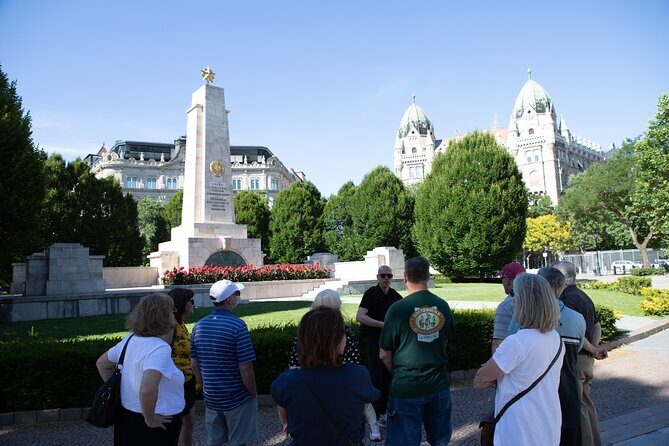
This isn’t a “big facts” lecture that keeps moving whether you’re with it or not. The tour is built like a sequence of snapshots: Soviet memory first, then the machinery of repression, then the public spaces where Hungary argued with its own past. That’s a good structure, because communism in Hungary isn’t one smooth story—it changes, and the reminders around the city show the tension.
I also appreciate that it’s private. In a small group, you’re more likely to get the kind of pointed context that makes you look differently at what you’re standing next to. And you might notice the guide’s style matters here: in my research, names like Julia, Brigit, and Norbert came up for strong explanations and personal storytelling that makes the topic less distant.
The last practical reason I like this format is simply logistics. You get pickup from your requested address, and the tour is set up around central sites, many within easy reach of public transportation. That helps when you’re short on time and don’t want to fight transit between emotional stops.
You can also read our reviews of more private tours in Budapest



Soviet Heroic Memorial: A WWII Monument That Sets the Mood
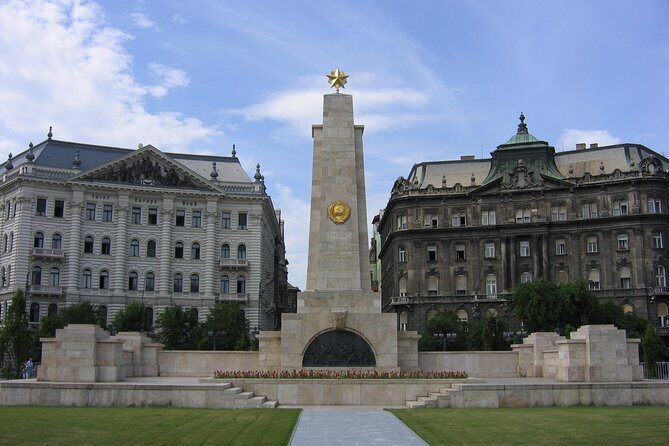
The first stop is the Soviet Heroic Memorial, a white obelisk in a landscaped park. It’s commemorating Russian military who served in WWII, but the way it’s presented matters: monuments like this don’t only honor the past—they shape what the living are encouraged to remember.
When you’re standing there, I suggest you take 30 seconds to ask yourself what the memorial is emphasizing. Is it emphasizing liberation, sacrifice, or a simplified wartime narrative? That question becomes useful later, because Hungary’s 20th-century conflicts overlap, and the city doesn’t let you keep them in separate boxes.
This stop is short—about 15 minutes—and that’s intentional. It’s not meant to be a deep museum dive. It’s meant to set the baseline for how Soviet presence was framed before the tour moves toward the darker machinery of later decades.
House of Terror Museum: When History Explains Your Own Feelings
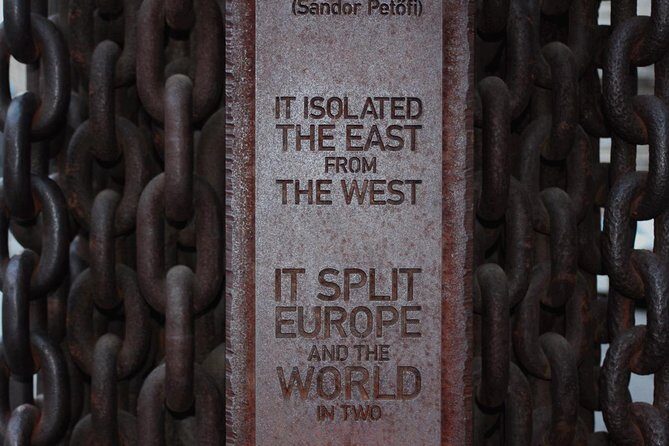
Then you go to House of Terror Museum on Andrássy út 60. This is the heavy hitter: the museum includes exhibits related to the fascist and communist regimes in 20th-century Hungary and acts as a memorial for victims—people who were detained, interrogated, tortured, or killed in that building.
What I like about this stop is that it doesn’t treat political ideology like a classroom topic. You’re in a physical space tied to oppression, and the museum format helps you understand what “regime control” looked like in real life. Even if you already know the headlines, it tends to land differently in person.
The time budget is again about 15 minutes, which may feel fast depending on your style. If you’re the kind of person who reads carefully, arrive ready to use your guide well—ask questions that focus your attention, like what themes the museum wants you to notice first. If you’re more of a skimmer, it still gives you enough structure to connect what you see with the later outdoor memorials.
One practical note: House of Terror is listed with admission as free in the tour schedule. Still, if entry policy details are ever fuzzy on the day, it’s worth confirming right there with your guide so you’re not scrambling mid-tour.
St. Stephen’s Basilica Stop: A Beautiful Pause With a Practical Catch
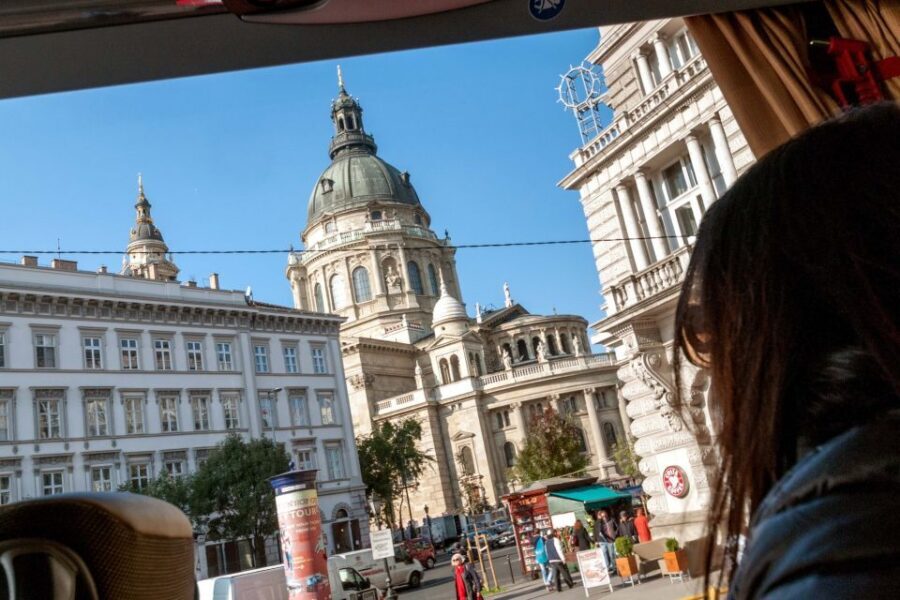
You’ll also stop at St. Stephen’s Basilica (Szent István Bazilika). This Roman Catholic basilica is named for Stephen, the first king of Hungary, and the reliquary holds his right hand. It’s a major architectural sight, and it’s also part of how Hungary’s story is anchored in older identity before the 20th-century regimes took over the narrative.
The schedule gives it about 15 minutes, and the admission is marked as not included. That’s the key consideration here: you can enjoy the exterior and the immediate area with the group, but if you want to go in, you’ll need to plan for the ticket yourself.
If you like context, use this moment to compare timelines. You’re moving from state oppression to a church that symbolizes a longer thread of Hungarian identity. It’s a reminder that communism wasn’t the first system that shaped public life, and it wasn’t the last one to influence how people interpret the past.
Szabadság tér (Liberty Square): Two Memorials, One Uncomfortable Truth
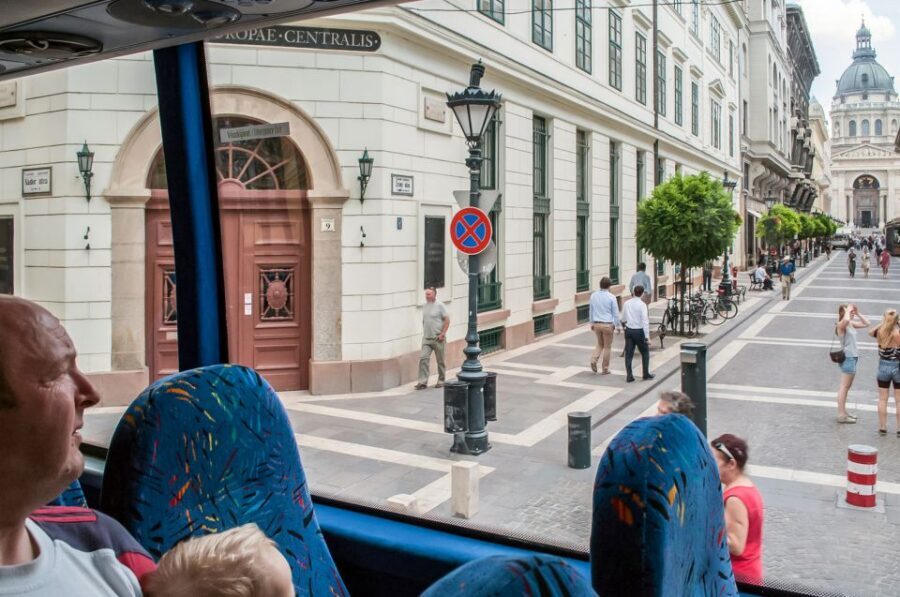
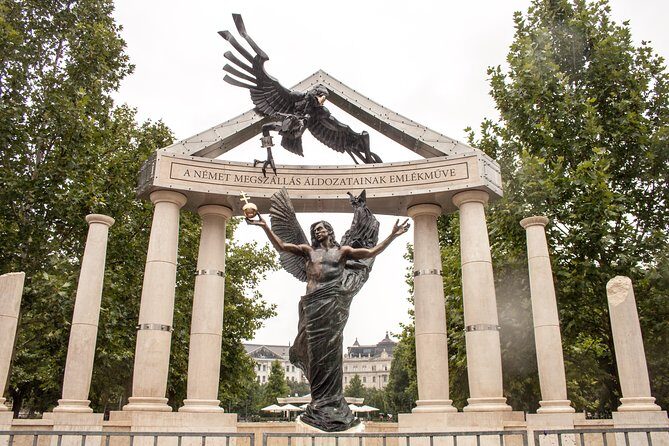
Next up is Szabadság tér (Liberty Square) in the Lipótváros neighborhood. The square is famous for two controversial memorials: one commemorating Hungarian Jewish victims of the Holocaust and one honoring Soviet soldiers who liberated Budapest from the Nazis in 1945. You’ll also notice the United States Embassy in Hungary and the historicist headquarters of the Hungarian National Bank around the square.
This stop is about 25 minutes, and I think that’s enough time to do it justice if you don’t rush. Liberty Square is a lesson in how public space can hold competing narratives at the same time. In other words: you won’t get to file the past neatly into one side being “good” and the other side being “bad.” Instead, you learn how memory works—and how politics follows memory.
I’d recommend you walk slowly and let the meaning of the memorials hit you in sequence. If you want to get the most from the outdoor setting, ask your guide what makes this square controversial and how the two memorials coexist visually and politically.
Admission here is listed as free, so it’s a low-cost, high-impact stop compared with places that can add ticket fees quickly.
You can also read our reviews of more historical tours in Budapest




The 1956 Revolution Memorial: Resistance, Not Just Victimhood
The tour includes a Memorial to the 1956 Hungarian Revolution and War of Independence. This one is specifically about the heroes of the uprising against the communist regime. It’s scheduled for about 15 minutes, with free admission listed.
This is where the emotional tone shifts a bit. Up to this point, the story leans toward occupation, control, and victimization. Here, the square becomes a statement that Hungarians pushed back—and that the communist regime didn’t go unchallenged.
When you’re standing there, I’d treat it like a question: Who gets remembered, and why? The 1956 memorial helps you see that communism in Hungary wasn’t only imposed from outside or managed from above. It also sparked resistance with its own identity.
Hungarian Parliament Building: A Landmark Stop You’ll See Best From the Outside
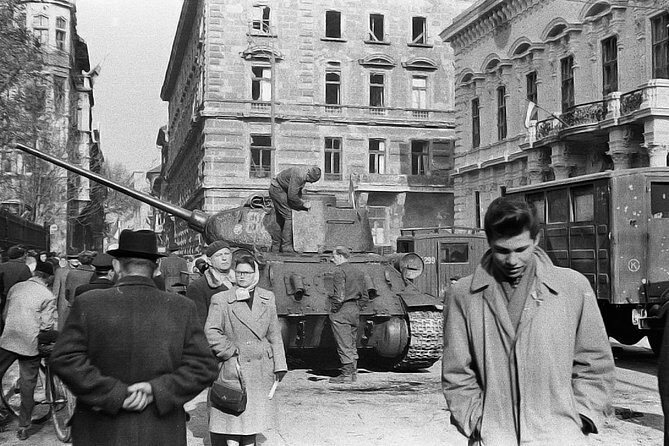
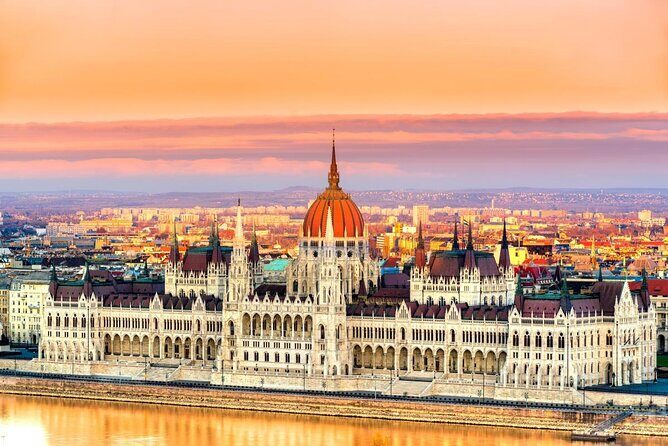
You’ll pass the Hungarian Parliament Building (Országház), often described as the seat of the National Assembly. It’s a top Budapest landmark and a popular tourist destination. The tour time here is about 15 minutes, and admission is marked as not included.
Even without stepping inside, the exterior is usually where you’ll get your best return in a tour like this. Use the moment to connect what you’ve just learned to what political power looks like in architecture—how the state chooses to present itself.
Because admission isn’t included, I’d treat this as a sight-and-context moment, not a full “parliament visit.” If you want to see interiors, you can plan that separately on another day when you have more time and can choose the ticket options that fit you.
The Communist-Themed Bar Stop: A Retro Drink as a Mental Reset
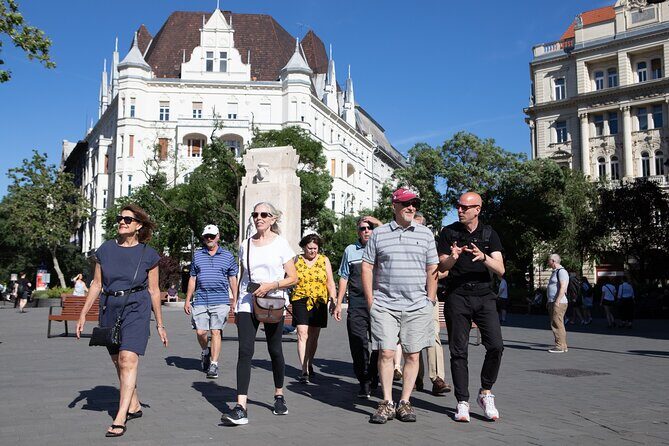
One of the included extras is a stop at a communist-themed bar, where you get a retro soda. The tour also includes coffee and/or tea, plus maps and further recommendations.
I actually like this kind of break on tough tours. After House of Terror and the heavy outdoor memorials, your brain needs a minute to process. A quick drink also turns the tour from a straight march into something more human—like conversation over a short pause.
Just keep expectations realistic. Food and drinks aren’t included unless specified, and the main stated included item here is the retro soda. If you’re hungry, plan to handle meals separately.
Price and Value: Is $108.14 a Good Deal?
At $108.14 per person for a private tour around 3 hours, the value depends on what you want out of your time in Budapest. For a private format, you’re paying for a guide’s attention plus pickup. That can be a solid deal if you care about context and want your questions answered on the spot.
You also get several built-in elements that reduce your planning work:
- Hotel/apartment pickup from your requested address
- Mobile ticket
- Maps and further recommendations
- Retro soda at the communist-themed bar
- Coffee and/or tea
The watch-out is admissions. Some sites are listed as free in the tour schedule, while St. Stephen’s Basilica and Hungarian Parliament Building are not included. If you plan to go inside both, factor that into the total cost.
In short: if you want an efficient, guided route through key memory sites—especially House of Terror—this can be worth it. If you mostly want museum ticket-by-ticket value, you might decide to visit certain sites independently and spend your money on only the guided parts you care about most.
Timing, Getting Around, and What to Wear
The total duration is about 3 hours, which means you should keep your expectations aligned: you’re seeing a lot of important stops, not lingering for a full museum reading marathon.
The tour is also designed with movement in mind. It’s near public transportation, and with pickup plus central locations, you’ll likely connect between stops without long detours. Still, wear shoes that handle city sidewalks comfortably and be ready for walking that fits a moderate fitness level.
And yes—this experience depends on good weather. If it’s canceled due to poor conditions, you’ll typically be offered a different date or a full refund, so check what the forecast looks like when you book.
Who This Private Tour Fits Best
This is a strong fit if you want:
- a focused, guided route through communist-era sites
- context that connects buildings, squares, and national memory
- a private experience where the guide can adjust if you ask questions
It may be less ideal if you want lots of slow time inside museums or you want a purely light, sightseeing style day. The subject matter is heavy, and the pacing is built around covering key points rather than reading every label without help.
Families can do it too, with the note that children must be accompanied by an adult. If you’re traveling with teens who can handle difficult topics, it can be an educational, reality-based outing.
Service animals are allowed, and the tour is in English, which helps if you don’t want to rely on a translation app for the complex political context.
Should You Book Born Under The Red Star in Budapest?
If your goal is to understand Hungary’s communist past using real places—especially the House of Terror Museum—I’d book this. The private format, pickup convenience, and inclusion of a bar break make it feel efficient without turning it into a rushed checklist.
But if you’re the kind of traveler who plans everything around included admissions and you hate ticket surprises, I’d double-check the entry expectations for St. Stephen’s Basilica and the Parliament Building before you go. Once you confirm that part, you’ll be set.
FAQ
FAQ
Where does the guide pick me up?
Your guide meets you at your requested address.
How long is the tour?
The tour lasts about 3 hours.
Is this a private tour?
Yes. It’s private, and only your group participates.
What language is the tour offered in?
The tour is offered in English.
Is there a mobile ticket?
Yes, the tour includes a mobile ticket.
Which sites are included on the route?
You’ll stop at the Soviet Heroic Memorial, House of Terror Museum, St. Stephen’s Basilica, Szabadság tér (Liberty Square), the 1956 Revolution and War of Independence memorial, and the Hungarian Parliament Building.
Are admission tickets included everywhere?
Not everywhere. The schedule lists free admission for the Soviet Heroic Memorial, House of Terror Museum, Liberty Square, and the 1956 memorial. St. Stephen’s Basilica and the Hungarian Parliament Building are marked as admission not included.
What’s included in the food and drink?
You’ll get a retro soda at a communist-themed bar, plus coffee and/or tea. Food and drinks aren’t included unless specified.