REVIEW · BUDAPEST
Budapest Historical Sightseeing – Free Walking Tour
Book on Viator →Operated by Perfect European Tours - Budapest FREE Walking Tours. · Bookable on Viator
Free history, no fluff. This Budapest Historical Sightseeing walk is a tip-based orientation that connects the communist era to what you see on the street today. I especially like the stop-by-stop Pest-side route ending at Széchenyi Lánchíd, and I also appreciate how guides (often Peter, Victoria, or Elizabeth) keep the stories clear and entertaining. The main drawback: it’s a good amount of walking on city streets, and it isn’t built for long breaks or slow pace.
Over about 2 hours 30 minutes, you’ll pass major landmarks and a few smaller architectural moments that most first-timers miss. You’ll learn why squares and statues matter, how the Jewish Quarter shifted from community to ghetto and later to creative life, and what memorials along the Danube are meant to make you feel. If you come early in your trip, you’ll leave with a much better sense of where everything is and how the city fits together.
In This Review
- Key highlights worth your time
- Budapest’s history, told on the sidewalk
- Stop-by-stop: Kálvin tér to Shoes on the Danube
- 1) Hungarian National Museum gardens and the mythical turul
- 2) Kalvin Square, Calvin, and a place to regroup
- 3) Unger’s House courtyard: architecture as a timeline
- 4) Elizabeth Square: Budapest Eye and bar-nightlife context
- 5) Danubius Hotel Astoria: French Empire style and film history
- 6) Through the Jewish Quarter: community, ghetto, then modern life
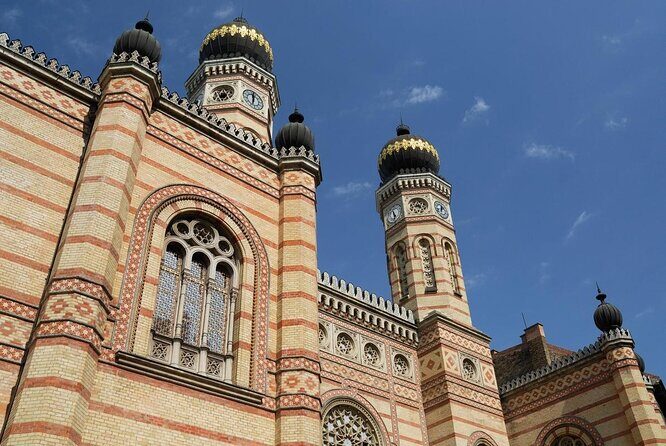
- 7) St. Stephen’s Basilica exterior: named for Hungary’s first king
- 8) Szabadság tér (Liberty Square): communist memorial focus
- 9) Stock Exchange Palace: a huge landmark you can’t miss
- 10) Ronald Reagan statue (and the Bush connection)
- 11) Hungarian Parliament Building views: electric, neo-Gothic exterior
- 12) Fisherman’s Bastion area: views from Pest side toward Buda
- 13) Széchenyi Lánchíd and the reconstruction story
- 14) Shoes on the Danube Bank: 60 pairs, Holocaust victims
- What the guide style gets right (and where it can wobble)
- Price, tips, and why you should plan your comfort
- Where this route fits in your Budapest trip
- Should you book Budapest Historical Sightoring – Free Walking Tour?
- FAQ
- How long is the Budapest Historical Sightseeing – Free Walking Tour?
- How much does the tour cost?
- Where does the tour start and where does it end?
- Is the tour in English?
- What’s included in the price?
- Are tickets or entry fees included for all stops?
- Is there food or coffee provided?
- Can I use public toilets during the tour?
- Are service animals and dogs allowed?
Key highlights worth your time
- A strong first-day orientation across the Danube’s Pest side, with an easy ending near the Chain Bridge
- Yellow-shirt guides who tell the stories with personality (and in English)
- Communist-era landmarks like Szabadság tér and the Danube memorials that hit hard
- Jewish Quarter context from wartime history to today’s streets with independent shops and bars
- Great value for the price, since the experience is built around tips rather than a fixed ticket
- Plenty of photo-worthy stops, from St. Stephen’s Basilica views to Parliament Square from the outside
Budapest’s history, told on the sidewalk
This tour is priced low up front (listed at about $3.63), but the real structure is tip-based. That means you’re paying for an in-person guide and the route planning—not for expensive museum tickets or pre-booked entry. It’s the kind of format that works well when you want answers without turning your day into a ticket line marathon.
You’ll also notice how the tour is framed: you don’t just get facts. You get reasons. Why a square is placed where it is. Why a building style looks the way it does. Why memorials exist in such an open, public space. Even if you’re not a history fanatic, that context helps you understand what you’re looking at from street level.
You can also read our reviews of more walking tours in Budapest



Stop-by-stop: Kálvin tér to Shoes on the Danube
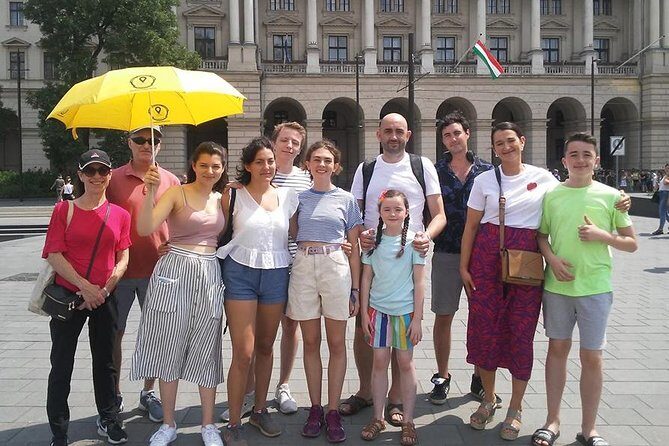
Below is the real rhythm of the walk, with what each stop adds—and the one thing to watch for.
1) Hungarian National Museum gardens and the mythical turul
You start at Kálvin tér 12–13 (OTP Bank area). From there, the early momentum goes toward the National Museum gardens, where you’ll see the statue of the mythical turul bird. The guide also ties the museum to its collections and founder, then connects that story to Hungary’s 1948 uprising.
What I like here is that it’s not just “look at the building.” It’s the start of a theme: how people shape national identity, then get pulled into political conflict. You’ll also hear about secrets connected to the VIII district, once known for grand palaces, which helps you understand why Budapest’s layers don’t always look obvious at first glance.
2) Kalvin Square, Calvin, and a place to regroup
Next comes Kalvin Square at 12 Kalvin ter, with the guide team wearing yellow so you can spot them fast. This is a practical pause point: the area has places to sit and shelter if the weather turns.
From a touring standpoint, this break matters. It gives you a moment to reset your legs and wrap your brain around what you’ve already learned before moving into more “story-dense” stops.
3) Unger’s House courtyard: architecture as a timeline
You’ll stand in the courtyard connected to Miklós Ybl’s creation known for mixing styles—Byzantine, Gothic, Moorish, Renaissance, and Romantic elements. The guide frames it as a fading palace, which is a good reminder that Budapest’s beauty can look both grand and fragile depending on how you catch it.
If you care about architecture, this stop gives you vocabulary for why certain buildings feel theatrical. If you don’t, it still helps you see the city as a living mix of influences, not one single era.
You can also read our reviews of more historical tours in Budapest




4) Elizabeth Square: Budapest Eye and bar-nightlife context
At Elizabeth Square, you’ll get the Budapest Eye reference and hear about the square’s history, along with where some of the city’s cool bars and nightlife spots are located.
This one is useful even if you’re not planning to go out that night. Knowing which neighborhoods have energy (and where people actually gather) helps you plan your evenings without wandering in the wrong direction.
5) Danubius Hotel Astoria: French Empire style and film history
You pass by the Danubius Hotel Astoria, noted for its French Empire look. The guide also connects it to the cosmopolitan atmosphere that attracted international stars and film productions, including the Josephine Baker Story directed by Brian Gibson.
This is a “blink and you’ll miss it” stop if you’re scanning only the postcard views. Slow down for a minute here. The tour uses this building to show how international culture touched Budapest, not just tourist photos.
6) Through the Jewish Quarter: community, ghetto, then modern life
The route then travels through the Jewish Quarter, where you’ll learn how the area moved from a home to a vibrant Jewish community to a ghetto in the Second World War. More recently, the guide explains how it became home to artists and students and how you now see independent shops, designers, and bars.
I like this section because it gives the neighborhood a timeline. It’s not only tragedy and it’s not only entertainment. You get both the weight and the everyday reality that followed.
7) St. Stephen’s Basilica exterior: named for Hungary’s first king
You’ll stand outside St. Stephen’s Basilica and learn why it is named after Hungary’s first king. This stop is included as a look-and-learn moment, with admission not included.
Practical note: because you’re viewing it from outside, the best payoff is when you take a few minutes to look upward and notice details rather than just walking past to the next square.
8) Szabadság tér (Liberty Square): communist memorial focus
At Szabadság tér, you’ll spend time at Liberty Square and see the communist memorial. The guide uses this to explain the story of the era and how monuments communicate power long after the politics change.
This is one of the emotionally direct stops. If you want the tour to land well, don’t rush this moment. Give yourself the chance to actually look.
9) Stock Exchange Palace: a huge landmark you can’t miss
You’ll pass the Stock Exchange Palace, described as about 50,000 m² and the largest privately owned historic landmark in Budapest. Admission isn’t included, so you’re there to observe and connect it to the city’s economic and architectural footprint.
If you like big spaces and scale, you’ll enjoy getting a sense of how large the building presence is—even from outside.
10) Ronald Reagan statue (and the Bush connection)
You’ll find the Ronald Reagan statue near Parliament Square viewpoints. The guide explains why Reagan is walking away from Parliament looking so happy, and also brings up why a Bush statue stands waiting nearby.
This stop works because it’s playful without forgetting it’s still political theater. Statues here aren’t just decoration; they’re part of how foreign relations get remembered in a public place.
11) Hungarian Parliament Building views: electric, neo-Gothic exterior
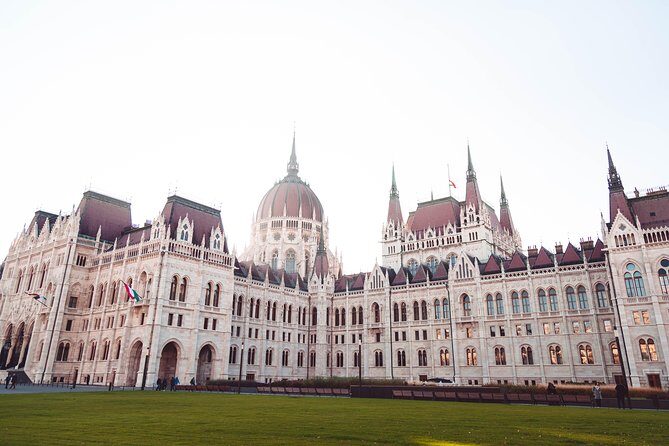
You’ll stand outside the Hungarian Parliament Building and get amazed by the electric/neo-Gothic style and the Danube views from the square. The guide also points out other nearby important buildings, including a chocolate museum, a former ministry of Justice, and an agricultural museum.
Because you’re not entering (admission not included), your job is to use the stop for framing: spot where the Danube sits, understand the geometry of the square, and learn how the building dominates the skyline from this side of the river.
12) Fisherman’s Bastion area: views from Pest side toward Buda
Next comes Fisherman’s Bastion viewing angles from the Pest side. You’ll see the castle area and Fisherman’s Bastion, plus St. Matthias Church with its colored tiled roof and the Hungarian National Palace in the distance. You’ll also get glimpses of St. Margit Island and Gellert Hill from afar.
This is a “distance stop,” but it can be great if you pay attention. Use it to learn the geography of the Danube bend so your later self-guided walks make more sense.
13) Széchenyi Lánchíd and the reconstruction story
Finally, you’ll reach Széchenyi Lánchíd (Chain Bridge), where the guide shares the history and reconstruction context. The tour ends near Lanchid at Id. Antall József rkp. 1 (easy to continue on foot into the city center).
This ending is smart. Chain Bridge is a natural visual payoff after a day of architecture and memorials.
14) Shoes on the Danube Bank: 60 pairs, Holocaust victims
On the way, you’ll stop at Shoes on the Danube Bank, a monument with 60 pairs of shoes dedicated to Holocaust victims who were lined up and shot on the banks. It’s a simple design, and it’s meant to land in your stomach, not just your camera roll.
If you only take one “quiet moment” on the whole route, make it here.
What the guide style gets right (and where it can wobble)
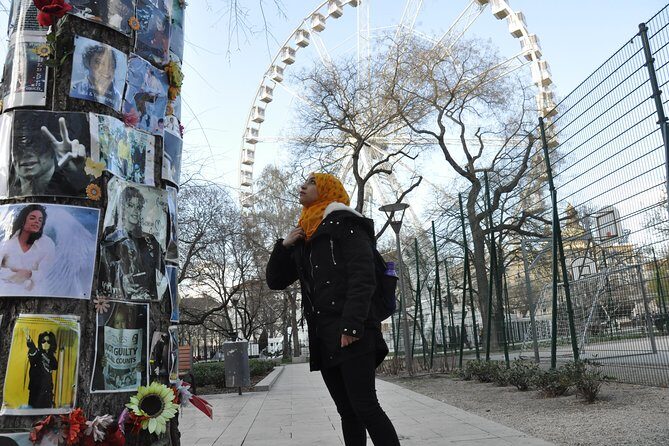
The big reason this tour scores so high is the guide delivery. You’ll see names pop up in strong reviews—Peter, Victoria, Elizabeth, George, and Sabi—and the consistent pattern is clear English, strong pacing, and stories that connect Budapest’s past to what you notice today. Many also highlight humor used as a tool, not a distraction.
There are two realities to keep in mind. First, group size can reach up to 50, and busy squares can make it harder to hear from far back. If you’re at the edges, move a bit closer when the guide starts talking. Second, the tour is designed for movement, not long breaks. That includes food and drink stops.
Price, tips, and why you should plan your comfort
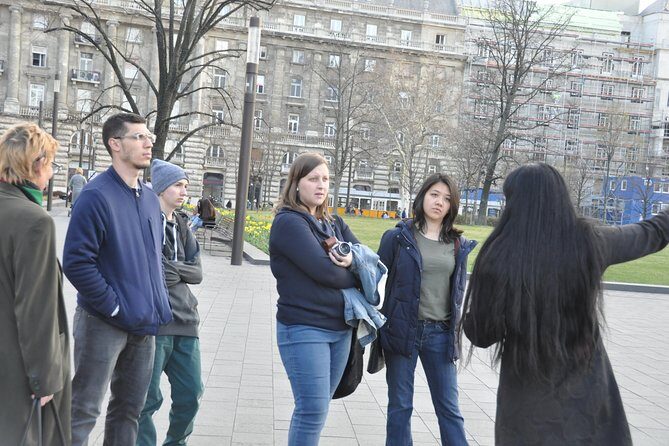
Yes, it’s priced low. But the structure still costs something: your time and your attention, plus you’ll likely spend a little money along the way. Coffee and tea aren’t served, and there’s no meal break. You can take a short 5-minute break to buy drinks and use the toilet, but you’ll pay for that out of pocket (public toilet costs are listed between 100 HUF and 500 HUF).
Bring water and sunscreen if it’s warm. In winter, this area can get brutally cold. One provider note even mentions -9°C with conditions that can feel like -25°C. If you’re visiting then, wear layers you can move in and consider gloves and a hat you’ll actually keep on.
Also remember: the guides can’t carry guest luggage or equipment, so travel light.
Finally, a gentle but important social detail: the tour runs on a respectful group rhythm. If people talk over the guide, the experience falls apart for everyone. Treat it like a shared classroom on the move.
Where this route fits in your Budapest trip
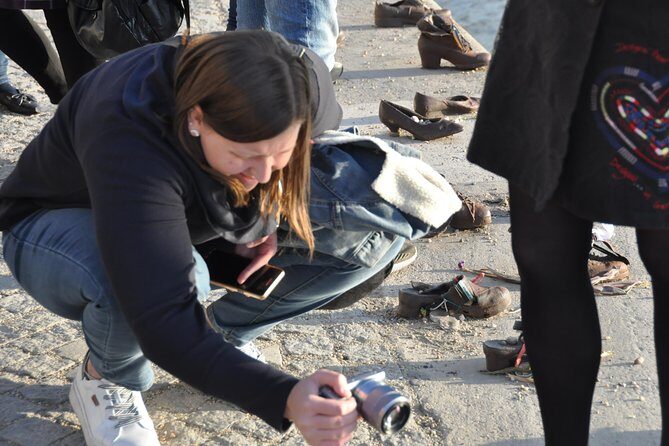
I’d book this early. It gives you orientation fast: Kálvin tér as a start point, Parliament Square and Liberty Square as anchor areas, then the Chain Bridge zone as your ending point. After this, your independent walking gets easier because you already understand the city’s big lines.
It’s also a good way to build a “mental map” for later choices. For example, after hearing about the Jewish Quarter’s timeline, you’ll navigate it differently. After learning the Danube memorial meaning, you’ll see that stretch as more than a photo stop. And once you understand where the Parliament view is framed from, you’ll know which sides to aim for later.
Should you book Budapest Historical Sightoring – Free Walking Tour?
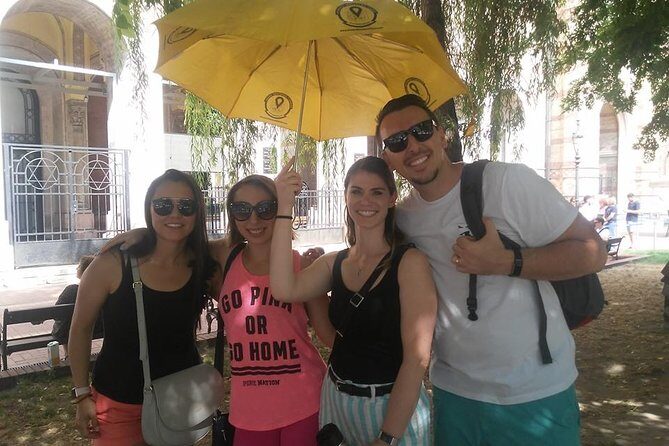
Book it if you want a low-cost introduction that actually explains what you’re looking at: communist-era landmarks, the Jewish Quarter’s changing chapters, and Danube memorials with context. With guide formats like Peter, Victoria, Elizabeth, George, and Sabi showing up in strong feedback, you have a good chance of getting a tour that’s both clear and fun to follow.
Skip or rethink it if you need fewer walking hours or you struggle with extended standing and cobblestones. The tour isn’t recommended for people unable to walk about 3 miles, and if you hate cold weather, come ready—this route doesn’t pause for comfort for long.
If you want Budapest in one coherent storyline without paying for a stack of entry tickets, this is a strong match.
FAQ
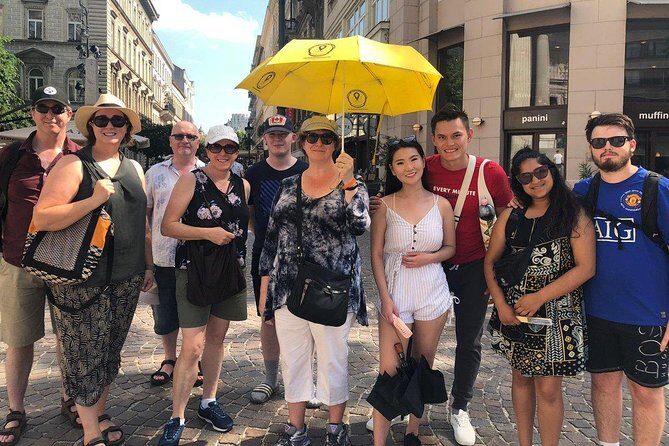
How long is the Budapest Historical Sightseeing – Free Walking Tour?
It runs for about 2 hours 30 minutes.
How much does the tour cost?
The listed price is $3.63 per person, and the tour is tip-based.
Where does the tour start and where does it end?
It starts at OTP Bank Budapest, Kálvin tér 12–13, 1085 Hungary. It ends at Lanchid (the Chain Bridge area), near Budapest, Id. Antall József rkp. 1, 1052 Hungary.
Is the tour in English?
Yes, the tour is offered in English.
What’s included in the price?
An in-person guide is included. Some sights involve outside viewing, while others have admission not included.
Are tickets or entry fees included for all stops?
No. Admission is not included for some key stops like St. Stephen’s Basilica, the Stock Exchange Palace, and the Hungarian Parliament Building.
Is there food or coffee provided?
No coffee or tea is served. There’s a short 5-minute break for drinks and using the toilet, but you pay for your own.
Can I use public toilets during the tour?
Yes, but you’ll pay for public toilets. The cost is listed as 100 HUF to 500 HUF.
Are service animals and dogs allowed?
Service animals are allowed. Dogs are not permitted, except guide dogs with the official papers carried by the owner.