REVIEW · BUDAPEST
Budapest: Big Bus Hop-On Hop-Off Tour by Open-top Bus
Book on GetYourGuide →Operated by Big Bus Budapest · Bookable on GetYourGuide
Budapest has a way of pulling you in fast. This hop-on hop-off bus tour gives you an easy overview of the big sights, with numbered stops and 16-language audio as you ride.
What I like most is how practical it is for getting your bearings without burning your legs on hills and long crossings. I also like the optional-but-included 1-hour walking tour in Pest, which helps you add street-level context the bus can’t cover.
The one thing to watch is timing and comfort expectations: buses are great for moving quickly, but you can still lose time if you’re trying to match an exact schedule, and some audio or viewing setups can be hit-or-miss.
In This Review
- Key things that make this tour worth your time
- Why this Budapest hop-on hop-off loop works so well
- Getting on board: meeting point, numbered stops, and the Red Route walk
- Pest side highlights: Basilica, Opera, Heroes’ Square, and the Thermal Bath area
- A Pest-side reality check
- Across to Buda: Castle views, river drama, and Gellért Baths area
- Comfort note as you cross
- The included 1-hour Pest walking tour (1:00 PM) and why it changes your day
- Audio commentary and bus comfort: 16 languages, but your experience can vary
- Danube River cruise discount: 30% off at Dock 6, Vigadó 6-os dokk
- Practical value: is $41 worth it for your Budapest plan?
- Comfort and access: what to know before you commit
- Should you book the Big Bus Budapest hop-on hop-off tour?
Key things that make this tour worth your time

- A loop that hits both banks so you can plan your next days smarter
- 16-language audio to help you match landmarks to stories
- A guided Pest walk (English only) that reaches places the bus stops can’t
- Air-conditioned or heated buses so you’re not cooked in summer or chilled in winter
- Real convenience value: you can hop off, do one thing, then get back on when you’re ready
Why this Budapest hop-on hop-off loop works so well

If you’re new to Budapest, the hardest part is deciding what to see first. This tour helps you do that by putting the major landmarks along a ride you can repeat across 1, 2, or 3 days. You’re not locked into a set pace. You’re building a plan while you travel.
I like that the experience is designed around two speeds. The bus is your fast-moving “connector” for iconic sights like St. Stephen’s Basilica, the Chain Bridge, the Danube riverside, Heroes’ Square, and Buda Castle. The walking tour is your slower, closer look at Pest street scenes and the memorial areas around the riverfront.
And because the buses run with audio commentary in 16 languages, you can get the basics even if you don’t join the walking tour every day. You can also stay flexible if your energy dips halfway through the day.
You can also read our reviews of more tours and experiences in Budapest.



Getting on board: meeting point, numbered stops, and the Red Route walk
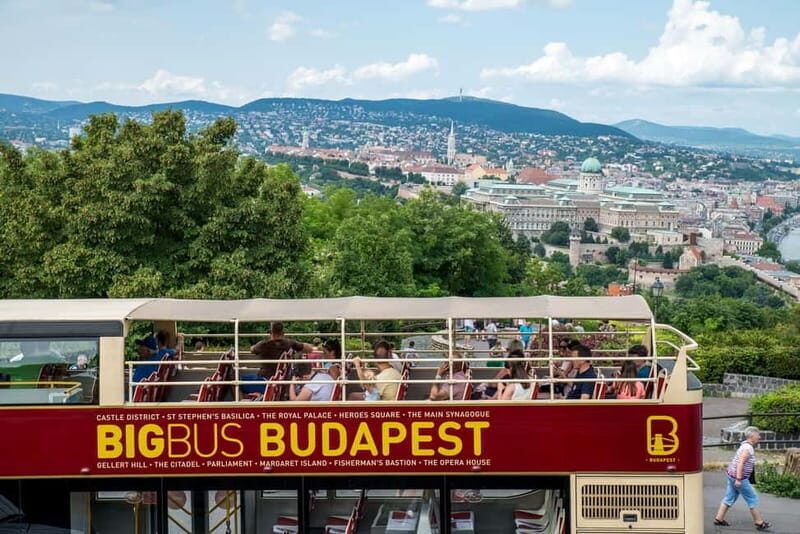
Your starting point is József Attila u. 24. You’ll present your booking confirmation to staff at the Big Bus office or on the bus. There’s no hotel pickup or drop-off, so you’ll want to plan how you’ll reach that area on your own.
The walking tour starts at 1:00 PM from Stop #1 (Basilica, Red Route) and ends at Stop #2 (near the Chain Bridge). Before you join, you’ll redeem your ticket with Big Bus staff. It’s worth doing the walk earlier in your stay if you can, because it gives you a clearer sense of what to revisit once you’re back on the bus.
Here’s a practical tip: at bus stops, make sure you’re catching the right bus for the route color shown at that stop. Some stops can be a little confusing on first pass, and the tour doesn’t try to replace a good system for figuring out which bus goes where.
Also, a heads-up on timing: some people run into trouble when they assume buses will be dead-on to the minute. Traffic happens. If you have a tight boat booking or a show time, build in buffer time.
Pest side highlights: Basilica, Opera, Heroes’ Square, and the Thermal Bath area
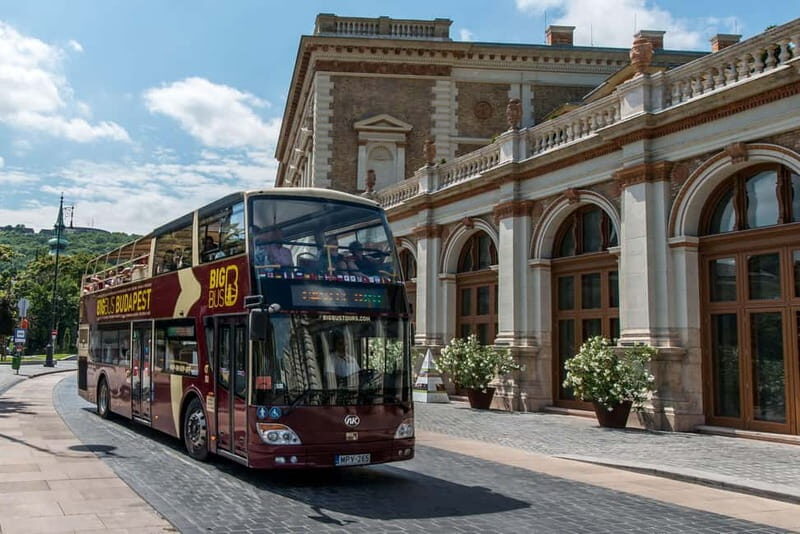
Budapest is split into Pest (flatter, street-heavy, city life) and Buda (steeper, castle views). The tour’s Pest run gives you a strong first impression, and it does it with stops that group well.
Here’s how I’d think about the Pest sequence:
St. Stephen’s Basilica (pass by)
You’ll roll past one of the city’s most recognizable church landmarks. This is a great first sight because it helps you understand the city center before you move outward. If the sky is clear, you can often grab satisfying photos from the bus, but don’t expect every angle to be perfect.
Chain Bridge (pass by)
Even if you don’t step off, seeing it from the bus sets the theme for the trip: Budapest is about the Danube’s connections. The bridge area also lines up nicely with the walking tour endpoint.
Deák Ferenc tér (pass by)
This is a major hub area, which makes it a useful stop for getting oriented. Even if you don’t exit here, it signals that you’re in the heart of the city’s movement network.
Dohány Street Synagogue (pass by)
This stop is all about location. The bus puts it within reach, and you can decide whether to do it now or save it for a focused visit later.
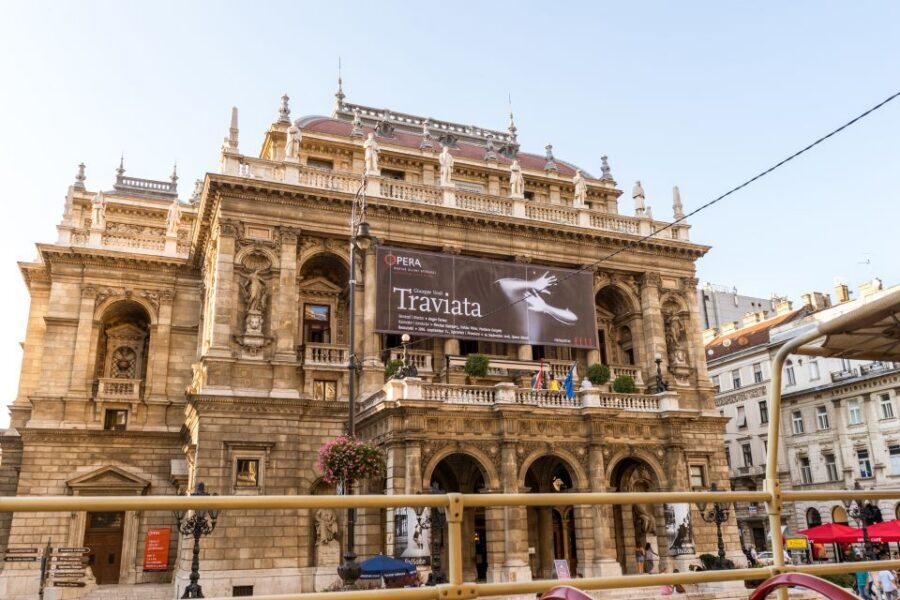
Hungarian State Opera House (pass by)
Another “photo and orientation” stop. If you’re into architecture, this is the kind of landmark you’ll want a second look at on a quieter walk.
Heroes’ Square (pass by)
This is a big visual moment. It also works well as a break point if you want to step off for a stretch and then continue. It’s also a natural place to reposition your next hop-off choice.
Szechenyi Thermal Bath (pass by)
Even if you don’t go inside, seeing the bath area from the bus helps you decide if you want the full thermal experience. The bus is a practical way to judge distance and timing without committing too early.
Museum of Fine Arts (pass by) and Budapest Zoo and Botanical Garden (pass by)
These are good “context” stops. They tell you where major cultural and park spaces sit. If your schedule is tight, you may only want a quick look from the bus before committing to something closer to your interests.
There are also a couple of stops that feel like everyday Budapest landmarks because they’re tied to how people actually live and move:
New York Palace Café (pass by) and Astoria (pass by)
These areas can be handy if you’re trying to plan a meal break without guessing. You can hop off when hunger hits and hop back on when you’re ready to keep rolling.
Váci Street (pass by) and Elizabeth Bridge (pass by)
Váci Street is a shopping-and-stroll option, and the bridge gives you another major crossing connection. If you’re the kind of traveler who likes to mix one big sight with one “walkable wandering” hour, these stops fit that rhythm.
A Pest-side reality check
The bus covers a lot, but you won’t always be able to walk straight to every landmark from the exact stop. One specific note from real-world experience: the Parliament area may involve about a 10-minute walk from the bus stop. So if you’re counting on a precise route from the bus door, plan for a short walk.
Across to Buda: Castle views, river drama, and Gellért Baths area
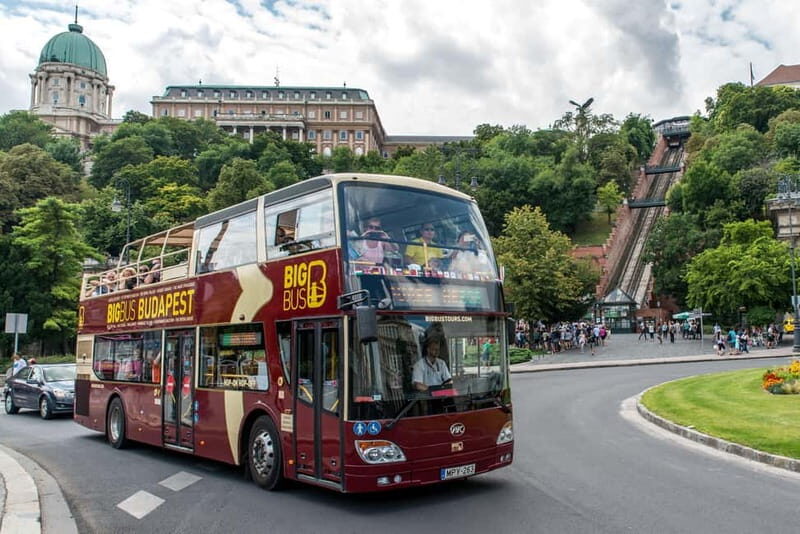
Once you start heading toward the Buda side, the vibe shifts. Roads feel steeper. Views feel wider. The bus becomes even more useful because it handles the “getting up there” problem.
Key Buda-side moments include:
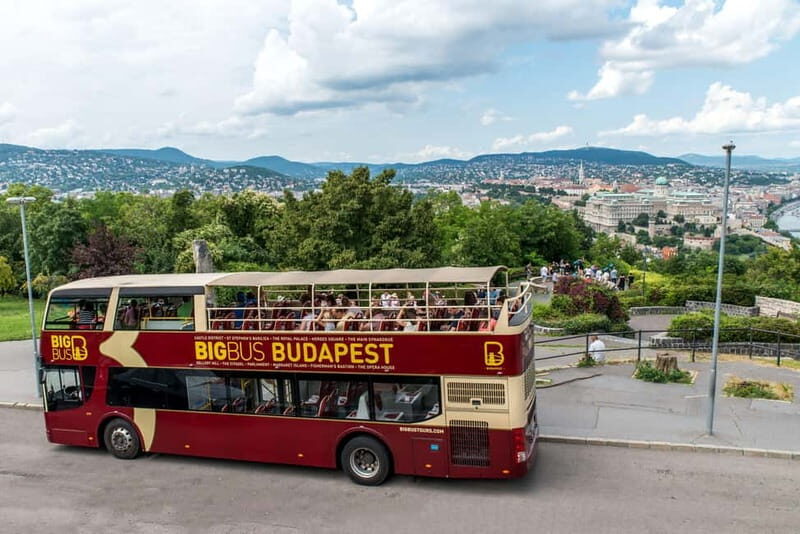
Buda Castle (stop)
This is a must for first-timers. Seeing it from the bus helps you understand why so many people come for the skyline and viewpoint experience. If you hop off here, you’re in the zone for exploring the castle district on foot.
Gellért Baths (pass by)
This stop is for the thermal-curious. Even without entering, you’ll spot why the area is a repeat destination. It’s a good option if you want a relaxing block later in the day rather than burning morning hours on tickets and lines.
Margaret Island and Margaret Bridge (stop / pass by)
This section is where Budapest slows down. You get a sense of the city’s green space inside the river system. If you’ve been hopping nonstop, this is one of the best places to break the day with lighter walking.
Hungarian Parliament Building (stop)
This is the headline. From the bus, you get the classic views that help it feel like more than just another building on a map. Again, give yourself some walking time if you’re targeting the building area.


Comfort note as you cross
Budapest weather can be dramatic. Big Bus keeps things manageable with air-conditioning during summer and heating in winter, which matters when you’re spending hours on an open-top style bus experience. Even if you enjoy being outside for views, you’ll still want that climate control when the day gets hot or cold.
The included 1-hour Pest walking tour (1:00 PM) and why it changes your day
The bus gives you the “big picture.” The Pest walking tour gives you the “street picture.” It’s a focused 1-hour guided walk in English only, starting at Basilica (Stop #1, Red Route) at 1:00 PM, ending near the Chain Bridge (Stop #2).
This walk is especially helpful because it can reach details the bus route doesn’t. You get a chance to connect landmarks with nearby streets and riverfront points like Shoes on the Danube Bank memorial sculpture and key Pest sights around the Danube and major central areas.
It also helps you shop your next steps. Once you’ve done the walk, the bus stops stop feeling random. You start to recognize why each stop matters and what you’ll want to revisit later.
In terms of guide quality, I saw strong praise for guides by name, including Sofia and Gergo, and also a guide named Hicam on another guided experience. That tells me the tour leadership can be a real factor, not just a checkbox on your itinerary.
One practical caution: don’t schedule the walking tour as the only buffer for a time-sensitive plan. If your day has a boat or a ticketed event, keep some breathing room. People can get thrown off by rush-hour timing and by needing to confirm exactly where and when they’re starting.
Audio commentary and bus comfort: 16 languages, but your experience can vary
The biggest built-in learning tool here is the digital audio commentary in 16 languages. That’s a lot of coverage, and it’s great for matching what you see to what you’re hearing. You can also use it as a filter: if one stop grabs your attention, you’ll know what to research or do later.
When it works well, it turns the bus into a moving mini guide. When it doesn’t, it can feel like background noise. Some issues show up in real-life feedback: audio sometimes runs too fast, continues past a stop, or is hard to understand from one bus to another. Others also noted that some window coverings can reduce photo clarity.
My advice: treat the bus audio as helpful context, not the sole source of your trip’s facts. If a landmark looks interesting, hop off and take a closer look rather than relying only on the audio track.
Danube River cruise discount: 30% off at Dock 6, Vigadó 6-os dokk
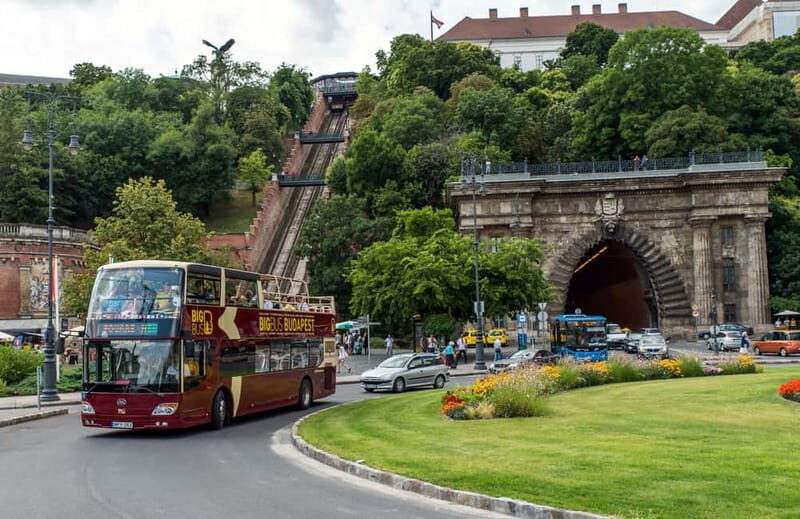
You get a 30% discount on a Danube River cruise when you purchase pier side at Dock 6 (Vigadó 6-os dokk), Jane Haining rakpart, 1052 Budapest. The discount is tied to having the Big Bus ticket, so it’s an easy add-on when you want a water-level perspective.
Some people loved the cruise, and others described it as good even when the weather wasn’t ideal. If it’s raining, you’ll still get the river views, but your ability to see outside can be limited.
Timing matters here. In at least one experience, rush-hour delay caused someone to nearly miss their boat. So I’d plan it like this: don’t pick a cruise date based on a perfect fantasy schedule. Pick it based on how much flexibility you’ve built into your hop-off day.
Practical value: is $41 worth it for your Budapest plan?
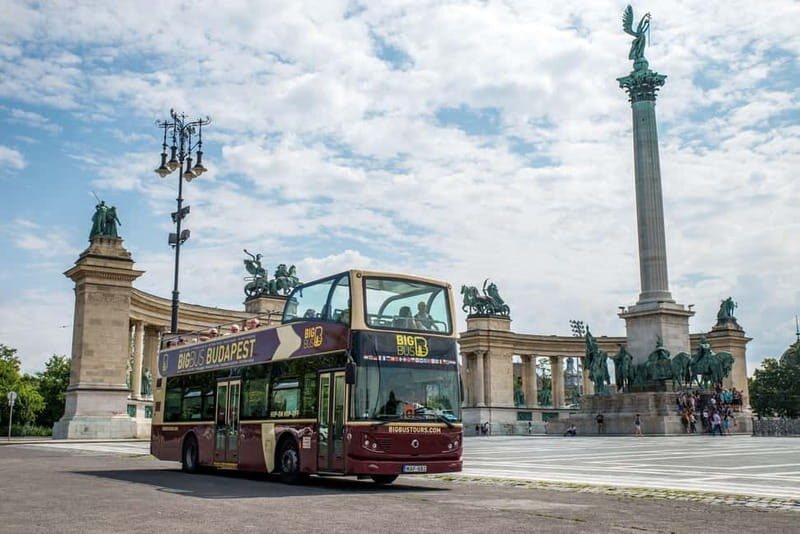
Price is listed at about $41 per person, and your ticket can be valid for 1, 2, or 3 days. For a city where the sights are spread across the two banks, the value comes from removing decision fatigue. You’re paying for transit plus orientation plus a guided walking component plus a cruise discount.
If you only have one day, this is best as a strategy: ride the bus early to get oriented, listen to the audio, and hop off only for the top 1–3 priorities you identified while riding. It’s a way to protect your energy while still seeing the essentials.
If you have two days, that’s the sweet spot. You can repeat part of the route on day two and turn your first-day impressions into focused visits. Several people described using the bus as a way to plan follow-up stops, which is exactly how I’d use it too.
If you have three days, it becomes a comfort tool. You can hop off for longer exploration, then return by bus when tired. That’s especially helpful if your feet are done by the afternoon.
Comfort and access: what to know before you commit
The buses are wheelchair accessible, which is a plus. Still, some real-world comments mention steps being difficult and limited help getting from bus to pavement. So if mobility is a concern for you, I’d plan for extra time at stops and ask staff for the best boarding setup.
Also, on busy days, you might occasionally face limits on boarding if buses fill up. That’s not a unique hop-on hop-off problem, but it’s worth factoring into your day.
Should you book the Big Bus Budapest hop-on hop-off tour?
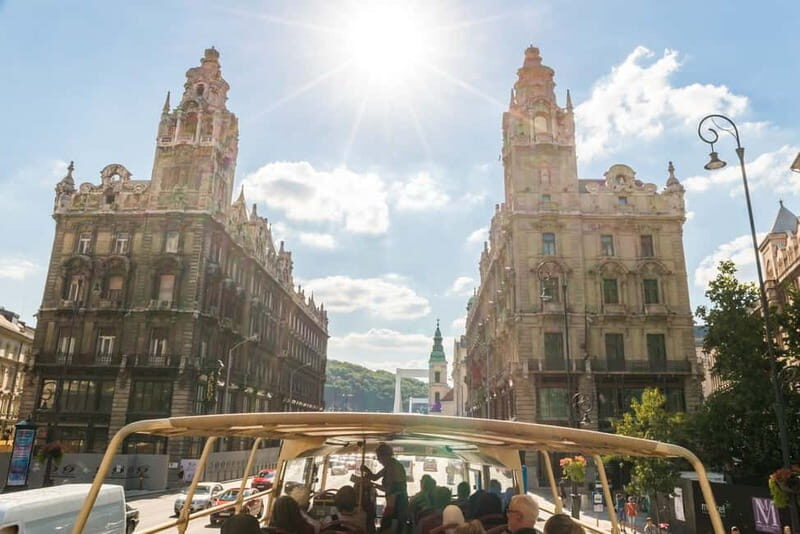
I think it’s a smart booking if you want a fast route to the big sights without spending your whole day navigating the city from scratch. It’s especially useful if you’re trying to cover both Pest and Buda efficiently and still want the option to do a 1-hour Pest walking tour at 1:00 PM.
Book it if:
- you like flexible hop-on hop-off planning
- you want audio guidance in many languages
- you want one day to get oriented, then build the rest of your trip from there
- you’re interested in the Danube cruise discount after your bus day
Skip or adjust expectations if:
- you have very tight time constraints and hate schedule risk
- you’re extremely sensitive to audio issues or photo clarity from bus windows
- you expect a fully open-air photo platform at all times
If you’re choosing between doing Budapest “your way” versus doing Budapest “the efficient way,” this one usually wins on efficiency. You’ll still be able to explore like a local once you know what you want to see up close.