REVIEW · BUDAPEST
Budapest: Floating Bus Tour by Land and Water
Book on GetYourGuide →Operated by RiverRide-Tours Ltd. · Bookable on GetYourGuide
A bus that becomes a boat in Budapest. The amphibious ride turns city streets into a short Danube experience, with picture-worthy views from seat height. I like that it’s built as one continuous tour—no switching vehicles, no bouncing around town.
I really like the mix of live guide narration (English and German) plus headphone audio in many other languages. That combo helps you keep up with the sights even if you miss a bit on the move.
One thing to consider: there’s no toilet on the boat, and the river portion is intentionally short. If you were hoping for a long Danube cruise with lots of landmark stops, this is more “fun splash and views” than “full sightseeing boat trip.”
In This Review
- Key things I’d plan around
- Amphibious Bus, Real Danube Views: What Makes This Tour Fun
- Where You Meet in Budapest (So You Don’t Miss the Start)
- Your On-the-Road Segment: Sights, City Context, and Comfort
- The River Moment: How the Danube Float Works in Practice
- Live Guide + Headphones: How the Commentary Gets You Through
- Photos From Two Worlds: What to Shoot (and When)
- Price and Value: Is It Worth $28?
- Who This Tour Suits Best (And Who Might Want Another Option)
- Practicalities That Affect Your Day
- Should You Book the Budapest Floating Bus Tour?
- FAQ
- Where do I meet for the Budapest Floating Bus Tour?
- How long is the tour?
- Does the route go to the Parliament and the Chain Bridge?
- Is there a toilet on the boat?
- What languages are offered?
- How many times a day does the tour depart?
Key things I’d plan around
- Land first, then water: you stay on the same amphibious vehicle the whole time.
- Danube photos from a unique angle: skyline views from the river are part of the payoff.
- Headphones in your language: many audio options plus English/German live guiding.
- Route does not go to Parliament or the Chain Bridge: manage expectations on what you’ll see.
- Short river time: great for a taste, not a replacement for a long boat cruise.
Amphibious Bus, Real Danube Views: What Makes This Tour Fun
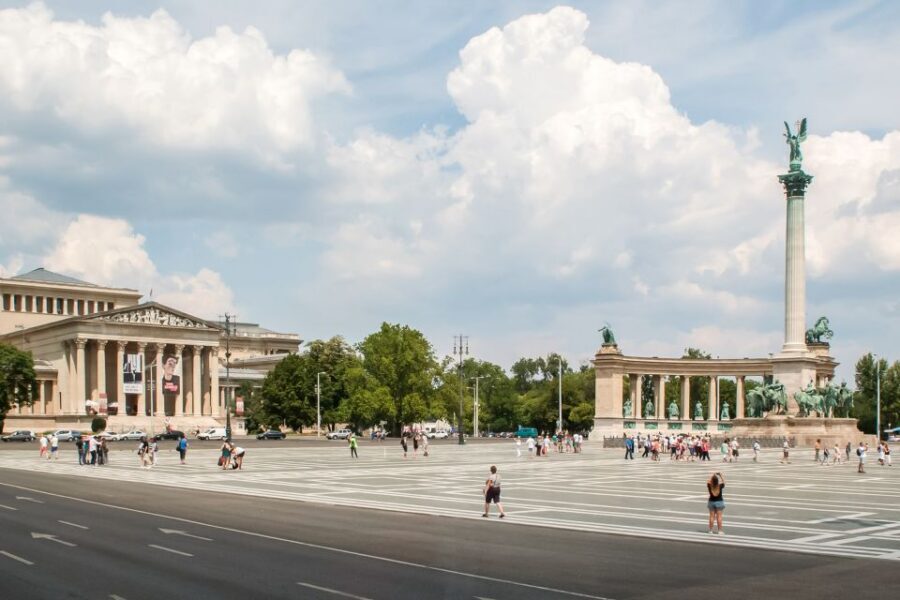
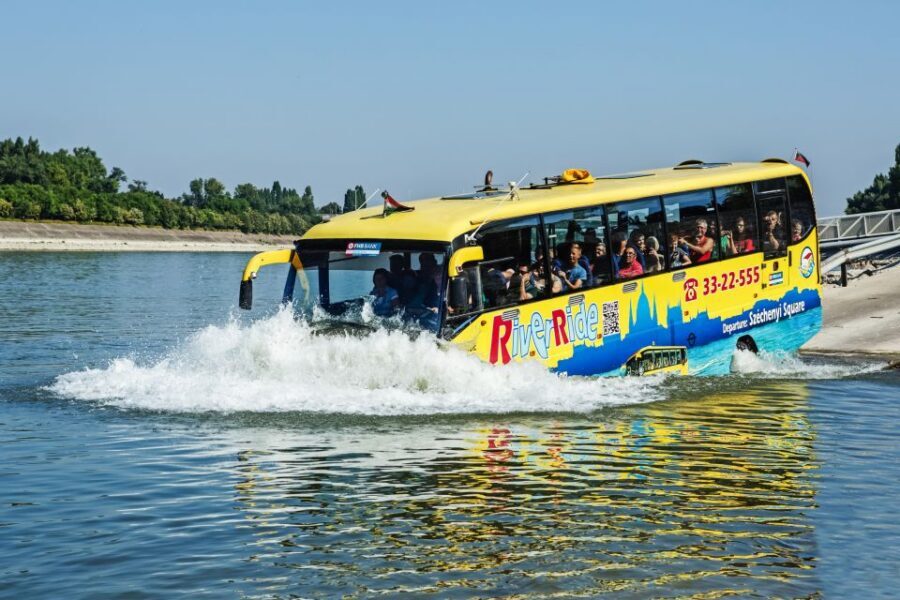
This is one of those Budapest activities that’s easy to explain and hard to forget: an amphibian bus that drives like a normal vehicle, then enters the water of the Danube. The moment you see it happen is the headline, but the ride is also a clever way to see the city without doing a “one bus, one boat” shuffle.
I like that it’s straightforward. You start on land, get the city context, then get the surprise factor when the vehicle reaches the river. You also get great photo angles because you’re not stuck behind the railings of a traditional boat.
Your time is also used efficiently. At $28 per person for roughly 50 minutes to 1.5 hours, you’re paying for a very specific attraction rather than covering dozens of stops at a slow walking pace. That tends to feel fair in a city where “one more tour” can start to feel expensive fast.
You can also read our reviews of more tours and experiences in Budapest.



Where You Meet in Budapest (So You Don’t Miss the Start)
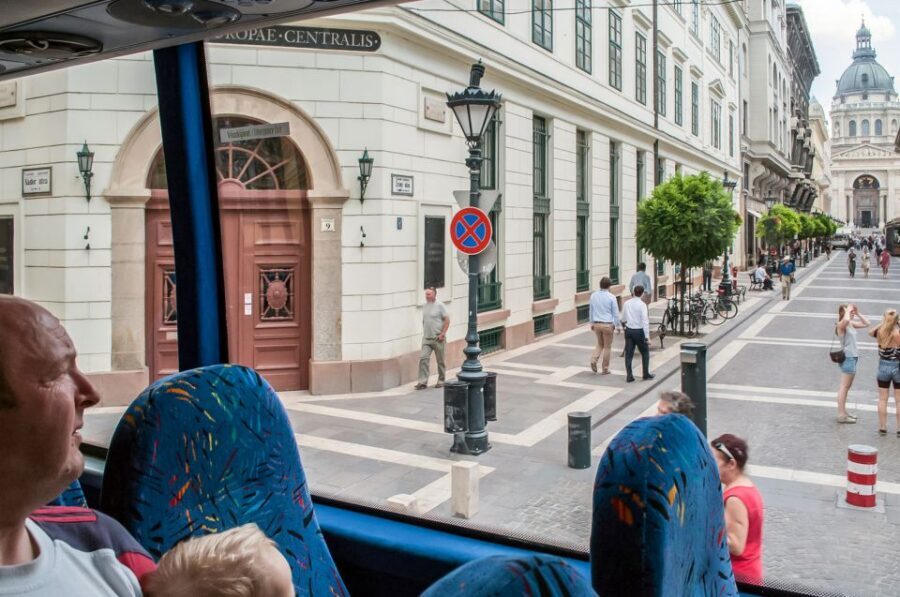
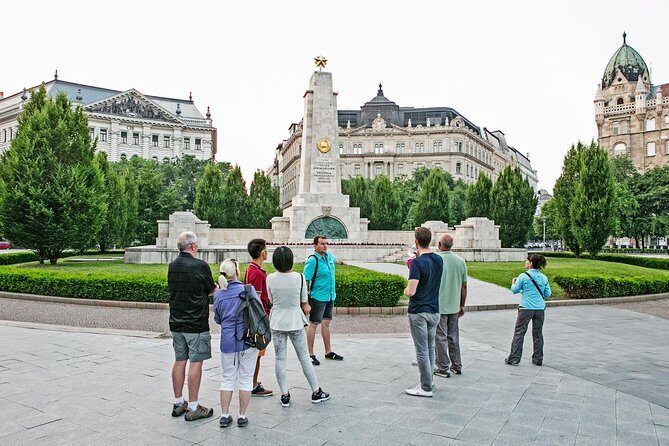
Plan to show up a little early at Széchenyi István Square 7, right next to the Toiko Budapest Restaurant. That meeting point is central enough that you can walk in from the nearby area, and it’s specific enough that you can confirm it quickly.
No hotel pickup is included, so you’ll need to get yourself to the square. The good news is that this makes the tour schedule simpler: you don’t have to wait on a driver or coordinate a hotel lobby time window.
This ride also runs multiple times daily. From April through October it departs four times a day, and from November through March it departs three times a day. If you’re building a first-day plan, check the available start times and pick one that lines up with your energy level.
Your On-the-Road Segment: Sights, City Context, and Comfort
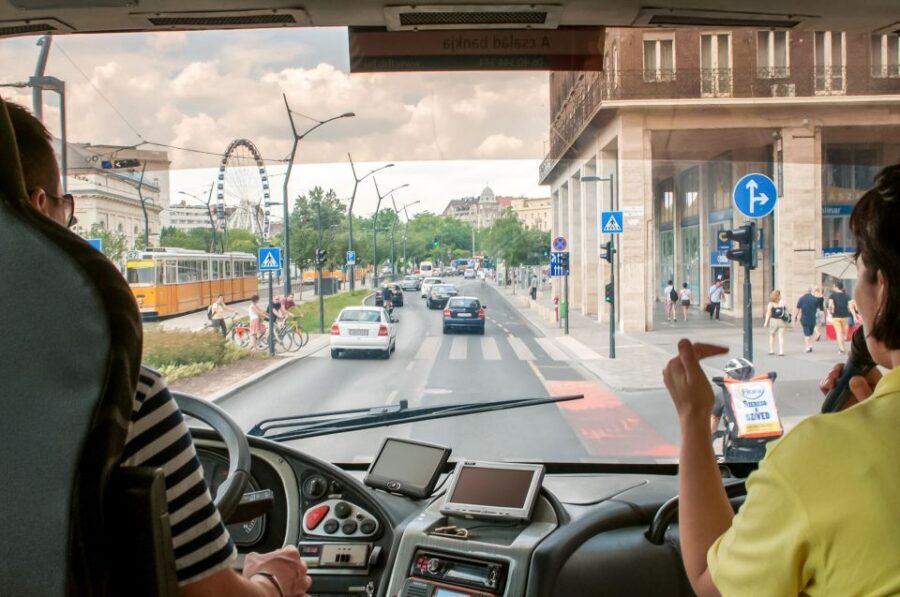
The tour starts with a bus route through the downtown area. You’ll see the major parts of Budapest from a comfortable seat on the air-conditioned vehicle. The goal on land is to help you place what you’re about to see on the river—this is sightseeing with context, not random driving.
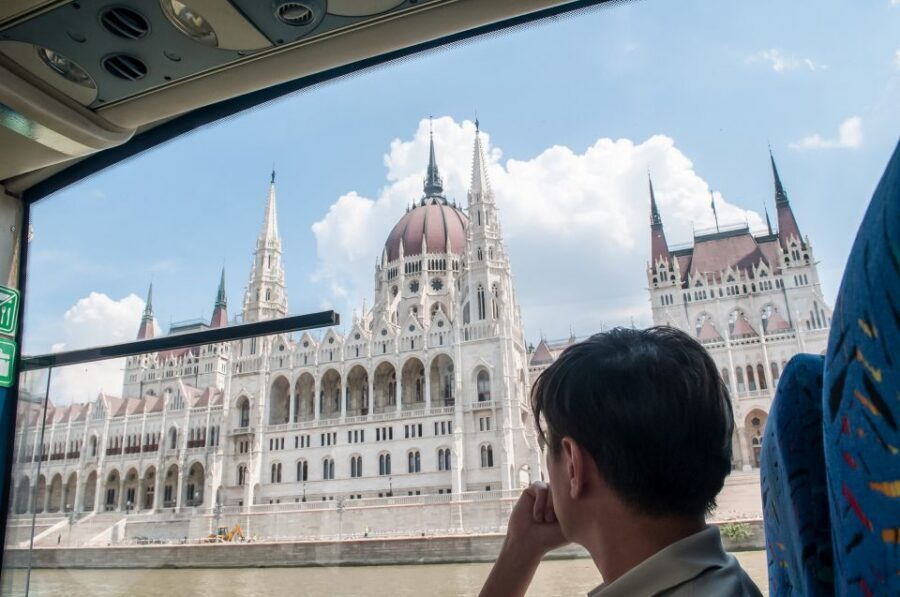
A practical detail that affects your experience: the tour is designed as a highlight loop, so it won’t try to get to every famous checkpoint. During the short trip, the bus does not reach the Hungarian Parliament Building or the Chain Bridge. You’ll still get “big Budapest” visuals, but you should not expect those two icons to be included in the route.
This on-land section also gives you a chance to settle in and get your bearings. When the commentary begins through the headphones, it’s easier to follow once you recognize the general layout of the river and the city’s key corridors.
The River Moment: How the Danube Float Works in Practice
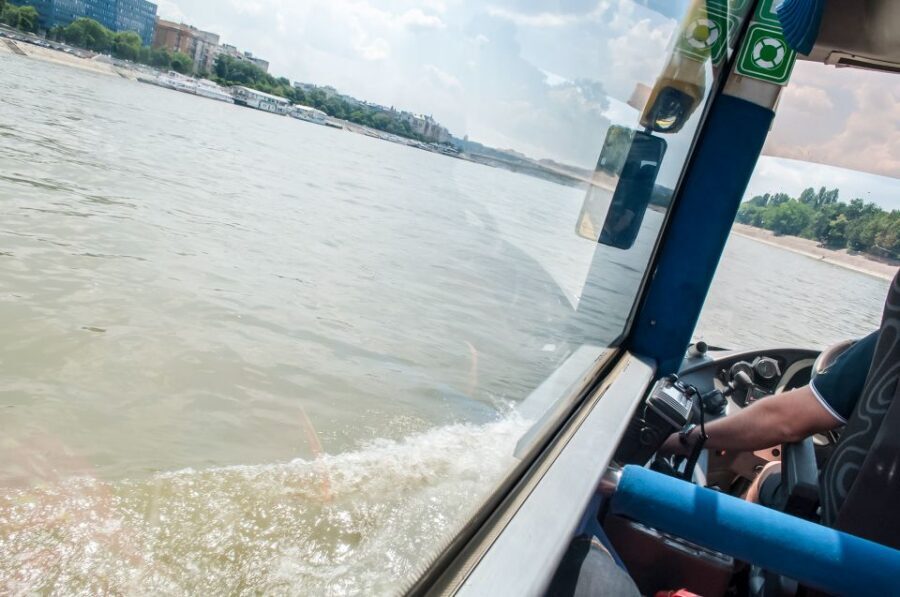
The main attraction is the amphibious transition—your bus goes into the Danube. It’s built as a short water segment, so you get the “wow” without a long stretch of waiting for more stops.
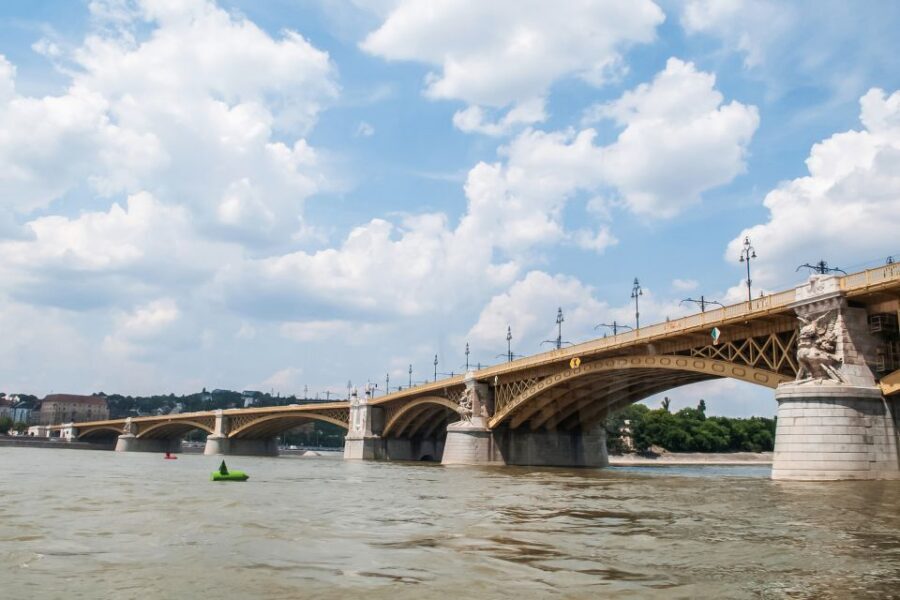
What you’re really seeing from the water is the city’s relationship to the river. Even though the tour does not go into the most famous Parliament/Chain Bridge area, you still get that classic Budapest skyline feel from a different vantage point. And because you’re in the same vehicle that you were on minutes earlier, you don’t lose time transitioning between transport modes.
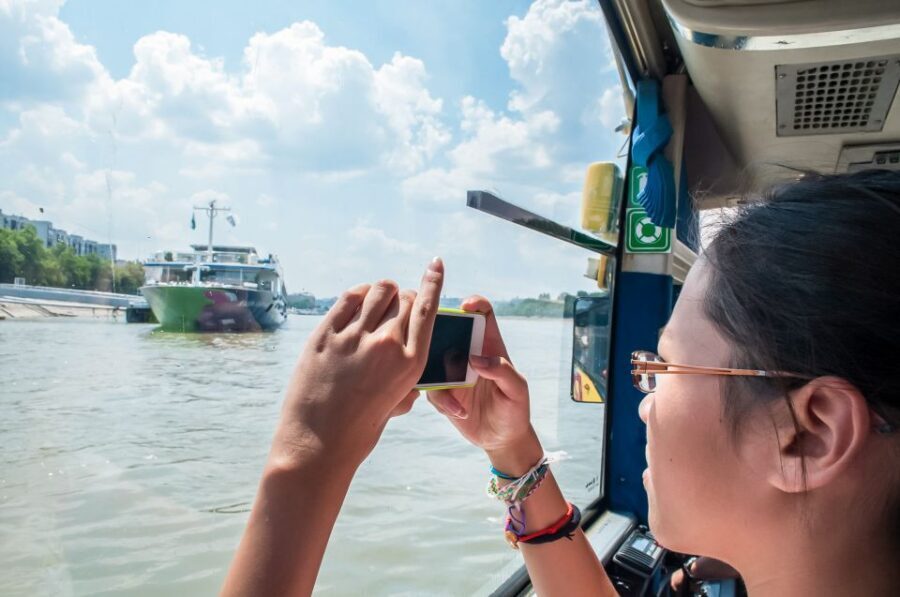
The ride feels gentle. You’ll be rocked on rippling waves, which makes it feel like a real river moment rather than a gimmick photo stop. For pictures, you can often frame the skyline behind the vehicle—something that’s harder to do when you’re standing on a traditional deck with crowds.
Be realistic about the pace. The river portion is short, and it doesn’t function like a long commentary cruise with multiple landmark passes. Think of it as a concentrated Danube experience: splash, skyline, and then back to land.
Live Guide + Headphones: How the Commentary Gets You Through

You get a live guide in English and German. If you’re traveling in a mixed-language group, this helps keep the tour on-track and interactive, especially around practical questions and general explanations.
On top of that, there’s also audio in many languages via headphones, including Spanish, Ukrainian, Danish, English, French, German, Hebrew, Hungarian, Italian, Polish, Romanian, Russian. That’s a big deal for value: you’re paying for a narrated experience even if you’re not matching the live-guide language.
One small tip for audio: treat the headphones like part of the tour kit, not an optional extra. Put them on early, keep them secure, and if something sounds off, alert the guide right away. There have been occasional reports of audio behaving oddly mid-sentence, so staying attentive helps.
If the live guide is speaking, you can use both sources. The best results come when you listen for the live narration while using the headphone audio to catch details you might miss from where you’re seated.

Photos From Two Worlds: What to Shoot (and When)

The tour is built for cameras. You’re high enough to get clear sightlines, and you also have the advantage of being on both land and water in one continuous ride.
On land, focus on wide city views and major buildings as they appear along the route. Since the tour doesn’t reach Parliament or the Chain Bridge, I’d treat those as optional extras—look for other prominent skyline angles and river-facing structures instead.
On the water segment, switch to skyline compositions. Try to capture the city as a backdrop with the river in the foreground. That’s where the amphibious angle really shines, because you’re getting the Danube viewpoint without the usual boarding and crowd shuffle of a separate boat trip.
If you care about framing: keep an eye on which side you’re on when the bus heads toward the water. The “best” view depends on your seat relative to the route, so being aware early is worth it.
Price and Value: Is It Worth $28?
For $28 per person, this tour is priced like a specialty attraction. You’re not paying primarily for a deep, full-length Danube cruise. You’re paying for the amphibious experience plus a narrated city introduction.
In terms of value, the biggest win is that it combines two modes. A traditional boat cruise can be great, but it won’t show you the city streets in one package. Separate tours also add time and coordination. Here, you do one meeting point, one vehicle, and you get both land-and-river sightseeing in a single block of time.
The short duration is part of the value equation. Around one hour can be a sweet spot if you’re sightseeing efficiently. If you’re visiting with teens or you just want one “Budapest must-do” that isn’t a whole evening commitment, this works well.
Who This Tour Suits Best (And Who Might Want Another Option)
This tour is a strong fit if you want a fun, different way to see Budapest without spending hours hopping between transportation. It’s also a good family option because it’s visually entertaining and doesn’t demand long walking.
It’s not the best choice if your priority is seeing specific “must-see” landmarks like Parliament and the Chain Bridge. The route explicitly skips those, so you should plan separate time for them if they’re high on your list.
It also has clear accessibility limits. Wheelchair users are not suitable for this experience, and non-folding wheelchairs and electric wheelchairs are not allowed.
Food isn’t part of the deal. You can’t bring food or drinks into the vehicle, and there’s no toilet on the boat. If you need a restroom stop, you’ll have restaurants around the meeting area where you can use facilities before you start.
Practicalities That Affect Your Day
A few rules matter for comfort. Smoking isn’t allowed in the vehicle, and you can’t bring drinks or food onboard. That keeps the ride clean, but it also means you’ll want to plan a snack earlier or elsewhere.
Season can change the feel of the ride. The bus is described as air-conditioned, but on a hot day, comfort can still vary depending on how the system performs. If you run warm easily, a light layer can help for shoulder-season or summer departures.
Also, think about timing in your itinerary. The tour runs multiple times daily, but because it’s not a whole-day sightseeing block, pair it with nearby sights before or after. This helps you keep the day flowing instead of waiting around.
Finally, this experience is a good first “orienting” activity. Getting a Danube perspective early makes later self-guided walks feel easier, because you start to understand what the river is doing through the city.
Should You Book the Budapest Floating Bus Tour?
Book it if you want a memorable, efficient land-and-water sightseeing highlight with easy logistics: one meeting point, one vehicle, and that Danube splash moment. At $28 and under about 1.5 hours, it’s a solid value play for visitors who like variety.
Skip it or adjust your expectations if you need a full landmark-by-landmark Danube cruise. This tour doesn’t reach Parliament or the Chain Bridge, and the river segment is intentionally short. You’ll get great views and a fun ride, but it won’t replace a longer boat or a walking plan focused on those specific icons.
If you’re choosing just one “different Budapest” activity, this one is hard to beat for pure wow-factor per hour—especially if you’re traveling with family or want something your whole group can enjoy without over-planning.
FAQ
Where do I meet for the Budapest Floating Bus Tour?
Meet your guide at Széchenyi István Square 7, next to the Toiko Budapest Restaurant.
How long is the tour?
The tour runs from 50 minutes to 1.5 hours. Exact timing depends on the starting time you select.
Does the route go to the Parliament and the Chain Bridge?
No. During the short trip, the bus will not reach the Parliament and will not reach the Chain Bridge.
Is there a toilet on the boat?
There is no toilet on the boat, but you can find restaurants around where you can use restrooms before or after.
What languages are offered?
You’ll get a live guide in English and German, and audio guide headphones include many languages such as Spanish, Ukrainian, Danish, English, French, German, Hebrew, Hungarian, Italian, Polish, Romanian, and Russian.
How many times a day does the tour depart?
Departures are four times a day from April through October, and three times a day from November through March.