REVIEW · BUDAPEST
Budapest City Landmarks Walking Tour in 2 Hours
Book on Viator →Operated by Triptobudapest.hu - Free Budapest Walking Tours · Bookable on Viator
Budapest in two hours starts at a Ferris wheel. This walking tour strings together big-photo landmarks and small human details, from public art and ornate facades to a serious stop on the Danube. You’ll also get basic Hungarian and practical ideas for eating and sightseeing once the walk ends.
I especially like the value here for first-time orientation, since you cover a lot of territory without spending time figuring things out on your own. And I like how the guiding style mixes architecture, everyday culture, and food talk in one flowing route, with guides who keep you moving and make the stories easy to follow.
One thing to consider: it’s a short, mostly outdoor walk, and the tour does not enter Szent István Basilica, so you’ll want a separate visit later if you’re set on going inside.
In This Review
- Key things you’ll notice (fast)
- Price and what you’re really paying for
- Meeting at Erzsébet tér: look for the small blue flag
- Erzsébet tér to St. Stephen’s Square: the city’s big story in walking form
- Jozsef Nádor tér and Vorosmarty tér: porcelain, people-watching, and the underground fact
- Danube embankment views and the Korzo tram stretch: UNESCO on foot
- Little Princess wishes and Vigadó tér: fun stops with cultural weight
- Szechenyi Lánchíd and the Chain Bridge story
- Gresham Palace and the Art Nouveau moment
- Hungarian Academy of Sciences: language prompts and Nobel-prize bragging rights
- Shoes on the Danube Bank: a moment that stays with you
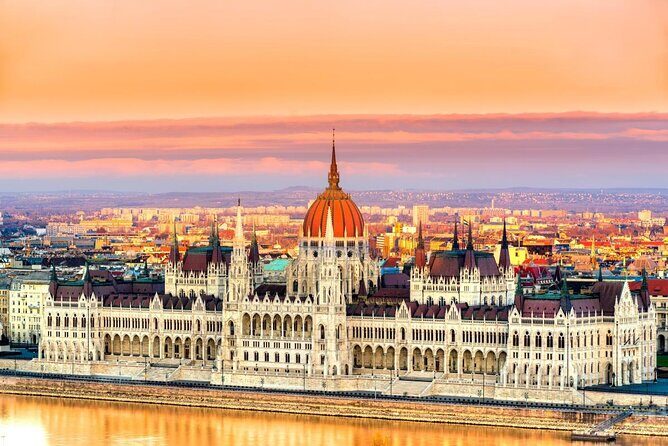
- Ending at Hungarian Parliament Building: neo-Gothic, recent history, and next-step planning
- What guides do especially well here (from the vibe you’ll feel)
- Who this tour suits best
- Should you book Budapest City Landmarks Walking Tour?
- FAQ
- Where does the tour start and end?
- How long is the tour?
- What language is the tour offered in?
- Do we enter Szent István Basilica?
- How many people are in a group?
- Is the tour guide’s service fee included in the price?
Key things you’ll notice (fast)
- Small-blue-flag meeting point near the Budapest Eye makes it easier to start with confidence.
- A true city overview that pairs landmarks with “what to do next” advice for your free time.
- Photo stops with purpose, from the Little Princess Statue to UNESCO-listed river views.
- Food and culture tips on the way, including how to spot tourist traps.
- Serious memory on the Danube at Shoes on the Danube Bank, not just a quick look.
Price and what you’re really paying for
At $3.63 per person, this is priced like a budget sampler. The fine print matters, though: the booking fee covers administration, and it does not go to the guide. Guides depend on what you choose to donate at the end, so think of that as part of the real cost of the experience.
That said, the value still makes sense for what you get. In two hours, you get an organized route, a narrative thread through Pest’s key sites, and a bunch of practical guidance you can use the rest of the day. If you’ve ever wandered Budapest for hours and still felt unsure what you just saw, this tour is built to prevent that.
You can also read our reviews of more walking tours in Budapest



Meeting at Erzsébet tér: look for the small blue flag
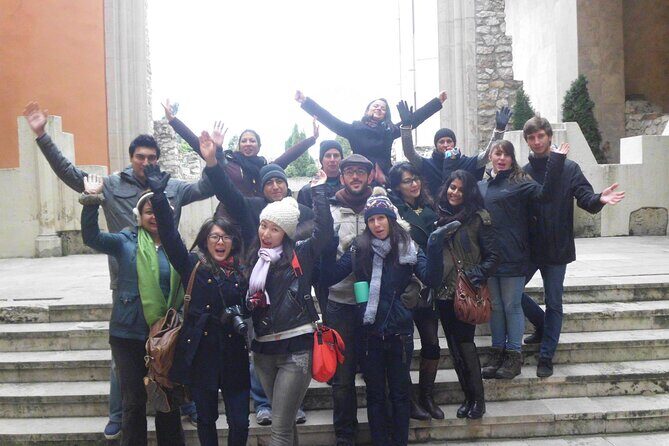
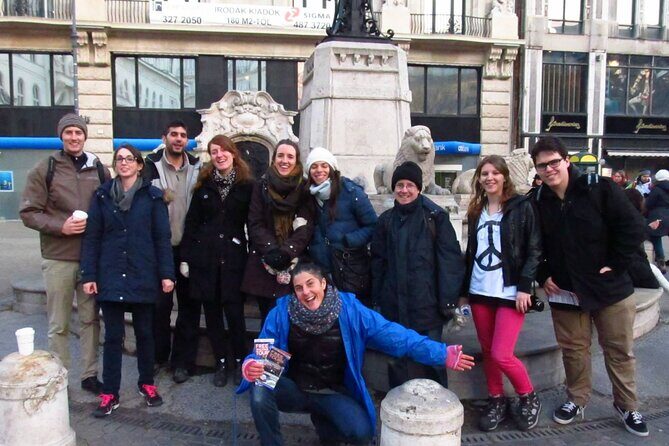
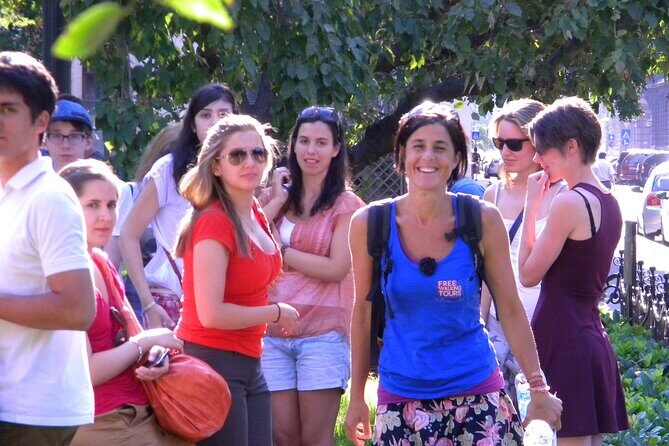
You start at the Ferris Wheel of Budapest on Erzsébet tér. The guide meets you about 20 meters from the Budapest Eye on Elisabeth Square, holding a small blue flag.
Here’s my practical advice: arrive a few minutes early, and don’t overthink it. Use the Budapest Eye as your anchor. If you’re standing near it and still unsure, check again and wait a moment for your group to gather. One good rule in a city like Budapest is to avoid last-second panic. This tour moves along, and the meeting point is your one job before the walking begins.
Erzsébet tér to St. Stephen’s Square: the city’s big story in walking form
The first stop is at Erzsébet tér, right by the Budapest Eye. This is where the guide sets the tone. You’ll get an overview that’s not just dates and rulers. Expect a mix of history, architecture, public art, and how people actually live and think. You’ll also get basic Hungarian and quick references that help you read the city as you walk.
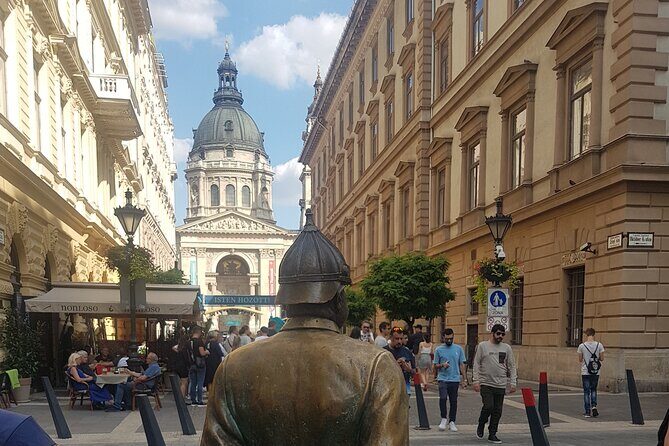
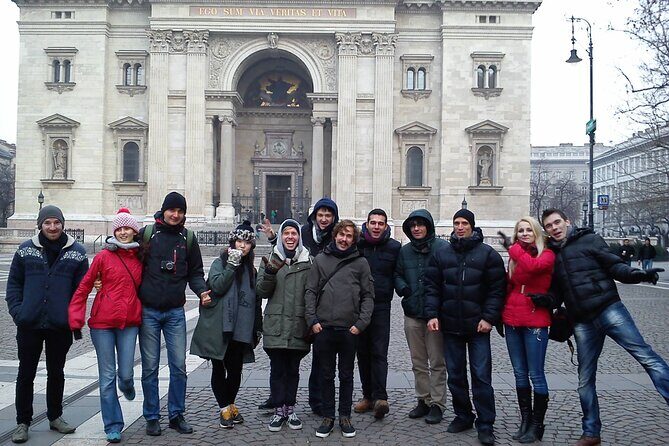
Then the tour heads to Szent István Bazilika (St. Stephen’s Basilica area). Even though you don’t go inside, the guide frames why this building matters. You’ll learn it’s the largest church in Budapest, with seating for around 8,500 people. You’ll also hear how its architecture reflects different periods of splendor, almost like a timeline you can see in stone. And since the stop is in a pedestrianized space, you can take in the basilica and the surrounding streets without the hassle of traffic.
From there you roll into St. Stephen’s Square, where public art does some of the talking. You’ll see the famously cheeky public art about fat policemen with shiny bellies. It’s light in tone, but the guide uses it as a launch point into Hungarian culinary culture. The food talk is specific: how cooking evolved, what’s worth eating in Budapest, and how to avoid tourist traps. If you’re the type who likes a plan for meals, this part is more useful than it sounds.
Jozsef Nádor tér and Vorosmarty tér: porcelain, people-watching, and the underground fact
Next comes Jozsef Nádor tér. This stop is short, but it’s packed with local references. You’ll learn about the most Hungarian Habsburg and then get a visual treat: Herendi hand-painted porcelain and Zsolnay colorful, glazed ceramic masterpieces. Even if you’re not a ceramics person, it helps to see what Hungarian craftsmanship looks like in real public spaces, not just in museum displays.
Then the route reaches Vorosmarty Square. This is one of those places where you can learn a lot just by watching. It sits at the end of Váci útca, so you get that classic central pedestrian-street energy, plus space to breathe.
Two standouts here:
- You’ll hear about the second-oldest underground in the world, including a terminal nearby.
- You’ll get pointed context about the neo-classical-style buildings and the famous Gerbaud café, plus how Christmas markets and traditions work in Budapest.
If you’re visiting around the holidays, this is useful early intel. If you’re not, it still helps you understand why the city’s seasonal street life is so strong.
Danube embankment views and the Korzo tram stretch: UNESCO on foot
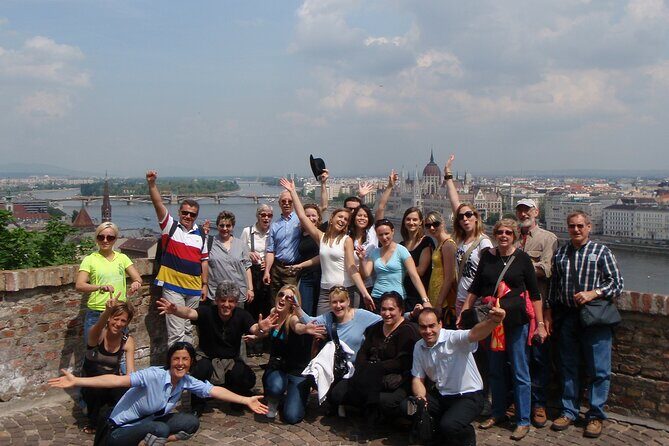
The walk then swings to Korzo – Danube Embankment (Dunakorzo). This is where Budapest really starts showing off. You’ll be taught to connect the dots across the riverfront: the panoramic tramline, the riverside buildings, and the big viewpoints toward Castle Hill—think Matthias Church, Fisherman’s Bastion, Buda Castle—and further on to Gellért Hill with the Citadel.
One of the tour’s strengths is that the guide doesn’t just name sights. You’ll learn how they relate to each other, including that many of these views connect to UNESCO World Heritage designations. On your own, you can look at the skyline and still miss the logic. Here, you get a map in your head.
This is also one of the photo-friendly segments. Bring your phone battery habits: take pictures, but don’t stop walking at every sight. The tour is built as a sequence, so your best photos often happen when you keep moving and pause at the guide’s cue.
You can also read our reviews of more city tours in Budapest





Little Princess wishes and Vigadó tér: fun stops with cultural weight
After the riverfront segment, you make a very brief stop at the Little Princess Statue. The ritual is simple: making a secret wish while touching the shiny knees. It’s silly in the best way, and it gives you a quick mental reset before the tour turns more serious later.
Then you head to Vigadó tér. This stop is about music and monarchy-era ceremony. You’ll learn that it’s tied to the coronation banquet of Franz Joseph and Sissy (in the 19th century) and that outstanding Central European musicians such as Franz Liszt, Debussy, and Brahms were playing there.
What I like here is the contrast. Budapest can swing between monumental and playful fast. You get both, and you understand why they’re part of the same city.
Szechenyi Lánchíd and the Chain Bridge story
Next is a short stop at Szechenyi Lánchíd (Chain Bridge), where the guide tells the story of Pest and Buda through the bridge. You’ll hear that the Chain Bridge was the first permanent bridge built in the city.
This is the kind of stop that pays off later. Once you know the bridge’s role, you’ll naturally interpret what you’re seeing when you cross it or look at it from other points. It’s not just a landmark name; it’s a hinge in the city’s growth.
Gresham Palace and the Art Nouveau moment
Then comes Gresham Palace, another short but meaningful stop. You’ll learn about the secessionist style building from Budapest’s golden age around the turn of the century, and you’ll get guided attention to the major Art Nouveau ornaments.
This is a good example of why this tour works for your whole trip. Budapest has so many architectural styles that can blur together if you’re just snapping photos. Here, the guide points out what makes a particular facade special so you can later recognize it without a narrator.
Hungarian Academy of Sciences: language prompts and Nobel-prize bragging rights
At Hungarian Academy of Sciences, the tour shifts from streets and buildings to ideas. The guide teaches you Hungarian words and phrases meant to help you sound confident with locals.
You’ll also learn why Hungary has the largest number of Nobel prize awards per capita, and you’ll hear about famous people of Hungarian origin plus Hungarian inventions that you might miss in daily life. Even if you’re not a stats person, it’s a morale boost. Budapest isn’t only romance and ruins. There’s real intellectual punch behind the scenes.
Shoes on the Danube Bank: a moment that stays with you
Then you reach Shoes on the Danube Bank, with 60 pairs of shoes set along the river. This memorial commemorates the 60th anniversary of the Holocaust. The guide talks about WWII history, deportations, and the more recent history of the Hungarian Jewish people.
The emotional structure here matters. You’re asked to close your eyes and imagine the individuals who died here, spanning everything from synagogue-goers to assimilated Jewish people, from older grandmothers to children and grandchildren, and across class lines. It’s not a quick photo stop. It’s a pause meant to slow you down and make the memorial more than an object.
This is the one stop where your best behavior is patience. Walk up with respect, listen closely, and let it land. It’s heavy, but it’s also part of understanding Budapest honestly.
Ending at Hungarian Parliament Building: neo-Gothic, recent history, and next-step planning
The final stop is the Hungarian Parliament Building. The guide explains recent history and elections, then frames the building’s neo-Gothic architecture as part of a larger story.
You also get the practical payoff at the end: useful recommendations about restaurants, nightlife, and what to do on your next days. In my experience, this is where the tour becomes more than sightseeing. A good guide turns the city from a list into a plan.
If you’ve ever left a walking tour and thought, Okay, now what, this avoids that. The route ends with context and options, so you can move from seeing to doing.
What guides do especially well here (from the vibe you’ll feel)
A lot of guides in this format can throw facts at you. This one tends to work differently: the guide uses a pace that lets you hear clearly, and many tours also use a speaker so the group isn’t straining to catch every word. I’ve seen guides handle larger groups smoothly without turning into a lecture.
You’ll also notice humor and personality. Some guides lean into funny city comparisons and quick cultural observations. Others focus on stories and answers, including Hungarian language prompts and practical food advice. Names you may run into include Balázs, Sofia, Esther, Marton, Andy, Sophie, Endre, Dóra, Judith, Rita, Gary, Emmy, Dora, and Andi. Different personalities, same core idea: help you understand Budapest quickly and move through the city with confidence.
Who this tour suits best
This is ideal if:
- It’s your first day in Budapest and you want a city overview fast.
- You like guided context more than reading on your own.
- You want food guidance that helps you avoid the worst tourist traps.
- You’re okay with not entering buildings, as long as you get the stories behind them.
It’s less ideal if:
- You specifically want to go inside Szent István Basilica during this slot.
- You hate walking outdoors for a couple of hours, rain or shine.
Should you book Budapest City Landmarks Walking Tour?
Yes, if you want a smart first move. For a low upfront price (with the booking fee handled separately), you’re getting a tight route, clear storytelling, and real planning help at the end. It’s especially worth it if you want your Budapest trip to feel intentional rather than random.
Book it early in your visit. The food talk, the architecture framing, and the final recommendations are most useful when you still have time to act on them.
If you want to do this tour and also see interiors, just treat it like the orientation layer. Then add the inside visits you care about most on your own schedule.
FAQ
Where does the tour start and end?
It starts at the Ferris Wheel of Budapest on Erzsébet tér (Budapest Eye area) and ends at the Hungarian Parliament Building near Kossuth Lajos tér 1–3.
How long is the tour?
Plan for about 2 hours (approximately).
What language is the tour offered in?
The tour is offered in English.
Do we enter Szent István Basilica?
No. The tour discusses and views the basilica area, but it does not enter the Basilica.
How many people are in a group?
The tour has a maximum of 30 travelers.
Is the tour guide’s service fee included in the price?
The listing price includes a booking fee. Tips are not included, and guides rely on donations at the end, with the amount being your choice.