Budapest hides messages on every wall. This Budapest street art walk turns District VII side streets into an easy-to-follow guide, with ET explaining the meaning behind murals, stickers, and wall text in plain language. I especially like how the tour helps you read the why, not just the what.
I also love the small group size (capped at eight), which keeps the pace calm and makes it easier to ask questions. The main drawback to consider is that it’s a walking-heavy experience, with thin streets and lots to spot, so comfy shoes matter.
You start at Telep-Art Galéria Budapest on Madách Imre út, then end at Szimpla Kert, one of Budapest’s best-known ruinbar landmarks. If you want a first-day kind of tour that changes how you look at the city afterward, this is a fun, offbeat choice.
In This Review
- Key points to know
- Budapest street art in District VII: a walk that reads the city
- Telep-Art Galéria Budapest: meeting point with real street-art energy
- Narrow streets, stickers, bronzes, and big murals: what you’ll spot
- ET’s street-art decoding: the meaning behind the messages
- Szimpla Kert finish: ending at Budapest’s famous ruinbar
- Price and time: is $36.20 worth two hours of walking
- Who should book this alternative walking tour
- Should you book now or pick a different Budapest tour
- FAQ
- How long is the Budapest street art tour?
- What is the price per person?
- Is the tour offered in English?
- What’s the maximum group size?
- Where does the tour start and end?
- Do I get a ticket on my phone?
- Are service animals allowed?
- When should I book, and what if I need to cancel?
Key points to know
- Max 8 travelers keeps it personal and interactive with ET.
- District VII street focus means you see more than the usual tourist murals.
- Multiple street-art types come into play: stickers, large wall paintings, and other formats.
- Slow walking on thin streets helps you stay oriented and not feel rushed.
- Clear English explanations for the meaning and the politics behind the images.
- Finish at Szimpla Kert so you can keep the evening going right after.
Budapest street art in District VII: a walk that reads the city
This is not a museum-style art lesson. It’s a city walk built around street art’s real job: to comment, persuade, protest, joke, and get noticed. If you’ve ever walked past a mural and wondered what it’s actually saying, you’ll be in the right mindset here.
The tour is designed to help you see with purpose. ET points out details most people miss when they’re just moving from one famous site to the next. And because the group is small, you get time to ask what you’re seeing and why it might exist in the first place.
Expect an alternative Budapest vibe, with a strong street-level focus. Some of the themes are political, and that’s part of the point. If you prefer art that stays neutral and decorative, you might find the subject matter more opinionated than you expect.
A few more Budapest tours and experiences worth a look

Telep-Art Galéria Budapest: meeting point with real street-art energy
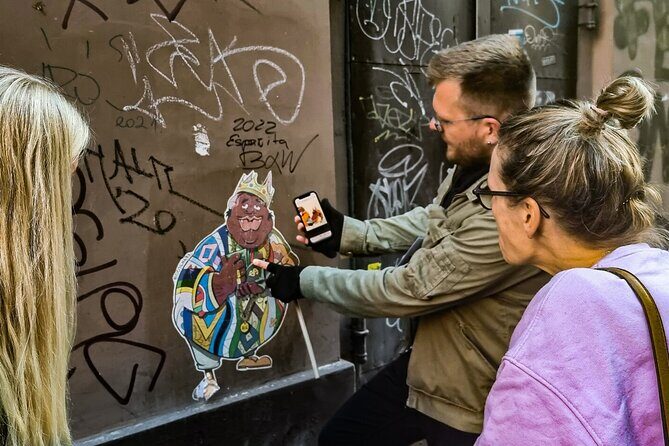
You meet at Telep-Art Galéria Budapest, Madách Imre út 8 (1075 Hungary). I like this start because it feels grounded in the local scene rather than a generic pickup point. It also puts you close to the neighborhood streets you’ll be walking through, so you don’t burn time commuting.
ET runs this as a guided walk, not a long lecture. You’ll get instructions that make it easier to follow along, and you’ll quickly learn what to look for once you step outside. In other words, you’re not just paying for sightseeing—you’re paying for a way to interpret what’s already around you.
One practical note: since the walk is on thin streets, you’ll want to keep your group rhythm and follow the guide’s cues. It’s usually the kind of pace that feels friendly, but it’s still a walk through a real neighborhood.
Narrow streets, stickers, bronzes, and big murals: what you’ll spot
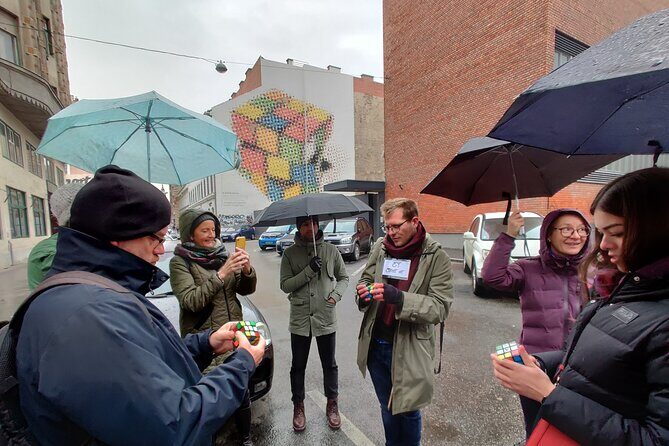
The tour centers on walking slowly and stopping frequently to check out different kinds of street art. You’ll see more than one style and more than one surface. Street art here can be paint on walls, pasted stickers, and larger images that people can spot from farther away.
The mix is one of the big reasons this tour works. One review mentions everything from stickers to smart-art style images and even bronze sculpture elements. Even if you don’t memorize each format, you’ll learn the habit of noticing: how placement, size, and style change what a piece is trying to do.
You’ll also start looking at “in-between” spaces. Alley edges, corners, and small wall sections that normally blend into the background become part of the story. That’s what makes this a worthwhile two-hour investment: it trains your eye for the rest of your Budapest time, not just the tour itself.
The “thin streets” part is worth repeating. This isn’t a wide boulevard stroll. If you’re sensitive to crowds or tight sidewalks, wear good footwear and be ready for close-up viewing.
ET’s street-art decoding: the meaning behind the messages
Street art isn’t only about aesthetics—it’s about messaging. ET explains what the art might be saying, not just what it looks like. He ties pieces to the social and political context that shaped artists in the area, including how European street artists use different media.
A big theme in the tour is interpretation. You’ll learn how to look at symbols and wording, and how to think about tone. Some art on the street is trying to provoke; some is trying to document; some is trying to rally people. By the time you finish, you’ll probably notice the difference between art that’s mainly decorative and art that’s clearly making an argument.
You’ll also get an interactive feel. ET answers questions and keeps conversations moving with the group. Reviews mention groups with different nationalities and ages, and that variety can make the discussion more interesting because people bring different frames of reference. If you like two-way conversation on tours, this is a good fit.
One more useful detail: ET shares resources, including Instagram pages, so you can keep exploring after the walk. That turns the tour into a starting point, not a one-and-done activity.
Szimpla Kert finish: ending at Budapest’s famous ruinbar
The walk ends at Szimpla Kert, Kazinczy u. 14 (1075 Hungary). The tour description notes it as one of Budapest’s symbols and the city’s oldest ruinbar, which makes a satisfying landing point.
This matters for two reasons. First, you’ll finish in a place that’s easy to return to for later plans. Second, the vibe fits the theme: street culture meets a recognizable local landmark. It’s the kind of ending that helps the experience feel complete instead of abruptly stopping in an empty spot.
If you want a practical next step, plan to grab a drink or snack at Szimpla Kert afterward. Even if you don’t stay long, it’s an efficient place to reset and orient yourself for the rest of your evening.






Price and time: is $36.20 worth two hours of walking
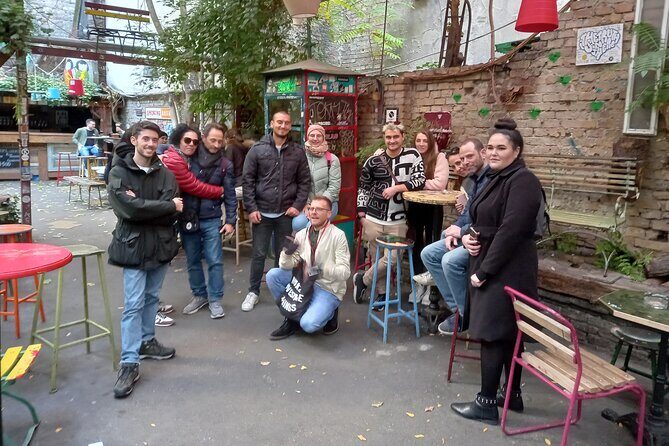
The price is $36.20 per person for about two hours, offered in English with a mobile ticket. On paper, it’s “just” a walking tour. In practice, it’s a focused art-and-context session where the guide teaches you how to read what’s around you.
Where the value comes from:
- Small group (up to eight) means you’re not lost in the back of a crowd.
- High attention to meaning helps you get more from every wall you pass.
- Multiple street art formats keep the walk from feeling repetitive.
- A clear ending point near a major local landmark makes your time easier to plan.
You’ll want to treat it as part sightseeing and part learning. If you’re the kind of traveler who likes casual walking but also wants the story behind what you’re seeing, the cost makes sense.
The main “value trade-off” is physical effort. This tour is built around walking slowly and looking closely, so if you’d rather sit and take photos, you may prefer a different style of tour. The time is short, but it’s still a walk.
Who should book this alternative walking tour
This is a strong pick if you’re traveling with one of these goals:
- You want District VII and street culture without getting lost.
- You like art that has opinions and politics, not only pretty imagery.
- You want a guide who can answer questions while you walk.
- You’re visiting for the first time and want a fresh angle on Budapest right away.
It can also work well for families, since one review explicitly calls it a good option for different ages. And because it’s in English and built for “most travelers,” it’s approachable if you’re not an art specialist.
Who might hesitate:
- If walking for two hours on narrow streets sounds exhausting, you’ll feel that here.
- If you prefer quiet, purely historical sightseeing with minimal controversy, the street-art messaging may feel too direct.
If you fall in the middle—curious but not sure—this is still worth considering because ET’s explanations are part of what makes it click. You come away with a new habit: spotting details everywhere.
Should you book now or pick a different Budapest tour
Book it if you want Budapest to feel like a living city, not a checklist. For $36.20, you’re buying a guided way to interpret the street-level art scene, guided by ET, with a small group pace and an ending at Szimpla Kert so your plans don’t collapse after the tour.
Skip it if you want minimal walking, or if you strongly prefer mainstream sights over alternative neighborhood culture. Also skip if you get uncomfortable with political or critical themes, since street art often talks back.
One last practical thought: this experience is often booked about 25 days in advance, so don’t leave it to the last minute. If your schedule is fixed, grab a slot that fits your day while you still have options.
FAQ
How long is the Budapest street art tour?
It runs for about 2 hours.
What is the price per person?
The price is $36.20 per person.
Is the tour offered in English?
Yes, the tour is offered in English.
What’s the maximum group size?
The tour has a maximum of 8 travelers.
Where does the tour start and end?
It starts at Telep-Art Galéria Budapest, Madách Imre út 8, 1075 Hungary and ends at Szimpla Kert, Kazinczy u. 14, 1075 Hungary.
Do I get a ticket on my phone?
Yes, it includes a mobile ticket.
Are service animals allowed?
Yes, service animals are allowed.
When should I book, and what if I need to cancel?
On average, it’s booked 25 days in advance. You can cancel up to 24 hours before the experience for a full refund.