REVIEW · BUDAPEST
Budapest Historic Downtown Bicycle Tour in small groups
Book on Viator →Operated by BIKE & RELAX - Bike Tours and Bike Rental · Bookable on Viator
Budapest clicks into place on two wheels. This small-group bike tour uses a live guide to connect the dots between the Jewish Quarter, Andrassy Avenue, City Park, and the Danube in about 3.5 hours.
I love how smoothly it layers major landmarks with street-level context as you ride, so the city feels more like a story than a checklist.
One thing to consider: this isn’t for beginners, since you’ll mix in city streets and traffic at times while staying under a safe guide-led pace.
In This Review
- Key takeaways before you book
- Budapest on two wheels: how the 3.5-hour plan really works
- Price and what you actually get for $41.13
- Meeting point, timing, and the vibe on departure
- Small group size: why it matters on busy streets
- The early ride: Rumbach Street Synagogue and Liszt Academy
- Andrássy Avenue to the House of Terror: a guided street-history shortcut
- Heroes’ Square: Central Europe in one glance
- City Park in motion: ice rink vibes, Vajdahunyad Castle, and modern halls
- Andrassy Street highlights: Opera and St. Stephen’s Basilica from the outside
- Szabadság tér and Parliament: grand views with a somber edge
- Baths and bridges: Rudas, Gellért, and Liberty Bridge viewpoints
- Central Market and the Jewish Quarter finish: what to do next
- Guide quality and pacing: the difference between good and great
- Bikes, helmets, and comfort details that actually matter
- Who should book this bike tour (and who should skip it)
- Should you book the Budapest Historic Downtown Bicycle Tour?
Key takeaways before you book
- Small-group size with real-time guidance keeps you together and moving at a comfortable rhythm
- Big sights without building entry means you see the essential exterior highlights fast
- Street art and historic architecture near Rumbach Synagogue and Liszt Academy set the tone early
- Heroes’ Square to City Park packs monuments and modern architecture into one easy ride segment
- Danube viewpoints focus on Parliament panorama, Shoes on the Danube Bank, and key bridges
- Practical inclusions: bike, bottled water, helmet option, and free luggage storage
Budapest on two wheels: how the 3.5-hour plan really works
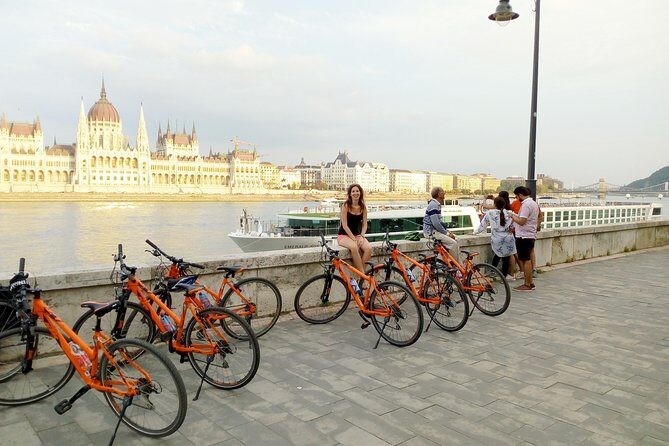
This is the kind of tour that helps you get your bearings fast. You start in central Budapest, then follow a route that links the historic core with the grand avenues and major Danube landmarks, all while you’re seated on a bike instead of stuck walking.
The best part is how the stops are chosen. You get short pauses at the places that shape the city’s identity—then you roll on before you lose momentum. It’s a “see it, understand it, move on” style of sightseeing that fits a half day perfectly.
You can also read our reviews of more historical tours in Budapest


Price and what you actually get for $41.13
At around $41.13 per person, you’re not just paying for a rental bike. The price includes a live guide, bottled water, and free luggage storage during your ride. You also get a helmet (not obligatory), which is a nice practical touch for comfort and safety.
Because entrance fees are not included, you’re paying mainly for guiding, route design, and the ability to cover a lot of ground without logistics headaches. If you’re the type who hates waiting in lines or paying for each stop, that structure can feel like good value.
Meeting point, timing, and the vibe on departure
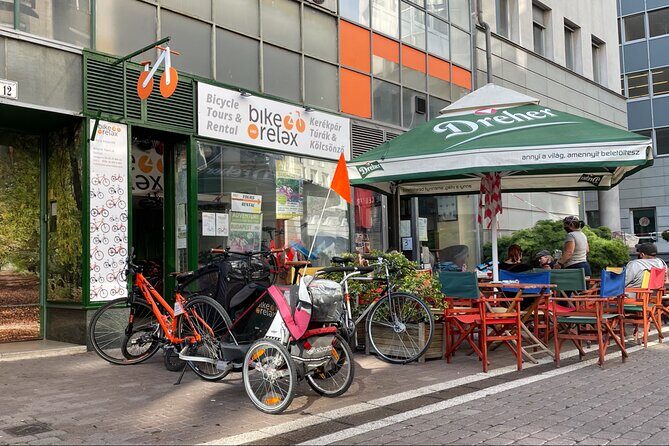
The tour starts at 10:30 am and meets at Budapest, Madách Imre út 12, 1075 Hungary. It ends back at the same place, so you don’t have to worry about finding your way across town afterward.
The duration is listed at about 3 hours 30 minutes, but plan for something close to that range. One of the nicest features is that the pace is managed for group riding, not for a single fast cyclist.
Small group size: why it matters on busy streets
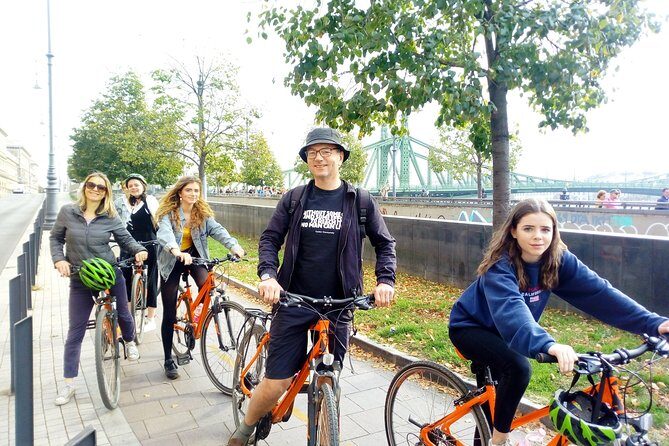
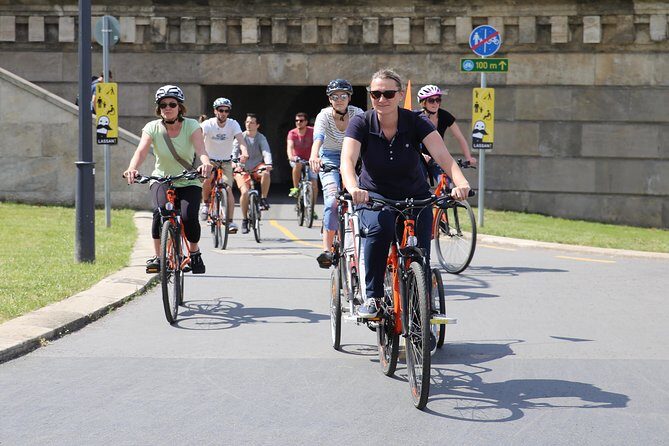
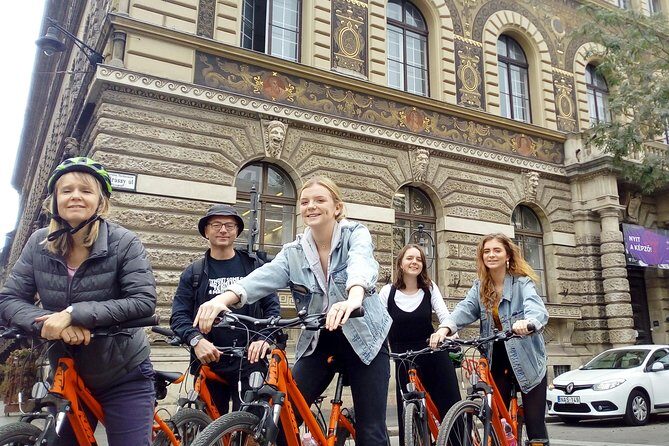
You’ll ride in a small group. The tour highlights mention a cap of up to 14 travelers, while the operator info lists a maximum of 10—either way, it’s meant to stay intimate and manageable.
That size helps in two ways. First, the guide can actually keep track of everyone at intersections. Second, it’s easier to hear the story behind each stop, because you’re not listening over a crowd of people drifting in ten directions.
The early ride: Rumbach Street Synagogue and Liszt Academy
Your tour opens with a quick get-settled moment at Bike & Relax, then you head into the Jewish District edge. At Rumbach Street Synagogue, you’ll see an art deco landmark wrapped in a street-scene that also includes Budapest’s street art personality. You’re not going inside, but the exterior stop gives you a strong visual anchor for the area.
Next comes Liszt Academy, the Music Academy building near the Jewish District. Even from outside, the architecture and the active student setting give you a sense of Budapest as a city that still runs on music, not just postcards.






Andrássy Avenue to the House of Terror: a guided street-history shortcut
A major segment of the route follows the famous “connect-the-dots” street linking the center to Heroes’ Square and City Park. You’ll pass important named areas along the way, including Nagymező Street, often described as the Broadway-style street of Budapest, and Liszt Square.
On this stretch, you’ll also come by the area connected to House of Terror. You’ll stop to see it from the outside—this is former GESTAPO headquarters and a later communist-era prison, now presented as a museum (but you won’t enter). There’s a striking feature in front: a portion of the Berlin Wall displayed there, which makes the history feel less abstract.
This is one of those stops where the guide’s commentary matters most. The building isn’t just an object to photograph. It’s evidence of how power can reshape everyday life.
Heroes’ Square: Central Europe in one glance
Then you roll into Heroes’ Square, with a free stop designed for learning, not rushing. The square was created to celebrate the 1000-year anniversary of Hungary in 1896, and the monumental layout helps you understand how the story of the region gets told in statues and symbolism.
The topic stays focused: you get a historical overview from key figures like King Stephen to revolutionary Kossuth. It’s basically Central European history in a compact form, which is perfect when you only have one half-day to orient yourself.
City Park in motion: ice rink vibes, Vajdahunyad Castle, and modern halls
From Heroes’ Square, you move into City Park (Varosliget), Budapest’s big green pause in the middle of the city. Depending on the season, you’ll pass the ice rink in winter or an artificial lake meant for boating in summer.
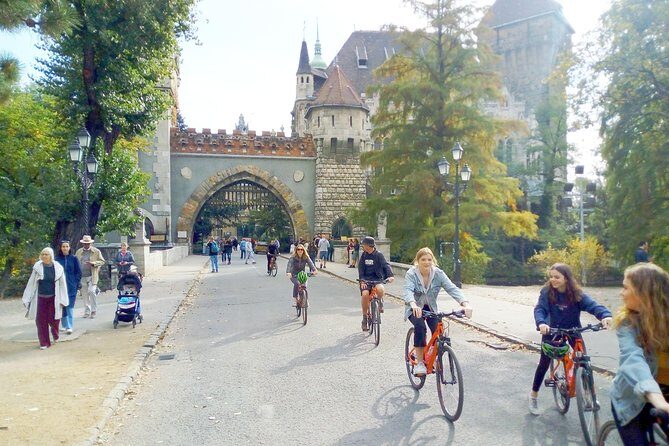
The ride keeps the “wow” factor coming. At Vajdahunyad Castle, you’ll see the famous “fake castle” concept and hear why it exists. You’ll also spot the statue of Anonymous, which is one of those local details that makes the scene feel less generic once the guide explains it.
Then it turns contemporary. You’ll admire House of Music Hungary, a modern concert hall with stand-out architecture. Nearby, the Museum of Ethnography gets a stop too—again, you’re admiring from outside, but the building’s unusual shape and its park-edge views are part of the point.
One practical note: the park segment is open and exposed. If it’s windy, you’ll feel it. Layers help a lot.
Andrassy Street highlights: Opera and St. Stephen’s Basilica from the outside
Back on the city axis, the route hits Hungarian State Opera on Andrássy Avenue. You won’t go inside, but you do get time to appreciate the architecture credited to Michael Ybl, plus the larger idea of Andrássy Avenue as a UNESCO-protected ensemble. You’ll also learn about the historical M1 subway connection, which adds a transportation-history layer to the architecture.
Next up is St. Stephen’s Basilica (Szent Istvan Bazilika). You won’t enter the church, but you’ll still see a signature feature: the right hand of St. Stephen displayed under glass. Even without a church interior visit, it’s a visual moment that helps you understand why this building is considered a highlight of Downtown.
Szabadság tér and Parliament: grand views with a somber edge
At Szabadság tér, you’ll get a street-level contrast between today’s office-street feel and the place’s heavier past. The stop references controversial memorials and a somber reminder linked to the Holocaust and World War II in Budapest.
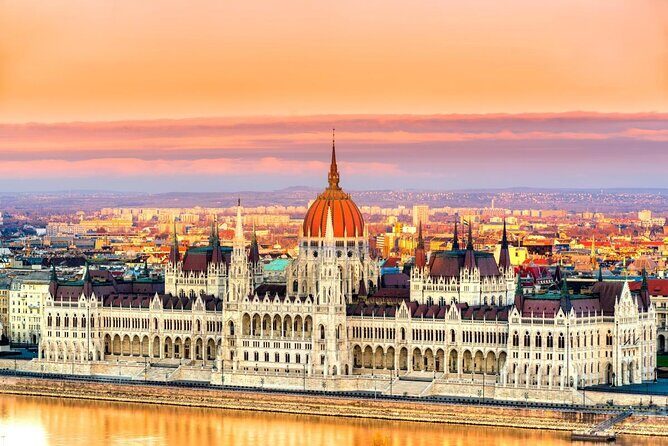
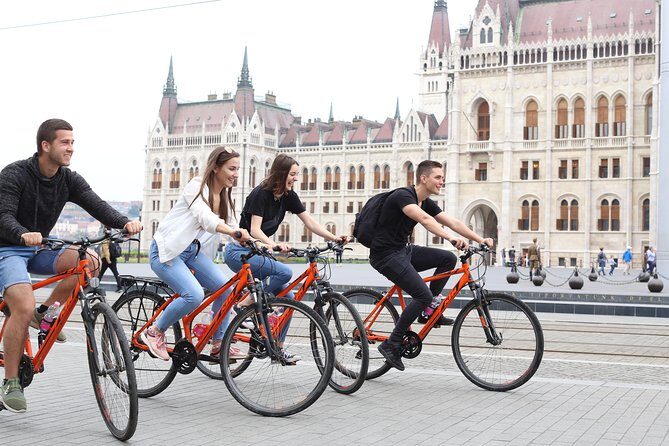
Then you arrive at the Hungarian Parliament Building on the river bank. This is an exterior-only stop, but it’s still worth it. From here, you get a strong panorama back across the Danube, including the Buda side.
And right after that, you pass the Shoes on the Danube Bank memorial. The tour notes that direct access can depend on traffic, so you may not always get the most comfortable photo angle. Still, the idea is clear: this is a place where the history sits at ground level.
You’ll also pass Chain Bridge, the oldest bridge across the river. You don’t park and linger here like you do at the main stops, but seeing it in motion is a good way to connect the Danube visuals across different parts of the route.
Baths and bridges: Rudas, Gellért, and Liberty Bridge viewpoints
As you ride the river corridor, you’ll pass Rudas Baths, one of the oldest Turkish baths in Budapest. The key point here is what the tour is offering: you’re not getting a bath visit, but you are seeing why these bath complexes are such a big deal in Budapest’s culture.
The tour also notes the Hammam schedule concept—men-and-women days—which can help you decide if you want to plan your own time later. If baths are on your list, this is a good “preview from the bike” moment.
You’ll continue on and have another bath-related pass on the Buda side at Gellért Baths. Then the route crosses into the next visual chapter at Liberty Bridge (Szabadság hid). This bridge is a meeting point for students and young people, and the viewpoint helps you see Budapest as a living city, not just a museum.
Central Market and the Jewish Quarter finish: what to do next
On the way back toward the end, you pass the Central Market area. It’s a reminder to plan a return visit if you want to try Hungarian food and soak up the market atmosphere.
You also pass the National Museum, a good cue for anyone who’s hungry for more on the region and the peoples connected to it.
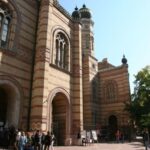
Finally, you end with an exterior stop at the Great/Central Synagogue (Nagy Zsinagoga) at the border of the Jewish Quarter. It’s in a Moorish style, and you’ll see it up close as a landmark. The tour does not include entry into the synagogue, but it still works as a strong visual closer before you ride back to the meeting point.
Guide quality and pacing: the difference between good and great
This tour lives or dies on the guide. In the best versions of this experience, the guide balances safety, pacing, and clear storytelling at every stop. You’ll want someone who can keep the group together while still giving you enough detail to make each landmark click.
You may meet guides such as Oliver, Tomas, Dori, Balint, Valentin, Katalin, or Karol (names that show up for this style of tour). Across them, the common theme is simple: short stops, useful context, and a pace that feels controlled rather than rushed.
If you’re the kind of rider who wants time for photos, you should still be realistic. The route is packed, so you’ll get quick opportunities rather than long photo sessions. That trade-off is part of the value.
Bikes, helmets, and comfort details that actually matter
You’ll be provided a bicycle, and you’ll also have free luggage storage during the tour. That matters if you’re arriving with shopping bags or a day pack you don’t want bouncing while riding.
Helmets are included but not mandatory. For me, that’s still a “good idea” given wind and traffic mix, especially on bridges and open park edges. One of the best practical tips from riders is to wear layers and bring gloves and a hat for wind.
There are also constraints worth noting:
- Weight limit is 110 kg
- The tour is not recommended for beginners
- Not recommended for people with visual impairment
- Children must be with an adult
Who should book this bike tour (and who should skip it)
Book this if you want a fast, guided loop that hits the headline Budapest sights in one morning. It’s especially good for first-time visitors who want orientation plus some meaningful historical context at the places where Budapest’s story is complicated.
I’d also recommend it if you like cycling and prefer sightseeing without hunting for entrances, tickets, and lineups. Even with exterior-only stops, the combination of architecture and Danube landmarks makes it feel like a full experience.
Skip it if you’re a shaky rider or you mostly avoid bikes in traffic. Even when the terrain is friendly in parts, you still need confident control and attention.
Should you book the Budapest Historic Downtown Bicycle Tour?
If your goal is to see the essential Budapest route in one half day, this tour is an efficient choice. At its price point, you’re paying for a guided circuit that strings together Andrassy Avenue, Heroes’ Square, Parliament, and Danube memorials with practical inclusions like bike, water, and luggage storage.
I’d book it if you’re comfortable riding on city streets and you want the guide to connect the dots for you. I’d reconsider if you’re a beginner, you’re sensitive to traffic noise, or you need long stops for photos, food, or restroom breaks.