REVIEW · BUDAPEST
Grand Segway Tour of Budapest – Private Tour with Coffee Stop
Book on Viator →Operated by Segway Tours Budapest by GetSegway™ · Bookable on Viator
Budapest moves fast on a Segway. This private 3-hour ride strings together Buda and Pest icons with guides like Beka, Sam, and Hose keeping the pace friendly. I like how you get big, photo-ready stops without the usual shuffle of buses and crowds—plus you can ask for small changes as you go.
I also love the training-first approach. Even if it is your first time (or you have kids), you start with an orientation session and learn the Segway basics before heading into the streets. Guides have been praised for staying patient and safe, including Beka helping a child keep control during traffic.
One thing to consider: the check-in can be a little chaotic. One guide start was delayed due to a previous tour, and you should assume timing can shift a bit at the shop, even though the tour is listed as about 3 hours.
In This Review
- Key points worth knowing before you ride
- Segway-powered highlights: why this route works
- Before you ride: orientation session, helmets, and first-time confidence
- Galamb u. 3 check-in and how the 3-hour plan unfolds
- Fisherman’s Bastion to Buda Castle: the hilltop wow moments
- Chain Bridge crossings and riverfront perspectives
- Váci Street and Vorosmarty Square: Pest’s shopping-and-scene stops
- Heroes’ Square and St. Stephen’s Basilica: big landmarks, quick context
- Opera, Andrássy Avenue, and the elegant long lines
- Vajdahunyad Castle, City Park, and Széchenyi Baths area
- House of Terror, Szabadság tér, and how the guide handles darker stops
- Hospital in the Rock and the Danube memorials: real meaning, not just photos
- Ronald Reagan, Anonymus Szobor, and the final map-points back to Deák
- The coffee stop: what you should expect in real life
- Value check: is $107.68 per person worth it?
- Who should book this private Segway tour?
- Should you book Grand Segway Tour of Budapest (Private) with Coffee Stop)?
- FAQ
- How long is the private Grand Segway Tour of Budapest?
- How much does the tour cost?
- Where do we meet, and where does the tour end?
- Is this tour private?
- Do you provide helmets and rain gear?
- What language is the tour in?
- Is there a coffee stop?
- What are the rules for minors?
- What is the cancellation policy?
Key points worth knowing before you ride
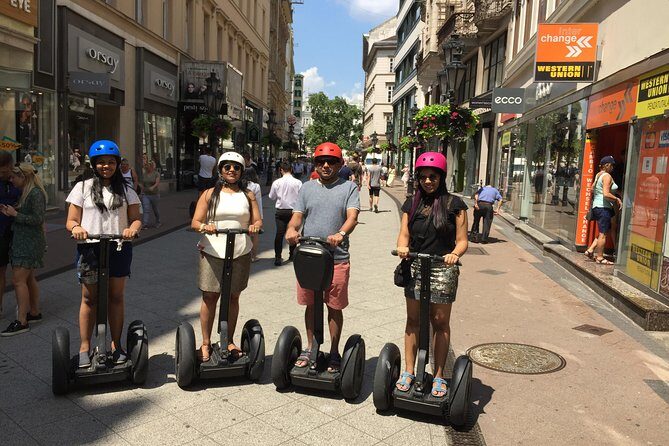
- Private guiding means your route can be adjusted on the fly to match your interests.
- Orientation + helmets (all sizes) make first-time and family rides feel more manageable.
- Fast stop-and-see rhythm covers a lot of Budapest in 3 hours without rushing you through every viewpoint.
- Coffee stop included in the experience name, with some schedules allowing time for it and others running tight.
- A loop across Buda and Pest hits signature sights like Fisherman’s Bastion, Chain Bridge, St. Stephen’s Basilica, and Shoes on the Danube.
- High satisfaction: the tour is consistently rated 5 stars, with about 99% recommending it.
Segway-powered highlights: why this route works
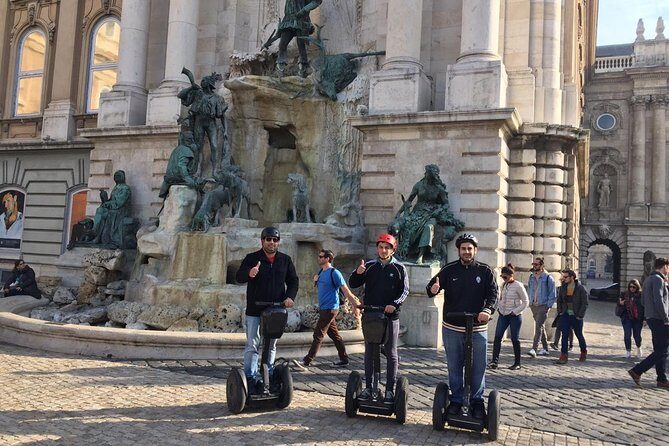
Budapest is perfect for a Segway because the city gives you two things most tours don’t: dramatic viewpoints and efficient ways to move between them. You get the classic hill-and-river story, then you switch to wide boulevards and grand squares. Instead of choosing one side to walk, you cover both within a short afternoon window.
This experience feels especially practical if you’re juggling energy. You still get outside time and fresh air, but you’re not doing a 10-mile hike. You also get a guide who can explain what you’re seeing in the moment, then help you decide what deserves your extra minutes.
And since it’s private, it is easier to avoid the “everyone must stay together” feeling that can make long sightseeing days drag.
You can also read our reviews of more private tours in Budapest



Before you ride: orientation session, helmets, and first-time confidence
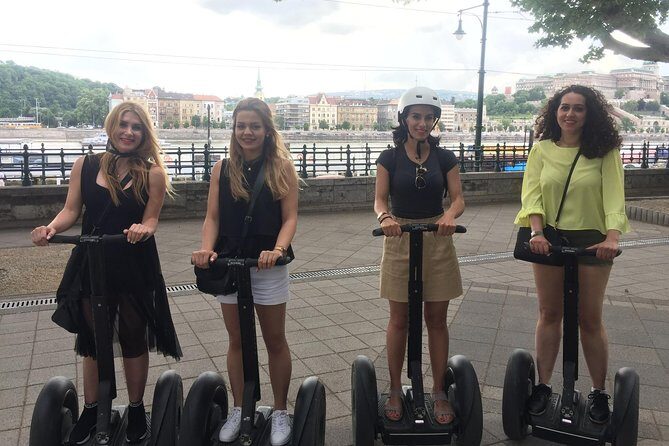
Segways look simple. They are not magic. The best part here is that you do not hop on and hope for the best. You get a supervised orientation session first, with all necessary equipment and helmets in all sizes. If rain shows up, you also get raincoats.
A really common fear is balance. In the feedback, people who had never ridden before said the lessons made it click quickly. One family with two kids reported that after some practice near the start under a bridge area, their children adjusted fast—one child needed hands-on help and the guide physically assisted to keep the ride safe while traffic and turns stayed controlled.
That safety factor matters in a city like Budapest, where you want to focus on the view, not the wobble. The route also benefits from bike and cycle lanes, and guides keep you moving where riding feels predictable.
Galamb u. 3 check-in and how the 3-hour plan unfolds
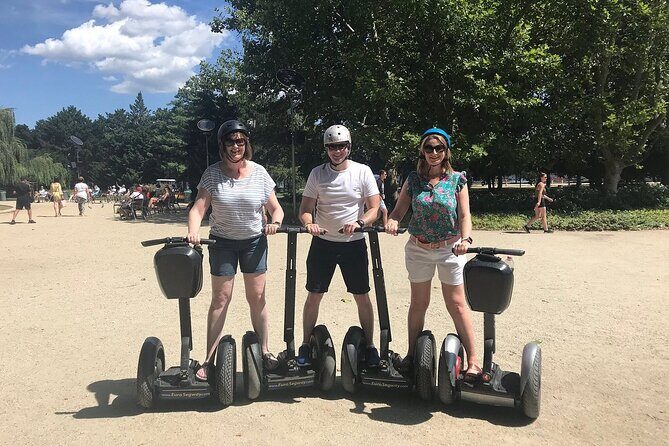
You meet at Galamb u. 3, 1052 Hungary, and the tour ends back at the same place. It is near public transportation, which is handy if you’re pairing it with museums or dinner plans afterward.
Check-in happens at a shop-style location. One person noted that the shop was busy and the training start felt a bit disorganized, including a delayed start due to a previous tour. That does not mean it is unsafe. It does mean you should arrive a few minutes early and be ready for the first 10 to 20 minutes to depend on how other groups are doing.
Once your group is set, the tour settles into a steady rhythm: short orientation, then a ride with multiple stops. You’ll spend about 5 minutes per location for quick context and photos, unless your guide agrees to spend a bit longer where your interests land.
Fisherman’s Bastion to Buda Castle: the hilltop wow moments
The tour kicks off close to the start point, then climbs into the Buda story. The first major payoff is Fisherman’s Bastion. This is one of those places where the city instantly looks more cinematic. Expect sweeping views over the Danube and the Pest side skyline, with your guide explaining what you’re looking at as you roll by.
Right after that, you’re at Matthias Church. Even if you don’t go inside, it’s a strong visual stop. The guide’s job here is to connect architecture with the city’s bigger layers—what this area symbolizes and why it has become one of the postcard favorites.
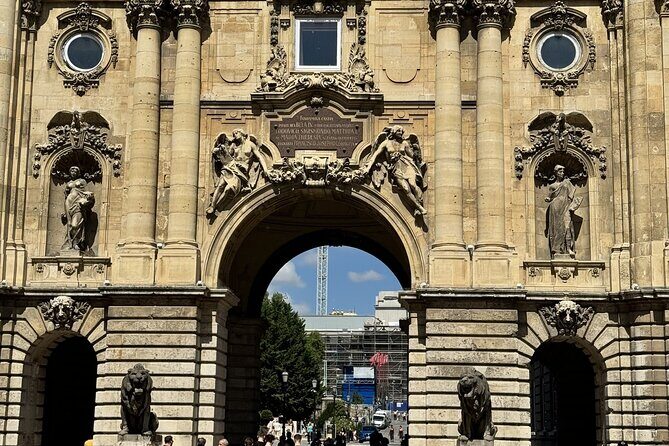
Then the ride swings toward Buda Castle. This is where your Segway matters. Walking up and between viewpoints would take ages. On a Segway, you can keep your momentum and still pause when you want a clearer photo angle.
A practical tip: treat this segment as your “Buda orientation.” If you fall in love with the hilltop views, you’ll know where to return later on foot (or by funicular) for a deeper look.
Chain Bridge crossings and riverfront perspectives
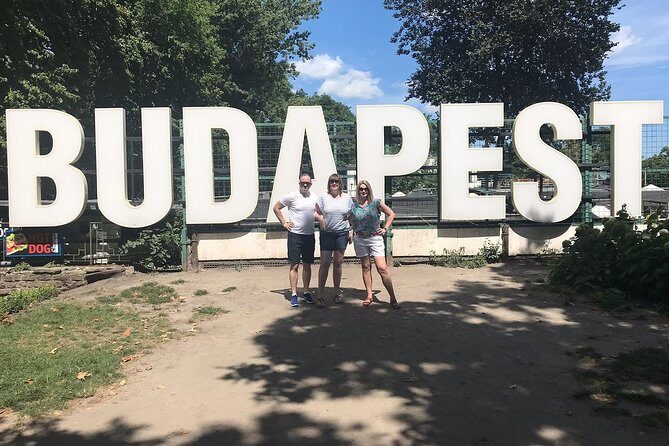
From the Buda side, you get one of Budapest’s signature transitions: the Szechenyi Lanchid (Chain Bridge) area. This stop works as both a photo moment and a mental map. Seeing the bridge and the river from the route helps you understand the layout of the city fast.
You also pass by the Danube River itself during the loop. That sounds obvious, but it matters. The guide’s narration helps you see the river as more than a pretty background. You start noticing how many landmarks line up along it.
Then you roll into Clark Adam Square (Clark Adam ter), which is a classic viewpoint zone for understanding where the bridge sits and how the riverfront streets connect. It’s the kind of place that makes you want to slow down—yet you still keep the energy up for the rest of the day.
A few more Budapest tours and experiences worth a look




Váci Street and Vorosmarty Square: Pest’s shopping-and-scene stops
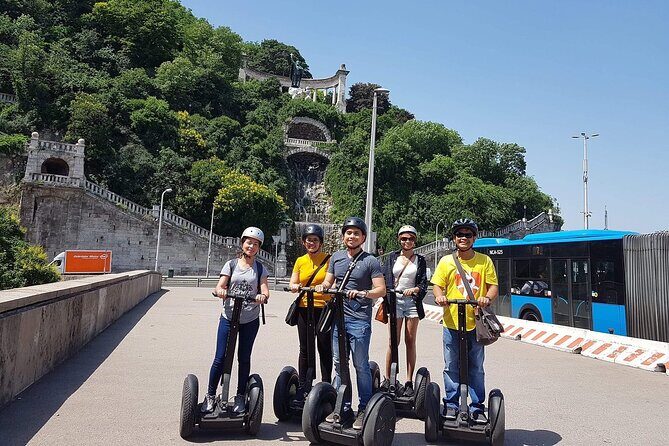
On the Pest side, the tour shifts from viewpoints to neighborhoods with character. Váci Street is where the vibe changes. You’ll get a chance to see the busy central corridor (from your Segway position) and understand why this is a magnet for dining and shopping.
Next comes Vorosmarty Square (Vorosmarty ter). This is a good “pause your brain” stop. It’s a place where you can stand, look around, and let the grand sights settle into your memory. Even though the stop is short, it gives you a sense of where you’ll likely want to wander later.
These two stops are valuable because they anchor the day in real city life. It’s not only monuments. It’s also where people gather.
Heroes’ Square and St. Stephen’s Basilica: big landmarks, quick context
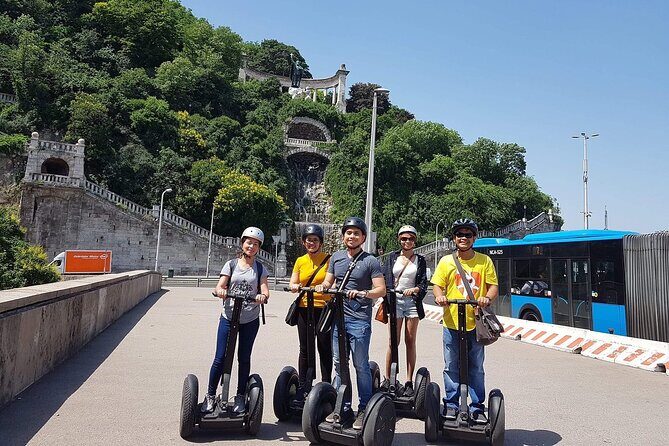
If you want the feeling of Budapest as a capital, you get it at Heroes’ Square (Hosok Tere). This is a major monument space, and the Segway keeps you from spending too much time walking between angles. You get a guided context moment, then you move on.
Then you reach St. Stephen’s Basilica (Szent Istvan Bazilika). This is another “you have seen it in photos” landmark. The value here is that your guide helps you connect the building’s role in the city and why it’s such a central symbol.
The whole point of visiting these giants inside a Segway route is not to do a long museum day. It is to build a fast understanding of what you’re looking at and where everything sits in relation to everything else.
Opera, Andrássy Avenue, and the elegant long lines
The tour passes Hungarian State Opera House (Magyar Allami Operahaz). Even if you have no interest in opera, the building is a statement. Seeing it up close (from the street) adds weight to your understanding of the city’s style.
Then you ride into Andrassy Avenue, one of the city’s grander stretches. Long, straight sight lines make it feel like the guide is turning a page in a book—each landmark adds a new chapter.
Also included in this zone is Statue of St. Stephen. If you’ve been seeing St. Stephen names pop up (and you will), this is the visual reinforcement that ties the city together. It’s small, but it helps the big-sight story make sense.
Vajdahunyad Castle, City Park, and Széchenyi Baths area
The route continues into Varosliget/City Park. City Park is where Budapest feels more open and slower than the city center. You also get stops for Vajdahunyad Castle and Hungarian Agricultural Museum. These can be easy to miss if you’re only chasing the absolute most famous icons. Here, they’re placed where you can actually fit them into a short trip window.
Then you reach Széchenyi Baths and Pool. You don’t need to be a thermal-bath expert to appreciate the scale of the area. It’s also a good moment to rest your legs and reset your brain for the memorial and museum-adjacent stops ahead.
If you want a “what to do later” clue, this part helps. It shows you where a longer, slower day could work well—especially if you want baths or a longer stroll in the park.
House of Terror, Szabadság tér, and how the guide handles darker stops
Some of the stops are not cheerful. House of Terror Museum is one of them, and the experience includes a stop nearby for context. You’ll likely be looking at the outside area rather than doing an inside visit as part of the ride, since the timing per stop is short.
Nearby is Szabadsag ter (Szabadság tér), another place where your guide’s job is to help you read the space. These stops matter because they balance the day. Budapest is not only pretty architecture. It also has memory built into street-level landmarks.
Then you see the Buda Hill Funicular area. This is a chance to understand the terrain. If you like the Segway angle, the funicular also makes sense as a future option for a different pace.
Hospital in the Rock and the Danube memorials: real meaning, not just photos
The tour includes Hospital in the Rock Nuclear Bunker Museum nearby. Again, this is a quick stop moment, which means the guide’s spoken context is what carries most of the value.
Then you continue toward the river and the memorial line-up. Erzsebet Bridge brings you back into the Danube flow. The stop at Shoes on the Danube Bank is one of the most powerful moments in the whole city, and it’s exactly the kind of place where a short narration helps more than a long wander.
It’s hard to keep it light here, and that is the point. The guide helps you understand the memorial without turning it into a “stand and pose” stop. When the tour is paced well, you finish the river segment with respect and clarity, not just photos.
Ronald Reagan, Anonymus Szobor, and the final map-points back to Deák
One unique stop in the late route is the Ronald Reagan Statue. It’s surprising the first time you see it, and it often creates that “wait, why is it here?” reaction—exactly what a good guide can turn into story.
You also pass Anonymus Szobor (Anonymous’ Statue). This is one of those city sculptures that works better with an explanation than without one. The ride format keeps the day moving, and you still get enough context to understand its role.
Finally, the tour ends around Deak Ferenc Square (Deák Ferenc tér), which is a natural place to leave the day. It’s a useful finish because it connects you back to transit and makes planning dinner or a night walk easier.
The coffee stop: what you should expect in real life
The experience is marketed with a coffee stop, and at least some schedules include time for a break. One review noted a pause café and good timing in the full 3 hours.
Still, not every plan goes perfectly. One review mentioned that a coffee stop was not as expected. So I treat it as a built-in break, not a guarantee that it will be long or that it will happen at a specific moment on your clock.
If coffee is a must, plan to grab a quick drink after the tour too. You will still get the main value from the route itself.
Value check: is $107.68 per person worth it?
At $107.68 per person for about 3 hours, this is not the cheapest way to see Budapest. But it is also not trying to compete with a free walking route.
The value comes from three things:
- You cover a large chunk of the city without draining your legs.
- You get a private guide who can adjust the stops to your interests (people have reported spending more time on favorites and skipping things they already saw).
- You get the hardware and safety layer built in: helmets, equipment, raincoats if needed, and a supervised start.
If you are the type who likes to pack in highlights but hates long stair climbs, this can be a smart spend. If you prefer slow wandering and you already know you’ll return to many of these landmarks, a Segway might feel unnecessary. For a first-time “see it, then plan the rest” trip, it’s a strong fit.
Who should book this private Segway tour?
Book it if:
- You want a short, high-impact introduction to Buda + Pest.
- You’re traveling with kids or first-time riders and want structured training.
- You like having time to pause at viewpoints while still covering distance.
- You value a guide who can tune the day, not just read off a script.
Skip it if:
- You hate any sort of balance activity, even with a practice session.
- You want a strictly museum-only day with long interior time at every stop.
- You prefer fully self-directed pacing without the stop-and-go rhythm.
Should you book Grand Segway Tour of Budapest (Private) with Coffee Stop)?
I’d book it when you want an organized, efficient Budapest overview and you like the idea of learning as you ride. The guides named in the feedback—Beka, Sam, Hose, Nour, and Hafa—are repeatedly described as patient and safety-focused, which is exactly what you want on a Segway, especially with kids or nervous first-timers.
If you’re sensitive to schedule swings, just know check-in can be busy and the day can run a few minutes off. Still, when it runs smoothly, this is one of the easiest ways to hit the big icons and start mapping where you’ll go next.
FAQ
How long is the private Grand Segway Tour of Budapest?
It runs for about 3 hours.
How much does the tour cost?
The price is listed at $107.68 per person.
Where do we meet, and where does the tour end?
You meet at Budapest, Galamb u. 3, 1052 Hungary, and the tour ends back at the same meeting point.
Is this tour private?
Yes. It is private, so only your group participates.
Do you provide helmets and rain gear?
Yes. Helmets are provided in all sizes, and raincoats are provided if needed.
What language is the tour in?
The tour is offered in English.
Is there a coffee stop?
The experience is branded with a coffee stop, and some schedules include time for a coffee break. One review noted that a coffee stop was not provided as expected on their day.
What are the rules for minors?
Minors under 18 must be accompanied by a parent or an adult during the tour.
What is the cancellation policy?
You can cancel for a full refund up to 24 hours in advance. If you cancel less than 24 hours before the start time, the amount paid is not refunded.