REVIEW · BUDAPEST
Born Under The Red Star – Communist tour with Coffee in a Retro Bar
Book on Viator →Operated by Budapest Urban Walks · Bookable on Viator
Budapest’s communist story is best walked. This 3-hour route stitches together WWII-era memorials, Cold War sites, and hard-hitting museum stops, then adds a refreshingly odd retro bar break. I especially like the way the guide connects the dots as you move, and the fact the route hits places most people skip in a normal sightseeing day. One thing to consider: the politics here get serious fast, and not every major building stop (like the basilica and Parliament) has admission included.
You’ll be walking with a small group (up to 15), so you can actually ask questions and keep the story straight. The tour also includes a classic soda at a Communist-themed bar, plus maps and recommendations for what to do next on your own. A minor drawback: it is a short, high-density stop-and-stare format, so if you want long time inside museums or buildings, you’ll still need to plan extra time separately.
In This Review
- Key things to know before you go
- Why this Communist-era walk fits Budapest so well
- Meeting at the Hungarian State Opera and keeping a good pace
- Soviet Heroic Memorial: the first stop and the first big message
- House of Terror Museum area: why the building has to be talked about
- St. Stephen’s Basilica pause: a useful contrast, not the main event
- Liberty Statue on Gellért Hill: freedom made stone
- Szabadság tér: two controversies, one square
- Memorial to the 1956 revolution: where hope had a deadline
- Hungarian Parliament Building exterior: the symbol without the ticket
- The retro bar stop: a classic soda with Communist-themed decor
- Price and value: is $90.31 worth it?
- Tips for planning the rest of your Budapest day after Liberty Square
- Who should book Born Under The Red Star
- Should you book this tour?
- FAQ
- What is the duration of Born Under The Red Star?
- How much does the tour cost?
- Where does the tour start and end?
- What language is the tour offered in?
- What is included in the tour price?
- Are there any admission fees included for stops?
- Is free cancellation available?
- Is the tour suitable for kids and pets?
Key things to know before you go
- Small-group pacing keeps the guide’s commentary understandable, not rushed.
- House of Terror Museum stop is free to enter for the visit window, but it’s a heavy subject.
- Liberty Square connections link the Holocaust memorial story and the Soviet liberation memory in one stop.
- Szent István Basilica and Parliament are important pauses, but their admission is not included.
- Retro bar soda break gives you a quick reset in a uniquely themed setting.
Why this Communist-era walk fits Budapest so well
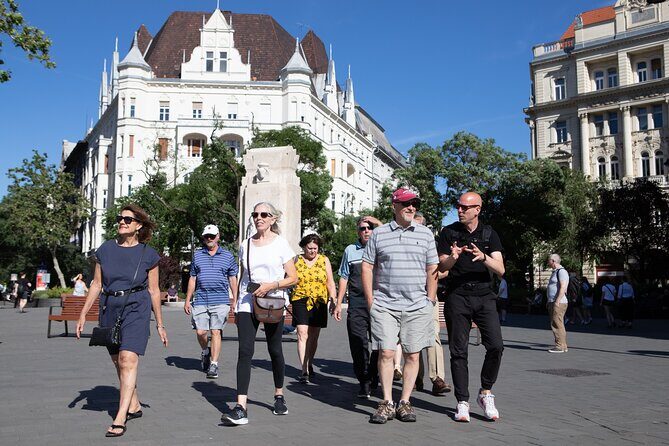
Budapest can feel like two cities at once: ornate, photogenic, and easy to like. Then you peel back the surface and you see how power shaped daily life, from fascist and communist regimes to the 1956 uprising and the long shadow of Soviet control. This tour is built for that second layer. You don’t just stand in front of monuments; you learn what each one was meant to communicate.
I like that the route is practical. It links sites that are historically linked but geographically spread, so your time stays efficient. You’re also not stuck reading captions alone. With a guide doing the talking while you walk, the timeline starts to make sense.
The name Born Under The Red Star tells you the mood: ideology, propaganda, and people living under it. What makes it work is the pacing and the commentary, not just the list of stops.
You can also read our reviews of more drinking tours in Budapest


Meeting at the Hungarian State Opera and keeping a good pace
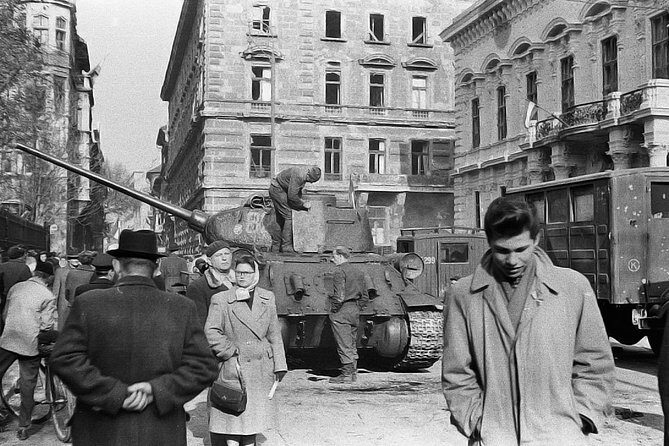
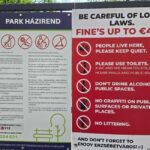
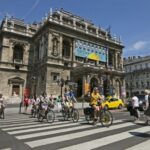
You meet at the Hungarian State Opera area on Andrássy út (Hungarian State Opera, Andrássy út 22). The walk is about 3 hours long, and it’s structured around short stops of roughly 15 minutes each. That means you’ll cover a lot of ground without burning the whole day.
Because it’s a guided group tour (maximum of 15 travelers), you’ll likely move at a steady walking pace with clear regrouping points. It also helps that the tour is offered in English, so you’re not doing guesswork on what you’re seeing.
One small planning tip: wear shoes that can handle frequent stopping and short detours. This kind of political walking can turn into a lot of looking down at stone, plaques, and street-level details.
Soviet Heroic Memorial: the first stop and the first big message
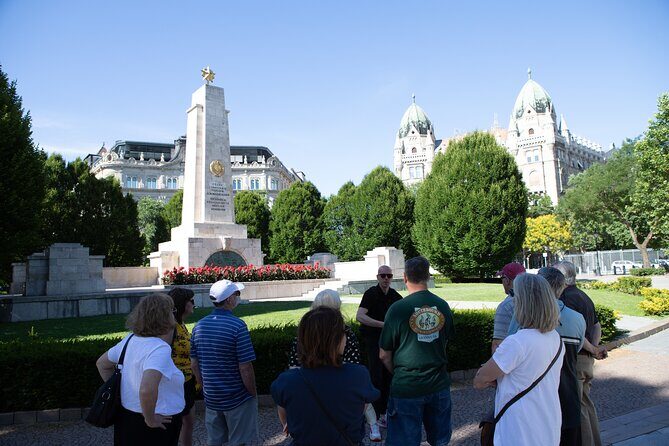
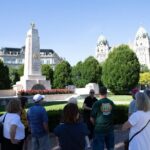
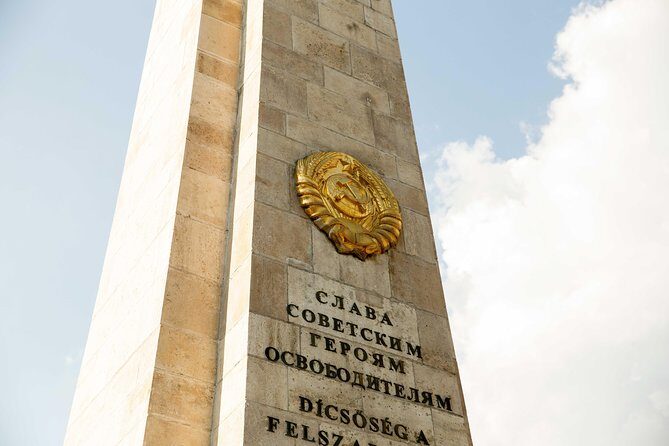
The tour begins with the Soviet Heroic Memorial: a white obelisk in a landscaped park that commemorates Russian military who served in WWII. The stop is free and lasts about 15 minutes.
This is a smart opening because it frames how Soviet memory tried to legitimize itself through the language of heroism. Even if you’ve seen lots of European memorials before, this one pushes you to notice the intended message: who gets honored, and what story is being told about sacrifice and victory.
Why it matters for you: the rest of the tour keeps contrasting different kinds of remembrance. Starting here primes your brain to spot patterns in how regimes use public space.
A small caution: obelisks and grand memorials can look similar from afar. The guide’s commentary is the difference between seeing a structure and understanding the political intent.
House of Terror Museum area: why the building has to be talked about
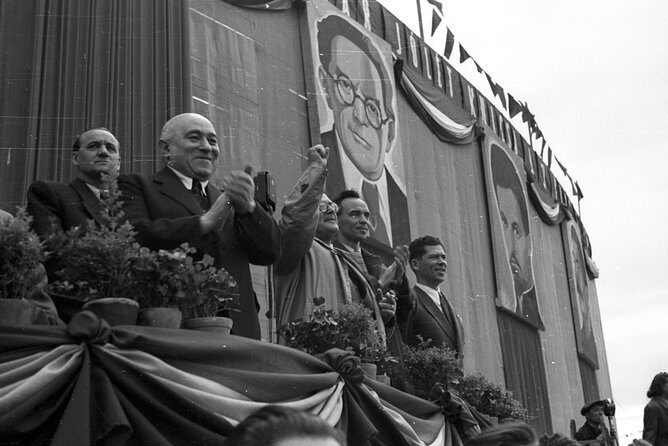
Next is the House of Terror Museum at Andrássy út 60. Admission is free for the tour’s visit window, and the stop runs about 15 minutes.
This museum centers on exhibits connected to fascist and communist regimes in 20th-century Hungary, and it also functions as a memorial to victims. That includes people detained, interrogated, tortured, or killed in the building.
I think this is the tour’s most emotionally demanding part. Even when you only have a short viewing period, you’ll still walk away with a clearer sense of what ideology looked like in real life: fear, forced silence, and institutional violence. It’s not the kind of exhibit where you can skim comfortably.
For practical expectations: 15 minutes can feel like a whirlwind inside a museum setting that deserves more time. If you come away wanting more detail, that’s a good sign. It means the tour did its job of pointing you to what to learn next.
St. Stephen’s Basilica pause: a useful contrast, not the main event
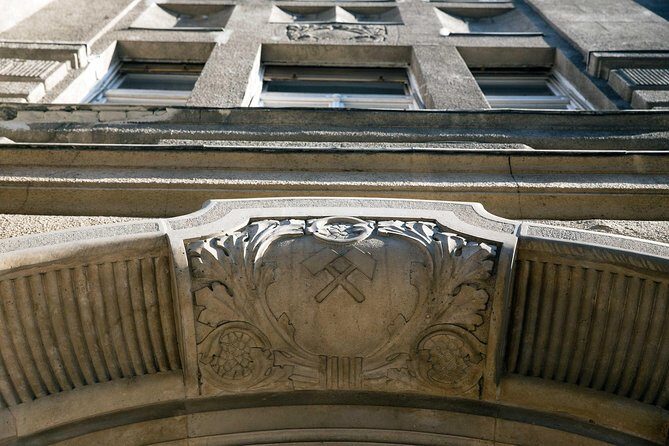
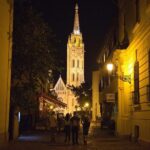
The tour includes a stop at St. Stephen’s Basilica (Szent István Bazilika). The timing is about 15 minutes, but admission is not included.
This is a key contrast stop. You’re moving from regime-focused memory into Hungary’s religious and national symbolism. The basilica is named for Stephen, the first King of Hungary, and his right hand is housed in a reliquary. The building was also once among the largest church structures in Hungary before 1920.
Even if you don’t go inside during the tour, the stop gives you a checkpoint: Hungary’s identity isn’t only political power. It’s also long-standing cultural anchors like religion, kingship, and national continuity.
A consideration for your planning: since admission is not included, you’ll need to decide whether you want to pay separately if you want the full basilica experience.
A few more Budapest tours and experiences worth a look

Liberty Statue on Gellért Hill: freedom made stone
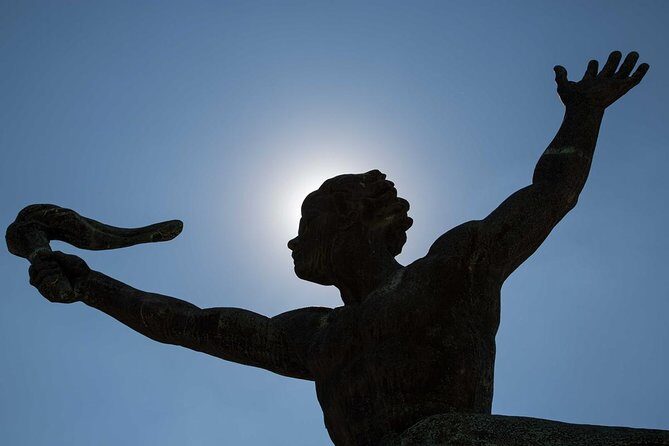
The next monument is the Liberty Statue (Szabadság-szobor), on Gellért Hill. The tour includes this stop as part of your walk, linking the theme of freedom to a specific physical landmark.
This is where Budapest’s story shifts again. Instead of honoring WWII military narratives or regime victims, you focus on commemorating those who sacrificed for independence, freedom, and prosperity.
If you like your history with good photo opportunities, this is also a strong moment because Gellért Hill area is known for views over the city. Even with only a short stop, you can get context for why hilltop monuments are such a common choice: visibility is part of the message.
One practical note: some stops along hill-adjacent areas can involve changes in elevation. If you’re sensitive to walking stamina, factor that into your day.
Szabadság tér: two controversies, one square
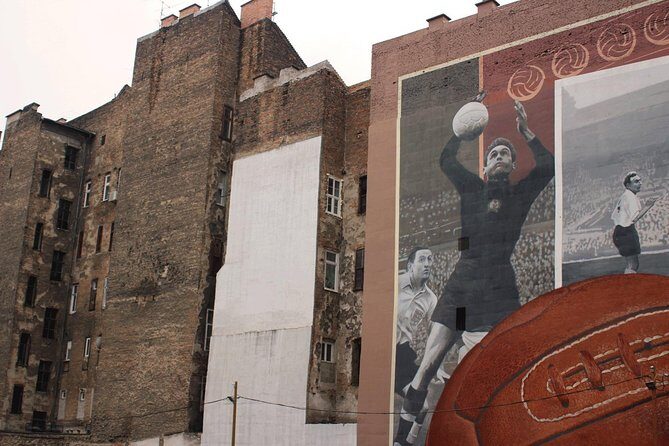
The tour then heads to Szabadság tér, or Liberty Square, with a 15-minute stop and free admission.
This is one of those places where public memory is not calm. The square is famous for two controversial memorials: one connected to Hungarian Jewish victims of the Holocaust, and another honoring Soviet soldiers who liberated Budapest in 1945. On the west side you also have the United States Embassy in Hungary and the historicist headquarters of the Hungarian National Bank.
What I like here is how the guide’s framing turns the square into a lesson about competing narratives. You can stand in one location and feel how history can be interpreted differently depending on who tells it, and what they want remembered.
For you, this stop can change how you read the rest of the city. Budapest isn’t just about sightseeing; it’s also about how countries argue with their own past in public.
Memorial to the 1956 revolution: where hope had a deadline
After Liberty Square, you visit the Memorial to the 1956 Hungarian Revolution and War of Independence. It’s about 15 minutes and free.
This memorial is dedicated to the heroes of the 1956 uprising against the communist regime. The fact that the tour includes this stop after Liberty Square is telling. It ties together different periods of resistance and liberation, and it gives you the key date that still hangs over modern Hungarian political identity.
I find memorials like this easiest to understand when you already absorbed the earlier stops. By now, you’ve seen how states used monuments to shape narratives. Now you see how people use monuments to keep a resistance story alive.
In terms of emotional weight: 1956 isn’t “abstract history” here. It’s a living reference point, which is exactly why the guide’s commentary matters during the short stop.
Hungarian Parliament Building exterior: the symbol without the ticket
The last major stop is the Hungarian Parliament Building (Országház), also known as the Parliament of Budapest after its location. It’s a 15-minute stop, and admission is not included.
Even from outside, Parliament carries meaning. The building is the seat of the National Assembly of Hungary, so it represents state authority in a very visible, formal way. After learning about regimes that controlled people through fear, you can start noticing the difference between government as representation versus government as domination.
For photos, this stop is useful because you’re ending your walk in a landmark zone. But the “not included” part is important: if you want to go inside, plan on separate tickets.
The guide’s commentary at this point also tends to help you make sense of why this building is so central to the idea of Hungarian self-governance.
The retro bar stop: a classic soda with Communist-themed decor
This tour includes a retro soda in a Communist-themed bar, plus coffee and/or tea, and it wraps the walk with maps and additional recommendations.
This kind of stop does two things well. First, it gives you a break in the middle of a topic-heavy route. Second, the themed decor is an odd little reminder that propaganda and politics weren’t confined to government offices. They seeped into everyday spaces too.
I like that it’s not positioned as a joke. It’s more like a sideways way to help you remember the tone of the era you just studied. You get to reset your brain while still staying connected to the theme.
If you’re the type who gets anxious about long food breaks during tours, this is a good fit. It’s a beverage-focused pause rather than a restaurant stop that eats half your afternoon.
Price and value: is $90.31 worth it?
At $90.31 per person for about 3 hours, this isn’t a bargain-basement walking tour. But I think the value is there if your goal is understanding, not just checking boxes.
You’re paying for:
- Guided, English-language commentary that connects multiple political periods.
- A museum stop tied to the House of Terror theme (free within the tour’s visit window).
- A themed bar beverage (classic soda), plus coffee/tea.
- Maps and further recommendations, which helps you extend the trip after the walk ends at Liberty Square.
So the question isn’t whether it’s cheap. It’s whether you’ll use the context. If you’re the kind of traveler who hates vague sightseeing and wants to know what a monument was meant to do, the price feels more justified.
If you only want a light stroll and casual photos, you might resent the intensity and short stop times. But if you want to understand Budapest’s 20th-century political landscape with real guidance, this is a strong use of your time.
Tips for planning the rest of your Budapest day after Liberty Square
Because the tour ends at Liberty Square, you’ll finish in a central area with big landmarks and easy onward transportation. That’s handy if you want to keep exploring immediately rather than heading back across town.
Use the included maps and recommendations to choose a follow-up theme. A good approach is to pick one direction and go deeper rather than trying to do everything in one evening. The tour hits important points quickly; your own time can be where you slow down.
Also, because weather matters for this experience, keep an eye on forecasts. If conditions are poor, you don’t want to be trapped trying to enjoy an outdoor walk under miserable conditions.
Who should book Born Under The Red Star
This tour is a great fit if:
- You care about Hungary’s 20th-century political story, including Soviet influence and the 1956 uprising.
- You prefer a guided walk with commentary rather than reading alone.
- You like historical context that changes how you see monuments in the city.
It’s also a solid choice for a couple or small group vibe. The tour runs with a maximum of 15 travelers, and the experience can feel personal when the group stays small. I’ve seen cases where it ended up being very small with the guide Ferenc, which makes asking questions much easier.
It may be less ideal if you want a purely uplifting, feel-good city day. The House of Terror museum content is intense, and the subject matter is not subtle.
Should you book this tour?
I’d book it if you’re traveling to Budapest for more than postcard sightseeing and you want the political and historical backbone behind the monuments. The route is efficient, the guide adds the missing links, and the retro bar soda stop keeps the experience from turning into one long grim lecture.
Skip it only if you strongly dislike difficult historical topics, or if you expect long time inside major sites. This is a well-structured 3-hour walk, not a full museum day.
If you’re on the fence, the best reason to go is simple: you’ll understand more of Budapest’s story in a short time than you’d get from wandering without guidance.
FAQ
What is the duration of Born Under The Red Star?
The tour is approximately 3 hours.
How much does the tour cost?
It costs $90.31 per person.
Where does the tour start and end?
It starts at Hungarian State Opera (Andrássy út 22, Budapest) and ends at Liberty Square (Szabadság tér).
What language is the tour offered in?
The tour is offered in English.
What is included in the tour price?
It includes a retro soda in a Communist-themed bar, coffee and/or tea, plus maps and further recommendations.
Are there any admission fees included for stops?
Admission is free for the Soviet Heroic Memorial and House of Terror museum, while St. Stephen’s Basilica and the Hungarian Parliament Building are not included.
Is free cancellation available?
Yes, you can cancel for a full refund up to 24 hours before the experience starts.
Is the tour suitable for kids and pets?
Children must be accompanied by an adult, and service animals are allowed.