REVIEW · BUDAPEST
Budapest Castle Walk
Book on Viator →Operated by Taste Hungary · Bookable on Viator
Buda Castle is one story written across stones. This 3-hour Budapest Castle Walk threads together medieval, Ottoman, Habsburg, and WWII history with landmark stops and Danube-side views in the cobbled UNESCO quarter. I especially like how it mixes major sights with the smaller, easily missed corners that make Buda feel lived-in rather than staged.
My other favorite part is the practical value: coffee or another drink is included, and Matthias Church entrance is covered so you’re not juggling tickets mid-walk. The main drawback to keep in mind is timing and meeting-point clarity; if your booking doesn’t make the start details crystal clear, confirm them before you head out so you don’t lose precious time on the hill.
In This Review
- Key Things That Make This Tour Worth Your Time
- Why the Buda Castle Walk Works Better Than a Quick Sightseeing Loop
- Price and Value: Is $125 for Three Hours Reasonable?
- Meeting at the Zero Kilometre Stone and Finishing Near Matthias Church
- Stop 1: Fisherman’s Bastion and the Hill’s Street Logic
- Stop 2: Matthias Church Interiors and the WWII Siege Story
- Stop 3: National Széchényi Library and the Idea of a Golden Age
- Stop 4: Castle Garden, Courtyards, and the Neighborhood That Still Lives
- WWII Bunker Stop: What You Might Expect to See
- Várkert Bazaar and Danube Views: A Neo-Renaissance Break in the Story
- What the Tour Gives You Beyond the Big Names
- Footwear, Pace, and Timing Notes You Should Plan For
- Who Should Book This Tour (and Who Might Not Need It)
- My Take: Should You Book the Budapest Castle Walk?
- FAQ
- How long is the Budapest Castle Walk?
- What is the price per person?
- How big is the group?
- Where do I meet the guide?
- When does the tour start?
- Where does the tour end?
- What’s included in the price?
- Are museum entrances included?
- Is the tour available year-round?
- What is the cancellation policy?
- Should I book in advance?
Key Things That Make This Tour Worth Your Time
- UNESCO Buda Castle quarter on foot: cobblestones, viewpoints, and architecture from multiple eras
- Matthias Church included: you get inside and connect it to the WWII-era story
- Real neighborhood history, not just photos: Jewish community sites, courts, statues, and hidden gardens
- Fisherman’s Bastion panoramas: hilltop views over the Danube and Pest
- Coffee break mid-route: one drink included, so you can slow down and recharge
- Small group size options: max 8 for the small-group format, plus private tour upgrades
Why the Buda Castle Walk Works Better Than a Quick Sightseeing Loop

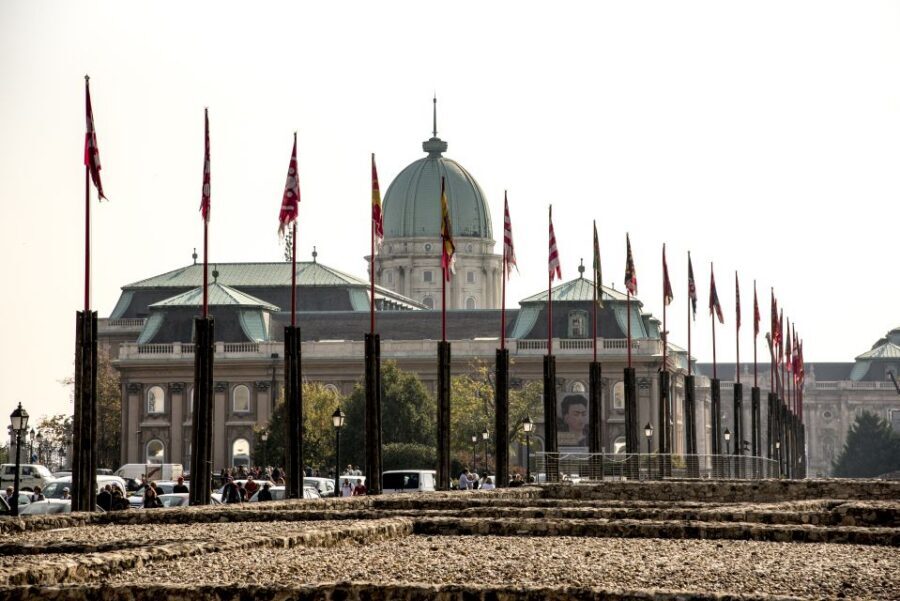
This walk is built around the idea that Buda Castle is a district, not a single building. You cover the hill’s key spaces—palace area, churches, library, and Danube viewpoints—while your guide puts each location into a timeline you can actually remember.
What I like most is the way the story shifts with the streets. You don’t just hear dates; you learn how different eras shaped what you see now—then you stand there and look at it from a viewpoint like Fisherman’s Bastion.
One more thing: it ends near Matthias Church. That matters because you finish where you can easily continue on your own, grab lunch nearby, or tie the rest of the day into the Castle area.
You can also read our reviews of more walking tours in Budapest


Price and Value: Is $125 for Three Hours Reasonable?
At $125 per person for about 3 hours, this isn’t a budget shuffle. But it’s not just a walking chat either—two inclusions add real weight to the price: coffee/drink during the tour and entrance to St. Matthias (Matthias Church).
Most of the other major stops on the route are described as admission free in this experience. That means your money goes mainly toward the guide time plus the one paid cultural stop you shouldn’t skip if you’re in Budapest.
Also, group size helps. The small-group tour format caps the group at eight (with two as the minimum), and there’s a private tour option if you want flexibility. Smaller groups usually mean more questions and less rushing at the viewpoints.
Meeting at the Zero Kilometre Stone and Finishing Near Matthias Church
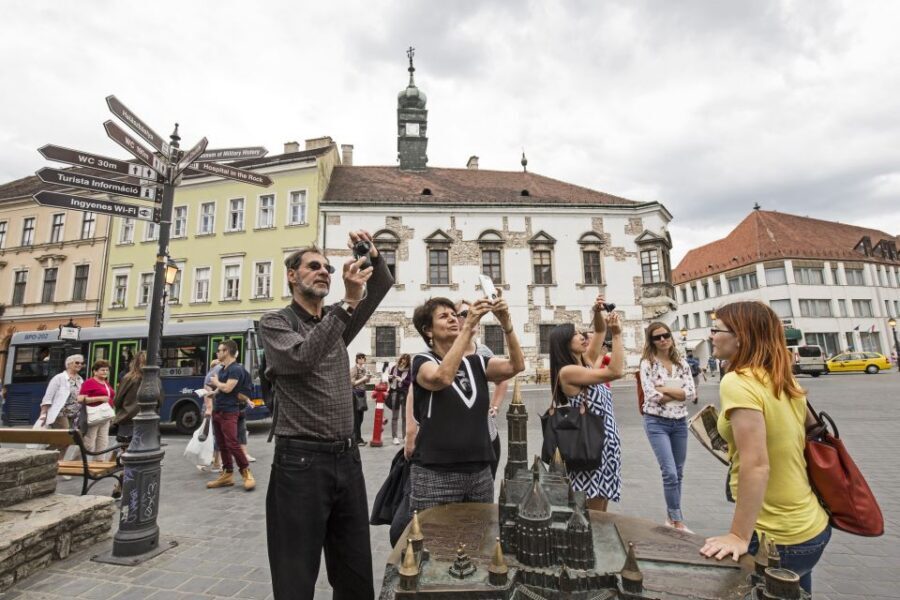
You start at the Zero Kilometre Stone in Budapest, Clark Ádám tér (3:00 pm start). That’s helpful because it’s a clear landmark meeting spot, and it sets you up to walk into the Castle district without guessing your way through hilltop streets.
You finish at Matthias Church at Szentháromság tér 2. Ending there is convenient if you want to keep exploring the Castle area afterward, or just stay in the same neighborhood instead of returning uphill again.
If you have a tight plan after the tour, tell your guide at the start. This is scheduled as about three hours, but the experience notes it can run longer if you’re not in a rush.
Stop 1: Fisherman’s Bastion and the Hill’s Street Logic

Fisherman’s Bastion is more than a postcard. Your guide starts by framing why the streets follow the hill shape and what it meant when the first royal residence appeared here in the mid-13th century.
From this viewpoint, you also get a strong sense of how the district is layered. The fortification vibe is obvious in the look of the hilltop—but the history of the neighborhood is what makes the view feel meaningful instead of just pretty.
A big theme at this stop is Buda’s changing population. You’ll hear special emphasis on the Jewish community that lived in the area, along with the influence of Hungarian royalty and the Habsburg empire. That context helps you notice things you might otherwise walk past—like the old street layout and locations tied to community life.
Admission here is described as free for this stop, so you’re not losing time checking tickets before enjoying the view.
Stop 2: Matthias Church Interiors and the WWII Siege Story
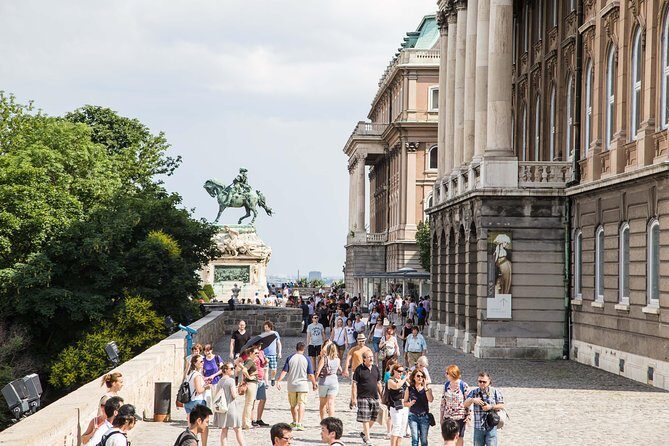
Matthias Church is the anchor stop, with entrance included. You’ll learn how the area was marked by WWII and the Siege of Budapest, when Russian and German forces fought in and around these streets in 1945—damage that reshaped the neighborhood.
This is one of the stops where the tour does something useful: it connects a stunning church interior to the way the city suffered and rebuilt. You’re not just looking at architecture; you’re also tracking how conflict changes urban space over time.
You’ll also see the interior and the multi-colored tiled roof. That roof detail is the kind of thing that sticks in your memory because it’s so distinctive, and your guide’s story helps you understand why Matthias Church became a coronation site for many Hungarian kings.
Time-wise, expect about 20 minutes here. It’s enough to take in the key interior impressions, listen to the context, and still have a bit of time to orient yourself for photos.






Stop 3: National Széchényi Library and the Idea of a Golden Age
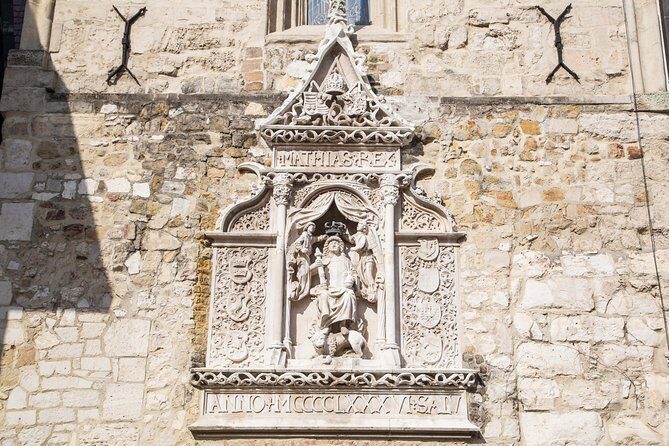
The National Széchényi Library stop is shorter, but it isn’t random. Your guide ties it to the idea of a golden age that began with the Royal Court—while also pointing out an interesting twist: no royals ever resided here.
So you’re learning about power and politics through what seems like a quieter landmark. It’s a nice reminder that cities are built by institutions, not only by palaces.
You’ll also hear how the area has been destroyed and rebuilt multiple times. The message to keep in mind is simple: what you see today is a layered result of restoration and rebuilding, especially after WWII when the damage was extensive.
As with Fisherman’s Bastion, admission for this stop is described as free in the experience.
Stop 4: Castle Garden, Courtyards, and the Neighborhood That Still Lives
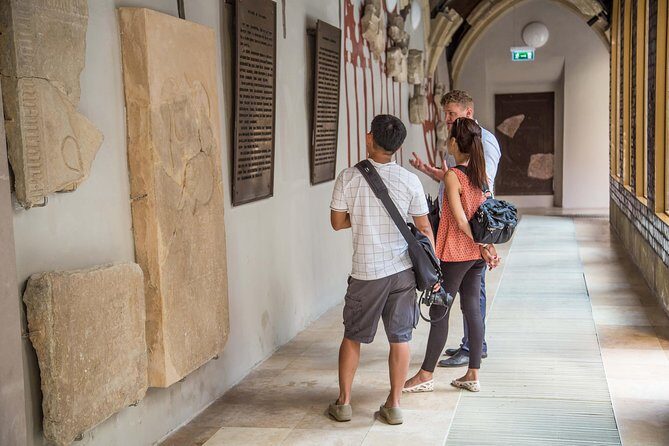
Castle Garden feels residential, even though it carries heavy historic weight. Here, you’ll hear how the Hungarian president is able to call this neighborhood home, plus the presence of local residents in long-standing historic buildings.
That mix—official life and everyday life—helps you understand why Buda Castle isn’t a theme park. Even when the buildings look like they’re from another century, people still live their routines in and around them.
Your guide focuses on what you might miss without direction: historic courtyards, gardens, palaces, and statues that hint at the past. This is a good place to slow down and look for small transitions—arches, hidden passages, and the way walls and courtyards bend the street.
Admission is described as free for this stop, so you’re spending time on the story and the visuals rather than ticket lines.
WWII Bunker Stop: What You Might Expect to See
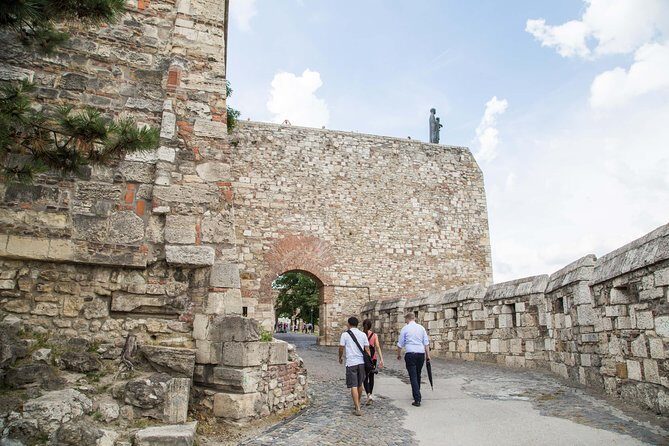
The tour description includes a WWII bunker visit and a discussion of the Siege of Budapest. This is one of those stops where the tone can shift. The goal isn’t to scare you—it’s to help you understand why the city you see now has the forms it does.
Because bunker details aren’t fully specified beyond being part of the tour, I’d treat it as a short but powerful waypoint. You’ll likely come away thinking differently about the surrounding streets—how narrow spaces and hilltop defenses matter when armies meet on them.
Várkert Bazaar and Danube Views: A Neo-Renaissance Break in the Story
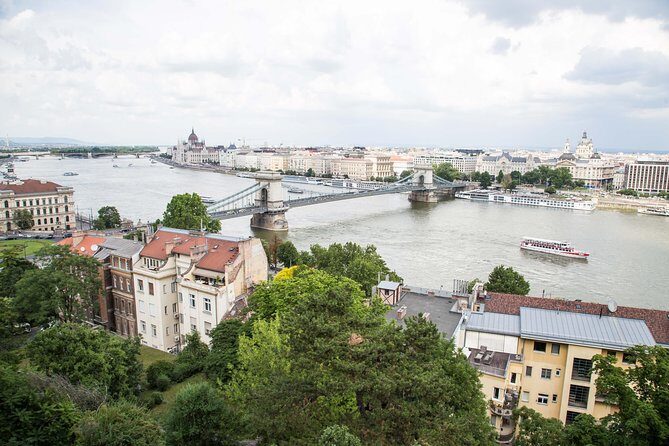
At some point during the walk, you’ll spend time around the restored Várkert Bazaar by the Danube. Even if you’ve been to other river promenades, this one helps you link Buda’s hilltop world to the water-facing city.
Your guide uses this area for panoramas and city-river context. The restored look is part of the point: it shows how the waterfront has been shaped to match what the city wants to present now, while the hill above still carries older layers.
Then there’s the coffee. A coffee or another drink is included during the tour, which is a practical touch for a hilltop walking route. It gives you a breather before you head into the church area again and finish near Matthias.
What the Tour Gives You Beyond the Big Names
Yes, you’ll see the famous landmarks: Fisherman’s Bastion and Matthias Church. But the stronger value is in the connective tissue—what links them together.
Here’s how that plays out on the ground:
- Architecture with a timeline: baroque and Gothic elements show up in the story, not just in the photo.
- Jewish heritage in the narrative: you’ll get pointed attention to the area’s Jewish population and sites connected to that community.
- Courtyards and hidden gardens: these spaces are often skipped when people race for the next viewpoint.
- WWII context: the siege story explains why rebuilding left distinct marks on what’s still standing.
If you like tours that help you read a city like a book, this format works.
Footwear, Pace, and Timing Notes You Should Plan For
This is a walk on cobbled hillside streets. That means you should wear shoes with decent grip and be ready for uneven steps.
The tour runs about three hours and is year-round. If it’s rainy, plan on slower steps and bring something light for sudden weather shifts. If it’s hot, the coffee stop will feel like a gift, but you’ll still want water on hand.
If you have another plan right after, treat three hours as a baseline and be ready for a small stretch. The experience explicitly says it can run longer if you’re not in a hurry.
Who Should Book This Tour (and Who Might Not Need It)
This tour is a good fit if you want:
- A guided story of Buda Castle’s major eras, from medieval to WWII
- Included access to Matthias Church, plus coffee during the walk
- A small-group vibe that keeps the conversation going (max 8)
You might skip it or choose a different option if you’re only hunting for a fast list of highlights, with no interest in how different eras shaped the district’s layout.
If you prefer one-on-one attention, the private tour option lets you customize the experience while still keeping the same overall landmarks and themes.
My Take: Should You Book the Budapest Castle Walk?
I’d book this if you want a memorable, story-driven walk through Buda Castle that doesn’t ignore the darker chapters. The mix of UNESCO district architecture, Matthias Church access, and the WWII siege context makes it more than a scenic stroll.
The price makes sense when you factor in the guide time plus the included Matthias Church entrance and coffee. And the small-group limit helps you actually process what you’re seeing instead of getting swept along like luggage.
Just do one smart thing before you go: double-check the exact start time and meeting point details so you don’t waste time on the hill. That’s the one practical snag hinted at in feedback.
FAQ
How long is the Budapest Castle Walk?
It’s scheduled as a 3-hour walking tour.
What is the price per person?
The price is $125.00 per person.
How big is the group?
The small-group option has a maximum of 8 travelers (minimum of 2). There’s also an option for larger groups and a private tour.
Where do I meet the guide?
You start at the Zero Kilometre Stone at Budapest, Clark Ádám tér, 1013 Hungary.
When does the tour start?
The start time listed is 3:00 pm.
Where does the tour end?
The tour ends at Matthias Church, Budapest, Mátyás Templom, Szentháromság tér 2, 1014 Hungary.
What’s included in the price?
An English-speaking local guide is included, along with a coffee break (one coffee or drink) and entrance to St. Matthias (Matthias Church). Coffee and/or tea are also included.
Are museum entrances included?
Museum entrances are not included.
Is the tour available year-round?
Yes, it is available year-round.
What is the cancellation policy?
Free cancellation is available. You can cancel up to 24 hours in advance for a full refund.
Should I book in advance?
On average, this tour is booked 85 days in advance, so earlier booking can help you get the option and date you want.