REVIEW · BUDAPEST
Explore the rich Jewish heritage of Budapest PRIVATE TOUR
Book on GetYourGuide →Operated by Roll On Magyarország Kft. · Bookable on GetYourGuide
Budapest’s Jewish Quarter packs big meaning fast. In just 2 hours, this private walking tour links street-level sights with Jewish community life and the events that broke it, ending with a sobering stop at the Shoes on the Danube Bank memorial. I like that it’s private, so the pace stays comfortable and questions feel welcome.
What I really appreciate is the mix of architecture and everyday stops. You get exterior views of major synagogues like Dohány Street Synagogue (Moorish and Romanesque style) and Rumbach Street Synagogue (Art Nouveau details and stained-glass windows), then you move on to places where you can taste Hungarian Jewish food. One possible drawback: entry into synagogues isn’t included, so if you want inside access, you’ll need separate tickets (and that can add time and cost).
Key details matter here too: the tour is designed as a walking experience with a history-focused guide, and it’s not meant for kids under 12. If you’re hoping for a guide who can answer every question from personal religious experience, keep in mind that guide backgrounds can vary, even when the tour content is strong.
In This Review
- Key things to know before you go
- Starting at Starbucks on Fashion Street: the easy kickoff
- Hungarian Electrotechnical Museum: a smart way to set the context
- The Ghetto Memorial Wall: when the street tells you what documents can’t
- Kosher Market (Kóser Piac): food as a living link to the neighborhood
- Babka Deli: the tasting break that turns history into something you can feel
- Exterior views that read like architecture lessons: Dohány and Rumbach
- Dohány Street Synagogue (from the outside)
- Rumbach Street Synagogue (from the exterior)
- Shoes on the Danube Bank Holocaust memorial: where the walk gets real
- Optional upgrades: Jewish Museum, nearby memorials, and extra context
- Price and value at $49 for a private 2-hour walk
- Pace, comfort, and who this tour fits best
- Guide quality: what to expect from real-time explanations
- Should you book the Explore the rich Jewish heritage of Budapest PRIVATE TOUR?
- FAQ
- Is this tour private or shared?
- How long is the walking tour?
- Where do we meet?
- Does the tour include entry into synagogues?
- Will we see the Shoes on the Danube Bank Holocaust memorial?
- Is food included?
- Can I add a visit to the Jewish Museum?
- What’s the child age limit?
Key things to know before you go
- Private group, 2 hours: designed for a focused route without feeling rushed.
- Synagogues from the outside: major architecture moments without synagogue entry included.
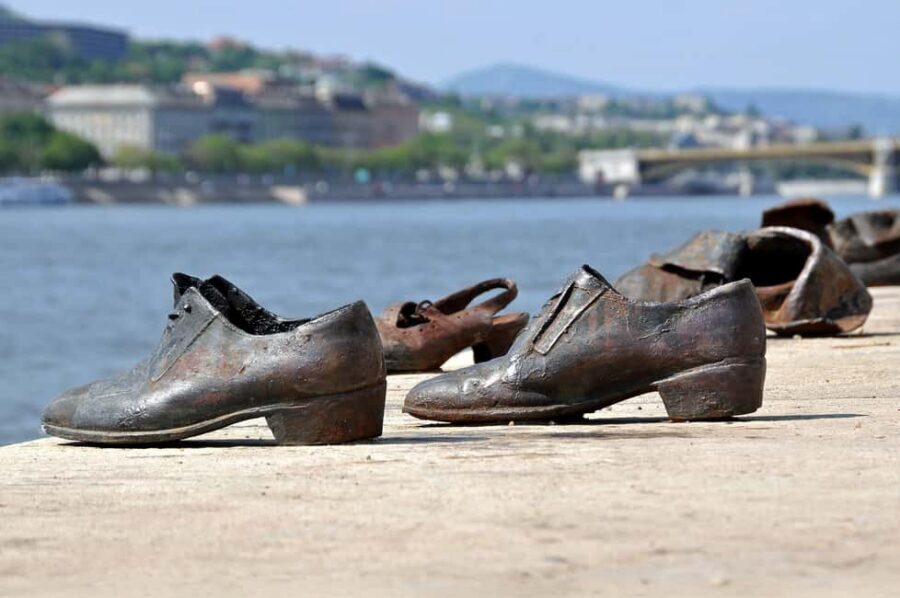
- Shoes on the Danube Bank memorial: a powerful Holocaust remembrance stop.
- Kosher Market and food tasting: a real break for snacks, not just sightseeing.
- English live guide: history background and route flexibility for your questions.
- Optional add-ons nearby: the Jewish Museum can be added with an extra ticket, if you want more.
Starting at Starbucks on Fashion Street: the easy kickoff
You’ll meet in front of Starbucks on Fashion Street with a guide holding a Roll On board. That’s a nice kind of simple: it’s easy to find, and you don’t waste your first minutes figuring out where the group is gathering.
From the start, the tour is set up for a tight, high-impact loop. At only 2 hours, your guide needs to use the time well, and they do by keeping the route concentrated in the Jewish Quarter area and around key remembrance sites. If you’re the kind of traveler who likes a clear plan but still wants to ask follow-up questions, a private format helps a lot.
One practical note: this is a walking tour, so wear shoes you’re comfortable in. You’ll also be standing at memorials, including the Danube bank site, where you’ll want a steady footing and a moment to pause without rushing.
You can also read our reviews of more private tours in Budapest


Hungarian Electrotechnical Museum: a smart way to set the context

One stop on the route is the Hungarian Electrotechnical Museum, with guided storytelling and walking time built in. This kind of location choice does two useful things for you.
First, it keeps the tour from feeling like only a checklist of memorials and religious buildings. Second, it gives your guide a chance to connect community life to broader Hungarian history and public life—how technology, society, and modernization intersected with the people who lived here.
Even if you’re not a museum-goer, the value is in the framing. Your guide can use the setting to explain how Jewish life in Budapest wasn’t frozen in time; it changed, grew, and was part of the city’s larger story before the worst chapters arrived.
The Ghetto Memorial Wall: when the street tells you what documents can’t
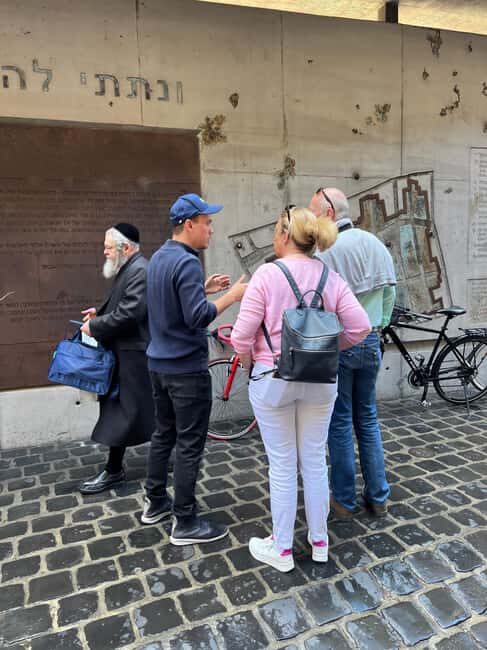
Next you’ll reach the Ghetto Memorial Wall, which is another guided, on-foot stop. A memorial wall like this works best when you let it slow you down for a minute. Your guide’s job here is to give you the timeline and the meaning, but you also benefit from simply taking in the setting.
This is where the tour’s balance matters. It’s not just “look at a sign.” It’s a stop that connects history to place—what happened here, and why Budapest became central to the stories you’re hearing.
If you prefer your history structured, ask your guide for a quick overview before you walk closer. If you prefer a quieter moment, you can let the guide’s narration guide you while you absorb the details at your own speed. Either way, the wall is a turning point emotionally.
Kosher Market (Kóser Piac): food as a living link to the neighborhood
A standout part of the experience is stopping at the Kosher Market (Kóser Piac). This isn’t just about buying snacks. It’s about seeing everyday Jewish life in an active, current setting, where food traditions still matter.
That’s a big reason I like this tour: it doesn’t treat Jewish heritage like something only found behind museum glass. You get a real-world connection through a market environment—where a community’s food culture is part of how the neighborhood functions.
Keep your expectations practical. Food and drink aren’t included, so you choose how much you want to spend. If you’re hungry, this is a good place to plan your order around what you want to remember: coffee, pastries, or something more filling.
Babka Deli: the tasting break that turns history into something you can feel

After the market, you’ll visit Babka Deli for a food tasting stop. This is a smart pacing choice for a 2-hour tour. Right around the time you’ve taken in heavy context (memorial stops), you get a chance to reset with something edible.
A tasting stop also makes the tour feel more personal. It’s not just “walk, look, listen.” It’s a chance to ask what to try and how the flavors fit into Hungarian Jewish food culture. And since food and drink are optional, you can keep it light—one pastry and a drink—if you’re not interested in turning the tour into a meal.
If you specifically want Hungarian coffee and flódni, this is where that break can fit naturally. Flódni is one of those iconic pastries that helps you remember the story in a human way, not just as dates and locations.
You can also read our reviews of more historical tours in Budapest




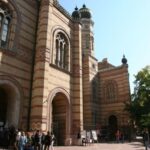

Exterior views that read like architecture lessons: Dohány and Rumbach

The tour highlights include outside viewing of two major synagogues.
Dohány Street Synagogue (from the outside)
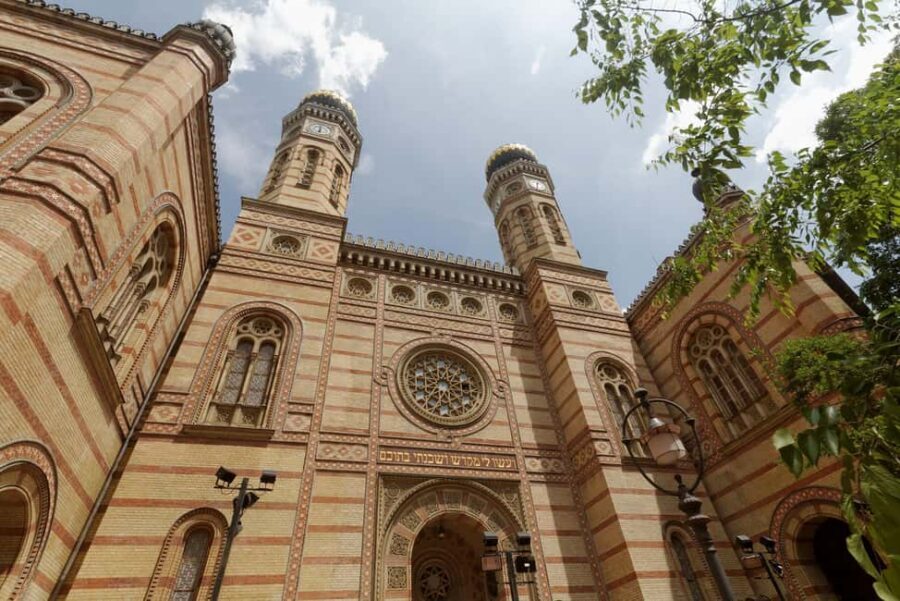
You’ll admire Dohány Street Synagogue from outside, and your guide will point out why it’s so striking: a fusion style that blends Moorish and Romanesque influences. Even without entering, this building hits you visually. It’s also a good moment to ask your guide what architectural choices meant in their time.
Rumbach Street Synagogue (from the exterior)
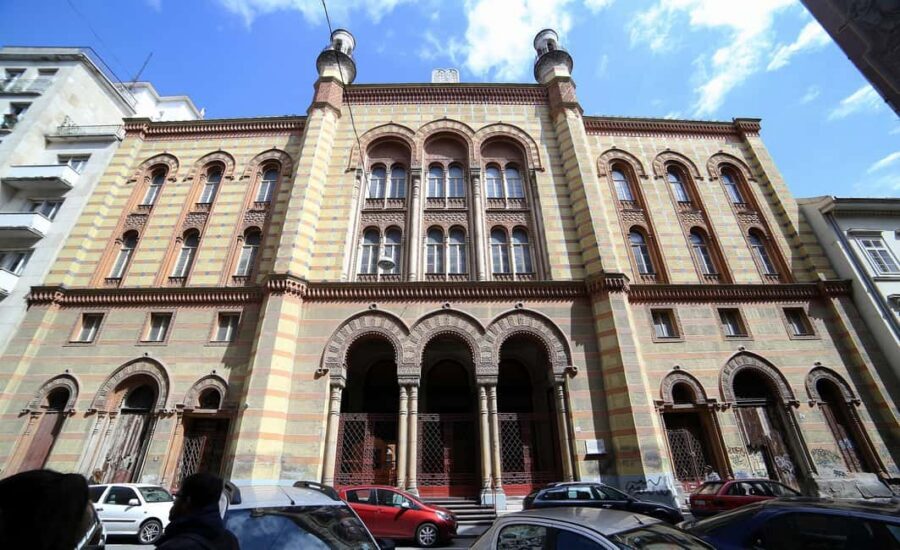
You’ll also see Rumbach Street Synagogue from outside. Here the focus is on its Art Nouveau details and stained-glass windows. That stained-glass look can feel almost theatrical from the street, which makes it easier to remember later when you’re trying to place it in your mental map of Budapest.
Why outside viewing works well on a 2-hour private tour:
- You get the most important visual impact without the time cost of tickets.
- You can keep moving and still cover the memorial stops.
- You’re more likely to stay on schedule, especially if you’re pairing this with other sightseeing.
If synagogue entry is a must for you, plan for separate tickets. The tour explicitly does not include entry, so you’ll want to budget time accordingly.
Shoes on the Danube Bank Holocaust memorial: where the walk gets real

Then comes the stop you’ll remember the longest: Shoes on the Danube Bank. This memorial is powerful because it uses a simple visual idea—shoes—to force you to imagine the moment of loss. It’s not complicated to understand. It’s complicated to forget.
I think it’s best to treat this part like a pause, not like another photo stop. Your guide’s narration should help you frame the context, but you’ll get more out of it if you give yourself a minute to stand still and look.
Also, be aware that memorial stops can hit people differently. If you’re traveling with someone sensitive to heavy topics, consider telling your guide in advance that you might want slower pacing here.
It’s the emotional anchor of the tour, and it gives the earlier synagogue and neighborhood stories the weight they deserve.
Optional upgrades: Jewish Museum, nearby memorials, and extra context
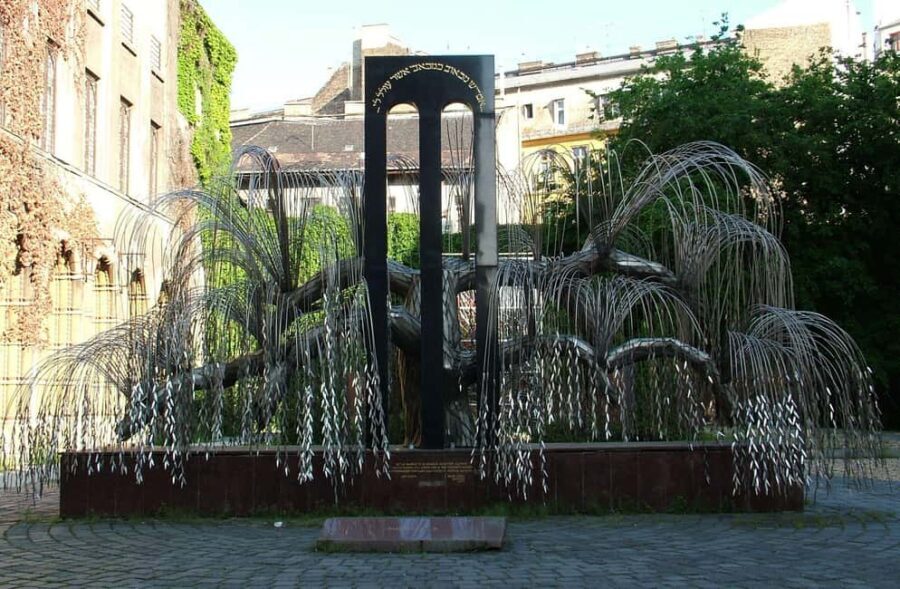
Your guide may offer suggestions for nearby add-ons like the Jewish Museum (additional ticket required), the Holocaust Memorial Center, and the Raoul Wallenberg Memorial Garden. These are the kinds of options that make sense if you want more background without switching tours entirely.
Here’s the practical way to decide:
- If you’re short on time, stick to the core route and enjoy the pacing.
- If you already know the basics and want more detail, the Jewish Museum add-on can help you connect what you saw outside with deeper historical context.
- If you’re especially focused on Holocaust remembrance sites in Budapest, you can use your guide’s suggestions to build a second outing.
One good thing about a private guide: you can ask what would fit your interests best, instead of trying to guess from a brochure.
Price and value at $49 for a private 2-hour walk

At $49 per person for a 2-hour private walking tour, the value comes down to what you’re buying: time, focus, and interpretation.
A private format is often the difference between:
- hearing facts, and
- understanding why those facts matter.
You also get an English live guide with a history background, which is the real product here. The food break is optional, so you’re not paying a bundle price for meals you may not want. That makes the cost feel more honest and flexible.
So who gets the best value?
- You want a targeted route with minimal waiting.
- You like asking questions in real time.
- You’re okay with seeing synagogues mainly from outside and putting museum-style learning into optional add-ons.
If you’re traveling with others and can split costs, it often becomes even better value than group alternatives—especially when the subject is complex and you want good explanations.
Pace, comfort, and who this tour fits best
This is a wheelchair accessible private tour, which is a meaningful detail if mobility is part of your planning. It also keeps your overall experience more comfortable when you’re navigating Budapest’s streets.
On the other hand, it’s not suitable for children under 12. Given the Holocaust memorial element, that limitation makes sense. If you’re bringing teens or older kids, you might still want to consider the content carefully, but the rule is clear for younger children.
Length-wise, 2 hours is ideal for:
- a first-time Budapest visit (especially if you want a meaningful slice of the city),
- travelers who dislike long days of nonstop walking,
- anyone who wants Jewish Quarter highlights plus one major remembrance stop without committing to a full-day program.
One small consideration: the tour doesn’t allow alcohol or drugs. That’s standard for many guided walking tours, and it helps keep the atmosphere respectful, especially near memorials.
Guide quality: what to expect from real-time explanations
The tour reviews show strong praise for guides who can explain both Budapest and the wider political and social context. Names like Anne and Levi come up as examples of guides who were described as friendly, intelligent, and strong on Hungary-related topics.
Still, there’s one takeaway to keep in mind: if you specifically want answers that require personal Jewish community knowledge, you might not always get that from every guide background. Even when guides are well-informed, they may not be able to answer every question in the way you expect.
My practical advice: before the tour focuses on a religious or cultural question, ask your guide what they can answer confidently. That one question can save you frustration and help you get what you want out of the experience.
Should you book the Explore the rich Jewish heritage of Budapest PRIVATE TOUR?
If you want a focused 2-hour private walk through Budapest’s Jewish Quarter with big landmarks and one unforgettable memorial stop, I think this is a strong choice. The structure is efficient: synagogue exteriors, neighborhood context, kosher-market culture, a food tasting break, and the Shoes on the Danube Bank memorial.
Book it if:
- you like private tours where you can ask follow-ups,
- you want a respectful, structured way to handle Holocaust remembrance in Budapest,
- you’re comfortable with synagogue exteriors only and are open to optional museum entry.
Consider another option if:
- you’re hoping for guaranteed synagogue interior access without extra tickets,
- you need a guide who can answer every question from personal religious experience (not just history),
- you’re traveling with a child under 12.
FAQ
Is this tour private or shared?
This is a private group tour, so you’ll be with your own group and guided by a live English speaker.
How long is the walking tour?
The tour lasts 2 hours.
Where do we meet?
You meet in front of Starbucks on Fashion Street, where a Roll On colleague will be waiting with a board.
Does the tour include entry into synagogues?
No. The tour does not include entry into synagogues. You can purchase separate tickets if you want to visit inside.
Will we see the Shoes on the Danube Bank Holocaust memorial?
Yes. Paying respects at the Shoes on the Danube Bank memorial is listed as one of the highlights.
Is food included?
Food and drink are optional. The itinerary includes a food tasting stop, but you choose what you order.
Can I add a visit to the Jewish Museum?
Yes, a visit to the Jewish Museum can be added, but it requires an additional ticket.
What’s the child age limit?
The tour is not suitable for children under 12.