REVIEW · BUDAPEST
Buda Hills 2-Hour Segway Live-Guided Tour
Book on Viator →Operated by Segway Tours Budapest by GetSegway™ · Bookable on Viator
Segways make Buda Hill painless. In a tight two hours, you’ll zip between classic viewpoints and the Danube’s most memorable stops, guided start to finish. I love the built-in photo stops and the full training that gets you confident before the uphill parts. One catch: every stop is short, so you’re here for smart snapshots and context, not for long wandering.
At $71.38 per person, this is a value play when you want major Buda and Danube highlights without spending the whole day in transit. The tour is live-guided in English, keeps groups to a maximum of 15, and includes helmets, raincoats if needed, and a photo service so you’re not stuck filming with one hand while riding with the other.
In This Review
- Key things you’ll notice right away
- Price and value: what $71.38 really buys you in Budapest
- Getting started at Galamb u. 3: training, gear, and your first minutes on a Segway
- The 17-stop Buda Hills circuit: where you’ll go and what each stop feels like
- Stops 1–4: Varhegy, Fisherman’s Bastion, Buda Castle, Matthias Church
- Stops 5–7: St. Stephen’s Basilica, Váci Street, and the Statue of St Stephen
- Stops 8–11: Danube, funicular area, Shoes on the Danube Bank, and Hospital in the Rock
- Stops 12–15: Erzsébet Bridge, Fountain of King Matthias, Trinity Square, National Archives
- Stops 16–17: Budapest Eye and Soviet Heroic Memorial
- Why the guide and the stories matter more than the speed
- Photo service on a moving day: how to use it without losing your spot
- Riding on hills: the part you’ll either love or you’ll want to prep for
- How this tour compares to other ways to see Budapest
- Weather and raincoats: the small detail that saves your photos
- Should you book the Buda Hills 2-Hour Segway Tour?
- FAQ
- FAQ
- How long is the Buda Hills Segway tour?
- How much does the tour cost per person?
- Is the tour offered in English?
- Where does the tour start and end?
- What’s included with the tour?
- What is not included in the price?
- What is the cancellation policy?
Key things you’ll notice right away
- Two-hour route that packs the Buda Hills and Danube highlights into a single session
- Training plus the right equipment (including helmets) before you start moving
- Photo service built into the experience, with multiple iconic stops
- A small group size (up to 15), which helps the ride stay smooth
- Live, story-focused guidance at every major landmark
- Raincoats included if the weather turns
Price and value: what $71.38 really buys you in Budapest
This tour costs $71.38 per person for about two hours, which sounds steep if you’re comparing it to bus tickets. But you’re not just paying for transportation. You’re paying for a guide, the Segway setup, the coaching, and a route that hits big-name sights in a short window.
The strongest value is for two types of travelers: (1) first-timers trying to get their bearings fast, and (2) people with limited time who still want to see more than one neighborhood. If you’re happy doing quick looks and photos, you’ll feel like you “covered a lot.” If you’re hoping for slow museum time or long photo sessions at each stop, the format may leave you wanting more—because the whole loop runs on a tight schedule.
You also get practical extras included: helmets, full guided training, photo service, and raincoats if needed. Gratuities are optional, but they’re not part of the quoted price.
You can also read our reviews of more guided tours in Budapest


Getting started at Galamb u. 3: training, gear, and your first minutes on a Segway
Your tour starts and ends back at Budapest, Galamb u. 3, 1052 Hungary. It’s in an area that’s near public transportation, which matters because you don’t want a stressful commute before a ride that depends on timing.
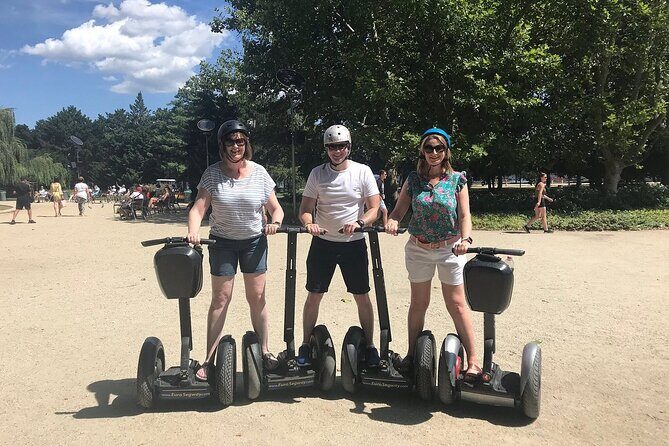
Before you roll out, you’ll get full guided training and the necessary equipment, including helmets. That’s a big deal on a city tour—especially with hills in the mix—because you’re not just learning the “how,” you’re learning how to stay comfortable and in control.
Here’s the practical part: this is a guided experience, so your pace is set by the route and the group. That’s a plus if you want structure, and it’s a downside if you like to drift off on your own. Either way, the training helps you avoid the classic day-one Segway problem: being more focused on staying balanced than on enjoying the view.
The 17-stop Buda Hills circuit: where you’ll go and what each stop feels like
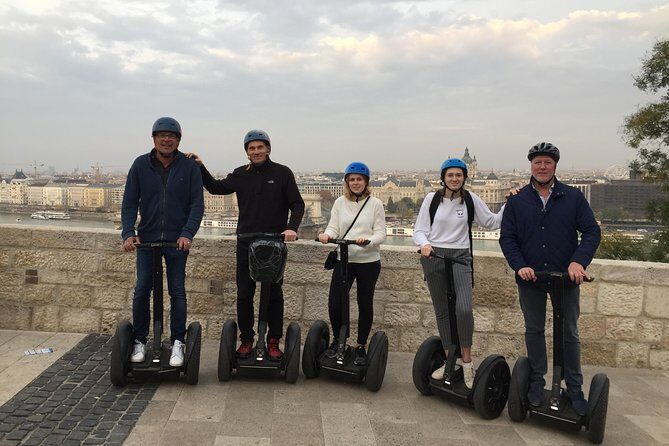
The route is designed like a fast, guided highlight reel. Each stop is listed for about five minutes, and admission is free for the listed stops. Translation: you’ll get a short, meaningful visit at each place, usually aimed at photos and quick context, then you’re back on the Segway for the next jump.
Stops 1–4: Varhegy, Fisherman’s Bastion, Buda Castle, Matthias Church
Stop 1: Varhegy (castle walls)
This is where the castle-area views start. Standing near the castle walls gives you a sense of how Budapest’s layout stacks hills and viewpoints on top of each other. The short stop works well for a first orientation shot.
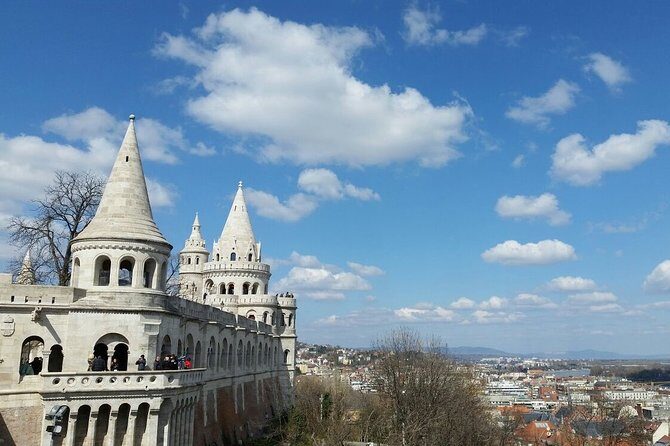
Stop 2: Fisherman’s Bastion (Fisherman’s Bastion)
Fisherman’s Bastion is one of those places where the photos look good from almost every angle. With only a brief stop, you’ll want to be ready to move—this is a quick “take it in, get your angle, move on” moment.
Stop 3: Buda Castle (Buda Castle)
This stop is about scale and presence. You’ll get close enough to understand why the area is the star of Buda. If you like architecture and sweeping views, this short visit is an effective sampler.
Stop 4: Matthias Church
Matthias Church adds a clear focal point—religious architecture and an instantly recognizable landmark vibe. Because your time is limited here, you’ll get the best results if you prioritize one or two angles rather than trying to photograph every side.
Stops 5–7: St. Stephen’s Basilica, Váci Street, and the Statue of St Stephen
Stop 5: St. Stephen’s Basilica (Szent Istvan Bazilika)
You’ll see the basilica as a major city landmark tied to Hungarian identity. The stop is brief, so it’s best used as a photo and orientation moment—think of it as locking in where this part of the city sits relative to the river.
Stop 6: Váci Street (Vaci Utca)
Váci Utca is the famous pedestrian shopping stretch. The short stop helps you connect the sightseeing dots: you’re moving from the elevated views of Buda toward street-level Budapest. If you want to actually shop or linger at cafes, you’ll likely want to come back later.
Stop 7: Statue of St Stephen
This is a quick landmark stop that reinforces the national theme you saw at the basilica. It’s also a handy pause point in the ride—ideal for one final “where are we now?” photo before the route turns back toward the river.
A few more Budapest tours and experiences worth a look




Stops 8–11: Danube, funicular area, Shoes on the Danube Bank, and Hospital in the Rock
Stop 8: Danube River
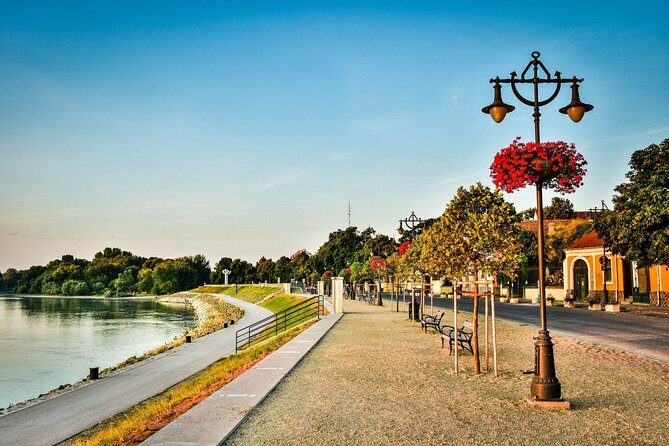
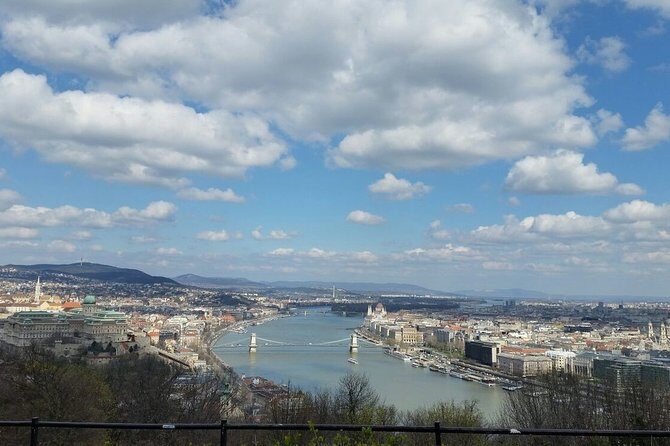
The Danube is the emotional and visual center of Budapest. Even in five minutes, the river view helps your brain connect the neighborhoods to each other. On a Segway, you also get to cover ground around it without feeling like you’re stuck in traffic.
Stop 9: Buda Hill Funicular (Castle Funicular)
This stop gives you a practical city-transport connection: you see the funicular area even if you’re not riding it during the tour. It’s useful because it reminds you how Budapest moves people up and down the hill efficiently.
Stop 10: Shoes on the Danube Bank (Jewish Memorial)
This is the somber pause in the itinerary. The format here matters: you’re not racing through it as a generic “photo stop.” A good guide will frame what you’re looking at so the moment lands. Still, with limited time, you’ll want to absorb quietly for a minute before you head back onto the Segway.
Stop 11: Hospital in the Rock Nuclear Bunker Museum
This is the most “different” stop on the route—a bunker museum setting that adds tension and history to a day that started with viewpoints. You won’t get deep museum time in a short stop, but it’s a strong contextual waypoint, especially if you like understanding how cities prepare and adapt in hard times.
Stops 12–15: Erzsébet Bridge, Fountain of King Matthias, Trinity Square, National Archives
Stop 12: Erzsébet Bridge (Erzsebet Hid)
Bridges in Budapest are visual anchors. This brief stop helps you connect the river views with major city crossings, and it also helps you understand the shape of the route you’re on.
Stop 13: Fountain of King Matthias
The fountain adds an artistic and symbolic moment. It’s short, but fountains are great for quick detail shots—faces, carvings, and water textures can look great even when you only have a few minutes.
Stop 14: Trinity Square (Trinity square)
Trinity Square shifts the tone toward a civic square experience. Think of it as a “pause and look around” moment in the city fabric, a helpful contrast to the earlier church-and-river stops.
Stop 15: National Archives of Hungary
This is a landmark that adds an official, historical-institution feel. With a quick stop, your guide’s explanation is what makes it work—you get the name, the setting, and a bit of context without turning the ride into a long academic session.
Stops 16–17: Budapest Eye and Soviet Heroic Memorial
Stop 16: Ferris Wheel of Budapest (Budapest Eye)
This stop gives you a modern Budapest marker. Even if you don’t go up in the wheel during the tour, seeing it from the ground helps you clock the city’s newer landmarks alongside the older ones.
Stop 17: Soviet Heroic Memorial (Hero monument)
The final stop is again emotional and historical. This is a good way to finish: you end with a big, serious monument that makes you look back at the day with a broader lens, not just as a parade of pretty views.
Why the guide and the stories matter more than the speed
A Segway tour is fun because it’s fast. It can also get shallow if all you do is cover distance. What makes this one worth it is the professional live guide focus—plus full guided training that helps you actually ride comfortably and pay attention.
Some guides associated with this tour are known for clear translation and story-driven explanations, including hosts named Jahan and Hami. That matters because Budapest’s sights aren’t random. A good guide ties together the hills, the river, and the landmarks so the city feels like one connected place instead of a checklist.
If you’re choosing between a Segway ride and a standard walking tour, the difference is the “distance-per-attention” ratio. Here, you’re covering more ground while still getting guided context at each stop, which is exactly what you want on a tight schedule.
Photo service on a moving day: how to use it without losing your spot
The tour includes photo service, which is great because your hands are busy with your Segway. The practical trick is simple: keep your eyes up when your guide signals a photo moment, and don’t get stuck fiddling with your own camera while the group is moving.
Because each stop is about five minutes, you also need to decide in advance what you want:
- One wide shot that shows the setting
- One close shot that captures a detail
- One quick memorial or church-spot photo, depending on your priorities
The included photo service can cover the group-shot side, which is useful if you don’t want to rely on strangers asking to take your picture. You’ll still want to take a few yourself, but you can do it at a calmer pace rather than sprinting at every location.
Riding on hills: the part you’ll either love or you’ll want to prep for
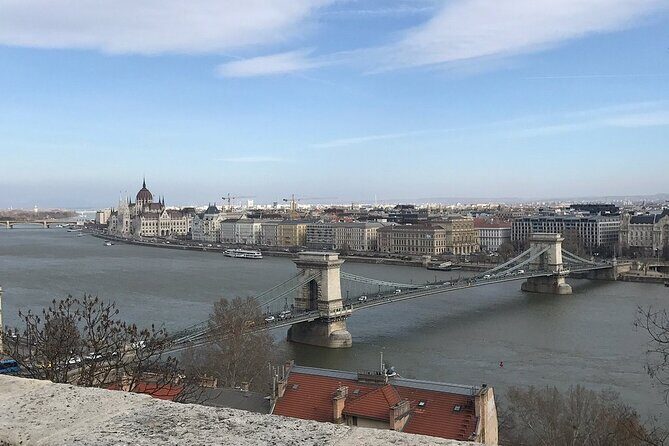
Buda Hills are not flat. That’s the whole point. A Segway turns uphill effort into something more manageable, so you can spend energy on looking and listening instead of sheer walking legs.
You do go up and down as part of the route, so the experience works best if you’re comfortable with short periods of active riding. If you’re uneasy about balance or have any concerns, you should check with the operator before you commit. The tour notes that most people can participate, but comfort on a moving platform is still personal.
Also, expect the ride to be physical in a light way. You’re not hiking, but you are upright, steering, and paying attention for safety. That’s why the training time is included.
How this tour compares to other ways to see Budapest
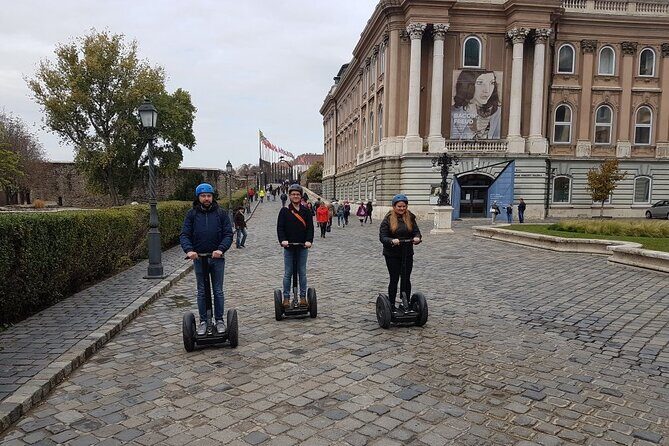
This style of tour is best when you want speed and structure. It’s not best if you want to:
- linger for long museum visits
- shop and stop for snacks repeatedly
- take hours to chase one perfect view
Compared with walking, you gain time and reduce fatigue. Compared with a car tour, you gain mobility without losing the ability to stop quickly and step out for photos. It’s also a good “first-day” or “first-Buda-day” plan because the route hits both scenic lookouts and city landmarks.
Weather and raincoats: the small detail that saves your photos
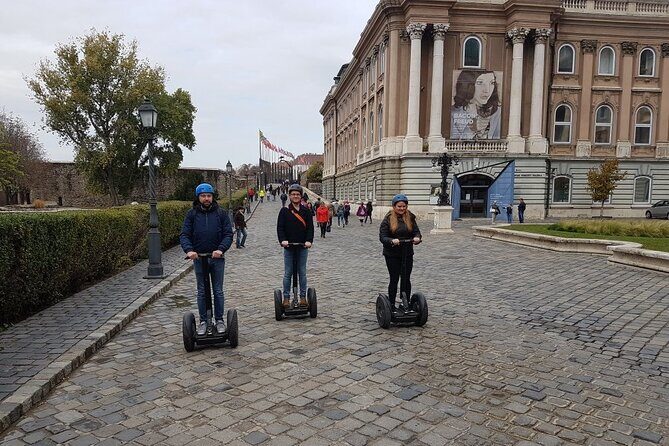
Rain happens in Budapest. You’re given raincoats if needed, which keeps the ride more comfortable and helps you avoid the common problem of stopping sightseeing early because you’re damp and cold. It’s a simple inclusion, but it affects the whole mood of the day.
If you’re photographing, rain can even create softer lighting. The key is staying warm enough to keep moving and not turning the tour into a shiver-fest.
Should you book the Buda Hills 2-Hour Segway Tour?
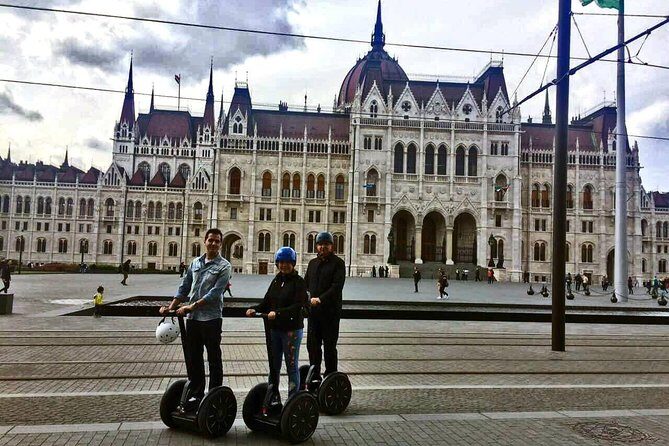
Book it if you want a fast, guided way to connect Budapest’s Buda Hill views to key city landmarks and Danube moments in about two hours. It’s especially good for getting your bearings, taking lots of photos without overplanning, and spending your energy on enjoying the scenery instead of commuting.
Skip it or pair it with a second plan if you need long time at any one site. The pace is designed for coverage, so you’ll get quick looks at big places—then you’ll likely want to return later if something really grabs you.
If you do book, choose the option that matches your style. The tour notes that private options can adjust the itinerary, so if there’s a specific landmark you care about, ask about fitting it in. And if English guidance is your preference, you’re covered there.
FAQ
FAQ
How long is the Buda Hills Segway tour?
The tour is about 2 hours.
How much does the tour cost per person?
It costs $71.38 per person.
Is the tour offered in English?
Yes. The tour is offered in English.
Where does the tour start and end?
It starts at Budapest, Galamb u. 3, 1052 Hungary, and it ends back at the same meeting point.
What’s included with the tour?
Included are a professional live guide, full guided training, all necessary equipment including helmets, photo service, and raincoats if needed.
What is not included in the price?
Gratuities are optional and not included.
What is the cancellation policy?
You can cancel for a full refund up to 24 hours in advance of the experience start time.