REVIEW · BUDAPEST
Budapest: Rent a Wide-Wheel E-Scooter
Book on GetYourGuide →Operated by Excelia Tours Kft · Bookable on GetYourGuide
Budapest on wheels beats walking. I like the fast, self-paced way the MonsterRoller gets you from the Hungarian Parliament photo stop to St. Stephen’s Basilica, and I really enjoy the panoramic views you can reach quickly around Gellért Hill and Buda Castle. One thing to watch: your time can feel tight if you push far off the central loop, so plan a route with a return buffer.
This is a no-frills setup. You meet the scooters at Bécsi u. 8 (look for the E-Magine sign, about a 2-minute walk from Deák Ferenc tér metro), grab your helmet and lock, get a short practice, then you’re free to ride where you want.
In This Review
- Key points before you rent
- Renting a Wide-Wheel MonsterRoller: quick setup and first minutes
- Price and timing: what $30 for 1–3 hours buys you
- Parliament to Castle Hill: how the central loop feels on wheels
- Gellért Hill, Chain Bridge, and Buda Castle views without the suffering
- Margaret Island and Heroes’ Square: adding parks and parade-room streets
- St. Stephen’s Basilica and Fisherman’s Bastion: photo stops that feel like moments
- Riding in traffic: how to stay confident after the first few minutes
- What’s included, what to bring, and what’s not allowed
- Who this scooter rental suits best (and who should skip it)
- Should you book this Budapest wide-wheel e-scooter rental?
- FAQ
- Where is the meeting point for the e-scooters?
- How long is the scooter rental?
- What’s included with the rental?
- Do I need a driving license?
- Can I ride the scooter along bike lanes?
- What restrictions should I know before riding?
Key points before you rent

- Self-guided freedom: stop for photos, coffee, or a side street detour whenever you feel like it
- Built for sight stops: easy access to landmarks like Parliament, Basilica, Margaret Island, Heroes’ Square, Chain Bridge, and Fisherman’s Bastion
- Panoramas without the climb tax: Gellért Hill and Castle District viewpoints become practical
- Use bike lanes like an e-bike: it’s treated as an e-bike, so you can take advantage of bike-lane flow
- You control the pace, but not physics: the closer you stay to the central sightseeing corridor, the less likely you’ll feel rushed at the end
Renting a Wide-Wheel MonsterRoller: quick setup and first minutes
The whole appeal here is simple: you get wheels, you get freedom, and you don’t have to stay on a rigid walking route. The scooter is a MonsterRoller e-scooter designed to be easy to learn, with only a few minutes of practice needed before you’re comfortable. You’ll also get a helmet and a lock, plus gloves in cold weather and a rain poncho if weather calls for it.
One detail I appreciate: you don’t need a driving license. That takes away a common worry for people who are used to paperwork when trying a new mobility option. Also, since your Luna Bike qualifies as an e-bike, you can travel along the bike lanes. In a city like Budapest, that small detail can make the ride less stressful because you’re not constantly trying to guess where you should be.
Meeting is also pretty straightforward. You’re looking for scooters outside the store at Bécsi u. 8, and the sign to watch for is E-Magine. If you’re arriving by metro, it’s an easy hop from Deák Ferenc tér (lines M1, M2, M3). Give yourself a few minutes to find the right spot, especially if you’re planning to start right at your chosen time.
A few more Budapest tours and experiences worth a look



Price and timing: what $30 for 1–3 hours buys you
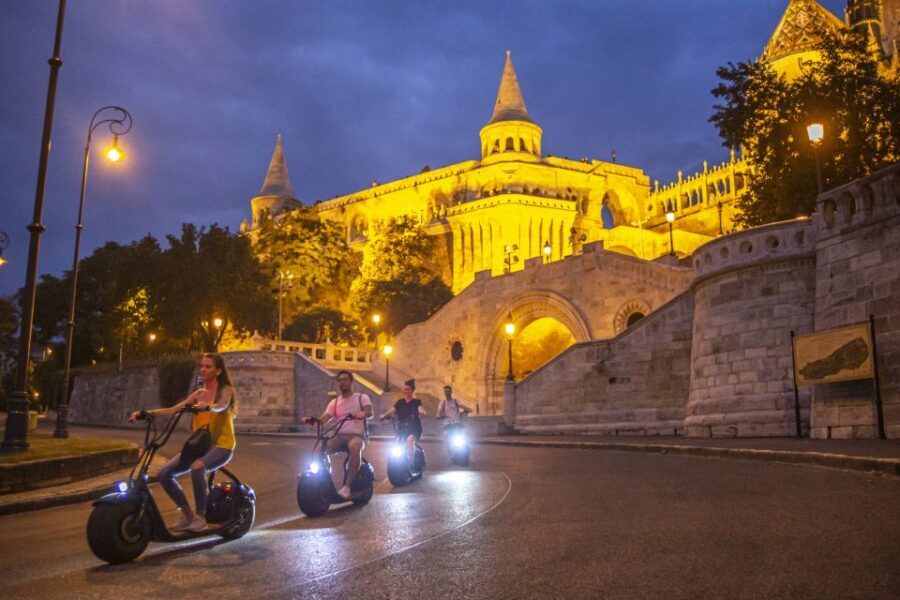
At about $30 per person for 1–3 hours, the value comes from time math. Budapest is spread out, and even when things are close, you can lose time climbing hills, crossing busy areas, or walking from one viewpoint to the next. With an e-scooter, you can cover more ground than walking or public transport while still stopping whenever you want for photos and breaks.
That said, the biggest mistake people make is trying to do too much. One review-style lesson stands out: if you go too far from the core sightseeing zone, you might feel limited as you head back, even if you booked a longer window. So I treat the rental duration like a planning tool, not a blank check. If you want multiple viewpoints on both banks, keep your route sensible and avoid big detours.
For most visitors, the sweet spot is a tight loop that hits the main sights you’d otherwise struggle to connect efficiently. You’ll likely feel best if you choose your “must-see” list first, then let the scooter fill in the gaps between them.
Parliament to Castle Hill: how the central loop feels on wheels
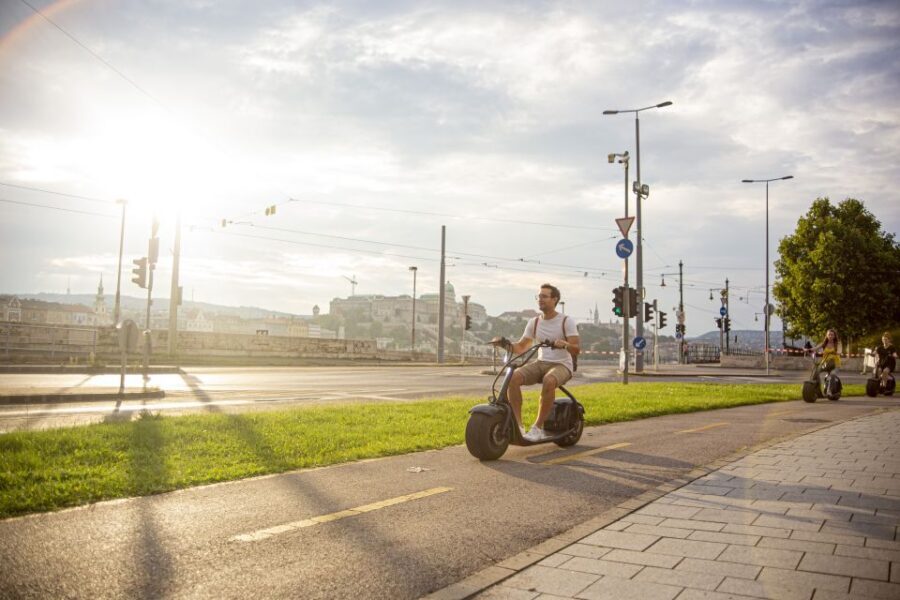
Your ride starts in central Budapest and quickly moves into the classic sights people come for. The schedule includes a Hungarian Parliament Building photo stop, then onward to Castle Hill for both riding and visiting.
The Parliament stop is a good first move because it anchors your trip visually. You get an iconic view without committing to a long walk early on. Take a few photos, look at the area around the river, then roll on before you lose your momentum.
From there, Castle Hill is the area where the scooter really earns its keep. You’re still doing a hill-and-heritage district, but the scooter reduces the amount of slow, stop-start effort it takes to bounce between viewpoints and walking streets. The plan also includes time to visit once you’re there, not just ride through. That balance matters: you want the atmosphere of the Castle District, not only fast transit.
A practical note: Castle-area streets can feel more crowded near viewpoints and photo spots. Ride slow, watch for pedestrians, and treat this section like a photo day rather than a race. The payoff is that you’re positioned for the next wave of panoramic stops without burning your legs.
Gellért Hill, Chain Bridge, and Buda Castle views without the suffering
The ride’s big visual reward comes from the viewpoints. After Castle Hill, your itinerary includes Gellért Hill for sightseeing. This is the kind of spot where you want time to pause, scan the river, and get that layered Budapest look—without spending ages working your way uphill on foot.
Next comes the iconic connector: Chain Bridge. The plan includes sightseeing and scootering through this stretch. The bridge is a classic scene for good reason: you get river views and a clear sightline between the sides of the city. On a scooter, it’s easier to stop at the right moments and then move on, instead of doing a slow shuffle and hoping you found the best angle by luck.
After crossing the Danube, you’re lined up for some of Budapest’s most famous “postcard” territory. The itinerary specifically calls out Fisherman’s Bastion as a photo stop and sightseeing point. Even if you do only a short visit here, it’s one of the places where arriving with fresh energy makes a difference. You’ll get more out of it when you’re not already exhausted from climbing and walking all day.
Margaret Island and Heroes’ Square: adding parks and parade-room streets
Not every part of Budapest sightseeing needs to be uphill and stone-heavy. The route makes room for breathing space with Margaret Island and a grand-city interlude at Heroes’ Square.
At Margaret Island, the plan gives you free time plus scooter riding. That’s smart because the island works best when you can slow down. You can wander through gardens and fountains and check out medieval ruins without worrying about squeezing every stop into tight timing. On a scooter, you can travel between sections quickly, then actually enjoy the quiet you’re looking for.
Then you head toward Heroes’ Square, with Andrássy Avenue on the way. The avenue is listed as World Heritage, and the route also includes the quieter stretch through City Park. This is a useful transition: you go from island calm to a broad, ceremonial city space where the architecture does the talking. Ride the scooter to move through the area efficiently, but plan to step off and take a careful look once you’re there.
Because the trip is self-guided, you decide how long to linger in each “big scene.” If you’re the type who likes photos, Heroes’ Square is a great anchor. If you prefer walking, use the scooter to connect, then explore on foot for a short while.






St. Stephen’s Basilica and Fisherman’s Bastion: photo stops that feel like moments
Your schedule includes St. Stephen’s Basilica as a photo stop. It’s the kind of landmark that benefits from a quick plan: you arrive, get your shots, and keep your route moving so you don’t lose time. A photo stop works well on a scooter day because you’re collecting highlights without turning everything into a full detour.
Then later, Fisherman’s Bastion is another photo stop with sightseeing. This area is known for views, but it’s also a great place to slow down and absorb details once you’re there. Use your scooter to position yourself close and then give yourself enough time to enjoy the angle rather than just snapping and leaving.
One reason these two stops work in the same rental window is variety. Basilica and Fisherman’s Bastion are different vibes: one is about the landmark presence, the other is about the panorama and viewpoint drama. If you’re only doing one side of Budapest, this pairing helps you feel like you saw multiple layers in a short time.
Riding in traffic: how to stay confident after the first few minutes
The scooter is easy to learn, but Budapest traffic is still traffic. The most common early challenge is navigating around cars, buses, and buses pulling into traffic flow. The good news: after you find the rhythm, riding becomes much more fun and less stressful.
Here’s how I’d make it easier on yourself:
- Take your first minutes to practice smooth starts and controlled turns, especially near intersections.
- Stick to safer routes where pedestrians are obvious and you can slow down quickly.
- Keep a calm pace on busy sight stretches, even if you feel ready to go faster.
Also remember the “plan like you’ll actually need it” theme. The ride is convenient, but it’s not magic. One lesson from the experience is that the farther you push away from the central loop, the more you risk feeling tight on time when you head back.
What’s included, what to bring, and what’s not allowed
You get a practical set of gear: helmets, a lock, and gloves in cold weather. If it looks like rain, you’ll also get a rain poncho depending on conditions. That’s the kind of inclusion that keeps you from turning your sightseeing day into a wet, distracted mess.
Bring a passport or ID card. And keep a few rules in mind: no alcohol and drugs, and bare feet aren’t allowed. The experience also isn’t suitable for pregnant women or people with mobility impairments, based on the activity’s requirements.
Even though it’s self-guided, think like a responsible rider. You’ll get the freedom to stop and explore, but you’re still sharing space with people on foot and vehicles.
Who this scooter rental suits best (and who should skip it)
I think this works best for visitors who want efficiency without sacrificing flexibility. If your ideal day is a mix of famous sights and occasional side streets, a self-guided scooter rental is a good match. It’s also a great fit for couples, friends, or anyone who can ride after a short practice and wants to set their own pace.
It might be less ideal if you’re looking for a guided explanation of each place. This is not a tour with a guide; it’s a self-guided ride where you decide when to stop. If you want context, you’ll likely rely on your own reading or your phone while you’re there.
Finally, if your mobility needs make scooter riding uncomfortable, you’ll want to choose a different Budapest plan. And if you’re nervous about traffic, give yourself extra time to get settled and choose a route that keeps your stress low.
Should you book this Budapest wide-wheel e-scooter rental?
Book it if you want a practical way to hit major highlights—Parliament, Castle Hill, Gellért Hill, Margaret Island, Heroes’ Square, Chain Bridge, and Fisherman’s Bastion—without losing half your day walking or getting caught in long transfers. The value is strongest when you use the scooter for the connections and viewpoints, then slow down where the place earns your attention.
Consider skipping or switching your plan if you’re the kind of traveler who wants to roam far beyond the central areas, because you may end up feeling pressed for time when it’s time to return. Also, if traffic makes you tense, start conservatively and give yourself room to learn the rhythm.
If you’re deciding right now, this is an easy yes for most people doing Budapest for the first time—especially if you like the idea of turning sightseeing into motion and keeping the day flexible.
FAQ
Where is the meeting point for the e-scooters?
You meet at Bécsi u. 8, and you should look for the scooters in front of the store and the E-Magine sign. It’s about a 2-minute walk from Deák Ferenc tér metro station (lines M1, M2 and M3).
How long is the scooter rental?
The duration is 1 to 3 hours, depending on availability and the starting time you choose.
What’s included with the rental?
Included items are helmets, locks, and gloves in cold weather. You may also receive a rain poncho, depending on weather.
Do I need a driving license?
No. The activity states there is no need for a driving license.
Can I ride the scooter along bike lanes?
Yes. The Luna Bike qualifies as an e-bike, and you can travel along the bike lanes.
What restrictions should I know before riding?
You’ll need to bring a passport or ID card, and you must not ride with alcohol and drugs. Bare feet are not allowed, and the activity is not suitable for pregnant women or people with mobility impairments.