REVIEW · BUDAPEST
Budapest Exoskeleton Robotics Powered City Walk
Book on Viator →Operated by E-Magine Rides Budapest · Bookable on Viator
You get superpowers for a Budapest walk. An exoskeleton makes steep bits feel way more manageable, and you still get classic sights and photo-ready viewpoints. My favorite parts are the hill help and the mix of terrain, but note the gear is not medical equipment, so it needs a basic level of comfort with wearing it and walking.
I also like that this keeps you active without turning the day into a slog. You start near Várkert rkp, get a briefing plus a fitting and test, then spend about 2.5 hours moving from Gellért Hill down toward the river. One consideration: the route depends on good weather, since the walk uses outdoor paths and slopes.
Finally, the small group size helps the experience feel personal. With a max of 8 people, you’re not stuck waiting in a huge line, and the guide can help you get the hang of modes for climbs and stairs.
In This Review
- Key things to know before you go
- Robot-leg briefing and what you’re really signing up for
- Meeting at Várkert rkp: timing that fits a sightseeing afternoon
- Gellért Hill: panoramic views with less leg burn
- Buda Castle: the hilltop payoff without the squats
- Fisherman’s Bastion and Castle Garden: quick hits, big angles
- Széchenyi Lánchíd: a bridge crossing that feels like a scene
- Price and value: why $71 can make sense here
- What the “robot legs” feel like in real life
- Who this tour suits best (and who should choose something else)
- Practical tips to make the most of your 2.5 hours
- Should you book this exoskeleton city walk?
- FAQ
- What is the duration of the Budapest Exoskeleton Robotics Powered City Walk?
- Where does the tour start?
- What time does the tour start?
- How much does it cost?
- Is the tour offered in English?
- What’s included in the price?
- Are meals included?
- Is the exoskeleton a medical device?
- What group size should I expect?
- What happens if weather is poor?
Key things to know before you go
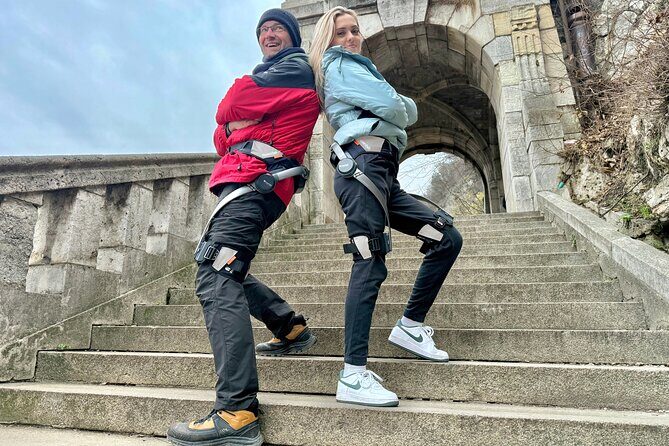
- Hypershell exoskeleton assist: walking feels lighter on hills and stairs, not like you’re riding a bike.
- Briefing, fitting, and testing included: you don’t just get handed a device and sent off.
- Terrains on purpose: climbs, rough paths, and steep sections are part of the route.
- Big viewpoints, short stops: you get timed photo windows at the best skyline angles.
- Small group cap (8): better pacing and more guide attention.
- English tour with a mobile ticket: easy to use while you’re sightseeing.
Robot-leg briefing and what you’re really signing up for
This is not a sit-and-watch tour. It’s a powered walking experience built around Budapest’s hilly layout, where the city does you zero favors if you’re trying to do everything on foot.
The included setup matters: you get a briefing, then a fitting and hands-on testing before you start moving. That time helps you understand how the assistance works for uphill, downhill, stairs, and descending sections—so you’re not guessing once the real slopes begin. And yes, it still feels like walking. You keep your pace, you move your legs, and the machine helps carry some of the effort.
The route is designed for the way Budapest actually feels under your feet: hills above the Danube, stair climbs, and a final crossing into the city’s flatter streets. If you want a normal sightseeing stroll, this might feel like more fun than you expected. If you want to cover ground without suffering, this hits the sweet spot.
You can also read our reviews of more walking tours in Budapest



Meeting at Várkert rkp: timing that fits a sightseeing afternoon
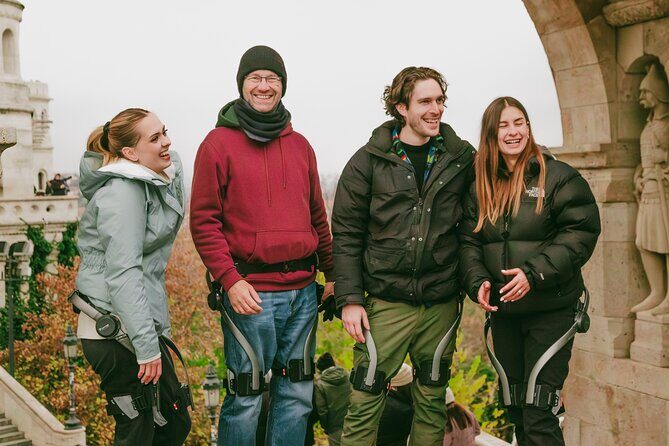
You meet at Budapest, Várkert rkp. 16, 1013 Hungary, starting at 1:30 pm. The total time is about 2 hours 30 minutes, and the tour ends back at the same meeting point.
Why that timing works: late afternoon in Budapest often comes with better light for photos, and you’re not forced to choose between a long morning climb and an evening museum plan. You also get a nice flow—start high on Gellért Hill, then gradually work your way through castle-area landmarks, and finish with the bridge crossing back toward the center.
It’s a group tour, offered in English, and you’ll use a mobile ticket. With a max of 8 travelers, you can usually stay with the group at a steady pace instead of playing catch-up.
Gellért Hill: panoramic views with less leg burn
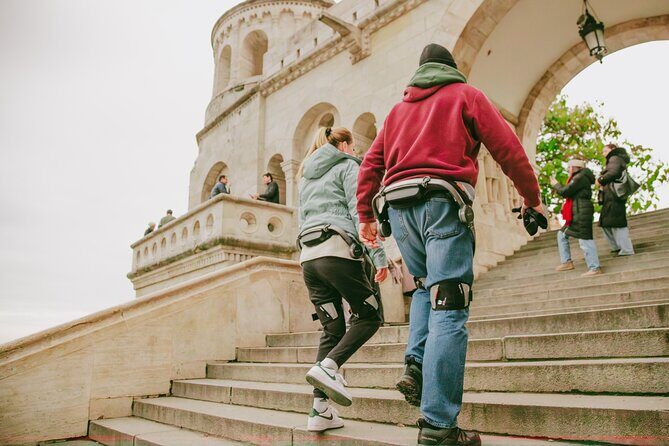
Stop 1 is Gellért Hill, and it’s the kind of place where Budapest looks like it was made for postcards. From above the Danube, you get that classic sweep showing both sides of the city. The walking paths here also cut through a protected natural area, which adds a slightly wilder feel compared with the tighter streets of the castle district.
The practical win is the grade. Gellért Hill can be a workout in regular shoes, especially if you’ve already walked a lot that day. With the exoskeleton assistance, uphill movement becomes easier to control. The device helps so you keep moving without your legs fading early—so you can actually enjoy the stops, not just reach them.
You’ll spend about 1 hour here. Since it’s a hill and viewpoints, bring your patience for photo pauses. The reward is big: landmark views like the Citadel and the Liberty Statue sit at the top, and the area’s trails give you angles beyond the main overlook points.
Buda Castle: the hilltop payoff without the squats
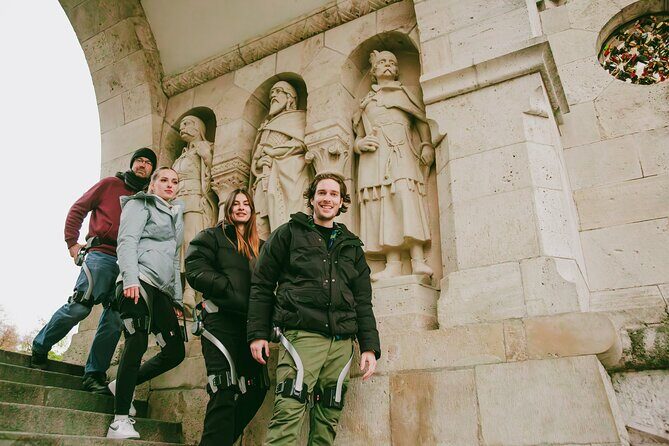
Next comes Buda Castle for about 45 minutes. This area is famous for its layered story—royal seat origins, wartime damage, later rebuilding—and it also delivers that special hilltop feeling where every direction looks like a view.
The exoskeleton’s real value shows up here again. Castle-area walking often includes slopes and stair segments, which can turn a sightseeing plan into a leg-training session. With assistance, you can keep your energy for the actual moments that matter: looking out over the city, taking photos, and moving at a pace that feels more comfortable.
One subtle benefit: because the device helps with the physical effort, you’re less likely to rush. That means you can spend a little time choosing your viewpoint instead of just sprinting to the next spot.
Also note the stop is marked as admission ticket free, so this portion is about wandering and views rather than forcing a paid entry into a specific museum or exhibit.
Fisherman’s Bastion and Castle Garden: quick hits, big angles

Then you move to Fisherman’s Bastion for about 15 minutes. It’s known for fairy-tale towers, but what you’ll really love in a short time window is the view line—especially the angle that gives a strong view toward the Parliament area. Because the stop is brief, you’ll want to be ready to move fast between photo points once you’re there.
After that, you visit Castle Garden for about 15 minutes. This spot has a layered identity: once a glamorous riverside garden, then a ruin, now a revived cultural terrace space. In practice, what you get is that “backstage access” feeling—stairs and terraces where you’re close enough to the Danube to feel the setting without being stuck on the busiest main streets.
Why I like this combo in one day: Fisherman’s Bastion gives you the headline fairy-tale skyline look. Castle Garden adds a softer, more walkable, terrace vibe with a sense of place. Even with short time blocks, they create variety, not repetition.
You can also read our reviews of more city tours in Budapest






Széchenyi Lánchíd: a bridge crossing that feels like a scene
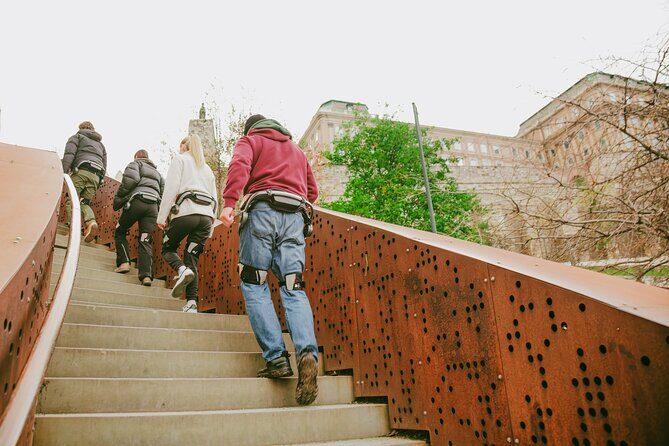
Your final stop is Szechenyi Lanchid (Széchenyi Lánchíd) for about 15 minutes. This is Budapest’s most iconic bridge, and crossing it at a walking pace changes the experience. It stops being a landmark you glance at from afar and turns into a slow-motion “here’s the city” moment.
You’re moving between Buda and Pest, and the river framing makes it feel like a transition. It’s also a nice way to close the tour: you end with a flatter, more open stretch where you can enjoy the view without constantly recalculating steps on a steep path.
The bridge time is short, but it’s timed well. You finish near the meeting point, so you’re not left with a long extra commute just to get back to your base.
Price and value: why $71 can make sense here
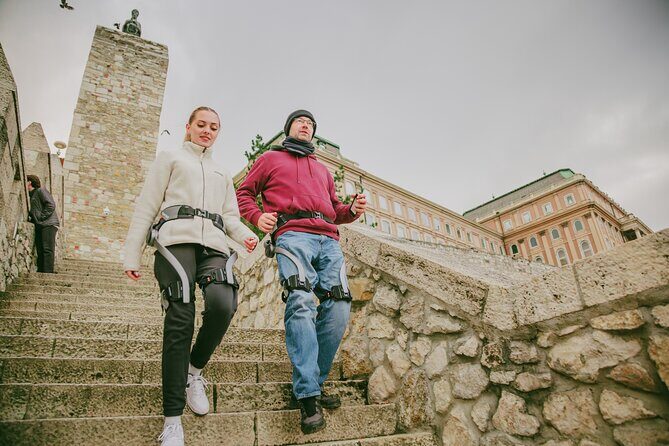
At $71.04 per person, you’re paying for more than a guide and sightseeing stops. You’re paying for the exoskeleton experience itself: the Hypershell exoskeleton device, the briefing plus fitting and testing, and a professional, certified guide.
If you’re the type of traveler who wants the big viewpoints but doesn’t want to spend the day in pain, this is where the value shows. Hills and stair-heavy districts are the main challenge in Budapest. When the device reduces that effort, you’re more likely to enjoy the entire itinerary instead of choosing only a couple of stops.
Group size also affects value. With a max of 8, you’re usually getting more attention during setup and less waiting. That’s part of why the experience tends to feel smooth and fun instead of stressful.
What’s not included: meals, hotel pickup/drop-off, and personal travel insurance. If you’re planning a full day, budget for food on your own before or after.
What the “robot legs” feel like in real life
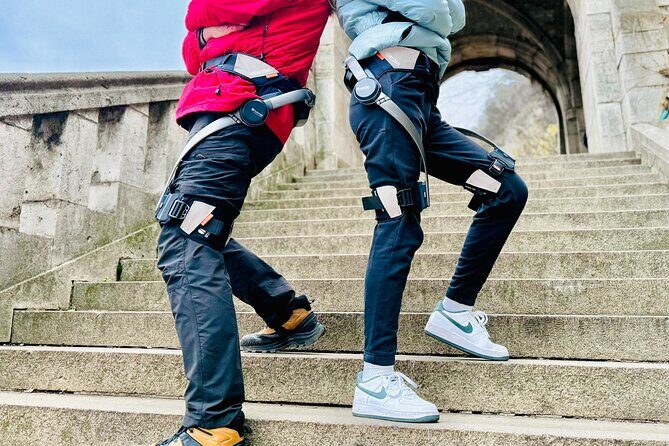
The best part of this tour is that it doesn’t turn walking into something fake. The assistance is described as natural and powerful, like a lighter step on hills rather than a heavy push you can’t control.
A few practical details from the way people talk about the experience:
- The device helps you keep moving on rough terrain, including rocky and muddy paths.
- It includes modes for different movement types: climbing, uphill, downhill, descending, and stairs.
- Once you’re used to it, you can treat the route like a normal city walk, just with less fatigue.
I’d frame it like this: you’re still walking through real Budapest. You’re just not paying the full physical cost for the city’s elevation changes.
One consideration: the exoskeleton is not considered an official medical device. If you have mobility concerns, talk to a professional before you book. And even if “most travelers can participate,” you still need to be okay with strapping into gear and walking continuously for a couple of hours.
Who this tour suits best (and who should choose something else)
This is a strong fit if you want classic Budapest sights but fear the “leg day” version of them. It’s also great for people who love walking, want more laughs than exhaustion, and like playful tech without it feeling like a gimmick.
It’s a good choice for:
- Sightseeing lovers who want less uphill suffering
- Visitors who can walk but want assistance for hills and stairs
- Travelers who want big viewpoints with fewer breaks
It might not be ideal if:
- You’re expecting a gentle, flat city stroll only
- You have concerns about using powered equipment (remember it’s not medical equipment)
- You’re planning around unpredictable weather and can’t be flexible
And if you’re traveling with service animals, the tour allows them. The tour is also marked as near public transportation, which helps if you don’t want to rely on taxis.
Practical tips to make the most of your 2.5 hours
Because the route includes hills, stairs, and natural paths, the little things matter.
First, wear shoes with decent grip. Some parts of Gellért Hill’s paths can be uneven, and the tour uses that terrain on purpose.
Second, keep your expectations realistic: this is about moving and sightseeing at a human pace. You’ll get short stops at major viewpoints, so if you want a very slow, long-photo experience, you may feel slightly time-pressed.
Third, show up ready for the full setup experience. The fitting and testing aren’t optional extras. They’re what makes the walking feel natural afterward.
Finally, check the weather. The tour requires good weather, and poor conditions can lead to a different date or a full refund.
Should you book this exoskeleton city walk?
Book it if you want Budapest’s best viewpoint loop—Gellért Hill to Buda Castle to Fisherman’s Bastion—without turning your day into a recovery mission. At $71, the value is strongest for travelers who know they’ll struggle with hills, stairs, or long walking days.
Skip it or consider an alternate tour if you only want flat streets and long, relaxed stops. Also think twice if you’re worried about powered equipment or you need a strictly medical-grade solution, since the device is not an official medical device.
If you like the idea of a small-group, guide-led walk that’s active, scenic, and genuinely different, this one is easy to recommend.
FAQ
What is the duration of the Budapest Exoskeleton Robotics Powered City Walk?
It lasts about 2 hours 30 minutes.
Where does the tour start?
It starts at Budapest, Várkert rkp. 16, 1013 Hungary.
What time does the tour start?
The start time is 1:30 pm.
How much does it cost?
It costs $71.04 per person.
Is the tour offered in English?
Yes, it’s offered in English.
What’s included in the price?
The price includes the Hypershell exoskeleton device, a briefing with fitting and testing, and a professional and certified tour guide.
Are meals included?
No, meals are not included.
Is the exoskeleton a medical device?
No. It greatly helps with walking, but it is not considered an official medical device.
What group size should I expect?
The tour has a maximum of 8 travelers.
What happens if weather is poor?
The experience requires good weather. If it’s canceled due to poor weather, you’ll be offered a different date or a full refund.