REVIEW · BUDAPEST
8 days European Highlights PRIVATE TOUR from Budapest including Budapest Vienna Prague and Bratislava
Book on Viator →Operated by Shuttlesfrombudapest · Bookable on Viator
If you like your travel plan organized, this one fits. It strings together Budapest, Vienna, Prague, and Bratislava with private guiding, smart pacing, and real time to wander on your own. I especially liked how smoothly the day-to-day logistics run and how your guide turns big sights like the Parliament and Prague’s Old Town Square into something you can actually follow.
Two things I really love: the private tours in each city (so you can ask questions and move at your group’s pace), and the fact that key highlights are paired with downtime, not just checklists. A small caution: several major entrances are not included, so you’ll want some cash or card ready for things like Matthias Church, parts of Schönbrunn Palace, and select Prague and Bratislava sites.
This is also the kind of trip that works well even if it’s your first time in these capitals. I saw that confirmed by guides like Susan in Budapest and Steve with a family group, plus Javier for another route. Expect a friendly, structured experience that keeps you from wasting your vacation time getting lost.
In This Review
- Key highlights worth paying attention to
- Price and what you’re actually getting for it
- Day 1: Smooth arrival in Budapest (including that pre-sightseeing calm)
- Budapest in one guided sweep: Castle views, Parliament drama, and Danube glow
- Budapest on your terms: optional Szechenyi Thermal Bath and free exploration
- Vienna: Ringstrasse architecture, opera grandeur, and Schönbrunn’s scale
- Prague: Old Town Square’s clock magic and the fortress-city feel
- A half-day of Prague freedom after the big sights
- Bratislava: Old Town compact charm and views from above
- Where this trip shines for first-timers (and for families)
- Tickets, meals, and the pace reality check
- Should you book this private European Highlights tour?
- FAQ
- What cities are included in the 8-day tour?
- Is this tour private?
- Are airport transfers included?
- What’s included for meals?
- Are tickets and entry fees included?
- What language is the guide?
- What time does the tour day start?
- Is hotel accommodation included?
Key highlights worth paying attention to
- Private guiding in every city so you get context, not just photo stops
- Central 3- and 4-star hotels that make walking and quick Uber-free sightseeing easier
- Danube evening cruise with a drink included for a softer, memorable end to Budapest
- Long-hit city anchors like the Hungarian Parliament, Vienna Ringstrasse, and Prague’s astronomical clock
- Flexible downtime built into the schedule so you can shop, snack, and wander
- Air-conditioned transport and punctual transfers that take the stress out of moving between cities
Price and what you’re actually getting for it
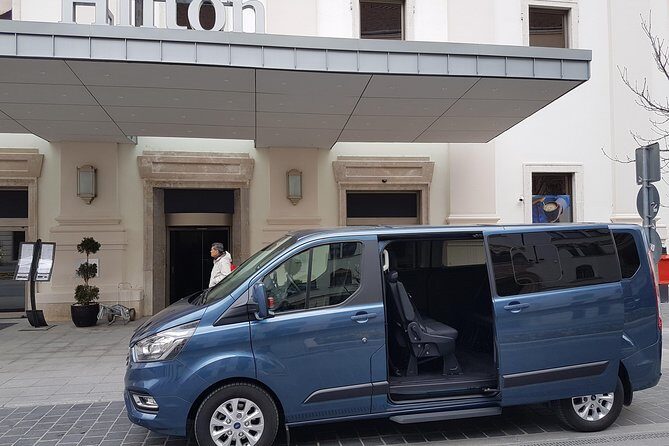
At $3,506.97 per person for 8 days, this is not a budget hop-on-hop-off deal. It’s a pay-for-convenience trip. You’re paying for private guiding, private transfers from Budapest airport on both arrival and departure, and dedicated transport by air-conditioned minivan/car. You also get 7 nights in central 3- and 4-star hotels, with breakfast included for 6 mornings.
The value shows up in how the trip is built: you get full guided sightseeing in each capital, then you’re not stuck inside a tour van all day. You’ll have time to walk streets on your own, shop for souvenirs, and pick your own lunch and dinner (since those aren’t included).
One more practical point: ticket coverage is mixed. Some entrances and experiences are included, like St. Stephen’s Basilica and the Danube cruise. Others, like Matthias Church and the interior visit at Schönbrunn Palace, are listed as not included. That means the real cost on the ground depends on what you choose to enter.
You can also read our reviews of more private tours in Budapest



Day 1: Smooth arrival in Budapest (including that pre-sightseeing calm)
Your first day is designed to keep you from feeling jet-lagged and instantly behind. When you arrive at Budapest airport, your driver meets you inside the arrival hall with a sign showing your name. Then you head to your hotel with a quick smoothie drive to help you settle in.
If you’re traveling with kids, older family members, or anyone who hates the first-day scramble, this matters. You’re not negotiating taxis or waiting around with everyone else. You’re also not losing your first afternoon to logistics.
Tip I’d give you: if you land before your guide day starts, use the hotel area to walk off that travel stiffness. Central placement helps.
Budapest in one guided sweep: Castle views, Parliament drama, and Danube glow
Budapest is the kind of city where the big sights can feel disconnected unless someone helps you stitch them together. This plan does that through a compact, logical loop.
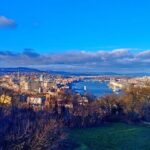
Start in the Castle District area. You’ll visit Fisherman’s Bastion, which is famous for city views over the Danube and the Pest skyline. Even if you’ve seen pictures, it hits differently in person because you’re looking out from the ridge. From there, you continue with the nearby Matthias Church. The church itself is listed as not included for admission, but the guided walk is still part of the value. You’re there for the story and the setting as much as for the interior.
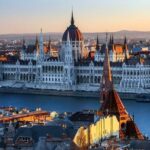
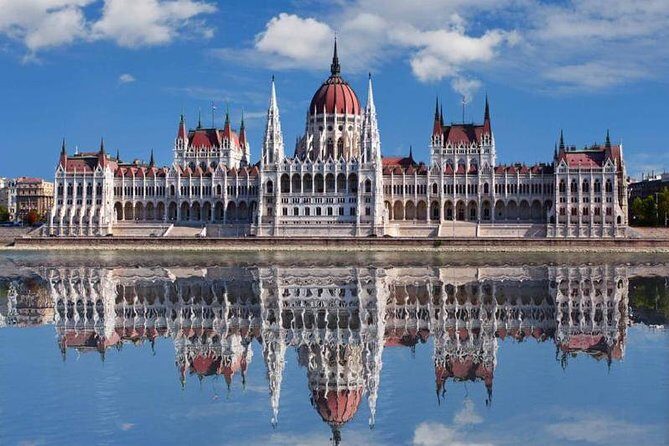
Then it’s over to the Hungarian Parliament Building. You’ll walk around the building and hear about its history. This is one of those places where architecture can be hard to read by yourself. A guide helps you understand what you’re looking at and why it matters.
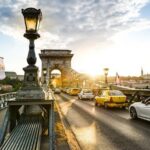
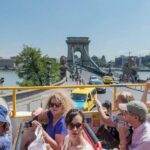
You also pass the history behind Szechenyi Chain Bridge—the first permanent Danube connection between Buda and Pest. That’s the kind of detail that makes your evening cruise later feel more connected to what you saw in daylight.
Next, you head to St. Stephen’s Basilica (Szent Istvan Bazilika) for an indoor guided visit. Admission is included here, which is a nice win. Budapest’s basilica is one of those interiors where it’s worth going inside instead of just taking a street-level exterior shot.
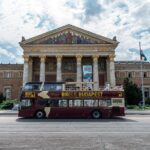
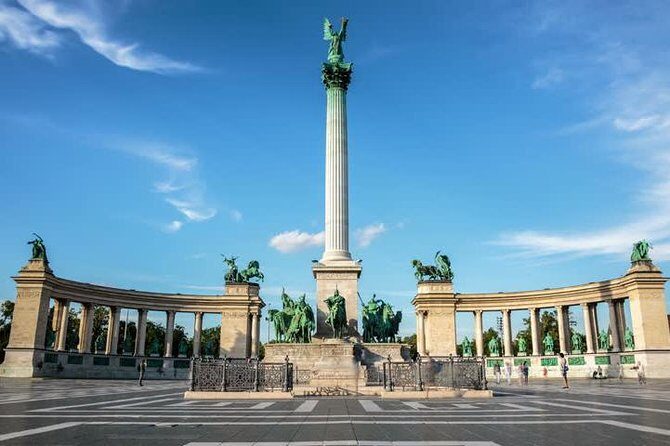
From there, the route opens up with Heroes’ Square, where the Millennium Monument commemorates 1000 years of Hungarian history. It’s big, formal, and very photo-friendly. Then you climb the Citadella area for views from Gellert Hill and the Liberty statue on top.
Along the way, you’ll also pass by Vajdahunyad Castle in the city park area. Even if you don’t enter, it’s a recognizable landmark and a useful visual marker for where you are.
And you’ll get a drive down Andrássy Avenue, one of Budapest’s elegant central boulevards lined with shops and places to eat. This is a good bridge between sightseeing and real-life city strolling.
Finally: the day softens with a 1-hour evening Danube river cruise with a drink included. Budapest is photogenic from the water, but the real payoff is the mood shift. You go from monuments and viewpoints to a slower, scenic perspective.
Budapest on your terms: optional Szechenyi Thermal Bath and free exploration
Not every Budapest day needs to be museum mode. You’ll get a day where you wander around the Baroque Old Town, based around the Main Square (Fo ter) area, with narrow streets and a local vibe connected to medieval ruins. You’ll have about 3 hours, including time for souvenir shopping.
This is also where the tour gives you an optional add-on: Széchenyi Thermal Bath. It’s listed as not included, but the details are helpful: it’s the largest public bath with 18 indoor and outdoor pools. If you’ve been doing mostly churches and palaces, this is a very different kind of “Budapest experience,” and it’s a good use of a day when your feet are tired but you still want something iconic.
My practical advice: if you go, book your timing so you don’t rush. Wear flip-flops, bring a swimsuit you trust, and plan for a slower evening afterward.
Vienna: Ringstrasse architecture, opera grandeur, and Schönbrunn’s scale

Vienna shows up with an immediate change in pace: wider streets, grand buildings, and a different kind of elegance. Your guided time focuses on the city’s “big architecture story,” so you learn how the city grew and why the center looks the way it does.
You’ll start with key sights tied to Vienna’s cultural world. The plan highlights Vienna State Opera and the Vienna Ringstrasse. The Ringstrasse is described as a striking architecture ensemble that’s part of a World Heritage Site, historic center of Vienna. The route includes sights you might otherwise miss if you’re just passing by: the Parliament, City Hall, Museum of Natural History, Vienna State Opera, and the Burgtheater.
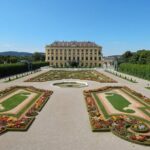
Then it’s time for Schönbrunn. You’ll see Schönbrunner Gardens first, including the Great Parterre and the Angel Fountain, plus statues and more. Garden time works well because it helps you acclimate before the palace itself. The gardens are listed as free, which makes the decision easy even if you’re cautious about extra tickets.
Next, you get the option/plan for Schönbrunn Palace interior, which is listed as not included. This is where you decide based on your interests. If you like royal rooms, ceremonial halls, and Habsburg grandeur, it’s often worth the extra entry. If you’d rather save ticket costs, you can still enjoy the gardens without feeling like you skipped the core.
After Schönbrunn, you get free time at Mariahilfer Strasse, one of Vienna’s major shopping streets. It’s listed as an hour, which is just enough time to browse without turning it into a second job.
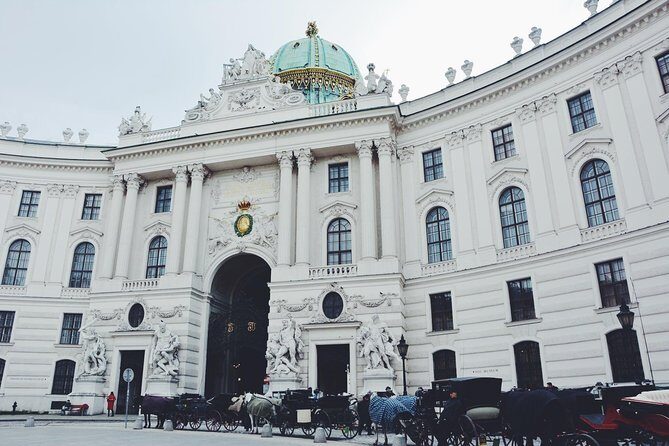
You also stop briefly at the Hofburg, the former principal imperial palace and now the President’s residence and workplace. Admission is not included, and the time is short, but the guided context helps you understand what you’re looking at.



Prague: Old Town Square’s clock magic and the fortress-city feel
Prague is the city where a good guided first pass saves you hours later. You’ll start at Staroměstská radnice and Old Town Square, where the layout is part of the drama. This is where you see the Old Town City Hall and the astronomical clock. The most memorable detail is what happens every hour: people gather to watch the rotating apostles around the clock’s centerpiece.
If you’re the type who wants to understand why it’s important, not just that it’s famous, this is a great stop to have a guide. The square also includes landmarks like the Church of Our Lady before Týn and St. Nicholas in the area.
You’ll also have the option of climbing the tower for views—this is mentioned as part of the experience, and it’s one of those choices that can make your photos look like you had a drone even if you don’t.
Next up: Charles Bridge. You get a short visit here with free admission, and you’ll understand its connection between the Old Town and Lesser Town (Malá Strana). Even in brief time, you’ll feel the pedestrian river traffic, and the twin towers on each end give you strong framing for photos.
Then the plan heads to Prague Castle, described as the largest ancient castle complex in the world, with multiple churches, palaces, towers, and halls open to visitors. Admission is listed as not included, but the guided orientation is where the castle becomes easier to explore later. The castle complex can feel confusing without a map in your head.
You’ll also visit St. Vitus Cathedral with free admission listed for the stop. It’s the largest and most important church in the country and a key Gothic landmark. You’ll spend time there, and it’s worth it even if you don’t consider yourself a church person.
A half-day of Prague freedom after the big sights
Day 6 is more about pacing. After breakfast, you get 3 hours of free time in the heart of Prague. That’s not just a break; it’s strategic.
Once you’ve seen Old Town Square and Charles Bridge earlier, your free time is when you can:
- walk side streets for cafés and small shops,
- stop for a focused photo moment,
- and find the views that match how you like to travel, not how the tour clock says you should.
It’s also when you can make room for food. One tip from a Budapest-to-Vienna-to-Prague trip: Vienna’s Wienerschnitzel is worth trying when you get the chance. Prague has its own local comfort foods too, and this free block is where you’ll choose what fits your schedule.
Bratislava: Old Town compact charm and views from above
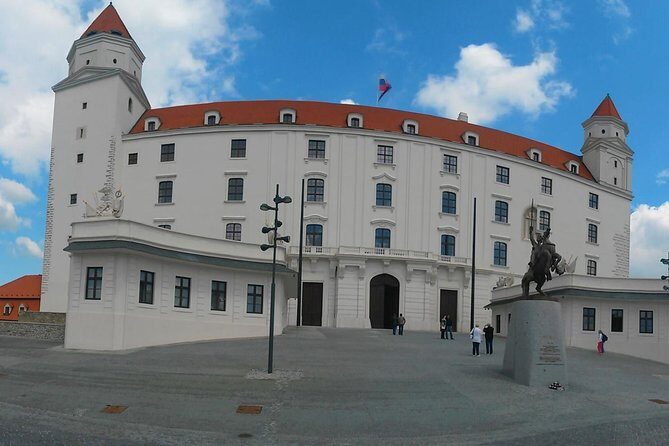
Bratislava is often treated as a bonus stop. Here, it’s given a proper guided day, so it doesn’t feel like a drive-by.
You start with Primate’s Palace, a neoclassical building in Bratislava’s Old Town with a pale pink and white look. Admission is not included, but the stop is short and visual—helpful if you want to understand the city’s layout fast.
Then you move into Bratislava Old Town, built around a lively medieval center. You’ll learn about St. Michael’s Tower and St. Michael’s Gate, with a preserved gate section from the fortified city structure. The guide also points out the oldest parts of streets like Michalská ulica.
You’ll see details like Zichy’s Palace at the corner of Ventúrska and Prepoštská Streets. You’ll also hear about major landmarks such as St. Martin’s Cathedral, described as the largest, oldest, and remarkable church from the 14th century.
The plan also includes “postcard” moments: the crossroads around Fisherman’s Gate and nearby streets where street musicians show up, plus the famous statue of Čumil that people like to photograph. And you get a view through the city’s rhythm at Fisherman’s Gate, including a statue of a man holding a hat.
The day includes about 2 hours for this walking and sightseeing block, listed as free admission during the Old Town segment.
Finally, you’ll visit the Grassalkovich Palace—also called the presidential palace, with the president of Slovakia residing there. It’s listed as not included, but you get about 1 hour and a look at the setting, including a fountain courtyard and a garden behind the property.
Where this trip shines for first-timers (and for families)
This itinerary is built for people who want a coherent overview. You get the big “anchor sights” in each capital, plus the context to make them make sense.
It’s also good for groups. The tour is explicitly private, meaning only your group participates. That matters with families because you’re not negotiating crowd flow. One family group with children had a great experience thanks to their guide’s day-to-day attention, and they also mentioned having free time to explore independently.
Even if you travel solo, a private structure can reduce decision fatigue. You still get time to wander, but you’re not constantly figuring out what to do next.
Tickets, meals, and the pace reality check
Let’s be honest: this is sightseeing-heavy. You’ll spend a lot of time walking and seeing. The upside is you cover a lot of ground in 8 days without wasting hours transferring on your own.
The trade-offs are simple:
- Lunch and dinner aren’t included, so you need a plan for meals.
- Some key entries aren’t included, so you may pay extra depending on what you choose to go inside.
- Some days list shorter timed segments, so you’ll want comfortable shoes and patience.
If you want a calmer vibe, pick your priorities. For example, you can treat one stop like the basilica or cathedral as a must-go interior, and treat another stop as a quick exterior and viewpoint moment.
Should you book this private European Highlights tour?
Book it if you want a low-stress, high-structure way to see Budapest, Vienna, Prague, and Bratislava with private tours, comfortable transfers, and central hotels. This is especially smart if it’s your first time in these cities, or if you want your guide to explain the why behind the where—like what the Ringstrasse connects, how the astronomical clock fits into Old Town Square, or why Budapest’s viewpoints matter.
Skip it (or adjust expectations) if you’re extremely ticket-sensitive, because several entrances and interior visits are not included. Also, if you hate schedules and prefer to drift without stops, this plan may feel like a lot.
FAQ
What cities are included in the 8-day tour?
The tour covers Budapest, Vienna, Prague, and Bratislava.
Is this tour private?
Yes. It’s a private tour/activity, and only your group participates.
Are airport transfers included?
Yes. There are round-trip private transfers from and to Budapest airport for both arrival and departure, plus pickup from your hotel or private address based on your preference.
What’s included for meals?
Breakfast is included for 6 days. Lunch and dinner are not included.
Are tickets and entry fees included?
Some are included and some are not. For example, St. Stephen’s Basilica and the Danube cruise are included, while other entrances listed as not included include places like Matthias Church and Schönbrunn Palace interior.
What language is the guide?
The tour is offered in English.
What time does the tour day start?
The listed start time is 9:00 am.
Is hotel accommodation included?
Yes. You get 7 nights in central 3 and 4-star hotels.