REVIEW · BUDAPEST
Budapest Art Nouveau Walking Tour
Book on GetYourGuide →Operated by insightcities.com · Bookable on GetYourGuide
Budapest turns architecture into a story. I love the way the tour makes Ödön Lechner’s Postal Bank feel like a headline, and I also love that you get into the entrance halls at major sites to spot Art Nouveau details up close. You’ll walk away with a clearer sense of why Hungarian Secession went so hard on porcelain and Asian motifs. One thing to keep in mind: weekend schedules can limit interior access, so the exact plan may adjust.
I also like that you’re not just looking at facades. This is led by an art/architecture historian in English, and the pacing is built for real observation—entrance halls, selected interiors, and multiple design “clues” you can carry to the next stop. If you want a quick sweep of turn-of-century Budapest with context, this is a strong fit.
In This Review
- Key things to watch for on this Art Nouveau walk
- Hungarian Art Nouveau in Budapest: Hungarian Secession, explained while you walk
- Price and value: is $123 worth 3 hours of Art Nouveau?
- How the 3-hour format works: what to expect from the walking pace
- Bedö House and the State Treasury stop: setting the tone before the big show
- Gresham Palace: seeing Art Nouveau inside the entrance hall
- The Postal Bank by Ödön Lechner: Hungary’s Gaudí moment
- Zsolnay porcelain tiles and Thonet House: ceramics as architecture, not decoration
- Rózsavölgyi utca and Paris Passage: the style continues beyond big landmarks
- Kazinczy Street Orthodox Synagogue: the Art Nouveau interior finale
- Weekend reality check: when interiors close and how the guide adapts
- Should you book this Budapest Art Nouveau walking tour?
- FAQ
- How long is the Budapest Art Nouveau walking tour?
- What does the tour cost?
- Is the guide available in English?
- Is this tour mostly walking?
- Are tram and metro tickets included?
- Where do we meet if there is no hotel pickup?
- Can you enter the Hungarian National Bank on weekends?
- Is the Orthodox Synagogue on Kazinczy Street open on Saturdays?
- Are there extra fees for certain sites?
Key things to watch for on this Art Nouveau walk
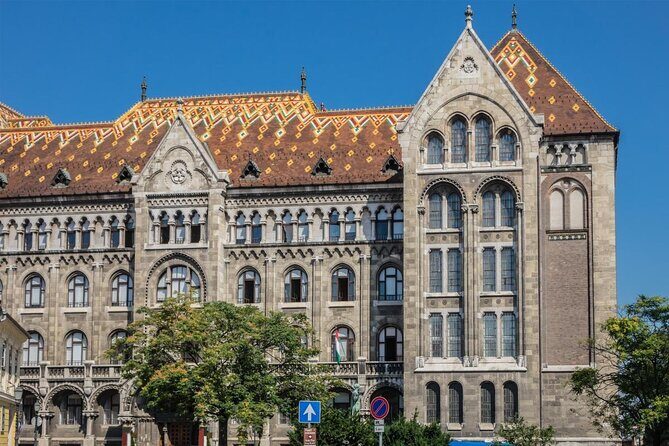
- Lechner’s Postal Bank details: why it’s often compared to Hungary’s Gaudí, and what to notice in the design
- Gresham Palace entrance-hall moments: exterior drama plus a look inside to connect the style
- Zsolnay porcelain tiles in real architecture: how Hungarian Secession used ceramics as a design language
- Asian motifs, European Orientalism, and Hungarian Secession: the why behind recurring design themes
- Kazinczy Street Synagogue as the finale: the Art Nouveau interior that leaves a lasting impression
- Sites that may switch on weekends: National Bank and synagogue access can change your route
Hungarian Art Nouveau in Budapest: Hungarian Secession, explained while you walk
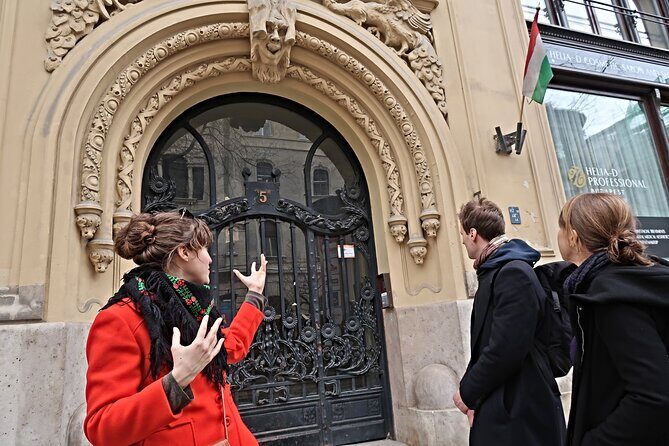
Budapest is packed with Art Nouveau, but this tour focuses on the Hungarian take on it, often called Hungarian Secession. The style spread across Europe around the turn of the 1900s, and Budapest’s version has its own personality: bold forms, lots of ornament, and a strong sense that design should feel modern and slightly dramatic.
What you’ll learn on the walk is that Hungarian Secession didn’t just copy trends from elsewhere. It pulled in ideas tied to the supposed eastern origins of the Hungarian nation—and then you’ll also hear how wider European Orientalism shaped the visual language of the era. That matters because it changes how you read the buildings. You stop thinking ornament is just decoration, and start seeing it as messaging: identity, ambition, cosmopolitan taste, and wealth expressed through design.
You’ll also get a practical lens on one of the most recognizable Hungarian signatures: porcelain. Zsolnay ceramics—famous from the south of Hungary in Pécs—show up as tiles and surfaces on facades. The effect is less subtle than you might expect. Instead of plain stonework, you see how ceramic finishes can make architecture look animated and layered, almost like the building is wearing its own jewelry.
And then there’s the big takeaway: this isn’t quiet, museum-only Art Nouveau. This is Belle Époque Budapest energy, presented through buildings that once signaled status and international outlook.
You can also read our reviews of more walking tours in Budapest



Price and value: is $123 worth 3 hours of Art Nouveau?
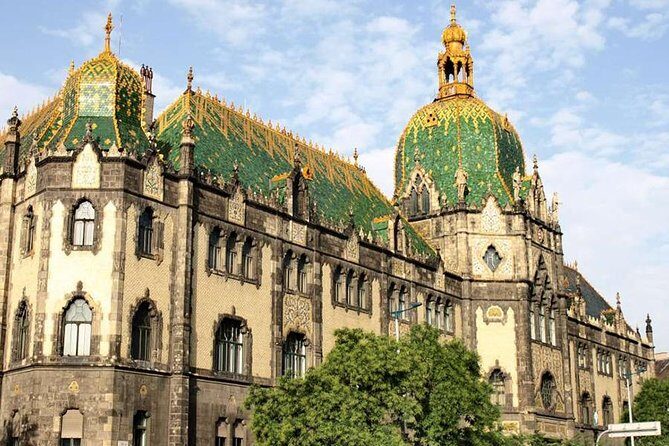
At $123 per person for a 3-hour walking tour, you’re paying for a historian guide and for time spent at places where you can actually see details—not just stand in front of them from the sidewalk.
Here’s where the value comes from. Two of the most important stops on the walk are buildings where visitors can go into the entrance hall—so you’re not limited to exterior photos. That matters because Art Nouveau design is often strongest where light hits ornament and where the plan of the interior reveals how the building designers thought.
You’re also covering multiple stops that connect the dots: not just one famous façade, but a sequence of structures that show how Hungarian Secession used ceramics, how designers repeated motif ideas, and how different buildings expressed affluence. For $123, that focus on context is the difference between a pretty walk and a satisfying one.
A caution: if some interiors aren’t accessible, you may pay modest extra for certain sites when they’re open. The tour may adapt to your interests, including options like the House of Hungarian Art Nouveau or the Kazinczy Street Synagogue interior, each with its own entry fee.
How the 3-hour format works: what to expect from the walking pace
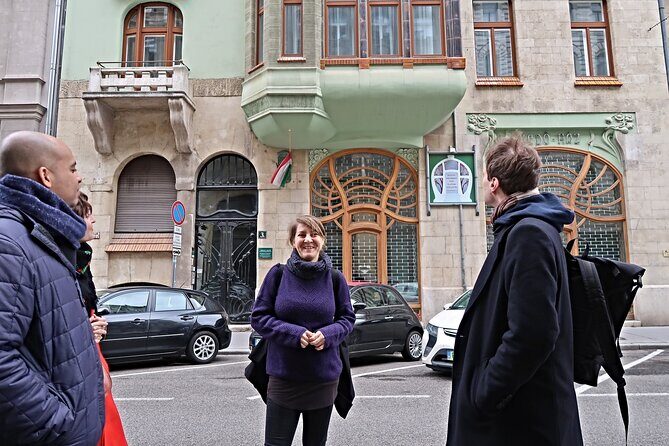
This is a 3-hour walking tour, so you’ll want comfortable shoes. The route is built to keep your attention moving between stops, with guided time at each place rather than long gaps on the street.
You should also plan for short transit breaks on foot only, because tram and metro tickets are not included. If you’re using public transport to get to the starting area, budget time to connect smoothly so you don’t arrive late and lose the first wave of discussion.
If you prefer a central meeting point instead of pickup, the meeting location is Madal Café, Budapest, Alkotmány u. 4. That’s convenient because you can anchor your day around it.
Groups are private or small group options, so the experience should feel more like a guided walk with discussion than a large bus-tour lecture. And since the guide speaks English, you won’t have to filter information on the fly.
Bedö House and the State Treasury stop: setting the tone before the big show
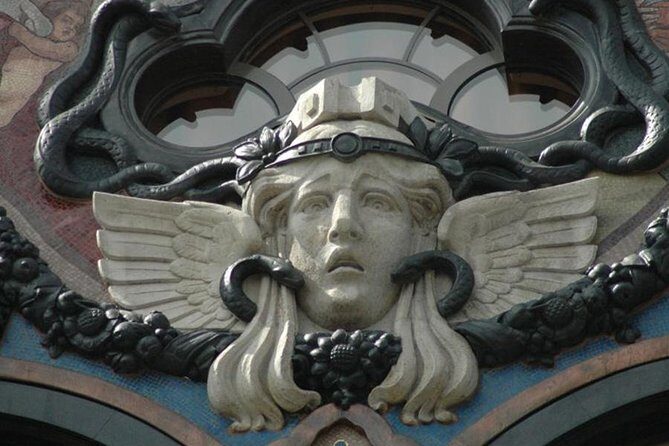
Early in the walk, you’re given guided time at Bedö House and the Hungarian State Treasury. Even without getting lost in jargon, this phase is important: it helps you calibrate what you’re looking at before you hit the headline buildings.
Expect your guide to point out how Art Nouveau designers used curves, surface patterns, and decorative thinking to make buildings feel less like blocks and more like crafted objects. This is the stage where you start noticing repeating themes that will show up again at the next stops.
The practical benefit? By the time you reach the major landmarks, you’ll recognize the style choices faster. You won’t just see fancy ornament. You’ll understand why it’s there and what it’s doing visually—especially when porcelain and motif ideas enter the picture later.
Also, because this is a walking tour with expert commentary, the timing at these early stops helps you avoid the common problem: arriving “open-mouthed” at the first flashy building, then forgetting what you just saw because you didn’t have a framework yet.
Gresham Palace: seeing Art Nouveau inside the entrance hall
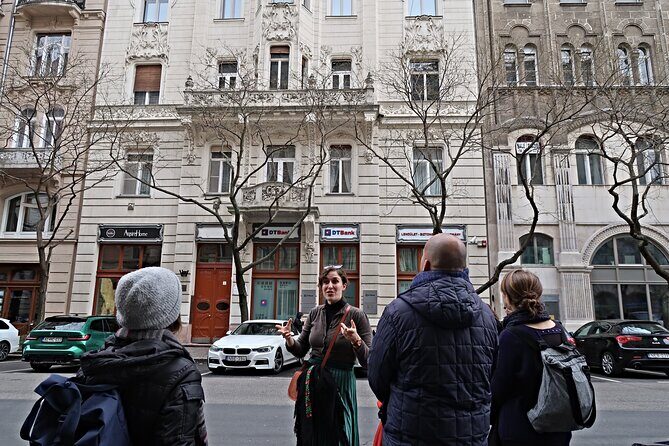
Gresham Palace is one of the tour’s core moments, and you get more than an outside look. The entrance hall is open to visitors, which gives you a rare chance to connect façade drama with interior design choices.
When you’re inside (even just in the entrance area), watch for how the building’s look “thinks in details.” Art Nouveau often uses design logic that continues across surfaces: patterns repeat, forms relate to each other, and materials carry the style. That’s the kind of connection a historian guide can make quickly, and it’s why the entrance-hall access is such a big deal on this tour.
Even if you’re not the type who reads architectural theory, you’ll still get value here. It’s simply easier to understand the style when you can stand in the space where ornament and design meet.
One consideration: because the tour depends on day-of-week conditions, some buildings have restricted access at certain times. The tour notes weekend limitations for specific sites, so if you’re going on a Saturday or Sunday, have a backup mindset: the guide can adjust to keep your experience meaningful.






The Postal Bank by Ödön Lechner: Hungary’s Gaudí moment
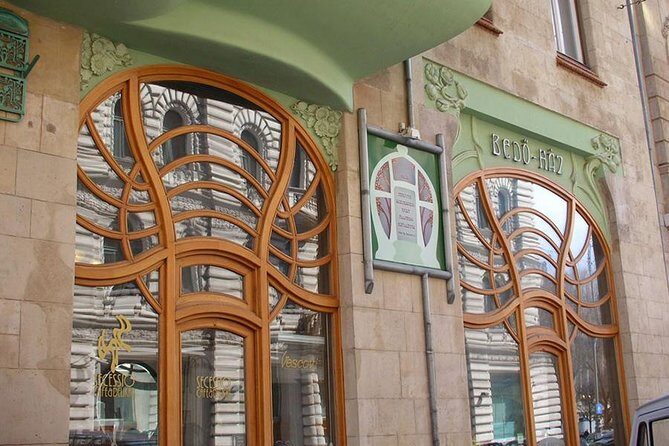
If you like Art Nouveau for the audacity, this is your stop. The tour highlights the Postal Bank by Ödön Lechner, often described as Hungary’s Gaudí. That nickname isn’t just marketing fluff. It points to the building’s willingness to be bold and theatrical—an aesthetic choice that matches the Belle Époque belief that architecture should impress.
What you’ll love here is the combination of flamboyance and design clarity. You’re not only admiring a spectacle from across the street. The tour includes time to examine the building’s important features and, like at Gresham Palace, you get access to the entrance hall area so you can see more of the design thinking up close.
Lechner is also a key to understanding Hungarian Secession. The guide’s job here is to show you how the style communicates modernity and national ambition at the same time. Keep your eyes open for how surfaces and ornament contribute to the overall rhythm of the building—because that’s where Hungarian Secession often feels most alive.
Zsolnay porcelain tiles and Thonet House: ceramics as architecture, not decoration
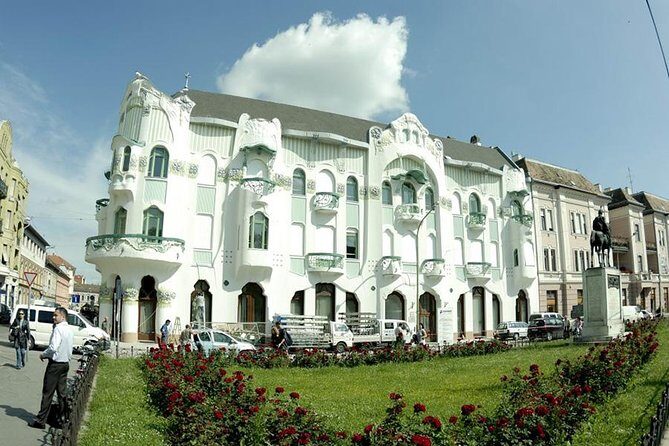
One of the most distinctive threads of this tour is the focus on Zsolnay ceramics. You’ll examine how Zsolnay porcelain tiles appear on facades, and this is a big part of what makes Hungarian Art Nouveau feel different from the rest of Europe.
At Thonet House, you’ll consider the use of Zsolnay porcelain tiles and look at how the design uses porcelain as more than just a finish. It becomes part of the visual structure—texture, color, and surface pattern working together. You start to see how ceramic products let designers create details that feel crisp and crafted rather than heavy or weathered.
This matters for your photos too. If you only photograph from far away, you miss the way these tile patterns catch light. The guide’s commentary helps you know where to stand and what to zoom in on.
And this is also where motifs come in. You’ll examine Asian motifs and design elements as part of the broader Hungarian Secession story, along with the wider European Orientalism that influenced Art Nouveau. The key is the connection: motifs aren’t random. They’re part of the visual vocabulary that the era used to signal identity, imagination, and taste.
Rózsavölgyi utca and Paris Passage: the style continues beyond big landmarks
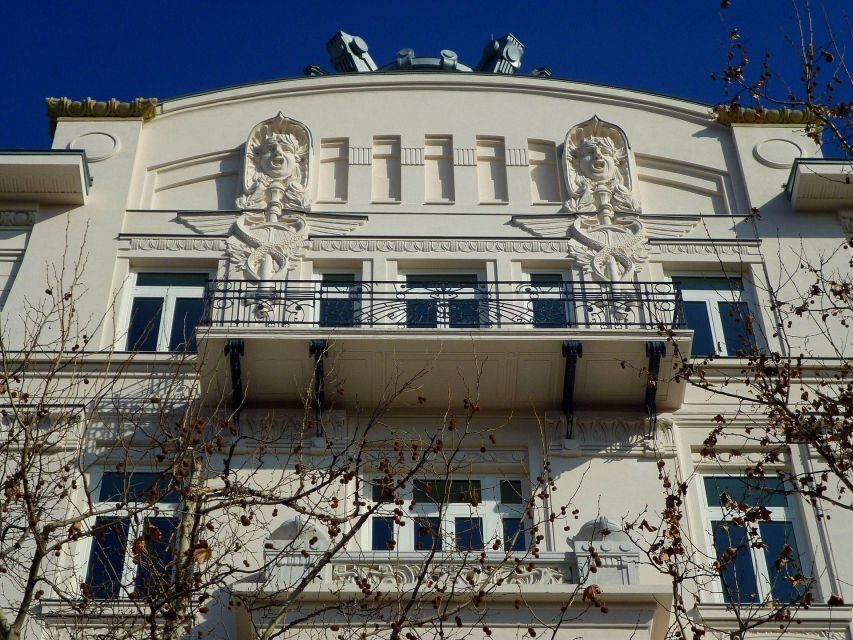
Not every Art Nouveau moment in Budapest is a single famous building. The tour also includes stops that help you see Art Nouveau as something built into daily life and public spaces.
Along the route, you’ll visit guided stops around Rózsavölgyi utca and in Paris passage, where the atmosphere feels different than a standard street walk. This section of the tour is useful because it shows how design shows up in commercial and semi-public spaces, not just monuments.
You’re also told to look for original interiors connected to the era, including a flower shop with its original interior, a department store, and bank offices. The point isn’t that you’re touring retail history for fun. It’s that Art Nouveau style wasn’t reserved for palaces. It was a way to brand spaces, impress customers, and project credibility.
You may also spend time around a small but exquisite Art Nouveau museum and coffee house. That’s a smart addition to the walk because it gives you a controlled space to slow down and see how the style works across applied arts, not just architecture.
Kazinczy Street Orthodox Synagogue: the Art Nouveau interior finale
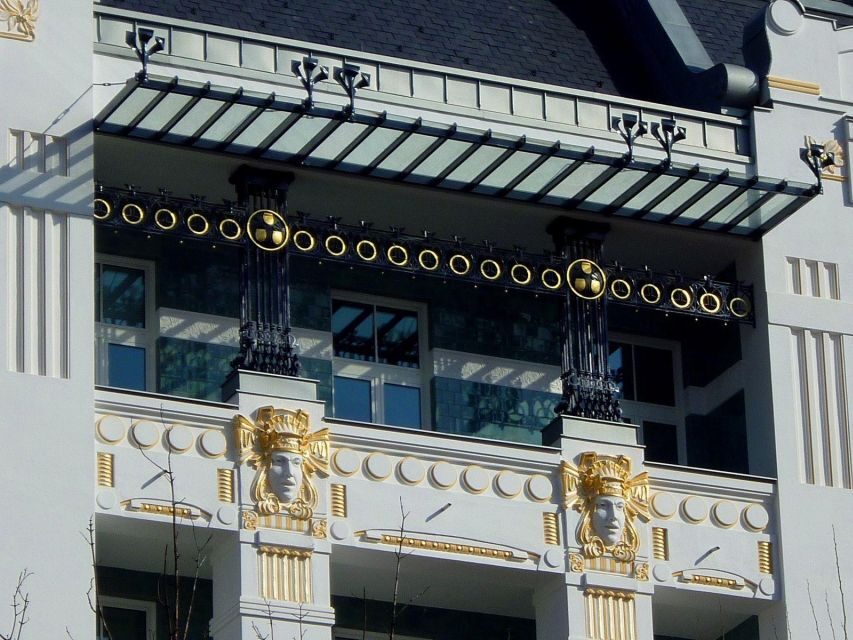
You finish at the fascinating Kazinczy Street Orthodox Synagogue. This is a strong ending because it reframes everything you’ve been learning. Instead of only thinking about outer façades and porcelain tiles, you see how Art Nouveau design sensibilities can shape an interior environment.
The key detail here: the synagogue’s Art Nouveau interior is noted as exquisite, but access can depend on the day. It’s closed on Saturdays, and that affects whether you can see everything your guide intends. When it’s open, the synagogue is the kind of place where you feel the style in three dimensions—proportions, ornament, and light working together.
If the interior is accessible, it’s a satisfying closer because you can connect the dots you built earlier: Hungarian Secession design habits, motif ideas, and the overall Belle Époque confidence.
Weekend reality check: when interiors close and how the guide adapts
This tour isn’t always the same from one day to the next. On weekends, you cannot enter the Hungarian National Bank, which is specifically mentioned as having fine examples of Zsolnay porcelain. Also, the Orthodox Synagogue on Kazinczy Street is closed on Saturdays.
If that’s your travel day, don’t treat it as bad luck. The tour can be adapted to your interests or extended to include other Art Nouveau jewels in Budapest, such as the Gellért Bath Hotel, the Museum of Applied Arts, and the Geology Museum.
Two extra entry fees are noted for certain options:
- House of Hungarian Art Nouveau: 1000 HUF per person (about $3.50)
- Orthodox Synagogue on Kazinczy Street: 2000 HUF per person (about $7.00)
So if you’re going on a weekend, you might get a slightly different set of interiors. The value doesn’t disappear; it shifts to keep the Art Nouveau story intact.
Should you book this Budapest Art Nouveau walking tour?
I’d book it if you want more than a quick look at pretty buildings. This is best for people who like to understand the why behind design: Hungarian Secession, porcelain tiles, and the way motifs travel through culture and fashion of the period. The fact that you get entrance-hall time at major stops makes it feel like a serious architectural walk, not just sightseeing.
I’d skip or reconsider if you’re the type who hates walking and wants everything to be strictly exterior. Since it’s a walking tour with optional interior access that can depend on the day, you’ll want to be flexible.
If your goal is to leave Budapest with a sharper eye for Art Nouveau—and not just more photos—this 3-hour guided walk is a good value for the attention you get and the places you can actually enter.
FAQ
How long is the Budapest Art Nouveau walking tour?
It lasts 3 hours.
What does the tour cost?
The price is $123 per person.
Is the guide available in English?
Yes, the live tour guide speaks English.
Is this tour mostly walking?
Yes. It’s a 3-hour walking tour.
Are tram and metro tickets included?
No. Tram and metro tickets are not included.
Where do we meet if there is no hotel pickup?
If you choose the central meeting option, you meet at Madal Café, Budapest, Alkotmány u. 4.
Can you enter the Hungarian National Bank on weekends?
No. On weekends, you cannot enter the Hungarian National Bank.
Is the Orthodox Synagogue on Kazinczy Street open on Saturdays?
No. It is closed on Saturdays.
Are there extra fees for certain sites?
Yes. The House of Hungarian Art Nouveau costs 1000 HUF per person (about $3.50) and the Orthodox Synagogue on Kazinczy Street costs 2000 HUF per person (about $7.00) when included and open.