REVIEW · BUDAPEST
Budapest: St. Stephen’s Basilica Tour & Music Performance
Book on GetYourGuide →Operated by Maggino - Magic in Hungary · Bookable on GetYourGuide
Budapest’s basilica has two big surprises. This tour is built around St. Stephen’s Basilica’s art and architecture, plus a real-life look at the Holy Right relic and its legend. I love how the guide explains the meaning behind sculptures, mosaics, and altars, and I also like the finale: Hungarian folk songs and dance steps led by the guide. One thing to plan for: flash photography is not allowed when viewing the Holy Right, so your best photos will come from normal lighting.
You’ll spend about 1.5 to 2 hours with a licensed Hungarian guide, with skip-the-line entry and commentary in English or Spanish. It’s a great fit if you want more than sightseeing photos—you want context you can actually use while you’re standing in the church.
In This Review
- Key things I’d circle before you go
- St. Stephen’s Basilica in 90 Minutes: What You’re Actually Buying
- Meeting on Szent István tér and Getting Into the Basilica Fast
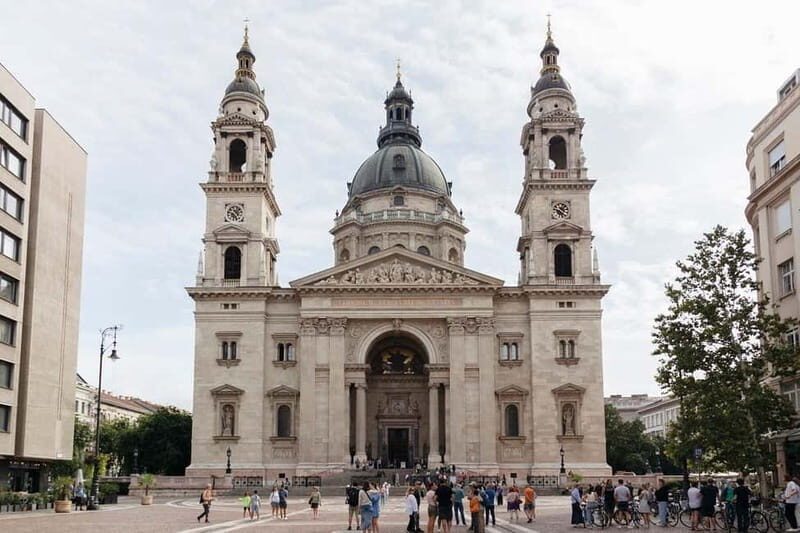
- Outside First: The Basilica’s Shape and Why Construction Took Over 50 Years
- Inside the Marble, Mosaics, Sculptures, and Hungarian Art
- The Holy Right Relic: Legend, Viewing Rules, and Photo Reality
- Budapest Context You Can Spot While You Walk
- The Folk Music Finale: Where the Tour Becomes Personal
- Price and Value: Is $64 a Fair Deal in Budapest?
- Who This Tour Fits Best (and Who Might Prefer Another Plan)
- Quick Practical Tips Before You Go
- Should You Book This St. Stephen’s Basilica Tour?
Key things I’d circle before you go
- Outside-and-inside viewing, not just one hallway
- Construction story: why it took over 50 years to finish
- Hungarian art stops: sculptures, mosaics, paintings, and altars
- Holy Right viewing with clear photo rules
- Live culture at the end: Hungarian folk music and dance (or organ concert, depending on your option)
St. Stephen’s Basilica in 90 Minutes: What You’re Actually Buying
This tour isn’t trying to cram every corner of the basilica into your memory. Instead, it targets the parts most people miss: the building’s “why” and “how,” the meaning of the art, and the story behind a national relic.
The price—$64 per person—makes more sense when you consider what’s included: guided time (licensed guide), basilica admission, and the special viewing of the Holy Right. You’re also getting a performance component at the end, which is hard to recreate on your own. If you’re short on time in Budapest but want real context, this is the kind of experience that holds up.
You can also read our reviews of more tours and experiences in Budapest.



Meeting on Szent István tér and Getting Into the Basilica Fast
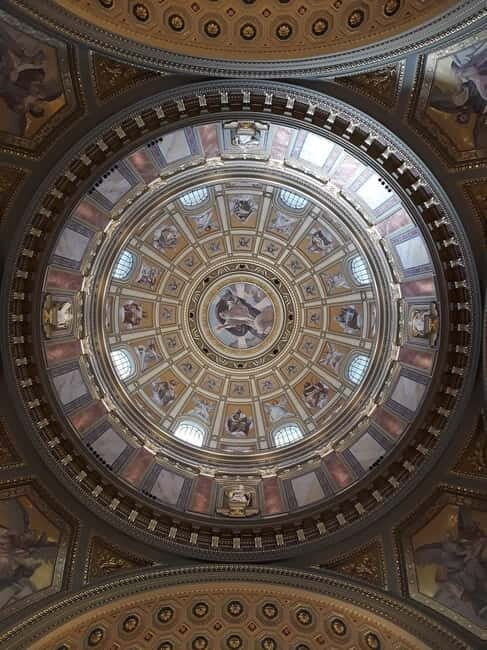
You meet in front of the main entrance at 1051 Budapest, Szent István tér, where the guide holds a board with the Maggino logo. The logo is a dark blue stork with an orange musical note in its beak, with the words MAGGINO underneath. Easy to spot, and that matters when you’re trying to start on time.
From there, you head in with skip-the-ticket-line access. It’s not just a time-saver. In a church, fewer waiting minutes usually means more energy for noticing details—light on stone, the scale of sculptures, and the way the interior feels when you first step inside.
Outside First: The Basilica’s Shape and Why Construction Took Over 50 Years
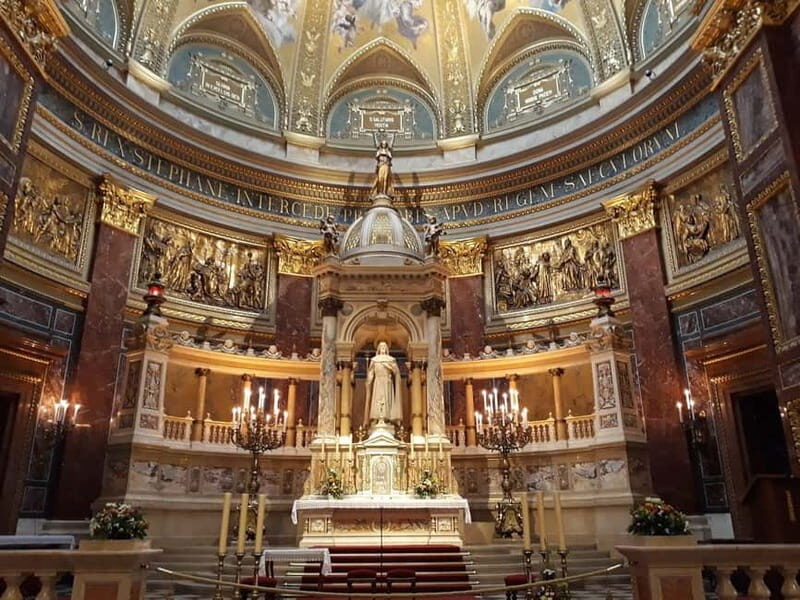
I like the tour’s pacing because it starts with the basilica’s outer structure. Even if you’ve seen photos, it’s easy to miss how the exterior hints at what you’ll find inside: the scale, the form, and how the building presents itself as Budapest’s major Catholic landmark.
The guide also explains the construction story—specifically, why it lasted more than 50 years to complete. That length of time changes how you think about the building. You stop seeing it as one finished “object” and start seeing it as a long project carried through different phases, decisions, and changing circumstances.
If you’re the kind of person who likes to understand why things exist (not just that they exist), this is the part that clicks. You’re training your eyes for the interior rather than just consuming it.
Inside the Marble, Mosaics, Sculptures, and Hungarian Art
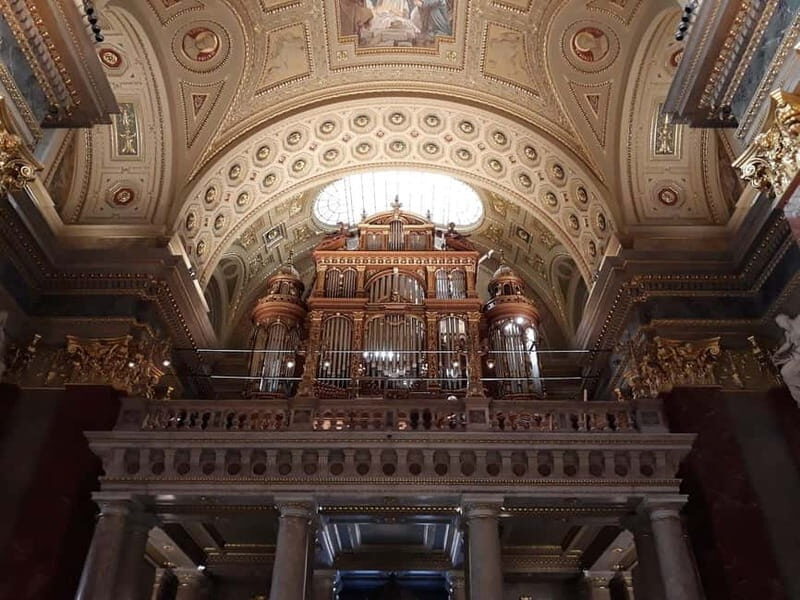
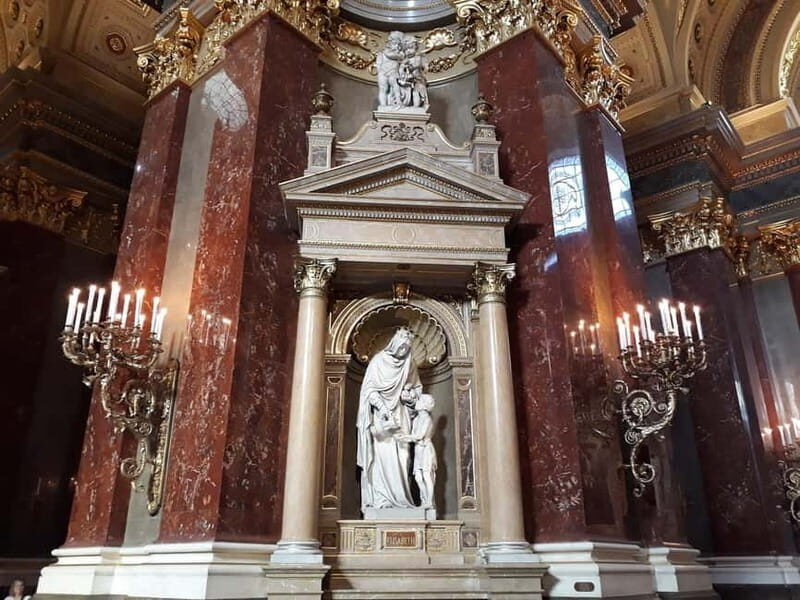
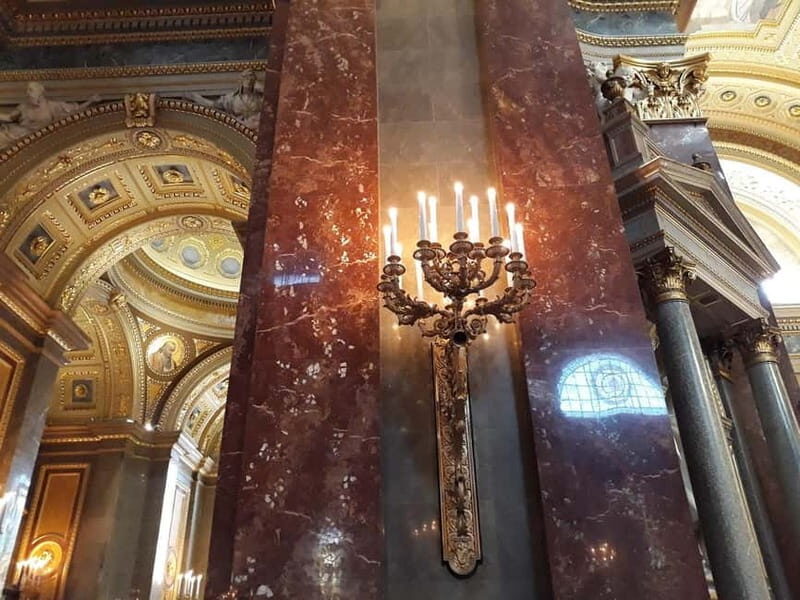
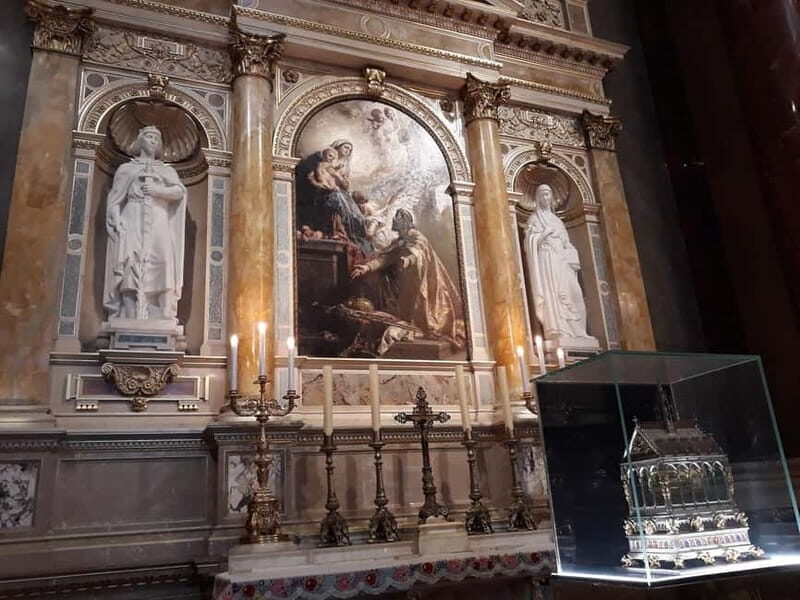
Once inside, the tour shifts from building basics to artistic meaning. You’ll see the prestigious sculptures, mosaics, paintings, and altars that make St. Stephen’s Basilica feel like a living museum of Hungarian religious and cultural identity.
The key word here is interpretation. It’s one thing to stand in front of decoration. It’s another to understand what you’re looking at—why certain figures are included, what themes the art supports, and how the church signals national devotion.
You also get an overview of Hungarian religious history. The tour points to Hungarian saints and kings whose sculptures can be seen inside. That helps you connect the basilica to the broader story of Hungary rather than treating it like a one-off monument.
One practical note: wear comfortable shoes. You’ll be doing walking inside and outside, and you’ll want your feet to cooperate while you’re listening.
The Holy Right Relic: Legend, Viewing Rules, and Photo Reality
The centerpiece for many visitors is the Holy Right. This tour doesn’t just mention it—it includes an opportunity to admire the relic itself, and the guide shares the legend of one of Hungary’s most valuable national relics.
That legend matters because it turns the relic from a “thing to look at” into a story with emotional weight. You’ll understand what people believe and why it became so significant in Hungarian Catholic tradition. Even if you’re not a religious traveler, stories like this are often the fastest way to grasp why a place matters.
Photo expectations: flash photography is not allowed for taking photos of the Holy Right. So plan around that. You can still take photos without flash, but don’t bank on perfect shots. Think more about getting a clear look with your own eyes than capturing a perfect camera moment.



Budapest Context You Can Spot While You Walk
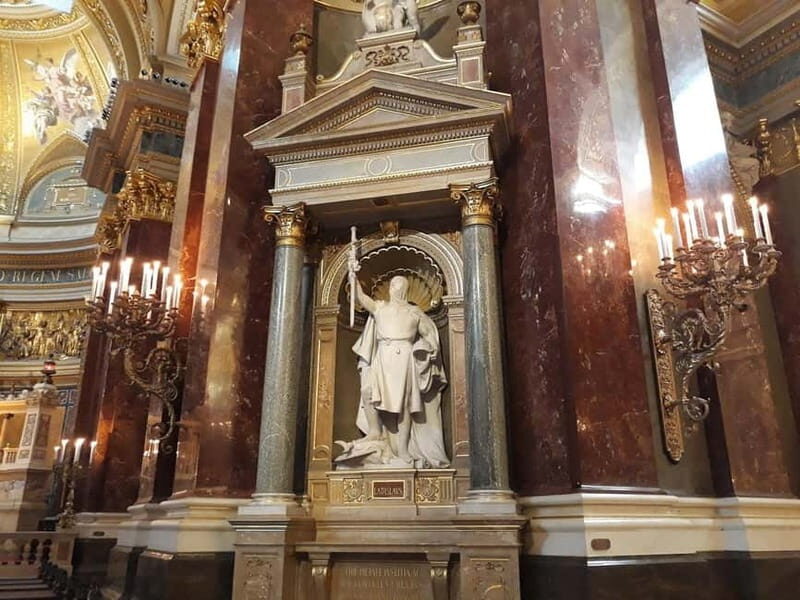
What makes this tour feel efficient is that the guide connects the basilica to Budapest’s wider history while you’re physically inside the place. You’ll hear about Hungarian saints and kings, and you’ll see their presence through sculptures inside the church.
That’s useful for you on the rest of your trip. After this, the city’s history won’t feel like separate facts you read later. It’ll feel anchored to landmarks you already visited.
The tone also matters. The guide brings enthusiasm, and the explanations don’t stay stuck in dates and names. When the guide points out a sculpture or altar and explains what it represents, it changes the experience from passive observation to active understanding.
The Folk Music Finale: Where the Tour Becomes Personal
This is the part that turns the tour from informative to memorable. At the end, you’ll enjoy a Hungarian folk music performance made by your guide. The guide sings Hungarian folk songs and also shows traditional folk dance steps.
It’s not just entertainment tacked on at the finish. The performance gives you a sensory bridge between the church’s religious art and Hungary’s everyday cultural expression. You leave with sound and movement in your head, not only images.
In particular, the guide talent is something people consistently praise—especially when the guide, such as Kristóf, combines history talk with singing and dance. One thing I’d expect you to enjoy is how this kind of performance works even if you don’t speak Hungarian. Music and body language do a lot of the communicating.
If you prefer something more strictly musical (and less dance), there’s also an option for a special organ concert instead of the folk music performance, depending on the tour version you choose.
Price and Value: Is $64 a Fair Deal in Budapest?
$64 for about 1.5 to 2 hours doesn’t look cheap at first glance—especially in Europe, where you can always wander and read signs. But you’re paying for three things that are hard to replicate on your own:
- A licensed guide who explains the exterior, interior, and the “why” behind the art
- Admission included, plus the chance to see the Holy Right relic
- A live performance at the end (folk music and dance, or an organ concert)
Skip-the-line access also adds real value. It reduces idle time and helps you avoid getting stuck in ticket queues right when you want to be focused on details.
If you’re traveling with limited time in Budapest, the value equation improves fast. You’re basically buying interpretation plus included access, not just a seat in a group.
Who This Tour Fits Best (and Who Might Prefer Another Plan)
This tour is a strong match for you if:
- You want meaning with your sightseeing—history, symbolism, and explanations at the basilica itself
- You like a mix of “look + listen,” with art and architecture followed by a cultural performance
- You’d enjoy a guide who’s comfortable singing and bringing the experience to life
It might not be ideal if you:
- Prefer silent visits or self-paced exploring with no performances
- Care deeply about flash photos at the Holy Right (because flash is not allowed there)
- Want a very long, full building tour without set timing (this runs 1.5 to 2 hours)
For most people who like guided context, this is a good use of time.
Quick Practical Tips Before You Go
A few small things will make the tour smoother:
- Bring comfortable shoes for walking inside and outside.
- Dress for the weather. You’ll be moving around the basilica area.
- Keep your phone ready, but remember: no flash when photographing the Holy Right.
- Expect a performance at the end, so be ready to listen and watch rather than constantly multitask.
Should You Book This St. Stephen’s Basilica Tour?
If you’re trying to choose between a simple basilica visit and a guided experience, I’d lean toward booking this. You get the Holy Right viewing experience, an architecture and art explanation that helps you notice more, and a Hungarian folk music finale that turns the basilica into something you remember with your senses.
Book it if you want a tight itinerary with real cultural payoff in under two hours. Skip it only if you strongly prefer self-paced quiet time or you don’t want live performance included in your sightseeing day.