REVIEW · BUDAPEST
Private Jewish Quarter Walking Tour with Synagogue entry
Book on GetYourGuide →Operated by Purple Team · Bookable on GetYourGuide
Budapest’s Jewish Quarter hits hard, fast. In just 3 hours, you get a guided route that connects skip-the-line synagogue entry with the Ghetto Memorial Wall and other remembrance points around Erzsébet tér and the historic quarter. My favorite part is how the walk keeps turning architectural beauty into human stakes, then back into place-by-place context you can actually picture on your map.
One consideration: the tour is marketed as including visits to three named synagogues, but the exact inside time may vary depending on timing and access, so I’d confirm you’ll be able to enter each one you care about most.
In This Review
- Key things I’d book this for
- Start at Budapest Eye: how the meeting point keeps things easy
- Erzsébet tér to Madách Imre Square: where modern Budapest meets wartime memory
- Király Street and Gozsdu Udvar: why the neighborhood still has a pulse
- Rumbach Street Synagogue: Moorish-style architecture with a memorial purpose
- Kazinczy Street Orthodox Synagogue: Art Nouveau details you can spot fast
- The ghetto wall stops: what to do when your photos won’t capture it
- Emanuel Tree Budapest and cemetery grounds: remembrance you can walk through
- Dohány Street Synagogue: what makes the Great Synagogue visit worth the skip
- Rumbach and Kazinczy vs. Dohány: how to judge whether it matches your priorities
- Pace and timing: what 3 hours feels like on foot
- Price and value: is $129 reasonable for what you get?
- Who this tour suits best
- Should you book this private Jewish Quarter walking tour?
- FAQ
- How long is the private Jewish Quarter walking tour with synagogue entry?
- Where is the meeting point?
- What does the skip-the-line ticket cover?
- Which synagogues are included for admission?
- Is flash photography allowed?
- What should I bring for the tour?
- Who is the tour not suitable for?
Key things I’d book this for
- Skip-the-line access to the Great Synagogue experience (Dohány Street Synagogue) with a private guide inside
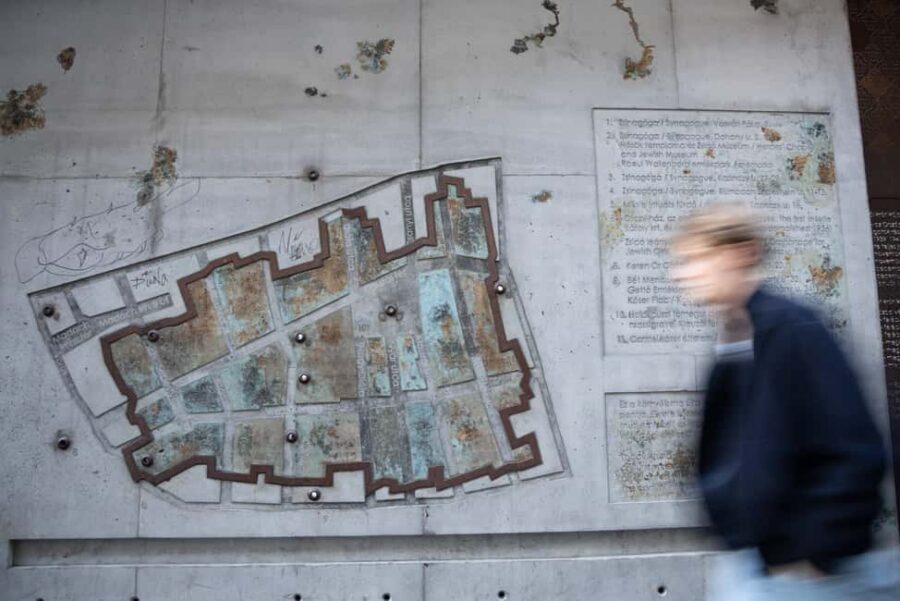
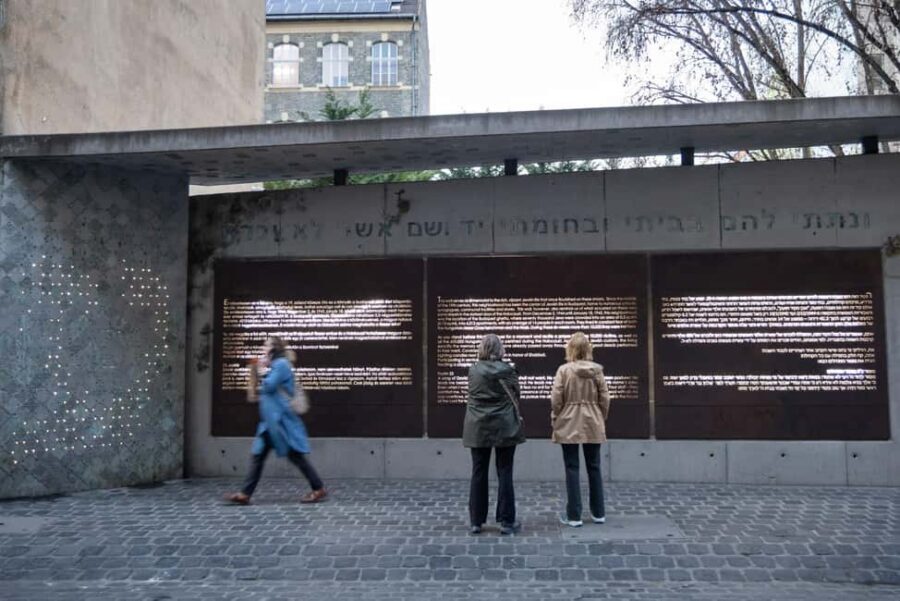
- Ghetto Memorial Wall + ghetto wall fragment stops that don’t feel like a quick photo break
- Synagogue variety in one walk: Moorish-style (Rumbach, Dohány) and Art Nouveau Orthodox (Kazinczy)
- Street memorials that add layers fast, like the Raoul Wallenberg suitcase memorial and other public artworks
- A clear 3-hour pace that ends in Herzl Tivadar park so you’re not stuck in the same spot
Start at Budapest Eye: how the meeting point keeps things easy
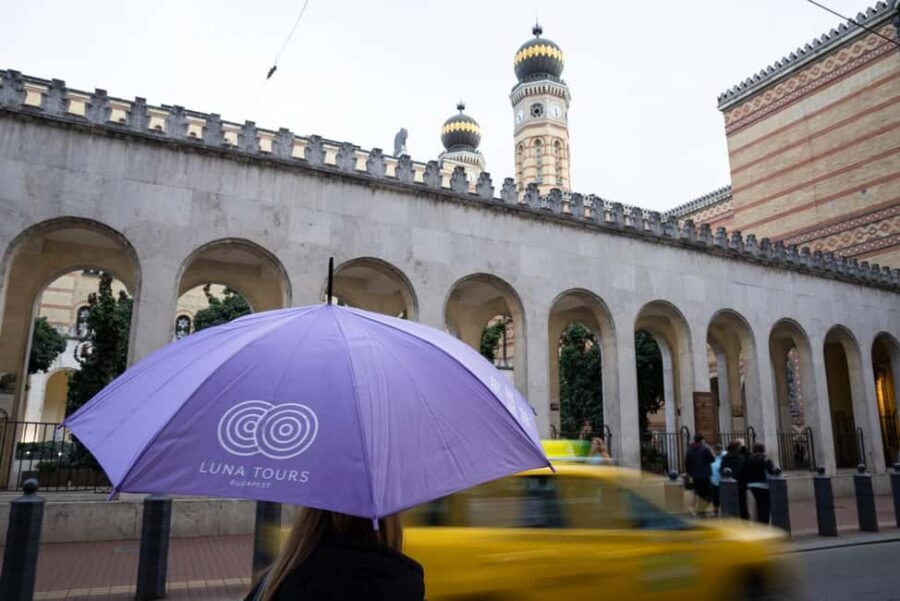
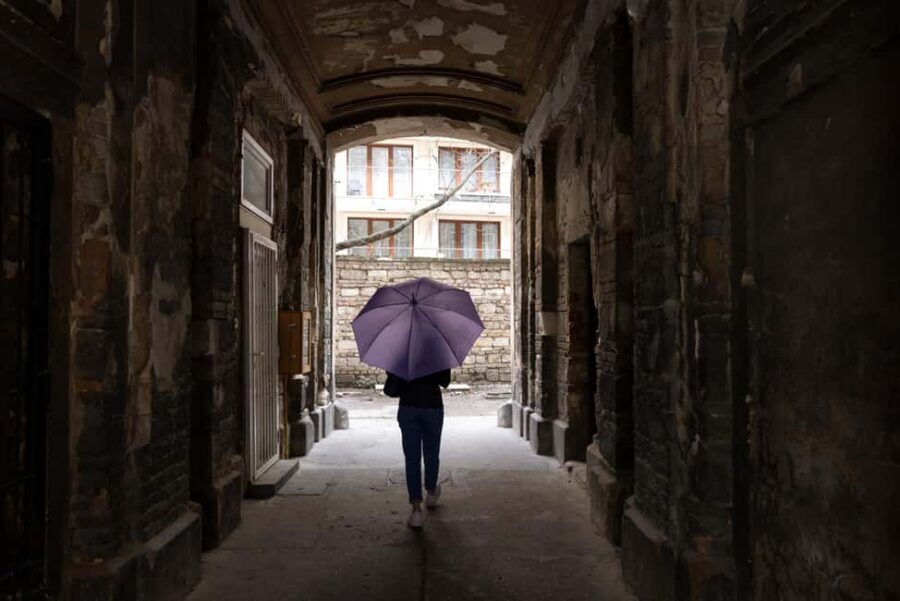
Your tour begins at Budapest Óriáskereke (the Budapest Eye). The organizer meets you there, and you should look for a PURPLE umbrella. It’s a solid choice because it’s central, easy to spot, and simple to find even if you’re still getting your bearings in the city.
This start matters because the Jewish Quarter sites are close, but they’re also spread across a few different streets and squares. A clean meeting point helps you get moving quickly instead of spending your best daylight hunting for the right corner.
Once you’ve checked in, you’ll transition from modern Budapest landmarks into the older urban web of the Jewish Quarter. That shift happens early, so you get context before you’re staring at walls and synagogues with no map in your head.
You can also read our reviews of more walking tours in Budapest


Erzsébet tér to Madách Imre Square: where modern Budapest meets wartime memory
After you meet at Budapest Eye, the early walking portion places you near Erzsébet tér, a lively central square with cafes and foot traffic. This is useful because it frames the tour in real city life, not a fenced-off museum zone.
From there, you’re routed through landmarks tied to memory and identity. One early highlight is the Raoul Wallenberg Suitcase Memorial. The bronze suitcase points to Wallenberg’s role in saving thousands of Hungarian Jews during World War II, plus his mysterious disappearance and lasting legacy of courage.
You’ll also move toward Madách Imre Square, known for its iconic archway leading to the former Madách housing complex. Even if you don’t know the story yet, the setting tells you this is not just about religion. It’s about community, displacement, and the way streets preserve (or hide) the past.
Király Street and Gozsdu Udvar: why the neighborhood still has a pulse
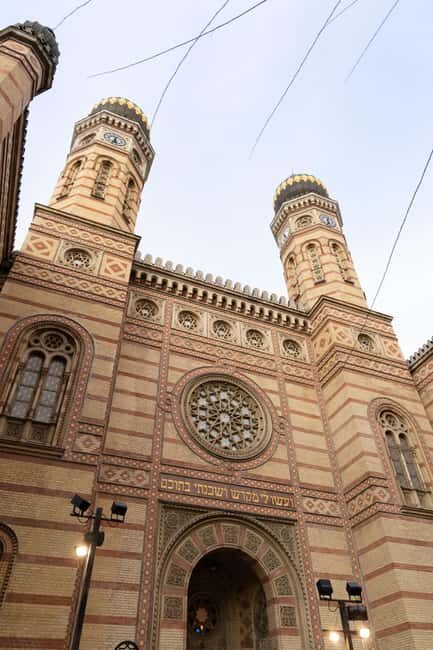
This route doesn’t freeze time. You’ll pass through Király Street and reach Gozsdu Udvar, which connects the old Jewish Quarter’s commercial life to the modern vibe of cafes and ruin bars today.
That blend is more than entertainment. It’s a reminder that the neighborhood didn’t vanish after WWII and it didn’t stay frozen in one era. When you walk these streets right after the memorial points, you get a stronger sense of continuity: life returned here, and people rebuilt the everyday.
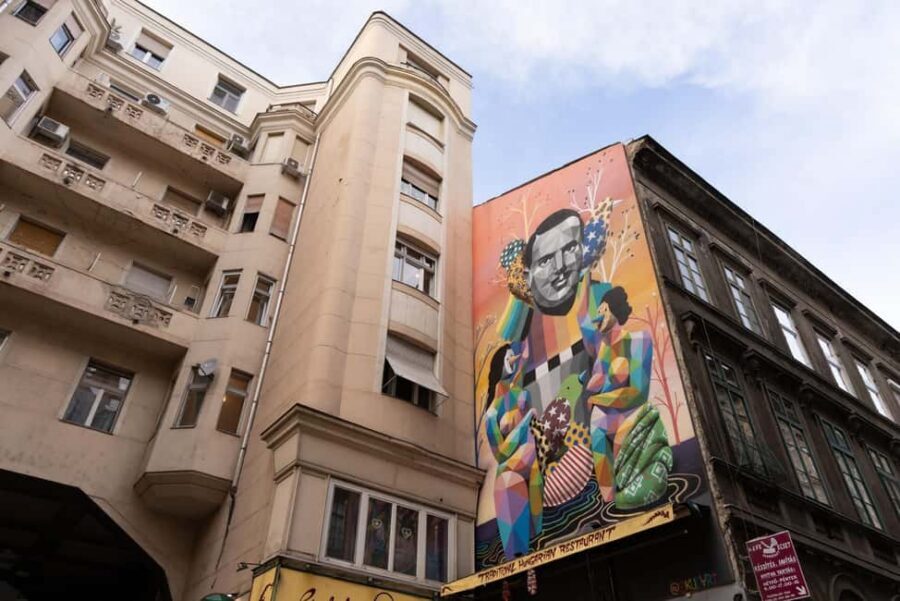
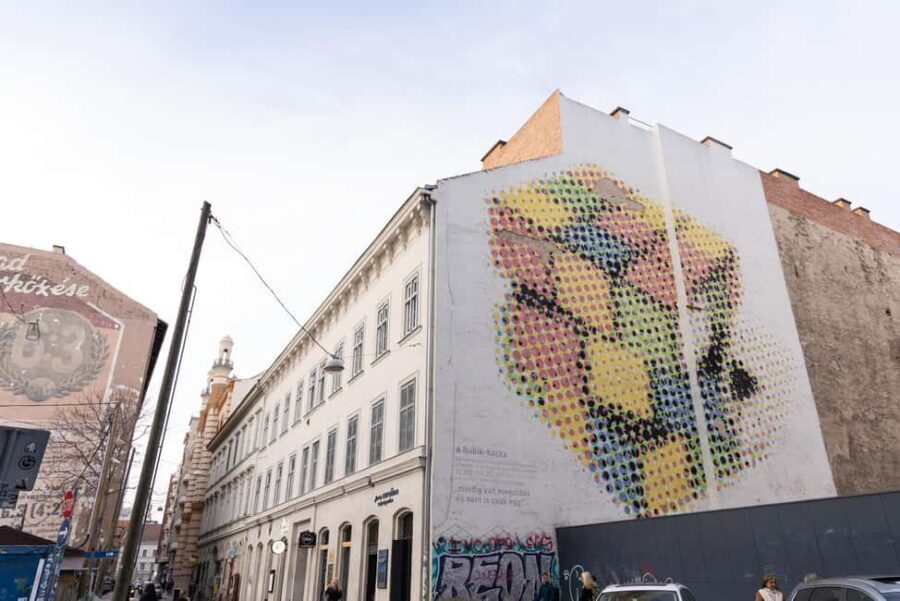
You’re also likely to notice a few of the neighborhood’s public artworks as you move. Two included stops in this category stand out: the 6:3 Street Painting, which commemorates Hungary’s 6:3 football victory over England in 1953, and the Rubik’s Cube sculpture honoring Hungarian inventor Ernő Rubik. Neither is strictly Jewish history, but both tie the area to Hungarian identity and pride—another way the community story stays bigger than one painful chapter.
Rumbach Street Synagogue: Moorish-style architecture with a memorial purpose
One of the most visually rewarding stops is Rumbach Street Synagogue. It’s a Moorish-style synagogue designed by Austrian architect Otto Wagner in 1872. If you like architecture, this is the kind of building where the details grab you even before you think about what they mean.
What I like about having this on your route is the pacing. You’ll first be in the zone of street memorials and ghetto remembrance, then you shift into a place of worship and cultural presence. You’re also told it has been recently restored and now functions as a cultural space and memorial, which changes how you read the building. It’s not only about what happened inside; it’s also about what the building does now.
Plan for at least a short pass-by window here. Depending on the day, you may not have long hanging time like you do at Dohány Street Synagogue, but it’s still one of the best “stop-and-look” structures on the walk.
Kazinczy Street Orthodox Synagogue: Art Nouveau details you can spot fast
Kazinczy Street Synagogue is the Orthodox center for Budapest’s Orthodox Jewish community. It’s built in the 1910s and has a strong Art Nouveau feel, with stained glass, intricate woodwork, and a heavily decorated interior.
This stop works best if you pay attention to texture. Orthodox synagogue architecture can be easy to miss if you rush, but the Kazinczy building rewards the slow glance—especially at the interior elements mentioned above. Even if you only pass by for a shorter window, knowing what you’re looking for helps a lot.
Also, the “mix” idea matters here. You’re seeing different architectural languages of Judaism in one compact route. Moorish Revival and Art Nouveau don’t just look different; they signal different community tastes, eras, and public visibility.
You can also read our reviews of more private tours in Budapest






The ghetto wall stops: what to do when your photos won’t capture it
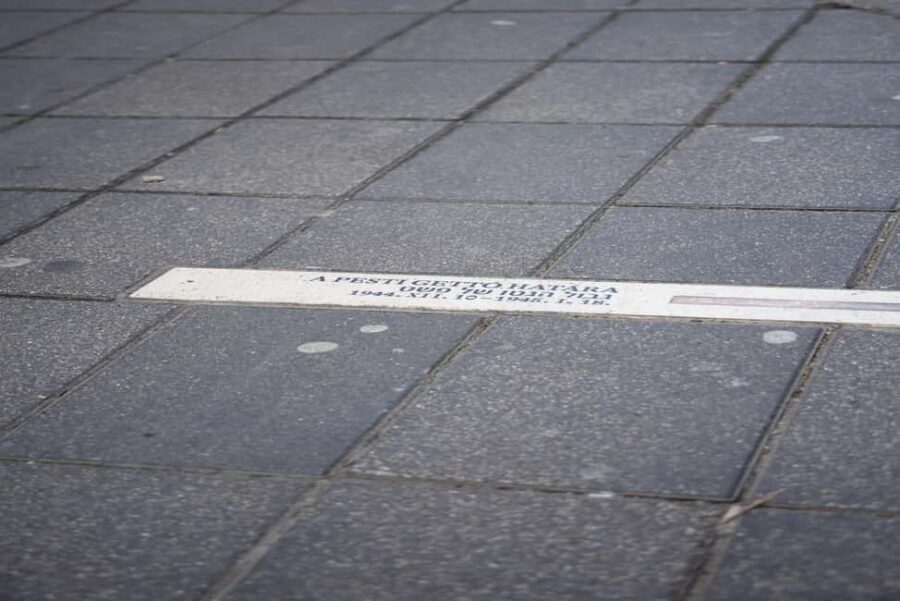
The most emotionally direct part of the tour centers on the ghetto wall. You’ll visit a Jewish Ghetto Wall Fragment, one of the last remaining pieces that once enclosed the Jewish ghetto during World War II. This is the kind of site where a quick snapshot feels inadequate because the context hits after you’ve walked a few steps and read the meaning.
Nearby, there’s also access to a Ghetto Wall Exhibition area with photos, documents, and personal stories. That’s important because a preserved fragment alone can feel like a random ruin. The exhibition gives you the “how did people live here” and “what did this mean” pieces so the wall doesn’t become just a wall.
When you’re standing there, I suggest you slow your pace for a full minute. Let the stories settle before you move on. That small change turns the stop from scenery into understanding.
Emanuel Tree Budapest and cemetery grounds: remembrance you can walk through
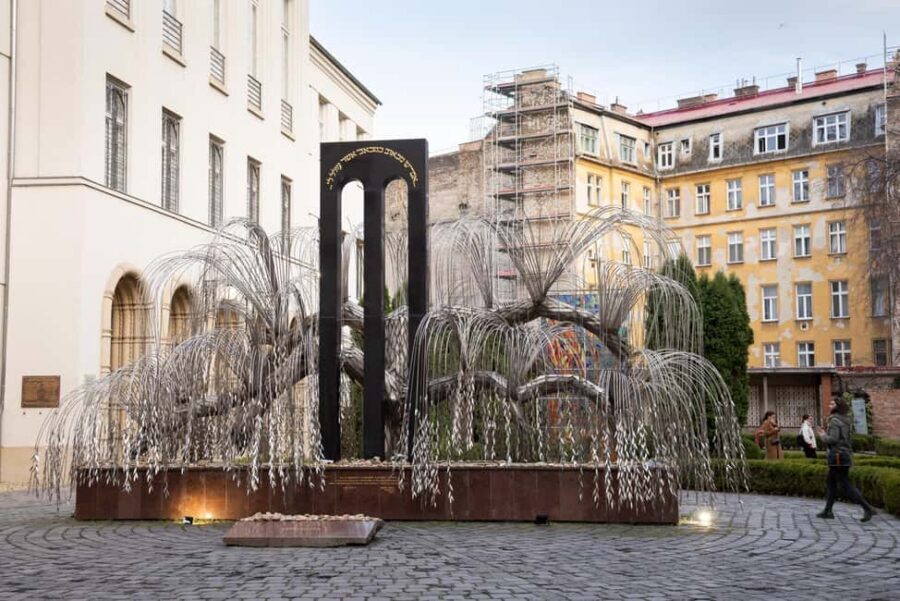
Included on the tour is a visit tied to the Jewish Cemetery and Memorial Park. You’ll also make a stop at Emanuel Tree Budapest as part of the remembrance flow.
Even without getting poetic about it, these are the stops that shift your visit from architecture to accountability. Synagogues show public life and worship; memorial parks and cemetery spaces bring grief and permanence into the walk.
The practical upside is the structure. After the ghetto wall context, you’re guided toward a place where remembrance is physically anchored, not just mentioned. It also gives your mind a place to rest, which helps because the rest of the tour involves more landmarks and walking.
Bring water and keep your shoes comfortable. This portion is where fatigue can creep in, and you’ll want your focus for what you’re seeing.
Dohány Street Synagogue: what makes the Great Synagogue visit worth the skip
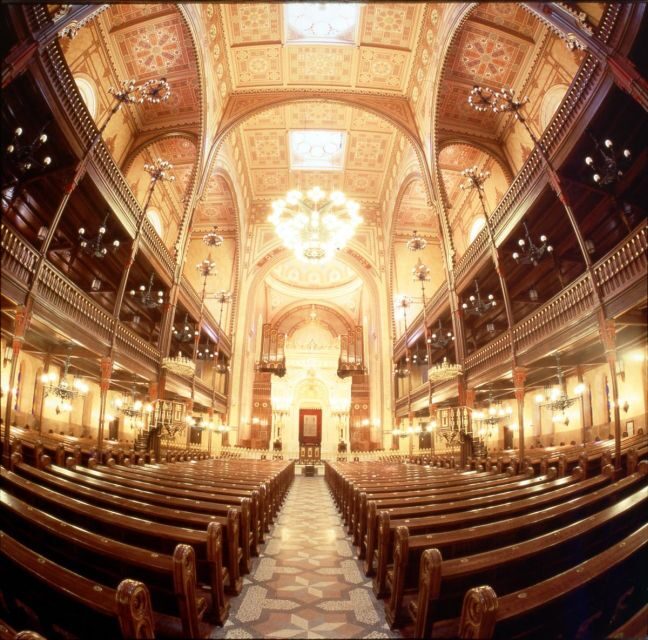
This is the headline experience: the Great Synagogue experience at Dohány Street Synagogue. It’s described as the largest synagogue in Europe and a masterpiece of Moorish Revival architecture, built in 1859.
What I love here is the range of roles the building plays. It’s a religious center, Holocaust memorial, cemetery, and museum. That multi-purpose identity is why you can’t treat it like a normal church visit. The building holds layers—worship, mourning, and education—in the same walls.
The tour includes skip-the-line ticketing for this part, plus a private guide inside the Great Synagogue. That combination is a real value play. You don’t just get entry; you get help reading what you’re looking at while you’re standing in it. And since you’re given about an hour here, you’re not rushed through like a checklist.
A few rules to keep in mind: flash photography is restricted in certain areas, and no smoking. If you’re trying to capture photos, use your phone without flash and keep it respectful—especially around memorial sections.
Rumbach and Kazinczy vs. Dohány: how to judge whether it matches your priorities
Here’s how I’d think about fit before you book. If your top priority is one major inside visit with time and guidance, Dohány Street Synagogue delivers. The tour gives a longer block there, and it also wraps it with skip-the-line convenience.
If your priority is entering Rumbach Street Synagogue and Kazinczy Street Synagogue for a comparable amount of inside time, you should know that the schedule in this category can be shorter depending on access and day-of logistics. One person felt the tour didn’t match the expectation of full entry for all three named synagogues, even though admissions were part of the promise. That doesn’t mean your experience will be the same, but it’s a strong reason to confirm the inside-entry expectations for each synagogue.
My practical advice: decide what matters most. If it’s a guided Great Synagogue visit plus ghetto wall remembrance, this tour makes sense. If it’s equal-time indoor visits to three separate synagogues, message the operator ahead of time and get clarity.
Pace and timing: what 3 hours feels like on foot
This tour runs about 3 hours. It’s a walking-focused experience, and that’s a good thing if you like moving through neighborhoods rather than sitting in one place. The stops are clustered, but you’re still shifting between squares, streets, and synagogue entrances.
The structure also helps: you start with orientation around Budapest Eye, then you move into memorial-heavy context with the ghetto wall fragment and the Holocaust-linked synagogue complex. By the end, you finish at Herzl Tivadar park, which helps you transition back to free exploring without needing to backtrack.
If you’re sensitive to emotional content, plan for it. The ghetto wall is preserved physical evidence, and the tour includes Holocaust-linked memorial context at Dohány. It’s not a casual sightseeing loop.
Price and value: is $129 reasonable for what you get?
At $129 per person for a 3-hour private-guided experience, the value comes from three things: entry to major synagogue spaces, skip-the-line convenience, and guided interpretation inside the Great Synagogue.
Buying entry tickets on your own can add up quickly, and then you still have the challenge of figuring out what to prioritize once you’re inside. Here, you pay for that guidance—especially when you hit Dohány Street Synagogue with its layered roles as a synagogue, museum, and memorial.
So I look at it like this: if you want one high-impact, guided inside experience and you also want the ghetto wall stops handled for you, this price is competitive for Budapest. If you only want a general stroll with minimal entry time, you may want a different option.
Who this tour suits best
This tour is a good match if you want your Budapest Jewish Quarter visit to feel structured and meaningful, not random and rushed. It also suits you if you enjoy architecture and want to compare Moorish-style and Art Nouveau elements in a single day.
It may not suit:
- Kids under 10
- Pregnant women
- People with mobility impairments and wheelchair users (even though wheelchair accessibility is also listed, the suitability note is the part you should treat as the caution)
If you’re traveling solo, with a partner, or with older teens who can handle emotional sites, you’ll likely get the most from the guided context.
Should you book this private Jewish Quarter walking tour?
I’d book it if you want a guided walk that connects public memory (Raoul Wallenberg, ghetto wall fragment, memorial sites) with serious synagogue architecture, and if skip-the-line entry to Dohány matters to you. The private guide inside the Great Synagogue is the main reason to spend your time here instead of doing it on your own.
I’d hesitate or at least confirm expectations if indoor time at Rumbach and Kazinczy is a must-have for you. Ask ahead so you’re not surprised by how the schedule balances multiple synagogue sites.
If you come ready to walk, look closely, and accept that some parts are heavy, this is one of the most focused ways to understand the Jewish Quarter in a short time.
FAQ
How long is the private Jewish Quarter walking tour with synagogue entry?
The tour lasts 3 hours.
Where is the meeting point?
You meet at Budapest Óriáskereke (Budapest Eye). Look for the PURPLE umbrella.
What does the skip-the-line ticket cover?
It includes skip-the-line entry to the Great Synagogue, along with a guided experience there.
Which synagogues are included for admission?
Admission is included for Rumbach, Kazinczy, and Dohány Street Synagogues.
Is flash photography allowed?
Flash photography restrictions may apply in certain areas, so plan to avoid flash.
What should I bring for the tour?
Bring comfortable walking shoes, water, and sunscreen.
Who is the tour not suitable for?
It is not suitable for children under 10 years, pregnant women, people with mobility impairments, and wheelchair users.