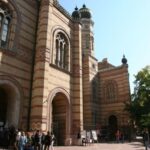
Budapest gets personal on this Jewish Heritage walk. I love how you start inside Dohány Street Synagogue and move through the Raoul Wallenberg Memorial Garden, plus the Jewish Cemetery grounds—so the story goes beyond a photo stop. The route also includes a short, focused look at the Jewish Quarter’s landmarks and what Jewish life in Hungary can mean right now.
I like the tight pace and small group feel, with a cap of roughly ten people for a more personal experience led by Edith. You’ll have time for questions and discussion, not just a lecture, and Edith can tailor the tone to what you care about most.
One thing to plan for: the synagogue entrance fee is extra (about €26 per person), and the tour works best with good weather since you’ll be walking outdoors.
In This Review
- Key Things That Make This Tour Worth Your Time
- How the Jewish Heritage Tour Fits a Real Budapest Day
- Meeting at Deák Ferenc tér and Why the Small Group Matters
- Stop 1: Dohány Street Synagogue, the Raoul Wallenberg Memorial Garden, and the Cemetery
- What to watch for inside and around the building
- Possible drawback at Stop 1
- Stop 2: Shoes on the Danube Bank Memorial in 15 Minutes
- Why this stop works so well
- Stop 3: The Memorial to the Victims of the German Invasion (and Ongoing Protests)
- Why I think this stop matters
- Price and Value: What You Pay and What You Actually Get
- Is it good value?
- Timing, Pace, and How Much Walking to Expect
- Who should consider lighter comfort planning
- The Most Praised Part: Edith’s Storytelling and Personal Touch
- Who This Tour Is Best For
- Quick FAQ
- FAQ
- What is the duration of the tour?
- Where do I meet and where does the tour end?
- What’s included in the price?
- Is transportation included?
- Do I need to pay an entrance fee?
- What language is the tour offered in?
- How big is the group?
- Do I get a mobile ticket?
- Is good weather required?
- Can I cancel for a refund?
- Are service animals allowed?
- Should You Book This Jewish Heritage Tour?
Key Things That Make This Tour Worth Your Time
- Edith’s guided approach: clear, thoughtful explanations that include present-day context, not just dates.
- Small group, more room to ask questions: the experience stays personal and interactive.
- Dohány Street Synagogue + cemetery complex: a major site with layered meanings and on-site memorials.
- The Danube’s Shoes memorial: quick but gut-level emotional impact in a short stop.
- A controversial memorial stop in the city: you see how memory and public debate can stay active for years.
- Plenty of time for your own Budapest plans: it’s short enough that you can stack it with other sights the same day.
How the Jewish Heritage Tour Fits a Real Budapest Day
This is a 3-hour, high-impact tour that works well if you want meaning without eating your whole day. You cover major Jewish landmarks in central Budapest, and the time blocks are short enough that you won’t feel trapped in a long marching line.
What makes it click is the combination: one big living religious space (Dohány Street Synagogue), one memorial tied to the Danube, and one stop that shows how history can still cause public friction. Even if you come with general knowledge, the guide’s job is to help you connect the dots—and then keep the conversation going while you’re standing in the middle of the story.
If you like tours that make you look up from your phone and actually notice details, this one has that. And if you prefer lots of Q&A, the small-group setup helps.
You can also read our reviews of more historical tours in Budapest



Meeting at Deák Ferenc tér and Why the Small Group Matters
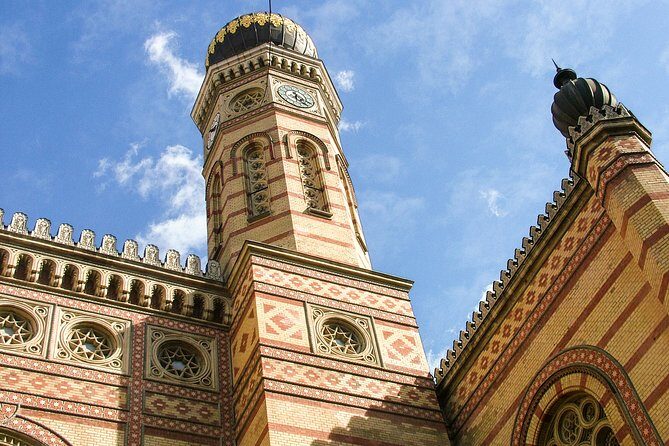
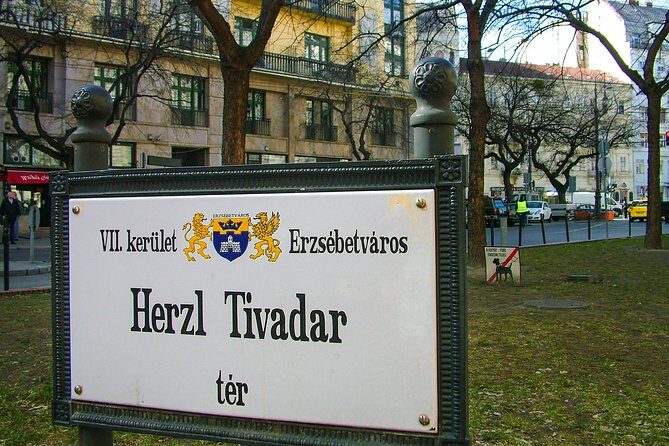
You meet at Deák Ferenc tér in central Budapest and finish at Dohány Street Synagogue (Dohány u. 2, 1074). That’s a location you can usually reach easily with public transit, which matters in a city where street corners can turn into mini-adventures.
The real value is the group size. The tour is described as capped at around ten people for a more personal experience, and the overall maximum is listed as up to thirteen. Either way, you’re not stuck listening from the back row. You can ask questions while walking, and the guide can adjust explanations when people get curious—or when the group needs a slower moment.
This is also where the dialogue component shows up. The tour isn’t only about what Jewish communities were in the past. It also asks what it means to be Jewish in Hungary today, and that framing gives the stops extra weight without making the experience feel like a single-note lecture.
Stop 1: Dohány Street Synagogue, the Raoul Wallenberg Memorial Garden, and the Cemetery
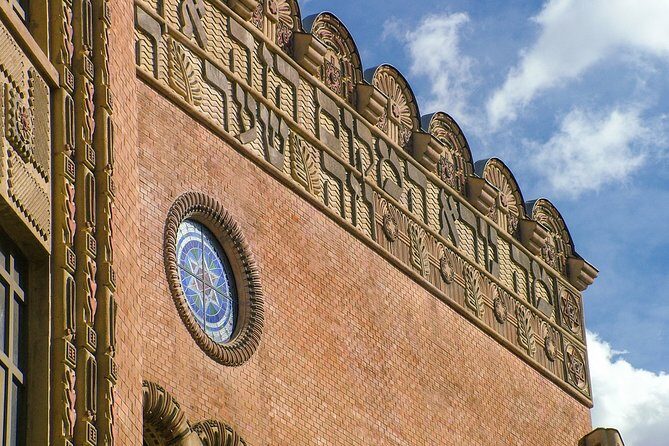
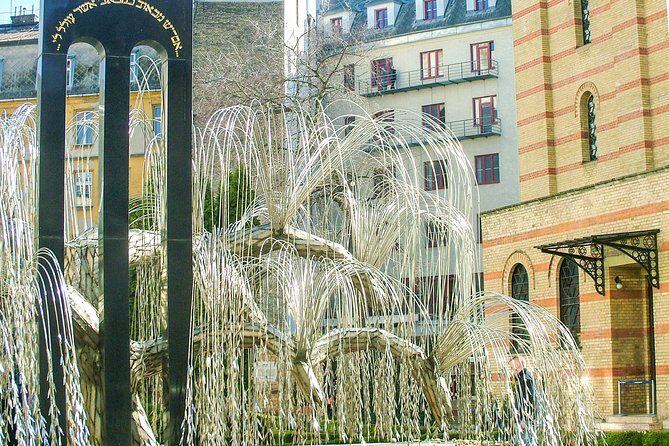
This is the heart of the tour, and it takes about two hours. You’ll tour the synagogue building and visit the Raoul Wallenberg Memorial Garden along with the Jewish Cemetery. That combo is powerful because it moves you from a landmark of faith and community to memorial space dedicated to rescue and survival history, then into the cemetery grounds where memory becomes physical.
A few details make this more than a quick look. You’ll also see the Emmanuel Tree, created as a moving monument established by Tony Curtis. And you’ll learn about the historic streets and former communities in the area—plus, there’s a sense of what’s happening now, since this neighborhood also has a lot of street art and night life.
One more practical point: the synagogue building entry fee is not included, and it’s listed as €26 per person. Plan on paying that on top of your tour price. If you’re trying to keep costs tight, treat this as part of the real package value, not a surprise add-on.
What to watch for inside and around the building
- Look for how memorials are woven into the grounds, not put in a separate corner.
- Pay attention to how the guide connects the synagogue’s role in Jewish life to broader Hungarian history.
- If you care about World War II history, this stop is where the story tends to sharpen.
Possible drawback at Stop 1
Dohány Street Synagogue and the surrounding memorial grounds can be emotionally heavy. If you’re the type who needs frequent breaks, you may want to mentally budget a slower pace and a few deep breaths before moving to the next stop.






Stop 2: Shoes on the Danube Bank Memorial in 15 Minutes
After the synagogue area, you head to the Danube for Shoes on the Danube Bank. This stop is brief—about 15 minutes—and that brevity is part of the impact.
It’s a touching memorial to the thousands of Jews who were shot into the river Danube. You don’t need a long explanation to understand what you’re seeing. But the guide helps you place it in context, so the memorial doesn’t feel like a symbolic sculpture with no story behind it.
Why this stop works so well
Short memorial stops can sound cold on paper, but in person they help you avoid fatigue. Fifteen minutes gives you a moment to take it in while your senses are still fresh. It also keeps you moving so you can reach the next site while the emotion is still centered—not numbed.
If you’re photographing, be respectful of space. This is a place where people tend to stand quietly and process.
Stop 3: The Memorial to the Victims of the German Invasion (and Ongoing Protests)
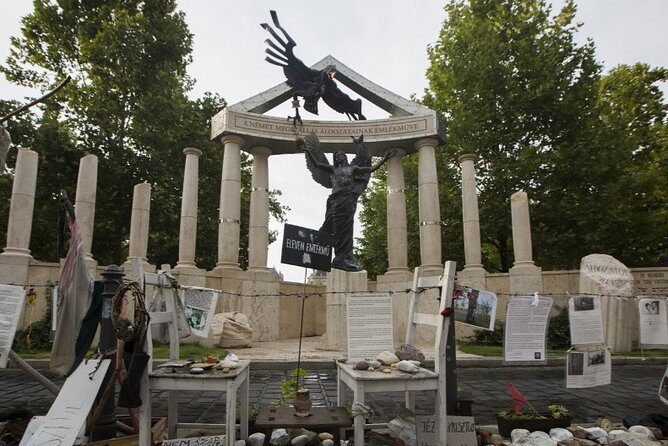
The final major stop is the Memorial to the Victims of the German Invasion, focusing on victims who were mostly Jews. This one is listed as another 15-minute stop and comes with extra political and emotional tension.
It’s described as one of the city’s more controversial memorials, set up in the dark of night and guarded by policemen. There are also ongoing protests that have continued ever since it was established about ten years ago. That means you’re not just seeing the monument. You’re seeing history argued in real time—how different communities interpret memory, responsibility, and public acknowledgment.
Why I think this stop matters
Budapest has plenty of memorials. What makes this one stand out is that it doesn’t let you pretend the past is finished. Even if you don’t agree with every angle of the debate, you understand why it continues.
This also ties back to the tour’s broader theme: what Jewish identity and memory look like in the present, not only in museums.
Price and Value: What You Pay and What You Actually Get
The tour price is listed at about $80.86 per person, and that includes guiding by a local licensed tour guide. That’s the core value: you’re paying for a guide who can turn landmarks into meaning, then handle questions in English.
Transportation is not included, and the tour is designed around short walks and transit connections between sites. In practice, that matters because you’ll want to think about your day planning as a city-center route. You’re not being shuttled far outside the core.
The big line-item to budget for is the synagogue entrance fee (about €26 per person). Once you factor that in, the tour becomes a more complete package: you’re not only paying for the sites, you’re paying for guided access and interpretation inside the most important stop.
Is it good value?
For me, yes—because the emotional and historical weight of the sites is high, and the tour format is efficient. You get:
- a major landmark visit inside Dohány Street Synagogue,
- two short memorial stops that still get context,
- and a guide-led discussion style that keeps it from becoming a checklist.
If you’re the kind of traveler who can tolerate reading plaques on your own, you could DIY some of this. But you’d miss the conversational context and the way the guide connects past and present.
Timing, Pace, and How Much Walking to Expect
The tour runs about 3 hours. The long stop is the synagogue complex at about two hours, then the Danube and the controversial memorial each add around 15 minutes. That structure means most of your time is either inside the big site or in concentrated outdoor moments.
The reviews-style experience notes you can expect a comfortable pace with time for questions. One important detail: the tour often connects locations on foot and may use public transport to keep things efficient. If you like sampling the metro or tram system, this route can give you a taste of that without turning your day into a full transit day.
Who should consider lighter comfort planning
If you have limited mobility or get tired easily in outdoor settings, the synagogue time may still work well because part of it is indoors, while the memorial stops require standing time outdoors. The good news: the tour is short.
The Most Praised Part: Edith’s Storytelling and Personal Touch
What really elevates this tour is the guide. Edith shows up again and again in the ratings, and the common theme is that she doesn’t just recite facts. She explains how Jewish life in Budapest has shifted across decades and how Soviet influence and modern realities can shape what people experience.
The other standout praise is how personal and approachable she is. People highlight that Edith makes the experience feel respectful, question-friendly, and emotionally aware. That matters on sites like the Shoes memorial and the controversial German invasion memorial, where a purely clinical explanation can feel wrong.
Edith also brings communication clarity. Multiple comments emphasize her excellent English and her ability to keep the tour understandable even when topics get complex.
One extra benefit you might appreciate: guides sometimes share practical local tips beyond the main route, like where to eat or what kinds of nightlife spots to check out in the area. Don’t count on a detailed restaurant plan, but it’s a nice bonus when it happens.
Who This Tour Is Best For
This tour is a strong fit if you want Jewish heritage sites in Budapest with:
- guided context (not just signage),
- a small group feel,
- and a present-day discussion about identity and memory.
You’ll likely enjoy it most if you’re traveling with a partner, a small group of friends, or on a solo trip where conversation is welcome. It also works well as one of your first Jewish heritage stops in the city, because it sets a mental framework for understanding later visits to the area.
It may be less ideal if your style is strictly self-guided and you hate structured stops with memorials. Also, if you prefer long stays at each site, this format is efficient rather than slow and lingering.
Quick FAQ
FAQ
What is the duration of the tour?
It’s about 3 hours.
Where do I meet and where does the tour end?
You start at Budapest, Deák Ferenc tér, and end at Dohány Street Synagogue, Dohány u. 2, 1074 Budapest.
What’s included in the price?
Guiding by a local licensed tour guide.
Is transportation included?
No. Transportation is not included.
Do I need to pay an entrance fee?
Yes, the Dohány Street Synagogue entrance fee is listed as €26 per person and is not included.
What language is the tour offered in?
English.
How big is the group?
It’s kept small for a more personal experience, with the experience described as a maximum of ten travellers and a maximum of 13 travellers listed.
Do I get a mobile ticket?
Yes, the tour offers a mobile ticket.
Is good weather required?
Yes. The experience requires good weather, and if it’s canceled due to poor weather you’ll be offered a different date or a full refund.
Can I cancel for a refund?
Yes. You can cancel up to 24 hours in advance for a full refund.
Are service animals allowed?
Yes, service animals are allowed.
Should You Book This Jewish Heritage Tour?
If you want a short, meaningful way to experience central Budapest Jewish heritage, I’d book it. The big payoff is the combination of Dohány Street Synagogue with the Raoul Wallenberg Memorial Garden and cemetery grounds, then the Danube Shoes memorial and the controversial German invasion memorial—each in a tight time window, so you get focus instead of fatigue.
Add Edith’s reputation for clear explanations and personal, respectful storytelling, and you have a tour that feels human, not mechanical. Plan for the synagogue entrance fee, and keep an eye on the weather. Do that, and you’ll get a moving, thought-provoking morning you can build the rest of your Budapest day around.