REVIEW · BUDAPEST
Private Communist Budapest Tour
Book on Viator →Operated by CurioCity Budapest · Bookable on Viator
Communism in Budapest makes sense on foot. You get a private, English-guided walk that links major landmarks to the ideology and the everyday effects—and you start with hotel pickup so you do not waste time figuring out logistics.
Two things I genuinely like: the English is strong and easy to follow, and the guides bring real personal perspective, not just textbook dates. That matters a lot when you are trying to understand how power worked on the street, not only on posters.
One consideration: this is an all-weather outdoor walk and the topic is politically charged, so wear layers and be ready for serious moments at the memorial. Also, the key stop includes a site where admission is not included.
In This Review
- Key highlights to look for
- Why a private Communist Budapest walk is worth your time
- Szabadság tér: Soviet Red Army memorial and the U.S. Embassy next door
- Walking route logic: how you cover big sights without feeling rushed
- The guide makes the theme click: Martin and Bogota’s approach
- Price and value: what $361.23 buys you in real terms
- Getting ready: timing, comfort, and weather reality
- Should you book the CurioCity Budapest Private Communist Tour?
- FAQ
- How long is the Private Communist Budapest Tour?
- What language is the tour offered in?
- Is hotel pickup included?
- Where does the tour start?
- Is admission included for the memorial at Szabadság tér?
- Is this a private tour?
- Does the tour run in bad weather?
- Is free cancellation available?
Key highlights to look for
- Hotel pickup from your hotel takes the stress out of starting on time
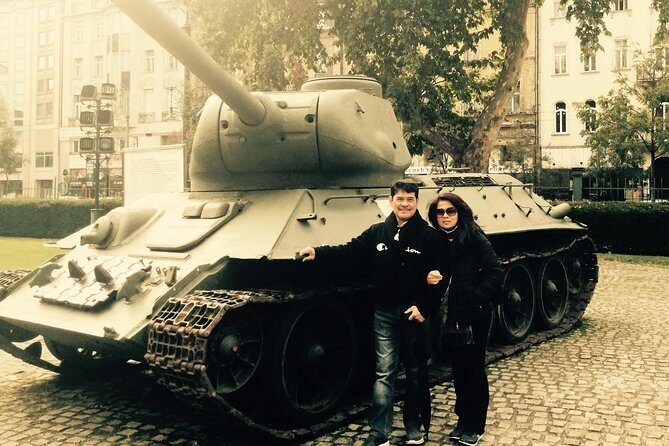
- Szabadság tér Soviet memorial and its controversy right next door to the American Embassy
- English-first guiding with lived-in context from guides including Martin and Bogota
- A 4-hour route on foot and by public transit that connects big sights to the theme
- Private, customizable pacing so the tour can fit your questions
Why a private Communist Budapest walk is worth your time
Budapest can look like one gorgeous postcard after another. But if you only stick to the surface, you miss why certain buildings, monuments, and street angles feel the way they do. This is a private tour built to explain the communist era in a way that actually connects to what you see outside your window.
The biggest practical win is the hotel pickup. You meet in the morning (start time is 10:30 am) and someone handles the first step. That means you can focus on what you came for: history that shows up in the city’s layout, not just on a museum placard.
Now for the human side. A private guide does not just point. They help you translate. In this case, guides like Martin and Bogota are praised for English that is clear, plus an ability to talk about communist history with both public events and day-to-day realities. You are not hearing a script. You are getting explanation you can ask follow-up questions on.
The price—$361.23 per person—might look steep at first glance. But you are paying for a few things at once: a dedicated guide for around 4 hours, pickup from your hotel, and a route that is designed to make the theme stick. If you have ever tried to DIY this with a map app and random reading time, you already know how hard it is to make the story line up with the streets.
You can also read our reviews of more private tours in Budapest



Szabadság tér: Soviet Red Army memorial and the U.S. Embassy next door
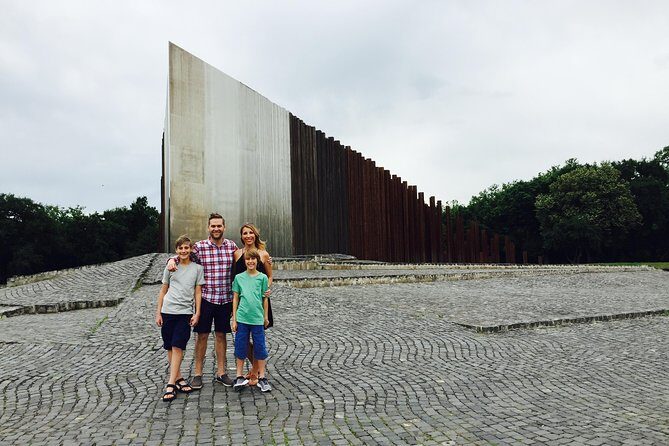
The tour’s first stop is Szabadság tér, a square where WWII memory is tied tightly to today’s politics. You will see the memorial to the Soviet Red Army that commemorates the fallen Soviet soldiers who fought in the Siege of Budapest. The mood here is not soft-focus. It is meant to be remembered.
What makes this stop especially useful is the immediate sense of contradiction—because the memorial sits right next to the American Embassy. That proximity turns the square into a live lesson in how symbols compete, overlap, and get re-read over time. You are not just learning what the monument says. You are understanding why that location can feel controversial.
Plan on about 20 minutes at this stop. Admission is not included for this part, so if you know you want to enter or access anything that requires a ticket, budget accordingly.
This is also a good place to mentally reset your expectations. If you came to Budapest expecting only neat sightseeing, this stop sets the tone. You will start connecting events to geography, and that makes the rest of the walk more meaningful.
Walking route logic: how you cover big sights without feeling rushed
The format is built around foot time, with help from public transit during the wider route. You get the best of both worlds: walking lets you notice street-level details, while transit helps you move between key areas without burning the whole morning on long connections.
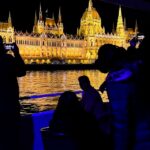
You should expect to see major landmarks along the way, including Parliament and St. Stephen’s Basilica. The point is not to tick them off like a checklist. The point is to frame them in context—what was built, what was used, and what the state wanted people to focus on.
Here is why this works for me as a way to understand a political era: when you walk, you slow down. Your brain has time to connect what you see with what you hear. When you only read from inside, the story stays abstract. On this kind of route, the theme stays attached to real streets.
Since it is private, your guide can adjust pace and emphasis. That flexibility is valuable for two types of people:
- those who want more explanation on daily life under the communist system
- those who prefer quick, clear context so they can keep moving
Either way, the tour’s customizable itinerary means you are not stuck with a one-size-fits-all script.
The guide makes the theme click: Martin and Bogota’s approach
The strongest praise is not about buildings. It is about the guide. English clarity comes up again and again. That matters more than people think, especially with political history where terms can get fuzzy fast.
Two guide names show up in the strongest feedback: Martin and Bogota. They are described as thoughtful and highly capable at speaking about communist history—covering both historic events and how ordinary citizens experienced the era. That blend is what makes the tour feel like more than a walking lecture.
One thing I would pay attention to is the way personal experience is used. When a guide can explain how something felt to live through it, the story stops being just dates and names. You start noticing how propaganda, housing, public institutions, and everyday interactions shaped people’s routines.
Also, the tone is human. The guides are described as delightful, thoughtful, and capable of giving straight answers—without flattening the story into a simple good versus bad narrative. That balance is important with communism, because it is not just one-sided. It changes depending on who you were and where you lived.
Finally, the tour operator connection matters too. Suzy is mentioned as excellent to work with on logistics. If you have ever had a tour company drop the ball on simple details, you will appreciate that extra layer of reliability.
Price and value: what $361.23 buys you in real terms
Let’s talk money like adults. $361.23 per person is not a bargain-basement tour price. So you want to know what you are getting beyond a general tour overview.
Here is the value math that matters for most people:
- Private time with a dedicated guide for about 4 hours
- pickup from your hotel (so you avoid added planning stress)
- a route that uses both walking and public transit to keep the story coherent
- a theme-focused itinerary designed to explain communist-era context where you are standing
If you compare this to hiring a guide for random stops on your own, the price makes more sense. A big chunk of the cost is buying someone else’s brain and scheduling. With a private tour, you also get the ability to ask questions and adjust pacing, instead of hoping your group stays together through unrelated sightseeing.
One small cost warning: the memorial stop at Szabadság tér lists admission as not included. So treat that as the one place where you might pay an extra fee depending on what you want to access.
If you are traveling with a small group or you care deeply about political history, this kind of private format is often the best value. It is also a strong choice when you want context without spending hours piecing together how different sites connect.



Getting ready: timing, comfort, and weather reality
This tour starts at 10:30 am and runs about 4 hours. The meeting setup includes hotel pickup, but you need to specify your hotel. If you want things smooth, do that as soon as you book.
The tour operates in all weather conditions. That line is not just legal language. You will be outside, walking. Dress appropriately for cold mornings, wind, and rain risk. Comfortable shoes matter here, because the tour uses a lot of on-your-feet time.
Good news if you like public transport: the tour is near public transportation, and the route may include transit segments. That keeps movement practical even when parts of the city are spread out.
Service animals are allowed. Most people can participate, but keep in mind the main activity is walking outdoors. If you have mobility constraints, you might want to think through your comfort level with an all-weather walking-focused morning before committing.
Should you book the CurioCity Budapest Private Communist Tour?
Book it if you want communist-era Budapest explained in context—on streets, not just inside. This is especially worth it when you care about how politics shapes daily life and how monuments and institutions interact in the urban layout. The praise for Martin and Bogota’s English and their use of personal perspective is exactly what you hope for from a private guide.
Skip it (or at least reconsider) if you want a light, purely scenic walk. The subject matter is political and the key stop at Szabadság tér can feel heavy. Also, if you dislike all-weather walking, you may find the format tiring on a bad day.
One practical upside: if your plans change, you can cancel for a full refund up to 24 hours in advance. That means you can book with less fear.
Bottom line: if Budapest history with real street context is your thing, this private tour is a smart use of half a day—and a good way to see beyond the usual tourist script.
FAQ
How long is the Private Communist Budapest Tour?
It’s approximately 4 hours.
What language is the tour offered in?
The tour is offered in English.
Is hotel pickup included?
Yes. Pickup is offered from your hotel, and your hotel needs to be specified.
Where does the tour start?
The start time is 10:30 am. The first listed stop is Szabadság tér.
Is admission included for the memorial at Szabadság tér?
Admission ticket is not included for that stop.
Is this a private tour?
Yes. It is private, and only your group participates.
Does the tour run in bad weather?
It operates in all weather conditions. Dress appropriately.
Is free cancellation available?
Yes. You can cancel up to 24 hours in advance for a full refund.