REVIEW · BUDAPEST
Guided Tour with Admission in Memento Park
Book on Viator →Operated by Memento Park · Bookable on Viator
Stalin’s statues become readable with a guide. This Memento Park visit in Budapest uses a focused, English-language walk plus included admission to explain the communist era through the park’s best-known sculptures, then gives you time for photos, a movie show, and a Barrack photo exhibition.
You’ll be in a group of up to 15 people, starting from Balatoni út – Szabadkai út sarok at 11:30 am, with the guided portion running about 70 minutes.
I love how the tour turns steel-and-stone artwork into actual context: you don’t just see figures, you learn why they were placed there and how Soviet-era power shaped public life. In the hands of guides such as Ilodi, Eszter, Louisa, and Esther, the explanations come with human-scale details and stories that make the era easier to grasp.
I also like that it’s not only walking and talking. After the tour, you get time to take photos and explore the movie show and the Barrack photo exhibition, including the “secrets” tied to Stalin’s Grandstand and the Trabant display.
One consideration: if you’re the type who wants a free-form wander with minimal structure, you may find the park more confusing than moving. The whole point here is that a guide helps you connect the sculptures to what they’re saying.
In This Review
- Key Things You’ll Gain From This Memento Park Tour
- Entering Memento Park: What the Start Really Means
- A 70-Minute Guided Walk That Makes the Sculptures Legible
- Q&A After the Tour: Turn Confusion Into Clarity
- Photos, the Movie Show, and the Barrack Exhibition
- Stalin’s Grandstand: The Part You Might Miss Without Help
- The Trabant Display: Why That Odd Detail Sticks
- Price and Value: Is $30.04 Worth It?
- Who Should Book This Guided Admission Tour
- Practical Notes for Your Day at Memento Park
- Should You Book This Guided Admission Tour?
- FAQ
- Where does the tour meet at Memento Park?
- What time does the tour start?
- How long is the tour?
- Is admission to Memento Park included?
- What language is the tour offered in?
- How many people are in the group?
- Do I receive a mobile ticket?
- What is the cancellation policy?
Key Things You’ll Gain From This Memento Park Tour
- A guided 70-minute loop that focuses your attention on what matters in the sculpture park
- English interpretation that’s designed to make the symbols and stories make sense
- Q&A time after the walk so you can ask the questions the sculptures raise
- Admission included, so you’re not juggling extra tickets on-site
- Time to explore on your own with photos, a movie show, and a Barrack photo exhibition
- Small group size (max 15), which keeps the experience from feeling rushed
Entering Memento Park: What the Start Really Means
Memento Park is the kind of place where your first impression can go two ways. You’ll either feel “wow, that’s intense,” or “what am I looking at?” This tour is designed to get you to the first reaction—fast—by giving you a guided map through the main ideas behind the park’s sculptures and displays.
You meet right at the park area at Balatoni út – Szabadkai út sarok, 1222 Hungary. The tour starts at 11:30 am and ends back at the same meeting point, so you’re not stuck trying to figure out logistics after the visit.
It’s also offered in English and capped at 15 travelers, which matters more than it sounds. When the topic is political and visual, smaller groups help the guide keep the pace and answer questions without turning your experience into a lecture you can’t pause.
And yes, you get a mobile ticket. If you like to travel light and handle everything on your phone, this is the simple kind of prep.
You can also read our reviews of more guided tours in Budapest



A 70-Minute Guided Walk That Makes the Sculptures Legible
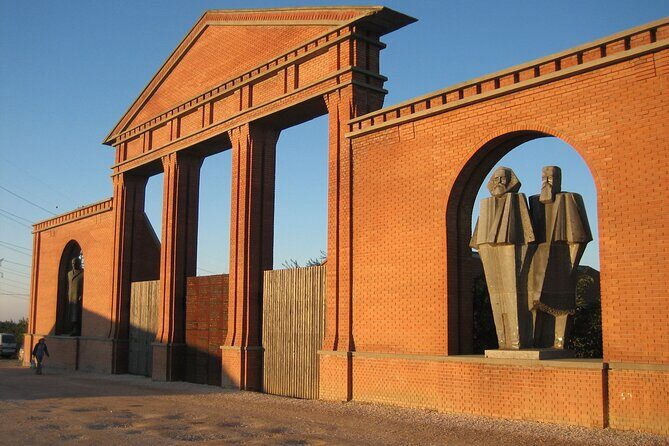
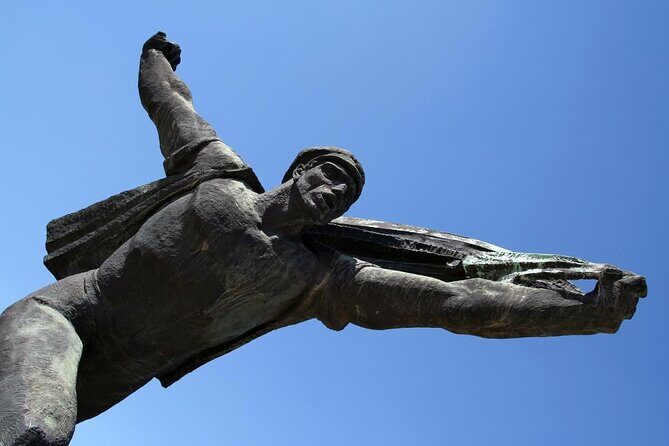
The core of the experience is a guided session of about 70 minutes, centered on the history of communism as expressed through the park. Instead of treating the statues as random collectibles, the guide helps you read them like public messaging: who these figures represent, why they’re styled the way they are, and how they fit into the larger story of 20th-century Hungary under Soviet influence.
That’s where I think this tour earns its strong reputation. Outside of guidance, a sculpture park can feel like a list of shapes. With a guide, the same shapes start to “talk.” You’ll learn to notice the details—the way the poses communicate authority, how the styling reflects ideology, and why certain scenes are framed the way they are in the landscape.
From what’s shared about real guide styles, people often single out the way the guide explains both the historical setting and the artistic choices. In particular, names like Ilodi, Eszter, Louisa, and Esther show up as leaders who translate the sculptures into clear meaning. If you care about art but also want the timeline, this kind of balancing act is exactly what you’re paying for.
Q&A After the Tour: Turn Confusion Into Clarity

After the guided walk, you don’t just get released into the park like a free sample. You’re given about 20 minutes for questions. That small window is bigger than it looks.
Communism is a broad topic, and the park is packed with symbolism. If you’ve been wondering things like what certain figures are meant to represent or how the political story played out locally, this is your chance to ask without trying to remember your questions later while you’re photographing.
Then the guide steps back and you can work on your own pace. The structure matters: you first get the framework, then you can test it against what you see. That’s often the difference between a visit that feels heavy but abstract and one that feels heavy but understood.
Photos, the Movie Show, and the Barrack Exhibition
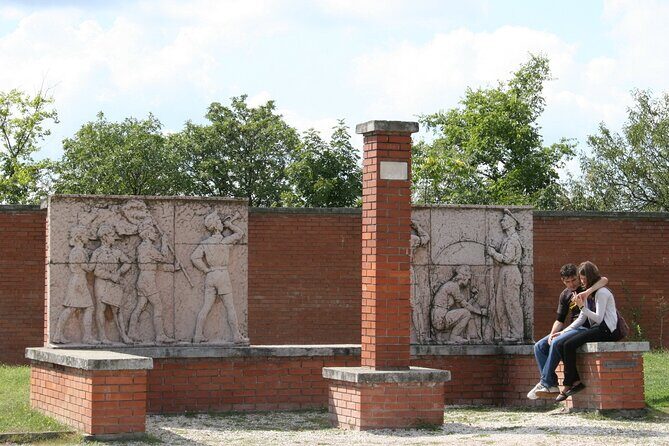
Once the guided portion ends, you shift from “listen mode” to “see mode.” You’ll have time to take photos and explore the park’s on-site features, including the movie show and the photo exhibition in the Barrack.
Why this part matters: sculpture parks can be visual only, which is where people miss context. The movie show and the Barrack exhibition add narrative and documentation so the sculptures don’t float without explanation. You get more than just the message of the statues—you also get supporting material that helps you connect what you saw to what happened.
Think of it as layering. First, the guide gives you the shape of the story. Then the film and photos give the story texture—how people lived, what propaganda looked like in practice, and how power was communicated to the public.
If you’re a photographer, this is the time to slow down. Don’t just aim for a picture. Use this window to frame the statues against their environment. Many of these works were built to dominate attention, and seeing them in context—standing where they were meant to be seen—changes the impact.
Stalin’s Grandstand: The Part You Might Miss Without Help
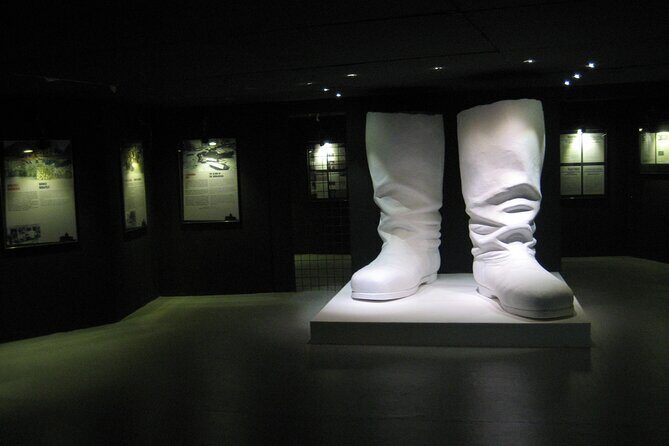
One highlight built into the experience is the focus on Stalin’s Grandstand, including the “secrets” tied to it. That phrasing is helpful because it signals a key idea: there’s more going on here than a “big view.”
The grandstand area is a powerful piece of stagecraft. It’s designed to impress, and it works even if you don’t know the exact political details in advance. But when you understand the intent behind it—how monuments and setups were used to project authority—you start noticing how the space pushes your attention and shapes your emotional response.
A guide makes this more than a photo stop. You learn what to look for, and you also learn how to interpret what you’re seeing. That’s the kind of value that’s hard to replace with a simple brochure.






The Trabant Display: Why That Odd Detail Sticks
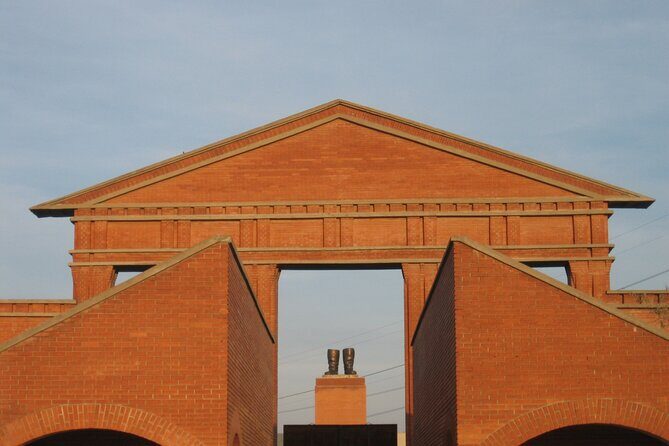
Another thing you’ll be able to see is the Trabant. It sounds almost out of place compared to towering political monuments, but that contrast is useful.
When you include a symbol of everyday life inside a place built for ideology, it reminds you that history isn’t only about leaders and speeches. It’s also about the material reality people moved through: what cars they drove, what products existed, what daily life felt like under a system.
This is where the tour’s mix of big history and human scale helps. It gives your brain a place to anchor the era outside of grand statements.
Price and Value: Is $30.04 Worth It?
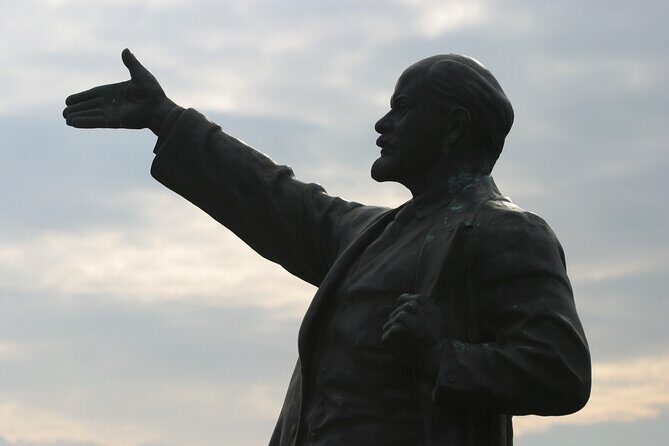
At $30.04 per person, this tour is positioned as a mid-priced guided experience, and the key value piece is that admission is included.
So you’re not paying for a guide who only walks you around. You’re paying for guided interpretation plus park access. For a one-visit stop, that bundled approach saves you time and keeps your day simple.
The stronger argument for the price isn’t just the total cost. It’s what you get for it: a structured explanation of communist history through sculpture, a follow-up Q&A window, and included time to experience the movie and photo exhibition components. If you’ve ever spent money on a museum where the audio guide didn’t quite connect the dots, you’ll appreciate this format: the guide sets up the meaning first, then you verify it on-site.
Who Should Book This Guided Admission Tour
This tour is a great match if you like history that’s not stuck in textbooks. You’re going to get political context, but also visual interpretation—helping you connect what’s in front of you to what it represents.
It also fits well if you enjoy art or design but want it explained through the real world. The park is built around sculptures, yet the impact comes from understanding the intent behind them.
Book it if:
- You want the park’s message decoded, not just photographed
- You prefer a small group and a real guide who answers questions
- You’re comfortable with a topic that can feel unsettling
You might skip it if:
- You strongly dislike guided tours and prefer to read everything yourself
- You’re looking for a light, low-emotion stop and don’t want heavy historical themes
Practical Notes for Your Day at Memento Park
A few details to help you plan a smooth visit:
- Start time: 11:30 am. Arrive a bit early so you’re not rushing while the group gathers.
- Group size: maximum 15 travelers, which makes it easier to ask questions.
- Language: English only (so plan accordingly if you’re more comfortable in another language).
- Ticket format: mobile ticket.
- Getting there: it’s noted as near public transportation, which is handy if you don’t want to rely only on taxis.
- Timing: the guided portion is about 70 minutes, with roughly 20 minutes of Q&A after. Then you’ll have time to explore, take photos, and check out the movie show and the Barrack exhibition.
Also, if you’re traveling with a service animal, the tour allows them. And like most short guided activities, it’s set up so most visitors can participate comfortably.
If plans change, you can cancel for free up to 24 hours before the experience starts for a full refund.
Should You Book This Guided Admission Tour?
If you’re choosing between a quick Memento Park visit with no help and this guided admission experience, I’d lean toward booking. The park is powerful, but it can be hard to interpret on your own. This tour exists to make the sculptures and the spaces around them click into place—through explanation, guided pacing, Q&A, and built-in time for the movie and Barrack photo exhibition.
Book this if you want your visit to feel organized: history first, then visuals, then the chance to ask questions and take photos while the meaning is fresh. Skip it only if you truly want a do-it-yourself walk and you’re okay doing the interpretive work yourself.
Either way, plan for a stop that’s emotionally heavier than your average Budapest photo outing. With a guide, though, it becomes clearer—and a lot more worth your time.
FAQ
Where does the tour meet at Memento Park?
The meeting point is Memento Park, Budapest at Balatoni út – Szabadkai út sarok, 1222 Hungary.
What time does the tour start?
The start time listed is 11:30 am.
How long is the tour?
The guided portion is about 70 minutes, and it includes time after the tour for about 20 minutes of Q&A and additional on-site exploration.
Is admission to Memento Park included?
Yes. An admission ticket is included.
What language is the tour offered in?
The tour is offered in English.
How many people are in the group?
The tour has a maximum of 15 travelers.
Do I receive a mobile ticket?
Yes, the tour includes a mobile ticket.
What is the cancellation policy?
Free cancellation is available. You can cancel up to 24 hours in advance of the experience for a full refund. If you cancel less than 24 hours before the start time, the amount paid will not be refunded.