REVIEW · BUDAPEST
Budapest Private Tour with a Local, Custom Highlights & Gems
Book on Viator →Operated by City Unscripted · Bookable on Viator
Budapest makes more sense with a local. This private walking tour is built around what you want to see, with a matched guide and stops that go past the usual photo points. I like how the day can stay flexible while still hitting the big landmarks, so you can adjust without feeling like you’re failing the plan.
Two things I really like: first, you get a short questionnaire and direct messaging with your host before you meet, which makes the tour feel planned for you rather than for a crowd. Second, the route mixes major sights with softer, street-level moments—panoramas from Buda Castle, Danube views, and time in neighborhoods where history and daily life sit side by side.
The main drawback is simple: it’s a walking-first experience with no private vehicle. You’ll cover plenty of ground, and for longer hops your guide may suggest public transport (with any costs settled day-of), so wear shoes you trust.
In This Review
- Key highlights that make this tour work
- Hotel pickup and a real plan before you meet
- Buda Castle district: royal past + real street atmosphere
- Danube riverfront walk: Chain Bridge and Parliament from across the water
- Fisherman’s Bastion viewpoint: architecture you can actually read
- Jewish Quarter time for bakeries, murals, and market wandering
- Bohemian boulevard into courtyards and ruin bar culture
- How your guide customizes the day on the fly
- Walking logistics: what to expect with distance and transport
- Price and value: why $59.25 can beat DIY
- How to get the most from your questionnaire and questions
- Who should book this Budapest private walking tour?
- Quick reality check: when you might choose something else
- Should you book this Budapest private walking tour?
Key highlights that make this tour work
- Hotel or central meetup so you start walking without hunting for a bus stop
- Custom route driven by a pre-tour questionnaire and real conversations
- Buda Castle panoramas plus context that helps the UNESCO site click
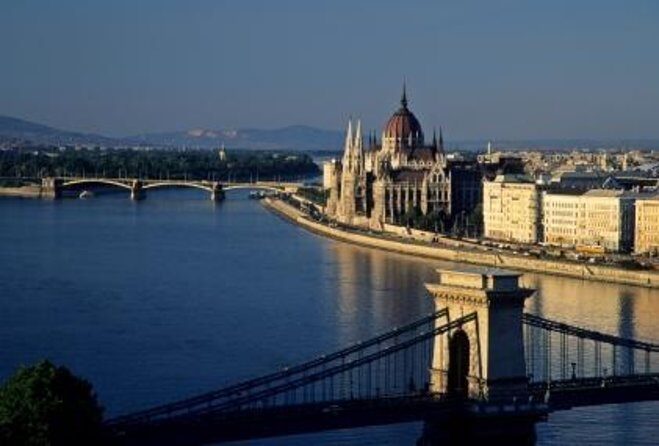
- Danube riverfront stroll with cross-river views of Chain Bridge and Parliament
- Jewish Quarter time for sweets, murals, and market wander
- Courtyards and ruin bar culture via small, off-main breaks
Hotel pickup and a real plan before you meet

One of the best parts here is how the start works. You can meet at your hotel at no added cost, or choose a central landmark if your hotel isn’t on the list. Either way, your guide meets you where you’re already positioned, so the tour doesn’t begin with a scavenger hunt.
Before you go, you’ll receive a short questionnaire. You’ll share what you care about—big architecture, cafés, artisan shops, viewpoints, river walks, everyday city life—and your host uses that to shape the day. This matters because Budapest is huge in character: imperial grandeur in Buda, formal streets in Pest, and neighborhood texture everywhere else.
It’s also private, so you’re not stuck with a pace that matches someone else’s knees. Guides on this experience have mentioned tailoring to family needs (including a nine-year-old pace), and that same flexibility is a big part of why people rate this so highly.
Practical note: because you can shift your mind along the way, you should feel free to ask for changes early. If you’d rather spend more time at a café stop or slow down for a photo viewpoint, a good host will treat that as normal.
You can also read our reviews of more private tours in Budapest



Buda Castle district: royal past + real street atmosphere
A lot of Budapest tours treat Buda Castle like a checklist. This one uses it as a story spine. You’ll follow your host through the district with panoramic views and background on the city’s royal past, framed in a way that helps the UNESCO setting feel less like a monument and more like a lived place.
Expect viewpoint moments that are genuinely worth the climb. You’ll be above the river and above the everyday grid, which is what makes Buda Castle such a strong first anchor for orientation. And if your interests lean toward architecture or how styles signal power and identity over time, this stop gives your day that “why this looks like this” feeling.
The best advantage here is pacing. Some guides are quick about the big sights and still leave you time to look around. Others slow down so you can absorb details at the walking speed you prefer.
If you want to avoid tour fatigue, this is the part where I’d focus on comfortable layers. Streets can be breezy and uneven, and it’s not fun to feel rushed when you’re trying to take in the views.
Danube riverfront walk: Chain Bridge and Parliament from across the water
After Buda’s heights, you’ll shift down to the Danube. This stretch is built for conversation and gradual orientation: you’ll walk along the banks, chat about Budapest’s history and everyday life, and see iconic sights from across the water. The Chain Bridge and Parliament are easier to understand when you’re watching them in their proper relationship, not just glancing at them from one angle.
What I love about this part is how it turns famous landmarks into context. You start to notice how the river shapes movement, views, and even the mood of each neighborhood. Guides have also shown a talent for pointing out small, practical cues—where people linger, what streets connect, and how the city’s rhythm changes as you move.
If you’re traveling with kids or you just want a calmer stretch, the Danube stop often does that job well. It’s outdoors, but not all hard climbs. You can keep the pace conversational, especially if you ask for photo breaks.
Fisherman’s Bastion viewpoint: architecture you can actually read
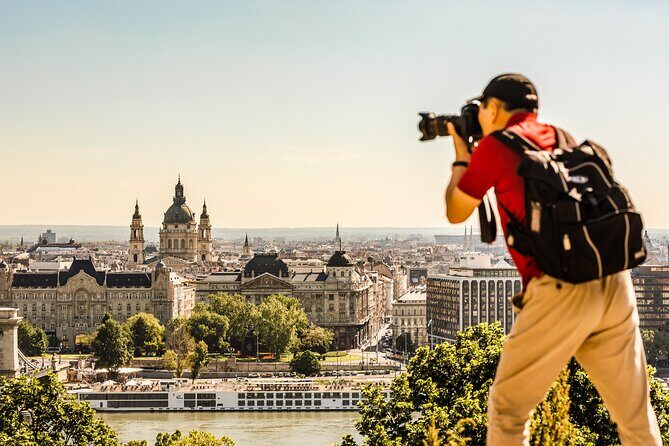
One of the best reasons to choose a guide for Budapest is that you don’t have to guess what you’re looking at. From the fairytale towers of Fisherman’s Bastion, you’ll get a top-down perspective over Pest, and you’ll learn what makes the architecture stand out.
The key here is the explanation of the mix of styles—neo-Gothic and neo-Romanesque influences—and how those choices shape the look of the place. Even if you’re not an architecture nerd, it makes the viewpoint feel earned instead of just scenic.
You’ll likely do some climbing because you’re reaching one of the city’s best vantage points. So yes, bring sturdy shoes and plan to take your time. The payoff is the view over Pest, where the city suddenly stops being a jumble of landmarks and becomes a map you can mentally navigate.
This is also a great spot to slow down and decide what you want next. If you’re someone who wants more time in Pest’s neighborhoods, your host can steer the rest of the day accordingly.
Jewish Quarter time for bakeries, murals, and market wandering

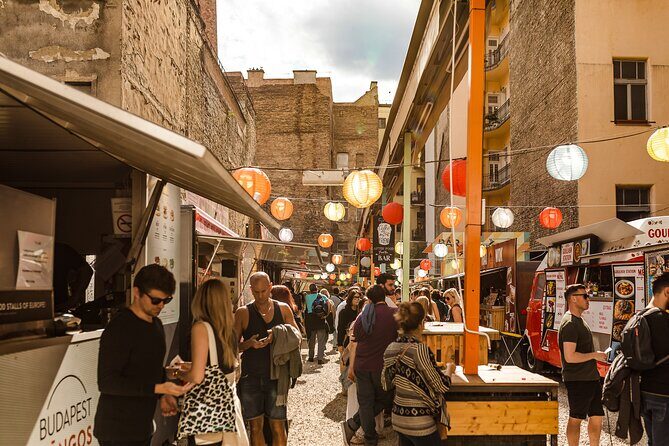
Budapest’s Jewish Quarter isn’t only about memorials and plaques. In this tour, the focus includes tradition and modern energy in the streets—old-school bakeries for sweet treats, murals you can’t miss once you know where to look, and time to browse market stalls.
This stop works because it’s not treated like a rushed pass-through. You get time to wander with a local who can point out what to pay attention to, so the area feels like a place with residents and habits, not just history on display.
If you like food moments, this is where the day can feel extra satisfying. Food isn’t included, but your host can recommend options and guide the route so you’re not just grabbing something random while you walk.
One practical tip: this is also a good time to ask your guide what to do next if you want more café time versus more street time. Guides have been great at adjusting plans mid-day, especially when someone wants a different tempo.






Bohemian boulevard into courtyards and ruin bar culture

After the Jewish Quarter, you’ll move through areas defined by big streets and older building lines—grand boulevard scenery with 19th-century mansions. Then the experience shifts into smaller spaces: tucked-away ruin bars or a hidden-courtyard café where the feel of Budapest changes from “big city view” to “local hangout.”
I like this structure because it gives contrast. You’re not spending the entire day in iconic landmarks, and you’re not stuck only in quiet streets either. That balance helps your brain keep the city straight.
In at least some versions of this day, guides also add extra stops that show their personal sense of Budapest, like a bookstore and café break in the Bohemian portion of town. That kind of choice is hard to replicate on your own unless you get lucky with a guidebook listing.
If you’re curious about nightlife culture without committing to a late night, ruin bar context from a guide is a smart compromise. You learn what makes the spaces special and why people go there, without forcing you into a loud scene.
How your guide customizes the day on the fly
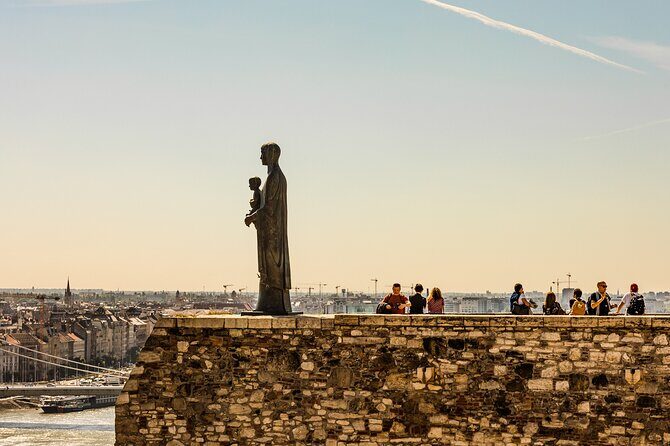
You’re not just getting a route—you’re getting a real-time conversation. Multiple hosts on this experience have been described as adjusting plans based on what you’ve already seen, shifting stops when the group gets tired, and answering questions far beyond the basics.
I’ve seen examples of guides making small but meaningful changes, like switching from walking to the underground when a route got long. Others have recommended good local restaurants at the end, and some have helped with practical tasks like taking photos at viewpoints.
There are also guides with very wide interests. One host style has included wide-ranging historical context tied to daily life. Another has mixed Budapest history with personal academic interests shared in conversation, including stories that connect notable schools and famous figures to the city.
That matters because Budapest rewards curiosity. If your brain wants explanations—language origins, political change, Ottoman influence—your guide can often meet you there. If your brain wants shortcuts—how to get from A to B without wasting time—they can do that too.
Walking logistics: what to expect with distance and transport
Because this is private and walking-focused, you should plan your day around your feet. The duration ranges from 2 to 6 hours depending on your selection and the pace your host builds. For longer distances between parts of Budapest, public transport may be used and local taxis are also an option at additional cost.
You won’t have a private vehicle waiting for you, so you’re moving under your own steam. The good news is that the stops are chosen to keep you walking between meaningful places, not just between tourist pins.
If you want the easiest experience, pick footwear that handles uneven sidewalks and don’t schedule this tour as the first thing after a long overnight flight unless you’re ready to pace yourself. Your guide can go slower, but the city still has hills and steps near some viewpoints.
Price and value: why $59.25 can beat DIY
At $59.25 per person, you’re paying for two things: smart routing and a local translator for meaning. If you DIY Budapest with a map and a guidebook, you’ll see a lot—but you’ll miss a chunk of the why behind the sights, and you’ll spend time figuring out how to order neighborhoods efficiently.
This tour also gives you something DIY usually lacks: real flexibility. You can change your mind on the walk. You can trade one viewpoint stop for more time in a café or market area. You can move at your pace, which is a major value if you’re traveling with kids or you just hate being rushed.
The tour is private, so it’s not about squeezing you into a group. It’s about using the guide’s time for your interests. That’s why the higher ratings keep circling around customization and the feeling of being cared for like an old friend who actually knows the city well.
How to get the most from your questionnaire and questions
When you fill out the questionnaire, think in three categories:
- What you want to see (landmarks vs neighborhoods)
- What you want to feel (quiet walk vs photo stops vs café breaks)
- What you’ll tolerate (stairs, long walking, crowds)
Then, when you meet, ask for a simple plan: where you’ll start, what order makes sense, and which stop is optional if you’re tired. The best guides will build in options without making you feel like you’re taking away from their job.
Also ask what the guide recommends for your day. Hosts on this experience have mentioned restaurant recommendations and local tips that go beyond a generic list. If you want Hungarian pastries, ask for the right kind. If you want a history thread, ask for what connects the places you’ll see.
Who should book this Budapest private walking tour?
This is a strong match if you:
- Want a first-day or second-day orientation that still feels personal
- Like history and culture, but prefer explanations that connect to street life
- Hate rushing and want control over pacing
- Are traveling with family or mixed ages and need a guide who adjusts
- Appreciate food and café breaks built into a route
It’s also ideal if you care about seeing major sights without feeling like you’re sprinting between them. Budapest can be confusing at first, and a guide turns the city into something you can navigate mentally.
Quick reality check: when you might choose something else
If you’re determined to do mostly museums or you want a tour centered on ticketed indoor attractions, this might not be your best fit because food and tickets aren’t included and it’s primarily a walking plan. Also, if you dislike walking for any reason, no private vehicle is included, and you’ll likely need to use public transport at times.
Should you book this Budapest private walking tour?
If you want Budapest with context and control, book it. This experience has a clear advantage: your day is shaped around you, with a guide who can steer your route, adjust pacing, and add the kind of small details that make the city feel understandable.
I’d especially recommend it for your first trip to Budapest or for a shorter visit where every hour counts. Bring good walking shoes, fill out the questionnaire honestly, and be willing to ask questions—your host will do the rest.