REVIEW · BUDAPEST
Buda Castle Private Walking Tour: A Kingdom of Many Nations
Book on Viator →Operated by Insight Cities · Bookable on Viator
Budapest’s old hill can feel like a time machine. This private walking tour focuses on Castle Hill and the surrounding landmarks, with an historian guide giving you the kind of context that turns stone and street corners into real stories. I especially like the personal pace and the way you get big-picture history tied to what you’re seeing right there.
Two more things I like: the clear route that hits the main sights without wasting time, and the chance to see both political power and panorama in one loop. The only real drawback to plan around is that the most famous interiors/views come with separate tickets for Matthias Church and Fisherman’s Bastion, so you’ll want to budget a bit extra and manage your time at those stops.
In This Review
- Key Things I’d Put on Your Radar
- Castle Hill: Where Royal Power Keeps Changing Hands
- Price and Group Size: How to Judge the Value
- Getting There: Start Point, Pickup, and Timing That Works
- Stop-by-Stop Walking Route on Castle Hill
- 1) Buda Castle (Castle Hill’s Crown and Color)
- 2) The Palace: How One Site Survived Invasions and Rulers
- 3) Sándor Palace: A Quick Look at Modern Hungarian Power
- 4) Matthias Church: The Roof You Came for (and the Ticket You Need)
- 5) Fisherman’s Bastion: Seven Towers and a Danube View
- 6) Vienna Gate: Ending With the Roman Trace to Obuda
- What the Best Guides Do Here: More Than a Walk, More Than a Lecture
- The Ticket Reality: Matthias Church and Fisherman’s Bastion
- Who Should Book This Tour (and Who Should Rethink)
- Should You Book the Buda Castle Private Walking Tour?
- FAQ
- Where does the tour start?
- Is pickup included?
- How long is the tour?
- Is this tour private?
- How many people are in a group?
- What language is the tour offered in?
- Is a mobile ticket provided?
- Do I need tickets for the stops?
- How far in advance is it typically booked?
- Can I cancel for free?
Key Things I’d Put on Your Radar
- A historian guide who connects dates to buildings, not just facts on a wall
- Small-group private experience, typically capped around 8 and up to 10 total
- Matthias Church and Fisherman’s Bastion are ticketed separately, so plan for that
- Royal power, Ottoman rule, and modern Hungary all show up on the same hill
- Short stops with purpose, including a quick look at the President’s residence
Castle Hill: Where Royal Power Keeps Changing Hands
Castle Hill in Buda is one of those places where the architecture feels like an argument between eras. One building looks medieval, the next feels Renaissance, and then you suddenly get later reconstructions that look like someone tried to design “the perfect past.” That’s why this tour works: it doesn’t treat the hill like one static monument. You’re walking through a timeline.
You’ll start on the oldest part of Budapest, where narrow, cobbled streets and baroque and Gothic facades create that classic “walk up and around” feel. The payoff is that every stop has a reason for existing, and your guide ties the look of the place to why it changed.
You can also read our reviews of more walking tours in Budapest



Price and Group Size: How to Judge the Value
This tour costs $397.36 per group (up to 10), lasts about 3 hours, and includes a professional guide. If you split the cost across a full group, you’re effectively paying something like $39–$50 per person depending on whether the group is closer to 8 or 10. That’s not cheap, but for a private, guide-led history walk in central Budapest, it’s often fair—especially when you want more context than a quick audio tour can give.
The biggest value isn’t the number on the ticket. It’s the fact that you’re not just moving from photo spot to photo spot. You’re getting a guided explanation of why the palace keeps getting rebuilt and repurposed, why Ottoman rule left its imprint, and why later rulers and reconstructions made different design choices.
Getting There: Start Point, Pickup, and Timing That Works

The meeting point is Budapest, Országház u. 31, 1014 Hungary, at a hotel called Bálthazár (Országház utca 31), about 50 meters from the first bus stop on Castle Hill. If hotel pickup is arranged for you, you’ll be picked up; if not, plan to arrive about 15 minutes early so you can start on time.
Pick morning or afternoon based on your own travel rhythm. The tour is about 3 hours, and the route mixes short walking legs with short sight stops, so you’ll want to be awake enough to absorb the explanations—especially when the discussion shifts into why the palace’s function changed over time.
Stop-by-Stop Walking Route on Castle Hill
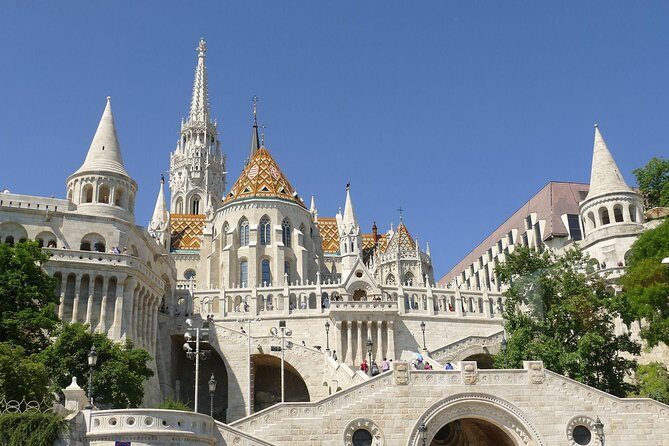
This is a focused loop. Most stops are brief (think quick orientation plus the key story), and the overall arc goes from the palace hill down to panoramic viewpoints. Here’s what to expect at each major moment.
1) Buda Castle (Castle Hill’s Crown and Color)
Your first stop is the Buda Castle area on Castle Hill. You’ll see the palace complex’s massive, imposing presence at the southern tip of the hill, alongside the other visual anchor: Matthias Church’s colored roof and the tall steeple pointing upward.
Even if you’ve seen photos, what hits you in person is how the street level feels. The street grid stays tight and old, so you’re constantly getting angled views rather than wide, postcard-perfect shots. That’s part of the charm, and your guide helps you read what you’re looking at instead of guessing.
This stop is listed as free for admission, which is great because it lets the tour start without you having to coordinate tickets right away.
You can also read our reviews of more private tours in Budapest






2) The Palace: How One Site Survived Invasions and Rulers
Next, you spend time at the palace itself, the ancient seat of royal power. The core idea your guide builds is simple: this place keeps changing hands—and changing looks—because it keeps getting remade.
You’ll hear the big sequence:
- King Béla IV erected a fortress on this site around 1250 after a devastating Mongol invasion.
- In the Renaissance period, King Matthias turned it into one of Europe’s most famous courts in the late 15th century.
- Then came Ottoman rule via pashas for over 150 years.
- After that, there was a succession of Habsburg emperors.
- The eclectic appearance you see today only really settled after World War II.
This is where the tour’s historian style pays off. Instead of treating the palace as one “thing,” you start to understand it as a layered project—rebuilt, extended, burned down, and rebuilt again.
Your route also includes a moment that specifically discusses the changing function of the building throughout its history. That topic matters because it changes how you interpret the architecture. A palace isn’t just a palace; its purpose shifts with whoever is in charge and what they need the site to do.
3) Sándor Palace: A Quick Look at Modern Hungarian Power
Then you move to Sándor Palace, the official residence of the President of Hungary. It also houses the Office of the President since 2003. The original palace dates to 1806 and is neoclassical in style, commissioned by Count Vincent Sándor, described as an aristocrat and philosopher in the Austro-Hungarian Empire.
This stop is short, but it’s a smart transition. You go from centuries of changing royal control to the idea that this “power address” is still used—just with different leaders and a modern state function.
It’s listed as free for admission, so it works well as a low-friction checkpoint in the walk.
4) Matthias Church: The Roof You Came for (and the Ticket You Need)
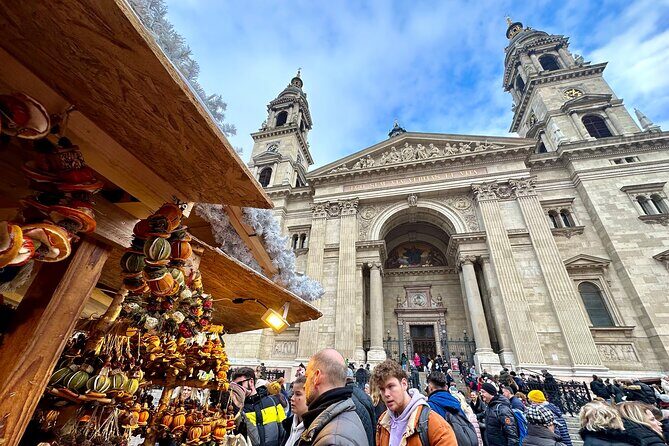
If you want one “wow” moment, it’s Matthias Church. The guide points out the abundantly decorated roof, and you’ll get to see why the building’s look is so memorable even before you step deeper into the story.
Architecturally, it’s described as a finely executed neo-Gothic reconstruction fantasy from the end of the 19th century. In plain terms: it’s not medieval in the way you’d expect—its grandeur was reinvented later. Your guide helps make that feel less confusing and more meaningful.
Important for your plan: Matthias Church tickets are not included. So while the tour brings you there and gives you the context, you’ll need to handle admission separately.
5) Fisherman’s Bastion: Seven Towers and a Danube View
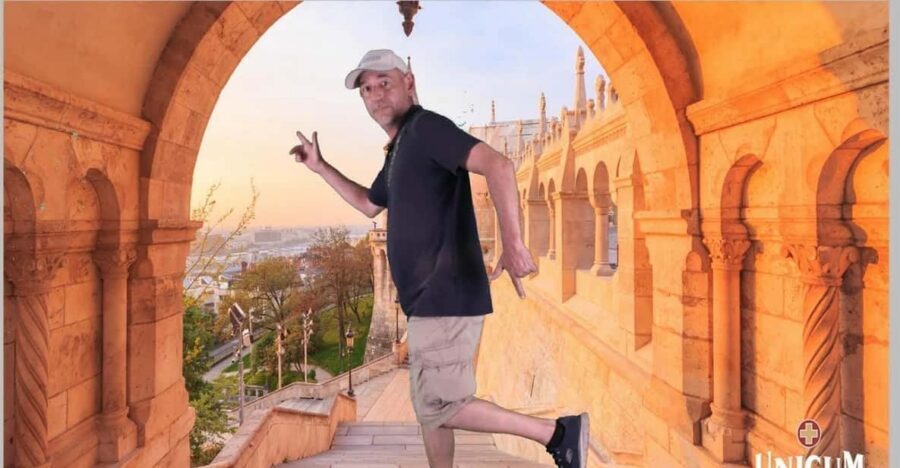
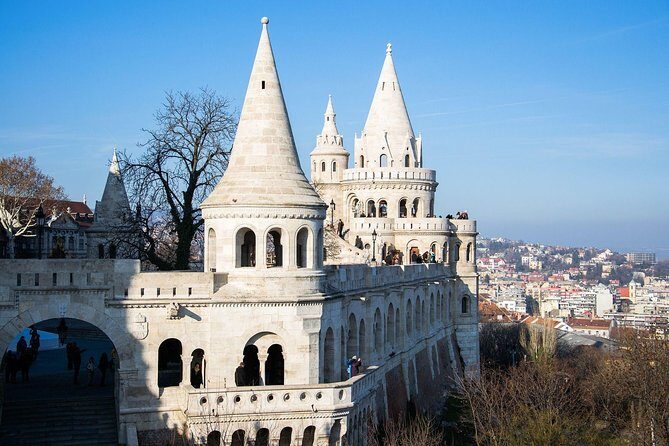
Next is Fisherman’s Bastion, an architectural fantasy in neo-Gothic and neo-Romanesque styles, built between 1895 and 1902. The tour ties the design to symbolism: the seven towers represent the seven Magyar tribes that settled in the Carpathian Basin at the end of the 9th century.
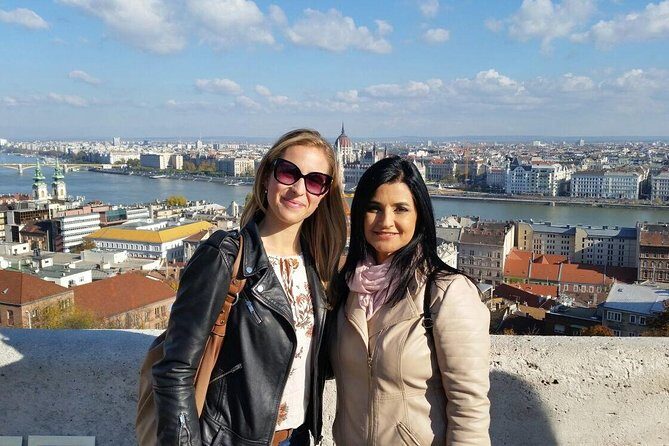
You also get the practical payoff: the terrace offers one of the most famous panoramic views of the Danube, Margaret Island, Pest, and Gellért Hill.
Like Matthias Church, Fisherman’s Bastion tickets are not included, so factor that into your budget and timing. This is one of those places where being off by 20–30 minutes can change your experience—queues, lighting, and photo crowds are real.
6) Vienna Gate: Ending With the Roman Trace to Obuda
The tour closes at Vienna Gate. From here, you can look toward Obuda (Old Buda), where the Romans founded the city called Aquincum.
This last stop works because it flips your thinking. The hill isn’t just medieval and Ottoman—it’s also connected to Roman foundations far earlier than the palace stories. It’s a neat ending: you’re finishing with a line of sight that stretches the timeline.
Vienna Gate is listed as free for admission, so it’s a relaxed closer before you head back down on your own.
What the Best Guides Do Here: More Than a Walk, More Than a Lecture
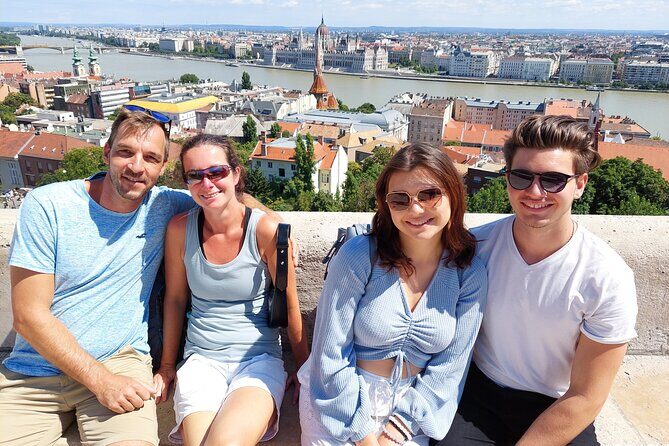
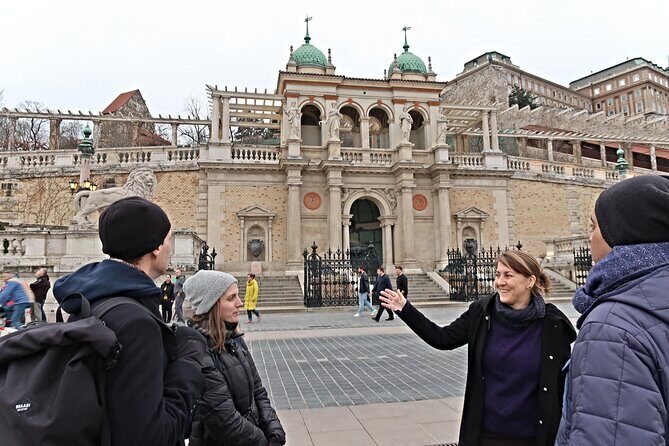
One of the strongest parts of this experience is the way the guide makes details feel relevant. In past departures, people have praised guides for delivering lots of historical background and subtle details that connect to what you’re seeing, not just a stream of dates.
Names that come up in enthusiast feedback include Kata and Julia. If you see those names on your day, you can go in with confidence: the tone you’re aiming for is historical context tied to the street-level reality of Castle Hill. That’s the difference between knowing facts and understanding place.
And yes, it’s still a walking tour. You shouldn’t expect museum-level time everywhere. You’re here for orientation, highlights, and interpretation that helps you keep seeing the city correctly afterward.
The Ticket Reality: Matthias Church and Fisherman’s Bastion

If you’re planning your spending, treat Matthias Church and Fisherman’s Bastion as the two paid add-ons you must handle separately. Everything else on the route is listed as free for admission at those specific stops.
That means you should:
- budget for at least two admissions beyond the base tour price
- plan a little extra time on the terrace area where the view is the main event
- be ready to pivot if your tickets don’t match your ideal entry time
The upside is that you’re not paying for every single stop. You’re paying for the moments that actually require admission—while the rest of the experience stays focused on guide-led context and free access viewpoints.
Who Should Book This Tour (and Who Should Rethink)
This tour is ideal if you want a private, guided walk through Castle Hill with history that’s specific to the buildings. It’s also a good fit if you like finishing with a strong view and a clear sense of how each era left its mark.
You might want to rethink it if your top priority is spending long stretches inside multiple buildings or museums. The structure is short stops with big context, and only the church and bastion are clearly ticketed. If you’re expecting the entire palace complex to function like a full museum day, you could feel disappointed.
There’s also the simple reality that Castle Hill is a hill. If your legs are limited, consider whether a multi-stop walk across cobblestones and slopes will be comfortable for you.
Should You Book the Buda Castle Private Walking Tour?

If you’re spending only a little time in Budapest and want your Castle Hill visit to actually click, I’d book it. The route is sensible, the guide format is built for understanding, and the pairing of political history plus scenic payoff makes it feel complete.
Book it especially if:
- you care about the story behind the palace and how rulers reshaped the site
- you want a private guide rather than walking on your own and guessing
- you’re excited for the views from Fisherman’s Bastion and want them explained
Skip (or pair with other plans) if:
- you want long indoor time in multiple venues
- you’d rather spend your money on museum admissions instead of interpretation
FAQ
Where does the tour start?
It starts at Budapest, Országház u. 31, 1014 Hungary, at the hotel Bálthazár.
Is pickup included?
Pickup is offered if you arrange it with the provider. If hotel pickup is not arranged, you meet the guide 15 minutes before the start time at the default meeting point.
How long is the tour?
It lasts about 3 hours.
Is this tour private?
It’s a private walking tour with a small group.
How many people are in a group?
It lists a maximum of 8 people per booking, and a maximum of 10 travelers for the tour/activity.
What language is the tour offered in?
The tour is offered in English.
Is a mobile ticket provided?
Yes, a mobile ticket is provided.
Do I need tickets for the stops?
Buda Castle and several surrounding viewpoints are listed as Admission Ticket Free, but Matthias Church and Fisherman’s Bastion tickets are not included.
How far in advance is it typically booked?
On average, it’s booked about 12 days in advance.
Can I cancel for free?
Yes. You can cancel up to 24 hours in advance for a full refund. If you cancel less than 24 hours before the start time, the amount paid is not refunded.