REVIEW · BUDAPEST
Budapest Hammer & Sickle Communist Times Tour
Book on Viator →Operated by Absolute Tours · Bookable on Viator
Revolution history in a real city.
This Budapest communist times tour strings together WWI, WWII, the 1956 uprising, and what life was like under Soviet-style rule—at street corners you can actually point to. I especially like how it pairs big political moments with human details, from passport hassles to black-market workarounds and those banana-line stories.
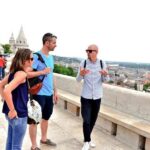
What I like most is the guidance style: English-speaking, small-group (max 10), and built around clear context plus personal, family-level anecdotes. Guides such as Anna, Celeste, Greg, Andrea, Balint Alkonri, Tomas, and George are all described as engaging and precise, and you’ll feel that when your questions keep getting answered.
One thing to consider: parts of the walk include emotional WWII and Holocaust remembrance (the Shoes on the Danube Bank memorial), and ticketed buildings like the basilica and Parliament can add a bit of planning since their admissions aren’t included.
In This Review
- Key moments you should clock before you go
- From Deák Ferenc tér Into Budapest’s 20th-Century Turning Points
- St. Stephen’s Basilica: Religion Under Communism Isn’t a Footnote
- Szabadság tér and the Soviet Memorial: Where Occupation Gets Its Name
- Parliament Square and the First Days of 1956
- October 23, Imre Nagy’s Statue, and the October 25 Memorial
- Budapest Retro Interactive Museum: See Daily Life, Not Just Dates
- Hearing Your Guide in Weather, With No Headphones
- Price and Value at $79.65 for a 2.5-Hour History Walk
- Should You Book This Communist Times Tour?
- FAQ
- How long is the Budapest Hammer & Sickle Communist Times Tour?
- What language is the tour offered in?
- Where does the tour start and end?
- Is the Retro Interactive Museum entry included?
- Are tickets included for Szent Istvan Bazilika and the Parliament area?
- Are any of the memorial/exhibition stops free?
- What’s included besides the guide?
- Is pick-up and drop-off included?
- Is there audio equipment or headphones?
- Is there free cancellation?
Key moments you should clock before you go
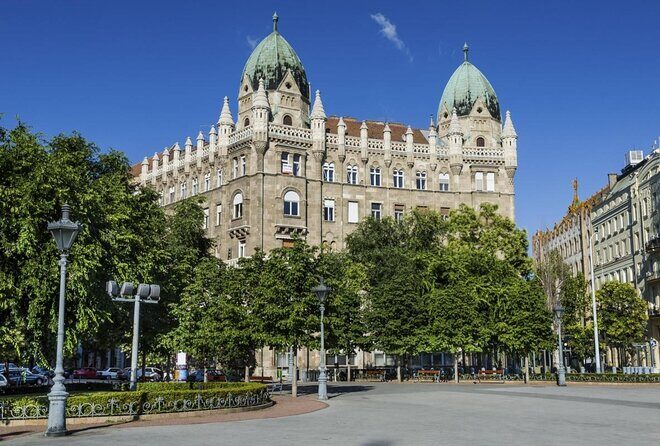
- A tight 2.5-hour route that still covers WWI, WWII, 1956, and the Iron Curtain era
- Interactive Retro Museum time focused on everyday routines, kids, travel, and shortages (plus passport delays)
- 1956 stop-by-stop context, including Liberty/Szabadság tér tributes and Imre Nagy’s story
- Archive-and-recollection memorial viewing tied to October 25, 1956 and the Soviet tanks
- Shoes on the Danube Bank as part of the WWII storyline and Holocaust remembrance
- No headphone setup, so you’ll want to stay near the guide in the walking segments
From Deák Ferenc tér Into Budapest’s 20th-Century Turning Points
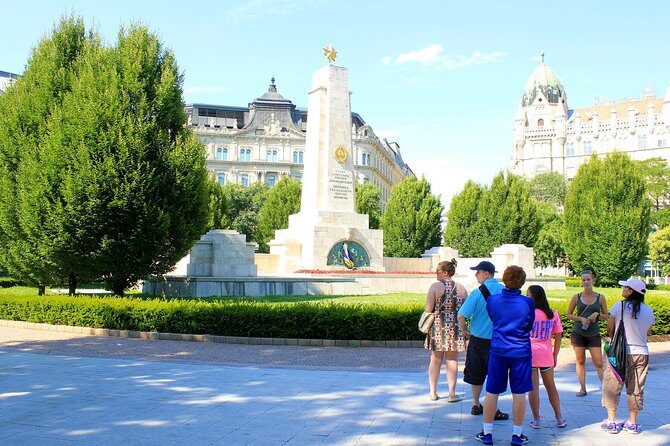
This is not a long, bus-heavy “overview.” It’s a walk that starts near Deák Ferenc tér (at the Lutheran Church area) and ends on the other side near Szabadság tér / Liberty Square in central downtown. The timing is about 2 hours 30 minutes, starting at 3:00 pm, which makes it a great “second-half of the day” choice after you’ve had time to absorb the city’s layout on your own.
The big promise here is historical continuity. You don’t just get a lesson on 1956—you get the lead-up. Hungary’s role in WWI and WWII helps explain why the country gets pulled into larger European conflicts, and why the Cold War logic hits so hard after 1945. Then you move forward into occupation, communist party power grabs, and finally the moment Hungary tries to reclaim freedom in 1956.
This tour works best if you like to connect dots in real places. You’ll hear how protests, speeches, and marches played out across Budapest—not as textbook abstractions, but as street geometry. And because the group is capped at 10, you’re less likely to feel like you’re watching history from a distance.
You can also read our reviews of more tours and experiences in Budapest.


St. Stephen’s Basilica: Religion Under Communism Isn’t a Footnote
The route begins with Szent Istvan Bazilika, where you’ll get the angle people often miss: what communism did to religious life and how churches operated. Even if you only take in the exterior views and surrounding area, the guide’s framing usually helps you understand why “freedom” also meant spiritual space and community life.
A practical note: admission for this stop is not included. So if you want the interior, you’ll need to plan for a ticket separately. For me, that’s the right kind of flexibility—you can decide how much time you want inside versus how much you want to keep walking.
Wear shoes you can trust. Even in a central district, this kind of history route rewards you for keeping your eyes up: plaques, facades, and street angles all do more work once you know what the guide is pointing out.
Szabadság tér and the Soviet Memorial: Where Occupation Gets Its Name
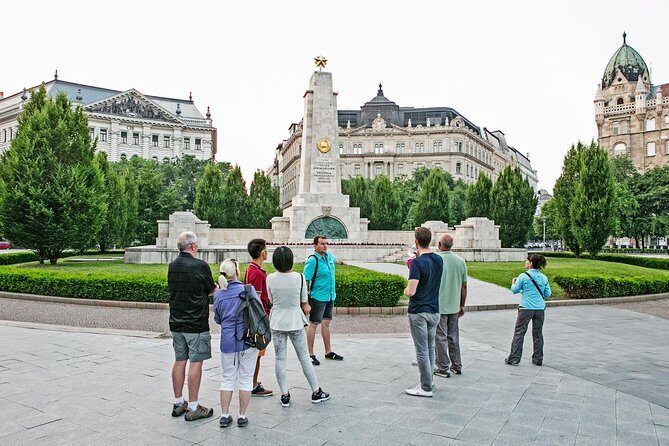
Next comes Szabadság tér, with a Soviet Memorial stop that frames WWII’s ending, the start of occupation, and how the Communist Party seized power. This is the pivot point where political control starts to feel physical. The memorial setting also makes it easier to understand why public memory under communism isn’t just about dates—it’s about what the state wanted people to repeat.
There’s no admission charge for this segment, which keeps it simple. You can spend your energy listening instead of checking ticket windows.
This is also where you’ll start hearing how travel and daily life got narrowed. The tour’s stories include how hard it could be to get documents like passports, plus the coping strategies people used—think black markets and the infamous banana-line style scarcity. You don’t need to “like politics” to appreciate that part. It’s the difference between knowing that a regime existed and understanding what it felt like.
Parliament Square and the First Days of 1956
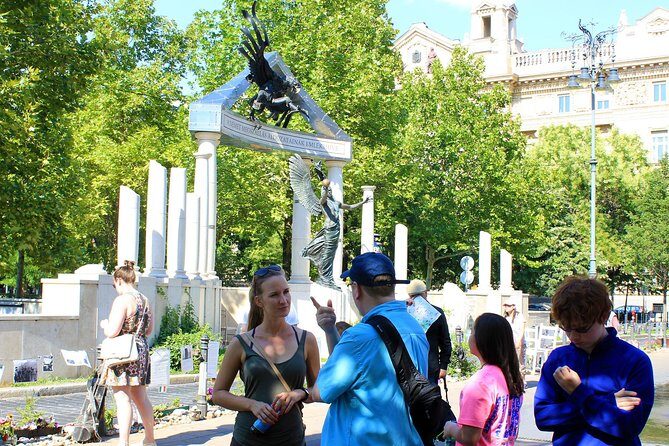
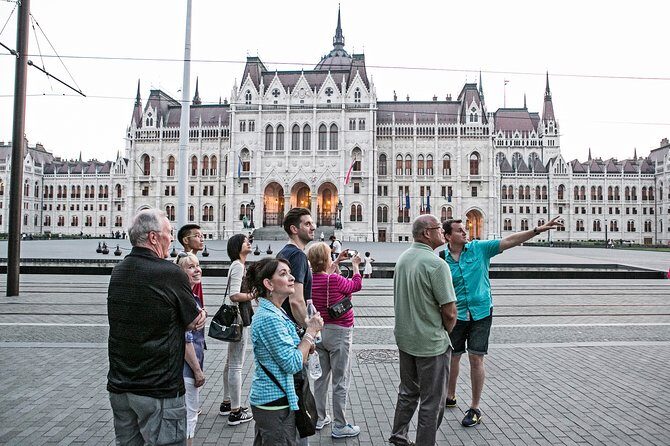
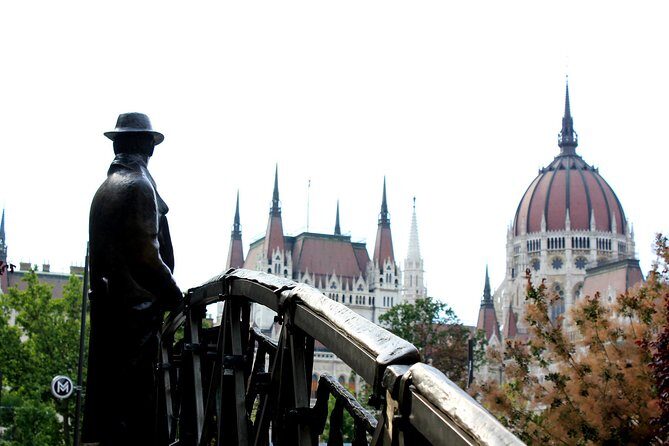
Then you move to the Hungarian Parliament Building area, where the square in front plays a key role in the first days of the 1956 revolution. The tour ties the outbreak of the uprising to what was happening in that political heartland, and it introduces Imre Nagy in a way that makes his role clearer: he’s known for defying Soviet leaders and was later executed after being condemned for treason.
Admission for the Parliament stop is not included. So again, you’ll decide whether you want to pay extra to go in, or treat the square itself as the stage for the story. Either approach works because the historical explanations are designed to function outside as much as inside.
This part is where the tour earns its name “Hammer & Sickle.” You’ll see how Soviet influence wasn’t only military—it was governance, messaging, and the shaping of public life. When the guide connects those dots, the later memorial visits make more emotional sense.
October 23, Imre Nagy’s Statue, and the October 25 Memorial
The tour continues with the Monument to Imre Nagy / remembrance for October 23, a stop that ties the uprising’s anniversary energy to a personal story of a leader who was executed and then reburied as Hungary changed course. Even if you’ve read about 1956 before, hearing it anchored here helps you grasp why commemorations matter to regime change: they signal who the country is choosing to honor.
After that, you’ll visit In memoriam 1956. October 25, described as a memorial and exhibition that covers the second day of the revolution, when military authorities and Soviet tanks fired into a gathering crowd. The exhibition uses archive footage and recollections, which makes this less like a quick photo stop and more like a concentrated “here’s what happened” moment.
This is one of the most serious parts of the experience. If you’re the type who likes to absorb heavy topics at your own pace, plan to take a breath here. The guide’s job is to explain, but your job is to let the story land.
And since the tour includes a WWII thread leading to the Shoes on the Danube Bank Holocaust memorial, you’ll also see how 20th-century tragedy is layered. WWII isn’t parked in the past here—it connects to why liberation and fear were so entangled in Hungary.



Budapest Retro Interactive Museum: See Daily Life, Not Just Dates
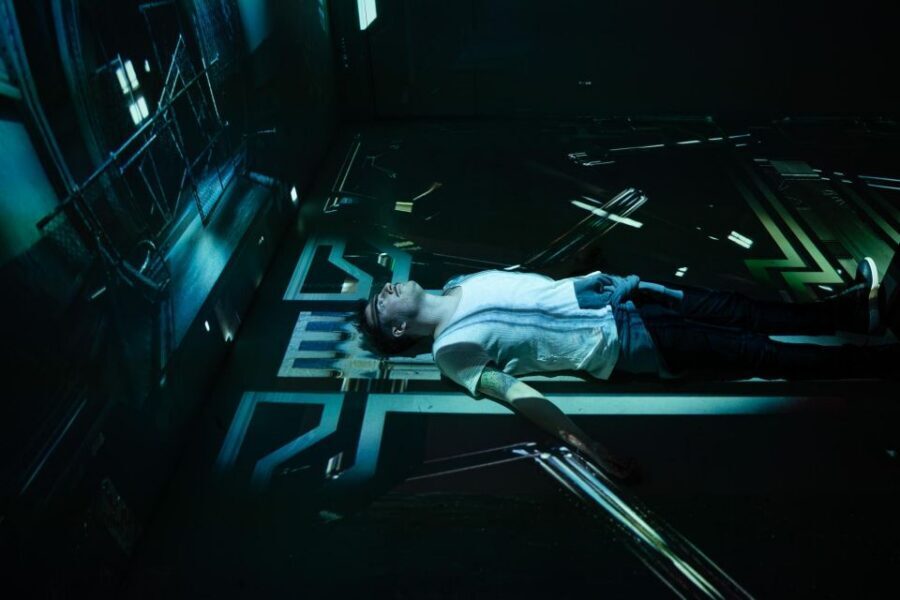
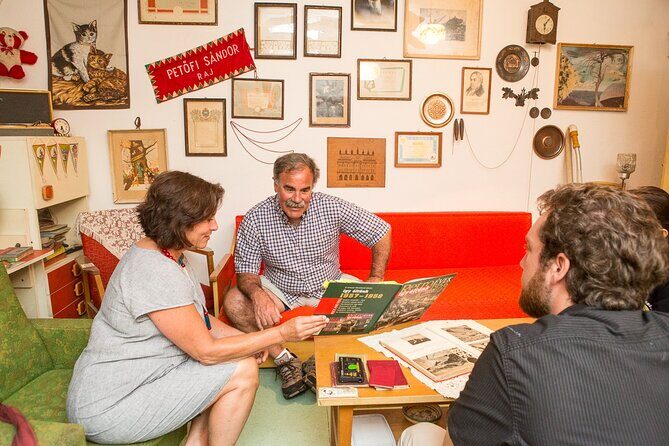
The standout value-added component is the entry to the Budapest Retro Interactive Museum, focused on what life was like behind the Iron Curtain. This is where the tour shifts from political landmarks to lived experience.
You’ll go through an interactive exhibition and learn how families lived, how children were brought up, how people traveled (and struggled), and why shortages and rules shaped everyday decisions. The stories that usually stick—based on what your guide will explain—include how long it took to get a passport and how black markets filled the gaps, plus those black-market/banana-line kinds of details that make scarcity feel real rather than abstract.
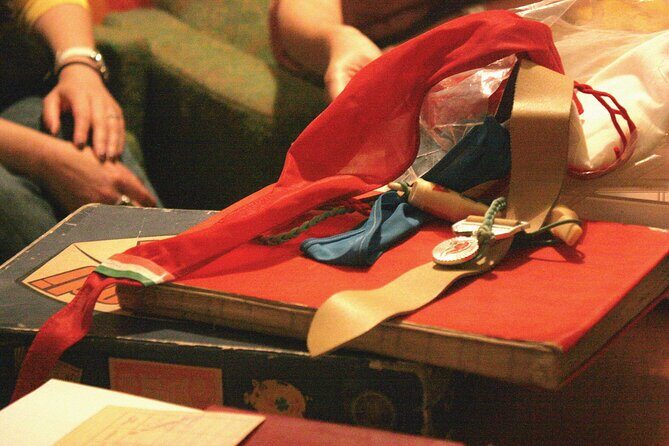
You may also encounter museum setups that feel like period rooms or staged domestic scenes, with everyday items used as teaching tools. Guides often use these objects to explain a whole system in one glance: how you spent leisure time, what kids played with, and what papers and permissions controlled your movement.
This stop is also where the emotional and practical threads connect. When you understand what ordinary life was like, the later images of protests and tanks don’t feel random. They feel like the consequence of something accumulating for years.
Hearing Your Guide in Weather, With No Headphones
Small group, no headphones, all-weather walking. That combo matters.
- No audio equipment means you’ll get more out of the tour if you stay close to your guide, especially at outdoor stops where wind and traffic can interfere.
- The tour runs in all weather conditions, so dress for it. If it’s raining, you’ll still be walking between monuments and squares.
- Most people can participate, but it’s not recommended under age 14. This is partly because the material covers WWII and communist repression topics, not just “history facts.”
- You’ll get coffee, tea, or a soft drink included, which helps when you want to keep going after memorial and museum time.
- There’s no pick-up/drop-off, and you’ll need to arrive at the start point yourself.
Finally, because group size is limited to 10, this is a good format if you like questions. Names that show up in guide experiences include Anna, Celeste, Andrea, Balint Alkonri, Bogata, Lazlo, Tomas, and George—each tied to a teaching style that blends street-level pointing with story-driven context.
Price and Value at $79.65 for a 2.5-Hour History Walk
At $79.65 per person, this sits in the “not cheap, but not outrageous” zone—mainly because you’re paying for a guided walk plus included entry to the Retro Interactive Museum and a local-language layer that you won’t get from a map.
Here’s the value logic:
- You get an English-speaking guide and a curated route through major 20th-century sites.
- You get at least one paid attraction included (Retro Interactive Museum).
- You also get coffee/tea/soft drink included, which is a small perk but helps the pacing.
The trade-off: some building admissions aren’t included, like at Szent Istvan Bazilika and the Parliament Building area. So if you plan to go inside those, you may spend a little more on top of the tour price.
For me, it’s worth it when you want context and human stories fast—especially if you only have a day or two in Budapest and want a strong “how we got here” storyline.
Should You Book This Communist Times Tour?
Book it if you want a focused Budapest introduction to the 20th century, told through real stops: Soviet power, the 1956 revolution, and the everyday reality behind official slogans. The Retro Interactive Museum component is a big reason to choose this over a purely exterior walking route, because it turns the abstract into routine—kids, travel problems, passports, scarcity, and coping habits.
Skip it (or pair it with something else) if you mainly want relaxed sightseeing, or if you’re sensitive to WWII/Holocaust remembrance. Also consider whether you’re the type who’s happy paying for guided interpretation versus doing everything self-guided.
If you decide to go, aim to arrive a few minutes early near the meeting point so you can settle in and hear clearly from the start.
FAQ
How long is the Budapest Hammer & Sickle Communist Times Tour?
It’s listed at about 2 hours 30 minutes.
What language is the tour offered in?
The tour is offered with an English-speaking guide.
Where does the tour start and end?
It starts at Deák Ferenc tér 4, near the Lutheran Church, and ends near Liberty Square at Szabadság tér 1.
Is the Retro Interactive Museum entry included?
Yes, entry to Budapest Retro Interactive Museum is included.
Are tickets included for Szent Istvan Bazilika and the Parliament area?
No. The basilica and the Parliament building stops note that admission tickets are not included.
Are any of the memorial/exhibition stops free?
Yes. The Soviet Memorial at Szabadság tér and the In memoriam 1956 October 25 memorial/exhibition are free.
What’s included besides the guide?
Coffee or tea or a soft drink is included.
Is pick-up and drop-off included?
No pick-up or drop-off is included.
Is there audio equipment or headphones?
No audio equipment or headphones are available on this tour.
Is there free cancellation?
Yes. You can cancel for a full refund up to 24 hours before the experience’s start time.