REVIEW · BUDAPEST
Live virtual walking tour in the Buda Castle quarter
Book on Viator →Operated by Behind Budapest Tours · Bookable on Viator
One hour in Budapest can feel oddly real. This live virtual walking tour through the Buda Castle quarter turns famous sights into a clear story—streets, buildings, and the “why” behind them.
I like two things most: the guide’s way of organizing the area into historical layers, and the production value that keeps the visuals sharp (a gimbal-focused camera setup paired with a video conference system). One thing to consider: it’s weather-dependent, and it’s only about an hour, so if you want to linger at spots on your own, plan a little extra time elsewhere.
In This Review
- Highlights You’ll Feel Right Away
- From Sándor Palace to Fisherman’s Bastion: the whole arc in one sitting
- How Adam Teaches You to Read the Buda Castle Quarter (Not Just Look At It)
- The Royal-to-Residential Switch: Why It Changes Everything You See
- Seasonal Bonus: the 110 Cherry Trees on the Buda Hills
- Matthias Church and the Lead-Up to the Panoramas
- The Cinematic Part: Gimbal Work and Clear Live Streaming
- Price and Value: $180.62 per Group (Up to 15)
- Who Should Book This Virtual Walk (and Who Might Skip It)
- Quick Tips to Get More Out of Your Hour
- Should You Book Adam’s Buda Castle Quarter Virtual Walk?
- FAQ
- Is this tour in English?
- How long is the live virtual walking tour?
- How much does it cost?
- Is it a private tour?
- Where does the tour start and end?
- Is a mobile ticket provided?
- Are admission tickets included?
- What do I need to join the live tour?
- Does it require good weather?
- Can service animals participate?
Highlights You’ll Feel Right Away

- A route with real structure: Sándor Palace to Fisherman’s Bastion, with logical stops in between
- Cinema-level framing: high-end gimbal work to keep views and details easy to follow
- History with context: royal vs. residential areas, plus Jewish quarter stories, sieges, and WWII restoration
- Seasonal color: a chance to catch blooming among 110 cherry trees (season matters)
- Q&A at the end: finish at Fisherman’s Bastion and ask questions while you’re still in “wow” mode
- Guide name you’ll remember: Adam’s tone is friendly, and he’s big on visuals like historic photos
From Sándor Palace to Fisherman’s Bastion: the whole arc in one sitting
Think of this tour as a guided walk with a point of view. You start at Sándor Palace (Szent György tér 1), and the session ends at Fisherman’s Bastion, where you get the payoff: views out over Pest.
What makes the flow work is that you’re not jumping randomly between monuments. You pass by the Alexander Palace area first to set the stage, then you move through the Buda Castle’s older “royal” zone before stepping into a residential neighborhood that many people miss. By the time you reach Fisherman’s Bastion, you’ve already been taught how to read what you’re seeing—architecture, street layout, and what changed over time.
In practical terms, it’s about one hour of live streaming. So if you’re trying to fit Budapest into a tight schedule—or you can’t do the physical climb up in person—this format gives you a strong orientation fast. And if you do end up visiting later, you’ll recognize the area immediately.
You can also read our reviews of more walking tours in Budapest



How Adam Teaches You to Read the Buda Castle Quarter (Not Just Look At It)
The Buda Castle quarter can look like a museum from the outside—pretty walls, big churches, big viewpoints. The trick is learning the order of events. This tour leans hard into that.
Early on, while you pass near the Alexander Palace, Adam talks about the different historical layers of the quarter and how upcoming construction work may change the way the area reads. That matters more than it sounds. When you know what was built when—and why you’re seeing what you’re seeing—you stop treating the streets like a backdrop and start treating them like evidence.
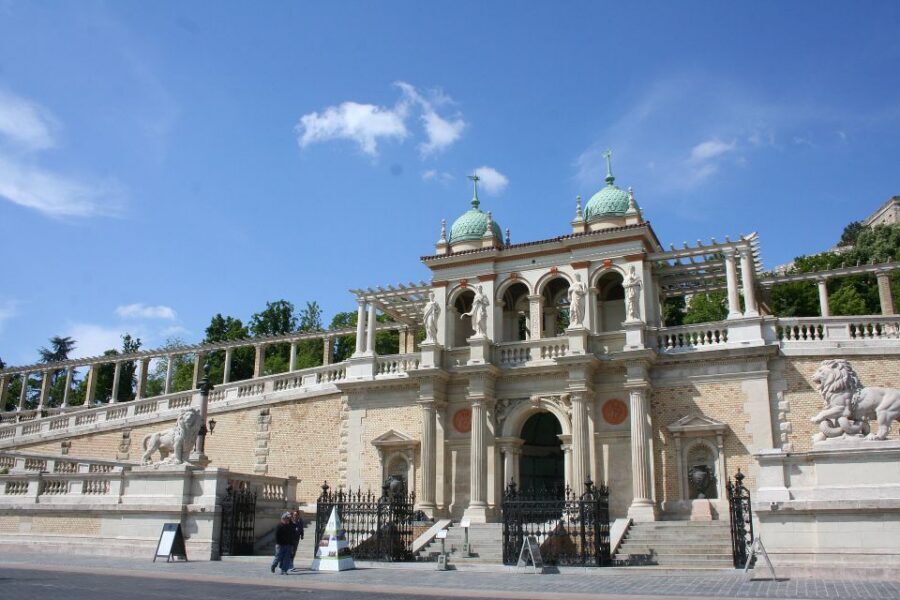
Then you move along the Northern facade of Buda Castle. That’s a useful pause because facades are where the “logic” of a complex building shows up. You’re not just looking at decoration; you’re seeing a side of the castle that helps connect the grand royal image to the lived-in reality of the neighborhood.
The most memorable turn is when the walk leaves the “royal part” and heads into the residential part. This is where the tour becomes more than a list of landmarks. You get time to talk about the first Jewish quarter of Buda, the long history shaped by sieges, and what restoration after WWII meant for the built environment. If you’ve ever wondered how a city rebuilds itself without erasing its identity, this section gives you a concrete example.
And it’s also a good reminder: this is not just a stage set. People have lived here, rebuilt here, and returned here—often more than once.
The Royal-to-Residential Switch: Why It Changes Everything You See
Many visitors focus on the royal monuments and viewpoints, then leave. But the Buda Castle quarter is layered in a different way: the grandeur is real, yet so is everyday life.
On this route, once you leave the royal core, the talk shifts toward the neighborhood side of the story. You get guided context on the first Jewish quarter of Buda and how that community fit into the broader urban picture. Even if you don’t know the details already, the guide gives you the scaffolding so the topic doesn’t feel like an unrelated history lecture.
Then the discussion of sieges and restoration after WWII turns the buildings into a timeline you can almost feel. Restoration isn’t just maintenance—it’s a statement about what a city chooses to keep, rebuild, or reinterpret. That lens helps when you later notice differences in materials, styles, or rebuilding patterns.
This matters for you because it changes how you’ll interpret the rest of Budapest. You’ll start asking better questions: What survived? What was rebuilt? Who decided? And how does that show up in the streets you can still walk today?
Seasonal Bonus: the 110 Cherry Trees on the Buda Hills
One of the nicest parts of a live walking tour is that it can react to what’s happening outside the window. Depending on timing, this one may let you enjoy the blooming of 110 cherry trees.
You shouldn’t book this hoping for a guaranteed flower moment—season controls it—but having the possibility built into the itinerary is smart. It means the tour isn’t stuck in static, postcard-only territory. You get a reminder that Budapest is a living city with seasonal rhythms, not just a collection of stone.
If you’re choosing between different dates, this is one of the few points where timing can truly change your experience. Bring that into your decision-making and think of the cherry trees as an extra “if we’re lucky” payoff.
Matthias Church and the Lead-Up to the Panoramas
As you approach the end, you walk by Matthias Church on the way toward Fisherman’s Bastion. Matthias Church is one of those sights people photograph first, but this tour helps you approach it with the right question: what does it mean in this district’s story?
You’re also getting the physical logic of the area: the route angles you toward higher ground and better sightlines. That’s where the tour’s structure pays off. You’re not just arriving at the view—you’ve been guided there with context, so the final panorama feels earned instead of random.
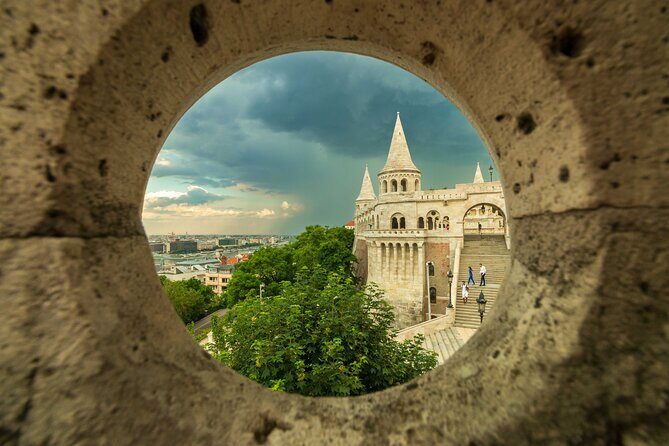
Then you reach Fisherman’s Bastion, where the session concludes with views over Pest. You’ll also get time for Q&A, which is a practical win. If something clicked for you earlier—like the Jewish quarter story, WWII restoration, or the construction plans mentioned near Alexander Palace—this is where you can ask follow-ups while the visuals are still fresh.
And yes: the views are the payoff. But the goal isn’t just seeing a view. It’s understanding why this spot became a classic vantage point.






The Cinematic Part: Gimbal Work and Clear Live Streaming

This is a virtual tour, so the question isn’t only what you’ll learn. It’s how well you’ll be able to follow along.
The good news: this experience uses a high-end gimbal to add a more cinematic feel, and the live session runs through a video conference system. In plain terms, you’re not stuck with a shaky webcam that makes you guess what direction the guide is pointing. The camera approach helps you keep up with the walk and catch details as they come.
From a practical standpoint, the production choices matter because you’re learning from visual cues. If you’re trying to understand architectural differences or the “where are we?” moments in a dense district, steady camera framing helps a lot.
The guide also adds visuals during the talk, including historic pictures of sites. That’s a powerful learning tool for virtual touring. When you can compare what was there to what you see now, your brain does the work of linking time periods. It turns the tour into a guided interpretation instead of a caption-only experience.
If you want to make this kind of virtual tour work best on your side, set yourself up so you can hear clearly (good audio helps) and keep your attention steady for that full hour.
Price and Value: $180.62 per Group (Up to 15)

Let’s talk money in a way that actually helps you decide.
This tour costs $180.62 per group, with a group size of up to 15. That makes the math very different depending on who’s traveling with you.
If you’re booking solo, the price per person becomes steep. But if you’re booking as a small group—friends, family, a department team meeting—you can spread that cost and suddenly it’s a bargain compared with multiple individual tickets to local guides. Since it’s also a private tour/activity, your group gets its own session rather than being blended into a crowd.
The real value here isn’t only the camera and the “virtual” angle. It’s the combination of:
- guided pacing (so you don’t get lost in the district’s complexity),
- specific content about historical layers,
- and a payoff ending at Fisherman’s Bastion with Q&A.
So I’d judge this purchase based on your situation:
- If you’re coming as a group, this is strong value.
- If you’re going solo, you should decide whether you want a one-hour orientation plus guided context enough to justify the cost.
Who Should Book This Virtual Walk (and Who Might Skip It)
This is the kind of tour that fits well if you want structure. You get a clear route, a guided narrative, and time to ask questions at the end.
I think it’s a great fit for:
- people who can’t physically climb around Buda Castle (access, mobility, or time limits),
- groups who want a shared experience that’s easy to schedule,
- history-minded travelers who like city context, not just photos,
- anyone who values strong visual guidance in a virtual setting.
It may not be ideal if:
- you already know the district very well and only want “free wandering,”
- you need more than an hour to absorb a place at your own pace,
- you prefer in-person strolling and tactile exploring (virtual can’t replace that).
Also, the tour is offered in English, so make sure that works for your group.
Quick Tips to Get More Out of Your Hour
A live virtual walking tour can be great when you treat it like a guided class, not just entertainment.
Here’s what helps:
- Plan for the full hour so you can follow the route logic from royal zone to residential neighborhood to the Pest views.
- Use your device audio well. If you can, choose headphones for clearer listening.
- Keep a note of the moments that spark questions—especially the WWII restoration and the Jewish quarter context—then save your best questions for the Q&A at Fisherman’s Bastion.
- If you’re taking screenshots, do it when the guide points to key visuals (facades, Matthias Church area, and the final Pest panorama). Historic photos are also worth capturing if your screen share shows them clearly.
And if you can pick your timing based on season, consider that cherry trees may be blooming depending on when you join.
Should You Book Adam’s Buda Castle Quarter Virtual Walk?
Yes—if you want a smart, guided introduction to the Buda Castle quarter with strong visuals and real context. The strongest reason to book is the way you’re taught to read the area: royal vs. residential, historical changes, and why restoration and rebuilding matter. The Q&A at the end at Fisherman’s Bastion is also a practical bonus, because you can turn your questions into answers while the sights are still in view.
I’d especially recommend it if you’re traveling with a group (up to 15) because the $180.62 per group price becomes much easier to justify. If you’re solo, it still can be worth it, but only if you value narrative and visuals enough to treat the session like a guided orientation rather than a cheap add-on.
If the schedule lines up and you’re ready for a one-hour, tightly guided experience, this is an excellent way to get oriented in Budapest without wasting time.
FAQ
Is this tour in English?
Yes. The experience is offered in English.
How long is the live virtual walking tour?
It runs for about 1 hour.
How much does it cost?
It’s $180.62 per group (up to 15 people).
Is it a private tour?
Yes. It’s a private tour/activity, meaning only your group participates.
Where does the tour start and end?
It starts at Sándor Palace, Szent György tér 1, 1014 Hungary, and ends at Fisherman’s Bastion in Budapest (1014).
Is a mobile ticket provided?
Yes. The tour includes a mobile ticket.
Are admission tickets included?
Admission tickets are not included.
What do I need to join the live tour?
You’ll join through a video conference system for live streaming, and the experience is delivered live.
Does it require good weather?
Yes, it requires good weather. If it’s canceled due to poor weather, you’ll be offered a different date or a full refund.
Can service animals participate?
Yes. Service animals are allowed, and most travelers can participate.