REVIEW · BUDAPEST
Budapest Dohany, Heroes’, Rumbach synagogues & Jewish Ghetto Tour
Book on Viator →Operated by Hidden Treasure Tours · Bookable on Viator
Budapest’s Jewish quarter tells stories in stone. This 2-hour walk links the Great Synagogue with Holocaust memory and Rumbach Street Synagogue architecture you rarely find on your own.
I love the way this tour turns landmarks into context, with clear, human explanations you can actually follow. Two standouts for me are the Great Synagogue’s grand 1850s interior and the Franz Liszt organ detail, plus the memorial stop where you move through the history of the ghetto with care.
The main catch is pacing: it packs a lot into about 2 hours 20 minutes, so you may not have time for lots of extra wandering or leisurely shopping along the way.
In This Review
- Key highlights to look for
- Entering the Great Synagogue: Neolog Hungary and the Franz Liszt organ
- Raoul Wallenberg Memorial Park: the ghetto, the helpers, and the cemetery
- Rumbach Street Synagogue: Otto Wagner’s Moorish surprise in the Jewish Quarter
- Király Street and Gozsdu Udvar: where old commerce returns
- Carl Lutz Memorial and Spinoza Színház: righteous rescue and Enlightenment roots
- Dob Street and Kazinczy Street: ghetto geography to Orthodox life today
- The kosher flodni stop and why snack timing is real
- How long it really takes, and the value for about $63.52
- Who this tour suits best
- Should you book this Budapest Jewish Quarter tour?
- FAQ
- What synagogues and memorial sites are included in the tour?
- How long is the Budapest Jewish Ghetto Tour?
- What is the dress code for entering the synagogues?
- Is the tour offered in English?
- What happens if a synagogue closes temporarily?
- Can I cancel and get a full refund?
Key highlights to look for
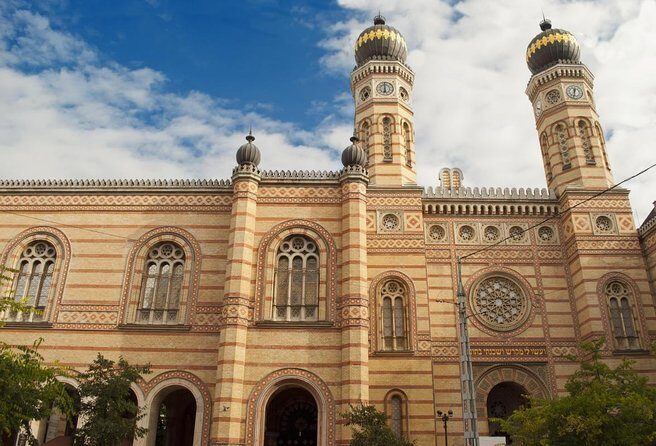
- Great Synagogue entry included at the largest Jewish temple of Europe, with architecture and Neologue history explained clearly
- Holocaust Memorial Park includes the Emmanuel Tree of Life and the ghetto cemetery with more than 2,000 victims
- Rumbach Street Synagogue reopened after renovation and still feels like a discovery in the Jewish district
- Walking through Király Street, Gozsdu Udvar, and Dob Street connects historic Jewish commerce to today’s revival
- Small photo stops with big meaning at the Carl Lutz Memorial and Spinoza Színház
- Guides like Milan, David, and Micki show up in reviews for their storytelling and ability to answer tough questions
Entering the Great Synagogue: Neolog Hungary and the Franz Liszt organ
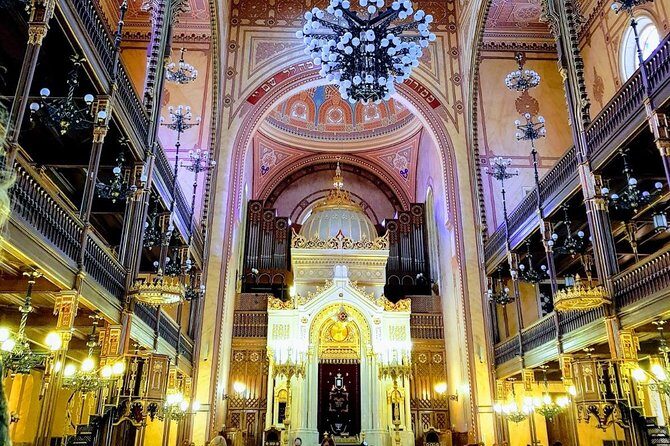
The tour starts at Dohány Street, then heads straight into Budapest’s most dramatic synagogue moment. The Great or Central Synagogue (Nagy Zsinagóga) is the largest Jewish temple of Europe, and the guide frames it in a way that makes the building make sense, not just impress you.
You’ll spend about 30 minutes here with entry included. The big idea is the Hungarian Neologue Jewish community: how it developed its own religious style, and how that showed up in architecture and public identity. You also get the kind of detail that turns a pretty room into a historical document—like the reference to Franz Liszt’s organ playing. Even if you are not a music person, it helps you picture how cultural life and religious life braided together in 19th-century Budapest.
One practical note: the tour asks you to dress for synagogue entry. Shoulders must be covered, and clothing should reach the knee (or be covered). Men also need a head cover, and the tour info says cover can be purchased on the spot. If you arrive underdressed, you might burn time sorting it out before you can go in, and that affects the pace for the rest of the group.
Also keep in mind that synagogues can close temporarily without notice. When that happens, the tour plans an alternative visiting time for the affected stop, but the info also notes refunds won’t be offered if the package needs adjusting. This matters for planning your day, because you are banking on timed access to specific interiors.
You can also read our reviews of more tours and experiences in Budapest.



Raoul Wallenberg Memorial Park: the ghetto, the helpers, and the cemetery
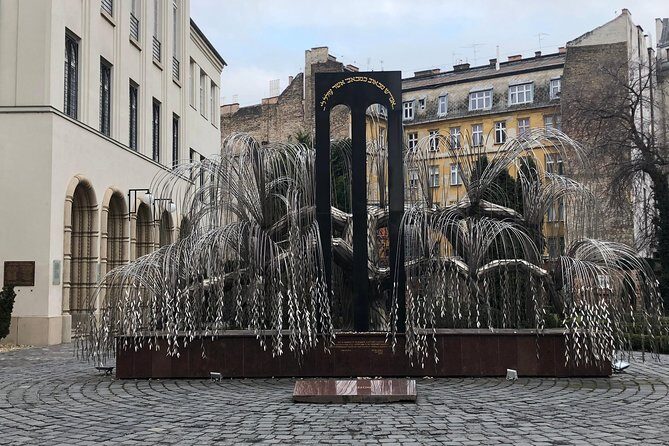
After the synagogue, the mood shifts—quietly, not abruptly. The second stop is Raoul Wallenberg Holocaust Memorial Park, and the guide uses it to connect the Holocaust to the geography you’re standing in, not just to dates in a textbook.
This stop lasts about 20 minutes and includes entry. You’ll visit the Emmanuel Tree of Life Memorial, then move through the Holocaust Cemetery created on the territory of the Budapest ghetto, where more than 2,000 victims are laid to rest.
What I like about this part of the tour is how it focuses on two things at once: the scale of suffering and the presence of rescuers. The tour description specifically highlights Righteous Gentiles who saved tens of thousands of Hungarian Jews, risking their own lives. That balance is important. It keeps the story from becoming only despair, and it gives you a fuller picture of what people did when choices were deadly.
There’s a tonal tightrope here, and the reviews back up that guides often handle it with sensitivity. Names that came up often include guides like David and Milan, with comments describing personal stories and an appropriate sense of humor even when discussing heavy topics. That doesn’t mean the content is light. It means the guide tries to keep the group moving, thinking, and listening—not shutting down.
If you tend to get overwhelmed at memorials, plan to slow your breathing and take your time at the cemetery section. The stop is not long, but a few extra seconds spent quietly looking can make the moment stick.
Rumbach Street Synagogue: Otto Wagner’s Moorish surprise in the Jewish Quarter
Then comes the architectural payoff. Rumbach Street Synagogue (Rumbach Sebestyén u. 13) is described as a remarkable Otto Wagner design from 1872—a Moorish-style building that feels like a hidden story tucked into the Jewish district.
You’ll spend about 45 minutes here, with entry included. The building has recently reopened after renovations, and that freshness matters. It means you’re seeing a space that is not just historically important but also physically restored—details that can get lost when a site has been closed for years.
What makes this synagogue especially satisfying is that it breaks the usual expectation. If you picture synagogues as all similar stone-and-ornament sets, the Moorish character will surprise you. The guide also connects it to the neighborhood and to the old ghetto streetscape, so you understand how a dramatic style choice belonged in everyday life.
This is also where the tour tends to earn praise as a discovery. In reviews, people specifically called it a wonderful find, an eye-opener they didn’t know they would miss if they skipped a guided walk. If you like architecture, this is the stop you will likely remember most vividly after the tour ends.
Király Street and Gozsdu Udvar: where old commerce returns
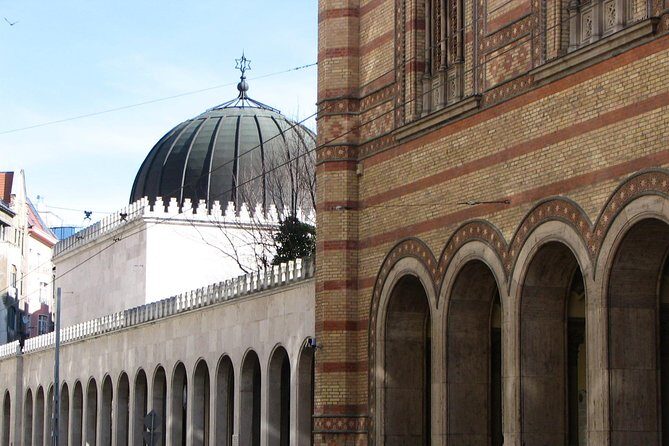
Between heavy stops, the tour walks you through the living city around them. Király Street is the historic high street of Pest in the 18th and early 19th centuries. It was a commercial and trade center that became a cradle of Jewish life in Pest. Today it’s back with a mix of commercial and cultural energy.
This segment is brief—about 10 minutes—but it’s not empty. The guide uses it to help you map Jewish life onto streets, so when you look around later, you’ll understand what you are seeing and why it mattered.
Next comes Gozsdu Udvar, described as one of the most colorful spots in the Jewish district. The history here is specific: in the past, it housed kosher salami stores, food stores, and apartments. Today it’s a social and cultural courtyard area where you can find local Jewish artists and shops, and you can eat or drink with friends.
This section is a great mental reset. It reminds you the story didn’t stop with tragedy. Jewish communities rebuilt, adapted, and re-created public life in the same general streets, even as the details changed over time.
If you are hungry, this is also where your timing matters. The tour includes a food-focused moment later, so you may want to keep room.
Carl Lutz Memorial and Spinoza Színház: righteous rescue and Enlightenment roots
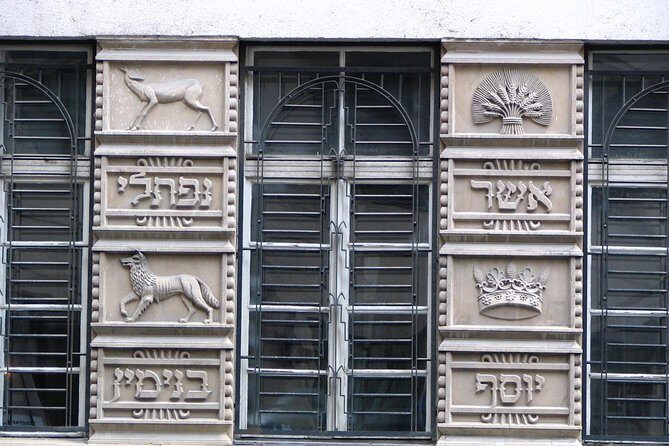
A couple of quick stops carry big meaning.
Carl Lutz Memorial is a short visit—about 5 minutes—and it spotlights one of the brave Righteous Gentiles who risked his life to save thousands of Hungarian Jews during the Holocaust. Even as a brief stop, it helps keep the rescue narrative present, instead of leaving it behind at the Wallenberg memorial.
Then you’ll pass the Spinoza Színház area for another short stop—also about 5 minutes. The theater is named after the Jewish Dutch philosopher of Portuguese Sephardi origin, connected to the Enlightenment in the 17th century. The guide’s framing ties the name to a larger story about ideas, learning, and identity moving across borders.
These stops work best if you are willing to slow down for a moment, even if the time window is small. You’ll get more out of them if you treat them like checkpoints in the overall narrative rather than quick sightseeing breaks.



Dob Street and Kazinczy Street: ghetto geography to Orthodox life today
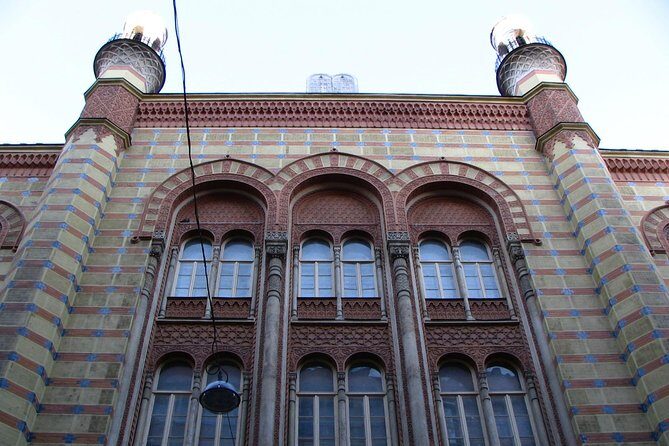
The tour then shifts back into street-level meaning. Dob Street runs parallel to Király Street and was central to the Jewish district of Pest—and also in the center of the Budapest ghetto. Today, it’s part of the neighborhood’s revival, including Hungarian Jewish orthodoxy.
This stop is around 10 minutes. It helps you understand that the “ghetto” idea isn’t only an event you read about. It’s a physical overlay on a city map. Once you’ve walked it with a guide, you’ll be able to picture the neighborhood’s old layout more clearly.
Finally, the tour reaches Kazinczy Street Synagogue. This area is known as Budapest’s cultural street, with ruin bars nearby, and it also includes the Hungarian Orthodox Jewish Center. The description is detailed about what you can find there: a synagogue, a mikveh, kosher restaurants and cafes, schools, and even kosher food stores.
Architecturally, you’ll get the Art Nouveau style reference—called Secession in Budapest. This is another moment where the guide helps you read the built environment. You’re not just seeing a building; you’re seeing what a community chose to display.
One important note: the Kazinczy Street Synagogue stop has admission not included. The tour does not promise entry the same way it does for the Great Synagogue and Rumbach Street Synagogue, so treat this as a shorter exterior or partial visit with on-site context.
The kosher flodni stop and why snack timing is real
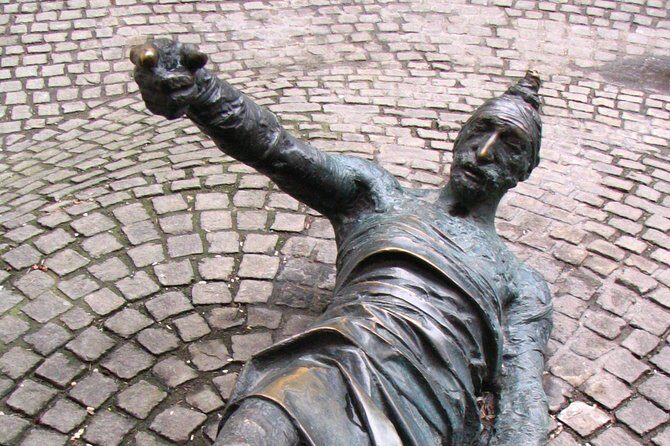
Some tours treat food as an optional extra. Here, you’re guided to one of the best-known places in Budapest for kosher flodni, the Hungarian Jewish cake.
This is not a long stop, and that’s the point: it’s there as a sensory break inside the history. You’ll get the chance to pick up something sweet without turning the tour into a food day.
Still, consider your timing. If you want to buy something, don’t do it when your brain is already in museum mode. Do it right when the stop hits so you don’t miss the guide’s next transitions. Reviews hint that the schedule can feel packed, so you may need to choose quickly.
How long it really takes, and the value for about $63.52
The price is listed as $63.52 per person for about 2 hours 20 minutes. On paper, that can look like a modest half-day tour. In practice, it’s a focused package because you get multiple paid-entry moments and a guided narrative tying everything together.
Your included admission stops are the Great Synagogue, the Holocaust Memorial Park portion, and Rumbach Street Synagogue. Those are the expensive, time-sensitive components. By contrast, Király Street and Gozsdu Udvar are free segments that help you connect the buildings to everyday streets. Kazinczy Street includes context but not admission.
Group size is capped at 35. That tends to be a sweet spot: small enough for questions and movement, large enough that you won’t feel like you’re trapped one-on-one with a guide for hours.
The biggest value is not just seeing three synagogues and a memorial park. It’s how the tour turns differences in Jewish religious life—like Neologue versus Orthodox—into something you can spot in architecture, naming, and how communities organized public space.
If you have limited time in Budapest and want a structured way to understand Jewish history in the city beyond a quick street walk, this is one of the smarter ways to spend your hours.
Who this tour suits best
This works especially well if you:
- want synagogue interiors (not just exteriors) and a guided explanation of the differences
- care about how the Holocaust is remembered in place, including the ghetto cemetery and Tree of Life memorial
- enjoy architecture and want to see why Rumbach Street Synagogue feels so distinct
It may feel less ideal if you:
- prefer slow pacing and long, silent browsing
- want to spend extra time shopping, eating, or visiting additional nearby sites on your own
Should you book this Budapest Jewish Quarter tour?
I’d book it if you want a tight, meaningful route that balances beauty with gravity and still keeps moving in a way you can follow. The standout strength is the combination of places: Great Synagogue for Neologue context, Wallenberg Memorial Park for ghetto and rescue stories, and Rumbach Street Synagogue for the Otto Wagner Moorish architecture that feels like a real find.
If you are sensitive to memorial settings, plan your mindset before you go and give yourself a moment to breathe at the cemetery. If you hate rushed tours, go in expecting a packed schedule and commit to the experience rather than treating it like a grab-and-go highlight list.
FAQ
What synagogues and memorial sites are included in the tour?
The tour includes entry to the Great or Central Synagogue, the Raoul Wallenberg Holocaust Memorial Park portion, and Rumbach Street Synagogue. Kazinczy Street is included as a cultural stop, but admission is not included there.
How long is the Budapest Jewish Ghetto Tour?
It runs for about 2 hours 20 minutes.
What is the dress code for entering the synagogues?
Shoulders must be covered. Clothing should reach the knee or be covered before entering. Covers are available for purchase on the spot, and men need a head cover upon entry.
Is the tour offered in English?
Yes, the tour is offered in English.
What happens if a synagogue closes temporarily?
If a synagogue closes temporarily and affects one part of the program, the tour offers an alternative visiting time. If all synagogues close unannounced, you’ll be offered alternative hours or dates or a full refund.
Can I cancel and get a full refund?
Yes. You can cancel up to 24 hours in advance for a full refund. If you cancel less than 24 hours before the start time, the amount you paid will not be refunded.