REVIEW · BUDAPEST
Jewish Heritage in Hungary with a Historian
Book on Viator →Operated by Budapest Explorers · Bookable on Viator
Budapest’s Jewish story is written in streets. This 2.5-hour small-group walk pairs a historian’s on-the-ground explanations with a smart route through key landmarks in Pest. I especially like the mix of sacred sites and everyday places, plus the way the tour gives context with historian-guided narration that helps you connect centuries, not just dates. Expect a focused tour that runs in English, with a mobile ticket and plenty of time for questions.
One thing to consider: two synagogue stops are outside-included viewing only, with admission tickets not included for Kazinczy Street Synagogue and the Great/Central Synagogue. That doesn’t ruin the tour, but you may want to plan ahead if you’re hoping for interior time.
In This Review
- Key Highlights You’ll Actually Care About
- Jewish Heritage in Budapest, Led by a Historian (Not Just a Walk)
- A quick sense of what you’ll get
- Erzsébet tér: Starting at a Medieval Market Square That Became a Main Square
- Practical note
- Raoul Wallenberg’s Statue: A Moment for Individual Action
- Why this stop matters on a walking tour
- Szimpla Kert: When a Ruin Bar Becomes a Cultural Reference Point
- Gozsdu Udvar: An International Street Snapshot
- Kazinczy Street Synagogue: Orthodox Jewish Life in Focus
- A good way to make the most of this stop
- Great/Central Synagogue (Nagy Zsinagóga): Seeing Europe’s Largest Synagogue From the Outside
- Why a non-inside stop can still be worthwhile
- Solinfo Café and Flódni: The Included Food Stop That’s Actually Memorable
- What you should do with this stop
- Where It Starts and Where It Ends: Easy to Build Your Day Around
- Price and Value: Is $64.71 Worth It?
- What You’ll Learn (Without Feeling Like It’s a Lecture)
- Who Should Book This Tour (and Who Might Skip It)
- Before You Go: Simple Tips for a Smooth Morning
- Should You Book This Jewish Heritage Tour?
- FAQ
- What language is the tour offered in?
- How long is the Jewish Heritage in Hungary with a Historian experience?
- What is the group size limit?
- What time does the tour start, and where does it meet?
- Where does the tour end?
- Is the Flódni tasting included?
- Which synagogue admissions are not included?
Key Highlights You’ll Actually Care About
- Up to 10 people keeps the pace calm and questions welcome
- Historian-led context ties streets, buildings, and community life to real timelines
- Ruin-bar stop at Szimpla Kert shows how Budapest’s past gets reused in culture
- Flódni at Solinfo Café is included, so you get a taste without hunting it down
- Synagogue sights with clear ticket rules (inside visits are not part of the included stops)
Jewish Heritage in Budapest, Led by a Historian (Not Just a Walk)
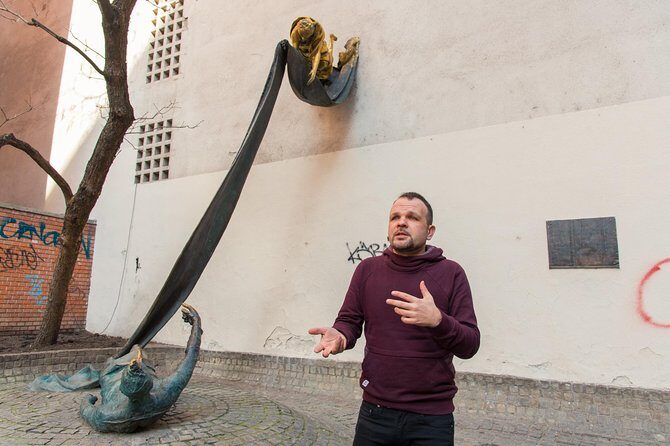
Budapest can feel like a museum with trams. But this tour uses the city as a classroom. You move through places you can actually see and stand in front of, while a historian guide explains what those locations meant to Jewish life across long stretches of time.
What makes it work is the balance. Instead of only focusing on tragedy, the route includes community landmarks, everyday neighborhoods, and even food. You’ll get a fuller picture of how Jewish history shaped Budapest’s streets and how Budapest, in turn, shaped modern life. Guides connected with this experience—people like Andrea, Gábor, Barbi, Noémi, and András—are repeatedly described as patient, clear, and tuned to the group’s questions. That matters because Jewish history can get heavy fast; you’ll want a guide who can explain without rushing or oversimplifying.
Also, the group size cap of 10 is not just a comfort perk. It helps the historian keep the pace human. If you’re the type who asks follow-ups, you’ll likely feel heard rather than shepherded.
You can also read our reviews of more historical tours in Budapest



A quick sense of what you’ll get
- Duration is about 2 hours 30 minutes
- Language is English
- It starts at 10:00 am
- It ends outside Dohány Street Synagogue
And yes, you’ll pass synagogues in addition to the designated synagogue stops, including areas around Rumbach Street, Kazinczy Street, and Dohány Street.
Erzsébet tér: Starting at a Medieval Market Square That Became a Main Square
Your tour kicks off at Erzsébet tér, meeting at the Kempinski Hotel Corvinus Budapest (Erzsébet tér 7–8). This square has the kind of layered past that Budapest does well: it started as a medieval market area and became one of Pest’s major squares.
Why I like this opening: it helps you get your bearings fast. Before you hit the religious sites, you understand that this neighborhood was never isolated. People shopped here, passed through here, built lives here. That simple idea makes the rest of the walk feel more real.
Expect a short stop—about 20 minutes—where you get context that anchors the rest of the tour. If you’re sensitive to information overload, this part is a good warm-up. It’s not too long, but it gives you a frame.
Practical note
Bring a phone you’re comfortable using. This experience uses a mobile ticket, so you’ll want it accessible from the start.
Raoul Wallenberg’s Statue: A Moment for Individual Action
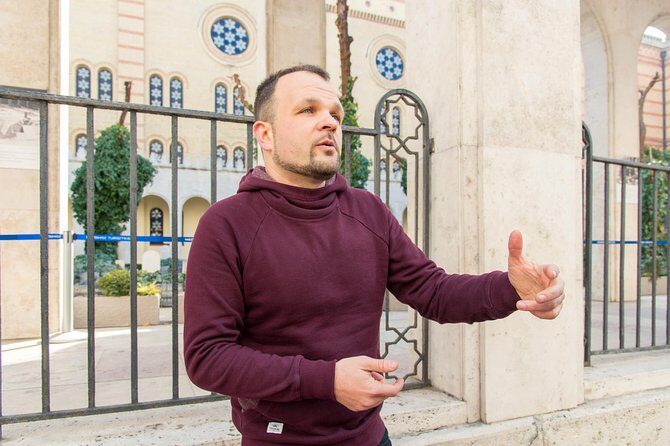
Next comes the Raoul Wallenberg’s Statue. This is a brief 10-minute stop, but it’s the kind of stop that changes how you read the rest of what you’ll see.
Wallenberg is introduced as one of the most important diplomats known for saving Jewish lives. Even if you already know the name, a guide-led explanation helps you place it in the local story and in the bigger moral questions of how people respond in crisis.






Why this stop matters on a walking tour
Some tours bury the human angle. Here, you get a clear reminder that history isn’t only dates and institutions. It’s also choices made by individuals, and the consequences of those choices.
Szimpla Kert: When a Ruin Bar Becomes a Cultural Reference Point
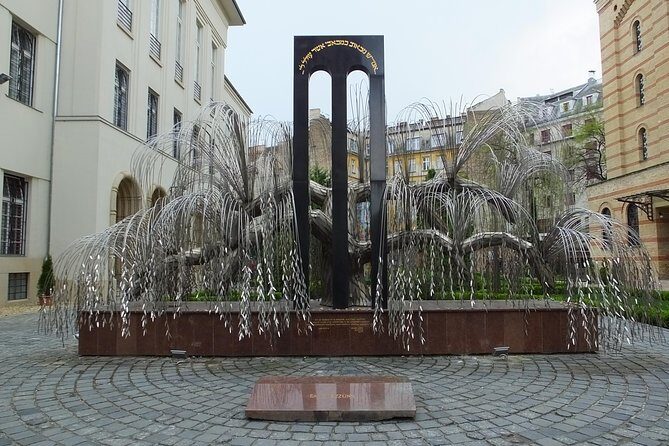
Then you’ll step into the world of Szimpla Kert, with about 20 minutes here. The tour frames Szimpla Kert as the first ruin bar in Budapest and thus in the world.
That might sound like a quirky detour—until you understand the symbolism. Ruin bars are more than nightlife. They’re about reuse: taking spaces shaped by damage or neglect and turning them into community hubs. Budapest does this well, and seeing it connected to the Jewish story makes the idea of survival and adaptation feel tangible.
You can also use this stop to take a breather. By now, your brain has absorbed a lot of context, so having a slightly lighter, street-level pause helps you keep going.
Gozsdu Udvar: An International Street Snapshot
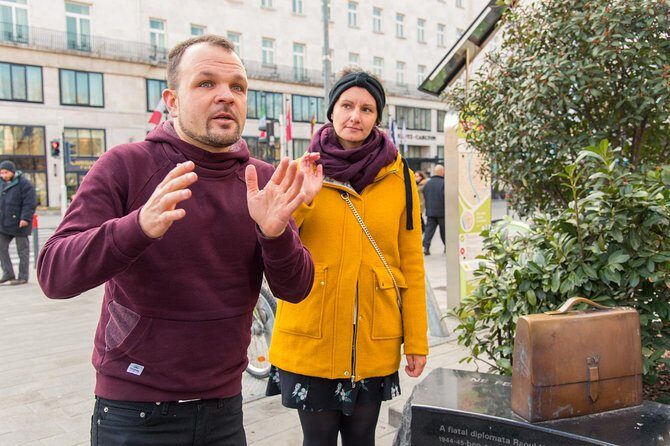
Your next stop is Gozsdu Udvar, a 10-minute stop focused on how the area developed into one of Budapest’s most international streets.
This segment is short, but it plays a role. Jewish heritage in Budapest isn’t only about synagogues and cemeteries. It’s also about the neighborhood’s social life: where people met, ate, worked, and built community with others.
If you like walking tours that don’t treat history like a one-track timeline, this stop helps you keep the city’s complexity in view.
Kazinczy Street Synagogue: Orthodox Jewish Life in Focus
Now you reach Kazinczy Street Synagogue, with about 20 minutes allocated. This stop is aimed at understanding the Orthodox Jewish community and how Orthodox Judaism has shaped community presence and identity in Budapest.
Important detail: the tour includes time at the synagogue site, but admission for inside viewing is not included. That means you may see the building in a way that’s still meaningful, but you shouldn’t plan on an extended interior visit as part of this ticket.
A good way to make the most of this stop
If you do want interior time, you’ll need to sort it on your own since the included portion won’t cover it. If you’re not sure, think about what you prefer: do you want the architecture and street context, or do you need the full indoor experience? This tour is strongest as a guided street-level story, with interior tickets treated as optional extras.
Great/Central Synagogue (Nagy Zsinagóga): Seeing Europe’s Largest Synagogue From the Outside
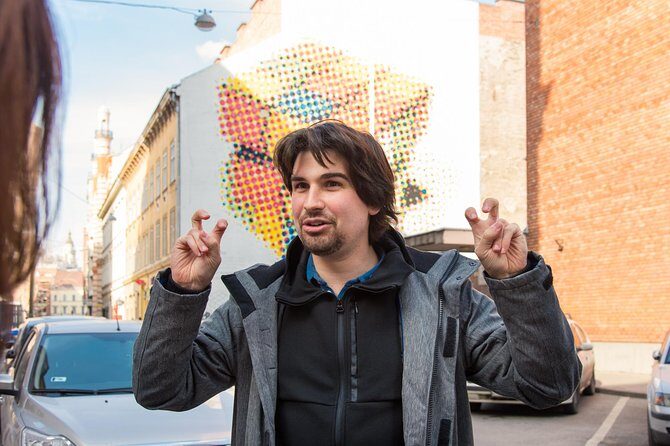
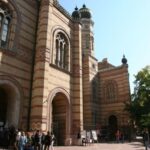
Next is the Great/Central Synagogue (Nagy Zsinagóga). The tour does not include entry inside, even though it introduces the building as Europe’s largest synagogue with historical connotations from roughly the last 200 years.
You’ll get about 45 minutes here, which is a generous block of time for an exterior-focused stop. That extra time is useful because you can slow down and absorb details while the historian explains why the synagogue’s size and longevity matter in the story of Budapest’s Jewish community.
Why a non-inside stop can still be worthwhile
If you’re expecting this to be only about interior rooms, you might feel slightly disappointed. But exterior interpretation can be powerful, especially when a guide explains what you’re seeing and why it was built or maintained at that scale.
Also, the longer time helps you ask questions. Exterior stops can get “watch-and-walk” fast on other tours. Here, the schedule gives the guide room to explain beyond obvious facts.
Solinfo Café and Flódni: The Included Food Stop That’s Actually Memorable
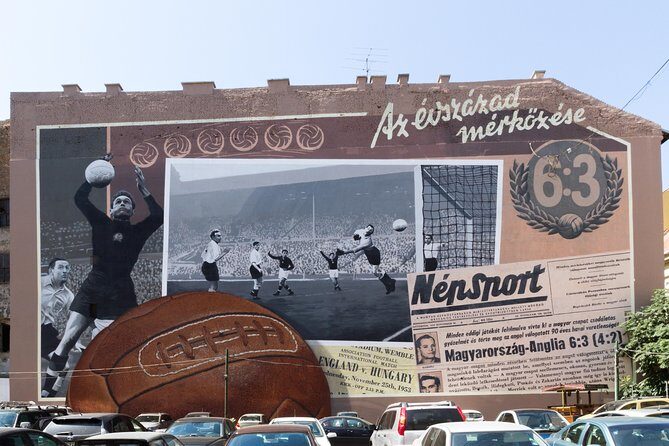
One of the smartest parts of the itinerary is the food break: Solinfo Café. This stop lasts about 20 minutes, and the tour includes trying a local Jewish cake: Flódni.
Flódni is a favorite across Hungarian Jewish culture, and the tour frames it as beloved by both Jews and non-Jews. I like this kind of inclusion because it’s not a random tourist snack. It’s local food with cultural weight, and you don’t have to figure out what to order while also tracking the rest of the day.
What you should do with this stop
Keep it simple. Taste the Flódni, ask the guide what makes it typical, and use the moment to reset. Eating during the tour keeps the walk from turning into an endurance test, and you’ll likely enjoy the later discussion more.
Where It Starts and Where It Ends: Easy to Build Your Day Around
The tour begins near major transit at the Kempinski Hotel Corvinus Budapest on Erzsébet tér. It ends outside Dohány Street Synagogue at Wesselényi utca 1.
This is handy for planning. Starting at Erzsébet tér gives you access to the central Pest network. Ending near Dohány Street Synagogue means you can continue at your own pace afterward, especially if you’d like extra time around that area.
The experience also notes access by public transportation is convenient, and service animals are allowed.
Price and Value: Is $64.71 Worth It?
At $64.71 per person, you’re paying for more than a walking route. The cost is tied to a historian guide, a small group size (max 10), a structured route through key sites, and an included cultural tasting (Flódni at Solinfo Café).
Here’s how I think about value on tours like this:
- If you want a self-guided walk, you might spend less, but you’ll also spend more time sorting what you’re seeing.
- If you want context, you’ll pay for the guide. In this case, the guide is the main ingredient.
- The food inclusion helps justify the total because you don’t have to buy a separate cultural item during the tour.
Also, this experience has been booked in advance on average about 42 days ahead. That’s a sign it tends to fit busy visitor calendars, which often means smoother scheduling during peak periods.
Net: for a focused, historian-led route in English with a small group and a food stop included, the price feels reasonable.
What You’ll Learn (Without Feeling Like It’s a Lecture)
A strong part of this tour is the way it connects different eras. The guide approach is described as honest about Hungary’s history—both the good and the bad—and sensitive to the tragic parts of the 1940s while still showing Jewish life beyond that period.
That balance is important. If your only frame is the Holocaust, you miss how communities existed, built institutions, and shaped everyday life before the catastrophe. And if you only hear about triumph and survival, you miss the scale of harm during World War II. The tour is designed to help you hold both truths in one place.
Who Should Book This Tour (and Who Might Skip It)
This tour is a great fit if:
- you want a small-group Jewish heritage walk in Budapest
- you like getting context from a historian rather than piecing together info later
- you’re interested in both sacred sites and everyday cultural spaces like ruin bars
- you want an included taste of Hungarian Jewish food (Flódni)
You might think twice if:
- you strongly prefer full synagogue interior visits as part of the ticket (because inside admission is not included for the Kazinczy and Great/Central synagogue stops)
- you want a longer, museum-style experience rather than a walking-route overview
Before You Go: Simple Tips for a Smooth Morning
A few practical things make this tour easier:
- Plan for a morning start at 10:00 am, and arrive a bit early so the group can check in calmly.
- Keep your mobile ticket ready on your phone.
- Wear comfortable walking shoes. This is a city walk with multiple exterior-focused stops.
- If synagogue interiors matter to you, consider whether you’ll add tickets separately for Kazinczy and the Great/Central synagogue.
The group size stays small, so you can ask questions, but don’t expect the schedule to turn into a free-for-all. You’ll still get a guided route with time built in for each stop.
Should You Book This Jewish Heritage Tour?
I’d book it if you want Budapest’s Jewish story told in a way that connects streets to meaning. The historian-led pacing, the small group limit, and the fact that you get a real Hungarian Jewish food moment (Flódni at Solinfo Café) make it feel like more than sightseeing.
I’d also book it if you’re curious about how Budapest reused spaces and identities over time, especially with the Szimpla Kert ruin-bar angle. It’s an unusual addition that still makes historical sense.
The main reason to hesitate is the synagogue ticket reality: you’ll spend substantial time at two major synagogue-related stops, but the included experience doesn’t cover inside entry. If your priorities are strictly interior viewing, you’ll need to plan extra.
FAQ
What language is the tour offered in?
The tour is offered in English.
How long is the Jewish Heritage in Hungary with a Historian experience?
It lasts about 2 hours 30 minutes.
What is the group size limit?
The tour has a maximum of 10 travelers.
What time does the tour start, and where does it meet?
It starts at 10:00 am and the meeting point is the Kempinski Hotel Corvinus Budapest at Erzsébet tér 7–8, 1051.
Where does the tour end?
It ends outside Dohány Street Synagogue, at Wesselényi utca 1, 1077.
Is the Flódni tasting included?
Yes. Flódni at Solinfo Café is included in the tour price.
Which synagogue admissions are not included?
Admission tickets are not included for Kazinczy Street Synagogue and the Great/Central Synagogue (Nagy Zsinagóga). The tour also notes that the Great Synagogue inside is not visited.