Half-day, private, and deeply moving in Jewish Budapest. This tour strings together the Jewish Quarter’s ghetto wall remains, yellow-star houses, and key synagogue architecture, with a guide who keeps the story clear and human. I love that it’s truly private with pickup and drop-off, so you’re not squeezed into a big herd. I also love the mix of synagogues plus memorials you’d never spot fast on your own. One catch: synagogue entry tickets are not included, and a couple of buildings may be outside-only depending on what’s open.
The best part for me is how the route connects place to meaning—Carl Lutz, the Shoes on the Danube, and a surviving ghetto segment on Király Street aren’t just photo stops. If you’re traveling on a Saturday, plan carefully, because the synagogues are closed for Jewish holidays and that changes what you can see inside.
In This Review
- Key highlights you’ll feel on day one
- Jewish Budapest on a private route: why it works
- Price and what $342.93 per group really buys
- Timing: the 4-hour plan and what to wear
- Start in Budapest’s Jewish Quarter: walls, stars, and real street traces
- Great / Central Synagogue (Nagy Zsinagóga): the centerpiece you should plan for
- Kazinczy Street Synagogue: when you have to accept outside views
- Rumbach Street Synagogue: recent renovation and inside access on request
- Carl Lutz Memorial: remembering rescue on a public street
- Szimpla Kert: the ruin-bar district break (without losing the thread)
- Shoes on the Danube Bank: the kind of site that slows you down
- Király Street: a surviving ghetto segment you can see right where you stand
- Food during the walk: what’s included and how to plan around it
- Who should book this Jewish Budapest private walk
- My take: should you book this tour?
- FAQ
- How long is the Jewish Budapest Private City Walk?
- How much does it cost and what group size is it for?
- Is pickup and drop-off included?
- Is the tour only in English?
- Are synagogue entrance fees included?
- Can you enter Kazinczy Street Synagogue?
- Is the Great / Central Synagogue the biggest in Europe?
- What about Saturdays?
- Can I cancel for a refund?
Key highlights you’ll feel on day one
- Private pacing with pickup: hotel/port pickup and drop-off keeps your time efficient.
- The Dohány Street Synagogue (Nagy Zsinagóga): the biggest functioning synagogue in Europe, with optional inside coverage for an extra fee.
- Outside views when access is limited: Kazinczy Street Synagogue is closed due to renovation/community limits.
- Holocaust remembrance in public spaces: Shoes on the Danube Bank and the Carl Lutz Memorial are powerful and easy to understand on the ground.
- A real food stop, not just a break: snack/tasting is built into the experience (alcohol and lunch are not included).
Jewish Budapest on a private route: why it works
Budapest can feel like a “seen it in photos” city—until you walk with someone who knows where the stories live. This private half-day format is built for exactly that: you move through the Jewish Quarter with time to ask questions and to slow down at the sites that need it.
You’ll cover both architecture and memory. You get the synagogue landmarks, plus the physical traces of the ghetto—like the wall remnants and the yellow-star houses—so the history doesn’t stay abstract. And because it’s private, you can take things at your pace instead of racing to the next group photo.
The guides are a major reason the reviews are so strong. Names like Suzy Szoke, Joel, and Bogato come up for being patient, serious when it matters, and good at answering questions without rushing people—especially when the group is older.
You can also read our reviews of more walking tours in Budapest


Price and what $342.93 per group really buys
The price is listed as $342.93 per group (up to 15 people) for about 4 hours. That sounds steep if you’re thinking per person—but private tours are usually priced by the group, not by the “one traveler in the corner.”
Here’s the practical way to think about it:
- If you have a couple of people, your per-person cost can stay high.
- If you can book with a small group (say 4–8 people), it starts looking much more reasonable.
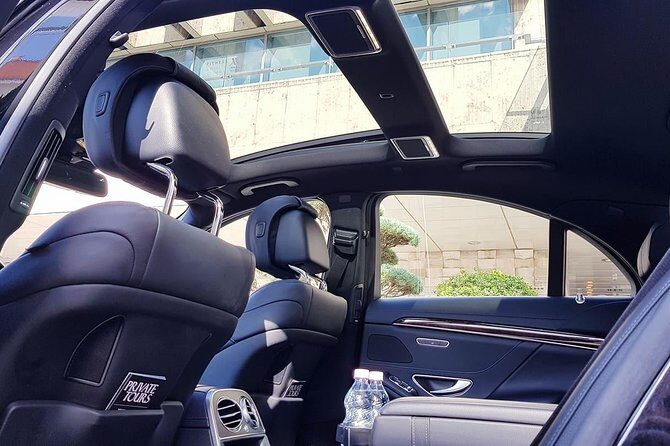
You’re also paying for more than walking. You get a local guide and a professional guide, plus hotel/port pickup and drop-off. For a city where moving between sites can eat time, pickup can be the difference between a stressful morning and a calm one.
Just keep your expectations straight on what’s included versus not. Entrance fees for some sites (especially synagogues) are not included, so you may need extra cash/card on the day for entry.
Timing: the 4-hour plan and what to wear
This is a walking city walk through central Budapest, with multiple stops ranging from 10–60 minutes. One review called out that it’s a lot of walking and listening, and that’s accurate—this is not a “we’ll stand still and talk” tour.
I’d treat it like a full morning of on-foot touring:
- Wear comfortable shoes you’d actually trust for uneven sidewalks.
- Bring water, because the route is active even when some stops are short.
Also, the tour isn’t recommended on Saturdays since synagogues are closed for Jewish holidays. If you can shift your schedule, that’s the easiest way to maximize inside access.
Start in Budapest’s Jewish Quarter: walls, stars, and real street traces
The tour begins in Budapest’s Jewish Quarter, starting with the remaining parts of the ghetto wall and the area known for yellow-star houses. These are the kind of details that you can miss entirely if you’re just wandering.
What I like about this start is that it grounds you fast. You’re not jumping straight into big buildings; you’re seeing how the space itself shaped people’s lives. Even when you’re looking at something that’s visually small (a wall segment, building facades), the guide’s job is to connect it to what happened here.
Admission for this first stop is free on the schedule, so you’re not paying to get oriented. It’s a good way to get your bearings fast before you head toward the more famous synagogue sights.
Great / Central Synagogue (Nagy Zsinagóga): the centerpiece you should plan for
Next up is the Great / Central Synagogue (Nagy Zsinagóga), also called the Dohány Street Synagogue. This is described as the biggest functioning synagogue in Europe, and you’ll feel that scale the moment you’re there.
Here’s the practical part: the admission ticket is listed as not included. The schedule says you can get taken through the whole building if you request it for an extra entrance fee. So if you’re hoping for maximum access, build that into your budget ahead of time.
This stop is also where the guide’s storytelling matters most. The synagogue isn’t just a pretty landmark; it’s tied to a turbulent history that you’ll understand better when it’s explained in context. If you want a strong first “wow” moment, this is it—but make sure you’re ready for ticket costs.
You can also read our reviews of more city tours in Budapest





Kazinczy Street Synagogue: when you have to accept outside views
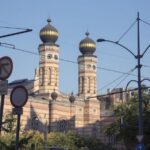
Kazinczy Street Synagogue is scheduled next, but it comes with a heads-up that changes the experience: it’s closed temporarily due to renovation work, so you can only see it from the outside. The information also notes a community ban that prevents entry right now.
Even so, this is still worth putting on your route. The synagogue dates to the 1910s and includes Art Nouveau architecture elements that reflect the era’s style. You won’t get interior access, but you’ll get architectural context and the sense of a site that’s part of the living community story—even when you can’t step inside.
If your dream is to tour every synagogue interior, this is the stop that most likely disappoints. It’s not the tour being lazy—it’s just reality on the street.
Rumbach Street Synagogue: recent renovation and inside access on request
Then you’ll reach Rumbach Street Synagogue, described as recently renovated and significant to the Jewish community of Budapest. The stop is planned for 30 minutes, and the key detail is this: entry tickets are not included for visiting the building.
That said, the tour notes that on request you can be shown inside. Translation: the guide may be able to help you access parts of the building, but you should expect that you’ll still need to handle any entry cost yourself.
This stop is a nice counterpoint to Kazinczy. One is closed. The other is open enough to be worth stopping for—and you still get history and architecture tied together in a way that doesn’t feel like a lecture.
Carl Lutz Memorial: remembering rescue on a public street
After the synagogue cluster, the tour shifts from buildings to remembrance at the Carl Lutz Memorial. This is a public memorial site for the Swiss diplomat who helped thousands of Jewish people avoid the death camps during the Holocaust.
It’s scheduled for about 15 minutes. Short stop, big content. The guide will walk you through who Carl Lutz was and why his actions matter, especially in the context of the horrors of the era.
I like memorial stops that are honest but not frantic. This one has a clear story arc: you understand the scale of the tragedy, then you’re shown that goodness and bravery did exist in the same dark timeline.
Szimpla Kert: the ruin-bar district break (without losing the thread)
Next, you’ll stop at Szimpla Kert, part of Budapest’s VII district and famous for ruin bars. The tour frames it as a major attraction area, and you’ll get about 15 minutes here.
I’ll be straight with you: this is the lighter, more social-feeling moment of the route. It can feel almost strange right after Holocaust memorial sites—but that’s also the point of a city walk. You see how Budapest continues to live in the spaces people eventually returned to.
The tour marks this as free admission. Alcohol is not included, so treat it like a short pause to reset your head, not a party stop.
Shoes on the Danube Bank: the kind of site that slows you down
Then comes one of the most famous memorials in Budapest: Shoes on the Danube Bank. The schedule lists it as free and gives about an hour, which signals you’re meant to spend time here, not just snap a picture.
This memorial remembers people who were shot into the Danube during the Arrow Cross terror. The guide’s role is crucial here. Without context, it can turn into a quick stop. With context, you understand what the memorial is trying to force you to face: the brutality, and how ordinary life can be weaponized.
Given that this tour has a serious tone, I appreciate that the time budget is generous. You can read and process instead of being marched past.
Király Street: a surviving ghetto segment you can see right where you stand
The final set of history stops includes Király Street, specifically under Király str. nr. 15, where an original segment of the Budapest Great Ghetto can be found.
This stop is planned for about 15 minutes and is also free on the schedule. The tour connects it to the fact that the Great Ghetto here was the second largest WWII ghetto in the world.
What makes this useful is the scale of it. You’re not looking at a museum diorama. You’re seeing a physical fragment tied to the streets you’re walking. It’s one of the best ways to understand how the ghetto wasn’t an abstract label—it was a place inside real neighborhoods.
Food during the walk: what’s included and how to plan around it
Food is part of the experience. The highlights note that food tastings and entry fees are included, and there’s also a review mentioning a snack stop at Strüdel House during the tour. At the same time, the tour lists entrance fees as not included overall, and lunch as not included.
So here’s the best way to plan: expect a snack or tasting, not a full meal. Alcoholic drinks are not included, so if you want beer or wine, you’ll have to buy it on your own.
If you’re the type who needs a proper lunch, come hungry but also plan for a real meal after the tour ends.
Who should book this Jewish Budapest private walk
This is a strong match if you want:
- A private guide who can answer questions and set context.
- A route that mixes synagogues, ghetto remnants, and Holocaust memorials in one half-day.
- A guide-led experience rather than piecing together the Jewish Quarter from signs.
It’s also a good option if you’re traveling with people who may need slower pacing. Reviews mention guides being patient with older travelers, and the private format helps.
Consider skipping or shifting days if:
- You’re traveling on Saturday, because the synagogues are closed for Jewish holidays.
- You’re counting on “everything inside is included for free,” because synagogue entry tickets aren’t included and one synagogue is outside-only right now.
Families can usually join (children must be with an adult). Service animals are allowed, and the tour is near public transportation, which is handy in case pickup timing doesn’t work for you.
My take: should you book this tour?
If your goal is to understand Jewish Budapest beyond a postcard, I’d book it. The combination of synagogue landmarks and public remembrance sites makes this a rare type of walking tour: it teaches you how the city’s geography and architecture connect to real events.
I especially like the way the route handles serious stops with enough time to breathe—especially at Shoes on the Danube Bank—and how it brings in Carl Lutz as a story of rescue, not only loss.
Just go in prepared for the two practical realities:
1) Synagogue entry fees are extra, and
2) one synagogue (Kazinczy) is currently outside-only.
If that fits your expectations and you’re not traveling on a Saturday, this private half-day is a strong value for the price—particularly if you can share the group cost with a few friends or family.
FAQ
How long is the Jewish Budapest Private City Walk?
It runs for about 4 hours (approx.) with a scheduled set of stops ranging from around 10 minutes to 1 hour.
How much does it cost and what group size is it for?
The price is $342.93 per group, for up to 15 people.
Is pickup and drop-off included?
Yes. Hotel/port pickup and drop-off are included. Cruise ship passengers need to provide port details at booking.
Is the tour only in English?
Yes, it’s offered in English.
Are synagogue entrance fees included?
No. Entrance fees are listed as not included, and the synagogue stops note admission tickets as not included. The Great/Central Synagogue can include more of the building on request for an extra entrance fee.
Can you enter Kazinczy Street Synagogue?
No. Kazinczy Street Synagogue is closed temporarily due to renovations, so you can only see it from the outside.
Is the Great / Central Synagogue the biggest in Europe?
The tour description states that the Great / Central Synagogue (Nagy Zsinagóga) is the biggest functioning synagogue in Europe.
What about Saturdays?
The tour is not recommended on Saturdays because synagogues are closed due to Jewish holidays.
Can I cancel for a refund?
Yes. Free cancellation is available. You can cancel up to 24 hours in advance for a full refund.