REVIEW · BUDAPEST
Communist Budapest Private Walking Tour
Book on Viator →Operated by Insight Cities · Bookable on Viator
Budapest changes meaning when you walk it with a historian. I loved how this tour ties landmarks to real political decisions, and how it points out the human cost behind the slogans. The main catch: it covers heavy themes, and you will do a fair bit of street walking between sites.
This is a small-group private outing with local hosts who tell the story with clarity and even some humor. I also liked the smart mix of big public symbols and less-obvious places tied to everyday life under the regime. If you want only pretty views or a light sightseeing loop, this one may feel too focused.
In This Review
- Key highlights you will care about
- Why a communist-era walk makes Budapest click
- Meeting up and getting around on a 3-hour timeline
- Kossuth Square to Liberty Square: Parliament, Cold War signals, and the Reagan link
- The House of Terror exterior: the Berlin Wall slab moment
- Puskás Stadium and socialist realism in public stone
- Bem József Square: the 1956 spark and a real-life time capsule
- What you are really paying for: private time with a historian
- Who this tour suits best, and who should think twice
- Should you book it?
- FAQ
- How long is the Communist Budapest Private Walking Tour?
- Is this tour private?
- What group size should I expect?
- What language is the tour offered in?
- Do I need to buy tram or metro tickets?
- Is the House of Terror Museum included?
- Where does the tour start and where does it end?
- Is pickup available from my hotel or flat?
Key highlights you will care about
- Private historian guide that adjusts the walk to your interests
- Three-hour pace built around short, meaningful stops across central Budapest
- Cold War landmarks from Parliament-area squares to the US Embassy and Soviet Army monument
- House of Terror exterior visit with the Berlin Wall slab setting the tone (museum entry not included)
- Socialist realism on display at the former People’s Stadium, now Puskás Soccer Stadium
- Bem József Square and the 1960s coffeehouse interior tied to the 1956 uprising
Why a communist-era walk makes Budapest click
Budapest can look like a set of pretty postcards if you stick to the highlights. This tour helps you see the layers under the surface: what power looked like in public space, what protest looked like in 1956, and how the Cold War showed up in everyday streets.
What I like is that it does not treat communism as an abstract concept. You get the physical map—squares, statues, institutional buildings—and then the guide connects them to how the system worked from 1949 to 1989. That is where the story becomes real, and where you stop asking what happened and start understanding why it happened.
Expect a mix of major monuments and a few “you’d miss this on your own” details. The guide role matters here. In past groups, guides like András have adjusted the pace to what people care about, while Kata is the type who explains clearly and adds perspective with grace and charm.
One more practical point: this is not a museum-only trip. The walk is designed to keep moving, so you get orientation and context fast—then you can choose how far you want to go at places like the House of Terror.
You can also read our reviews of more walking tours in Budapest


Meeting up and getting around on a 3-hour timeline
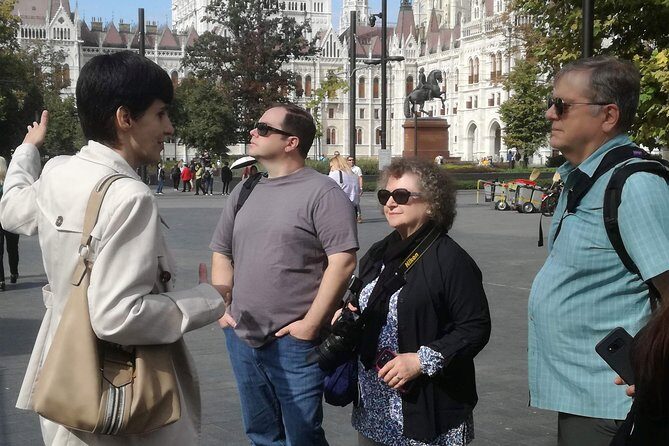
The tour is private and time-efficient: about 3 hours. You can choose a morning or afternoon departure, which is handy when you are building a Budapest day around other plans.
You have two start options, depending on pickup:
- If you request pickup, the guide meets you at your central hotel or flat and leads you by metro, tram, or foot when sites are close.
- If you do not want pickup (or you do not send an address), you should meet the guide 15 minutes before the start time at the default meeting point on Frankel Leó út 2-4, 1027 Hungary.
You’ll get a mobile ticket, but you should still plan for local transit. Tram and metro tickets are not included, though the guide will help you buy what you need if you do not already have a pass. That matters if you want the day to flow smoothly—no last-minute scrambling.
Logistically, this route is built for short hops, not endless hiking. Still, it is a walking tour, so wear comfortable shoes. Also, it is a theme tour, so you will likely want to keep your phone handy for the little “look right there” moments, especially around statues and square details.
Kossuth Square to Liberty Square: Parliament, Cold War signals, and the Reagan link
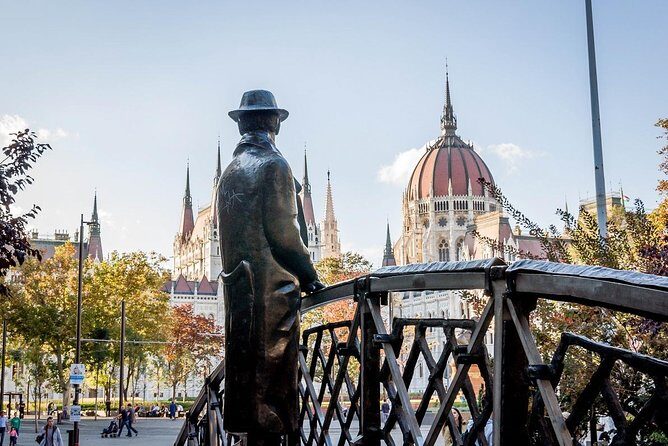
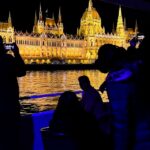
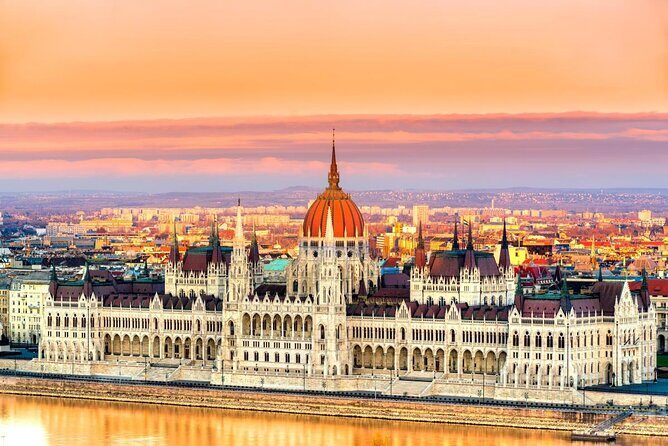
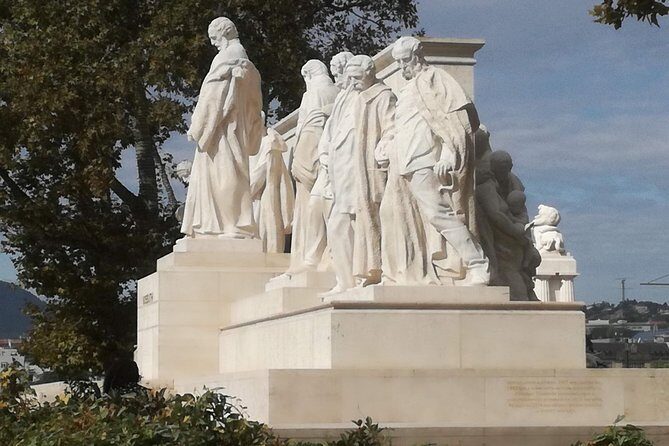
The walk begins around the Hungarian Parliament Building area near Kossuth Square. From here, you get monuments tied to the 1956 Hungarian Revolution, and you understand why the regime and its opponents fought over public memory.
A key strength of this stop is how it sets the time frame. You are not just looking at statues; you are placing them in the timeline of conflict: revolution in 1956, then the Cold War pressure that followed.
From the Parliament side, you continue toward Liberty Square where the guide unpacks how the Cold War showed up in Budapest. You will see and discuss things like:
- The US Embassy area
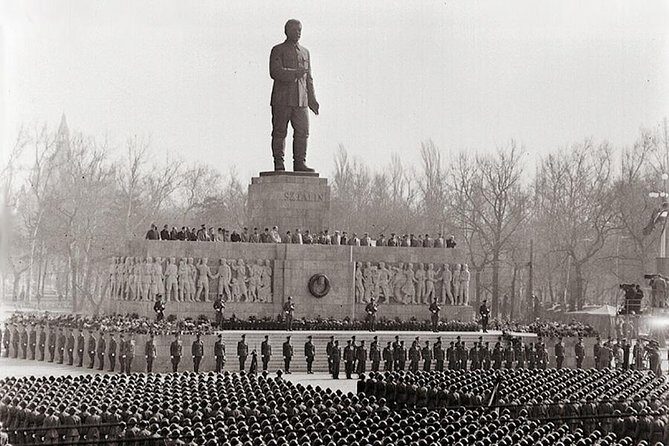
- The monument to the Soviet Army
- A Ronald Reagan statue connection
- An atomic shelter element
This section is especially valuable if you know the Cold War as a story from textbooks. Here, it becomes geography. You start to see why a city would brand itself with certain symbols and why foreign policy had a very local footprint.
Practical drawback to consider: the area is politically loaded and the guide will explain it directly. If you prefer a gentle, purely architectural approach, this is the part where the tone shifts quickest.
The House of Terror exterior: the Berlin Wall slab moment
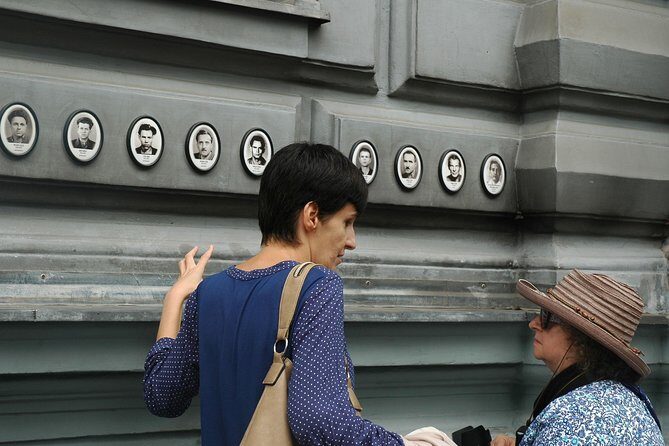
You end outside the House of Terror Museum at Andrássy út 60, 1062 Hungary. This is one of the most haunting stops in Budapest, and the tour uses it with purpose.
Here’s what you get from the walk itself:
- The museum’s setting in the former headquarters tied to the communist secret services
- An immediate visual statement: a slab of the Berlin Wall in front
Important: the tour does not include the museum exhibit. Even so, this is a strong endpoint because the exterior forces the themes of the entire walk into one place. By the time you reach it, the earlier stops make more sense—you understand how authority used fear, architecture, and propaganda.
If you have any curiosity left after the walk, this is where you can decide to go inside on your own time. If you skip the museum, you still leave with a clear sense of what the building represented.
Puskás Stadium and socialist realism in public stone
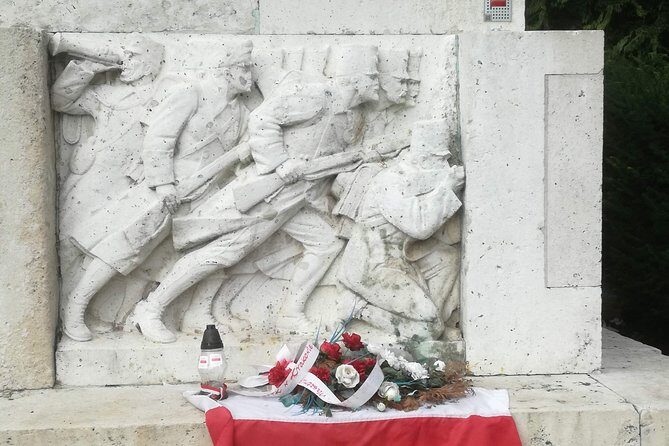
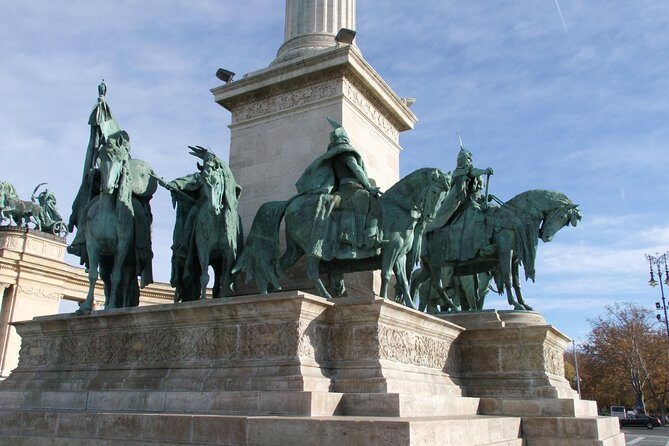
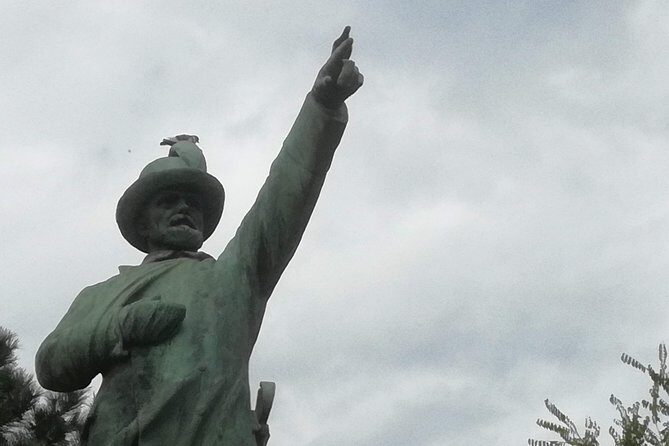
Next comes a stop at Stade Puskás Ferenc, the former People’s Stadium, now the Puskás Soccer Stadium. The tour focuses on the physical propaganda style that the communist system favored—especially socialist realist statues that still stand.
This is a smart choice because stadiums are where ideology meets crowds. Big architecture and big events are perfect tools for power. Even if you are not a soccer fan, you can read the message in the design choices and the sculpture placement.
What makes this stop useful is that it is not just about government buildings. It shows how the system shaped shared spaces—places where national identity and political messaging could be staged together.
Possible drawback: if your ideal tour is mostly about the 1956 uprising, you may feel this stop is slightly less centered. That said, it helps complete the picture of how the regime tried to present itself as permanent.
You can also read our reviews of more private tours in Budapest




Bem József Square: the 1956 spark and a real-life time capsule
Then you arrive at Bem József Square, also known as Bem Square. This is one of the most important stops on the route for understanding 1956 because it connects directly to the first major demonstrations of the uprising.
The guide does more than point at the square. You learn why this location mattered and how public protest unfolded in a setting built for spectacle and authority.
There is also a neat, practical detail here: on the square is a coffeehouse that kept its original interior from the 1960s. That kind of surviving detail helps you see the era as something people actually lived through—not just dates on a timeline.
When you pair 1956 protest with a preserved 1960s interior, the tour gives you contrast. You see the rebellion side, and you see how daily life looked under the regime’s cultural style.
If you want to extend your day, this is a good place to pause for a drink and let what you heard settle in. It also gives you a natural break before the final momentum toward the House of Terror.
What you are really paying for: private time with a historian
The price is $393.17 per group, and the tour is private. That sounds pricey until you think about what you are buying: not just a guide, but the time of a historian-host and the flexibility of a small group walking route built around political context.
For a small group, this can be good value because you avoid the frustration of joining a larger tour where the story is rushed. A private historian guide also tends to work better for theme tours. You can ask questions as you go—why certain symbols were used, what certain buildings signaled, how the Cold War shaped local decisions.
In short: you pay to get the story explained in human terms, with a pace that fits your group. You also pay for the fact that the walk is designed to move efficiently between central sites tied to 1949 to 1989.
One consideration: because it is theme-heavy, solo sightseeing may feel slower than a standard highlights loop. If you like learning through context and reading political symbolism, you will get your money’s worth. If you do not, it may feel like paying for content you did not ask for.
Who this tour suits best, and who should think twice
This tour is a strong fit if you:
- Enjoy history that connects to real places and real decisions
- Want context for the 1956 Hungarian Revolution and the Cold War era
- Like walking tours with an active guide who explains what you are seeing
- Prefer a private setup, with guides such as András or Kata bringing clarity and a bit of personality
It might be a weaker fit if you:
- Want only casual sightseeing without political weight
- Dislike tours that end at major sites of repression, where the tone stays serious
- Prefer museums first and walking second
The good news: even though the topics are heavy, the structure stays practical. You always know what you are looking at and why it matters.
Should you book it?
Book this communist Budapest private walking tour if you want Budapest to make sense beyond the photos. The best part is the way the walk turns squares, statues, and institutions into a story you can follow in your head. You will leave with clearer timelines—from 1956 protest to Cold War pressure—and a strong sense of how propaganda and fear shaped public life.
Skip it only if your ideal day is light and purely scenic. Otherwise, this is one of those theme walks where the guide’s voice matters a lot, and the small-group private format pays off.
FAQ
How long is the Communist Budapest Private Walking Tour?
The tour lasts about 3 hours.
Is this tour private?
Yes. It is a private guided walking tour with a small group size.
What group size should I expect?
The tour has a maximum of 8 travelers.
What language is the tour offered in?
The tour is offered in English.
Do I need to buy tram or metro tickets?
Tram and metro tickets are not included, but the guide will assist you in purchasing the required tickets if you do not have a transport pass.
Is the House of Terror Museum included?
The tour concludes outside the House of Terror Museum, and the exhibit inside is not included in the tour.
Where does the tour start and where does it end?
The default start point is Frankel Leó út 2-4, 1027 Hungary. The tour concludes outside the House of Terror Museum at Andrássy út 60, 1062 Hungary.
Is pickup available from my hotel or flat?
Pickup is offered from your central hotel or flat. If you do not provide an address or do not want pickup, you should meet the guide 15 minutes before start time at the default meeting point.