REVIEW · BUDAPEST
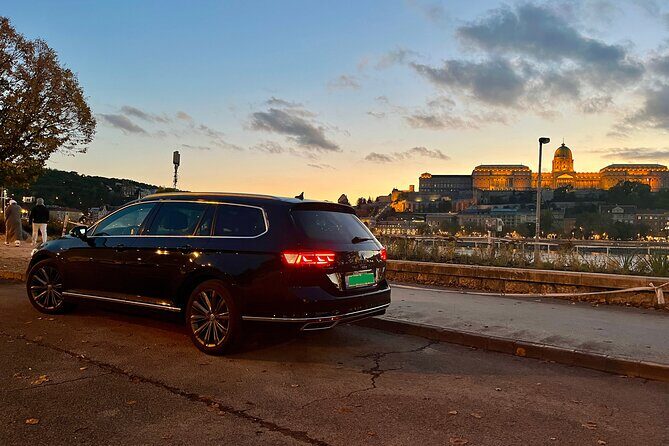
8-hour private Budapest city tour by car / minivan
Book on Viator →Operated by Private Sightseeing Tours in Budapest and in Hungary · Bookable on Viator
Budapest in a single day, minus the slog. This private car-and-walk tour strings together the biggest sights with short stops, plus door-to-door pickup from wherever you’re staying. I like the flexibility of a guide who can adjust as you go, and I like that you get personalized context for the city’s Hungarian history and culture. The one catch: a few stops are quick, and some major interiors cost extra (basilica, Matthias, and parts of Fisherman’s Bastion).
If you’re trying to make sense of Budapest without burning your legs, this is a strong use of time. On a day like this, guides such as Gergő (Gregory/Gergely) and Gabriel are specifically praised for keeping explanations clear and for pacing that feels human, not rushed. You’ll cover plenty—then have a short list of what’s worth revisiting later at your own speed.
In This Review
- Key Points Before You Go
- Why This Private 8-Hour Tour Works So Well in Budapest
- Entering Andrássy Avenue: Budapest’s World Heritage “Main Street”
- Heroes’ Square: Statues, Memory, and Modern Political History
- Széchenyi Baths: The Best Way to Try a Thermal Classic (Without Overcommitting)
- City Park Stops: Vajdahunyad Castle and House of Music Hungary
- And Then the Grand Interiors: Opera House, St. Stephen’s Basilica, and Extra Tickets
- Liberty Square and Parliament: A Day’s Worth of Big Power in One View
- The Danube Walk-By Highlights: Chain Bridge, Shoes on the Danube, and More
- Buda Castle District: Matthias Church, Fisherman’s Bastion, and a Castle You Can Feel
- Gellért Hill’s Citadel Lookout: The Best Ending Point
- Price and Value: Is $505.73 a Smart Move?
- Should You Book This Private Budapest Day Tour?
- FAQ
- How long is the private Budapest city tour?
- What’s the group size and price?
- Is pickup available?
- What language is the tour guide?
- Is this tour private?
- What’s included in the price?
- Are entrance fees included?
- Is lunch included?
- Is it heavy walking?
- What’s the cancellation policy?
Key Points Before You Go
- Private, small-group format (up to 3) with a professional guide driving the plan
- Door-to-door pickup anywhere in Budapest, so you don’t lose time with meeting-point shuffling
- Car between neighborhoods with only light walking at each stop
- Top sights across Pest and Buda—Andrássy Avenue, Parliament area, and Buda Castle District
- Baths and big viewpoints included on the route (Széchenyi Baths is a quick stop)
- Some interiors are extra-cost, so you’ll want to decide what’s worth paying for
Why This Private 8-Hour Tour Works So Well in Budapest
Budapest is one of those cities where the “highlights” are spread out in a way that can mess with your day. You can spend hours moving between the sweeping boulevards, the Danube riverfront, and the hilltop views on the Buda side. This tour solves that problem with a private sedan or minivan, timed for an efficient loop: you get vehicle coverage for the distances, then short, focused time where the photos and the story matter.
That matters for a practical reason. If you’re only in Budapest for a few days, you want your first day to teach you the city. After that, you can pick what to return to. And because this is private, you’re not forced into a rigid group rhythm. You can linger where you care—often the difference between a checklist and a day that actually clicks.
Also, the guide part is not just trivia. You’re getting Hungarian history and culture explained in a way that helps you understand why monuments look the way they do, why certain buildings are where they are, and what political changes shaped the city you see today. In other words: you don’t just look at stone—you learn how it got there.
One more note: this is an 8-hour tour. That’s plenty to hit the essentials, but it’s still a full day. If you’re the type who needs long museum time, think of this as orientation + key sights, not a deep dive into every interior.
You can also read our reviews of more city tours in Budapest



Entering Andrássy Avenue: Budapest’s World Heritage “Main Street”
Your day begins on Andrássy Avenue, one of Budapest’s signature boulevards dating back to 1872. The key thing here is scale and setting: this isn’t a random street stop. It’s the link between the city center and Heroes’ Square, lined with Neo-Renaissance mansions and townhouses, with a classic grand-city feel that you can’t really replicate by hopping between distant attractions on your own.
It also has a living, everyday side. You’ll pass luxury boutiques, cafés, restaurants, theatres, embassies—plus the kind of architecture that tells you Budapest wanted to project confidence and culture when it was building its big identity. Even if you’ve only seen photos, seeing the street in context makes it click fast.
Plan for about 20 minutes. That’s not enough to browse everything, but it’s ideal for getting your bearings. If you’re going to come back later, this is where you’ll likely decide which facades to study, which cafés you might want to return to, and where the best photo angles are for you.
Heroes’ Square: Statues, Memory, and Modern Political History
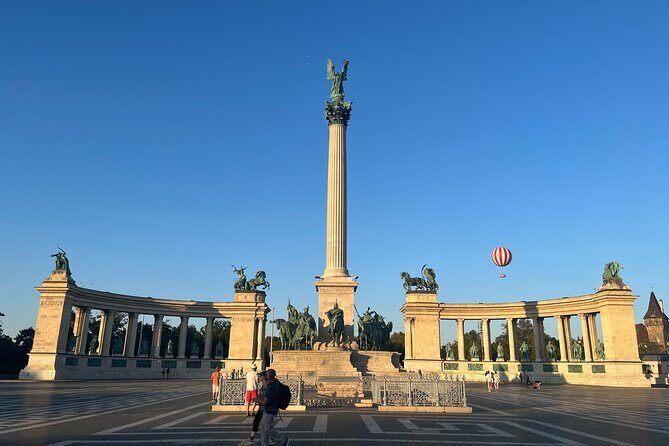
Next comes Heroes’ Square, one of the major squares in Budapest, famous for its statue complex of the Seven chieftains of the Hungarians plus other major national leaders. It’s surrounded by institutions like the Museum of Fine Arts and the Art Gallery, so it’s both symbolic and cultural.
What makes this stop feel more than tourist-kitsch is the layer of twentieth-century memory. The square has hosted major political events, including the reburial of Imre Nagy in 1989. That detail matters because it gives you a reason to pay attention to what you’re looking at. You start seeing the square as part of Hungary’s public life, not just a backdrop for photos.
You’ll have about 20 minutes. Use that time to get the overview and then decide if you want to return later for museum time. The square gives you a clean panoramic sense of the city—especially if you’re about to shift from grandeur into the practical rhythm of baths, parks, and church interiors.
Széchenyi Baths: The Best Way to Try a Thermal Classic (Without Overcommitting)
The itinerary includes Széchenyi Medicinal Bath and Pool, described as the largest medicinal bath in Europe. It’s fed by thermal springs with water temperatures around 74°C and 77°C. That’s hot-hot, and it’s part of why Széchenyi became such a famous stop in Budapest.
Here’s the trade-off: you only have about 10 minutes at this stop, and entrance tickets aren’t included. So this isn’t set up like a long soak-and-stay day. It’s more like a taste—enough to understand the place, take in the steam-and-architecture look, and decide if you want to come back for a fuller bath session on a different day.
Practical tip: if you want to actually use the pools during those 10 minutes, you’ll need to be prepared. If you’d rather just experience the setting, plan for photos and a quick look. Either way, it’s a memorable contrast point after sweeping city avenues and before you get into churches and castle views.
City Park Stops: Vajdahunyad Castle and House of Music Hungary
After Heroes’ Square, you shift into City Park, where two very different sights help you understand Budapest’s creative sides.
First is Vajdahunyad Castle. It was built in 1896 as part of the Millennial Exhibition marking 1000 years since the Hungarian Conquest in 895. The cool idea is that the castle was designed to copy landmark buildings from different regions of Hungary. So even though it’s a “castle-like” structure, it’s also a stitched-together celebration of national heritage through architecture. You get about 20 minutes, which is enough for an exterior circuit and to appreciate how the design references other styles.
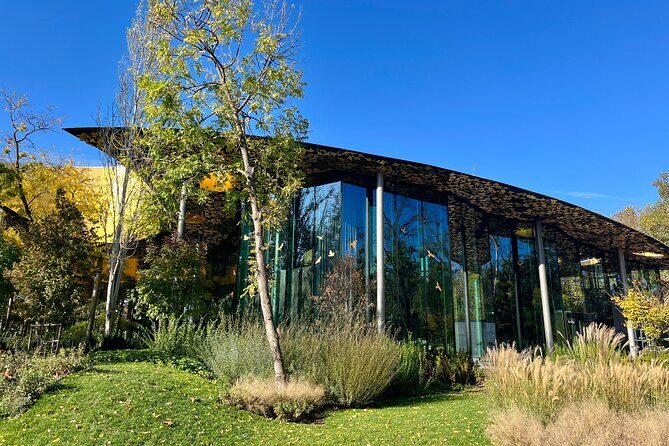
Then there’s House of Music Hungary, a newer addition opened in January 2022. It’s not just a pretty building. It’s described as an institution for musical initiation and the venue for the country’s first comprehensive exhibition on the history of music. The architecture was selected from 170 international projects, and it’s been getting attention since the winning design was announced. You’ll have about 15 minutes here, and since admission is free, it can be a smart “culture break” if you’re curious about music as part of national identity.
If you’re trying to decide what to prioritize: choose the one that fits your mood that day. The castle is more instantly recognizable. House of Music is more about the idea of connecting Hungary’s musical story to modern audiences.
You can also read our reviews of more private tours in Budapest






And Then the Grand Interiors: Opera House, St. Stephen’s Basilica, and Extra Tickets
From City Park, you move toward the classical, ceremonial heart of Budapest.
You’ll stop at the Hungarian State Opera House on Andrássy Avenue. The opera house is neo-Renaissance and sits right on that grand boulevard. This is another good “look first” stop: the exterior and setting do most of the work in the short time you have, and admission isn’t included.
Then comes St. Stephen’s Basilica (Szent Istvan Bazilika), with about 30 minutes allotted. This is a Roman Catholic basilica named for Stephen, Hungary’s first king—his right hand is housed in the reliquary. The basilica is also described as the third largest church building in present-day Hungary.
Important: admission isn’t included. So you’ll need to decide whether you want the interior experience. If you’re the type who likes church interiors—art, lighting, and scale—this is one to consider paying for. If you mainly want the viewpoint and exterior impact, you can still enjoy the stop without upgrading.
Liberty Square and Parliament: A Day’s Worth of Big Power in One View
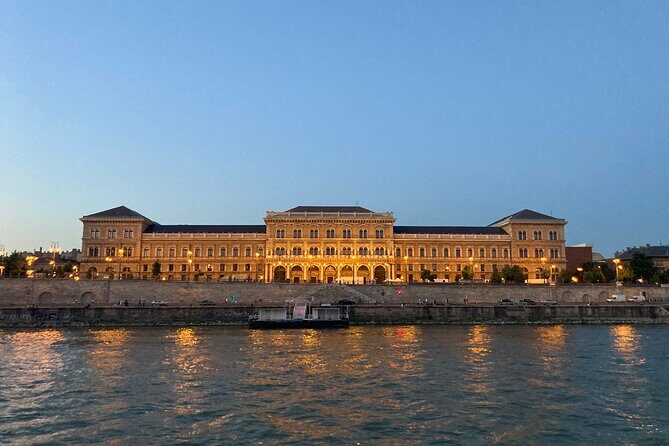
Liberty Square (Lipótváros) gives you a different kind of “center.” It’s a mix of business and residential buildings, with the United States Embassy and the headquarters of the Hungarian National Bank on its side. Some buildings on the square are in Art Nouveau style, which means the architecture changes character compared to the more grand, formal avenues.
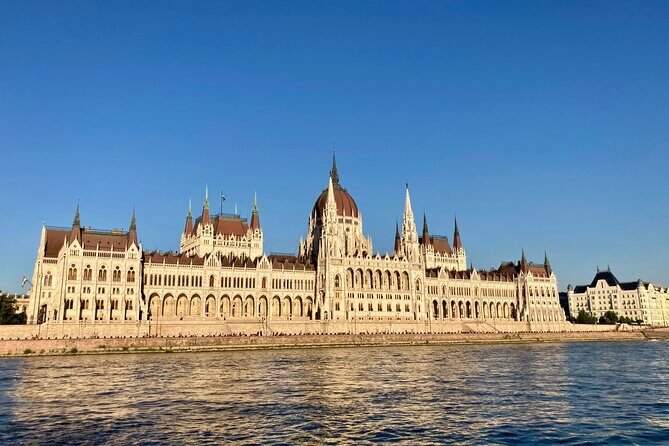
After that, you’ll reach the Hungarian Parliament Building at Kossuth Square on the Pest side, beside the Danube. It’s described as the largest building in Hungary and a major landmark and tourist destination. Admission isn’t included, so most likely you’ll be seeing it from the outside during your stop (about 20 minutes).
Here’s what makes these two stops useful together: they show how Budapest places power in public space. You can read the city as a sequence of official institutions: financial, diplomatic, and legislative. Even if you’re not a political-history nerd, the layout helps you connect the dots.
The Danube Walk-By Highlights: Chain Bridge, Shoes on the Danube, and More
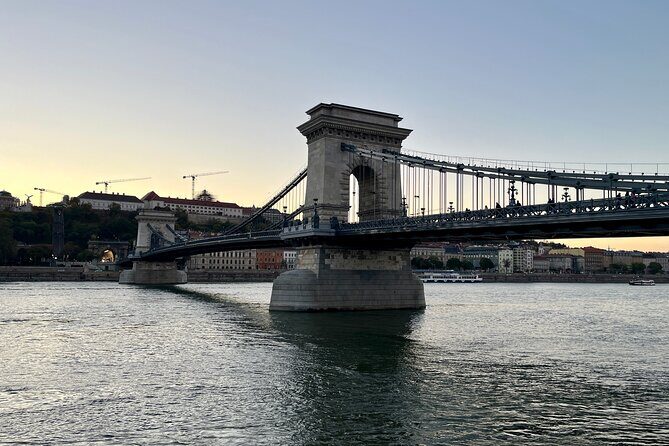
Once the day turns river-adjacent, Budapest shifts from “monuments and streets” to “memory and perspective.”
You’ll see the Széchenyi Chain Bridge area, the first permanent bridge across the Danube in Hungary, opened in 1849. The bridge was designed by English engineer William Tierney Clark and built by Scottish engineer Adam Clark. That international engineering story shows up in Budapest’s DNA—this wasn’t only a local project; it was a city thinking big.
Then comes one of the most emotionally heavy stops: Shoes on the Danube Bank. Conceived by film director Can Togay with sculptor Gyula Pauer, it honors Jews killed by fascist Arrow Cross militiamen during World War II. This isn’t a place you just rush. Give it the full 20 minutes you’re allowed, and try to stand still long enough for the scale and intention to land. Even if you’ve seen photos, being there changes how you feel about the message.
Along the way, the route also includes mention of Margit Bridge, the second oldest bridge in Budapest (1876), which connects Pest and Buda and the recreation area of Margaret Island. There’s also a stop connected to the Zero Kilometre Stone, a limestone marker that shows the reference point for road distances measured from Budapest.
If you’re camera-happy, this is where you’ll want to be. But if you’re feeling reflective, it’s also where your day slows down naturally.
Buda Castle District: Matthias Church, Fisherman’s Bastion, and a Castle You Can Feel
The Buda side is where Budapest goes from impressive to unforgettable.
You’ll visit Matthias Church, officially the Church of the Assumption of the Buda Castle area. It’s described as late Gothic in style and extensively restored in the late 19th century. You get about 30 minutes, and admission isn’t included. Again, you’ll be at a decision point: pay for the interior if you want more, or use the time to enjoy the exterior massing and the setting.
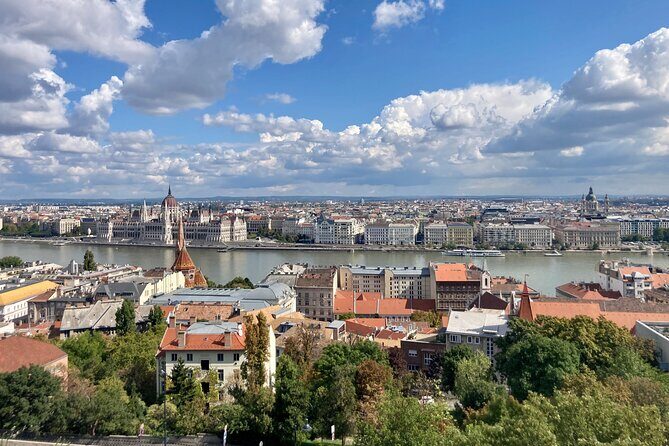
Next is Fisherman’s Bastion (about 20 minutes). It’s one of the best-known viewpoints in Budapest, known for its terraces and panorama over the city and Danube. The architecture is described as Neo-Romanesque and it was built between 1895 and 1902 on the base of earlier walls. Admission isn’t included, and part of the viewing experience (like upper floors) may cost extra, depending on what you choose to do.
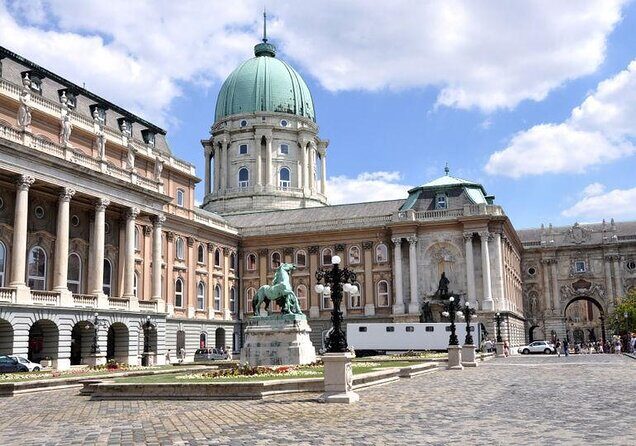
Then you move to Buda Castle, a huge historical palace complex. You’ll have about 45 minutes, and admission is free. The site has origins in the 1200s, but the massive Baroque palace you see today was built between 1749 and 1769. It’s part of the Budapest World Heritage Site, declared in 1987.
This is the stop where the tour’s “orientation” job becomes obvious. Without this car-to-hilltop jump, many people would only see the basics. Here, you get enough time to understand the district layout and why everyone’s drawn to it. Even if you don’t go inside every building, the view alone is worth the effort.
Gellért Hill’s Citadel Lookout: The Best Ending Point
To close the day, you’ll head for Citadel Lookout (Citadella) on top of Gellért Hill. The fortification was built in 1851 by Julius Jacob von Haynau, associated with the Austrian Empire. You’ll have about 30 minutes and free admission.
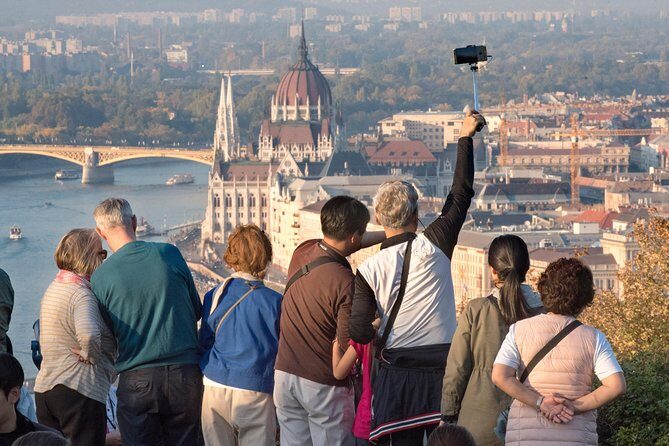
This is a good finale because it gives you the full map. From here, you can see why Budapest looks like two cities stitched together by the river and bridges. You’ll also be able to pinpoint where you want to go next—if you want more time at a basilica, more street wandering on Andrássy Avenue, or more castle-area exploration.
Price and Value: Is $505.73 a Smart Move?
The price listed is $505.73 per group, up to 3 people, for about 8 hours. That can sound high if you compare it to a bus tour. But for Budapest, I think the real comparison is different: public tours often force you to walk more, fight crowds longer, and accept a fixed route.
Here, you get:
- A private guide with a plan you can adjust
- Private transportation (sedan or minivan) that covers distances
- Parking fees and taxes included
- Door-to-door pickup from your hotel or accommodation
If you fill the group with three people, the cost works out to roughly $170 per person for a full day with private transport and a guide. If you’re traveling as two, it’s higher per person, but you still gain time and flexibility. The “best value” is usually when you have at least two people and you’re spending your Budapest time efficiently.
Your biggest potential cost add-ons are admission fees for interiors you choose to enter (like St. Stephen’s Basilica, Matthias Church, and parts of Fisherman’s Bastion), plus your lunch, which isn’t included. If you’re selective about paid interiors and mainly enjoy exteriors and viewpoints, you can keep extras under control.
Should You Book This Private Budapest Day Tour?
Book it if:
- You want a first-day orientation that hits both Pest and Buda without exhausting walking
- You like history explained in plain language while you see the landmarks
- Your time is tight and you’d rather pay for speed and comfort than spend half your day on logistics
Consider skipping (or tweaking your expectations) if:
- You want long museum time. This tour gives short stop windows, not full interior immersion.
- You hate extra ticket costs. Several major church and viewpoint experiences aren’t included.
If your goal is to get oriented fast and leave Budapest with a clear short list of what to revisit, this private day plan is a strong choice.
FAQ
How long is the private Budapest city tour?
It’s approximately 8 hours.
What’s the group size and price?
It costs $505.73 per group, up to 3 people.
Is pickup available?
Yes. Pickup is offered, and the tour can start from any hotel or other accommodation type in Budapest.
What language is the tour guide?
The tour is offered in English.
Is this tour private?
Yes. It’s a private tour/activity, and only your group participates.
What’s included in the price?
Private tour guiding by a professional guide, distances covered by car and light walks, door-to-door service, parking fees and taxes, and private transportation.
Are entrance fees included?
Not always. Some stops are free, but entrance fees for certain interiors or optional visits are not included (for example, St. Stephen’s Basilica, Matthias Church, and the upper floor of Fisherman’s Bastion).
Is lunch included?
Lunch isn’t included. There is time and the option for an optional lunch break, but meals are paid for on-site.
Is it heavy walking?
No. The tour covers distances by car and includes only light walks.
What’s the cancellation policy?
Free cancellation is available. You can cancel up to 24 hours in advance for a full refund. If you cancel less than 24 hours before the start time, the amount paid isn’t refunded.