REVIEW · BUDAPEST
7 Days Balkan tour to historic Croatia and Bosnia Herzegovina
Book on Viator →Operated by goEUgo International Limited · Bookable on Viator
Cross three countries in one week. You’ll stitch together Croatia and Bosnia with guided sights, the big nature stop at Plitvice Lakes, and an English-speaking guide who keeps the day moving with clear storytelling.
I also like the balance of medieval old towns and modern waterfront moments, like Zadar’s Sea Organ and Dubrovnik’s wall views, where you still get enough time to wander.
One thing to plan for: you’ll be on coaches for a lot of the week, and several highlights have admissions not included, so budget for tickets plus the stated daily gratuity.
In This Review
- Key highlights worth your attention
- A Balkan loop that’s efficient (and still feels varied)
- Zagreb on Day 1: cathedral details and the feel of a city that survived wars
- Plitvice Lakes National Park: the day nature does the talking
- Zadar and Split on Day 3: medieval streets, Roman scale, and a modern waterfront trick
- Dubrovnik on Day 4: wall views, major old-town sights, and a cable car option
- Bosnia Herzegovina on Day 5: Počitelj, Blagaj, and Mostar’s bridge in one packed day
- Sarajevo on Day 6: Latin Bridge history and the city’s meeting-of-cultures line
- Pécs on Day 7: Turkish-era ruins, cathedral towers, then back to Budapest
- Price and value: what $1,160.11 covers, and what can cost extra
- Who this tour suits (and who might feel rushed)
- Should you book this Budapest to Croatia and Bosnia tour?
- FAQ
- What cities and areas does the tour include?
- What is the tour duration?
- Where does the tour start and when?
- What language is the tour offered in?
- What’s included in the price?
- What’s not included?
- Is admission included for major attractions?
- How big is the group?
- How far in advance can I cancel for a full refund?
Key highlights worth your attention
- Small-group size (max 30): enough people for energy, not so many that you lose the guide.
- English service, plus bilingual support on mixed-language departures: one past guide named Kenny has been noted as fluent in both Mandarin and English.
- Plitvice Lakes is a must-do nature day: waterfalls, 16 lakes, and travertine “barriers” that shape the route.
- Dubrovnik concentrates the big hits: old town sights plus the option of a cable car ride for skyline views.
- Bosnia gets packed into a single day: Počitelj, Blagaj, and Mostar in one run.
- 3-star hotels with private facilities and 6 breakfasts included: practical, not fancy, but easy to manage.
A Balkan loop that’s efficient (and still feels varied)
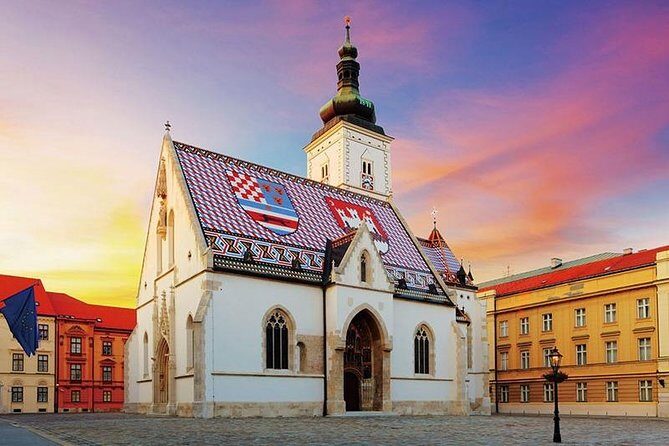
This 7-day route is built for people who want variety without micromanaging logistics. You start in Budapest, then work through Croatia’s key historic cores (Zagreb, Zadar/Split, Dubrovnik) before stepping into Bosnia and Herzegovina for Počitelj, Blagaj, Mostar, and Sarajevo. You finish back in Hungary with Pécs, then return to Budapest.
What makes this itinerary feel smart is the mix of pacing: a city morning here, a major “walk or photo” block there, and then a larger nature day at Plitvice Lakes that doesn’t just feel like another stop on a list. You also get the advantage of daily transport by modern, air-conditioned coaches with a professional driver, which matters a lot in this part of Europe where distances add up fast.
Value-wise, you’re paying for organization: the hotel package (minimum 3-star with private facilities), the guided elements, and transportation. Your freedom comes in small chunks during sightseeing—enough to pause, take photos, and get your bearings, rather than being herded the entire time.
You can also read our reviews of more historical tours in Budapest

Zagreb on Day 1: cathedral details and the feel of a city that survived wars
Zagreb is where the trip’s tone starts: historic and beautiful, yet shaped by a difficult past. The drive into the Croatian capital is part of the day’s rhythm, and then your walking sightseeing focuses on classic old-center landmarks.
You’ll visit the Zagreb Cathedral, then move through the core around Ban Josip Jelačić Square, and finish with sights like St. Mark’s Church. What I like about this opening is that Zagreb’s highlights are compact and readable. Even if you’re not a church-architecture specialist, you’ll have an easy time connecting what you see to the city’s identity: Gothic-style details, decorative craftsmanship, and a central public square that feels like the city’s living room.
Practical tip: wear shoes you can trust for uneven stone streets. You’re on a morning-and-early-afternoon sightseeing flow, and Zagreb can involve a bit of walking even with organized stops.
Night 1 is in Zagreb or nearby, in a minimum 3-star hotel. That’s useful because it lets you settle in before the long nature day ahead.
Plitvice Lakes National Park: the day nature does the talking
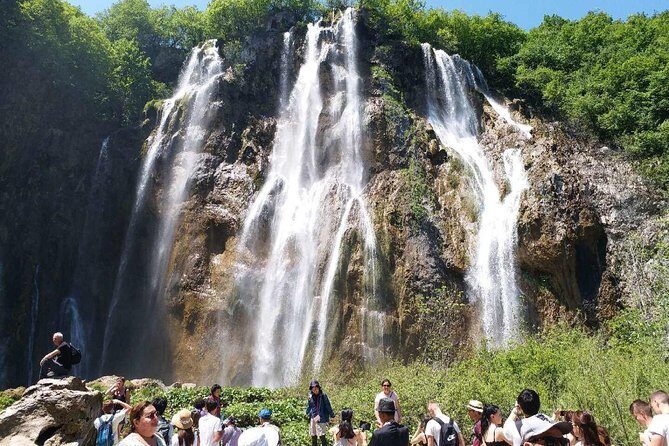
Day 2 is the big reset. You get a guided tour into Plitvice Lakes National Park, famous for its 16 lakes linked by waterfalls, walkways, and hiking trails. The key visual is the way travertine barriers form natural dams, shaping the water into distinct steps and basins.
The description of the water’s silver color isn’t just poetic. It’s part of the experience: the calcium carbonate rich water reflects trees and sky, and the result looks like it changes every time you turn your head. That’s why Plitvice is one of those rare stops that feels rewarding even if you’re tired—because the views keep happening.
One plus for value: Plitvice Lakes is listed with admission free in the schedule. That saves you a chunk of cash that you would otherwise need to budget for on a tour like this.
Practical tip: plan for time outdoors. Bring a light layer even in warmer seasons, and don’t wear shoes that hate wet surfaces. If you get even mildly motion-sick on scenic drives, let the driver know early so you can sit where you feel best.
Zadar and Split on Day 3: medieval streets, Roman scale, and a modern waterfront trick
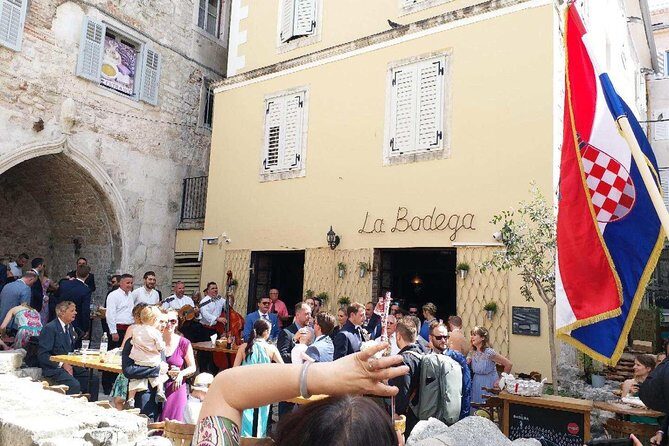
Day 3 is one of the best examples of how this tour balances eras. You start in Zadar, an ancient city with narrow lanes and a strong religious atmosphere. The streets are described as medieval-feeling, and you’ll get close to the waterfront where Zadar shows off its modern side.
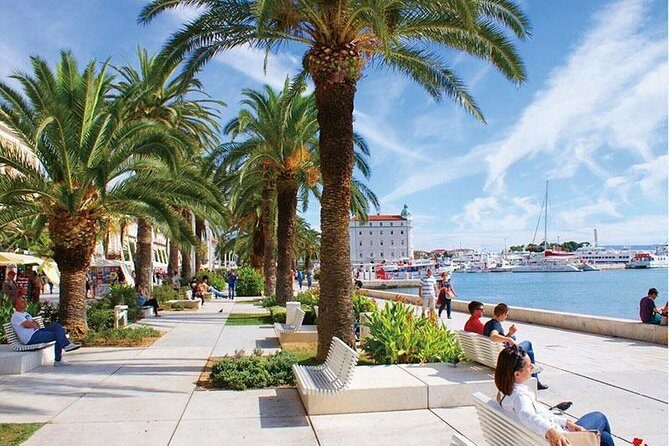
Two of your key stops are Zadar’s Sea Organ (Morske Orgulje) and the Sun Salutation. These are designed to interact with the environment—wind, waves, and light—so the experience isn’t only visual; it’s also a kind of listening and observation game. Then, you continue toward Split, where the scale jumps to Roman-era landmarks.
Your Split focus includes Diocletian’s Palace ruins, with a stop at the Peristyle of Diocletian’s Palace. It’s the kind of place where you instantly get the size of ancient power, because the architecture is still there in a way that feels solid, not museum-dry.
Admission notes in the schedule vary by stop, but some items are marked free and others not included. The good news is that the walk-and-see core of Zadar and Split doesn’t depend on paying for a ticket in every moment.
Practical tip: keep your camera charged. Zadar’s waterfront “modern-meets-medieval” vibe gives you photos that don’t look like typical postcard shots.
You’ll sleep in Neum or a city nearby (minimum 3-star), which is a helpful staging step for the Bosnia-heavy Day 5.
Dubrovnik on Day 4: wall views, major old-town sights, and a cable car option
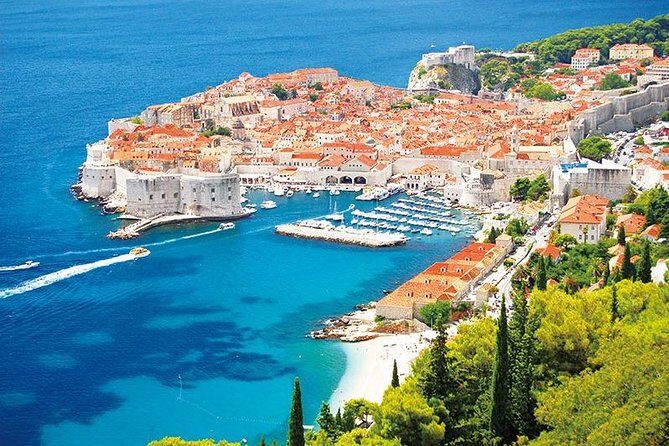
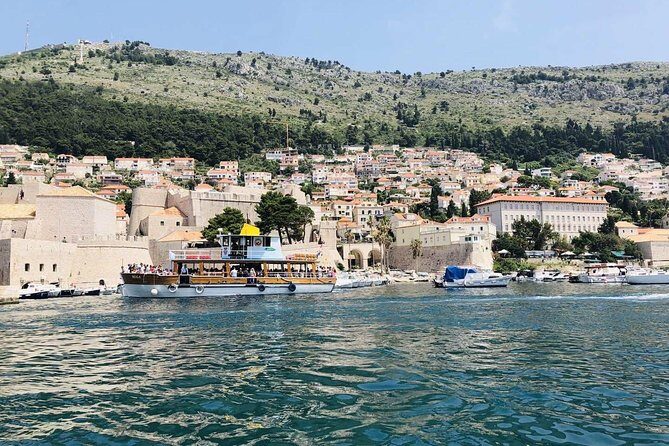
Dubrovnik is the headliner that many people dream about, and this day is designed around the core hits. You’ll tour the old town area and see the city walls, defensive tower viewpoints, the Rector’s Palace, and the Franciscan Monastery. There’s also a cable car option so you can get an elevated look over the city and coastline.
What I like about including the walls is that Dubrovnik stops being only about one pretty street. Once you get up to the wall lines, the entire layout makes sense: the density, the coastline curves, the way the city hugs the water.
The schedule notes admission as free for the Dubrovnik stop that includes the big overview. Other specific sub-stops on the same day list admission not included, so plan to pay for a ticket if your guide says it’s required for a specific interior or viewpoint.
Practical tip: Dubrovnik can mean long sun exposure. Bring sunscreen and a hat. Even if you’re not the “soak up the culture” type, the sheer photogenic geometry of the city makes it worth your attention.
This is also a day where you can choose how fast you move. If you like slow wandering, use the wall sections and breaks to take your time between scheduled photo points.




Bosnia Herzegovina on Day 5: Počitelj, Blagaj, and Mostar’s bridge in one packed day
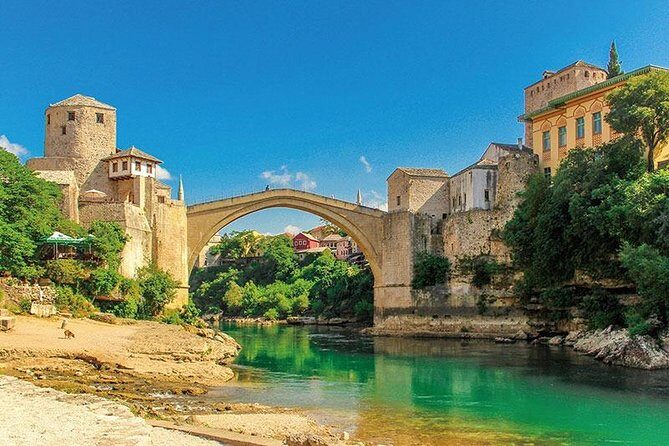
Day 5 is where the trip turns from Croatia’s coastal arc into Bosnia’s layered stories and scenery. The focus is Počitelj, Blagaj, and Mostar, which is a strong combination: fortress village, cliffside monastery, and a river crossing that’s become an icon.
First comes Počitelj, described as a stepped medieval fortress village, and it’s listed as included in the World Cultural Heritage list. This stop is different from a city walk because the layout is built into the terrain. You’re not just seeing buildings—you’re seeing how a community arranged itself on a hillside for defense and survival.
Then you head to Blagaj, where the Dervish Monastery sits into a 200-meter-high cliff. It’s surrounded by clear streams, so you get a quieter, more nature-linked feel after the fortress atmosphere.
Finally, you reach Mostar, and the highlight is the ancient arch bridge over the river. You get the bridge views and the photo angle from both sides, which is exactly what you want here. Mostar’s character is in the edges: the river line, the stone, the way streets and landmarks talk to each other.
This is also a good day to pace yourself mentally. The itinerary includes multiple major stops, and the “value” is in doing them with guided context, not in trying to race through them alone.
Overnight is Sarajevo or nearby, minimum 3-star, which sets you up for a history-packed Day 6.
Sarajevo on Day 6: Latin Bridge history and the city’s meeting-of-cultures line
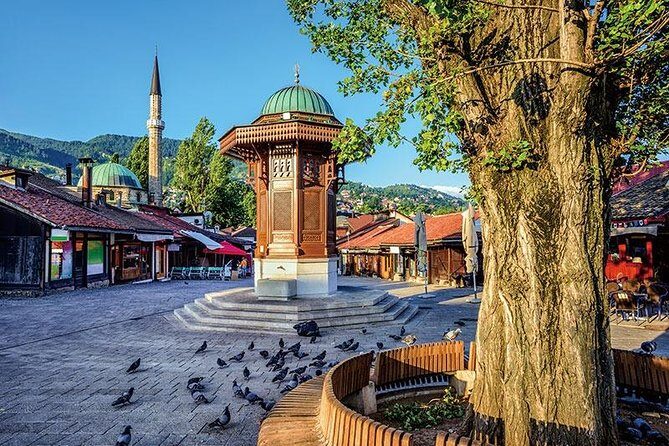
Sarajevo is the kind of city where history feels close to the sidewalk. The schedule highlights Sarajevo’s role as a gateway to the East, and the city’s mix of religions and cultures.
You’ll walk parts of the old town and see references tied to major 20th-century history, including the assassination at the Latin Bridge that contributed to the start of World War I. The tour also mentions a Sarajevo Meeting of Cultures line on the ground, which is the sort of physical marker that helps you understand the city’s identity at street level, not just in big museums.
What I appreciate is that the itinerary doesn’t only focus on heavy history. It also points to modern Sarajevo architecture—described as a “rebirth” after fire—so your mental picture of the city becomes more balanced. Old and new sit side by side, and you’ll feel that shift as you move between areas.
After the Sarajevo visit, you cross the border into Croatia and continue to an overnight stop in Vinkovci or nearby (minimum 3-star). This is one of those practical tour decisions that keeps the route doable, rather than trying to finish the whole Bosnia chapter and Hungarian return in a single day.
Pécs on Day 7: Turkish-era ruins, cathedral towers, then back to Budapest
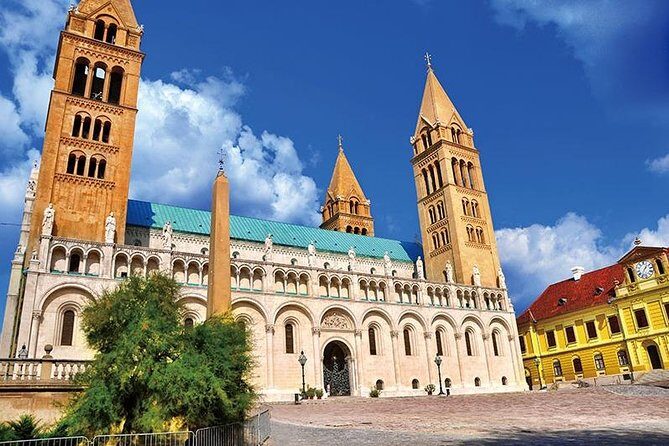
The final day returns you to Hungary with Pécs, a city set between the Danube and the Drava. Pécs is described as one of Hungary’s most attractive cities, with a long history and a museum highlight, plus the best Turkish ruins in the country.
You’ll also see cultural notes like music and performing arts (opera and ballet mentioned), but the big sightseeing anchor is the Pécs Cathedral towering over central Szent István Square. That’s a satisfying closing image: a clear landmark that helps you remember you started this trip in Central Europe and you’re ending it in the same region.
Then you drive back to Budapest in the afternoon. If post-hotel is chosen, you can extend your time in Budapest or nearby in a minimum 3-star setup.
Practical tip: for a final day, keep your shopping and extra stops light. The return drive is part of the package, and you’ll want energy for a smooth end.
Price and value: what $1,160.11 covers, and what can cost extra
At $1,160.11 per person, this tour is priced like a well-organized group package for a high-demand region. For that money, you’re getting:
- 3-star hotels minimum, usually in twin/double or single arrangements, with private facilities
- Daily transport on modern air-conditioned coaches
- A tour manager and guided sightseeing blocks
- Breakfast included for 6 mornings
- Some key admissions are listed as free (like Plitvice Lakes)
Where the value depends on you is what happens around the edges. Several attraction stops explicitly list admission not included, so you should expect to pay for certain interiors or specific entries during the week. Also, gratuities are listed as €10 per person per day, collected in cash by the tour manager while on tour.
Here’s the practical way to judge value: if you want to see major places without arranging hotels, transfers, and guide timing yourself, this price starts to look reasonable. If you’re the kind of traveler who prefers total freedom and plans your own ticketing, you may end up spending similar money while having to handle more of the logistics yourself.
Who this tour suits (and who might feel rushed)
This works best for you if you like:
- A guided structure that helps you connect the dots between places
- Historic cities where walking blocks are the main activity
- A nature highlight that’s more than just a quick viewpoint stop
- Traveling with a max group size of 30, where questions don’t get lost
You might feel less happy if:
- You strongly dislike coach travel. This itinerary moves between multiple cities and countries, and the schedule assumes you’ll accept that travel time is part of the deal.
- You hate paying for tickets on top of the base price. Some entrances are marked as not included, so you’ll want a small budget buffer.
One more fit note: the tour is offered in English. Past departures have included a guide named Kenny described as fluent in Mandarin and English, and the company can combine English and Chinese speaking clients in the same bus when needed. If you want a smooth language experience, that’s a positive sign.
Should you book this Budapest to Croatia and Bosnia tour?
I’d book it if you want a fast, organized week that still gives you real variety: Zagreb’s central landmarks, Plitvice’s waterfalls and lakes, Zadar and Split’s ancient-to-modern mix, Dubrovnik’s wall views, then Bosnia’s Počitelj–Blagaj–Mostar sequence and Sarajevo’s Latin Bridge story.
I’d think twice if you crave long solo time in one place, or if you want every ticket handled for you. This is built around guided highlights and practical hotel logistics, not independent wandering all day.
If you go, plan for walking shoes, a modest extra budget for admissions, and the mindset that the coach rides are how the week stays efficient. With that, this route is a strong way to experience the region without turning your vacation into a logistics project.
FAQ
What cities and areas does the tour include?
You’ll visit Zagreb, Plitvice Lakes National Park, Zadar, Split, Dubrovnik, Počitelj, Blagaj, Mostar (old bridge area), Sarajevo, Vinkovci (or nearby), Pécs, and return to Budapest.
What is the tour duration?
The duration is 7 days (approx.).
Where does the tour start and when?
It starts at Budapest-Keleti (Budapest, Kerepesi út 2-4, 1087 Hungary) at 8:30 am.
What language is the tour offered in?
The tour is offered in English.
What’s included in the price?
Included are minimum 3-star hotel accommodations with private facilities, daily transportation on air-conditioned coaches, the services of an experienced tour manager, and breakfast for 6 mornings.
What’s not included?
Not included are gratuities (listed as €10 per person per day), accommodations before and on the last day, optional activities and tickets for attractions not included in the itinerary, and personal expenses like laundry and internet.
Is admission included for major attractions?
It depends by stop. For example, Plitvice Lakes National Park is listed as free, while some Zagreb and Dubrovnik sub-stops list admission as not included.
How big is the group?
The tour has a maximum of 30 travelers.
How far in advance can I cancel for a full refund?
You can cancel up to 3 days in advance of the experience for a full refund. Cancellation must be at least 3 full days before the experience’s start time.