REVIEW · BUDAPEST
The beginner’s guide to Budapest – Budapest Sightseeing Tour
Book on Viator →Operated by Budapest Urban Walks · Bookable on Viator
Budapest clicks into place fast on this walk. You’ll get an easy first-time route through top landmarks, with public transport tickets included so you can focus on the sights instead of transit math. Two things I really like: the coffee and cake stop that keeps energy up, and the handy souvenir map that helps you keep your bearings after the tour.
Guides bring the city to life with real detail, not just names and dates. I especially liked seeing how guides such as Ferenc, László (Leslie), and Fanni keep the pace friendly for questions while still hitting the big-picture story of Budapest.
One possible drawback: the stops are short, so some entrances are limited. Also, a few major sites along the route don’t include admission, so you may need to decide on the spot if you want to pay extra.
In This Review
- Key moments that make this tour work
- Starting at the Hungarian State Opera: a great meeting point
- Heroes’ Square: statues, symbolism, and a quick lesson in the names
- Széchenyi Baths: how to experience thermal water without planning a whole day
- Vajdahunyad Castle and City Park: quick views with a choice to go deeper
- Andrássy Avenue: a World Heritage boulevard you’ll recognize in your photos
- The Hungarian State Opera House: more than a photo stop
- St. Stephen’s Basilica, Liberty Square, and Parliament: powerful, but from the right angle
- St. Stephen’s Basilica
- Liberty Square (Szabadság tér)
- Hungarian Parliament Building
- Széchenyi Chain Bridge and the Shoes on the Danube: finishing with meaning
- Széchenyi Chain Bridge
- Shoes on the Danube Bank
- Price and value: what you’re actually paying for
- Pacing, transport, and what short stops really mean
- What to wear and how fit you need to be
- Should you book this Budapest Sightseeing Tour?
- FAQ
- FAQ
- How long is the Budapest Sightseeing Tour?
- What language is the tour offered in?
- What’s included in the price besides sightseeing?
- Are admission tickets included for every stop?
- Where does the tour start and end?
- How many people are in the group?
- Is the tour suitable for people with only moderate physical fitness?
- Can I cancel for a full refund?
Key moments that make this tour work
- Public transport tickets included, so you ride like a local right away
- Coffee and cake at a local café, plus coffee/tea and snacks during the 3.5 hours
- Max 15 travelers, which keeps the group from turning into a herd
- Top landmarks on both sides of the Danube story, with smart photo and timing stops
- City layout made simple, thanks to a souvenir map and clear orientation
Starting at the Hungarian State Opera: a great meeting point
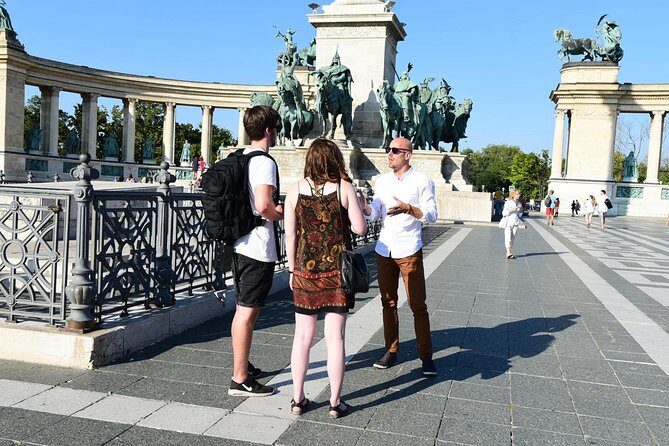
You begin at the Hungarian State Opera on Andrássy út (Andrássy Avenue), then you work your way into Budapest’s most recognizable sights. The location is useful because Andrássy út is one of the city’s main boulevards, and it sets you up for the rest of the tour: grand architecture, lots of pedestrian space, and easy access to transit.
This is also the kind of start that works even if you’re arriving tired. You don’t need to find a random side street or interpret a confusing schedule. You’re in a central, obvious spot, and your guide leads from there.
You can also read our reviews of more guided tours in Budapest

Heroes’ Square: statues, symbolism, and a quick lesson in the names
Your first stop is Heroes’ Square (Hősök tere), one of Budapest’s major squares and a must for understanding Hungarian national identity. The star attraction here is the iconic statue complex, including the Seven chieftains of the Magyars, plus other important Hungarian leaders.
There’s also the Memorial Stone of Heroes, sometimes mixed up with other stories people hear elsewhere. Your guide helps sort the facts from the common confusion, so you leave knowing what you’re looking at and why it matters. It’s a good early stop because it gives you a framework for the rest of the city’s monuments.
Széchenyi Baths: how to experience thermal water without planning a whole day
Then you move to Széchenyi Medicinal Bath and Pool, and this stop is the reason many people book. Széchenyi is the largest medicinal bath in Europe, fed by two thermal springs. The water temperatures are listed at 74 °C (165 °F) and 77 °C (171 °F), which explains why it feels warm even when it’s cool outside.
You don’t get a lazy, all-day soak here. Instead, it’s a timed visit that makes sense for a beginner tour: you’ll see what Széchenyi is about and get a taste of the bath culture without committing your entire schedule. If you’re curious but not sure you want a full spa day, this is a smart way to test the waters.
A practical note: this is a place where you’ll want to dress with the weather in mind. The tour runs in all weather conditions, so if it’s cold or rainy, you’ll appreciate having layers that work before and after the bath area.
Vajdahunyad Castle and City Park: quick views with a choice to go deeper
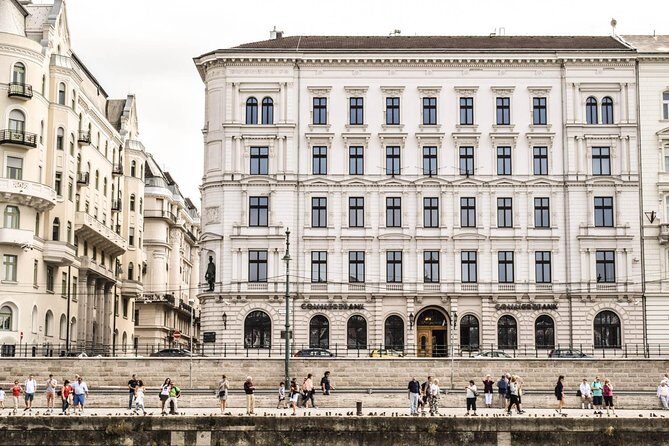
From there, you head to Vajdahunyad Castle in City Park (Városliget). The castle’s story is tied to the Millennial Exhibition in 1896, built to celebrate 1,000 years of Hungary since the Hungarian Conquest of the Carpathian Basin in 895.
Your time here is brief, and admission isn’t included. That setup is practical: you can use the stop for photos and orientation, then decide later whether you want to linger and pay to explore the inside. Even if you skip the extra entry, the exterior gives you a strong sense of why this part of Budapest feels so cinematic.
Andrássy Avenue: a World Heritage boulevard you’ll recognize in your photos
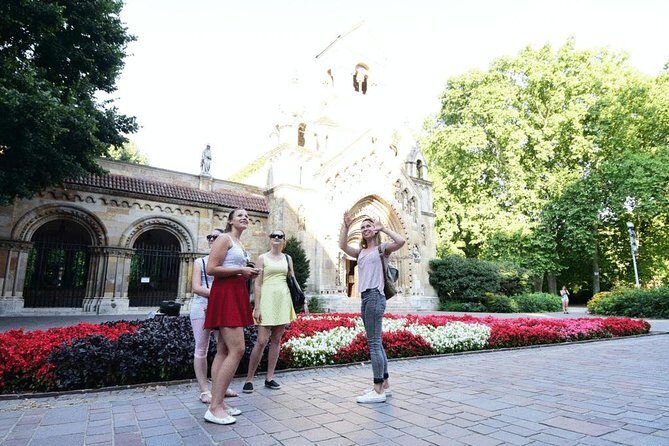
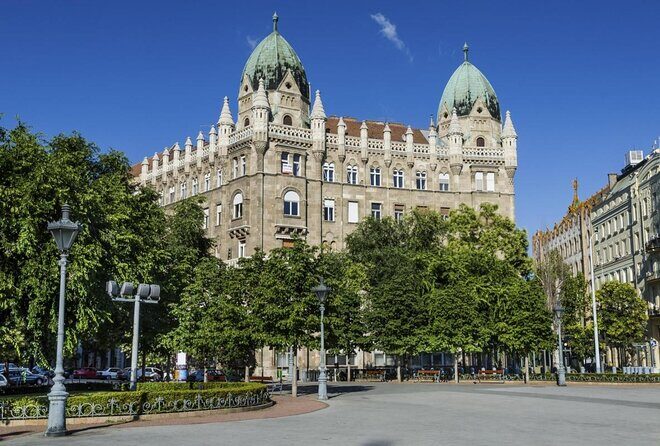
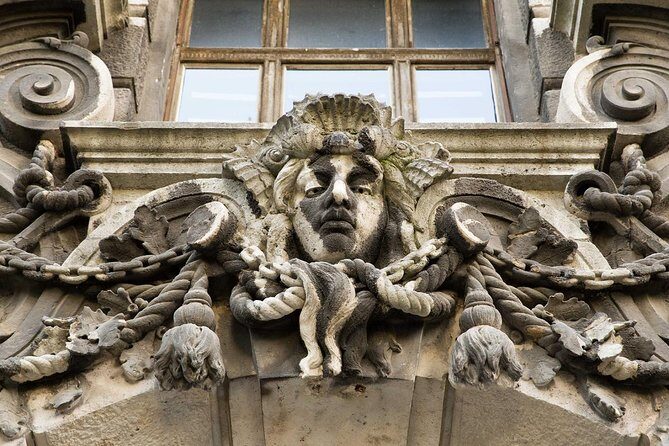
Next comes Andrássy Avenue (Andrássy út), a boulevard dating back to 1872. It’s lined with striking Neo-renaissance mansions and townhouses, and it was recognized as a World Heritage Site in 2002. Even with a short stop, this is one of those stretches where you can’t help but slow down for the architecture.
If you’re doing Budapest for the first time, this is valuable because Andrássy út isn’t just pretty. It helps you connect the city’s layout to its periods of growth and design. You’ll see how the city’s grand streets link key areas, and it makes the next stops easier to understand.






The Hungarian State Opera House: more than a photo stop
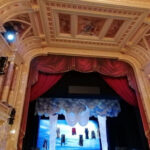
You’ll spend time at the Hungarian State Opera House (Magyar Állami Operaház), a neo-Renaissance landmark on Andrássy út. It was originally known as the Hungarian Royal Opera House and designed by Miklós Ybl, one of Hungary’s major 19th-century architects.
Admission is listed as free for this stop, so you can get a good look without extra planning. Opera houses can feel intimidating if you don’t know the background, but this kind of visit works well for beginners because your guide can point out the details you’d otherwise miss.
St. Stephen’s Basilica, Liberty Square, and Parliament: powerful, but from the right angle
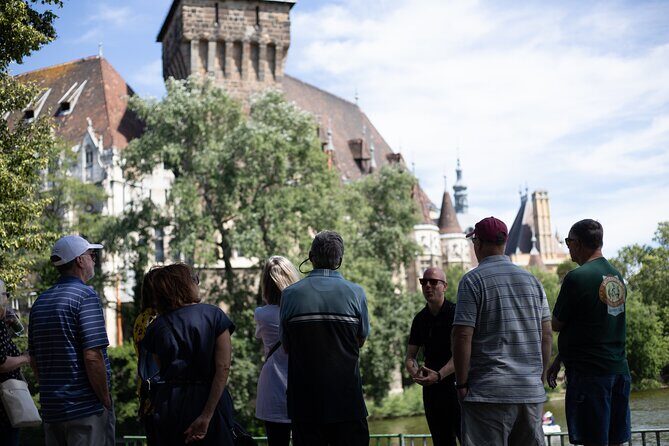
As the tour continues, you’ll hit three big names that shape Budapest’s identity: St. Stephen’s Basilica, Liberty Square, and the Hungarian Parliament Building.
St. Stephen’s Basilica
St. Stephen’s Basilica (Szent István-bazilika) is a Roman Catholic basilica named for Stephen, the first King of Hungary (c 975–1038). The right hand of Saint Stephen is housed in a reliquary, which is one of the reasons the basilica matters beyond its scale.
Admission isn’t included here, so you’ll be deciding on the spot whether you want to add interior time.
Liberty Square (Szabadság tér)
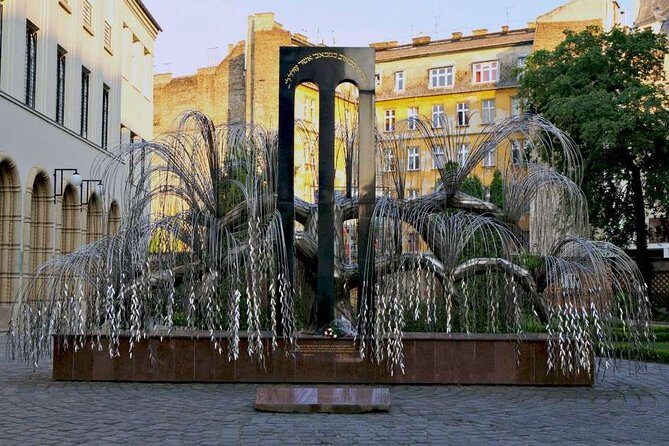
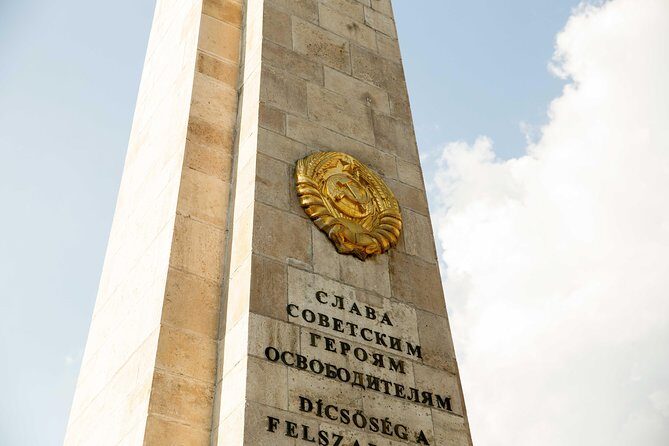
Liberty Square is more than a wide open space. It’s known for two controversial memorials: one commemorates Hungarian Jewish victims of the Holocaust, and the other memorializes Soviet soldiers who liberated Budapest from the Nazis in 1945. Your guide helps frame what you’re seeing so the square doesn’t become just another stop with flags and stone.
On the edge of the square, you’ll also notice major institutional buildings, including the United States Embassy in Hungary and the Hungarian National Bank headquarters.
Hungarian Parliament Building
The Hungarian Parliament Building (Országház) is the seat of Hungary’s National Assembly, and it’s one of the city’s most recognizable landmarks. Admission isn’t included on this stop, so think of it as a focused look from the outside—great for photos and for learning what the building represents.
Széchenyi Chain Bridge and the Shoes on the Danube: finishing with meaning
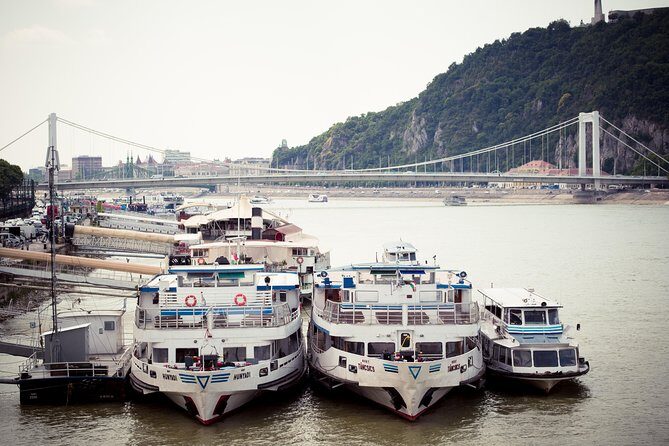
Now the route turns toward the Danube story—Buda and Pest, connected by one of the most iconic crossings in Europe.
Széchenyi Chain Bridge
The Széchenyi Chain Bridge (Széchenyi lánchíd) spans the Danube between the western and eastern sides of Budapest. It’s a classic view that instantly helps you understand the city’s geography. Even if you’ve seen photos before, seeing the bridge in context makes it click: this is how Budapest links its halves.
Shoes on the Danube Bank
The final stop is the Shoes on the Danube Bank, a memorial honoring Jews massacred by fascist Hungarian militia of the Arrow Cross Party during World War II. It’s installed as a stark reminder, and your guide’s context matters here because the memorial is meant to hit hard, not to be cheerful background scenery.
This ending is the reason the tour feels complete for many first-timers. You leave with a sense of the city’s beauty, yes—but also its weight.
Price and value: what you’re actually paying for
At $94.63 per person for about 3 hours 30 minutes, the price looks fair once you break it down. This isn’t just a walking tour with a lecture. You get:
- Public transport tickets included, which can add up fast in a city where you’ll likely ride more than you expect
- Coffee and cake at a local café, plus coffee/tea and snacks, so you aren’t hunting for food mid-route
- A souvenir map and recommendations, useful for your follow-up days
- A small group size (maximum 15 travelers) that keeps the guide’s attention from disappearing
You’re paying for time saved and for the guidance that turns landmarks into something you understand quickly. If you’re new to Budapest, that’s a real value. If you already know the city well, you might prefer a cheaper self-guided approach—but for true beginners, this tour often pays back immediately.
Pacing, transport, and what short stops really mean
A key thing to know: the route includes major sights with short time windows—often 10 to 20 minutes each. That’s the point. You get a broad sweep of Budapest quickly, plus a guide who can steer you toward what matters most.
In other words, this is ideal for getting the city’s structure into your head. Later, you can return to the places you want to explore more deeply. The tour helps you pick priorities.
The route also makes practical use of local transit. For example, one guide-led experience included hopping on a tram after meeting near the Opera House, and another had a guide help navigate the metro with patience. The takeaway: you’re not on your own figuring out lines while you’re also trying to enjoy the day.
What to wear and how fit you need to be
The tour asks for moderate physical fitness. That usually means walking time plus standing at key viewpoints, with stops that can be a little fast. If you’re fine with a few chunks of walking and quick transitions between sights, you should be comfortable.
The tour operates in all weather conditions, and it’s sensible to plan for rain or cold. Dress for the conditions, not the forecast you hope for. If you need service animals, note that service animals are allowed.
Also, if you’re traveling with kids, children must be accompanied by an adult. That matters for pace and for keeping the group under control during transitions.
Should you book this Budapest Sightseeing Tour?
Book it if you want a first-time orientation that feels efficient and human. The included transport tickets, thoughtful snack break, and small-group feel help beginners get oriented without turning the day into a stress test.
Skip or supplement it if you want long museum time or you know you’ll want to spend hours inside the big-ticket interiors. A few admissions aren’t included (like Vajdahunyad Castle, St. Stephen’s Basilica, and the Parliament Building), so you may want to plan follow-up visits once you learn what truly grabs you.
FAQ
FAQ
How long is the Budapest Sightseeing Tour?
The tour lasts about 3 hours 30 minutes.
What language is the tour offered in?
It’s offered in English.
What’s included in the price besides sightseeing?
You get tickets for public transport, coffee and cake at a local café, snacks, and coffee and/or tea. You also receive a souvenir map and further recommendations.
Are admission tickets included for every stop?
Not for every location. Some stops list admission as free, while others show admission is not included (for example Vajdahunyad Castle, St. Stephen’s Basilica, and the Hungarian Parliament Building).
Where does the tour start and end?
The tour starts at the Hungarian State Opera House on Andrássy út 22, 1061 Budapest, and it ends back at the meeting point.
How many people are in the group?
The maximum group size is 15 travelers.
Is the tour suitable for people with only moderate physical fitness?
Yes. The tour is for travelers with a moderate physical fitness level.
Can I cancel for a full refund?
Yes. You can cancel up to 24 hours in advance for a full refund. Canceling less than 24 hours before the start time means you won’t get your money back.