REVIEW · BUDAPEST
Life Under Communism” with optional visit to the House of Terror
Book on Viator →Operated by Fungarian · Bookable on Viator
Budapest’s communist clues are still visible today. This 3-hour walking tour traces Budapest’s Soviet-shadowed era through real buildings, squares, and street-level reminders, not just textbook dates.
I love the stop for coffee at Bambi Presszó, because it feels like a living artifact of old-school communist culture. And I like that the tour keeps things focused on the walk itself, starting around Liberty Square and moving step-by-step through the city’s most meaningful sites.
What makes it extra good is the way experienced local guides such as Miklós and Balázs turn those places into stories you can picture. One catch to plan for: the tour has optional branches, so if you want the House of Terror portion, double-check your selected option before you go—routes and included stops change.
In This Review
- Key things that make this Budapest tour work
- A walk through communist Budapest: what you’ll actually see
- Starting at Liberty Square: the Soviet Siege memorial
- Szabadság tér: the space of politics and perspective
- Kossuth Square and the Hungarian Parliament during 1956
- Petőfi statue area: social life at Március 15. Square
- Corvin köz: resistance at street level in 1956
- Crossing toward Gellért Hill: the view that ties everything together
- Optional add-on: Memento Park when you want the statues with context
- Optional add-on: House of Terror when you want the hard museum side
- Coffee at Bambi Presszó: why this stop feels more real
- Price and value: when this tour is a smart deal
- How good guides change the whole experience
- Who should book this tour?
- Should you book this Budapest communist tour?
- FAQ
- How long is the tour?
- Is this a private tour?
- What language is the tour in?
- Where does the tour start?
- What are the optional add-ons?
- Are entrance tickets included?
- Is pickup included?
- Is there coffee during the tour?
- Can children or service animals join?
- Can I get a refund if my plans change?
Key things that make this Budapest tour work
- A tight 3-hour route with major 20th-century stops without feeling like a marathon
- Central Budapest landmarks tied to the 1956 revolution and Soviet control
- Coffee stop at Bambi Presszó as a cultural pause, not just a sightseeing break
- Two optional add-ons: Memento Park for outdoor statues, or House of Terror for a museum visit
- Built for small groups (up to 5), so questions actually get answered
- English guide + mobile ticket, handy for smooth meeting and entry
A walk through communist Budapest: what you’ll actually see
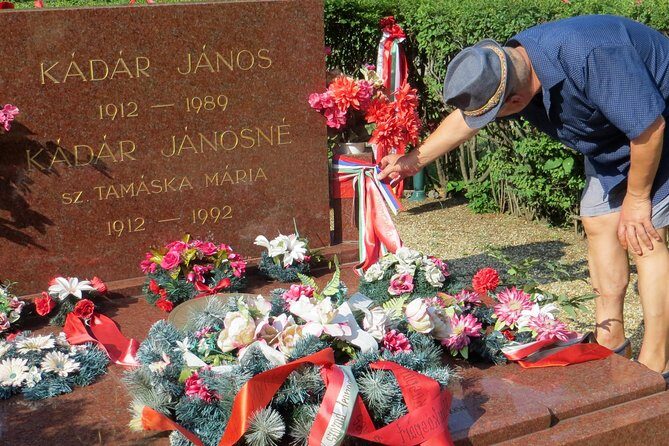
This isn’t a lecture hall. It’s a street walk, so you learn communist-era Hungary the way it’s meant to be learned: by looking at what’s still there. You’ll move through key parts of the center—spaces people protested in, buildings that watched 1956 unfold, and monuments that still shape how the city reads the past.
The tour is designed around a simple idea: power leaves traces. Sometimes those traces are official monuments. Sometimes they’re street corners connected to resistance. And sometimes they’re the way a museum building was repurposed to make the ideology impossible to ignore.
You also get a local guide and handouts, which helps you turn your route into something you can keep thinking about later, even after the walk is over.
You can also read our reviews of more tours and experiences in Budapest.


Starting at Liberty Square: the Soviet Siege memorial
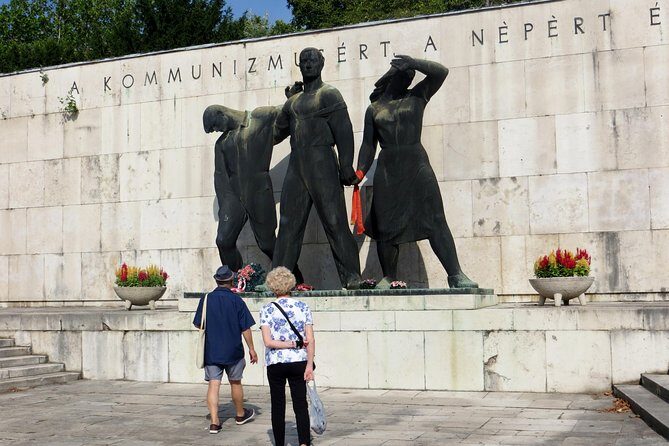
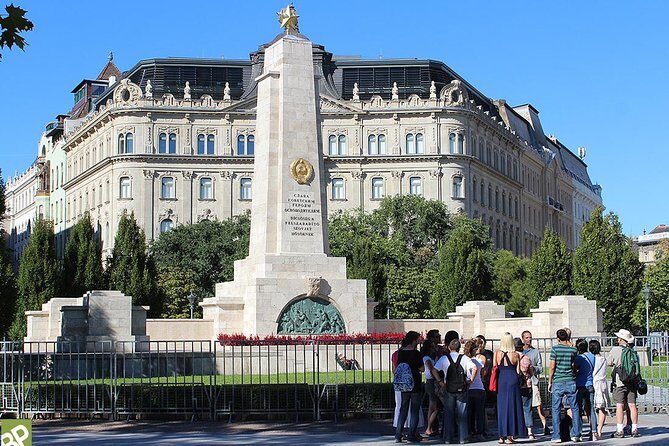
You begin in Liberty Square, where a large Soviet army memorial anchors the story. This is the kind of monument that feels grand on purpose—meant to project dominance—linked to the Siege of Budapest. You’ll hear how that 50-day encirclement near the end of World War II shaped what came next.
This stop works because it sets the tone fast. Before you even get into the parliament and bridge-area sites, you’re seeing how the city was forced (and later re-interpreted) through symbolism.
Practical note: if you’re the kind of person who likes to take photos, this is a good first stop, but plan to keep your attention on the guide. These places are easy to photograph without understanding, and that’s the whole point of the tour.
Szabadság tér: the space of politics and perspective
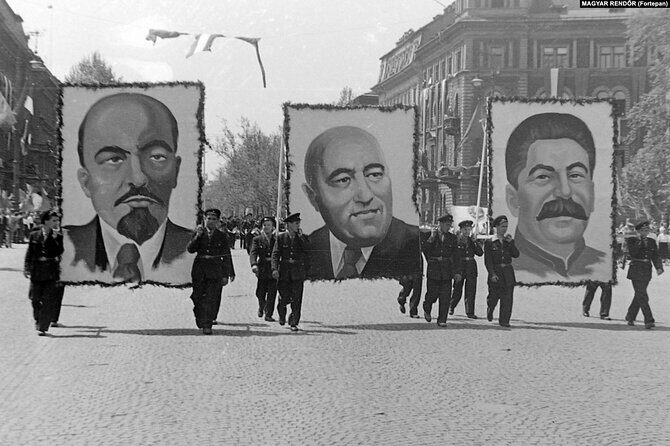
From there, you move to Szabadság tér, a wide square whose size reflects the Habsburg-era imprint on this part of Budapest. The tour frames it as a place where you can rest, look around, and feel the scale of the city center.
Why it matters in a communist-era tour: large civic spaces often become stages. They show you how regimes (and crowds) take space—who controls movement, and where public life is meant to happen.
If you like city planning as much as history, you’ll appreciate this stop more than you might expect. It’s not only about communism; it’s about how Budapest’s older layers affected where 20th-century events played out.
Kossuth Square and the Hungarian Parliament during 1956
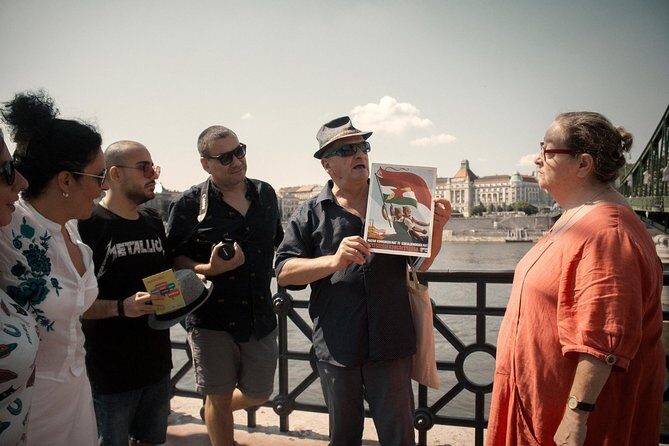
Next is Kossuth Square, home to the Hungarian Parliament Building. During the 1956 revolution, firefighting began in front of Parliament—and the exact number of demonstrators who died is still unclear. You’ll also hear how the crowd wasn’t just a single group: civilians included men and women, children and elderly.
This is one of the most emotionally intense points on the route because it explains the human mix of political moments. It also connects something specific: the way one location becomes a focal point for a larger turning point in national life.
The stop is also useful for your future self. Once you’ve seen where the revolution sparked, you’ll be better at reading other 1956 memorials around the city.
Petőfi statue area: social life at Március 15. Square
At the foot of Erzsébet Bridge, you reach the Petőfi statue and the Március 15. Square area by the oldest church of Budapest. After a renovation in 2011, this spot became a popular place for social life, not just sightseeing.
This stop is a smart counterweight. After heavy political locations, you get a normal-city moment. The guide’s job here is to keep the past grounded: the communist era affected public life, but public life didn’t stop. People kept meeting, walking, and making plans.
If you’re hoping for a tour that doesn’t flatten the city into grim chapters only, this stop helps a lot.



Corvin köz: resistance at street level in 1956
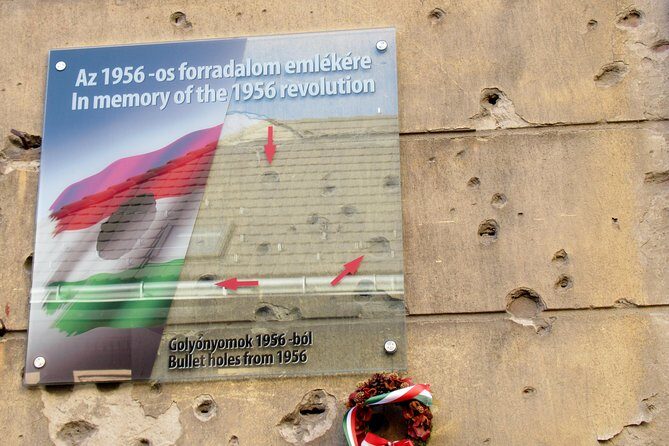
Then the tour heads to Corvin köz, on the southeast side of Budapest, tied directly to 1956 resistance. This was a major resistance center where local youngsters fought invading Russians with Molotov cocktails and guns taken from soldiers to fight Soviet tanks.
You’ll look at reminders of the battles here, and you’ll talk through what the invasion meant and what followed. This part of the route is valuable because it shows a different side of power: not just governments and documents, but ordinary people pushed into extraordinary choices.
The caution here is emotional overload. If you’re sensitive to violent-history details, give yourself a moment at the edge of the group so the story lands in your head, not just in your stomach.
Crossing toward Gellért Hill: the view that ties everything together
You’ll walk across one of Budapest’s most beautiful bridges to reach St Gellért Square. From here you get an excellent view of the Liberty statue, erected in 1947 in remembrance of Soviet liberation of Hungary.
This is a tricky but important point for any communist-era tour: terms like liberation can be politically loaded. Seeing the statue in the same walking day as the 1956 sites forces you to hold competing narratives in your mind at once.
If you like thinking clearly, this is where the tour helps you most. You’re not only learning facts; you’re learning how Budapest chooses what to emphasize—and how different eras try to control the story.
Optional add-on: Memento Park when you want the statues with context
If you choose the Memento Park option, the tour adds a full hour for the outdoor museum experience.
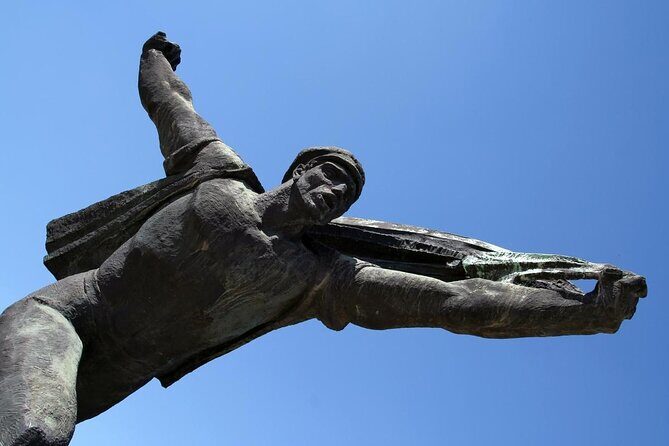
Here’s the core idea: after communism collapsed in Hungary in 1989, Budapest was left with many public artworks celebrating the era. In 1993, the city decided to save the statues instead of destroying them, leading to Memento Park.
This option is worth picking when you want the visual mood without the indoor heaviness. The statues feel strangely quiet, like characters waiting for their next interpretation. A good guide helps you read them as propaganda artifacts and also as reminders of how public space can be shaped.
One practical upside: outdoor walking is often easier to pace than a museum where you’re forced into set routes. If you want time to think between stories, Memento Park gives you that.
Optional add-on: House of Terror when you want the hard museum side
If you choose the House of Terror Museum option, you add about an hour with included admission.
The building has an intentionally stark exterior—black elements and strong architectural framing that makes it stand out on Andrássy Avenue. Inside, you’ll find exhibits including a T-54 tank on display. The museum is tied to the political machinery behind repression, using both the building design and the interior staging to keep you focused.
Pick this option if you prefer your history explained through museum rooms and curated exhibits rather than through outdoor monuments. It’s also the better choice if you want something you can revisit in your mind the way you would with a documentary scene.
If you tend to get tired in museums, plan your energy. This isn’t a quick photo stop. The museum’s power comes from attention, not from speed.
Coffee at Bambi Presszó: why this stop feels more real
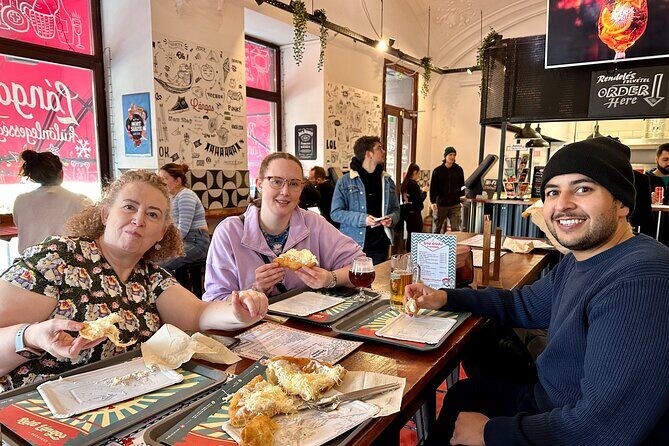
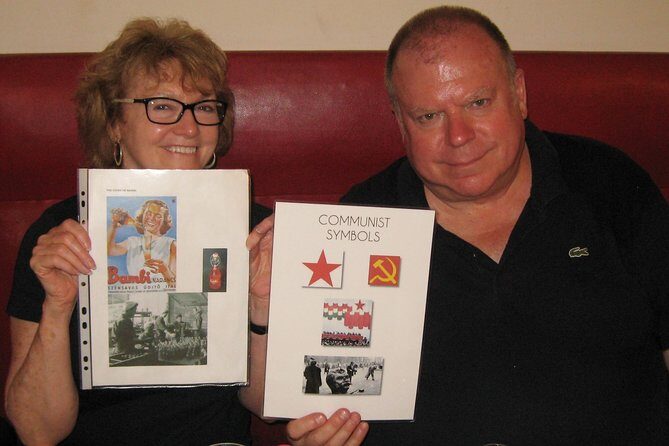
The tour includes a coffee break at Bambi Presszó, described as a last stronghold of communist culture. I like this kind of stop for two reasons.
First, it changes the tempo. Your brain needs a reset after squares, monuments, and revolution talk.
Second, coffee stops reveal something dates can’t: how people live now around old stories. Even if you focus on history, the cafe moment helps you understand Budapest as a living city, not a staged set.
Price and value: when this tour is a smart deal
This costs $280.33 per group up to 5 people, and it runs about 3 hours.
Value depends heavily on group size and what option you choose:
- If you’re splitting among a full group of 5, the cost per person drops quickly.
- If you’re traveling as 2 or 3, it can feel pricey, especially if you’re only doing the standard route and skipping add-ons.
- The tour includes entrance tickets for the optional parts you pick, which matters if you’re specifically targeting Memento Park or the House of Terror.
My practical advice: if you’re paying for one history experience in Budapest, make sure it matches your interest level. If communist-era symbols and 1956 details are what you came for, this tour is built for that. If you’re mainly after general sightseeing, you might feel the cost more than the content.
How good guides change the whole experience
This tour stands or falls on its guide. The route is packed with meaning, but it only becomes memorable when someone ties the places together into a clear story.
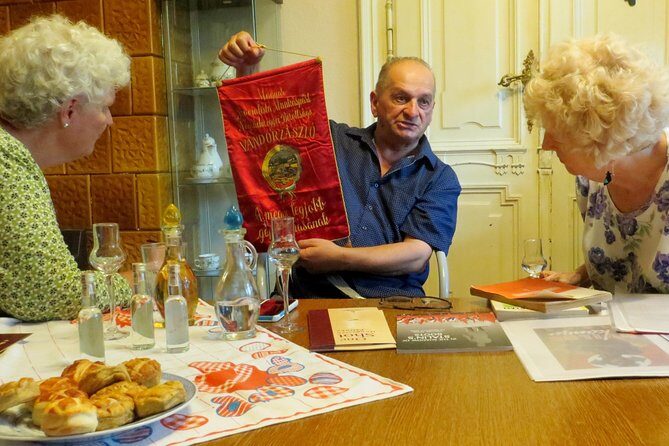
In particular, I’ve seen guides like Miklós praised for personal, first-hand-style context and for answering questions. Others like Balázs have been described as friendly and adapting the schedule to fit the group, with a coffee-house-style conversation that gives extra texture to what you just walked past.
Even with the best guide, your side matters. Ask questions when you hit a pause point, especially at Kossuth Square and during the 1956 sections. That’s where you’ll get the most useful explanations, not just more facts.
Who should book this tour?
You’ll likely love this if you:
- want a focused way to understand Budapest under Soviet influence and the 1956 revolution
- like walking tours that connect monuments to real stories
- are choosing between outdoor symbolism (Memento Park) and indoor museum intensity (House of Terror)
You might think twice if:
- you dislike heavy political topics
- you’re traveling as a solo person or just as a couple and want a low-cost day
- you’re unsure which option you want and haven’t confirmed the route
Should you book this Budapest communist tour?
If your goal is to understand communist-era Budapest with clarity, not just screenshots of monuments, I’d book it. The route hits the key locations you’d otherwise stitch together on your own, and the guide turns those places into a coherent “why it mattered” story.
To make your day smoother, do two things before you go:
- choose your option (Memento Park and/or House of Terror) based on how you want to experience the past
- set the expectation that this is a walking history day—moderate pace, real topics, and lots of meaning per stop
If you want your Budapest day to feel grounded in what shaped modern Hungary, this is a strong bet.
FAQ
How long is the tour?
It runs about 3 hours.
Is this a private tour?
Yes. It’s private, so only your group participates.
What language is the tour in?
The tour is offered in English.
Where does the tour start?
It starts at Liberty Square.
What are the optional add-ons?
You can add Memento Park (about 1 hour) and/or the House of Terror Museum (about 1 hour), depending on what option you select.
Are entrance tickets included?
Entrance tickets for the listed visit options are included.
Is pickup included?
Hotel pickup and drop-off aren’t included, but pickup is offered.
Is there coffee during the tour?
Yes, the tour includes a coffee stop at Bambi Presszó.
Can children or service animals join?
Children must be accompanied by an adult, and service animals are allowed.
Can I get a refund if my plans change?
Yes. You can cancel up to 24 hours in advance for a full refund.