REVIEW · BUDAPEST
Budapest: Jewish History Guided Walking Tour with Historian
Book on GetYourGuide →Operated by Budapest Explorers · Bookable on GetYourGuide
Budapest has a Jewish storyline most walks miss. You get it on a 2.5-hour historian-led walk that connects the 7th district to the real turning points of Hungarian and World War II history. I especially like the Flódni break (coffee and a local Jewish cake), and I appreciate the way the guide keeps pointing out what you’re actually looking at on the streets. One watch-out: the synagogue stops are outside-only, so don’t book expecting to wander inside.
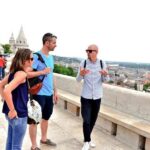
This tour is built for people who want more than a quick photo loop. You’ll cover the Jewish Quarter, former ghetto streets, major synagogue exteriors, memorials tied to winter 1944/45, and even some street art and nightlife pointers. It’s a small group (up to 10), so questions don’t get swallowed by the crowd.
One more thing I like: the guides have a strong track record for storytelling. I’ve seen names like Barbara, Andrea, András, Noémi/Neomi, Gábor, and Daniel come up again and again, with people praising their facts, humor, and respect for the subject. If you’re sensitive to heavy WWII material, go in prepared. You’ll feel it, but you’ll also understand why these places matter today.
In This Review
- Key highlights worth your time
- Meeting at Kempinski Corvinus: where the tour starts
- 2.5 hours in the 7th District: what you’ll cover on the walk
- Three synagogues, seen from the outside: Dohány, Rumbach, Kazinczy
- Dohány Street Synagogue: the scale hits fast
- Rumbach Street Synagogue: Otto Wagner’s 1872 footprint
- Kazinczy Street Orthodox Synagogue
- Former ghetto streets and today’s Jewish Quarter
- Raoul Wallenberg and Carl Lutz: the memorial stops that change the tone
- Gozsdu Passage and Elizabeth Town: street art with a purpose
- The Flódni break: coffee and local Jewish cake (and why it’s not random)
- Price and value at $63: what you’re really paying for
- Group size and pace: how to enjoy it without rushing
- Who this tour is best for (and who might want to skip)
- Should you book this Budapest Jewish history walking tour?
- FAQ
- FAQ
- How long is the tour?
- What does the tour cost?
- Are the synagogues included for entry?
- Is Flódni included?
- What group size should I expect?
- What language is the tour guide?
- Will the tour run in bad weather?
- Is there a cancellation option?
Key highlights worth your time
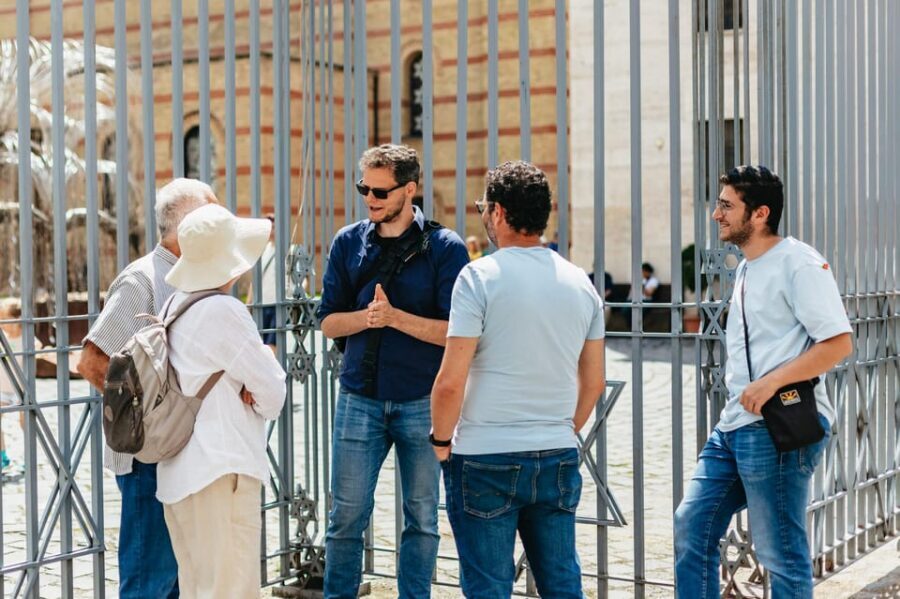
- Historian guide focus on Budapest’s Jewish Quarter and how it connects to Hungary’s wider story
- Flódni cake with coffee during a short café stop
- Dohány Street Synagogue exterior plus the other two major synagogue buildings from the outside
- WWII rescue memorials for Raoul Wallenberg and Carl Lutz
- Gozsdu Passage and Elizabeth Town street-art stops for a “today” view of the neighborhood
Meeting at Kempinski Corvinus: where the tour starts
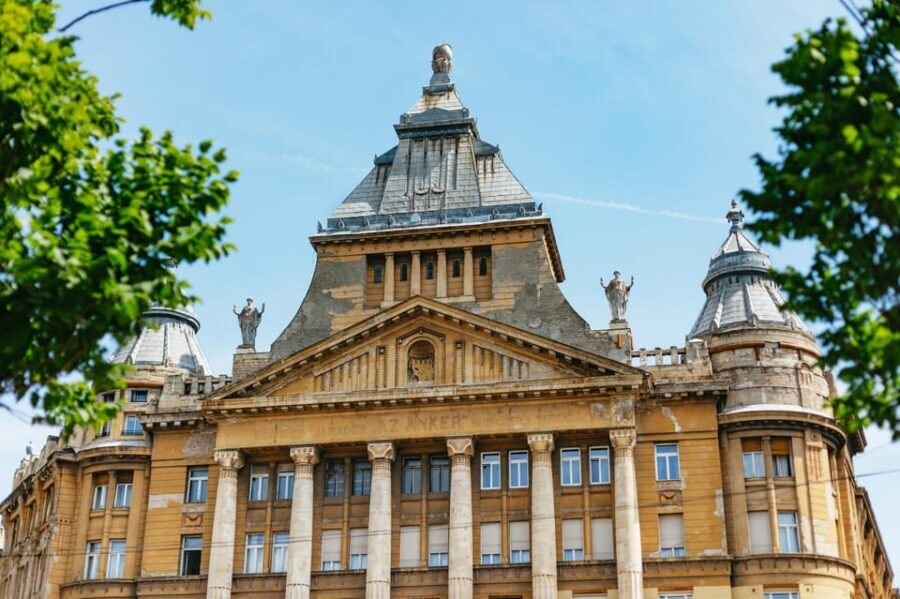
You’ll meet at the Kempinski Hotel Corvinus Budapest, on Erzsébet Square, facing the Ferris wheel. It’s an easy landmark if you’re already walking around this part of the city.
Getting there is straightforward with public transit. The tour directions point you to the M1, M2, or M3 subway lines, and then you’ll get off at Deák Ferenc tér. From there, it’s an onward walk to the hotel. If you’re arriving by taxi or rideshare, just ask for the hotel and the Ferris wheel on Erzsébet Square area.
Practical tip: since this is a walking tour that starts in all weather, wear shoes you can stand in for 2.5 hours without hating your life.
You can also read our reviews of more walking tours in Budapest


2.5 hours in the 7th District: what you’ll cover on the walk
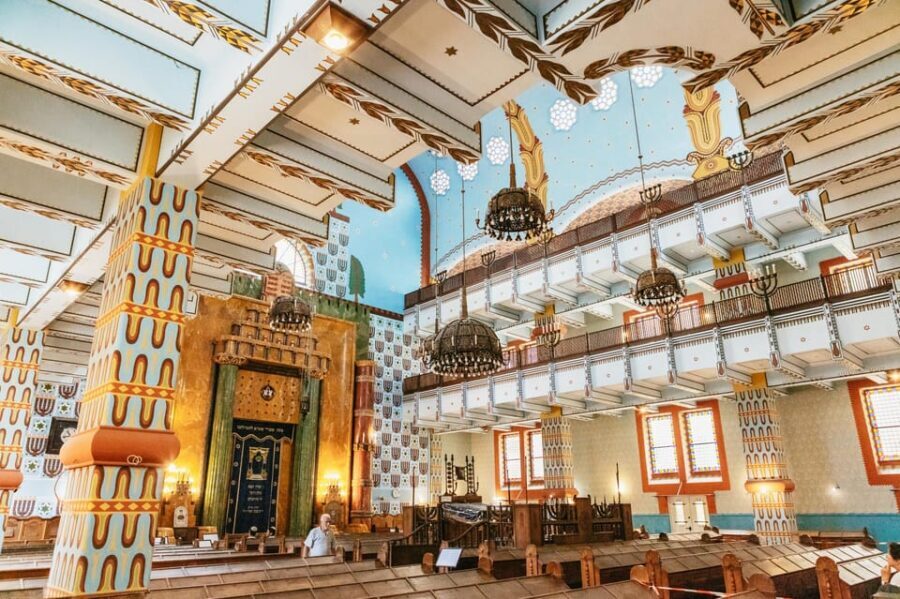
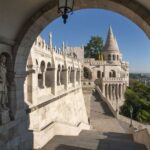
This walk concentrates on Budapest’s 7th district, where Jewish culture has been part of the neighborhood’s life for over 200 years and where there is still a large, active Jewish community today. The idea isn’t just to point at buildings. It’s to explain what shaped the streets, the community, and the shocks that hit later.
The route keeps moving through:
- the Jewish Quarter area and today’s community life
- the exterior viewpoints of three major synagogues
- former ghetto-era street areas, including spots marked with monuments and memorials
- a lively stretch around Gozsdu Passage
- street art and references to Elizabeth Town
You’ll cover a lot for the time. The trade-off is you can’t linger on every corner. So if you like asking questions, that’s where a small group helps a lot.
Three synagogues, seen from the outside: Dohány, Rumbach, Kazinczy
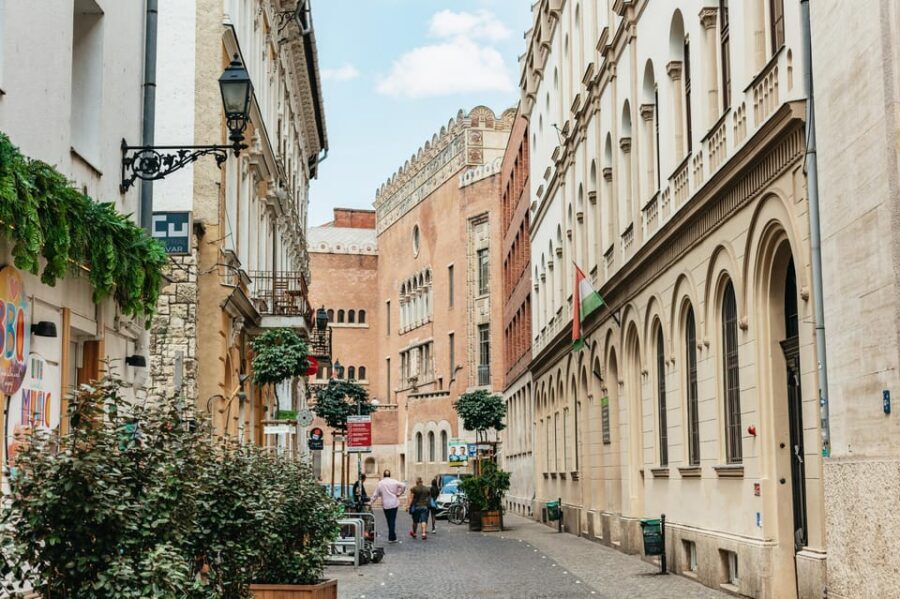
One of the biggest things to understand before you go is the scope: you’ll see the three main synagogues from the outside only. That’s not a problem if your goal is orientation and context. It is a disappointment if you want stained-glass time and interior details.
Still, even from the pavement, these buildings are worth the stop.
Dohány Street Synagogue: the scale hits fast
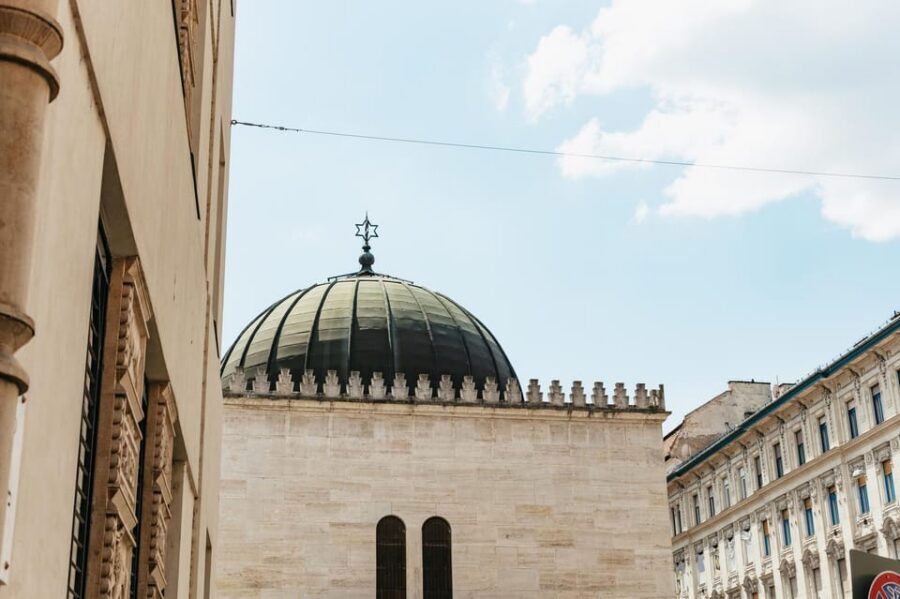
The Dohány Street Synagogue is highlighted as the largest synagogue of Europe. You’ll get to marvel at the exterior—an eye-catching statement of community presence and architectural ambition. On a guided tour, the exterior matters because the guide can explain the symbolism and the history behind the building, even without going inside.
Rumbach Street Synagogue: Otto Wagner’s 1872 footprint
You’ll also visit the Rumbach Street Synagogue from the outside. The details here are sharp: it was built in 1872 by Viennese architect Otto Wagner. That little fact changes how you look at the façade. Instead of seeing it as just another impressive wall, you start seeing a specific design lineage.
You’ll also get context about the neighborhood around it, including what the area became known for later—especially the ruin pub culture and nightlife references that many people associate with this part of Budapest.
You can also read our reviews of more guided tours in Budapest




Kazinczy Street Orthodox Synagogue
The tour includes the Kazinczy Street Orthodox Synagogue as another major exterior stop. It rounds out the story by showing how the community’s religious life expressed itself in different styles and institutions, not just one single landmark.
If you want inside-the-synagogue time, plan a separate visit on your own. This tour’s strength is understanding the “why” behind the sights while keeping the group moving.
Former ghetto streets and today’s Jewish Quarter
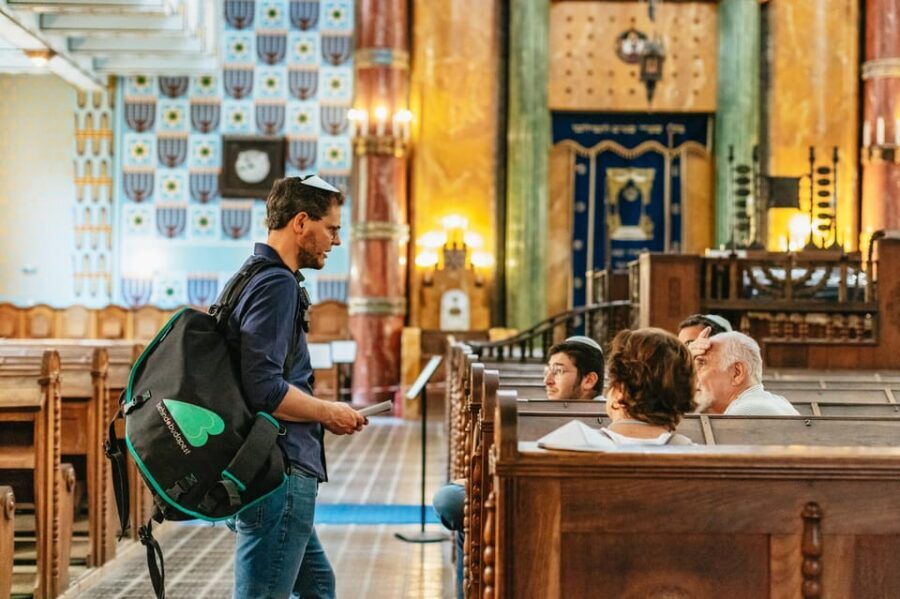
After the synagogue exteriors, the walk shifts into street-level context. You’ll stroll through the Jewish Quarter and along streets tied to the former ghetto. Even when you’re only seeing the neighborhood now, the guide points out which corners carry older layers: synagogues, monuments, and the kinds of kosher restaurants and kosher shops that still serve the community.
One detail that really lands during this part of the walk: the ghetto wall existed for a shockingly short period—reported as less than two months in the stories you’ll hear. That contrast is powerful. It makes the timeline feel less abstract and more urgent.
This section also works well if you’re the type who likes to connect history to daily life. The Jewish Quarter isn’t frozen in the past. It’s still active. The best tours help you notice both at once: the historical scars and the normal things happening around you now.
Raoul Wallenberg and Carl Lutz: the memorial stops that change the tone
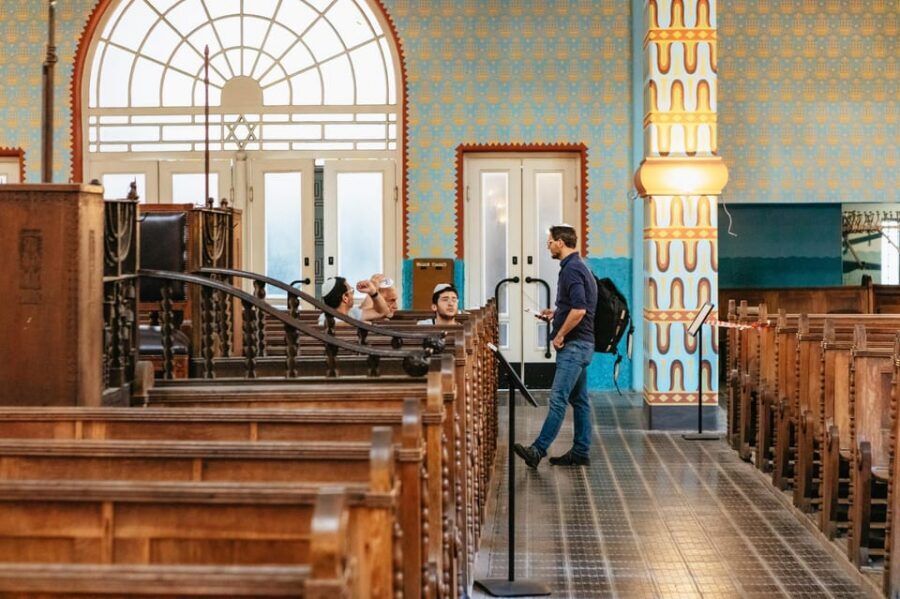
At some point, the tour turns serious in a way that’s hard to fake. You’ll learn about the local heroes who saved tens of thousands of Jewish lives during the winter of 1944/45. The key names the tour highlights are Raoul Wallenberg and Carl Lutz, and you’ll walk by their respective memorials.
Both are among the people honored as Righteous Among the Nations. That title gives you a clean way to understand what kind of moral courage they represented—courage with consequences in the real world, during the kind of winter when survival was not a given.
A good historian guide makes this part more than a list of names. They explain the setting, the decisions, and why the rescue efforts mattered. If you care about human stories inside big historical events, this is the heart of the tour.
Gozsdu Passage and Elizabeth Town: street art with a purpose
Budapest has a street art scene, and the guide uses it instead of treating it like a random photo break. You’ll get pointers about the area known as Elizabeth Town, including secrets tied to the neighborhood’s look and feel.
A stop around Gozsdu Passage also gives you a sense of how the Jewish Quarter’s edges blend into the city’s current nightlife. The tour doesn’t turn into a party pitch. It uses the area’s energy to help you picture where people lived, gathered, and later rebuilt.
My advice: when you see street art on this route, try not to treat it as decoration. Ask yourself what it might be referencing—identity, memory, or the ongoing transformation of the neighborhood.
The Flódni break: coffee and local Jewish cake (and why it’s not random)
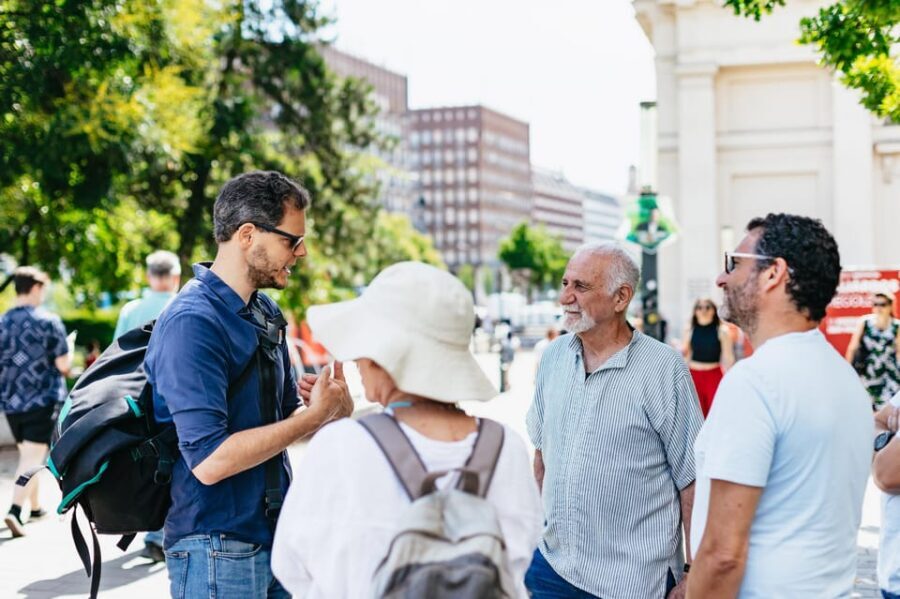
Yes, there’s a food stop. It’s also one of the best ways to make this history feel human.
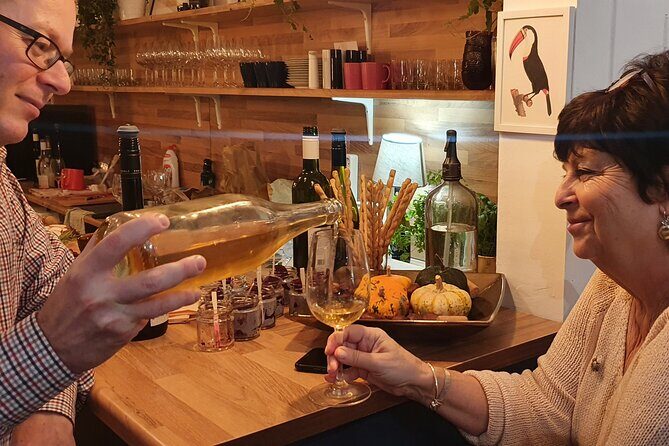
You’ll have coffee/soft drink with a local Jewish cake called Flódni in a cafe. The time is short—around 15 minutes—but it’s perfectly placed. You’re not cramming dessert on top of the heaviest lesson. You’re getting a reset while still staying in the neighborhood’s rhythm.
Flódni isn’t just a sweet souvenir. It’s a taste of the local Jewish culinary tradition that still shows up in the area. If you like travel that hits all your senses, this is a smart inclusion for a tour that otherwise focuses on streets and buildings.
Price and value at $63: what you’re really paying for
At $63 per person for about 2.5 hours, you’re paying for three things that add up fast in Budapest:
- a historian guide who explains context while you walk (not just a recitation of names)
- a tight route in a dense neighborhood where you’d otherwise need a lot of planning
- the included Flódni café stop with coffee/soft drink
You’re also not paying for synagogue entry tickets because the tour doesn’t include entry. That can actually make the price feel more honest: the tour spends your money on guidance and placement, not on museum-style access.
For value, this is best when you’re short on time or you want a structured way to orient yourself in the Jewish Quarter without missing the big themes. If you’re traveling with a group that likes to wander independently, you may prefer a self-guided day. But if you want an educated line through the city, this price typically feels fair.
Group size and pace: how to enjoy it without rushing
The group is limited to 10 participants. That matters more than it sounds. In practice, a small group helps the guide:
- keep the pace comfortable
- handle questions without turning it into a noisy Q and A line
- adjust to the group’s energy
Also, the tour starts in all weather. That means layers and grip matter. Budapest weather can change fast, and you don’t want your hands full of umbrellas while trying to keep up with the historian’s story.
If you’re the type who likes to capture photos, do it deliberately. Let the guide finish the key explanation first, then take the photo. You’ll understand what you’re capturing.
Who this tour is best for (and who might want to skip)
This tour is a great fit if you:
- want a guided introduction to the Jewish Quarter’s major sites
- care about WWII history told through real places, not just worksheets
- enjoy getting architectural context for synagogue exteriors
- like history that connects past events to what’s happening in the neighborhood today
- prefer small groups and clear explanations
It’s less ideal if you:
- specifically want to enter and tour the synagogues inside
- dislike heavy WWII themes and want a lighter overview
- want a long, slow walk with lots of free time at each stop
Should you book this Budapest Jewish history walking tour?
If you want a smart, place-based overview of Budapest’s Jewish Quarter with a historian guide, this is a strong choice. The included Flódni stop is a nice human touch, and the memorial focus on Raoul Wallenberg and Carl Lutz gives the walk real moral weight. The small-group size and the fact that you see all the major synagogue exteriors in one flow also make the time feel efficient.
Before you book, decide one thing: do you want interiors, or do you want context from street level? This tour is built for context. If you’re fine with outside-only synagogue views, you’ll likely leave feeling that the neighborhood has a clear story line from the 7th district’s long Jewish presence through the trauma of the ghetto era and the winter of 1944/45.
FAQ
FAQ
How long is the tour?
The tour runs about 2.5 hours (listed as 2.25 hours for the guided sightseeing time plus a short café stop).
What does the tour cost?
It’s priced at $63 per person.
Are the synagogues included for entry?
No. The tour includes visits to the three synagogues from the outside only.
Is Flódni included?
Yes. You’ll have a local Jewish cake called Flódni with coffee/soft drink during a café stop.
What group size should I expect?
The group is limited to 10 participants.
What language is the tour guide?
The tour guide provides the tour in English.
Will the tour run in bad weather?
It starts in all weather conditions, so dress accordingly.
Is there a cancellation option?
You can cancel up to 24 hours in advance for a full refund.