REVIEW · BUDAPEST
Self Guided Tour In Budapest With 100 Captivating Audio Stories
Book on Viator →Operated by Trales Audio Guides · Bookable on Viator
Budapest tells its stories best when you control the pace. This self-guided audio route strings together 100 location-based tales across iconic sights from Buda Castle to the Danube. The format is simple: one smartphone, headphones, and internet—then you choose what to hear and when to stop.
What I especially like is how it helps you move with your day. You can start and stop on your schedule, and the stops are designed for short, “walk-up” listening moments—so it’s easy to fit into a busy itinerary. I also like the focus on recognizable landmarks (Buda Castle, Parliament, Heroes’ Square, St. Stephen’s Basilica) without requiring a guided group.
The main consideration: it’s audio-first. If you don’t want to rely on a phone with internet, or you’re sensitive to audio as your main source of info (this is not recommended for hearing impairment), you may find a standard guided tour a better match.
In This Review
- Key points before you go
- A Budapest audio tour you can start in seconds
- Price and value: $3.62 per person, and what you’re really paying for
- How the mobile ticket and web audio work (no downloads)
- The route in real terms: from Buda Castle viewpoints to Parliament icons
- Buda Castle and hillside legends
- Bridges you can’t miss: Chain Bridge, Margaret Bridge, and the Danube walk
- Civic Budapest: Parliament, Heroes’ Square, and the squares that run the city
- Margaret Island and city park time
- What to expect at major “wow” sights (and where you’ll spend time)
- St. Stephen’s Basilica and why speed matters
- The Danube viewpoint loop that keeps paying off
- Libraries, music, stations, and everyday architecture stops
- Synagogue stories and a stop underground: a memorable contrast
- Practical pacing: how long to spend and how to keep it enjoyable
- Who this is best for (and who should look elsewhere)
- Quick FAQ about this Budapest audio tour
- FAQ
- How long is the Budapest self-guided audio tour?
- What does it cost per person?
- Do I need to download an app?
- Do I need internet on my phone?
- Are the audio tours available in English?
- Is there a physical in-person guide?
- Is this a private tour?
- Is the experience suitable for people with hearing impairment?
- What are the ticket and meeting point details?
- Is the booking refundable if I cancel?
- Should you book this audio tour?
Key points before you go

100 audio locations, choose your own route. You’re not locked into one fixed itinerary length.
Browser access means no cumbersome downloads. You start right from your phone in the web app.
Mobile ticket can help with time at big attractions. Reviews call out faster ticket handling at St. Stephen’s Basilica.
Short stop structure makes it easy to pace. Many listed story stops are around 10–20 minutes.
Real-world Budapest variety. You get fortresses, bridges, libraries, a synagogue, and even a cave stop.
Private-by-group experience. Only your group participates, even though it’s self-guided.
A Budapest audio tour you can start in seconds
Budapest is a city where scenery and stories are glued together. One minute you’re at grand viewpoints, the next you’re looking at architecture you’ll see from postcards—but with audio you can actually use while you walk.
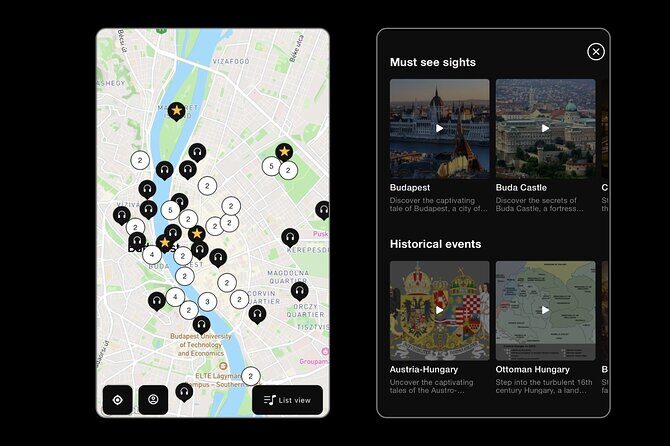
This tour is location-based audio with 100 captivating stories, delivered through a web app with a map. In plain terms: you don’t need to download a dedicated app or learn a complicated interface. You open the link, activate your audio access, and press play as you reach each spot.
You can also shape the day. Want a themed walk through power and politics? Or a more chill loop mixing views, markets, and quiet corners? The system is built so you can jump in and out without feeling stuck in a rigid schedule.
You can also read our reviews of more guided tours in Budapest



Price and value: $3.62 per person, and what you’re really paying for
At $3.62 per person, the best comparison isn’t another city tour that also includes transport or a live guide. It’s the alternative: paying for separate “guided” experiences, or paying for entry tickets without context.
For this format, you’re paying mainly for:
- The audio stories and soundscapes (the content)
- The web ticket/mobile access system
- A map that keeps you oriented as you move
Most of the listed stops show admission ticket free for the experience itself, meaning you’re not buying extra add-ons just to hear the story where you are. And because the time per stop is short, you can keep the cost-to-time ratio strong even if you only complete part of the route.
The value sweet spot is a “select-and-go” traveler. If you love cherry-picking highlights and using your day efficiently, this tends to make sense. If you want a historian-by-your-side or hands-on explanations, you might feel you’re missing the human layer.
How the mobile ticket and web audio work (no downloads)
Here’s the practical setup. You receive a mobile ticket and you access the audio through a link (your “one step access” button). You’ll need:
- A smartphone
- Internet access
- Your own headphones
There’s no offline access included, so plan around your battery life and data. I’d treat this like any other phone-dependent navigation in a big city: bring a charged battery pack if you use your phone heavily.
The upside is convenience. Because there are no cumbersome downloads, you can start even if you arrive late or your schedule shifts. If you’re the type who hates fumbling with apps in the street, this is the kind of setup that helps you get moving fast.
The route in real terms: from Buda Castle viewpoints to Parliament icons

Even though you can choose your own pace, it helps to understand the major “anchors” in the loop. The tour’s listed stops cover several classic Budapest zones—so you’re not wandering randomly.
A common strategy: do a morning “views and landmarks” run, then use the afternoon for indoor architecture and food stops. I like this because Budapest’s neighborhoods are layered, and your feet will want a mix of stairs, bridges, and calmer walks.
Buda Castle and hillside legends
If you start in Buda’s castle area, you’ll be in the mood for power, war, and royalty. The Buda Castle story is explicitly tied to battles and royal intrigue, and the stop is set up as an outdoor “walk-by” encounter. Think: arrive, orient yourself, listen in short chunks, and move on.
Near there, make room for Gellért Hill. It’s a viewpoint-and-folklore type stop, where the audio framing is about seeing Budapest from above. If you choose this stop, wear shoes for uneven ground—hills add effort fast.
Also on the Buda-side atmosphere: Citadella sits above the city with fortress views. This is a good match for anyone who likes structure, stone, and panoramic payoff.
And don’t skip the “hidden under your feet” angle: Gellert Hill Cave is part of the listed stops, bringing the story world underground. It’s the kind of contrast that breaks up the usual outdoor sightseeing rhythm.
A few more Budapest tours and experiences worth a look





Bridges you can’t miss: Chain Bridge, Margaret Bridge, and the Danube walk
Budapest’s bridges are both practical infrastructure and visual drama. The audio tour uses several of them as story anchors.
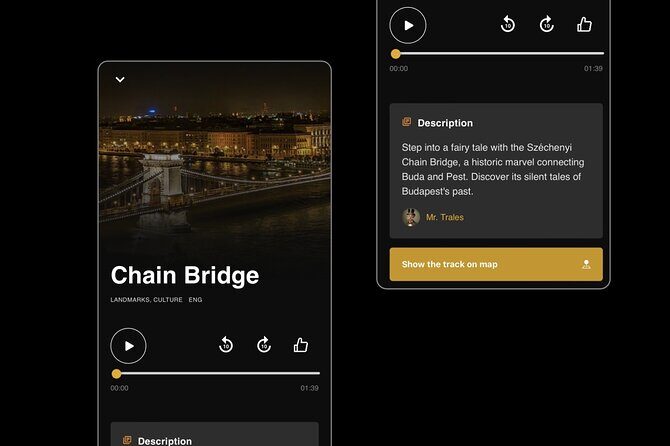
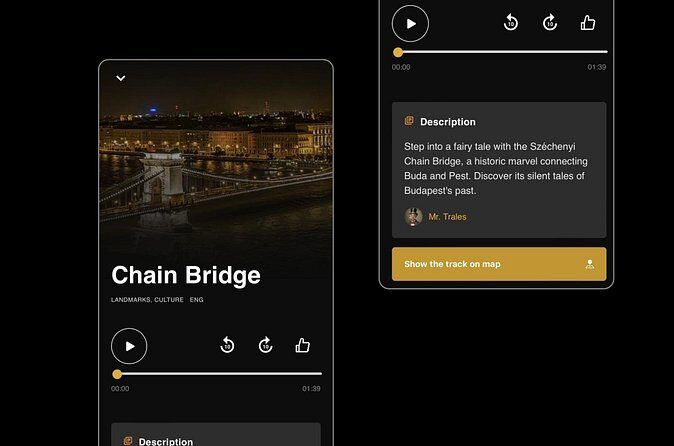
- Széchenyi Chain Bridge: you’ll hear silent tales connected to the historic crossing between Buda and Pest.
- Margaret Bridge: the audio focus is on the bridge’s distinctive 165-degree design, which is a fun detail to notice while you walk.
- Liberty Bridge (Szabadság híd): the story angle mixes history and myth with an art nouveau tone.
- Elisabeth Bridge (Erzsébet híd): framed around tragedy and rebirth, with a mystery-thread through its background.
For a quieter, more reflective stretch, add Shoes on the Danube Bank. This stop is built around the haunting memorial concept—very effective when paired with the wide river promenade views.
If you want a “stroll with context,” the Danube River story stop pairs well with a longer riverside walk, especially when you’re between bigger sights.
Civic Budapest: Parliament, Heroes’ Square, and the squares that run the city
Some stops act like a city map made of landmarks. They help you understand where power and identity show up in brick and stone.
- Hungarian Parliament Building: the audio frames it as a symbol of Hungary’s past and present.
- Heroes’ Square: the story centers on the Millennium Monument, created for the 1000th anniversary of the Magyar conquest of the Carpathian Basin, with the surrounding Museum of Fine Arts and Palace of Art as visual context.
- Vörösmarty Square (Vorosmarty ter): described as a “living flip book” of identity since 1812.
- Kossuth Lajos Square: the stop is all about the heart of Budapest and the hidden tales that shaped it.
- Deák Ferenc Square and Batthyány Square: these give you the practical “city flow” plus the power-and-legacy angle.
If you’re building a first-time Budapest day, these squares help you orient faster than any map app. You can look up, identify where you are, and then listen to why it matters.
Margaret Island and city park time
You also get green-space breathing room. The listed stop Margaret Island is framed as where history and nature meet, and it’s designed as an easy listening walk.
Then there’s City Park—wide acreage, a classic Budapest relaxation area. If your feet are getting loud, this is a good place to reset and keep listening without rushing.
What to expect at major “wow” sights (and where you’ll spend time)

Not every stop is a big ticket. In fact, the system is built for quick listening at many landmarks, typically around 10 minutes or 20 minutes at certain viewpoint-heavy spots.
Still, there are two standout categories where you’ll likely spend longer: ticketed attractions and architecture-heavy places.
St. Stephen’s Basilica and why speed matters
One of the most praised moments connected to this experience is how it can help you handle tickets quickly at St. Stephen’s Basilica (Szent Istvan Bazilika). The key point: reviews mention using the system to get ahead of a long line, with the idea that online booking can take just a couple of minutes.
The practical lesson for you: if St. Stephen’s Basilica is on your list, don’t rely on “maybe I’ll figure it out when I’m there.” Use the mobile ticket access so you have fewer dead minutes.
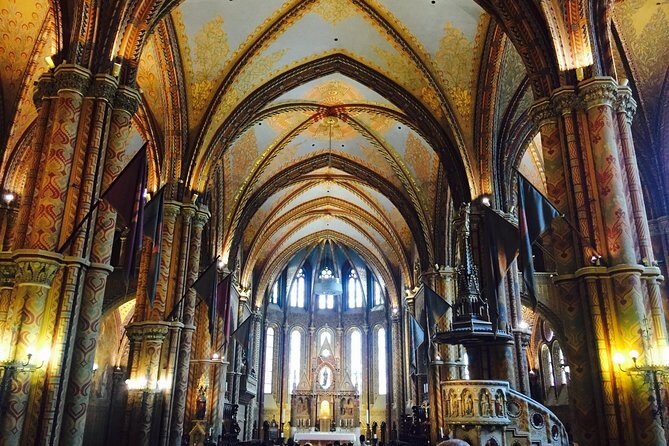
The review also noted that the church itself was really interesting, and there was regret about not booking the tower option. If you’re the type who wants the highest payoff viewpoint, make sure you check whether a tower ticket is something you want to add when you’re setting up your plan.
The Danube viewpoint loop that keeps paying off
Another reason this tour works is that several stops are visual even if you’re not reading every detail. You’ll get:
- River drama at the Danube promenade
- A memorial moment at Shoes on the Danube Bank
- Architecture and angle changes on multiple bridges
- Hilltop fortress perspectives from Gellért Hill and Citadella
In my view, this is where self-guided audio shines. You’re already looking at the scenery. The audio adds meaning while you stand where the facts make sense.
Libraries, music, stations, and everyday architecture stops

Budapest isn’t only monuments. The audio route includes “daytime” places that feel like stepping into another layer of the city.
Here are a few of the best examples:
- Central Market Hall (Great/Central Market Hall): a story stop aimed at culture and cuisine, connected to the market’s planning and role in city life. If you like grazing or browsing, this pairs well with the audio format because you can pause and listen while you walk stall to stall.
- Franz Liszt Academy of Music: a focused stop for music history and the kind of institution that feels important even from the sidewalk.
- National Széchényi Library: the story angle is about culture and knowledge, tied to the library’s setting in the Buda Castle area.
- Metropolitan Ervin Szabó Library: a “palace turned sanctuary of knowledge” type story, which makes it feel like the building is the main character.
- Semmelweis Museum of Medical History: a “medical breakthroughs and tales” framing linked to Semmelweis University and its founding in 1769.
Stations also make an appearance, and that’s a fun surprise:
- Nyugati Railway Station Royal Waiting Room: described as surprising elegance, with a “designed by the creators of the Eiffel Tower” type connection in the audio.
- Budapest-Keleti Station: focused on the grandeur and railway history angle.
These stops are good if you like variety. They also help you avoid the “monuments all day” trap.
Synagogue stories and a stop underground: a memorable contrast
Budapest’s cultural layers show up in the audio stops that aren’t just royal and political.
The big one is the Great/Central Synagogue (Nagy Zsinagoga), described as Europe’s largest synagogue, tied to the Dohány Street Synagogue. If you’ve been to places of worship before, you’ll know the difference audio can make: it helps you notice scale, detail, and meaning without you needing to be an expert.
Then add Gellert Hill Cave for contrast. Going underground (even just in story form) changes the whole rhythm of a day. You’ll go from open sky viewpoints to an underground myth-and-legends feeling—exactly the kind of mental switch that keeps a self-guided plan from getting repetitive.
Practical pacing: how long to spend and how to keep it enjoyable
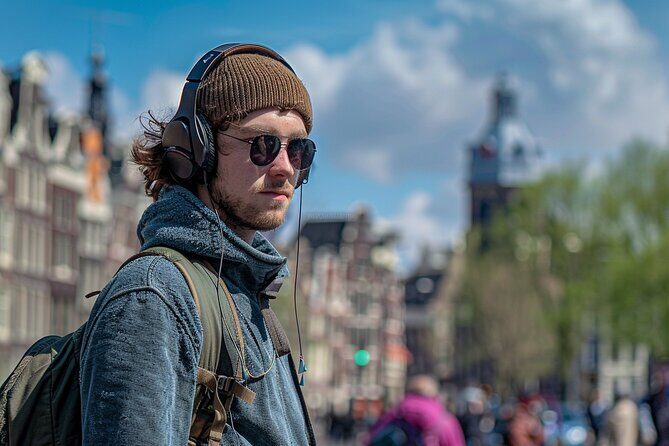
The tour is designed for 1 to 8 hours, roughly. That range is there for a reason. You can do a quick highlights sweep or a longer thematic run.
Here’s how I’d pace it in a way that doesn’t turn into a chore:
- Pick 6–12 stops for a 1.5–3 hour day. Focus on the big anchors (castle area, Parliament zone, bridges, one basilica/market stop).
- For a longer 4–6 hour day, add 2–3 “slower” categories: a library, a market, and a hilltop viewpoint.
- If you want to maximize without sprinting, treat each listed stop as a short listening appointment: 10 minutes for most, and 20 minutes for the longer story placements like Buda Castle and Margaret Island.
Also, bring headphones that fit comfortably. You’ll be listening outdoors and around city noise, so you want something that won’t annoy you after 30 minutes.
And a small but real tip: start charging your phone early. With no offline access, your internet dependence is part of the experience design.
Who this is best for (and who should look elsewhere)
This audio tour is a strong match if you:
- Like self-guided pacing and don’t want a group schedule
- Want quick context at big sights like Heroes’ Square and Parliament
- Prefer using your own transport time wisely
- Enjoy architecture, museums-from-the-outside, and story-led walking
It’s less ideal if you:
- Need a live guide to handle interpretation and questions
- Rely on hearing support technologies that audio-only doesn’t provide (this is noted as not recommended for hearing impairment)
- Don’t want to depend on phone internet and battery
Because it’s listed as a private tour/activity for your group, it can work well for couples and friends who want to move together.
Quick FAQ about this Budapest audio tour
FAQ
How long is the Budapest self-guided audio tour?
It runs for about 1 to 8 hours, depending on how many stops you choose to complete.
What does it cost per person?
The price listed is $3.62 per person.
Do I need to download an app?
No. You can activate and access the audio through the web link in your browser. Offline access is not included.
Do I need internet on my phone?
Yes. The audio requires a smartphone with internet access.
Are the audio tours available in English?
Yes, it’s offered in English.
Is there a physical in-person guide?
No. It’s a self-guided experience, and you use the mobile/web audio access instead.
Is this a private tour?
Yes. It’s a private tour/activity, so only your group participates.
Is the experience suitable for people with hearing impairment?
It is not recommended for travelers with hearing impairment.
What are the ticket and meeting point details?
You get a mobile ticket, and the activity starts in Budapest and ends back at the meeting point.
Is the booking refundable if I cancel?
No. The experience is non-refundable and cannot be changed for any reason.
Should you book this audio tour?
I’d book it if you want a low-cost way to turn Budapest sights into a story walk—and you like the freedom to do it on your own schedule. The best reason is practical: you’re not paying a lot, and the format is phone-friendly with fast access.
If St. Stephen’s Basilica is a must for you, this is also worth a close look because reviews highlight the value of getting ticket handling done quickly rather than waiting in line. Just make sure your phone battery is ready, since there’s no offline access, and you’ll get the most out of it when you actually use headphones.
If you tell me your travel dates and what you care about most—views, food markets, church interiors, Jewish heritage, or river walks—I can suggest a tight “best-of” set of stops from the options listed.