REVIEW · BUDAPEST
Budapest Audio Guide Cruise with Day, Sunset and Night Options
Book on Viator →Operated by Silverline Cruises Kft. · Bookable on Viator
Budapest glows best from the Danube. This 1-hour Silverline Cruises route gives you a simple way to follow the skyline, whether you pick daytime, sunset, or full-on night. I especially like that the audio guide is delivered through a free phone app, so you control what you hear instead of yelling over loudspeakers.
Two things I really like: the cruise packs in the big hits (Castle District, Chain Bridge, Parliament), and you get to choose your comfort level by staying inside or heading out on deck. My main caution is seating: the boat can get crowded fast, and top-deck space (and clear sightlines) are not guaranteed in colder, windy weather.
If you want an easy, low-cost way to see Budapest lights and bridges in one go, this cruise can work well. Just plan smart so you’re not stuck hunting for a window for the best views.
In This Review
- Key highlights worth planning around
- Where the Cruise Starts: Jane Haining rkp. 11 and Dock 11
- Audio Guide That Lives on Your Phone: Earphones Are Non‑Negotiable
- The 1‑Hour Danube Route: How the Sightlines Play Out
- Castle District at Night: The Hilltop Views That Make the Booking Worth It
- Chain Bridge, Margaret Bridge, and Parliament: The Danube’s Most Famous Photo Run
- Elizabeth Bridge Foot to Gellért Hill: That Scenic View Point Energy
- Liberty Bridge, Buda’s Side, and the University Area: More Than Just Monuments
- Petőfi Bridge, the New National Theatre, and Balna: The East Bank Mix
- Batthyány Square and Saint Anne’s Church: Baroque Beauty on the Edge of the Route
- Seating, Crowds, and Timing: How to Get the Best Views
- Price and Value: Is $14.40 a Deal or a Miss?
- Who This Cruise Fits Best (and Who Should Skip It)
- Should You Book This Budapest Danube Audio Guide Cruise?
- FAQ
- How long is the Budapest audio guide cruise?
- Is the audio guide played through loudspeakers?
- Where is the meeting point for the cruise?
- Is the tour offered in English?
- Are food and drinks available onboard?
- Can I cancel for a full refund?
Key highlights worth planning around
- Free app audio guide (no loudspeakers): bring earphones and a fully charged phone
- Iconic bridge sequence: Chain Bridge, Margaret Bridge, Liberty Bridge, plus more along the route
- Castle District at night: hilltop buildings look dramatic from the water
- Choose inside or outside deck: great for sun or cold weather, depending on the departure
- Short cruise, lots of sights: you’ll see a lot, but you won’t linger at any one stop
- Crowds are real: the boat has a max of 500 people, so arrive early for better positioning
Where the Cruise Starts: Jane Haining rkp. 11 and Dock 11
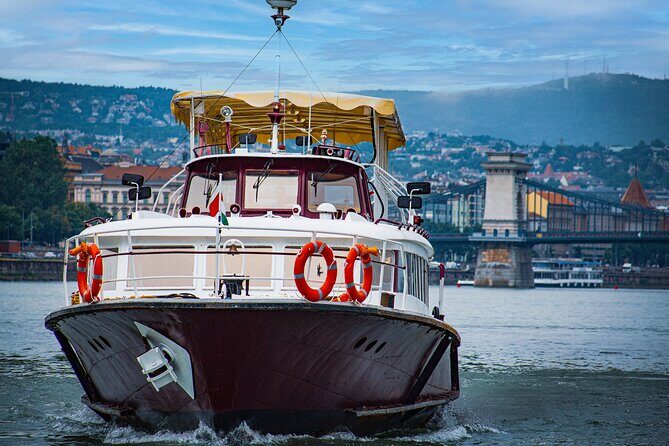
The tour meets at Budapest, Jane Haining rkp. 11 (1052), and it’s set up so you board and then return back to the same meeting point at the end. Reviews also tie this to Dock 11, which can help you confirm you’re at the right place when you’re scanning the riverfront.
Because the departure time is tight and the itinerary moves quickly, treat the meeting point like a showtime. If you show up late, you risk being placed in worse viewing spots, or even missing the most in-demand deck sections.
If you’re using public transit, this area is convenient enough to reach without needing a taxi. Still, the riverfront crowds can surprise you near prime departure times, so give yourself buffer time and don’t wait until the last moment.
You can also read our reviews of more boat tours in Budapest

Audio Guide That Lives on Your Phone: Earphones Are Non‑Negotiable
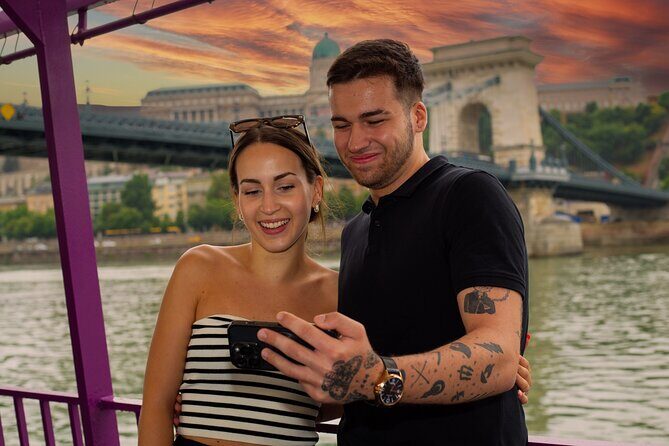
This cruise uses a free downloadable app for the audio guide, and the narration is not played over the boat’s speakers. That means you’ll want your own earphones (and ideally a charging cable and battery backup if your phone runs low).
Here’s why this matters for your experience: if your app doesn’t load, you’re basically cruising in silence. Some people have flagged audio not working properly, which makes the difference between a “great night tour” and a “why am I paying for this” feeling.
My practical tip: test the app before you reach the dock if you can, then keep your screen on the brightness level you need. Also, download in advance if you have spotty service by the river.
The 1‑Hour Danube Route: How the Sightlines Play Out
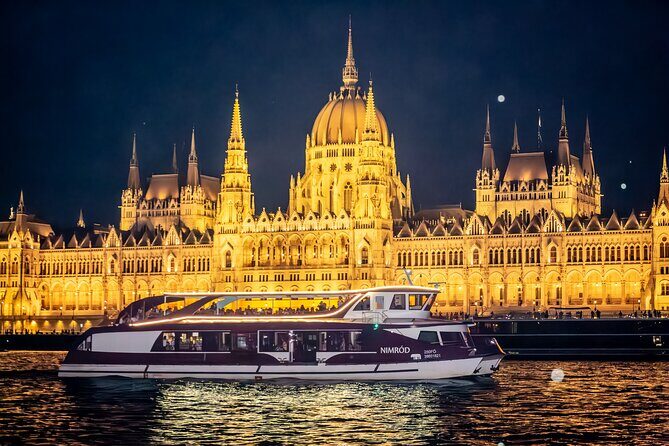
You’re on the river for about one hour, so it’s a fast pass over a concentrated set of landmarks. The itinerary is built around the classics: Budapest’s hilltop scenery in the distance, a chain of landmark bridges, and then a mix of civic, university, theatre, and modern riverside buildings.
Because it’s short, you should think of it as a moving photo gallery. You’ll get key angles, but you won’t “explore” in the walking-around sense. If you like seeing the big monuments from a distance and getting your bearings in one shot, this format suits you.
Also, the order of the sights matters for timing. Sunset departures tend to feel great because the buildings go from daylight outlines to the warm glow of night illumination, and you can shift between indoor and outdoor deck space as the temperature changes.
Castle District at Night: The Hilltop Views That Make the Booking Worth It
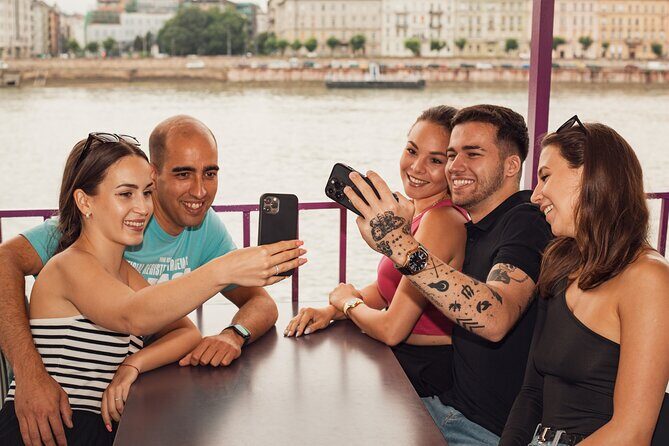
One of the most dramatic moments happens when the cruise frames the Castle District up on the Buda hills. The skyline view is the point here. When that hilltop area lights up, the whole district looks like it’s built for postcards—because from the Danube, it basically is.
You’ll also catch the Bazaar Gardens area in the general Castle District view. Even if you don’t disembark, the river angle helps you understand why this part of Budapest has such a strong visual identity.
The drawback: the best Castle District angles depend on where you’re seated and whether you can safely stand near openings on the outer deck. On a crowded sailing, “perfect view” can become “good enough view,” so arrive early if this is the stop you care most about.
Chain Bridge, Margaret Bridge, and Parliament: The Danube’s Most Famous Photo Run
After the Castle District comes a classic bridge sequence. You’ll pass Margaret Bridge, which is known for being the second permanent stone bridge in Budapest, built about 20 years after its predecessor. Right away, that sets the stage for the river’s role in linking Buda and Pest.
Then comes Chain Bridge, the first permanent stone bridge connecting the two sides. From the Danube, you get a clean view of the bridge as a central “connector,” not just something you cross in a car or on foot.
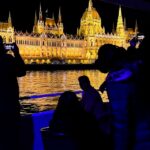
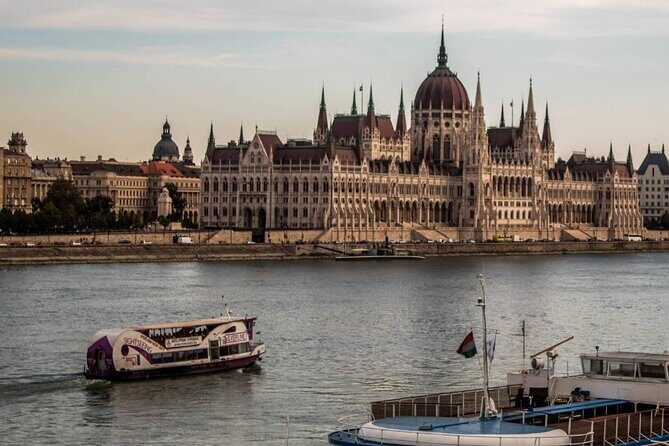
Next, you’ll see the House of Parliament, one of Budapest’s most recognizable buildings anywhere in the city. In night mode, it turns into a strong light-and-shadow scene, and it’s often the moment when people stop moving and just hold their phone steady.
One note for expectations: this cruise is structured for sighting landmarks, not for slow, detailed commentary. If you’re hoping to spend time lingering on each building, you may feel the clock a bit.
You can also read our reviews of more guided tours in Budapest





Elizabeth Bridge Foot to Gellért Hill: That Scenic View Point Energy
When the route reaches the foot of Elizabeth Bridge, it sets you up for views toward Gellért Hill. This is one of the most visited spots in the capital because the outlooks are obvious from the city’s river bends—you’re basically looking up at the hill’s prominence.
The cruise description also ties the area to famous nearby hospitality and spa culture, especially around Hotel Gellért and its well-known thermal bath reputation. Even if you don’t go to the bath during this one-hour ride, the sight line helps you connect the hill with the city’s thermal-bath fame.
Why this stop is worth caring about: Gellért Hill adds depth. Many river cruises feel like “bridges and straight lines.” This one adds the third dimension of a hill looming over the river, which makes photos look more layered.
Liberty Bridge, Buda’s Side, and the University Area: More Than Just Monuments

You’ll also pass Liberty Bridge, originally linked to the area called Fővám Square (on the approach side). From here, the cruise keeps your perspective aimed toward the Buda side, and the route context helps you see how the city’s “major points” cluster along the river corridor.
Along the way, you’ll reach the Budapest University of Technology and Economics area. The tour highlights it as the country’s key tech university and mentions its long-standing role in training engineers at the university level—an early European-style model.
That’s not the kind of detail most people expect on a short sightseeing cruise, and I like it because it makes the river feel like a real city, not only a set of lights. If you enjoy facts that give you a quick mental map of what you’re seeing, this adds value.
Petőfi Bridge, the New National Theatre, and Balna: The East Bank Mix
Further along, the route includes Petőfi Bridge, originally built in 1933, later destroyed during WWII, and then rebuilt in 1952. That kind of “history in the structure” detail is useful because it changes a bridge from just a visual element into a timeline.
You’ll also see the new National Theatre, which has been in use since 15 March 2002. The tour frames it as the current permanent home for theatre-goers in Budapest after a long time without a dedicated setup.
Then you’ll spot Balna on the east bank—often called the Whale because of the building’s shape. It’s a modern stop in the middle of older-looking landmarks, and it helps break the “everything is medieval” impression.
Batthyány Square and Saint Anne’s Church: Baroque Beauty on the Edge of the Route
The end stretch highlights Batthyány Square, including Szent Anna-templom (Church of Saint Anne). The church is a Roman Catholic baroque building built by the Jesuits between 1740 and 1761, which is exactly the sort of detail that makes a quick river sighting feel smarter.
The tour also calls out that this square connects to a market hall area. Even if you’re not stepping out to browse, seeing it from the water gives you a sense of where daily city life would spill into the riverfront.
This is another “from the Danube” view moment: you get the look, not the walking. Still, it’s a good finish point because it ties back to the city’s architecture rather than fading into only bridges.
Seating, Crowds, and Timing: How to Get the Best Views
Here’s the real-world issue with this cruise: it can get very crowded, especially on the top deck. Reviews consistently mention limited seating inside and not enough top-deck space, which pushes some people outside deck—or keeps them boxed in with restricted viewing gaps.
If you want the classic night photos, plan around this. Arriving earlier helps, and it matters even more for sunset and night departures, when people all chase the same angles at the same time. Reviews also point out that drinks or drink-pack arrivals sometimes get prioritized in boarding, which can shuffle who ends up where.
Dress for the deck you’ll actually use. Cold and wind can make outdoor viewing uncomfortable, which is why the inside option is a plus. But the tradeoff is that inside views may feel tighter, and window lines can be harder when it’s packed.
A small but important practical note: if your goal is photos, don’t wait for the last minute to pick a position. Window access and clear lines depend on where you start.
Price and Value: Is $14.40 a Deal or a Miss?
At $14.40 per person, this cruise is priced like a budget-friendly way to see the Danube’s main highlights. That’s the appeal: one hour, major landmarks, and a built-in audio guide.
But value depends on what you expect. If you’re okay with an experience that’s mostly about views and app-based narration, it can feel like a smart spend. If you expect a guided spoken commentary over loudspeakers, big comfort, and generous seating, you may feel shortchanged—especially when you’re stuck with a restricted view or indoors.
Some reviews also suggest that certain other Danube cruises at a similar price point include more drink extras. If you’re a drink-included person, you might want to compare what’s bundled versus what’s pay-as-you-go here.
Bottom line: for the price, it can be a good call if you show up early and treat it as a short, scenic ride rather than a full-service tour with time to linger.
Who This Cruise Fits Best (and Who Should Skip It)
I’d steer you toward this cruise if you want an easy “great sights” overview without needing tickets to multiple museums. It also fits well if you like using an app for your own pacing, and if you’re comfortable bringing earphones and managing a phone battery on a trip.
I’d reconsider if you’re very sensitive to crowds or if you hate awkward seating. On busier departures, people report cramped conditions and difficult photo-taking angles. Also, if you’re arriving late, you risk missing the best deck positioning.
If you’re pairing this with another plan—like a longer stay at a hill district or a separate walk across bridges—this cruise works as a quick orientation. It helps you understand what you want to photograph again later on foot.
Should You Book This Budapest Danube Audio Guide Cruise?
Book it if your top priority is Danube views in a short time and you’re good with the tradeoff that the audio guide runs through a phone app, not through onboard speakers. Arrive early, bring earphones, and aim for a seat where you can see the riverfront and illuminated buildings clearly.
Skip or upgrade your plans if you know you’ll be frustrated by tight space, limited top-deck availability, or if you prefer spoken narration without phone tech. This one can still be worth doing—but only if you go in prepared for a busy, one-hour sightseeing sprint.
FAQ
How long is the Budapest audio guide cruise?
It runs for about 1 hour (approx.).
Is the audio guide played through loudspeakers?
No. The audio guide comes as a free downloadable mobile app, and it won’t be broadcast through speakers. Bring and use your own earphones, and start with a fully charged device.
Where is the meeting point for the cruise?
The tour starts at Budapest, Jane Haining rkp. 11, 1052 Hungary, and it ends back at the meeting point.
Is the tour offered in English?
Yes. The audio commentary is offered in English.
Are food and drinks available onboard?
Yes. The cruise provides catering services onboard, and you’re asked not to bring your own food and drinks aboard.
Can I cancel for a full refund?
Yes, free cancellation is available. You can cancel up to 24 hours in advance for a full refund, based on local time at the experience location.