REVIEW · BUDAPEST
River Cruise ticket and Walking Tour in Budapest
Book on Viator →Operated by Luna Walking Tours · Bookable on Viator
Budapest clicks into focus fast on this Danube cruise. This 2.5-hour Budapest experience mixes a guided walk with scenic river time, so you get both close-up stories and views you can’t get from the sidewalk. I like that the route hits big-picture landmarks, but still moves at a human pace with a small group of up to 20.
One standout for me is the way the guide makes key stops feel personal, including the tough moment of the Shoes on the Danube memorial and the quieter details around Hungarian landmarks. Another thing I really appreciate is the guide energy: if you’re lucky enough to get Panna, her humor, patience, and answers to questions can turn a standard sightseeing loop into a real learning session. One possible drawback: museum-style entries aren’t included, so you’ll mostly see exteriors and get the stories from outside rather than doing interior ticketing.
In This Review
- Key highlights at a glance
- A Danube cruise walking tour with smart time use
- Price and what you actually get for it
- Where the tour starts and ends (and why meeting points matter)
- The stop-by-stop plan: what you’ll see and why it works
- Szent István Bazilika: St. Stephen’s Basilica, relic and scale
- The Fat Policeman Statue: a quick smile before the big stuff
- Budapest Parliament: Gothic Revival and royal relic power
- Shoes on the Danube Bank: history you feel in your chest
- Hungarian Academy of Sciences: neoclassical building with cultural weight
- Gresham Palace: Art Nouveau glamour (now Four Seasons)
- Széchenyi Lánchíd (Chain Bridge): walk the icon, then get the skyline shot
- Little Princess Statue: a playful “I found it” moment
- Margaret Island: calm greenery and historical ruins
- The boat segment: views plus a drink
- What kind of traveler this suits best
- The “small stuff” that makes the tour feel easy
- Should you book this Budapest cruise and walking tour?
- FAQ
- How long is the River Cruise ticket and Walking Tour?
- How much does it cost?
- What language is the tour offered in?
- Where does the tour start?
- Where does the tour end?
- What’s included in the price?
- Are museum or other attraction tickets included?
- Is there a group size limit?
- Is the tour suitable for most travelers?
- Can I cancel for a full refund?
Key highlights at a glance
- Small group feel (max 20): easier conversation and a better pace than big bus tours
- Real stories at major landmarks: including the sacred relic at St. Stephen’s Basilica and the Holocaust memorial on the Danube
- Chain Bridge views on foot: a classic Budapest crossing with skyline photo angles
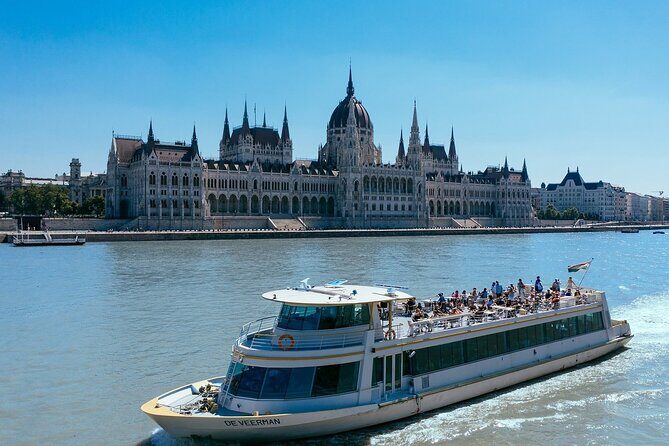
- Danube time with drinks available: you can relax while the city slips by
- Short stops that still add up: you get lots of famous sites without a full-day commitment
- Finish with city-light potential: an afternoon slot can help you see Budapest glow near the end
A Danube cruise walking tour with smart time use

This is the kind of Budapest tour that respects your energy. You’re not signing up for a marathon where every stop feels rushed. Instead, the timing is built around short, focused walks plus a river segment where the views do some of the work for you.
At $71.20 per person, the value comes from the mix: you’re paying for (1) a guided walk that organizes your sightseeing and (2) a river cruise ticket so you’re not stuck staring at maps. Add in that drinks are available on the boat, and it starts to look like an efficient way to cover the best-known Danube sights in one pass.
One practical note: museum tickets aren’t included. So if you’re the type who wants to go inside cathedrals, palaces, or paid attractions, plan on a small extra budget on top of the tour.
A few more Budapest tours and experiences worth a look



Price and what you actually get for it

Here’s how I’d frame the cost. You’re paying for guided interpretation at a cluster of top Budapest photo and history stops, plus boat time. That’s different from doing these sites on your own with an audio app, mainly because the guide ties the places together.
Also, the tour is in English, which matters in Budapest where English options can vary by venue. And the mobile ticket format keeps things simple day-of—you don’t need to hunt for a paper voucher.
Finally, because this kind of experience is typically booked ahead (the average booking window is about 88 days), it’s smart to lock in your preferred session early—especially if you care about lighting and timing for photos.
Where the tour starts and ends (and why meeting points matter)
The meeting point is Szent István Bazilika in Budapest (1051). The end point is Vigadó tér, at Dock #6 on 5 ponton.
This matters because Budapest sightseeing can be a maze. Starting at a major landmark like the Basilica helps you orient fast. Ending at the dock area also makes the transition to river time feel straightforward instead of chaotic.
If you’re using public transportation, this route is set up so you’re not forced into a long walk to reach the start. That’s a big deal on travel days when your legs are already tired.
The stop-by-stop plan: what you’ll see and why it works
The itinerary is built from a series of famous waypoints, each with a specific job: landmark, story, skyline view, or emotional context. Most stops are short, around 5–10 minutes, which keeps the momentum going without pretending you’ll absorb everything in one visit.
Szent István Bazilika: St. Stephen’s Basilica, relic and scale
You begin at Szent István Bazilika, a neoclassical landmark named for Hungary’s first king, St. Stephen. You won’t enter during the tour, but you do get the construction story and the meaning behind the sacred relic it holds—St. Stephen’s mummified right hand.
What I like here is that it sets the tone. You’re not starting with just a pretty building. You’re starting with the kind of detail that turns architecture into a cultural story, and the Basilica’s 96-meter height gives you something tangible to picture as you move through the city.
Consideration: since entry isn’t included, don’t plan on a long inside visit here. If you want interior time, treat it as a separate add-on.
You can also read our reviews of more walking tours in Budapest






The Fat Policeman Statue: a quick smile before the big stuff
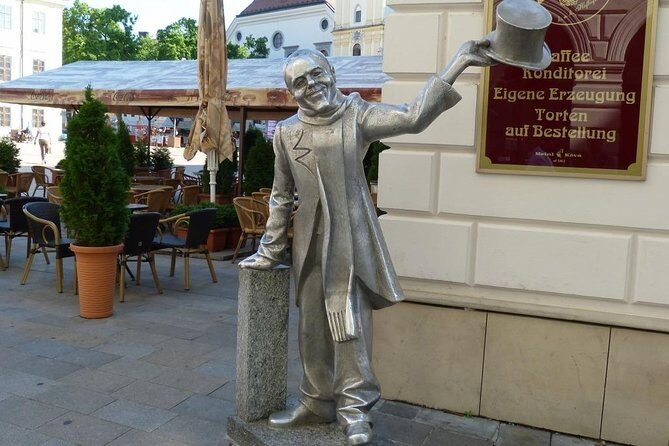
Next is the Fat Policeman Statue, a whimsical bronze figure associated with good luck—locals say rubbing his belly helps. This is a small stop, but it works because it changes the mood.
You’re often surprised how many tours skip these playful details. This one doesn’t. It helps you remember that Budapest isn’t only grand monuments. It’s also humor and street-level charm.
Budapest Parliament: Gothic Revival and royal relic power
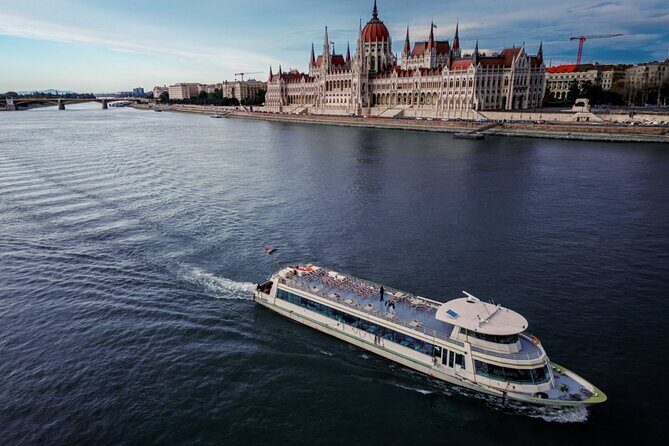
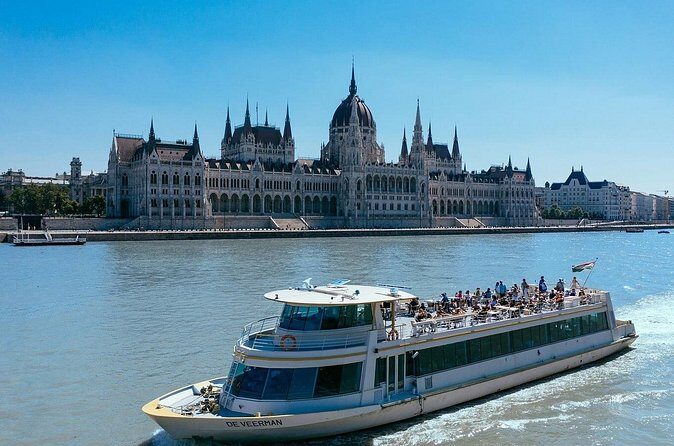
Then you move to Budapest Parliament, one of Europe’s largest legislative buildings, famous for its Gothic Revival architecture. You’ll also hear about why it’s more than a government building: it’s tied to national pride and Hungarian symbolism.
The tour highlights the Holy Crown of Hungary, a relic used for crowning kings for centuries. Even without paid interior access, this is one of those stops where the exterior view still feels like the real story—especially with the Danube nearby.
Consideration: admission tickets aren’t included, so plan for exterior appreciation rather than a full interior tour.
Shoes on the Danube Bank: history you feel in your chest
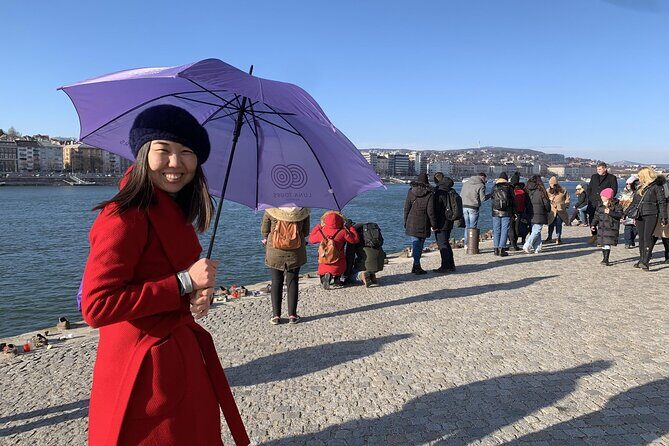
One of the most emotional stops is Shoes on the Danube Bank. This memorial remembers Jewish victims killed during World War II, represented by rows of iron shoes along the riverbank.
I appreciate how this tour doesn’t treat it like a random photo stop. The story matters: people were forced to remove their shoes before being shot into the Danube. That context makes the site heavy in a way that’s hard to capture from an Instagram image.
Hungarian Academy of Sciences: neoclassical building with cultural weight
After the memorial, you get a calmer but still meaningful stop at the Hungarian Academy of Sciences. It’s a neoclassical building with a strong presence along the Danube, and the point of this stop isn’t just the look.
You’ll hear how the Academy supports scientific discovery and also plays a role in protecting and promoting the Hungarian language—an important part of cultural identity.
This one is a good reminder that Budapest’s “big landmarks” aren’t only political or religious. There’s also a brain-and-language story here.
Gresham Palace: Art Nouveau glamour (now Four Seasons)
The route continues to Gresham Palace, an iconic Art Nouveau building now connected with the Four Seasons Hotel. The palace started as a luxury apartment building, and its design gives you that sense of early-20th-century Budapest confidence.
From the details provided, the palace has hosted notable figures over time, including Queen Elizabeth II, Prince Charles, and celebrities like Beyoncé and Brad Pitt. Even if you never care about hotel celebrity, the building itself is the point: it’s an architecture postcard you can look at from a thoughtful angle.
Széchenyi Lánchíd (Chain Bridge): walk the icon, then get the skyline shot
A highlight is crossing Széchenyi Lánchíd, the Chain Bridge. It was the first permanent bridge connecting Buda and Pest and opened in 1849. Expect the classic look: stone lions and iron chains.
Walking across is where this stop becomes more than a viewing moment. You’ll get panoramic angles over the river and the city’s landmark line-up. If you like photos, this is your “slow down and shoot” segment.
Little Princess Statue: a playful “I found it” moment
Along the Danube you’ll see the Little Princess Statue, a bronze sculpture with cheeky charm. The guide shares its connection to sculptor László Marton, and it’s exactly the kind of small creative detail that makes Budapest feel like a place, not a checklist.
This stop is short, but it gives your brain a break from monument mode.
Margaret Island: calm greenery and historical ruins
The final major stop is Margaret Island, a break of greenery in the middle of the river. You can stroll and enjoy gardens and river views from Margaret Bridge.
The island also has historical sites, including medieval ruins of a Dominican convent. That combo works well because it gives you both relaxation and a hint of “how old is this place really?” without demanding a full museum visit.
The boat segment: views plus a drink
Drinks are available on the boat, which is a simple but genuinely useful perk. You get to cool down, sit for a bit, and watch Budapest’s architecture change as you move along the water.
I’d use the boat time to let the day settle. Walks move fast. River views reset your attention.
Also, the small group size helps here. You’re not fighting a sea of elbows, and that makes the boat portion feel more social and less like a ride.
What kind of traveler this suits best

This tour is ideal if you want a high-signal overview of Budapest’s Danube core without committing to a full day of ticket lines and museum time. It also suits solo travelers, couples, and anyone who prefers to learn while walking instead of reading guidebooks alone.
If you’re sensitive to emotionally heavy topics, note that the Shoes memorial is part of the route and is intended to be respected and understood, not skimmed past.
And if you care about atmosphere at the end of a tour, aim for a session where the city lights show through as you wrap up. One practical tip: an afternoon slot can set you up for that glow, especially if you like photos at dusk.
The “small stuff” that makes the tour feel easy
A few details make this experience less stressful than many similar tours:
- Short timed stops keep you from losing the group
- A maximum of 20 travelers keeps attention on you, not on the clock
- English guidance means you’ll actually understand what you’re looking at
- The mobile ticket format makes last-minute logistics simpler
- It’s near public transportation, so you’re not stuck with a big pre-walk hike
No tour is perfect, but this one is built around a realistic pace.
Should you book this Budapest cruise and walking tour?

If your goal is to cover Budapest’s most memorable Danube landmarks in about 2 hours 30 minutes, this is a strong pick. The price feels reasonable for the combination of guided walking and river cruise time, and the guide experience can be a big reason to choose it over DIY.
Book it if:
- you want a curated route through major sites like Parliament and Chain Bridge
- you like learning facts and stories while you walk
- you appreciate the emotional weight of the Shoes on the Danube memorial, explained with context
- you want boat time with drinks available
Skip it or plan extra tickets if:
- you want to go inside major buildings during the tour (museum tickets aren’t included)
- you prefer long, slow stays at one or two sites instead of touching multiple highlights
FAQ
How long is the River Cruise ticket and Walking Tour?
It lasts about 2 hours 30 minutes (approx.).
How much does it cost?
The price listed is $71.20 per person.
What language is the tour offered in?
It’s offered in English.
Where does the tour start?
The start is at Szent István Bazilika, Budapest 1051, Hungary.
Where does the tour end?
The tour ends at Vigadó tér (5 ponton), Budapest 1051, at Budapest Dock #6.
What’s included in the price?
You get the river cruise ticket and the walking tour, plus drinks available on the boat and a mobile ticket.
Are museum or other attraction tickets included?
No. Museum tickets are not included, and the tour notes that admission tickets are not included at the major stops listed.
Is there a group size limit?
Yes. The tour has a maximum of 20 travelers.
Is the tour suitable for most travelers?
It says most travelers can participate.
Can I cancel for a full refund?
Yes, you can cancel up to 24 hours in advance for a full refund. Canceling less than 24 hours before won’t be refunded.