REVIEW · BUDAPEST
Café Wandering: An Excursion through Budapest’s Belle Epoque
Book on Viator →Operated by Insight Cities · Bookable on Viator
Budapest runs on coffeehouse stories. This 3-hour, small-group walk traces Budapest’s Belle Epoque coffee houses with an art historian guide, and I love the built-in context for what you’re seeing. One possible drawback: it’s mostly on foot, so you’ll want comfortable shoes and patience for street-level walking.
The route centers on legendary places like Café Gerbeaud and Central Café, then moves into quieter stops tied to thinkers and performers. You also get a real sense of how Budapest’s intellectual life once played out over cups, cakes, and conversation.
If the weather is decent, this tour feels like a time machine—short enough to stay fun, structured enough that you won’t wander in circles.
In This Review
- Key things I’d plan for
- Why Budapest’s Belle Epoque coffeehouses still pull you in
- Price and what you’re really buying for $110.16
- Getting started at Café Gerbeaud, Vörösmarty tér
- Stop 1: Café Gerbeaud and the feel of Imperial Budapest
- The walk toward Urania Café and Budapest’s lecture tradition
- Central Café and Museum Café: the stops that make the story click
- Stop 2 finale: Művész Café near the Opera House
- Pace, weather, and how to make the walking part feel easy
- Who this tour fits best (and who should skip it)
- The guides: art historian storytelling makes the rooms make sense
- Should you book Café Wandering in Budapest?
- FAQ
- Where does the tour start?
- Where does the tour end?
- How long is the Café Wandering tour?
- How big is the group?
- What’s included in the price?
- Are drinks and cakes included?
- Can I choose a morning or afternoon departure?
Key things I’d plan for
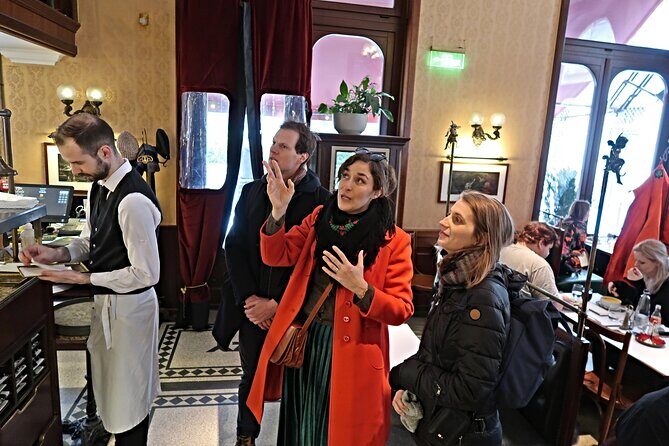
- Small-group pace: limited to six people, with a maximum of eight, so you’re not stuck behind a parade of strangers
- Art-historian guidance: the story is about architecture and culture, not just where to take photos
- Urania Café context: you’ll learn about its film-theater legacy and the lecture tradition linked to Budapest’s big thinkers
- Muvesz Café finale: finish near the Opera House, where the vibe mixes cakes, coffee, and the theater scene
- Refreshments are extra: tickets cover the tour, but pastries and drinks come out of your pocket
Why Budapest’s Belle Epoque coffeehouses still pull you in
Budapest’s coffee culture isn’t just a habit—it’s part of the city’s identity. These late-19th- and early-20th-century cafés were where people argued politics, traded ideas, and showed off new works of art. Walk the right route, and you start to see how the city’s public life formed around these rooms.
This tour is built for that exact effect. It’s timed for a 3-hour window, so you get momentum without feeling like you’re stuck in one place for too long. And because it’s a walking tour, you’re constantly shifting viewpoint—from grand façades to side details—so the architecture stays alive in your mind.
I also like that the tour doesn’t treat cafés as mere backdrops. The focus is on what the spaces meant to writers, artists, and intellectuals—so when you notice an ornate ceiling or a historic façade, you’ll have a reason why it mattered.
You can also read our reviews of more tours and experiences in Budapest.



Price and what you’re really buying for $110.16
At $110.16 per person, this isn’t a bargain-basement tour. You’re paying for three things that change the experience: a guided walk, an art historian guide, and a curated set of stops tied to specific cultural threads.
What you don’t get is a fully paid café crawl. Refreshments—cakes and coffee you choose during the visit—are not included. So if you plan to sample pastries at multiple stops, your total cost can climb fast. If you’d rather sip one coffee and split one pastry, you’ll likely feel the price more evenly.
Also, it’s not a tram tour. Everything is designed as walking time between cafés. That’s great for staying flexible and soaking in street-level views, but it’s worth knowing up front if you’re comparing options that use more transit.
Getting started at Café Gerbeaud, Vörösmarty tér
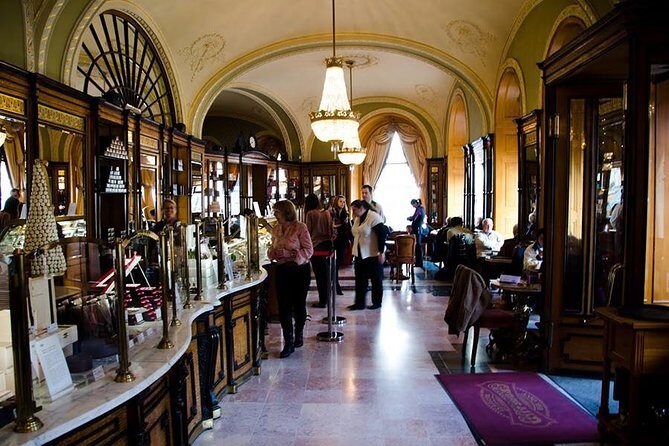
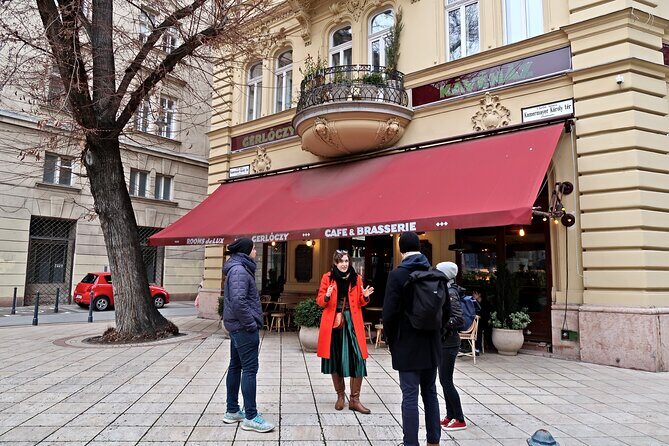
The tour begins at Café Gerbeaud, on Vörösmarty tér 7-8 (1051). This square area is central, so it’s easy to orient yourself before you start. If you’re arriving from elsewhere in the city, you’ll likely find public transport nearby helpful.
Café Gerbeaud is the perfect first stop because it sets the tone immediately. You’re in the middle of the action, in a 100-year-old café with an iconic reputation. The experience here is about stepping into Imperial Budapest style and starting your mental map of the places you’ll be hearing about as you walk.
Your time at this first café is brief—about 15 minutes—but that’s intentional. You’re not there to linger alone and guess what to notice. The guide’s job is to help you see the room quickly, then move you on before the novelty wears off.
Stop 1: Café Gerbeaud and the feel of Imperial Budapest
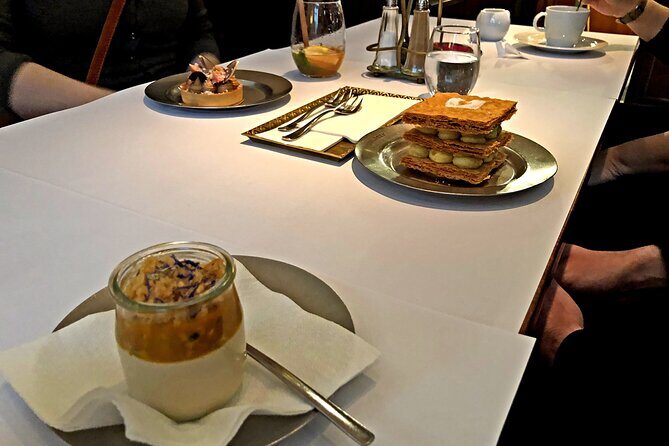
Café Gerbeaud is more than a pretty name on a sign. It anchors the tour in a period when Budapest’s cafés were cultural stages. Even if you don’t order anything right away, just being inside helps you understand why writers and intellectuals returned to these spaces.
This is also a smart launch point because it tells you what to look for. Focus on the café’s atmosphere and details rather than trying to memorize facts. The guide’s cultural framing gives you an easy way to interpret what you’re seeing—so the next stops land with more meaning.
One practical tip: since the tour is structured and time is limited at each stop, decide in advance if you want to spend your first moment scanning the room or grabbing a quick coffee and saving your bigger pastry moment for later.
The walk toward Urania Café and Budapest’s lecture tradition
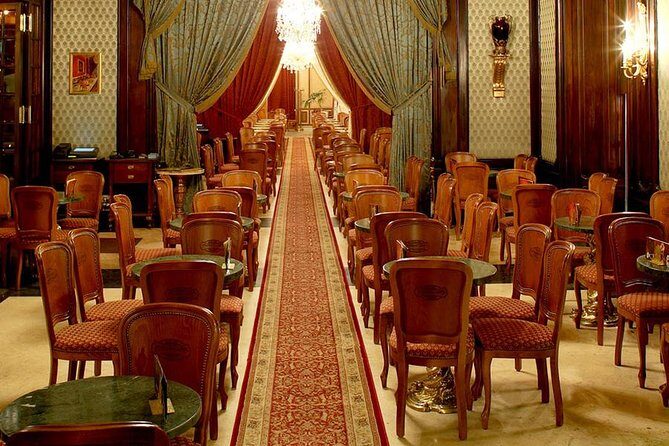
After starting at Gerbeaud, you’ll walk toward Urania Café, which connects to one of the tour’s most distinctive cultural claims. Urania Café is known for housing the city’s oldest film theater, and it’s also famous for lectures that drew large audiences from Budapest’s cosmopolitan crowd.
This stop is interesting because it links cafés with public events. You’re not only learning about private conversations over espresso—you’re also learning how these spaces served as meeting points for ideas at scale.
If you love history, you’ll probably enjoy how the guide ties art, media, and society together. A film theater inside a café setting is already a strange and memorable concept. Add the lecture angle and it becomes clear why this part of the route matters: it shows café life wasn’t passive. People showed up to be stimulated.
Here’s what to consider: if you’re expecting a pure café tasting experience at every stop, Urania Café may feel more like a cultural pause than a dessert moment. Still, for the story, it’s a highlight.


Central Café and Museum Café: the stops that make the story click
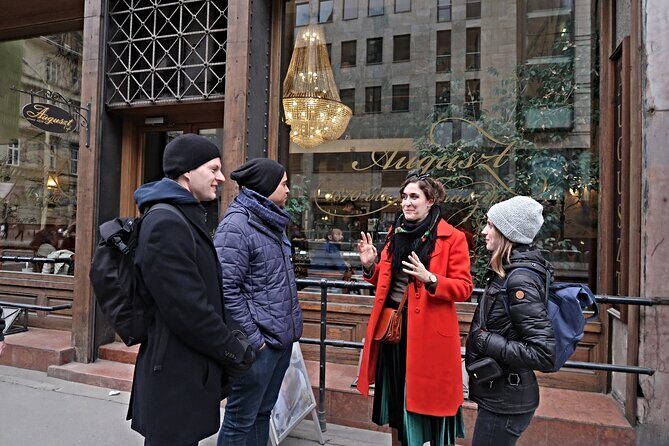
The tour’s broader focus includes Central Café and Museum Café. These names matter because they represent the wider café scene beyond just the two most famous anchors.
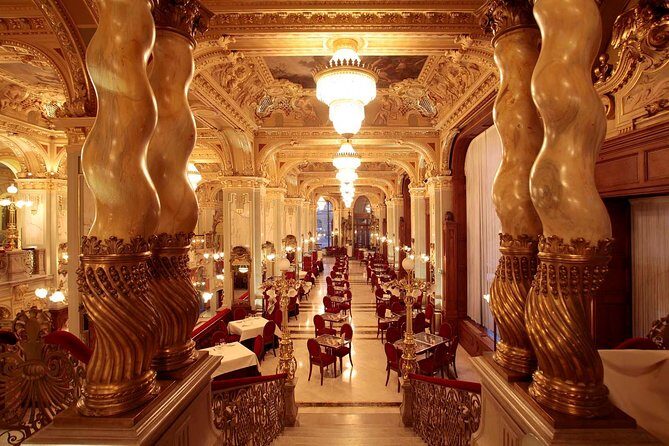
Central Café is highlighted as one of the legendary classic coffeehouses. That usually means you’ll want to look closely at the room’s elegance and how it reflects the era’s sense of public taste. The point isn’t only to see beauty—it’s to understand why these spaces attracted high-level conversation and creative minds.
Museum Café is tied to the intellectual and artistic side of café culture. This is where the tour helps you connect the dots: cafés weren’t separate from the arts and politics; they helped shape them. When you reach a stop like this, listen for how the guide frames people’s habits—who came, what they talked about, and why the setting mattered.
Practical angle: if you get tired of walking while you’re listening, use the “look and listen” method. When the guide is speaking, glance around at architectural or decorative details. When you need a break, slow down and take in the café façade before you move on.
Stop 2 finale: Művész Café near the Opera House
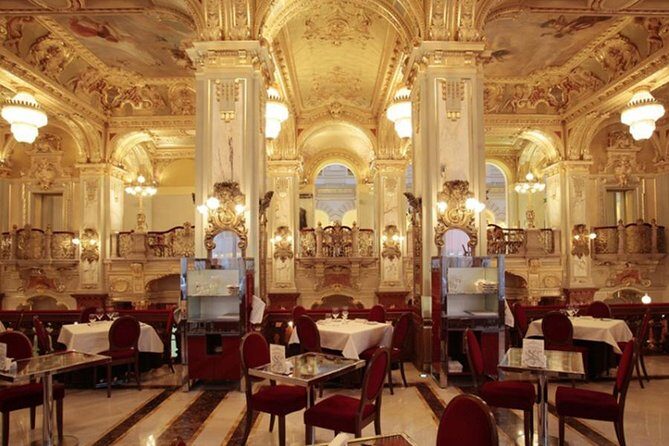
The tour ends at Művész Coffee House (Artist Cafe) on Andrássy út 29 (1061), close to the Opera House. This is a great ending because it shifts from pure historical storytelling to a more playful café finish.
You’ll wrap up with traditional cakes and coffee, with about 45 minutes set aside for this last leg. That extra time helps you do something useful: actually taste what you’ve been hearing about. After learning how cafés functioned as social hubs, you can enjoy a bit of that same rhythm in the present.
There’s also a fun note to this stop. The tour area is near the theater world, so you might spot celebrity actors on rehearsal breaks from the nearby Budapest Broadway. You shouldn’t plan your whole day on seeing someone famous, but the location makes that possibility feel real.
One more consideration: because this is the final stop, it’s where people tend to order most. If you’re keeping costs down, keep your choices focused. Choose one pastry you’ll remember, not five you won’t.
Pace, weather, and how to make the walking part feel easy
This is a walking tour, so the “duration” is really about how long you’ll be on your feet. The plan is about 3 hours, which is long enough to cover several café stops but short enough to stay upbeat if the pace is right.
The small-group limit helps a lot here. You get a guided flow without feeling like you’re racing a crowd. If your group is closer to six than eight, the experience usually feels more personal: more time to ask questions and more attention to what you’re noticing.
Weather matters. One guide plus a perfect day can make the walk feel effortless. If the weather is rough, choose layers, bring a small umbrella if rain is possible, and keep your shoes grippy. Because refreshments aren’t included, you’ll also want cash or card ready for quick stops if you feel like warming up.
And if you’re comparing tours: yes, it’s a pure walking structure. That’s the trade-off for the intimate pace and the café-to-café storytelling.
Who this tour fits best (and who should skip it)
This tour is best for you if you want Budapest culture with a focus on architecture and social history. You’ll enjoy it most if you like learning why places mattered, not just when they were built. It also works well if you like small groups, because the experience is meant to feel personal rather than assembly-line.
You might want to look at other options if you’re trying to turn this into a full-on food tour with multiple included tastings. Since refreshments aren’t included, the cost can rise quickly if you try to sample everything at every stop.
It’s also a good pick if you’re in Budapest for a short stay. Three hours is manageable, and the route starts in a central spot where you can connect to the rest of your day easily.
The guides: art historian storytelling makes the rooms make sense
The tour includes an art historian guide, and that’s a key quality driver here. You’re not just moving from café door to café door. You’re learning how to read these spaces.
One guide named Anet is highlighted for excellent English and a passionate, well-informed approach to the cafés. If you’re the type who loves vivid stories, that kind of enthusiasm can turn a simple walk into something you’ll remember.
Even if your guide varies by day, the format is the same: short stops, big context, and a route designed to connect each café with a specific cultural theme.
Should you book Café Wandering in Budapest?
I’d book it if you want a thoughtful, small-group walk through classic Budapest cafés, with an art historian guide and a route that connects coffee culture to writers, artists, and public life. The ending near the Opera House gives you a satisfying time window to actually eat and drink, not just look.
I’d think twice if you’re chasing an included tasting menu, because refreshments are on you. And if you dislike walking tours, know that this one is structured around walking time between cafés.
If you’re willing to trade a bit of flexibility for guided insight, this is a strong way to get your bearings and learn how Budapest’s café world shaped the city’s creative and intellectual identity.
FAQ
Where does the tour start?
The tour starts at Café Gerbeaud, Vörösmarty tér 7-8, 1051 Hungary.
Where does the tour end?
The tour ends at Művész Coffee House (Artist Cafe), Andrássy út 29, 1061 Hungary.
How long is the Café Wandering tour?
It lasts about 3 hours.
How big is the group?
It’s limited to six people for a small-group feel, and the maximum group size is 8 travelers.
What’s included in the price?
Included are the 3-hour guided walking tour and an art historian guide.
Are drinks and cakes included?
No. Refreshments, cakes, and coffees you choose during the café stops are not included in the price.
Can I choose a morning or afternoon departure?
Yes. The tour offers a choice of morning or afternoon departure.