REVIEW · BUDAPEST
Private Downtown Pest Walking Tour
Book on Viator →Operated by Insight Cities · Bookable on Viator
Budapest makes sense when you walk it. This private downtown Pest tour gives you a guided, historian-led route through the city’s biggest symbols and the stories behind them. It’s a smart way to turn famous landmarks into real context, not just photos.
I particularly love how the tour pairs major sights with answers that actually match your questions. Guides I met in this company network include András, who could reel off dates and details for what you were seeing, plus Kata, who connected Budapest to the wider European story and even helped with photos at key moments. I also like that the guiding style is adaptable: with Balint, the tour shifted quickly toward what interested the group.
One thing to consider: this is still a 3-hour walking experience (with stops), and it does not include food or drinks unless something is specified for your day. If you want long indoor time breaks or a built-in meal, you’ll need to plan that yourself.
In This Review
- Key things I’d flag before you go
- Private Downtown Pest: The value of having your questions answered
- Meeting point at Café Smúz: how to start smoothly
- Your guide matters: from dates to architecture to story
- Stop 1: Great / Central Synagogue (Nagy Zsinagóga) and the story behind the stone
- Stop 2: Hungarian Parliament Building at Kossuth Square (why it cost so much)
- Stop 3: Heroes’ Square—national symbols, not just statues
- Stop 4: Andrássy Avenue—Budapest’s Paris moment
- Stop 5: Ronald Reagan Statue—connecting Budapest to the Iron Curtain timeline
- Stop 6: Kossuth Lajos Square—seeing Parliament with fresh context
- Is it worth $393.17 per group? A practical value check
- What to expect from the pace and logistics
- What you’ll likely enjoy most (and who it suits)
- Should you book this Private Downtown Pest Walking Tour?
- FAQ
- How long is the Private Downtown Pest Walking Tour?
- How much does it cost, and how many people can be in a group?
- Is this tour private?
- What language is the tour offered in?
- Is pickup available?
- Is the ticket mobile?
- Do I need to pay admission for the listed stops?
- What is included in the price?
- What is not included?
- What should I do about walking comfort?
Key things I’d flag before you go
- Private group focus: only your group joins, so questions don’t get swallowed by a crowd.
- Historian-style Q&A: your guide is a professor/doctoral student/historian/journalist type, built for in-depth answers.
- Downtown hit list, logically linked: the route moves from religious community history to state power to national symbolism.
- Big sights, short stays: expect quick, efficient time at each stop, not a slow museum day.
- Multiple angles on Parliament: you’ll encounter the Parliament area more than once for different context.
- No food included: you’ll likely want a plan for snacks after the walk.
Private Downtown Pest: The value of having your questions answered
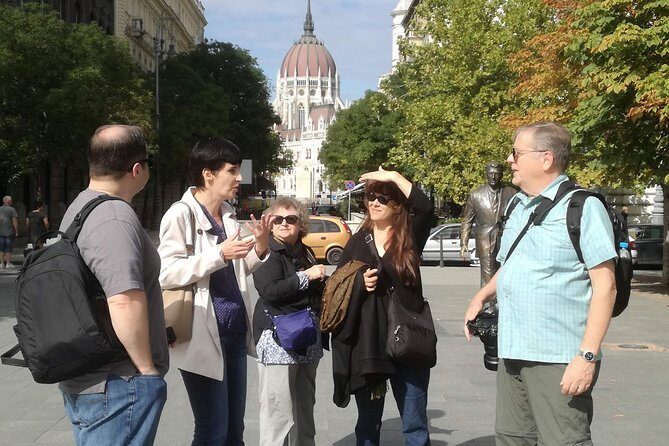
A walking tour can either be a checklist or a conversation. This one leans toward conversation. Because it’s private, you can ask follow-ups without feeling like you’re interrupting a stream of people getting pushed along.
I also like that the guiding team isn’t just doing memorized facts. The tour’s guide profiles include professors, doctoral students, historians, journalists, and storytellers. That mix usually means you’ll get clear explanations and also the reasoning behind the places, not just the dates.
And the route is practical. You’re focused on central Pest highlights where you can see how Budapest’s identity was shaped in the 19th century and then tested again through the 20th.
You can also read our reviews of more walking tours in Budapest



Meeting point at Café Smúz: how to start smoothly
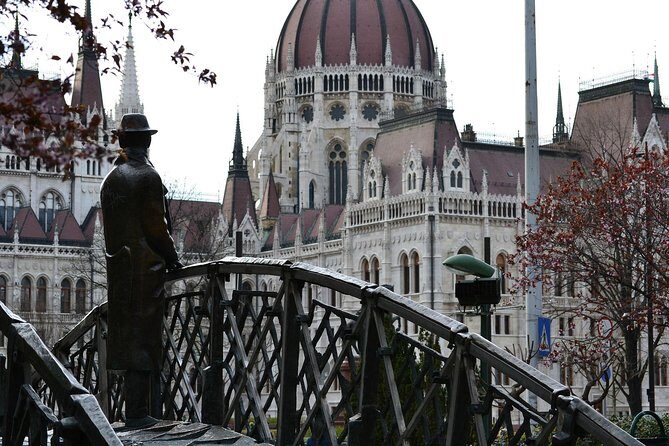
Pickup is offered, but if you don’t arrange hotel pickup, you’ll meet 15 minutes before start time at the default location: Café Smúz, Kossuth Lajos tér 18, Budapest 1055.
That time buffer matters more than it sounds. Central Budapest can be busy around major squares, and meeting early helps you connect with your guide without stress. The good news is it’s near public transportation, so if you’re coming on your own, you can usually get there without a complicated plan.
You’ll also get a mobile ticket, which is handy once you’re on the move. Just make sure your phone battery is healthy before you head out.
Your guide matters: from dates to architecture to story
This tour is built around one big idea: landmarks make more sense when someone explains how they got that way. The stops are set, but the tone is interactive—your guide is there to answer your in-depth questions.
In the guide stories I’ve seen from this company network, the best moments come when the guide connects what you’re standing in front of to how society shifted. For example, András was praised for knowing the exact dates and the content tied to what you see. Kata was praised for tying Budapest’s local history to Europe as a whole. Balint was praised for customizing fast once he understood what the group cared about.
That’s what you should aim for when you book: not just seeing buildings, but using a guide who can explain the why.
Stop 1: Great / Central Synagogue (Nagy Zsinagóga) and the story behind the stone
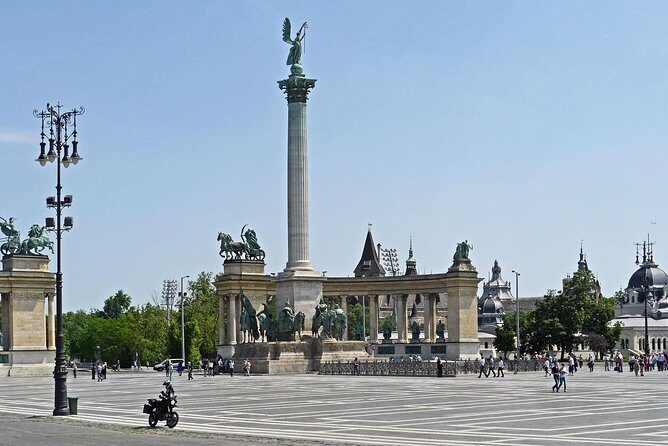
The tour begins with one of Pest’s most dramatic—and important—structures: the Great / Central Synagogue (Nagy Zsinagóga). It’s described as the second largest synagogue in the world, and the point of the stop is more than scale.
You’ll learn how the synagogue reflects the vitality of Budapest’s Jewish community in the 19th century. That matters because Budapest’s city center isn’t just about rulers and wars. It’s also about communities building institutions, placing identity in architecture, and leaving a visible legacy.
The tour notes that the admission ticket is free for this stop. That’s useful because it keeps the experience easier to manage. Just expect a quick orientation and context rather than a long museum-style visit.
Practical tip: look at details. When a guide points out specific features, it helps you avoid treating the synagogue like only a backdrop.
Stop 2: Hungarian Parliament Building at Kossuth Square (why it cost so much)
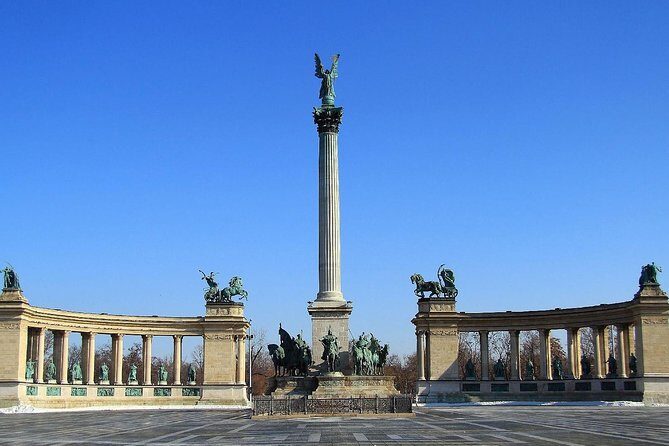
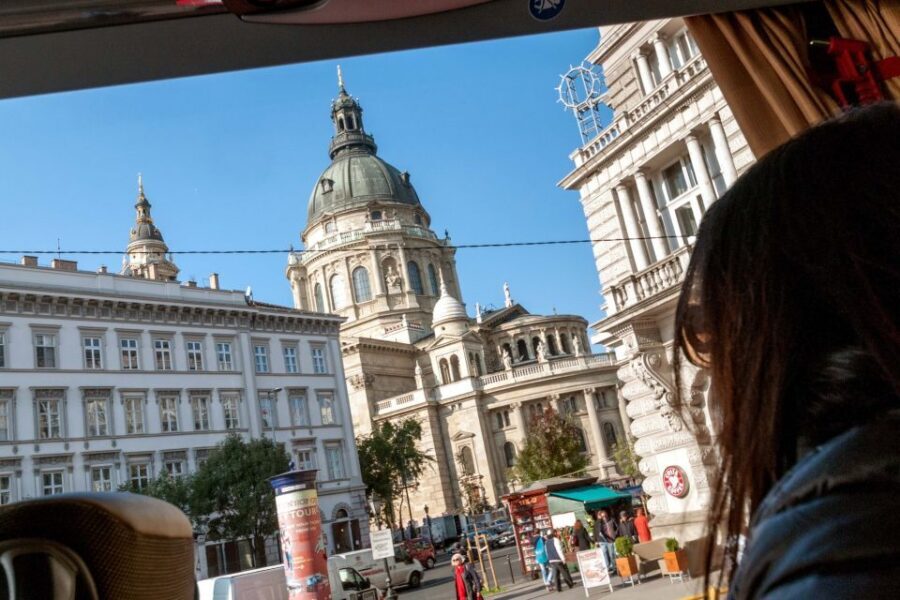
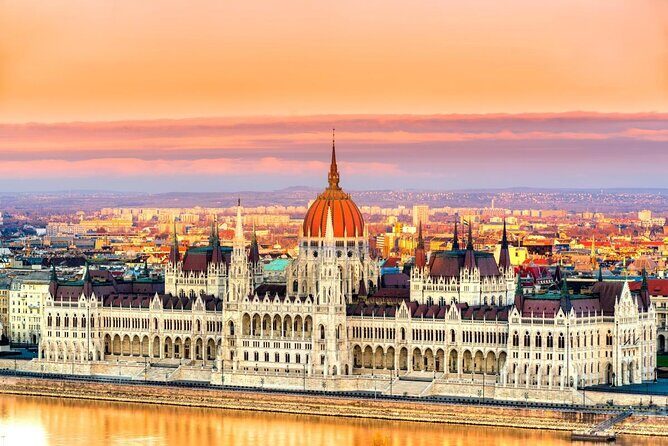
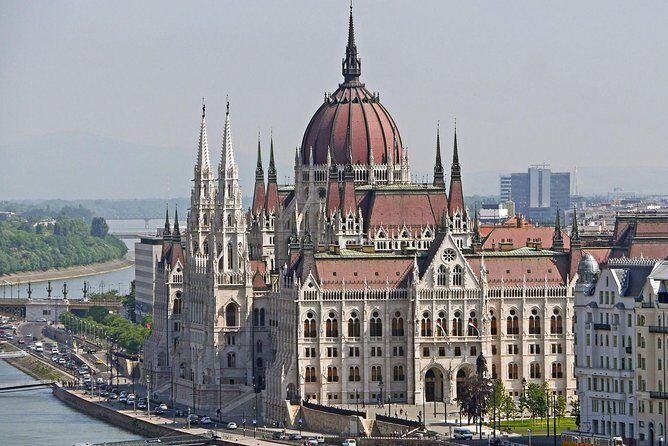
Next comes the Hungarian Parliament Building on Kossuth Square. The story here is about ambition and national confidence in the 19th century. The tour frames it as the monumental symbol of Budapest’s rise, and also as the most expensive structure ever built in Hungary at its inauguration.
This is a great stop for anyone who likes architecture with political context. You’ll be able to connect the building’s size and drama to the message it sent. A guide can also help you understand why a nation builds a statement structure in the exact period when it feels it’s changing.
Again, the tour notes admission ticket free for this stop. Even if you’re outside most of the time, that free-admission note keeps the visit from turning into a separate ticket hassle.
Time at this stop is about 20 minutes. That’s enough to get the meaning without turning the whole day into “one building, one hour.”
You can also read our reviews of more private tours in Budapest






Stop 3: Heroes’ Square—national symbols, not just statues
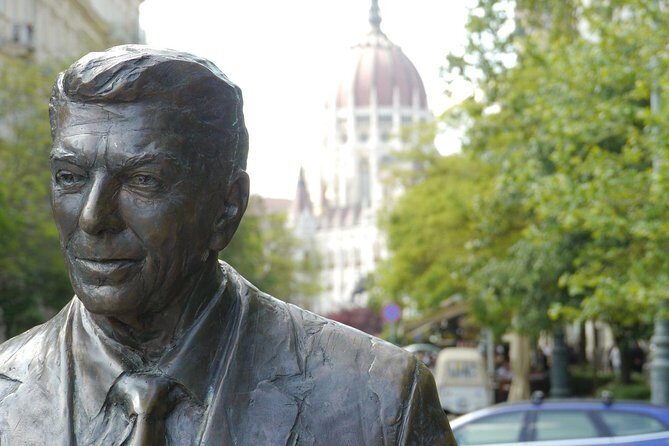
After Parliament, you head to Heroes’ Square. This stop is iconic for a reason, but the tour’s value is how it explains what you’re looking at.
The centerpiece includes statues of the Seven chieftains of the Magyars, plus other important Hungarian national leaders. The tour uses this as a chance to talk about identity—who a country chooses to elevate, and how those choices become part of public space.
This is also where I think the guide’s style shows. A good guide won’t just list figures. They’ll explain why the symbols matter and how they fit into the broader timeline you’re walking through.
You’ll have about 20 minutes here. Use it to step back and take in the full arrangement before you focus on the details.
Stop 4: Andrássy Avenue—Budapest’s Paris moment
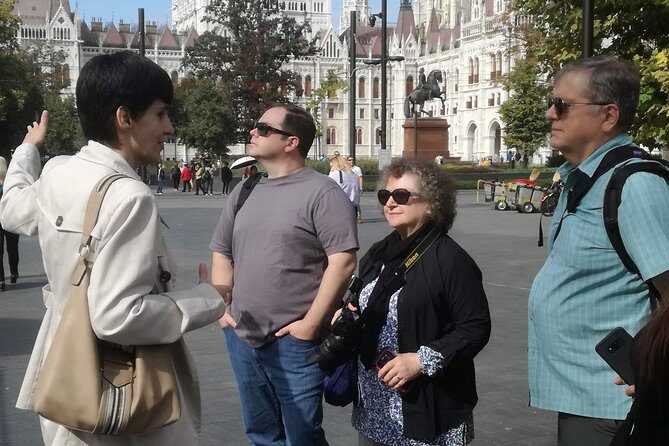
Then you’re on Andrássy Avenue, often compared to Paris’s Champs-Élysées. That comparison isn’t about copying; it’s about aspiration. The tour presents it as Budapest’s answer to a more sophisticated, affluent city image in the 19th century.
This is where the tour shifts from single “monument moments” to a broader urban feel. Andrássy Avenue helps you understand how a capital tried to look modern and important—through grand streets, orderly prestige, and the kind of architecture that signals wealth and power.
You’ll spend about 30 minutes on this stretch. It’s a good amount of time to take photos and still have your guide’s explanations land. If you enjoy walking with your eyes open—facades, scale, and street layout—this part will feel especially satisfying.
Practical tip: wear comfortable shoes here. Longer straight stretches make it easy to underestimate foot fatigue.
Stop 5: Ronald Reagan Statue—connecting Budapest to the Iron Curtain timeline
The tour then makes an interesting pivot to international history with the Ronald Reagan statue. The point of this stop is the Hungarian sense of obligation to Reagan for efforts that helped bring down the Iron Curtain.
This is one of those stops that can surprise you if you only expect local-only history on a Budapest walk. But it’s exactly why the tour works: it shows how Budapest’s story isn’t sealed inside Hungary’s borders. It’s tied to the broader political shifts of 20th-century Europe.
The time here is about 10 minutes. Think of it as a focused pause—enough to understand the message and the symbolism, not enough to turn the stop into a long debate.
Stop 6: Kossuth Lajos Square—seeing Parliament with fresh context
Finally, the tour returns you toward Kossuth Lajos Square. This is another Parliament-focused moment, with about 20 minutes on the clock.
The reason it’s valuable to encounter this area again is that your brain is now primed. Earlier, you had the core story of the Parliament’s significance and cost. By now, you’ve absorbed Jewish community visibility, national symbolism at Heroes’ Square, and the street-and-identity image from Andrássy Avenue. That makes your second look more meaningful.
You’ll get another chance to interpret what you see through a different lens. It’s a small route design choice, but it helps the big story stick.
Is it worth $393.17 per group? A practical value check
The price is listed as $393.17 per group for up to 10 people, with a duration of about 3 hours. For a private tour, that can be fair—or it can feel steep—depending on how you’ll split it.
Here’s the math people usually care about: if you fill the group limit, you’re roughly in the neighborhood of $39 per person. If you book as just two or three, the per-person cost climbs quickly. Private walking tours shine when you have a small group of friends or family who want undivided attention.
What you’re buying isn’t access to some exclusive building—it’s the guide’s attention and the way the route is structured so you actually understand the city’s symbols. If you’re the kind of person who asks questions and likes historical context, this style of guide-led walking is usually good value.
If you prefer wandering alone with only a map, then the price might feel unjustified. But if you want to leave with clearer connections between neighborhoods, statues, and politics, it’s a strong setup.
What to expect from the pace and logistics
This is a moderate physical fitness type of experience. That doesn’t mean it’s a strenuous hike, but you should expect real walking between central stops.
Timing is also set up for efficiency. Each stop has a defined window—about 10 minutes at the synagogue and Reagan statue, 20 minutes at Parliament and Heroes’ Square, about 30 minutes on Andrássy Avenue. So you’ll cover a lot of key Pest landmarks without feeling stuck at only one site for half the day.
You’ll also want to plan the rest of your day around the tour being primarily outdoors. The included parts are the guided walk and your professional guide; food and drinks aren’t included unless something is specified. If you’re traveling with kids, or if you’re sensitive to long gaps between snacks, plan a nearby break after the walk.
What you’ll likely enjoy most (and who it suits)
I think this tour is ideal for people who:
- want a private setting for better Q&A
- enjoy history explained through places, not through a lecture
- like major landmarks but also want the story behind them
It’s also a good fit if your group includes mixed interests. One person might focus on architecture at the synagogue or Parliament, while another cares about the political timeline—Reagan and the Iron Curtain stop helps bridge those interests.
If you’re visiting Budapest for the first time and you want to get oriented fast, this route does that job. If you already know the big sights, the guide’s ability to connect them into a single narrative can still make the experience feel fresh.
Should you book this Private Downtown Pest Walking Tour?
Book it if you want Pest highlights explained by a guide who can handle deep questions, and you like the idea of a focused 3-hour route that turns landmarks into meaning. The private format makes it especially worthwhile if you’re traveling with a small group who can split the cost.
Skip it (or pair it with other plans) if you’re mainly after a long, unstructured stroll or you need lots of built-in downtime and meals. This tour is efficient and history-forward, not a slow café crawl.
If you do book, show up ready to ask. This kind of tour works best when you treat it like a conversation with someone who’s prepared to answer.
FAQ
How long is the Private Downtown Pest Walking Tour?
It lasts about 3 hours.
How much does it cost, and how many people can be in a group?
The price is $393.17 per group, up to 10 people.
Is this tour private?
Yes. It’s a private tour/activity, and only your group participates.
What language is the tour offered in?
The tour is offered in English.
Is pickup available?
Pickup is offered. If hotel pickup is not arranged, you meet your guide 15 minutes before the start time at Café Smúz, Kossuth Lajos tér 18, Budapest 1055.
Is the ticket mobile?
Yes. You receive a mobile ticket.
Do I need to pay admission for the listed stops?
The tour notes admission ticket free for each listed stop.
What is included in the price?
A 3-hour guided walk through Downtown Budapest with a professional guide.
What is not included?
Food and drinks are not included unless specified.
What should I do about walking comfort?
The tour is listed for travelers with a moderate physical fitness level, so it includes walking between downtown sights.