REVIEW · BUDAPEST
Private Café Wandering: Excursion through Budapest’s Belle Epoque
Book on Viator →Operated by Insight Cities · Bookable on Viator
Budapest tastes better in old cafés. This private, art historian–led walk strings together five classic café houses and the stories behind them, from Café Gerbeaud to Muvesz. I love how the stops are tied to the city’s writers, poets, artists, and thinkers, not just pretty interiors, and you’ll appreciate the history-focused commentary that makes each room feel time-worn and real. One watch-out: refreshments, cakes, and coffees aren’t included, so you’ll want a little extra budget and comfy shoes for a 3-hour walk.
You start at Vörösmarty tér and end near the Opera, with a mix of strolling plus one tram ride along the Danube. It’s designed for a small private group (up to 10), which means your guide can slow down when a question lands. Pickup is offered if you arrange it, and otherwise you meet at the default spot at Café Gerbeaud.
The payoff is that you don’t just look at cafés. You learn how Budapest’s café culture functioned in the late 1800s and early 1900s—where conversation, ideas, and society mingled right alongside pastries and coffee.
In This Review
- Key points to know before you go
- A private “café house” walk with an art-historian lens
- Meeting at Café Gerbeaud (Vörösmarty tér) and how the route plays out
- Café Gerbeaud: the first room that sets the tone
- Tram ride by the Danube to Central Café
- Museum Café since 1885: guest-book signatures and Zsolnay tiles
- Urania Café on Rákóczi út: the oldest film theatre angle
- New York Café near Blaha Lujza tér: beauty with a purpose
- Muvesz Café by Andrassy Avenue and the Opera-area finish
- What the “art historian” add-on really gives you
- Food and cost reality: what’s included and what you’ll pay
- Is $449.51 per group good value for up to 10?
- Who should book Private Café Wandering in Budapest
- Should you book this café tour? My take
- FAQ
- How much does the tour cost?
- How long is the tour, and where does it start?
- Is hotel pickup available?
- What is included in the price?
- Do I need to pay for coffee, cake, or drinks?
- What language is the tour offered in?
Key points to know before you go
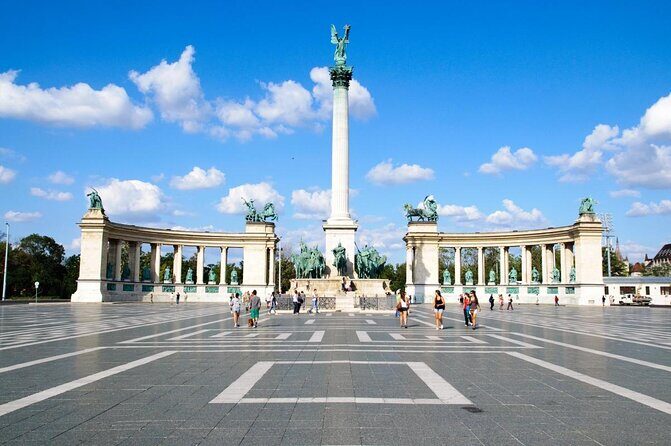
- Five iconic cafés in one focused route, built around Budapest’s Belle Époque peak
- Art historian commentary that connects rooms to writers, thinkers, and public life
- Café Gerbeaud, Museum Café, Urania Café, New York Café, and Muvesz Café, each with a distinct vibe
- A tram segment by the Danube that breaks up the walk and gives momentum
- A real café-house finish: coffee and cake seating near the Opera House
A private “café house” walk with an art-historian lens
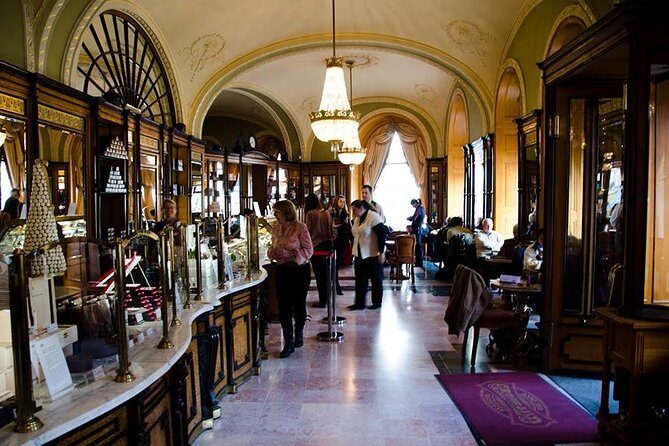
Budapest has plenty of grand buildings. But this experience asks a better question: where did people go to talk, read, debate, and gossip in the old days? The answer is in cafés—specifically the elegant café culture that grew in the 19th and early 20th centuries when the Habsburg Empire’s economic and cultural power pulled in money, ideas, and guests.
This is a private 3-hour walk with an art historian, so the guide isn’t trying to herd a big crowd through five interiors. You’re walking with your own group and one guide, which tends to make the stories more specific and less generic. And because the itinerary is built around famous café houses, you’ll see how each place had a role—social hub, dignified salon, public stage for lectures, or a celebrity-spot kind of stop.
If you’re the type who likes context—why a room looks the way it does—this tour fits well. If you just want to smash coffee and selfies, you might find yourself wishing for more time inside fewer places. The route is tight by design.
You can also read our reviews of more private tours in Budapest



Meeting at Café Gerbeaud (Vörösmarty tér) and how the route plays out
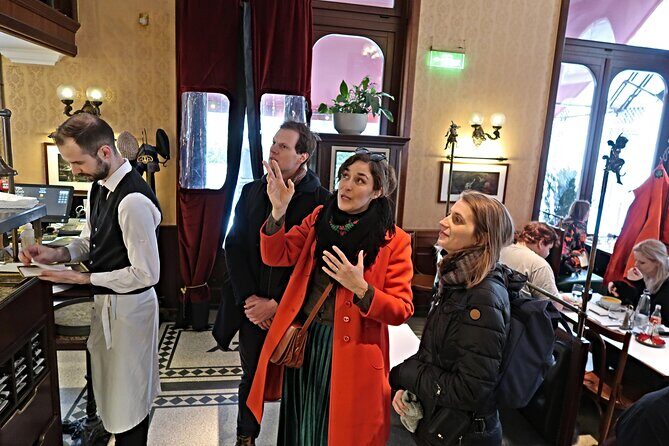
You’ll meet at Café Gerbeaud, Vörösmarty tér 7–8, 1051, unless you’ve arranged pickup. The start time is about 15 minutes after the meeting point, so I’d plan to arrive early enough to settle in and not feel rushed.
The tour lasts about 3 hours, and the pacing is a mix of walking plus one tram ride by the Danube. That matters because you’ll spend most of your time not just on the sidewalk, but in-and-around the city’s most meaningful café streets and squares. There’s also a natural rhythm: each café stop builds on the last one, then you move to the next setting like you’re turning pages in a book.
Most people can participate, and the meeting area is close to public transport. Still, assume you’ll be on your feet for a solid portion of those 3 hours. If your walking tolerance is limited, wear supportive shoes and don’t plan an immediate long day right after.
Café Gerbeaud: the first room that sets the tone
Your first stop is Café Gerbeaud, right at Vörösmarty tér. This is a smart starting point because it’s positioned like a front door into old Budapest—an easy place to imagine tourists and locals mingling side-by-side.
Gerbeaud is described as having exquisite interior details and more than 100 years of history. In the late 19th century, it served as a central social hub for both tourists and locals. That’s the key idea your guide will likely bring to life: this wasn’t just a place to grab something sweet. It was where people watched each other, met each other, and kept social life moving.
What you’ll enjoy most here is the contrast between the building’s historic role and the everyday café experience. You’ll be able to think, What would this room have felt like when it was new and when the city’s social class mix was part of the entertainment?
Possible drawback: because it’s the opener, you’ll want to pay attention early. If you’re distracted at the first stop, you might miss the thread that helps the later cafés make more sense.
Tram ride by the Danube to Central Café
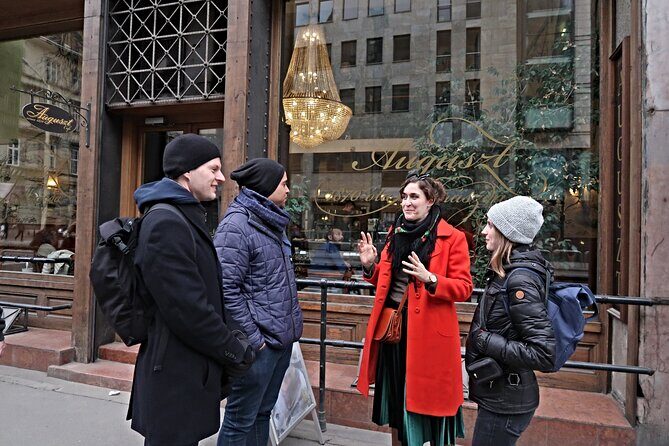
From Gerbeaud you’ll take the tram by the Danube to Central Café. I like this because it breaks the walking and gives you a quick city-sense reset between interiors. The Danube area is part of Budapest’s identity, and this transfer keeps the experience from feeling like a straight museum tour.
Central Café is described as a space so dignified that it epitomizes what café-house culture meant during the 19th-century peak of the Habsburg Empire’s economic and cultural power. In other words, this stop is about atmosphere and meaning, not just sweets.
When you’re in Central Café, focus on how the room makes you feel. Dignified is the word for a reason: café-house culture wasn’t only casual. It carried status. People came not just for coffee, but for social positioning—who was inside, what kind of conversation was happening, and the idea that culture belonged here.
And yes, you’ll likely want to order something if your budget allows. But even without buying, the point is to read the space: the decor, the layout, and how it signals ceremony.
Museum Café since 1885: guest-book signatures and Zsolnay tiles
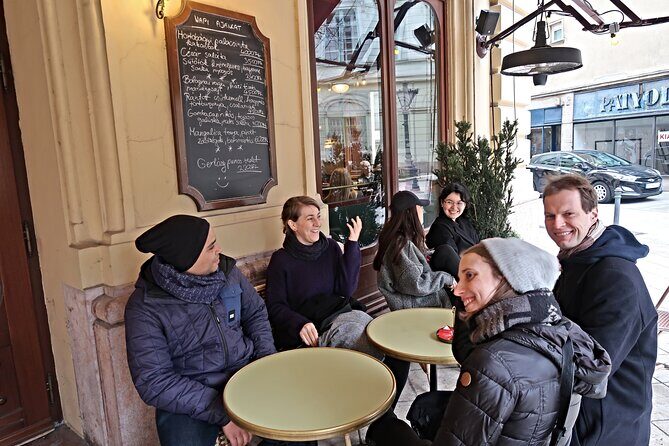
Next comes Museum Café, operating since 1885. If you like evidence—like physical proof that certain people really showed up—this is one of the most interesting stops.
The guest book is described as a historical document, with names of people who were regularly entered as prominent clientele, including members of parliament, distinguished writers, and famous Hungarian actors. That’s a powerful detail. It turns the café from a pretty stop into a place where public figures and creative minds overlapped.
The décor adds another layer. The walls are covered in tiles from the world-famous Zsolnay porcelain works, and there’s a grand 19th-century Venetian mirror. Those aren’t trivia add-ons. They’re clues about how Hungarian café culture borrowed prestige and craftsmanship from across Europe—then localized it into something uniquely Budapest.
What you should do during this stop: look for the mirror and tile work, and let your guide’s explanation connect it to what it meant for visitors in the 19th century. It’s the kind of setting where you can imagine serious conversation happening beside a pastry display.
Small consideration: the focus here is strongly on story and design. If you’re craving big, active tastings (multiple orders, lots of time sitting), plan to treat Museum Café as a meaningful interior pause rather than a long meal.






Urania Café on Rákóczi út: the oldest film theatre angle
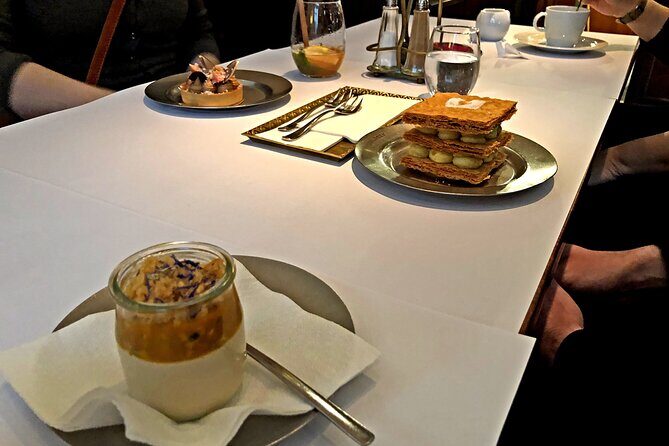
After that short walk, you reach Urania Café on Rákóczi street. The big idea here is that Urania houses the oldest Film Theatre in the city. That means the café isn’t just tied to old social life—it’s linked to the way Budapest adopted and discussed modern entertainment.
Urania is also described as famous for lectures given by prominent intellectuals before large audiences of Budapest cosmopolitans. That detail matters because it puts the café-house role in a different spotlight. Some cafés were about status and society. Urania’s angle leans toward ideas, public speaking, and intellectual gatherings.
During this stop, listen closely to how your guide connects the lecture culture to the physical space. You may find it easier to picture the audience, the topics, and the vibe when you hear how often these discussions happened in a café setting rather than a separate hall.
Practical tip: Urania can be a great stop to reset after prior cafés. It’s a different theme, so your brain doesn’t feel locked into the same story twice.
New York Café near Blaha Lujza tér: beauty with a purpose
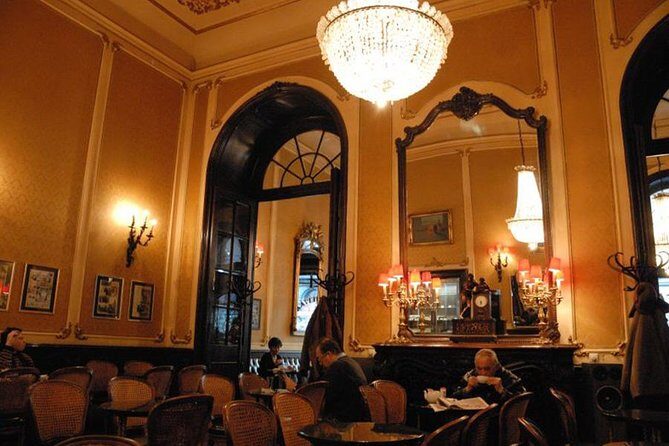
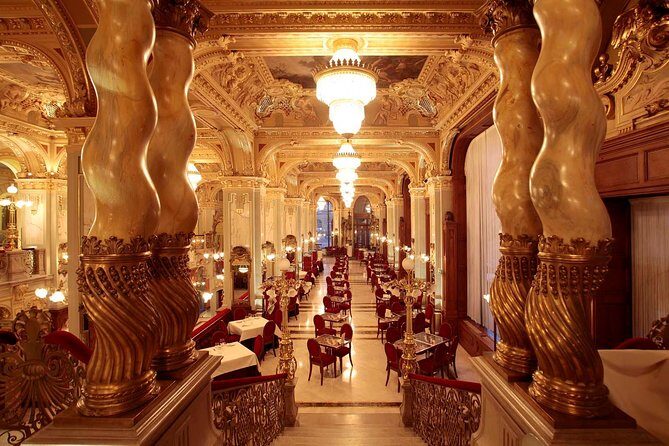
Now you walk toward Blaha Lujza tér on the boulevard to New York Café, described as one of the most beautiful café houses in the world. That kind of praise can sometimes feel like marketing. Here, the value is in how the tour uses the beauty to explain café culture.
New York Café works in the itinerary because it represents the heights of café-house grandeur. The tour framing matters: it’s not only about a stunning room. It’s about why people wanted that kind of beauty around everyday rituals like coffee and dessert.
When you arrive, give yourself a minute to take in the whole space, not just one corner. If you let the guide’s context steer you, you’ll start noticing how the room’s elegance supports the social role of cafés as public spaces for conversation, creativity, and visible cultural life.
One possible drawback to keep in mind: this is a more visually demanding stop. If you’re camera-happy, it can feel easy to lose time. I’d still try to listen and absorb before you start snapping photos, so you don’t end up sightseeing without the meaning.
Muvesz Café by Andrassy Avenue and the Opera-area finish
The tour ends at Muvesz Café on Andrassy Boulevard, near the Opera House. This is a great finale because it’s where the experience shifts from walking and learning to sitting down with coffee and cake.
Muvesz Café is described as a place where you might catch glimpses of city celebrity actors and actresses. The detail that makes it fun is that they regularly patronize the venue during rehearsal breaks from nearby Budapest Broadway. That’s the kind of lived-in, modern touch that helps the older cafés feel less like a sealed-off past and more like a living tradition.
Why this ending works: the earlier stops give you the historical framework. Ending with cake and coffee in a real working venue gives you the sensory connection. You’re not just thinking about café culture—you’re doing the part that made it matter.
In terms of time, you’ll likely leave with a comfortable last memory: sitting in a classic café atmosphere and reflecting on how each room played a different role in Budapest’s social fabric.
What the “art historian” add-on really gives you
A guide can tell you facts. An art historian guide tends to give you a way to see. Here, the tour is explicitly framed as commentary through Budapest’s iconic 19th-century and early 20th-century café houses. That means you’ll hear why the interiors, materials, and the café’s reputation connect to culture.
This is also where the private format helps. When your group is small, it’s easier to ask what you’re noticing. If you’re staring at Zsolnay tiles or that Venetian mirror, your guide can translate design into context—how it signaled taste and status, how it shaped social behavior, and how café life became part of the city’s creative ecosystem.
One review highlights how guide Kata was very informative and generous with her time, with a good mix of cafés and other Budapest sites. That lines up with what this tour is built to do: not just a checklist of venues, but a guided story with breathing room.
And yes, it’s still a walking tour. But the value comes from turning the walk into an explanation you can carry around the city afterward.
Food and cost reality: what’s included and what you’ll pay
This tour includes a 3-hour private walk in the company of an art historian. It does not include the price of refreshments, cakes, and coffees at the cafés you visit.
So here’s how to plan: treat the included time as the history and the café stop as the chance to order if you want. The final stop explicitly includes the chance to sit down for coffee and cake, but you’ll still be paying for what you choose there.
If you’re doing a budget-aware approach, I’d pick one café where you order something you actually want, and keep the rest as optional. That way you avoid the common problem on café tours: buying a little at every stop until the total quietly climbs.
If you do enjoy dessert culture, this itinerary supports that. Just pace yourself. After several cafés, your taste buds will thank you for slowing down.
Is $449.51 per group good value for up to 10?
The price is $449.51 per group, up to 10 people. That’s the crucial detail for value. With a full group of 10, you’re basically paying about $45 per person for a private, guided 3-hour experience covering five iconic café houses plus a tram segment.
Even with fewer than 10 people, the pricing can still work if you’re traveling as a small circle of friends or a family and want the benefits of a private guide rather than fitting into a larger schedule. What you’re buying isn’t just admission to interiors. You’re paying for context: the stories tied to writers, public life, lecture culture, and decorative art.
Also, the tour’s length is reasonable. Three hours is long enough to hit five cafés without turning into a half-day marathon. It’s short enough that you can pair it with other sightseeing later.
Where value can wobble: if your group wants lots of full meals at every stop, you’ll add costs quickly since refreshments aren’t included.
Who should book Private Café Wandering in Budapest
This tour is ideal if you fit any of these boxes:
- You love Budapest’s old-world atmosphere and want it explained through real locations
- You’re a design-and-interiors person who notices materials like tiles and mirrors
- You like café culture as a social idea, not just as a caffeine stop
- You want a private group experience with one guide and fewer distractions
It also suits writers, students, architecture fans, and anyone who enjoys seeing how art, politics, and public conversation shape daily life.
If you’re visiting only for a quick highlight sprint and you hate walking, you might feel this is too structured. But if you’re happy moving through the city at a calm pace, it’s a very satisfying way to spend an afternoon.
Should you book this café tour? My take
Book it if you want a practical, story-led route through some of Budapest’s most iconic café interiors, with an art historian guiding what to look for and why it mattered. The five-stop structure is sensible, and the ending near the Opera adds a comfortable payoff.
Skip it (or at least temper expectations) if you mainly want an all-day food crawl. Refreshments and drinks aren’t included, and the time is designed for commentary and atmosphere, not a long sit-down meal at every venue.
If you’re choosing between a generic walking tour and something more café-specific, this one wins on focus.
FAQ
How much does the tour cost?
The Private Café Wandering excursion costs $449.51 per group, up to 10 people.
How long is the tour, and where does it start?
The tour lasts about 3 hours. It starts at Vörösmarty tér 7, 1051 Hungary (the meeting point is at Café Gerbeaud unless pickup is arranged).
Is hotel pickup available?
Pickup is offered, but it’s not automatic. You can arrange pickup; otherwise you meet your guide at the default meeting point.
What is included in the price?
The price includes a 3-hour private walk with an art historian through Budapest’s 19th- and early 20th-century café houses.
Do I need to pay for coffee, cake, or drinks?
Yes. Refreshments, cakes, and coffees selected at the cafés are not included, so you should budget for what you order.
What language is the tour offered in?
The tour is offered in English.