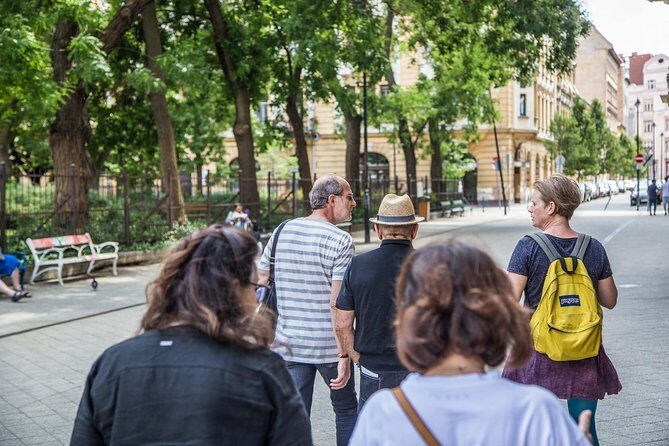
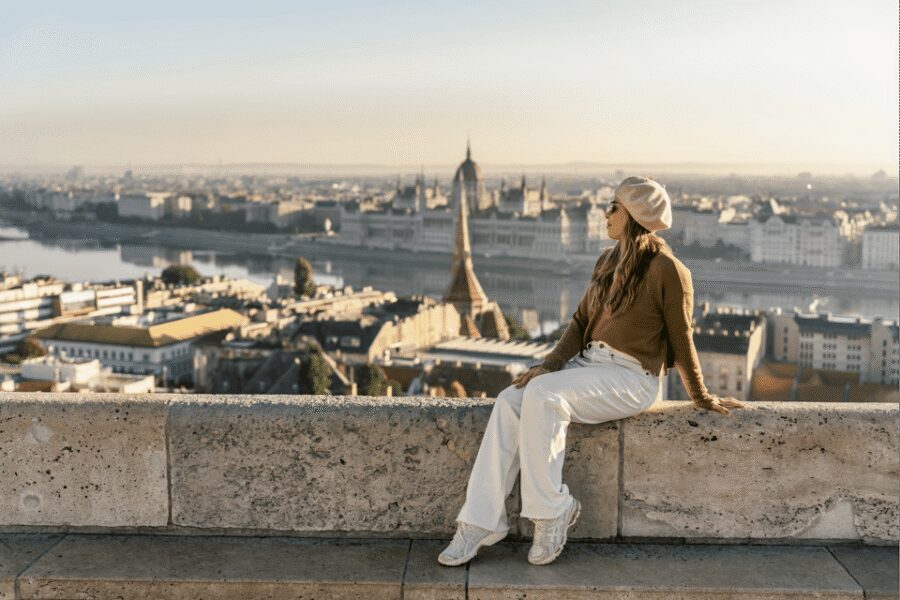
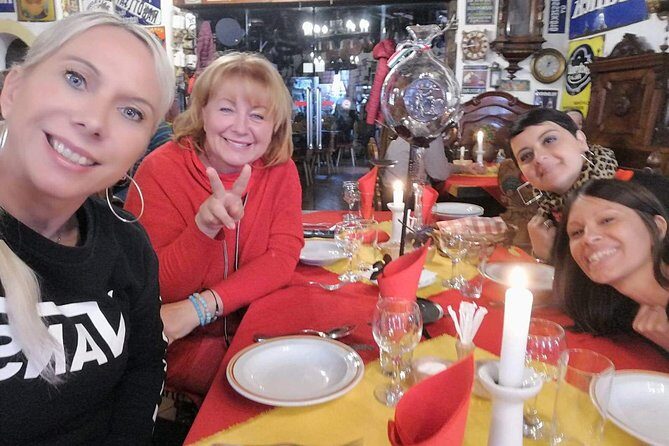
Budapest turns art into street-level magic. This private Art Nouveau tour is built around hands-on architecture stops, plus a complimentary coffee moment in a real Passage café. I especially like how the guide connects the buildings to Hungarian culture, not just dates and names. My only caution: the experience can be adjusted on the move, so if you want a rigid, clockwork itinerary, bring your patience.
I also like the practical setup: hotel or port pickup, a mobile ticket, and free admission at each listed stop. You’ll cover major Seccession and transitional buildings in about four hours, which makes it a smart way to get oriented fast. The tour runs in all weather, so plan on dressing for walking in rain, wind, or shine.
For English speakers, the whole thing is straightforward and group-size friendly. It’s for groups up to 15, so it still feels personal, just not tiny-mini.
In This Review
- Key Things You’ll Really Notice on This Tour
- Why Budapest’s Art Nouveau Works Best with a Private Guide
- How Pickup and Free-Entry Stops Change the Value
- Stop 1: Parisian Passage Café, Budapest’s Interior-First Art Nouveau
- Stop 2: Liszt Academy and Secession Details Inside
- Stop 3: Váci Street—Art Nouveau on Palaces and Shopfronts
- Stop 4 and 5: Török-Bankház and Postatakáreks—The Style Shift You Can See
- Török-Bankház Building
- Postatakáreks Bank
- Stop 6: House of Hungarian Art Nouveau and the National Style Thread
- Zoo Stops and the Museum of Applied Arts Facade
- What About the Guide Experience Actually Matters?
- Price and Timing: Is $243.53 Worth It?
- Who Should Book This Art Nouveau Tour?
- Should You Book This Private Art Nouveau Tour?
- FAQ
- How long is the Private Art Nouveau Tour Budapest?
- How much does the tour cost?
- Does the tour include hotel or port pickup?
- Is there free admission for the stops?
- What language is the tour offered in?
- Is coffee or tea included?
- What’s the cancellation policy?
Key Things You’ll Really Notice on This Tour
- Private, art-history guidance that ties style to Hungarian music and national identity
- Passage café coffee/tea time in an interior setting you can actually enjoy
- Multiple stops with free admission tickets so you spend your energy on seeing, not paying
- Art Nouveau to Art Deco transition via the Török-Bankház connection
- Short, targeted visits that still include interior looks where available
Why Budapest’s Art Nouveau Works Best with a Private Guide
Art Nouveau in Budapest isn’t just a decorative theme. It’s a way of thinking about the city—how craftsmanship, national identity, and modern style all tried to push forward at the same time. On this tour, you get a professional art historian guide, which matters because the details are the point: the mosaics, the ironwork, the lettering, the symbolic shapes. Without a guide, it’s easy to look at facades and miss the “why.”
This is also a private tour, meaning your guide can set the pace for your group. In past experiences with this tour, the guide experience has included adapting to limited walking ability (using taxis and public transport) and tailoring the route when there’s time sensitivity. That flexibility is a plus if you like to ask questions or if your group moves differently.
One thing to keep in mind: the style of guiding here can be more conversational than rigid. If you love a strict itinerary where every minute is pre-scripted, you may prefer a tour with less give. If you like learning through discussion, that looseness is often where the best moments happen.
You can also read our reviews of more private tours in Budapest



How Pickup and Free-Entry Stops Change the Value
At $243.53 per group (up to 15), the math looks great when you’re traveling as a small group that can share the cost. Even if you’re a couple, you’re not just buying “a walk.” You’re getting hotel/port pickup and drop-off, a private guide, and coffee/tea included.
What pushes the value higher is the structure: the itinerary lists multiple architectural stops, and admission tickets are free for the visits where entry is part of the experience. That means the cost isn’t quietly inflated by entrance fees that pop up later.
The tour is about 4 hours, which is a sweet spot. Long enough to see several districts and styles, short enough that you can still enjoy the rest of your day in Budapest without feeling crushed.
Stop 1: Parisian Passage Café, Budapest’s Interior-First Art Nouveau
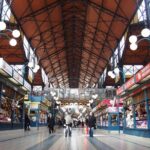
Your first architectural hit is the Parisian Passage Café—an interior Passage space with a strong Art Nouveau look. Even the way it’s described points to what you should pay attention to: the tour goes beyond the outside and into the passage, where you can actually experience the space as it was designed.
You’ll spend about 30 minutes here, and you’ll also get a complimentary coffee or tea in the Art Nouveau setting. This is one of those rare moments where the tour gives you a “rest stop” that’s not an interruption—it’s part of the design.
Practical tip: this is a great place to slow down and look up and around. Passages tend to reward that habit. If you only glance at the front, you miss the visual logic—how the space funnels your eye and frames details.
Stop 2: Liszt Academy and Secession Details Inside
Next up is the Liszt Academy, centered on music—and more importantly, on how architecture celebrates music. The Academy building is described as a homage to Hungarian music while also acting as a grand example of the international secession style.
Plan on about 15 minutes and, crucially, the tour includes going inside the hall to see mosaics and other interior details. This is where a guide makes a big difference. Mosaics can feel like “pretty tiles” unless someone points out what to look for and how the style expresses ideas.
The lesson to carry with you: in Budapest, architecture often works like a score. It has rhythm and repetition, plus moments of emphasis. When your guide connects those building traits to Hungarian culture, the interior decorations stop being wallpaper and start becoming meaning.
Stop 3: Váci Street—Art Nouveau on Palaces and Shopfronts
Váci Street is the famous fashion-and-shopping stretch. On its own, it can turn into just another busy street. On this tour, it becomes a visual scavenger hunt for Art Nouveau heritage embedded in urban palaces.
You’ll spend about 30 minutes walking through the street, stopping at various buildings to talk through the Art Nouveau elements. This portion is useful if you want the city to feel real, not just museum-like. It also helps you understand how architectural styles lived at street level—how “grand” design still showed up on everyday blocks.
Practical tip: wear shoes you can rely on. This stop is more walking and looking than standing still and listening. If rain hits, you may want a light rain layer that doesn’t slow you down too much.





Stop 4 and 5: Török-Bankház and Postatakáreks—The Style Shift You Can See
Budapest is famous for the transition between big pre-war architectural styles, and two stops make that shift easy to spot.
Török-Bankház Building
You’ll visit the Török-Bankház building for about 15 minutes. The tour frames it as an important step between Art Nouveau and Art Deco, with MIKSA ROTH named as a key figure behind it.
That transition matters because it teaches you not just what each style looks like, but how the ideas changed. Art Nouveau often feels organic and expressive. Art Deco tends to feel more geometric and forward-leaning. When you place buildings back-to-back like this, the differences become obvious in seconds.
Postatakáreks Bank
Then you move to the Postatakáreks Bank for about 15 minutes, described as a fine example of the Hungarian national branch of Secession, with an emphasis on enchanted, castle-like details. LECHNER is named here, which is a helpful breadcrumb for your later self-study when you spot similar forms around the city.
If you’re the type who takes photos, this is one of the best places to slow down. Banks and civic buildings often have the most detailed “signature” features—especially around entrances, window lines, and decorative frames.
Stop 6: House of Hungarian Art Nouveau and the National Style Thread
The House of Hungarian Art Nouveau is all about the Seccession period and the Hungarian national style, including how it was influenced. You’ll get about 15 minutes here.
This stop is valuable because it connects the dots. It explains how Hungarian architects adapted international trends and filtered them through local identity. You end up understanding why Budapest’s Art Nouveau doesn’t just mimic other European cities—it feels distinctly Budapest.
If you’re learning something new about Hungarian culture, this is where it clicks. The guide isn’t only pointing at design. They’re explaining the thinking behind it: national pride, modernization, and craft.
Zoo Stops and the Museum of Applied Arts Facade
After the central architectural sequence, the tour continues by seeing some of the buildings connected with the Budapest Zoo. This portion is another way to spot variety in Art Nouveau and Secession architecture, without turning the day into a pure “one neighborhood only” route.
You’ll also stop at the Museum of Applied Arts for about 15 minutes. Here’s the reality check: it’s still under renovation, so you can explore only the facade, not the full interior. That’s not a dealbreaker, but it does shape what you’ll get out of the stop. Use this moment for exterior observation—lines, ornament placement, and how the building telegraphs its style from outside.
Why include a facade-only visit? Because even when you can’t enter, the building still teaches you the same core lesson: Secession wasn’t limited to museums. It shaped civic architecture and public-facing design too.
What About the Guide Experience Actually Matters?
The big praise from past guiding experiences centers on a few things I think you’ll feel during the tour:
- Strong tailoring: one guide, Michael, was praised for tailoring the tour even on short notice. Another guide, Szőke Zsuzsanna, was praised for weaving architecture and country history together. Suzy was praised as a “walking encyclopedia” style presence. Bogata was praised for adapting to walking limits.
- Energy and passion: the best guides don’t just recite facts; they make you look. That show-your-work approach is especially important in a city where details are everywhere.
- Small, satisfying extras: at least one guided experience included an additional museum-related stop along the route. Even when extras don’t happen, the coffee/tea moment already provides that “reward” feel.
One caution from experience: if your group needs a perfectly structured plan, a more flexible guide style can feel off. It can sound like the tour is being created in real time. If you’re that kind of planner, tell your guide early what you want: time for photos, time for quick questions, or a strict order.
Price and Timing: Is $243.53 Worth It?
Here’s how I’d think about value:
You’re paying about $243.53 per group up to 15 for a 4-hour private outing. That’s where private tours can either feel expensive or feel like a bargain. The bargain side happens when:
- Your group is large enough to spread the cost.
- You’ll benefit from hotel/port pickup and drop-off.
- You want a guide who can point out what you’d otherwise miss—especially with interior mosaics and Passage café details.
- You can accept a mix of short stops (most around 15–30 minutes) rather than lingering all day.
The tour includes coffee/tea and lists free admission tickets for the stops where entry applies. That helps keep the “total cost” feeling predictable.
So, if you want Art Nouveau in Budapest with less guessing and fewer wasted stops, this is priced in a reasonable zone for a guided, private, multi-stop architecture day.
Who Should Book This Art Nouveau Tour?
This tour is a strong fit if you:
- Want to understand Budapest’s Secession/Art Nouveau style without feeling lost.
- Like architecture that you can see on the street and in interiors (Passage café and Liszt Academy hall).
- Prefer private guiding so you can ask questions and adjust pacing.
- Have limited time in Budapest and need a structured way to cover key examples.
It may not be the best fit if you:
- Hate flexible routing and need a very strict minute-by-minute plan.
- Want a tour that centers on hands-on activities (this is architecture and history observation, not a workshop).
Smart casual is the dress code. For me, that’s a hint you can dress comfortably for walking while still looking neat for indoor stops.
Should You Book This Private Art Nouveau Tour?
I’d book it if your priority is architecture that makes sense fast. Budapest’s Art Nouveau can look like “pretty detail” if you’re not taught how to read it. This tour is built to do the reading for you—style, symbolism, and the shift between eras—while still giving you a real break with coffee in a Passage café.
If you do book, I’d send a quick message after confirmation to confirm where pickup happens and when. One past experience described near-missing the tour because meeting details didn’t arrive properly. Not every booking will have that problem, but it’s easy to prevent.
Bottom line: for a private group, a four-hour slot, and a focus on recognizable Art Nouveau and Secession landmarks, this is a practical way to spend your time in Budapest—especially if you want the buildings to explain themselves.
FAQ
How long is the Private Art Nouveau Tour Budapest?
The tour lasts about 4 hours.
How much does the tour cost?
It costs $243.53 per group, for up to 15 people.
Does the tour include hotel or port pickup?
Yes. Hotel/port pickup and drop-off are included, and you can specify where you want pickup.
Is there free admission for the stops?
Yes. The itinerary lists free admission tickets for the visited stops.
What language is the tour offered in?
The tour is offered in English.
Is coffee or tea included?
Yes. Coffee and/or tea are included.
What’s the cancellation policy?
Free cancellation is available up to 24 hours in advance for a full refund. If you cancel less than 24 hours before the start time, the amount paid is not refunded.