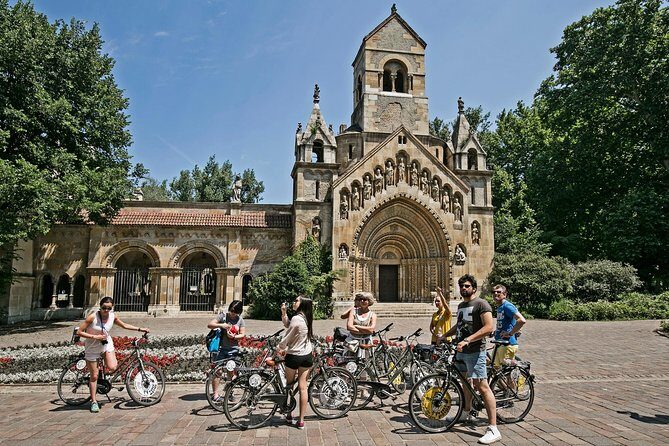
REVIEW · BUDAPEST
Budapest Castle District Walking Tour
Book on Viator →Operated by Triptobudapest.hu - Free Budapest Walking Tours · Bookable on Viator
Budapest’s Castle District can feel like a maze of stairs. This 2-hour walk ties the big sights to the stories behind them, so you leave with the hill actually making sense. You’ll also get time to ask questions, not just hear a lecture.
I especially like the small-group size (up to 30), because it keeps things interactive and easier to manage on uphill streets. I also like the route’s focus on free-to-see viewpoints and exterior highlights, including Matthias Church from the outside and the terrace angles that frame Pest across the Danube.
One thing to consider: this is a step-heavy climb. You should be ready for a moderate workout, including at least one uphill stretch of about 10 minutes, and crowding around Fisherman’s Bastion can make photos a bit of a squeeze.
In This Review
- Key Highlights to Expect on This Buda Castle Walk
- Getting Oriented on Buda Hill: Why Batthyány tér Sets You Up
- The Guide Matters: Licensed Locals, Real Storytelling, and Q&A Time
- Stop 1: Batthyany Square and the Castle District Map in Your Head
- Stop 2: Matthias Church (No Entry, but Strong Context)
- Stop 3: Fisherman’s Bastion—Views, Symbol Details, and a Disney Twist
- Stop 4: The Medieval Jewish Prayer House and Baroque Neighboring Streets
- Stop 5: National Archives of Hungary—WWII Scars and Gül Baba’s Pilgrimage Link
- Stop 6: Hospital in the Rock—Nuclear Bunker Museum and the Huszár Stories
- Stop 7: Buda Castle—Royal Power, Myth, and Government Offices
- Stop 8: Prince Eugene of Savoy Equestrian Statue—Pest-Side Panorama and a Quiz Finish
- Price and Value: Why This Feels Like a Deal (and How Donations Work)
- Timing, Weather, and Your Body: What to Wear on the Castle Hill Climb
- Who Should Book This Castle District Walking Tour?
- Should You Book It?
- FAQ
- How long is the Budapest Castle District Walking Tour?
- Where does the tour start?
- Where does the tour end?
- Is the tour in English?
- Does the tour include admission tickets?
- Will you enter Matthias Church?
- How much walking and climbing should I expect?
- What if the weather is bad?
- How many people are in the group?
Key Highlights to Expect on This Buda Castle Walk
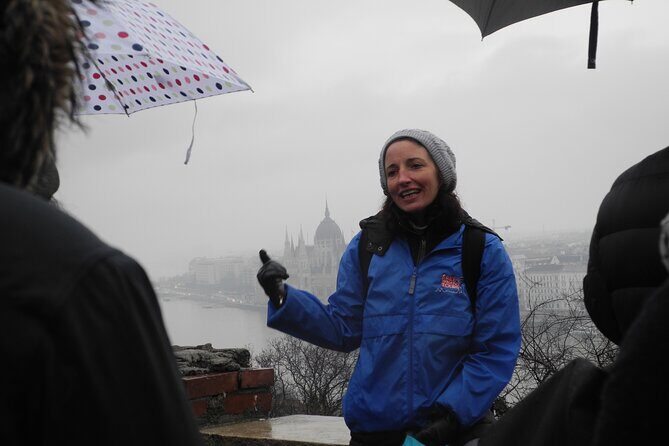
- Batthyány tér meeting point at the metro exit in the park makes starting feel straightforward
- A licensed local guide who’s born and bred in Budapest and handles questions as you go
- Matthias Church exterior only, with context and the daily-life angle between Hungarian, German, and Jewish communities
- Fisherman’s Bastion details including the Walt Disney connection and how to spot the cross strip differences
- Underground layers at Hospital in the Rock, plus the quirky huszár/light-cavalry stories
- A Pest-side panorama from the Prince Eugene of Savoy terrace, with a chance to quiz yourself on the landmarks
Getting Oriented on Buda Hill: Why Batthyány tér Sets You Up
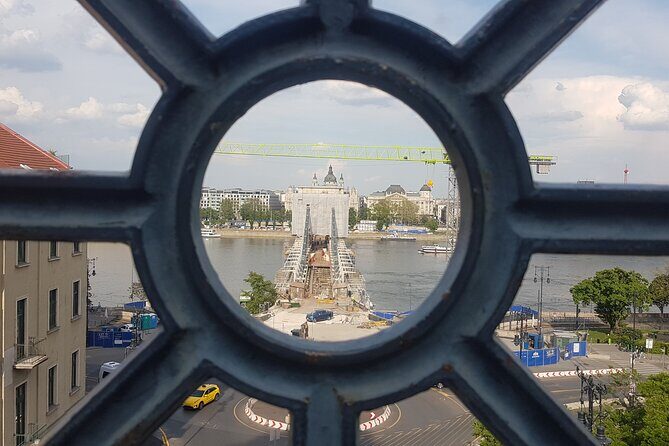
The tour starts at Batthyány tér 1, 1011 Hungary, at the metro exit in the park. If you’ve ever arrived at Budapest and felt like you needed a GPS just to understand the geography, this start helps. From the first minutes, you’re guided onto the right hillside rhythm and the route makes logical sense instead of random wandering.
This is also a walk that favors direction and understanding over speed. You’re not just ticking off postcard stops; you’re learning how the Castle District connects—royal power, religious buildings, defensive systems, and later scars from war.
And because the tour is run in English, it’s easier to ask follow-up questions on the spot. That matters here, since Budapest’s layers overlap: different empires, different faiths, different political eras, all pressed into the same hill.
You can also read our reviews of more walking tours in Budapest



The Guide Matters: Licensed Locals, Real Storytelling, and Q&A Time
The experience is led by a fully licensed local guide, and the guides rotate by tour date. In the feedback you’ll see names like Dora, Zsófia, Rita, Andy, Esther, Endre, Gábor, Sophia, Gary, Judit, Emma, Valeria, and Odea—and the common thread is how they keep the walk moving while still making room for questions.
A few specific “this works” patterns show up again and again:
- Guides keep the energy up in cold, windy, or hot weather by adjusting pacing.
- They include frequent question time, not just a big question at the end.
- Some guides even sprinkle in practical language tips, like basic Hungarian words taught during the walk.
You should also expect a maximum of 30 people, which is big enough to feel social but small enough that your guide can still notice who’s confused at a corner.
Stop 1: Batthyany Square and the Castle District Map in Your Head
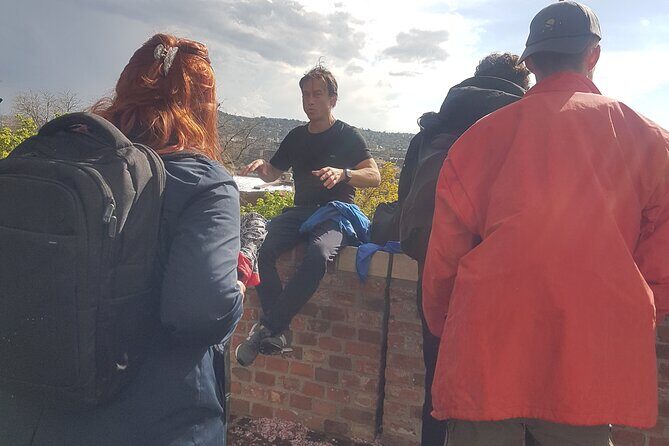
The first stop is Batthyány Square, with the meet point at the metro exit in the park. From there, your guide frames what you’re actually looking at. The Castle District isn’t just a single attraction—it’s a cluster that includes the Royal Palace, Matthias Church, Fisherman’s Bastion, Maria Magdalena Church Tower, and other nearby buildings and public art.
Your guide also sets expectations about the “why” behind the district: it’s one of Budapest’s most historically significant areas, and it’s been shaped by centuries of conflict and rebuilding. Even if you already know the names, this kind of orientation helps you recognize patterns as you walk.
A small but smart detail: since the early segment is about getting oriented, you don’t waste your energy later trying to decode what you already passed.
Stop 2: Matthias Church (No Entry, but Strong Context)
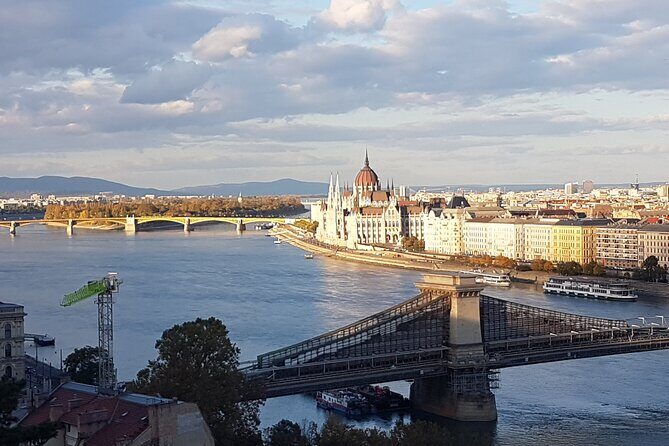
At Matthias Church, you’ll learn about about 800 years of history in the area—right away. The focus here isn’t on the building tour inside. The tour explicitly does not enter the church. Instead, you get the story of what happened around it: wars, occupations, and how daily life shifted among the district’s German, Jewish, and Hungarian communities.
That approach is a good match for people who want history without spending time buying tickets or waiting in lines. It also means the guide can keep you on schedule for the other major stops.
What can be tricky? If you’re the kind of visitor who loves architecture at ultra close range, you might wish you could go inside. But as an orientation stop inside a short 2-hour walk, Matthias Church works well.
Stop 3: Fisherman’s Bastion—Views, Symbol Details, and a Disney Twist
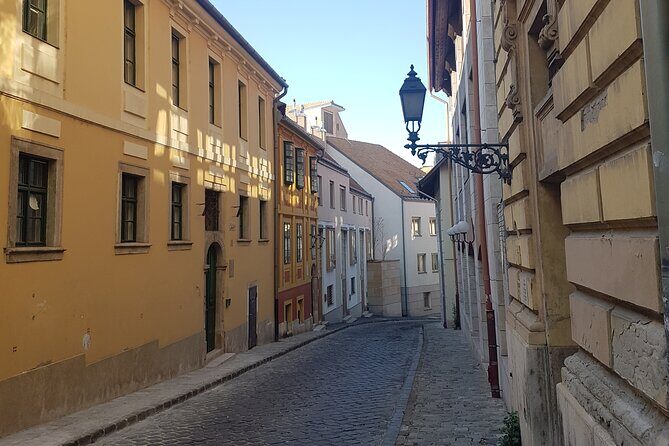
Fisherman’s Bastion is where the Castle District starts to feel like a movie scene. It’s also the stop with the biggest “you came to Budapest for this” payoff—terrace viewpoints looking toward the Danube and Pest.
Here’s what makes the stop more than just a pretty panorama:
- Your guide explains the Walt Disney connection tied to the site.
- You’ll learn the difference between a cross with one, two, or three strips, which is the kind of detail most people miss unless someone points it out.
- You’ll also be shown how to enjoy a free view from Castle Hill, which can help you find angles that feel less crowded.
The main drawback is practical: Fisherman’s Bastion can be extremely crowded. That doesn’t ruin the history, but it can slow down photos and make it harder to hold a quiet “look around” moment.






Stop 4: The Medieval Jewish Prayer House and Baroque Neighboring Streets
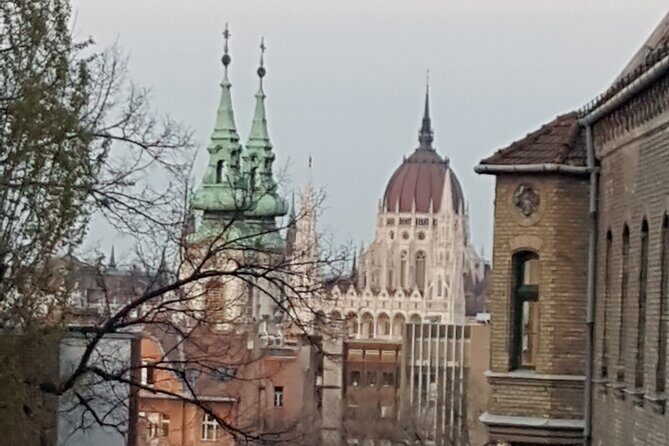
Next up is the Medieval Jewish Prayer House. This stop adds something the big tourist sights often skip: the Castle District wasn’t only a royal and religious Christian stage. It also held an active Jewish community, with religious life and architecture that you can still recognize.
Around it, you’ll see baroque residential buildings. This contrast matters. It helps you understand that the hill isn’t only monuments—it’s neighborhoods and lived-in streets that reflect shifting cultures over time.
If you like walking tours that balance grandeur with the smaller, human-scale structures, this stop is a strong reason to do the tour instead of just exploring on your own.
Stop 5: National Archives of Hungary—WWII Scars and Gül Baba’s Pilgrimage Link
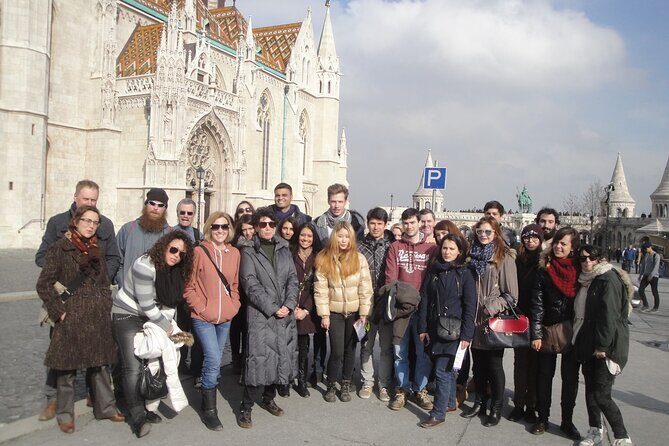
At the National Archives of Hungary, your guide shifts from architecture to the scars of the 20th century. You’ll see how WWII caused massive destruction and you’ll hear where the Nazi stronghold was.
This is heavy material, but the walk format keeps it concrete: you’re standing in the area, not reading it from a screen. That makes it easier to connect what you hear with what you see.
You’ll also learn about a different historical thread: where the rich in the era lived, and the Muslim pilgrimage connection for Gül Baba, the Ottoman Turkish monk and soldier.
This stop is valuable if you want Budapest to feel like more than scenery. If you’re sensitive to war stories, just know the tone turns serious for a few minutes.
Stop 6: Hospital in the Rock—Nuclear Bunker Museum and the Huszár Stories
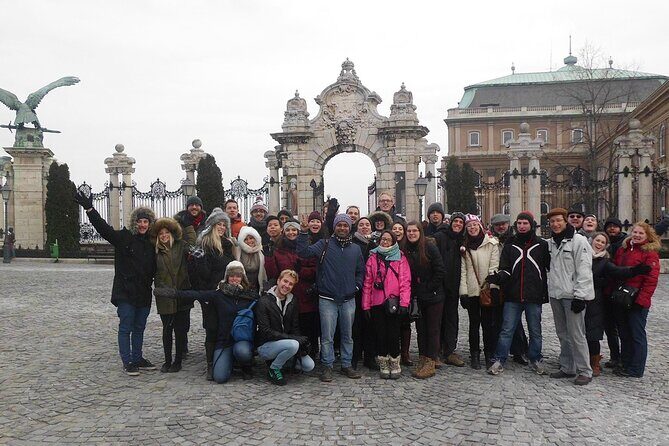
The Hospital in the Rock Nuclear Bunker Museum stop brings the Castle Hill’s defensive history into focus. You’ll get explanations about the underground life of the hill—its labyrinths and its role in defense over centuries.
This is one of the more unique stops on the route because it adds the “hidden Budapest” layer. Even without going deep into every exhibit, the guide’s explanations help you understand why tunnels and underground systems mattered.
You’ll also hear lighter, memorable pieces, including the story about the huszár light cavalry fighters (the tour frames it with an entertaining twist) and the idea of “funniest public statues in Budapest.” That contrast keeps the mood from becoming too heavy after WWII.
One consideration: if you’re claustrophobic, you may not love underground spaces. Since you’re only at the stop for around 15 minutes, it’s manageable for many people, but it’s worth thinking about ahead of time.
Stop 7: Buda Castle—Royal Power, Myth, and Government Offices
Then you hit Buda Castle, the big name. You’ll see the massive building that served as the residence of Hungarian kings, and you’ll learn how it was rebuilt multiple times due to war destruction.
This stop also includes myth and modern politics in the same walking moment:
- You’ll hear about the mythical bird of the Hungarians.
- You’ll learn where presidential and prime ministerial offices are located.
Even if you’ve seen photos of Buda Castle, it’s different when someone connects the physical building to centuries of political change. You start to notice how the palace fits the hill’s power structure.
A practical plus from guide-led walking: you’ll be reminded where facilities are. One helpful note from experience feedback is that there are bathrooms at Buda Castle, and you can refill water bottles there too.
Stop 8: Prince Eugene of Savoy Equestrian Statue—Pest-Side Panorama and a Quiz Finish
The tour ends at the Statue of Prince Eugene of Savoy (1013 Hungary). The finish point also gives you one last reason to slow down: a terrace panorama across to the Pest side of the Danube.
If you’re the kind of person who likes learning checks, this is fun. The guide may test your knowledge with tricky questions about the major Castle Hill landmarks and how Hungarians live—basically turning the walk into a quick recap game.
After that, you get practical information and time to answer remaining questions. That ending format is ideal for first-timers who still feel slightly lost about where to go next.
Price and Value: Why This Feels Like a Deal (and How Donations Work)
The listed price is $3.62 per person, for an about 2-hour English walk. The booking fee is separate and directed toward administration, not the guide’s earnings, and guides depend on your donations at the end.
So what’s the real value?
- You’re paying for the orientation and interpretation: someone to connect names, symbols, war stories, and viewpoints while you walk.
- The itinerary leans heavily on free exterior viewing and exterior-based learning, so you aren’t paying to see one ticketed attraction after another.
- You also get the interaction element: questions and sometimes even language tips.
The “gotcha” with extremely low ticket pricing is that it can feel like a bargain that should be purely paid upfront. Instead, think of it as low-cost entry plus a donation-based model. If you want the guide to be fairly rewarded for the work, plan to tip based on what you received.
If your goal is to spend as little money as possible on your first day but still understand what you’re looking at, this tour fits that strategy.
Timing, Weather, and Your Body: What to Wear on the Castle Hill Climb
This tour requires good weather. If it’s canceled due to poor weather, you’ll be offered a different date or a full refund. Because it’s mostly outdoors and involves a moderate uphill stretch, weather can change the experience fast.
Expect:
- A mix of uphill walking and steps.
- Enough movement that most people will feel it in calves, even if the total duration is only about 2 hours.
- Guides who adapt pacing: some have been praised for finding shade and giving rest time during the climb.
One review also pointed out that there are many stairs and that it isn’t wheelchair accessible. So if mobility is a concern, take that seriously. Even if you can manage the walking, the stairs might be the harder part.
Practical tip: bring water. Buda Castle has places to refill, and a small bottle can make the uphill stretches feel far less stressful.
Who Should Book This Castle District Walking Tour?
This tour is a great fit if you:
- Want a first-day Buda introduction with the big sights connected to context.
- Like question-friendly guides and a route built for orientation.
- Prefer exterior-and-viewpoint learning instead of spending time in ticket lines.
It’s also a good choice for couples and small families who want to see a lot without turning the day into a long schedule. The group limit of 30 helps keep it from feeling chaotic.
You might want to rethink if:
- You strongly need quiet, uncrowded time at Fisherman’s Bastion.
- You have limited mobility or you know stairs are a deal-breaker.
- You prefer deep museum time, because some stops are more about explanation than interior hours.
Should You Book It?
Yes, if your priority is understanding the Castle District fast and fairly. This walk is built for value: short enough to feel manageable, focused enough to avoid random wandering, and guided enough that the hill’s symbols and political layers start to click.
My call: book it for your next visit to Budapest if you want your photos and your facts to match. Go in expecting stairs, expect some crowding at Fisherman’s Bastion, and bring a mindset of learning through walking.
If you’re the type who enjoys guides with energy—people like Dora, Zsófia, Rita, Andy, Esther, Endre, Gábor, Sophia, Gary, Judit, Emma, Valeria, and Odea have all been highlighted for keeping the experience lively—that’s exactly the vibe this tour aims for.
FAQ
How long is the Budapest Castle District Walking Tour?
It runs for about 2 hours.
Where does the tour start?
Meet at Budapest, Batthyány tér 1, 1011 Hungary, at the metro exit in the park.
Where does the tour end?
The tour finishes at the Statue of Prince Eugene of Savoy in Budapest, 1013 Hungary.
Is the tour in English?
Yes, it’s offered in English.
Does the tour include admission tickets?
It says admission tickets are free for the stops listed, and the tour includes a mobile ticket.
Will you enter Matthias Church?
No. The tour provides information about Matthias Church, but it does not include entry into the church.
How much walking and climbing should I expect?
It’s best for travelers with moderate physical fitness, including an uphill walk of about 10 minutes and lots of stairs.
What if the weather is bad?
The tour requires good weather. If it’s canceled due to poor weather, you’ll be offered a different date or a full refund.
How many people are in the group?
The maximum group size is 30 travelers.