Roman ruins with a local street feel.
I love how this private Aquincum tour stitches together several small sites into one story of a Roman military town. You get two standout stops right away: the Roman military amphitheatre plus the Hercules Villa with mosaic floors. One thing to plan for: you’ll walk a fair amount, and the pace includes moderate walking (I’d treat it like about 6K steps).
The guide, Tiberius, is the kind of host who sounds excited without turning it into a lecture. I also like that the tour doesn’t just point at stones—it explains why the buildings and layouts mattered for everyday life in Aquincum and what to notice as you move between areas. The main drawback? The biggest attraction, the Aquincum Museum time, has an extra entrance fee you’ll pay on your own.
In This Review
- Why This Private Roman Aquincum Tour Works
- Getting Oriented in Aquincum: How the Tour Ties Together
- Stop 1: The Roman Military Amphitheatre Visit (30 Minutes)
- What to watch for (so you get more out of the brief visit)
- Possible drawback
- Stop 2: Flórián téri Park Inside the Former Legion Camp (About 1 Hour)
- What makes this stop valuable
- Possible drawback
- Stop 3: Hercules Villa Mosaics Between Apartment Blocks (30 Minutes)
- Why this stop hits differently
- Possible drawback
- Stop 4: Aquincum Museum Exhibits and Archaeological Park Ruins (About 1.5 Hours)
- How to get the most in the 1.5 hours
- Possible drawback
- Price and Value: What You’re Paying For (and What You’re Not)
- Pace, Footwear, and Who This Tour Fits Best
- Best match
- Not ideal if
- Ending at Batthyány Square: A Convenient Finish Point
- Should You Book This Budapest Roman Aquincum Tour?
- FAQ
- How long is the Budapest Roman Aquincum private tour?
- What is the group size and price?
- Is the tour private?
- What language is the tour offered in?
- What’s included in the price?
- Do I need to pay the Aquincum Museum entrance fee?
- Where do I meet and where does it end?
- Is there a lot of walking?
- What if the weather is bad?
Why This Private Roman Aquincum Tour Works
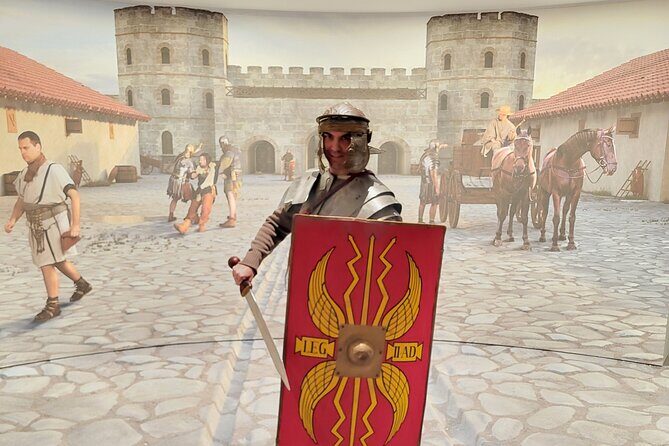
- Roman military amphitheatre first: you start at a rare structure and get quick context before you wander.
- Flórián téri Park on former legion land: you’ll connect green space and building remnants to the Legio II Adiutrix camp area.
- Hercules Villa mosaics: short, focused visit in an unusual setting between later apartments.
- Most time at Aquincum Museum: exhibits plus archaeological park ruins gives you the “materials and layout” view.
- Small-group feel up to 15: private setup for your group, not a crowded shuffle.
- Snacks included: a small welcome snack helps keep energy up during the walk.
Getting Oriented in Aquincum: How the Tour Ties Together
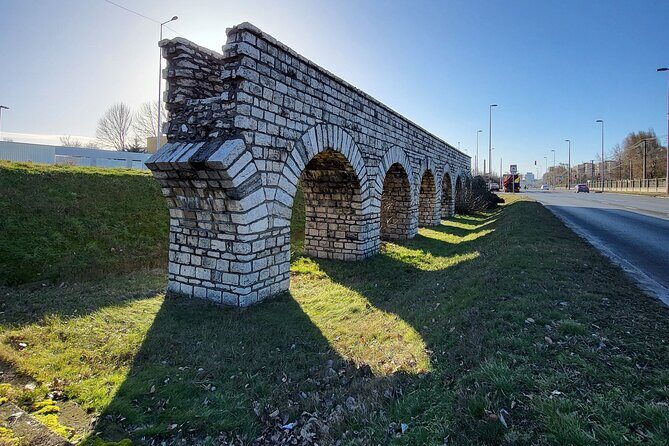
Budapest’s Roman layer isn’t one big monument you can see from a single viewpoint. It’s scattered—like clues across today’s streets, parks, and museum grounds. That’s exactly why a guided route makes sense here.
This tour is built around a clear sequence: start with the Roman military amphitheatre, then move through the former legion camp area, hit the Hercules Villa, and finish with the museum complex where you can slow down. The guide’s job is to give you a mental map so each stop stops feeling random.
You’ll also appreciate the practical side. It’s offered in English and uses a mobile ticket. It’s a private group experience (only your group participates), and it runs through a day-window of 9:00 AM to 4:00 PM. That timing matters because the Aquincum Museum visit takes the most time, and you don’t want to feel rushed.
Finally, know the walking reality. One review logged around 6K steps, so wear comfortable shoes and plan for short legs of walking between sites. This is totally doable if you move at a steady pace, but it’s not a “sit and look” kind of outing.
You can also read our reviews of more private tours in Budapest



Stop 1: The Roman Military Amphitheatre Visit (30 Minutes)
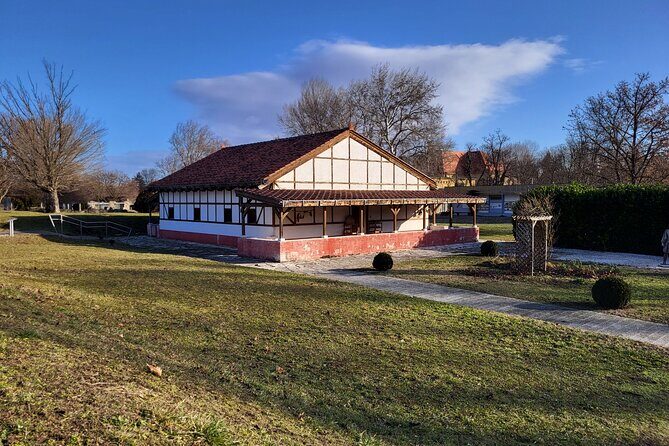
You meet at the Roman military amphitheatre and take a brief look. That start is smart. Amphitheatres are built to shape crowds—sound, sightlines, and scale. Even if you only spend about half an hour here, you’ll understand something important: this wasn’t just a random settlement. It had the organized public spaces you expect in a military town.
What makes this first stop especially worthwhile is how it sets expectations for the rest of the tour. When you later stand near the legion camp area and the villa, you’ll have a better sense of the Romans’ everyday priorities—discipline, structure, and community life, not just private homes and stone walls.
What to watch for (so you get more out of the brief visit)
- Look for how the space is shaped for viewing and gathering.
- Pay attention to any remaining structural cues that hint at how the site was used.
Possible drawback
Because it’s brief, you’ll want to have your questions ready. This stop is more about framing than lingering.
Stop 2: Flórián téri Park Inside the Former Legion Camp (About 1 Hour)
Next you shift into Flórián téri Park, where the tour focuses on hidden remnants and layout clues within the confines of the former legionary camp area tied to Legio II Adiutrix.
Parks in historic cities can sometimes feel like a detour—pretty but not always meaningful. Here, the park is part of the story. You’re not just walking for shade. You’re reading the ground as if it were part of a military map.
This is a great stop if you like “how places worked” history. A legion camp isn’t only buildings. It’s organization: where things were likely placed, how movement and access would have worked, and why certain areas ended up where they did.





What makes this stop valuable
- It turns today’s space into a readable context for Roman-era planning.
- It gives you a bridge between the amphitheatre and the residential world of Aquincum.
Possible drawback
Because it’s outdoors, this is weather-dependent in spirit. If the day is hot or wet, you might want to bring a bottle of water and keep your eyes on your footing.
Stop 3: Hercules Villa Mosaics Between Apartment Blocks (30 Minutes)
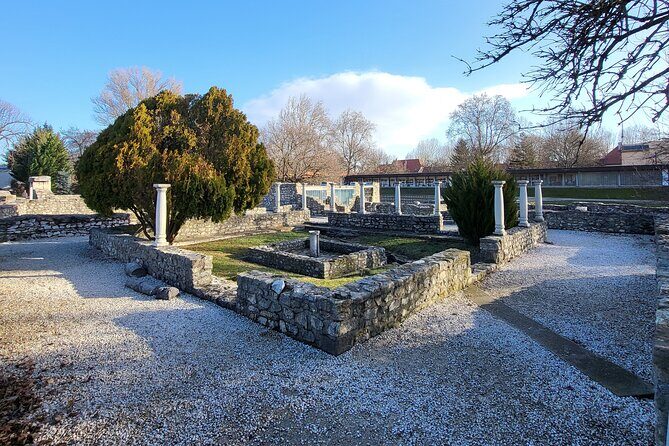
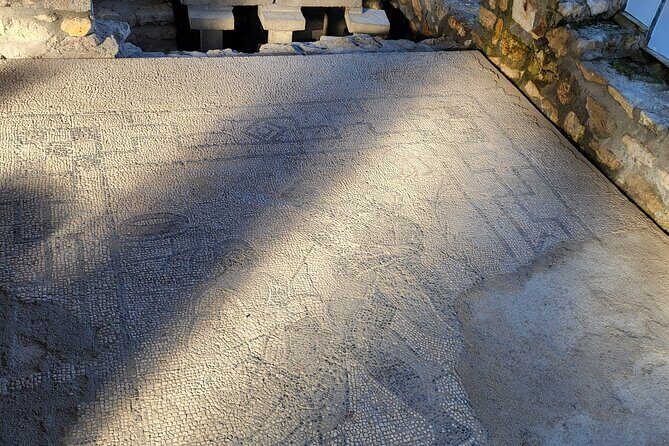
Then comes a stop that feels almost cinematic: the Hercules Villa. It’s a Roman-era villa tucked away between socialist-era apartment buildings. That contrast is part of the point. You get to see how Roman life ended up layered under modern Budapest.
The highlight here is the mosaics. The tour specifically gives you time to discover several mosaic floors. That short duration works well. You get enough time to enjoy details and understand what you’re looking at without turning the stop into a museum marathon.
Why this stop hits differently
A villa is where you move from the military town vibe into a sense of comfort and status. Even if you don’t know Roman art history, mosaics are visually legible. They’re durable, expressive, and meant to be seen.
And being in this awkward-in-a-good-way spot—Roman villa energy squeezed between later housing—helps you grasp something practical: history didn’t vanish. It got built over. You’re literally seeing the overlap.
Possible drawback
This stop is only about 30 minutes, so if you’re hoping for a long, slow gallery-style visit, you may wish it lasted longer. The tradeoff is that you still get the biggest time investment at the end.
Stop 4: Aquincum Museum Exhibits and Archaeological Park Ruins (About 1.5 Hours)
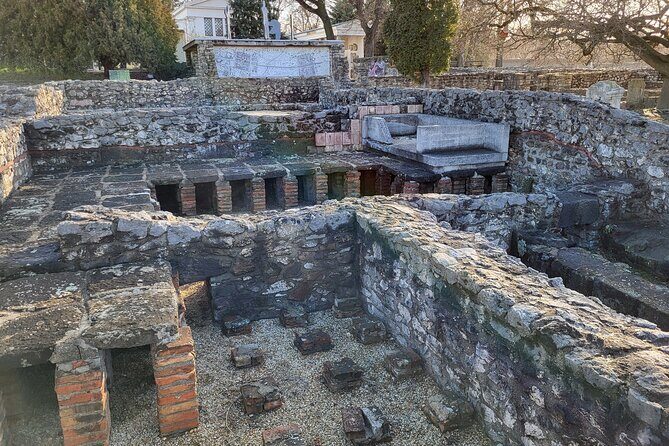
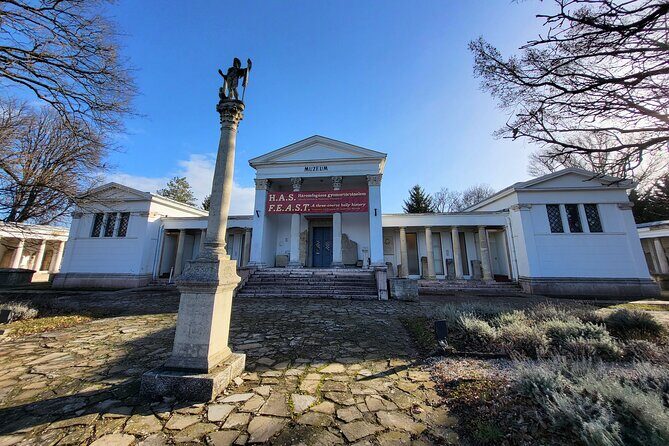
This is the main event. You’ll spend most of your time at the Aquincum Museum, covering both:
- museum exhibits, and
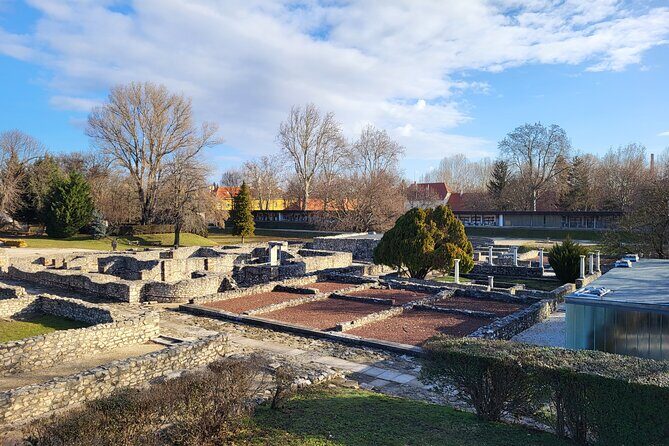
- the archaeological park with ruins.
This combination is what makes the visit feel complete. Exhibits help you understand what you’re seeing. The ruins help you understand how the structures relate to the site.
One big practical note: the Aquincum Museum entrance fee is not included. It’s listed as €8.00 per person. That cost isn’t a dealbreaker, but it does change the math on value. Still, if mosaics and amphitheatres are your thing, this museum time is where the tour earns its keep.
How to get the most in the 1.5 hours
- Start by scanning the exhibits for names, time periods, and how the site is organized.
- When you move into the archaeological park, focus on layout and scale. The “why this place looked like this” part usually clicks here.
Possible drawback
If you’re arriving in a hurry or have a museum-fatigue day, the museum portion can feel like the time sink. But that’s also where you’ll learn the most, because you’re not just walking past objects—you’re standing in context.
Price and Value: What You’re Paying For (and What You’re Not)
This tour is $78.27 per group for up to 15 people, lasting about 3 to 5 hours including travel time. On paper, that looks like a group deal, and it is.
Here’s the value logic:
- You’re paying for a private, guided route that connects multiple sites in a way you probably wouldn’t do as efficiently on your own.
- Your biggest variable cost is the Aquincum Museum entrance fee (€8 per person), which you’ll pay separately.
- You’ll also get a small welcome snack included, which is a nice touch when you’re walking.
If you’re traveling as a small family or a pair, the private format can feel like good spending because the guide can pace for your questions. If you’re solo and looking for the cheapest possible option, you might find other ways to see the area. But if you want the story behind what you’re seeing—why it’s arranged that way and what to notice—this route tends to be the better use of your time.
Pace, Footwear, and Who This Tour Fits Best
This experience is described as requiring moderate physical fitness. That matches the reality of the itinerary: multiple stops, outdoor walking, and a longer museum segment at the end.
Plan for:
- comfortable shoes (seriously),
- weather-appropriate clothing (you’ll be outside for part of it),
- and a mindset of “short visits with context.”
Best match
You’ll likely enjoy this most if you:
- like Roman history tied to real places (not only books),
- enjoy mosaics and architectural remnants,
- want a guide to help you read ruins and layouts fast.
Not ideal if
You want a low-walking, sit-heavy tour, or you’re hoping the entire cost includes every museum fee. The Aquincum Museum admission is separate.
Ending at Batthyány Square: A Convenient Finish Point
The tour ends at the Metro station in Batthyány Square, across from Parliament. That’s a handy way to close the loop. You’re not stuck in an out-of-the-way corner. You finish in a central area where it’s easier to catch transit or continue your day.
It also means the tour can slot smoothly into a larger Budapest plan—museum time first, major landmarks afterward.
Should You Book This Budapest Roman Aquincum Tour?
If you care about understanding what you’re seeing—beyond just taking photos—this is a strong choice. I’d book it if you want a guide like Tiberius to connect the amphitheatre, legion camp setting, Hercules Villa mosaics, and the Aquincum Museum into one coherent story.
I’d hesitate only if:
- you hate walking and prefer minimal steps, or
- you want every cost included upfront (the €8 museum fee is an extra you should budget).
Bottom line: for a Roman-focused morning or afternoon in Budapest, this is a practical private route that turns scattered remnants into something you can actually follow.
FAQ
How long is the Budapest Roman Aquincum private tour?
The tour lasts about 3 to 5 hours, and the total duration includes travel time.
What is the group size and price?
It costs $78.27 per group and accommodates up to 15 people.
Is the tour private?
Yes. It’s a private tour/activity, and only your group participates.
What language is the tour offered in?
The tour is offered in English.
What’s included in the price?
You get a small welcome snack. Entrance fees vary by stop, and the Aquincum Museum fee is not included.
Do I need to pay the Aquincum Museum entrance fee?
Yes. The Aquincum Museum entrance fee is €8.00 per person and is not included.
Where do I meet and where does it end?
You start at Budapest, Szőlő u. 2, 1034 Hungary and end at Batthyány Square Metro station (across from Parliament).
Is there a lot of walking?
There is some walking. One review noted logging around 6K steps, and the tour requires moderate physical fitness.
What if the weather is bad?
This experience requires good weather. If it’s canceled due to poor weather, you’ll be offered a different date or a full refund.