REVIEW · BUDAPEST
Past and Present of Budapest Jewish District Tour
Book on Viator →Operated by Triptobudapest.hu - Free Budapest Walking Tours · Bookable on Viator
Two hours, and Budapest tells a painful story. This Jewish Quarter walk connects major sights in District VII with a clear timeline, from Belle Époque optimism to the destruction that followed.
I love how the guide builds the story in a straight line, with street-level explanations for things like Gaudiopolis and the Schutzpass that helped save thousands of lives. I also like that it is not a museum-style march; you get urban details too, from the last ghetto-wall segment at Gozsdu Udvar to murals and street art around Rumbach and Szimpla.
One possible drawback: you do not go inside the synagogues, so this is best if you want context fast and then plan any interior visits separately.
In This Review
- Key things to know before you go
- Why the Jewish Quarter Walk Works So Well
- Price and Value: What $3.63 Really Means for You
- Meeting at Erzsébet tér, Ending at Szimpla Kert
- Stop 1: Erzsébet tér and the Belle Époque to Destruction Story
- Stop 2: Deák Ferenc Square, Gaudiopolis, and Old Exclusion
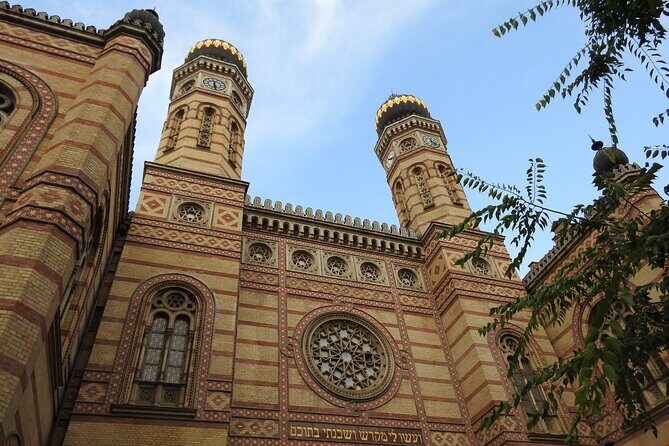
- Stop 3: Great and Central Synagogue Area (Nagy Zsinagóga) Without Going In
- Stop 4: Rumbach Street Synagogue and the Power of Restored Exteriors
- Stop 5: Gozsdu Udvar, the Passage, and the Last Ghetto Wall Piece
- Stop 6: Kazinczy Street Synagogue Area and What Lies Beyond the Door
- Stop 7: Szimpla Kert, Murals, and a Final Sense of Direction
- How the Guides Make or Break This Walk
- What You’ll Want to Do After (So It Doesn’t Feel Like a Quick Pass)
- Who This Tour Is Best For
- Should You Book This Jewish District Tour?
- FAQ
- How long is the tour?
- Where does the tour start?
- Where does the tour end?
- Is the tour in English?
- Does the tour include entry into the synagogues?
- Are there admission tickets included for the stops?
- What group size should I expect?
- Is there a mobile ticket?
- Are service animals allowed?
- Can I cancel and get a refund?
Key things to know before you go
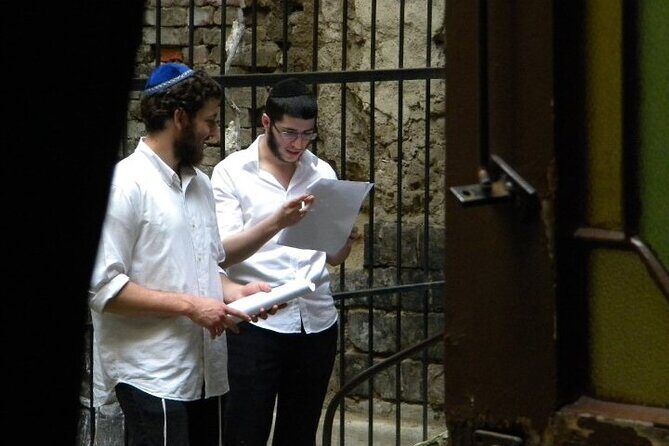
- A focused 1h45 route through the heart of District VII with short stops that keep momentum.
- Gaudiopolis and Schutzpass explained on the ground, not in the abstract.
- Nagy Zsinagóga seen with purpose from the outside, plus the Memorial Courtyard and cemetery view.
- Ghetto traces show up in modern streets, including the last piece of the wall at Gozsdu Udvar.
- Street art is part of the story, especially around Rumbach and the ruin-bar area at Szimpla.
- A donation-based guide model, with the tour designed so you can afford extra stops later.
Why the Jewish Quarter Walk Works So Well
Budapest’s Jewish District can feel like several neighborhoods at once. This tour helps you sort that out quickly by threading the past and present together along the same streets.
You get a guided narrative that starts in the city’s earlier “golden age” energy and moves toward the catastrophe that followed. The walk keeps returning to one theme: how laws, walls, and community life changed what people could do day to day.
And yes, it can be emotional. Several guides are praised for handling the Holocaust-era history with care and a human tone, not just facts on a timeline.
You can also read our reviews of more tours and experiences in Budapest.



Price and Value: What $3.63 Really Means for You
At $3.63 per person for an ~1h45 group walk, this is priced like an easy first step. That price point matters because it lowers the barrier to getting oriented without committing to a long, expensive day.
What you’re paying for is the guided experience plus the admin/booking side. The tour also uses a donation model at the end, meaning your guide’s earnings depend on what you choose to give, not on entrance fees bundled into the ticket.
So the true value is twofold. You’ll learn a lot of context fast, and you’ll also leave with a sense of which buildings are worth spending more time on when you’re ready to go inside.
Meeting at Erzsébet tér, Ending at Szimpla Kert
The tour starts at a very clear landmark: the Ferris Wheel of Budapest at Erzsébet tér (1051 Hungary). It ends at Szimpla Kert on Kazinczy u. 14 in District VII.
That end point is a nice practical choice. Szimpla is a ruin bar area where you can keep exploring, grab a drink or snack if that fits your day, or simply orient yourself for the rest of your evening.
Timing-wise, you should expect a brisk walk with plenty of standing around viewpoints and building exteriors. The total time is about 1 hour 45 minutes, and individual stops are typically 10 to 20 minutes.
The group size caps at 25 travelers, which is big enough to meet people, but small enough that a guide can still manage questions.
Stop 1: Erzsébet tér and the Belle Époque to Destruction Story

You begin at Erzsébet tér, meeting your licensed local guide right at Elizabeth Square. This opening sets the tone: you sketch the route and landmarks, then the guide starts the history with Hungary’s Jewish story through different eras.
This is where the tour earns its name, past and present. You’re not just looking at old buildings. You’re learning how the community’s life changed as the political climate hardened.
The first stop also frames what you’ll see later, including the major synagogues and the broader Jewish presence in what is now District VII. It’s a good way to avoid the common problem of walking through the area without understanding what matters.
Stop 2: Deák Ferenc Square, Gaudiopolis, and Old Exclusion
Next you move toward Deák Ferenc Square, where the guide explains a striking concept: Gaudiopolis, the City of Joy in Latin. That idea helps you understand that the story was not only tragedy. There was also real cultural life, growth, and pride.
You also get the darker side of the city’s structure. The tour points out former medieval city wall ruins that restricted where Jewish people could trade. Even if you’ve heard about discrimination before, seeing it connected to actual street geography makes it feel concrete.
This stop is a useful pivot. It teaches you to read the neighborhood like a map of access and exclusion, not just architecture.



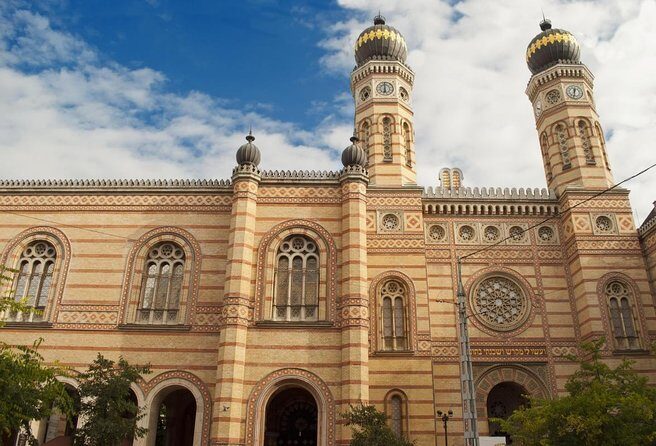
Stop 3: Great and Central Synagogue Area (Nagy Zsinagóga) Without Going In
At the Great / Central Synagogue (Nagy Zsinagóga) area, you focus on what the building represents. The guide explains the Neologue and Orthodox movements, plus the role of Zionism in Jewish life.
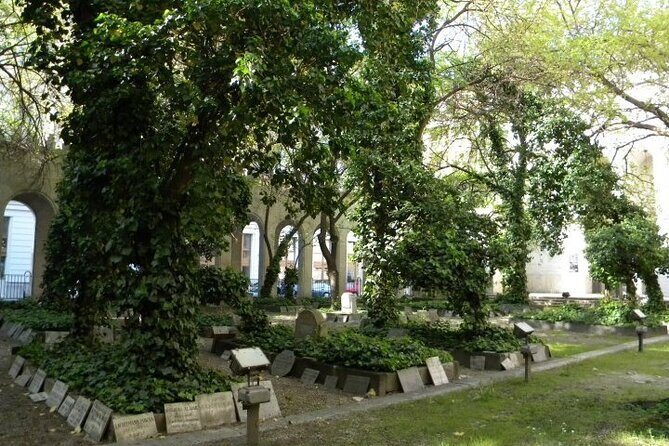
Important expectation: the tour does not enter the synagogue. Instead, you see the Memorial Courtyard and the cemetery from outside.
That choice has trade-offs. On the plus side, you save time and keep the narrative moving, and you still get a powerful memorial setting. On the minus side, if you came hoping for an interior visit, you’ll need to schedule that separately.
Still, this stop is often the one people remember most. It gives you a landmark to attach meaning to, and it anchors the rest of the walk.
Stop 4: Rumbach Street Synagogue and the Power of Restored Exteriors
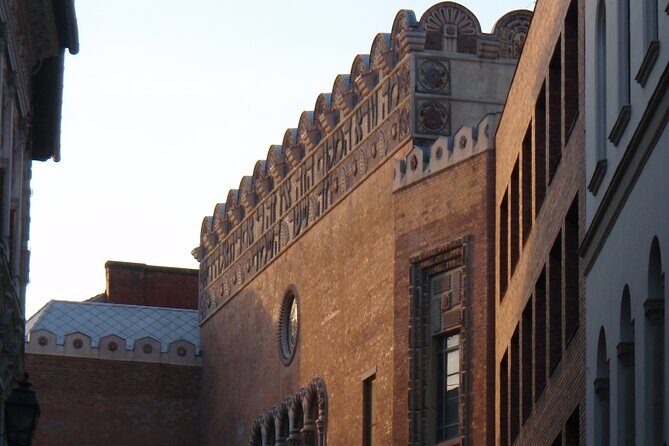
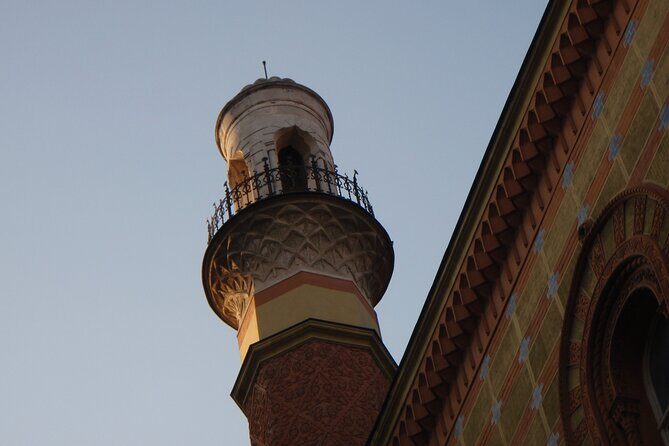
The walk continues to Rumbach Street Synagogue, where you learn about a building with a strong visual comeback story. You focus on how it has been beautifully restored, and you also connect the synagogue area to surrounding murals and street art.
The tour again does not enter the synagogue. You’re learning through exterior observation: facade details, the way the building fits into today’s streetscape, and how public art and modern urban life sit next to religious heritage.
This stop works especially well if you like history that shows up in everyday scenes. Budapest’s Jewish District isn’t frozen in time. It’s layers on layers, and Rumbach is one of the places where that layering becomes visible fast.
Stop 5: Gozsdu Udvar, the Passage, and the Last Ghetto Wall Piece
Then you pass through Gozsdu Udvar / Gozsdu Passage, and the guide brings the area into focus as a place that now mixes entertainment, gastronomy, and culture.
The historical connection is the key reason for this stop. You’ll also see the last piece of the ghetto wall, which makes the present feel earned rather than random.
This is one of those “walk and think” moments. You’re standing in a modern leisure zone, but your guide gives you the historical frame to recognize what once separated people and shaped movement.
If you’re the kind of traveler who likes to connect food and nightlife to history, this stop lands well.
Stop 6: Kazinczy Street Synagogue Area and What Lies Beyond the Door
The next area is around the Kazinczy Street Synagogue, belonging to the Orthodox community of about 50 to 60 families. The guide talks about how community size and structure shape daily religious life.
You also hear about practical cultural details, including kosher food and a Jewish ritual bath. Even without entering, those topics help you understand the neighborhood as a living community, not just a sightseeing checklist.
As with the other synagogues on this route, you do not go inside. You’re given orientation—where the building sits, what kind of community it served, and how the ideas behind it show up in rituals.
Stop 7: Szimpla Kert, Murals, and a Final Sense of Direction
The last stretch brings you to Szimpla Ruin Bar. This is less about one specific landmark and more about getting your bearings at the end.
You see additional pieces of murals and urban street art, then the guide provides a final orientation point—basically helping you understand what to do next if you want to keep exploring on your own.
This stop is also practical. Since the tour ends here and there is no entry fee mentioned for the ruin bar, it’s easy to roll straight into independent time after the walk.
If you’ve got energy, this is a friendly place to keep your history brain on while switching modes from standing and listening to wandering.
How the Guides Make or Break This Walk
The biggest difference you’ll feel is guide style. The route needs storytelling, not just names of buildings.
In particular, the guides named in feedback stand out for being friendly and organized, and for answering lots of questions. Some also keep the tone respectful when discussing Holocaust-era history, which matters because this tour is not light entertainment.
One caution: one person noted that a strong Hungarian accent made it harder to follow. If language clarity is your top priority, arrive early, and don’t be shy about asking the guide to repeat key points as you go.
Also remember that this is still a walking tour. Even with a good guide, you’ll spend a lot of the 1h45 on your feet, stopping and starting across District VII streets.
What You’ll Want to Do After (So It Doesn’t Feel Like a Quick Pass)
Because the tour keeps you outside the synagogues, your next step is simple: choose one interior visit you care about.
If a synagogue is the reason you came to Budapest’s Jewish Quarter, plan a separate time block later for an inside look. This tour is designed to help you pick what matters most.
You can also use the walk as a map. The story points you toward where the neighborhood’s memorial and community history lives in plain sight, so your own follow-up wandering becomes more meaningful.
A few people also mention finding smaller memorials and symbolic street details in the area. When you know what you’re looking for, those extras become easier to spot without turning your trip into guesswork.
Who This Tour Is Best For
This is a strong choice if you want:
- A fast, organized way to understand Jewish history in Hungary and how the Jewish Quarter developed
- A guided route that connects major sites without requiring entrances
- A history walk that includes both joyful community life and the brutal turning points that followed
It can be less ideal if you:
- Want a synagogue interior tour as part of the main event
- Get uncomfortable with a heavier topic and lots of standing around exteriors
- Need very clear English pronunciation with minimal accent variation
Should You Book This Jewish District Tour?
I think you should book it if you want a high-value orientation to District VII in under two hours, with a guide who ties the streets together into a real story.
Skip it only if your top priority is entering every synagogue building during the same session. This walk is built for context on the outside. If you want inside access, pair it with a later visit.
One last practical note: pack walking shoes. District VII is totally doable on foot, but you’ll be standing and walking more than you might expect for 1h45.
FAQ
How long is the tour?
The tour lasts about 1 hour 45 minutes.
Where does the tour start?
The meeting point is the Ferris Wheel of Budapest at Erzsébet tér, 1051 Hungary.
Where does the tour end?
It ends at Szimpla Kert, Kazinczy u. 14, 1075 Hungary.
Is the tour in English?
Yes, it is offered in English.
Does the tour include entry into the synagogues?
No. The tour does not enter any synagogues. You’ll see key areas from outside, including the Memorial Courtyard and the cemetery view at Nagy Zsinagóga.
Are there admission tickets included for the stops?
The listed stops show admission ticket free, and the tour does not include synagogue interior entry.
What group size should I expect?
The tour has a maximum of 25 travelers.
Is there a mobile ticket?
Yes, the tour includes a mobile ticket.
Are service animals allowed?
Yes, service animals are allowed.
Can I cancel and get a refund?
Yes. You can cancel for a full refund if you cancel at least 24 hours before the experience start time.