REVIEW · BUDAPEST
Budapest: Grand Sightseeing Bike Tour
Book on GetYourGuide →Operated by Bestbike Tours Kft. · Bookable on GetYourGuide
Budapest in three hours, pedal and picture. This guided bike tour is a smart way to see a lot of Budapest without spending your whole day in lineups, and you get real landmark context as you glide along the Danube. You’ll roll past iconic bridges, climb into Buda for big-sky views, then wind through key city sights on and off major boulevards.
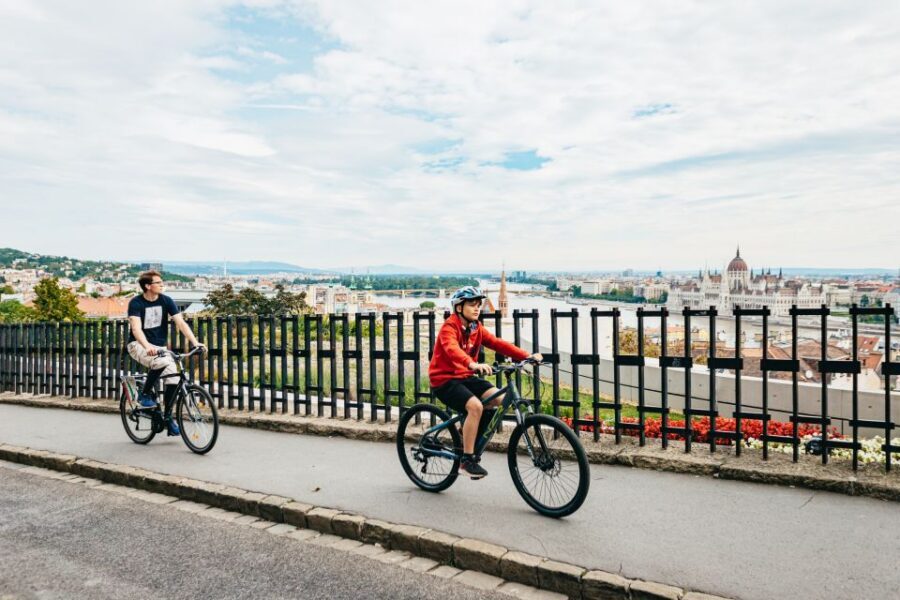
I especially love the Castle District panoramic payoff. It makes the uphill effort feel worth it fast, because you’ll be looking back over Pest from high ground. I also love the live guide storytelling. Names like Carson, Zsolti, Thomas, and Andy show up in past groups, and the common thread is that the tour has jokes, details, and clear explanations tied to what you’re actually seeing.
One thing to consider: there’s a steep hill climb in Buda. It’s doable, but if you’re not into leg-heavy days, you may want an e-bike option.
In This Review
- Quick hits before you pedal
- Why this bike tour is a great first-round in Budapest
- Meeting at Stasher and what to expect on the ground
- Danube Corridor riding: Duna Corso, Elizabeth Bridge, and Chain Bridge
- Climbing Castle District: the view that makes the hill worth it
- Margaret Bridge and Margaret Island: the breathing space in the middle
- Parliament, Freedom Square, and St. Stephen’s Basilica: seeing Hungary’s symbols up close
- Andrássy Avenue UNESCO ride: Opera House and House of Terror pass-by
- Heroes’ Square and City Park: the big finale before you head back
- Pace, safety, and how hard the ride really is
- Price: why $44 feels fair for what you’re actually getting
- Who this tour suits best
- Should you book the Budapest Grand Sightseeing Bike Tour?
- FAQ
- How long is the Budapest Grand Sightseeing Bike Tour?
- How much does it cost?
- What’s included in the tour?
- Where does the tour start?
- What sights will I see on the route?
- Is the tour conducted in English?
- What should I bring?
- Is the tour suitable for children or pregnant women?
- Can I bring luggage or large bags?
Quick hits before you pedal
- Danube bridge sweep: Elizabeth Bridge and Chain Bridge viewpoints are timed for easy photos.
- Castle District climb: big views over Pest, plus time to stroll the Castle streets.
- Margaret break: you get a breather on Margaret Island instead of nonstop riding.
- Landmark photo stops: Parliament, Freedom Square, and St. Stephen’s Basilica are built into the route.
- UNESCO Andrássy Avenue: you ride the formal boulevard in the shadow of the Opera House.
- Small-group feel: many departures run with only a few riders, so the guide can keep the pace comfortable.
Why this bike tour is a great first-round in Budapest
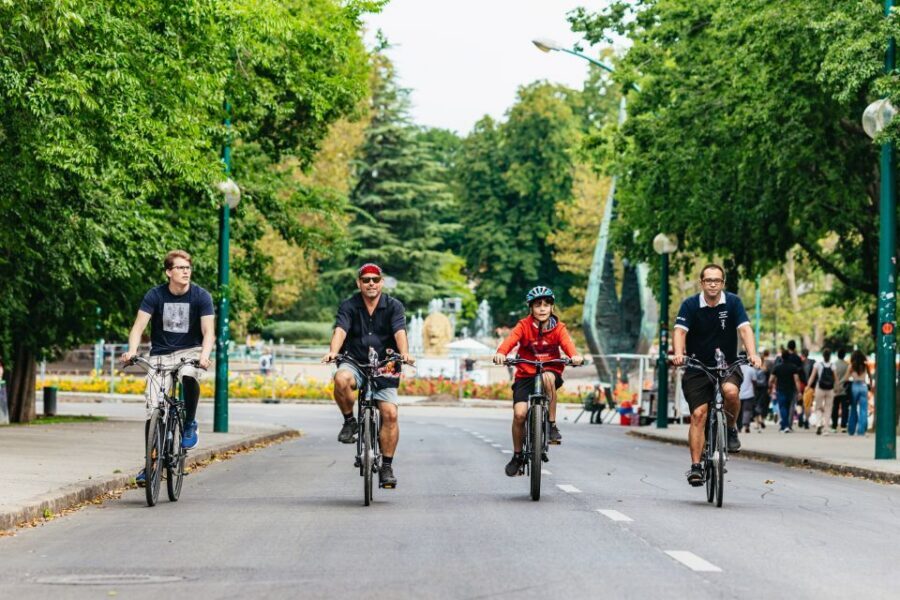
Budapest can feel like two cities stitched together: Pest with its river-front energy, and Buda with the hills and viewpoints. This tour is built for getting that split to click quickly. In about three hours, you cover a top slice of the “greatest hits” map, then you leave with a mental model of where everything sits.
I like that the ride is structured but not frantic. You get bike time for the big sweeping sights, plus enough stops for photos and short explanations that make the buildings more than just postcard shapes. And since the tour runs with a live English guide, you’re not stuck translating signs while your feet are getting sore.
If you’re doing Budapest in a short window, this is the kind of outing that helps your next days run smoother. You’ll know which areas you want to return to on foot, which views you’ll seek again at different times of day, and where the main landmarks connect.
You can also read our reviews of more cycling tours in Budapest

Meeting at Stasher and what to expect on the ground
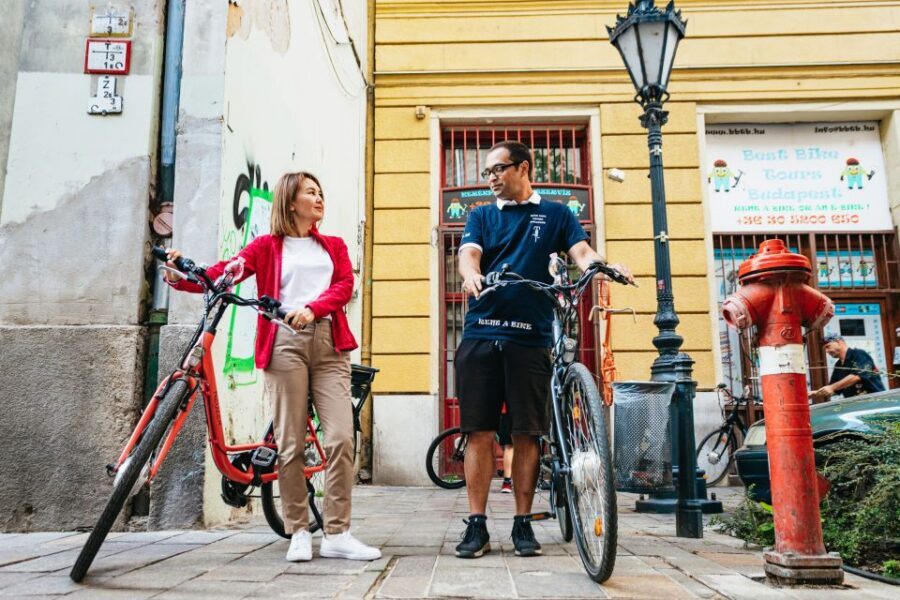
You’ll meet at Stasher – Luggage Storage Budapest, which is convenient if you want to drop bags and travel lighter. The tour includes a bike, a helmet, and a bottle of mineral water, so you’re not hunting for rentals or scrambling for basic gear right at the start.
You should still come ready to move. Bring comfortable shoes and dress for the weather because the tour goes in all weather conditions. Also plan to travel light: luggage or large bags aren’t allowed. If you’re carrying a big backpack or rolling suitcase, use the nearby luggage-storage idea and travel with a small day bag only.
In terms of comfort, past riders have noted that most of the route uses cycle ways, and when you do mix with road traffic, the vibe feels managed and safe. Still, you’re on a bicycle in a real city, so if you’re very nervous about riding near cars, start the tour with that in mind and keep a relaxed, predictable pace.
Danube Corridor riding: Duna Corso, Elizabeth Bridge, and Chain Bridge
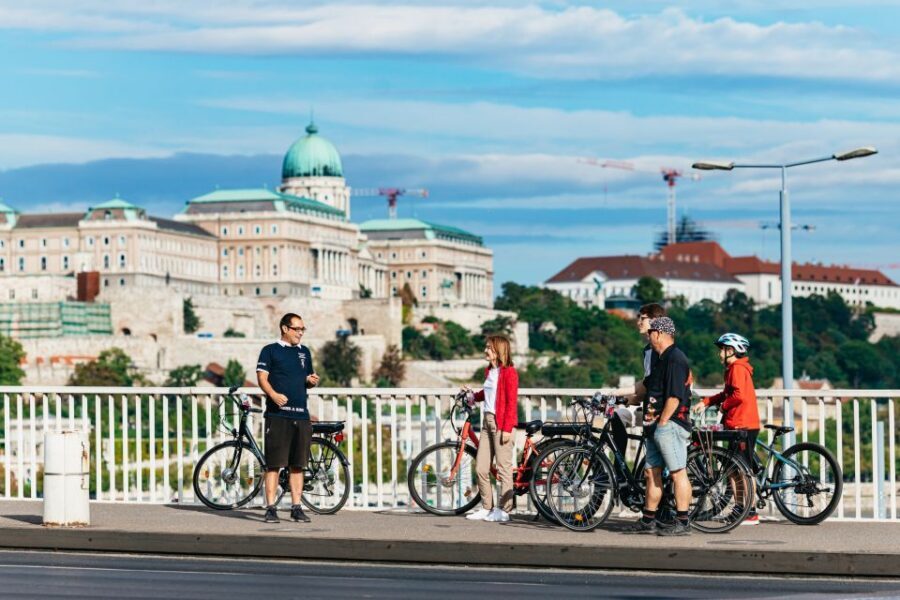
This tour’s first real “wow” comes from the Danube stretch. As you ride, you get that classic Budapest feeling: grand buildings lining the river, bridges acting like punctuation marks, and constant photo angles from the bike lane.
You’ll glide along the river toward Duna Corso, then hit an easy photo stop at Elizabeth Bridge. From here, you can frame Budapest’s skyline with the river in the foreground without needing to fight crowds at a single viewpoint.
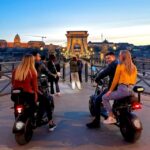
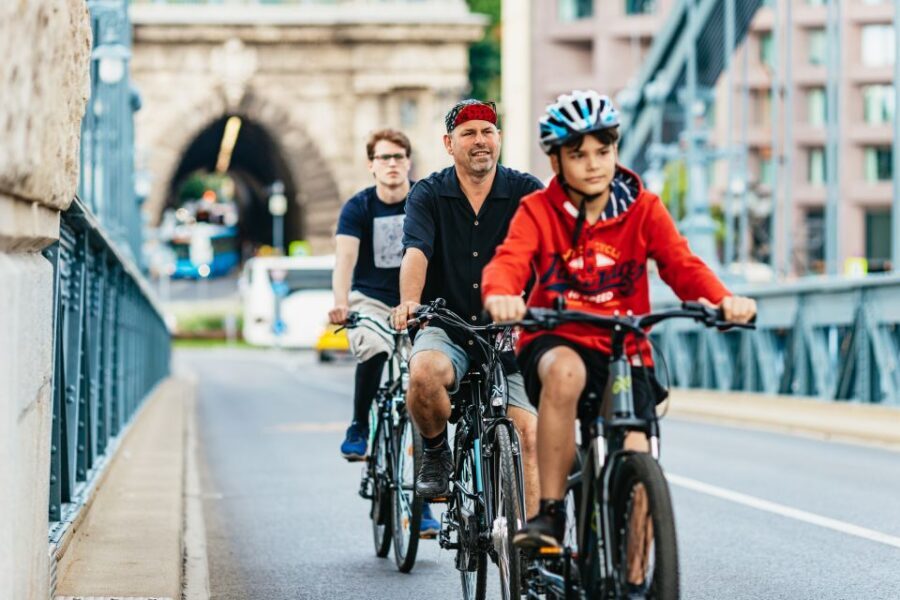
Next up is the Chain Bridge, one of the most recognizable connections between Buda and Pest. The bike format matters here. Walking can take forever between angles. By bike, you can cover enough distance to see how the bridge sits in the wider city picture, not just the closest front view.
This is also a good segment for your energy. It’s scenic, generally smooth, and it sets the rhythm for the rest of the tour. If you’re the type who loves architecture but doesn’t want museum time, this river section is the perfect appetizer.
Climbing Castle District: the view that makes the hill worth it
Then comes the part that makes Budapest feel real. You’ll climb into the Castle District in Buda, and you’ll feel the difference between Pest’s flatter streets and Buda’s rise.
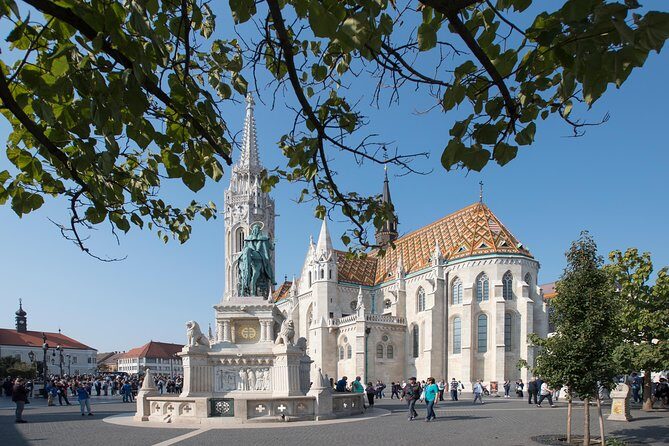
Expect a break time and photo stops around the Castle area, with some free time to walk the streets and take your time. The payoff is a magnificent panoramic view over Pest. This isn’t just scenery for scenery’s sake. It helps you understand why Budapest’s grand buildings look the way they do from across the water. From the height, the city’s layers make more sense.
The route also connects to views like Fishermen’s Bastion. Even if you’re not going inside any buildings, the bike tour gives you the sightlines and the reason people queue for those overlooks.
Real talk: this is the segment most people judge as easy or hard. A grind up to the lookout in Buda is common enough that some riders have chosen to upgrade to an e-bike for relief. If hills aren’t your thing, don’t wait until you’re already breathing hard. Ask your operator ahead of time whether an e-bike option is available for your departure.
Margaret Bridge and Margaret Island: the breathing space in the middle
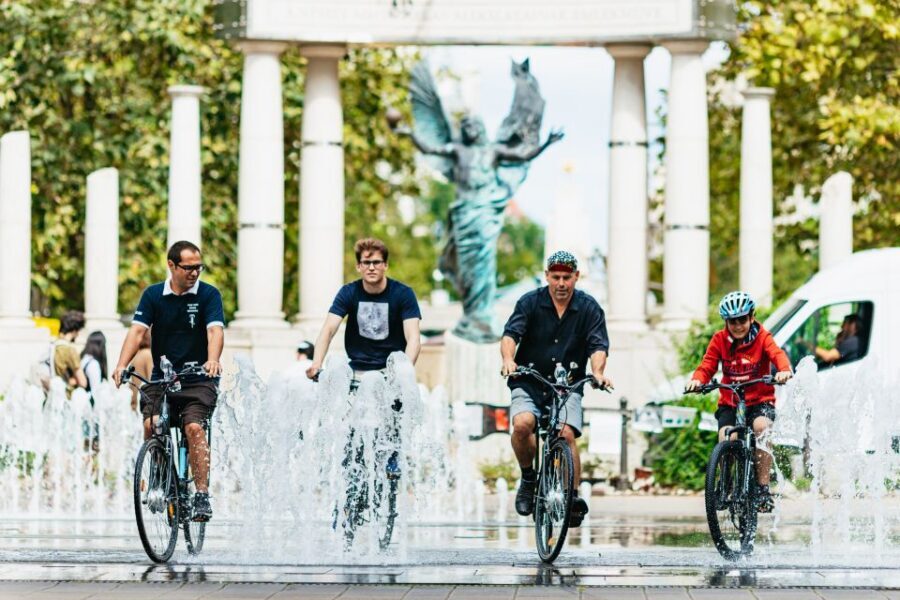
After the Castle time, you’ll descend and switch to a calmer pace as you head along the Danube toward Margaret Bridge. A ride along this stretch feels like the city slowing down. You’re still in the action, but the scenery turns greener and more open.
You’ll pass Margaret Bridge, then reach Margaret Island with another break time. This is where the tour gives you something many landmark walks forget: a chance to rest your legs and reset. If you want to sit for a few minutes, stretch out, or just soak in the river-and-park view, this is the moment.
Margaret Island also works as a mental reset between the big-ticket historic sights. You’ll roll back onto the more structured “photo-stop” rhythm afterward, but you’ll feel better prepared for it after this pause.





Parliament, Freedom Square, and St. Stephen’s Basilica: seeing Hungary’s symbols up close
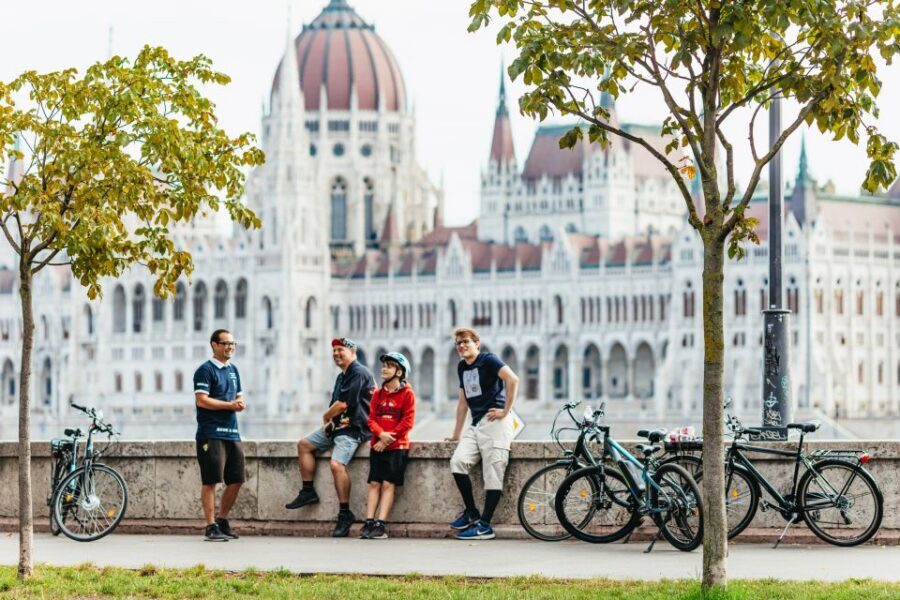
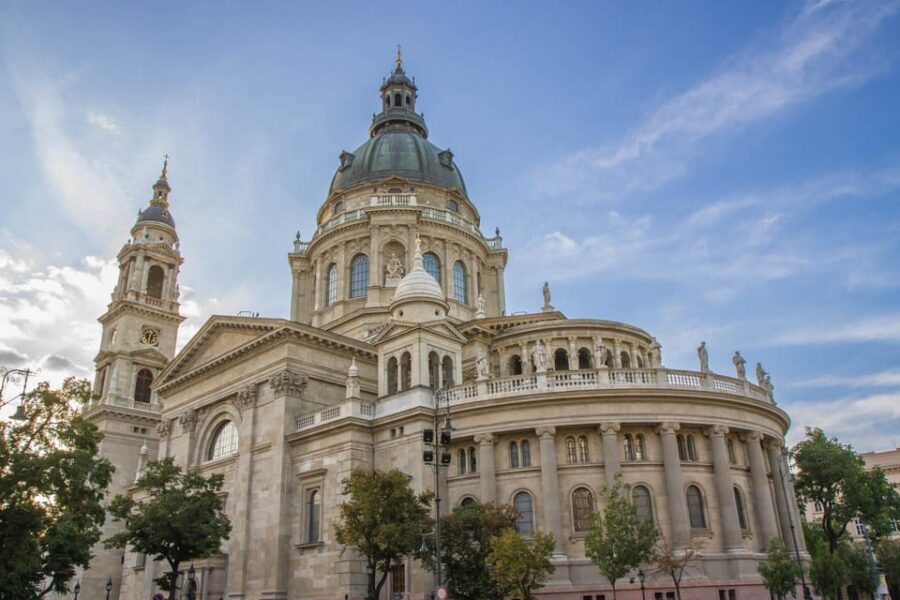
The tour then tightens into a classic Budapest sweep of major monuments in Pest. You’ll have photo stops at the Hungarian Parliament Building, then at Freedom Square (Szabadság Square), and later at St. Stephen’s Basilica.
The value of bike-based stops here is the context. These buildings aren’t just pretty. Each one connects to a different layer of Hungary’s story, and a live guide can tie the architecture to what it was meant to represent. Even the short stop windows feel useful because you hear the meaning right before you see it.
One practical advantage: you can get the landmark photos without spending long periods in the no-straight-into-it reality of walking routes. It’s still not a drive-by. You’ll stop long enough to look, orient, and get a picture that includes scale.
If you’re the kind of traveler who wants to return later with more time, these stops do that job too. You’ll know what side you prefer to revisit, and which building you’ll want to photograph again from ground level instead of skyline level.
Andrássy Avenue UNESCO ride: Opera House and House of Terror pass-by
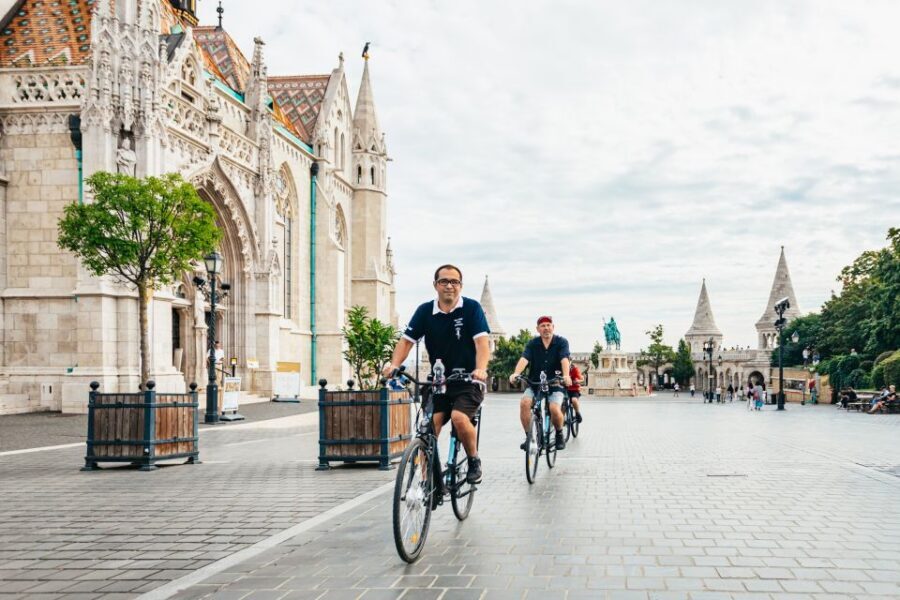
Next, the tour moves onto Andrássy Avenue, a UNESCO-listed boulevard. This part is special because it feels like Budapest trying to show off its grandeur in a long, formal line. Even if you’re not entering any buildings, riding the avenue gives you that “grand boulevard” perspective all at once.
You’ll pass the Opera House, and later you’ll also pass the House of Terror. The pass-by format matters. You get the quick recognition moments, plus guide stories that help you understand why these sites are so important. It’s also a good segment to notice how Budapest’s urban design changes once you’re off the immediate riverfront and into the city’s ceremonial streets.
Also, the timing and flow help. After the basilica and square stops, you’re ready for a change of pace. The boulevard ride gives you distance with less decision-making, and you can focus on the architecture and the feel of the neighborhoods sliding by.
Heroes’ Square and City Park: the big finale before you head back
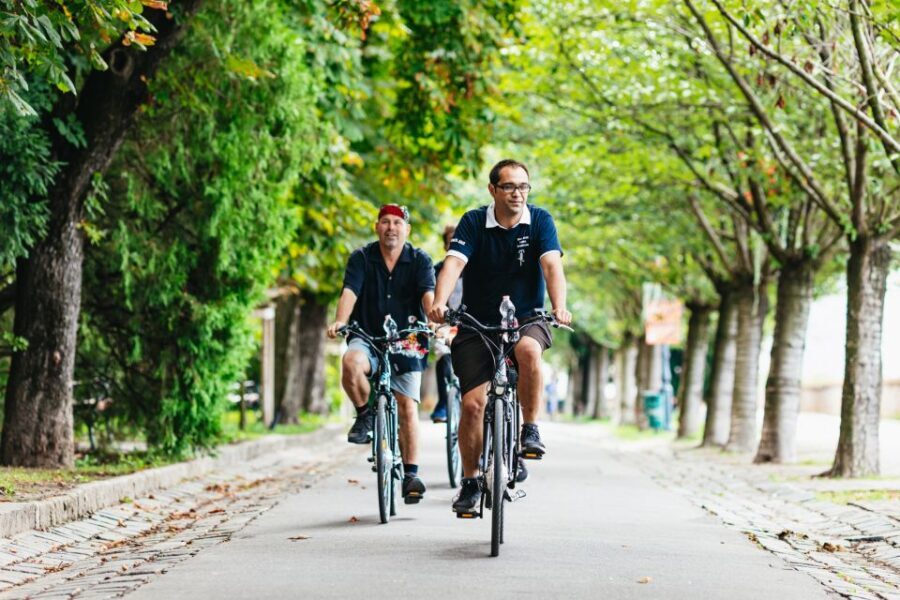
To wrap up, you’ll reach Heroes’ Square, where you’ll have another photo stop. This square is one of the places that instantly looks historic from any angle, because it’s meant to feel monumental. Standing there, even for a few minutes, gives you a sense of how Budapest likes to frame national identity in public space.
From there, you’ll also pass through Városliget (City Park) before heading back to the starting point. City Park can feel like a pause button after dense sightseeing. It’s a nice way to end a tour because the last moments aren’t all about speed. You can take in the broader park setting and wind down before you start planning what to do next.
Pace, safety, and how hard the ride really is
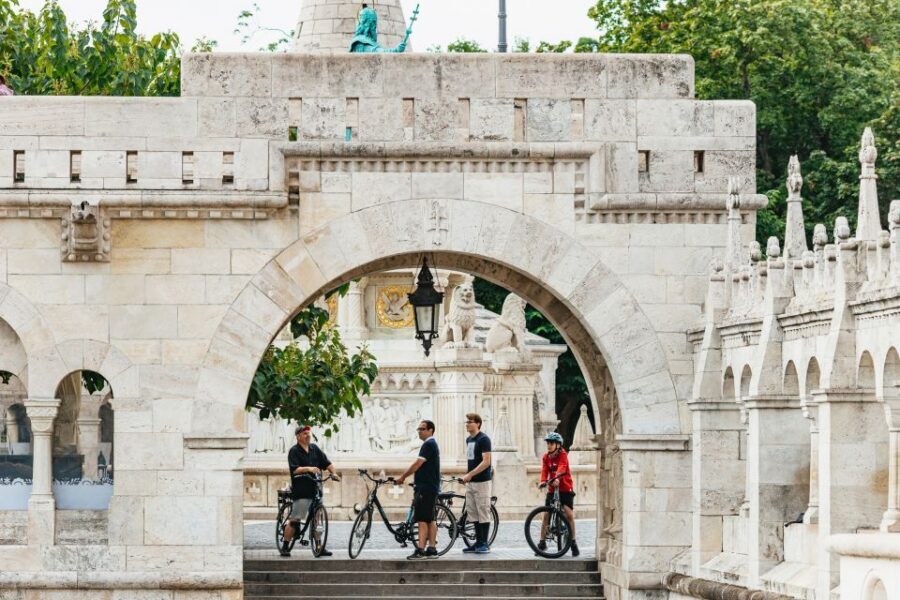
This is a sightseeing tour, not a fitness-only training ride. That said, you’re still cycling for three hours, and the route has enough elevation that you’ll feel it in your legs.
Here’s the honest breakdown:
- The Castle District climb is the hardest part. If you’re unsure, consider an e-bike option.
- The rest of the ride is framed by scenic river stretches and mostly manageable cycling paths.
- Safety tends to feel steady because a lot of the route uses cycle ways, and the guides manage the group pace.
Past riders have described the bikes as in good condition, and they’ve also praised guides for checking in and making sure everyone is okay. Some guides even act as photographers during stops, so if you want clean group shots, it’s worth asking your guide to help coordinate photos at the stops.
Group size can also shape your experience. Some departures have been small, which can mean less waiting at intersections and a more relaxed rhythm. If you’re hoping for that personal feel, booking at less crowded times can help.
Price: why $44 feels fair for what you’re actually getting
At $44 per person for about 3 hours, this tour is strong value on paper because it includes:
- a bike
- a helmet
- a live English guide
- mineral water
The part that makes the price make sense isn’t just the gear. It’s the guide doing the work: choosing routes, timing stops, and giving context while you’re moving through the city. For big landmarks, that’s where you normally spend time plus extra tickets plus guesswork.
If you compare it to buying a rental bike on your own, paying for bike-friendly navigation, and then trying to line up guided explanations on your schedule, you start to see why a fixed guided ride can be cheaper than it first looks. And because you can use the tour on your first day, the real value is what it saves you later: fewer wrong turns, smarter return plans, and faster orientation.
Who this tour suits best
I’d point you toward this tour if:
- you want a fast, organized overview of major Budapest sights
- you like learning while moving, not just standing still
- you’re comfortable riding a bike for several hours and handling at least one meaningful hill
I’d skip it if:
- you don’t want hills at all (the Castle District climb is the big test)
- you’re traveling with a child under 12, since it’s not suitable for them
- you’re pregnant, since it’s listed as not suitable
If you’re a first-time visitor or you’re only in Budapest briefly, this is one of the easiest ways to get oriented quickly and still feel like you saw the city, not just the basics.
Should you book the Budapest Grand Sightseeing Bike Tour?
Book it if you want a high-efficiency day: Danube bridges, Castle views, Parliament-and-basilica photo stops, then a ride down Andrássy Avenue with pass-by moments at the Opera and House of Terror. The structure is tight enough to cover a lot, but the pacing includes breaks like Margaret Island, so you won’t feel wiped out.
Don’t book it if hills scare you. The Buda climb is the main decision point, and you should plan accordingly (an e-bike option can be a lifesaver for some riders). Also, be ready for changing weather since the tour runs in all conditions.
If you’re open to that one hill challenge, this is a really practical way to get your bearings, learn what you’re looking at, and leave Budapest already knowing where you want to go next.
FAQ
How long is the Budapest Grand Sightseeing Bike Tour?
It’s a 3-hour guided bike tour.
How much does it cost?
The price is $44 per person.
What’s included in the tour?
You get a bike, helmet, a live English guide, and a bottle of mineral water.
Where does the tour start?
The tour starts at Stasher – Luggage Storage Budapest.
What sights will I see on the route?
You’ll ride along the Danube, see Elizabeth Bridge and Chain Bridge, spend time around the Castle District, stop for views related to the Castle area, and visit photo stops for the Hungarian Parliament Building, Freedom Square, and St. Stephen’s Basilica. The route also includes rides along Andrássy Avenue with pass-by views of the Opera House and House of Terror, plus Heroes’ Square and Városliget/City Park.
Is the tour conducted in English?
Yes, the live guide speaks English.
What should I bring?
Bring comfortable shoes and weather-appropriate clothing.
Is the tour suitable for children or pregnant women?
No. It’s not suitable for children under 12 and it’s not suitable for pregnant women.
Can I bring luggage or large bags?
No. Luggage or large bags are not allowed.