REVIEW · BUDAPEST
Budapest-Vienna One-Way Sightseeing Transfer
Book on Viator →Operated by Sidetrips from Budapest · Bookable on Viator
A Danube day with zero stress. This one-way transfer mixes guided sightseeing with an air-conditioned ride, turning your route from Budapest to Vienna into a full day of stops rather than just transportation.
I especially liked the small-group cap of 15—it feels personal, not like a bus tour where you only hear things through the gap between heads. I also liked having a local guide handling the flow and sharing context as you go, including food suggestions that made the day feel lived-in (langos is a big win).
The one possible drawback: the pace is efficient. You get great highlights at each stop, but if you want slow wandering or extra museum time, you’ll need to plan your Vienna time carefully.
In This Review
- Key things to know before you go
- Why this one-way transfer feels like more than a ride
- Morning logistics: pickup, timing, and getting set up fast
- Szentendre’s Old Town: Baroque streets in a small-town time capsule
- Esztergom Basilica over the Danube: the big wow moment
- Lunch time: plan around what’s included and what isn’t
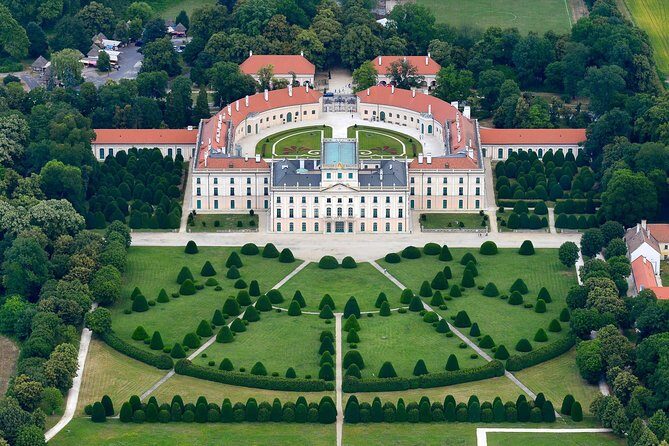
- Eszterházy Palace: a bonus option if you care about interiors
- Bratislava Old Town: medieval lanes plus a rebuilt castle view
- The guide’s role: why English helps, and why it matters
- Small-group travel: how 15 people changes the day
- Traveling comfortably: air-conditioning, luggage, and fewer headaches
- Vienna arrival: finish strong with a hotel drop-off and tips
- Price and value: what $324.41 really buys you
- Who should book this transfer—and who might not
- Should you book the Budapest to Vienna sightseeing transfer?
- FAQ
- How long is the Budapest to Vienna sightseeing transfer?
- What time does the experience start?
- How large is the group?
- Does the tour include pickup in Budapest?
- Is lunch included?
- Are entrance fees included for the sights?
- What language is the guide?
- Is there room for luggage in the vehicle?
- What is the cancellation policy?
Key things to know before you go
- Small group (15 max) for a more conversational, question-friendly day
- Local guide in English to connect the dots between Budapest, the Danube towns, and Vienna
- Comfort + luggage space in an air-conditioned vehicle built for this kind of transit
- Free sightseeing stops at each town listed, with Eszterházy Palace not included
- Three major stops in about 10 hours: Szentendre, Esztergom, then Bratislava
Why this one-way transfer feels like more than a ride
A straight transfer from Budapest to Vienna is fine if all you want is arrival. But paying for a guided sightseeing transfer usually makes sense when you’re short on time and you still want to see places you’d otherwise skip.
Here, the value is in three practical choices. First, you’re not just driving: you get a local guide giving explanations and pointing you toward what to notice. Second, the vehicle is air-conditioned and offers reasonable room for luggage, so you’re not traveling light and stressed. Third, you’re not waiting around all day—your stops are built into the day and timed out for a full sightseeing route.
The price—$324.41 per person—isn’t cheap for a transfer. But you’re paying for the combination of guide time, planning, and vehicle service, not just transportation. If you’d otherwise do a DIY mix of train/bus plus guided walking time, this can feel like a rational way to buy back your time.
A few more Budapest tours and experiences worth a look



Morning logistics: pickup, timing, and getting set up fast
The day starts at 9:00 am. You’ll be offered pickup, and the meeting point is near public transportation, which is useful if you’re staying a bit away from the main pickup hub.
This matters because one of the hidden costs of independent travel is the time spent figuring out where to stand, which stop to use, and how to manage baggage. Here, you can show up, get in, and go. And because you’re using a mobile ticket, you don’t have to play phone-to-paper scavenger hunt.
You’ll also want to think about how you pack. Since the ride includes multiple walking stops, bring a day bag you can keep with you. The vehicle has luggage space, but you’ll still want easy access for essentials like water, sunglasses, and a light layer.
Szentendre’s Old Town: Baroque streets in a small-town time capsule
Your first stop is Szentendre, a riverside town known for charming streets and architectural character. With about one hour here, it’s timed for an overview: enough time to get the mood and the best-looking lanes without turning it into a long slog.
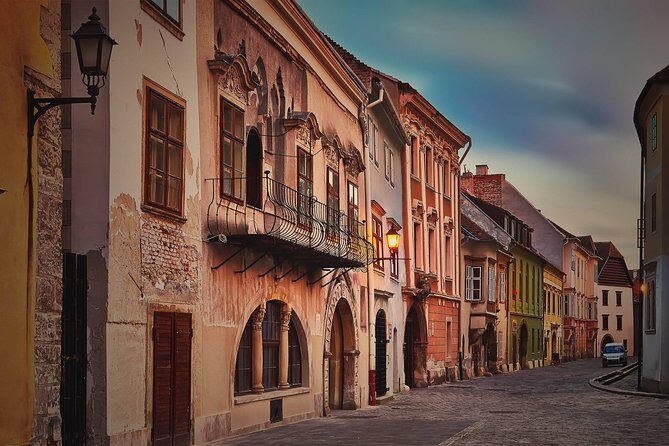
What you’ll notice fast is the street feel. Expect narrow winding lanes, cozy houses, and the kind of architecture that makes you look up as much as you look ahead. The description also points to Baroque architecture, and Szentendre’s Old Town does have that strong visual identity—bright facades, carefully preserved corners, and lots of photo angles that feel almost staged for a postcard.
One thing I’d treat as your strategy: walk toward the areas that naturally open up views of the Danube and the surrounding area. In an hour, you don’t want to get stuck in a side street where the group can’t easily keep moving.
Also, Szentendre has a reputation for a blend of influences, including Hungarian and Serbian flavors. If you like small-town food and people-watching, this is the moment to spot a café or snack stop—then still have time to rejoin the group cleanly.
Admission ticket is free for this stop, which is a nice change from tours that pile on paid entry early in the day.
Esztergom Basilica over the Danube: the big wow moment
After Szentendre, you’ll head to Esztergom, where the day gets dramatic. This is where the transfer earns its full-day rhythm: the stop centers on Esztergom Basilica (Cathedral) and the Danube views.
This part of the itinerary includes about two hours, and the star is the basilica’s grand scale. It’s described as a 19th-century masterpiece, and you’ll understand why quickly—especially when you’re viewing it from the Danube area, with the cathedral’s dome dominating the skyline.
The way this stop is set up is smart for time. You get viewpoints from the river area rather than forcing everyone into one narrow viewing lane. The description also notes views from both banks of the Danube, which helps you see the cathedral as a landmark, not just a building you stand next to.
Lunch time: plan around what’s included and what isn’t
You’ll stop for lunch in Esztergom, but lunch is not included. That’s actually useful. It gives you control: you can eat light, try something local, or just grab something quick so you’re not rushed later at the next stop.
If you like to travel with flexibility, treat lunch as your freedom block. Ask your guide what’s worth it right now, based on walking distance and how much time you have.






Eszterházy Palace: a bonus option if you care about interiors
There’s also an extra note in the tour details: entrance to Eszterházy Palace is not included. That doesn’t mean it won’t happen. In practice, you may have the chance to add it if your guide can work it in.
One helpful example from a guide experience I’ve seen: Martina had no pre-written plan to go inside Eszterházy Palace, but when interest came up, she was willing to adjust and the group went together. The palace interior was described as beautiful, and it’s the kind of add-on that can turn a standard stop into a memorable highlight—especially if you’re the type who likes interiors, not just exterior photos.
The one consideration: timing and language can affect how smooth this kind of add-on feels. In that same example, an English-only situation made it harder to coordinate inside the palace. So if palace time matters a lot to you, it’s smart to tell your guide early and ask how language support will work inside.
Bratislava Old Town: medieval lanes plus a rebuilt castle view
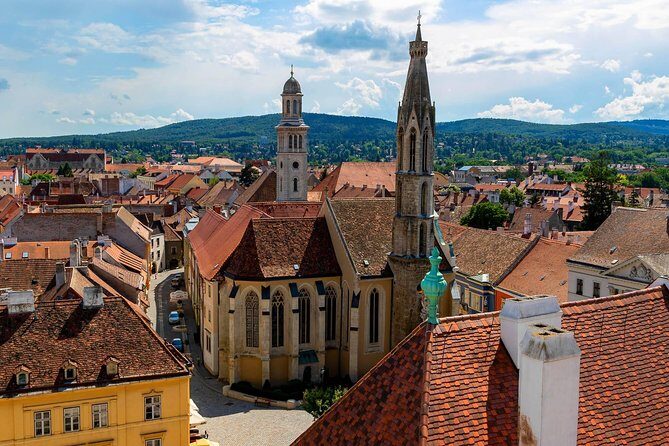
Next up is Bratislava, with about one hour for the Old Town. This is a compact stop, so the goal is orientation: you see the medieval layout, get a feel for the narrow streets and small courtyards, and then you get the main visual anchor from above.
What you’ll notice here is the mix of street-level detail and skyline presence. The Old Town is described as famous for medieval buildings, narrow streets, and little courtyards—perfect for quick wandering where you want to spot details without getting lost.
Then there’s the castle. The Bratislava castle towers over the Old Town, and the description notes it was rebuilt in the 20th century. That’s a key detail. Even if you’re not a history nerd, it helps you interpret what you’re seeing: you’re looking at a landmark shaped by more modern restoration choices, sitting on an older strategic location.
If you enjoy quick photo stops, Bratislava is good for that. If you want a deeper museum visit, this won’t replace a full Bratislava day. It’s more like: get your bearings, enjoy the core streets, and leave space for Vienna to finish the trip.
And as with the earlier stops, admission ticket is free for this part.
The guide’s role: why English helps, and why it matters
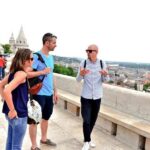
This is a group experience capped at 15 people, and the guide is central to how it feels. You’re not just following a route; you’re getting explanations along the way.
In one guide experience, the guide named Martina was described as handling both the driving logistics and the guiding, while also tailoring the day to interests like food and history. That matters more than you might think. When a guide adjusts on the fly—what to prioritize, what snack to look for, what small detail to notice—you end up feeling like the day matched your interests instead of running on autopilot.
Language can be a factor. In the same example, the guide’s lack of Hungarian fluency mainly affected an inside-the-palace situation. Outside on streets and viewpoints, English guidance tends to work smoothly, but if you’re planning to add optional interior visits, be aware that deeper explanations inside may depend on the guide’s language comfort.
If you speak English well and you’re flexible about optional extras, this kind of guide-led timing is a great match.
Small-group travel: how 15 people changes the day

A lot of tours are “small” in name only. Here, the cap is real: 15 people. That tends to change behavior in a good way.
With a smaller group, you typically get:
- easier listening when your guide is talking
- faster regrouping after short pauses
- more room to ask questions and adjust priorities
It also makes the walking stops feel less frantic. One hour in Szentendre and one hour in Bratislava could easily feel rushed with a big crowd. In a 15-person group, you usually get more practical movement—enough time to see what matters and still breathe.
Also, because you’re in a private tour/activity setup where only your group participates, you’re not mixed with unrelated groups. That tends to reduce the awkward stops where people are waiting for other people.
Traveling comfortably: air-conditioning, luggage, and fewer headaches
Your ride is in an air-conditioned vehicle, and there’s room for a reasonable amount of luggage. That might sound basic, but it’s a big quality-of-life factor on a day like this.
You’ll be leaving Budapest, moving through multiple towns, and arriving in Vienna the same day. If you had to manage bags on public transit and then re-check your luggage situation repeatedly, it would turn the day into a chore.
Here, your vehicle service is doing the heavy lifting. You can focus on the stops and the viewpoints rather than logistics. For many people, that’s the whole point of booking a transfer with sightseeing.
Vienna arrival: finish strong with a hotel drop-off and tips
The day ends with a drop-off at your Vienna hotel, which is a comfort. Long-distance transfers can create that annoying last-mile problem, where you arrive but still have to figure out where to go next. A direct drop keeps your energy for Vienna.
In one guide experience, the guide also shared recommendations for Viennese food, which is a smart add-on. Once you’re in your hotel, you want practical guidance, not a vague list.
If you’re arriving with evening plans—dinner reservations, a show, or just a relaxed walk—this kind of handoff helps you avoid the typical scramble.
Price and value: what $324.41 really buys you
Let’s talk about the cost honestly. $324.41 per person is a premium compared to a DIY transit plan.
You’re paying for:
- a guided, structured day rather than just getting from A to B
- multiple timed sightseeing stops
- vehicle service with comfort and luggage handling
- local guidance in English
The best way to judge the value is to think about your alternatives. If you would do the route anyway, then pay separately for guided time at each stop, a packaged transfer starts to look more reasonable. If you’re the type who enjoys architecture and short guided context, you’ll feel the value faster because you’re not paying for “travel time only.”
If, on the other hand, you love moving at your own pace and you’re comfortable planning transit and viewpoints independently, then you might feel the price is higher than you need. Still, it’s hard to beat the convenience of having a guide manage the day across three stops.
Who should book this transfer—and who might not
This works best if you:
- want a guided one-day route from Budapest to Vienna
- enjoy architecture and old-town walking more than long museum time
- prefer a small group (15 max) and English guidance
- are traveling with luggage and want comfort
You might want to skip—or at least manage expectations—if you:
- need a lot of museum time and slow wandering
- want lots of optional paid interiors built in
- hate feeling on a schedule, even a light one
Also, if palace interiors like Eszterházy Palace are a must for you, tell your guide early and ask how timing will work. The tour notes that entrance isn’t included, which means it’s something you’d need to decide on during the day.
Should you book the Budapest to Vienna sightseeing transfer?
I think it’s a strong choice for travelers who want to turn transit into sightseeing without stress. The small group cap, the guided interpretation, and the fact that each stop is timed to deliver highlights all in about 10 hours make it a practical buy.
Book it if you like guided context and you’d rather spend your energy walking Szentendre’s streets, admiring Esztergom Basilica over the Danube, and doing the core of Bratislava Old Town than figuring out logistics on the fly. Also book it if Vienna arrival with hotel drop-off matters to you.
One more tip before you click: if you’re interested in optional interior stops like Eszterházy Palace, bring it up early. A guide-led day can flex, but you’ll get the best results when you communicate what matters to you upfront.
FAQ
How long is the Budapest to Vienna sightseeing transfer?
It’s listed as about 10 hours.
What time does the experience start?
The start time is 9:00 am.
How large is the group?
The group is capped at just 15 people.
Does the tour include pickup in Budapest?
Yes, pickup is offered.
Is lunch included?
No, lunch is not included.
Are entrance fees included for the sights?
Admission tickets for the listed stops are free, but entrance to Eszterházy Palace is not included.
What language is the guide?
The experience is offered in English.
Is there room for luggage in the vehicle?
Yes, there is room for a reasonable amount of luggage.
What is the cancellation policy?
Free cancellation is available up to 24 hours before the experience start time for a full refund.