REVIEW · BUDAPEST
Original Budapest Walking Tour
Book on Viator →Operated by Original Budapest Tours · Bookable on Viator
Budapest comes with a story map. This low-cost walking tour strings together the big sights of both Buda and Pest and adds the human details you usually miss.
I like two things most. First, the guide’s stories make the landmarks feel personal, not just postcard views. Second, the pace and stop timing help you cover a lot without turning the day into one long photo sprint.
One thing to watch: the route can lean more toward the Pest side, and that may affect how much time you have for the Castle District and what you’ll want to plan later the same day.
In This Review
- Key things to know before you walk
- Price, value, and why $2.88 can still be a win
- Start at St. Stephen’s Basilica: your place to set the day’s rhythm
- The first bank of big views: Parliament and Chain Bridge
- Stop 1: Hungarian Parliament Building
- Stop 2: Széchenyi Chain Bridge
- Castle District shortcuts: Buda Castle, Matthias Church, Fisherman’s Bastion
- Stop 3: Buda Castle
- Stop 4: Matthias Church
- Stop 5: St. Stephen’s Basilica (Szent István Bazilika)
- Stop 6: Fisherman’s Bastion
- Pest center focus: Liberty Square, Andrassy Avenue, and the Eye of Budapest
- Stop 7: Liberty Square (Szabadság tér)
- Stop 9: Andrassy Avenue (World Heritage)
- Stop 8: Ferris Wheel of Budapest
- The memorial moment: Shoes on the Danube Bank
- Stop 10: Shoes on the Danube Bank
- Margaret Island: a break inside the city
- End views on the hill: Gellért Hill and the Széchenyi Square stop
- Stop 11: Gellért Hill
- Stop 12: Széchenyi Square
- How the 3 hours 30 minutes actually feels on foot
- What guides do best here (and why you should care)
- What’s included, what isn’t, and what to bring
- Is this the right Budapest walking tour for you?
- Should you book?
- FAQ
- What is the price of the Budapest walking tour?
- How long does the tour last?
- Where do I meet the guide?
- What time does the tour start?
- What language is the tour offered in?
- How big is the group?
- What’s included in the price?
- Is bottled water included?
- Is the tour ticket for each stop included?
- Does the tour run in any weather?
- What is the cancellation window?
Key things to know before you walk

- Guides who keep you moving: people highlight strong facts, charm, and Q&A during the route.
- A tight hit of Budapest icons: Parliament, Chain Bridge, Castle District, basilica, memorial sites, and panorama stops.
- Short, focused stops: each place is built for quick context and good orientation, not hours inside museums.
- Good value for money: at a listed $2.88, you’re paying mainly for guiding and city navigation.
- Bring your own water: bottled water isn’t included.
- Good weather matters: the tour requires weather that won’t shut it down.
Price, value, and why $2.88 can still be a win
At $2.88 per person, this is the kind of tour where the price makes you curious. You’re not buying a bus day. You’re buying guided orientation plus a route that hits the city’s “how do these places connect” story.
You get:
- A local tour guide
- English
- A mobile ticket
- A walking loop that covers major landmarks across central Budapest
- A listed total time of about 3 hours 30 minutes
That combo matters because Budapest is built on elevation changes and two river-banks. Without context, it’s easy to visit one highlight and still feel lost ten minutes later. With a guide, you learn the logic of the city: what sits where, why it matters, and how to link one stop to the next.
You can also read our reviews of more walking tours in Budapest



Start at St. Stephen’s Basilica: your place to set the day’s rhythm
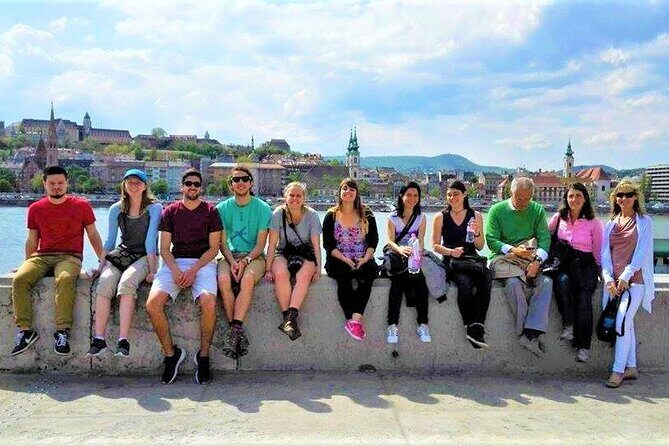
Your meeting point is St. Stephen’s Basilica (Szent István tér 1), with a start time listed at 11:00 am. You’ll likely start with the group clustered near the basilica area, then head out toward the river and the core landmarks.
This matters because St. Stephen’s is a great anchor. It’s central, it’s visually strong, and it gives you a clear starting point for understanding the layout of Pest around Erzsébet Square and along the grand avenues.
Also, the tour end point can vary. So you’ll get more value if you treat this like a guided “first pass” through the city, then plan your deeper museum time later.
The first bank of big views: Parliament and Chain Bridge
Stop 1: Hungarian Parliament Building
The Hungarian Parliament Building is the first major landmark on the route. The listing shows admission ticket free for this stop, which in practice usually means you’re there for viewing time and guide-led context rather than a long inside visit.
What you’ll get from a guided start here:
- A quick explanation of what the building represents
- Why it became such a visual symbol along the Danube corridor
- Stories that help you read the architecture later, even if you don’t tour the interior that day
Practical note: this stop is set at about 10 minutes, so keep expectations realistic. You’re not going deep. You’re grabbing bearings.
Stop 2: Széchenyi Chain Bridge
Then you’re at the Széchenyi Chain Bridge, Budapest’s most famous link between Buda and Pest. The bridge is a must-walk, and even short time here is useful because it shows you the city’s key axis: the Danube as the divider and connector.
If you’ve ever wondered why people call Budapest a city you can’t fully understand from one side, this stop answers that. You see how the lines of streets and hills align, and you start to picture where the Castle District sits in the bigger map.






Castle District shortcuts: Buda Castle, Matthias Church, Fisherman’s Bastion
Stop 3: Buda Castle
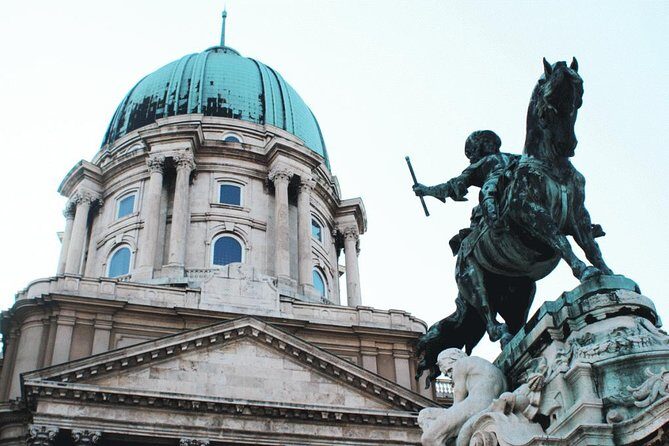
Buda Castle is the historical palace complex area, with the site’s timeline stretching back to the medieval period, and the major palace building taking shape in the 1700s. The listing again shows admission ticket free and a short time window (about 20 minutes), which is ideal for first-time orientation.
In this kind of stop, I find the guide’s storytelling is the real value. Instead of you guessing what you’re looking at, you get a framework:
- what the area used to be
- how the palace complex relates to Hungarian state power
- why the Castle District dominates the skyline
Stop 4: Matthias Church
Next is Matthias Church (Church of the Assumption), located in Holy Trinity Square and right near Fisherman’s Bastion. The guide-led context here tends to matter because the church isn’t just another pretty building. It’s tied to Hungarian royal and religious tradition.
The stop is listed around 20 minutes. That’s enough time for photos and for the “why this church matters” version of the story, but not enough for a long, slow interior visit if you’re hoping for one.
Stop 5: St. Stephen’s Basilica (Szent István Bazilika)
This is a return stop on the list details, and it highlights why the guide route is designed for quick but meaningful anchors. St. Stephen’s Basilica is named for Stephen, and the reliquary holding his right hand is a famous point of interest.
The practical value for you: after you see the big monuments and the bridge views, you circle back to a central landmark that helps you keep your mental map organized. And if you want to spend extra time inside later, you now know you can.
Stop 6: Fisherman’s Bastion
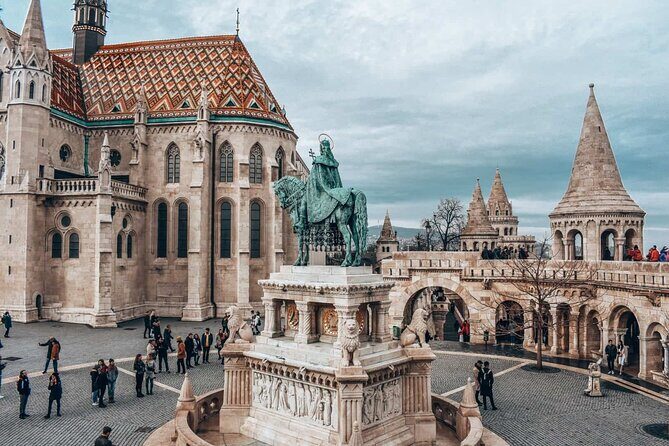
Then comes Fisherman’s Bastion (Halászbástya). This is one of the best panorama areas in Budapest, with terraces designed for wide views back across the Danube.
This stop is listed at 20 minutes, which is actually a good match for this location. You want enough time to:
- reach the viewpoints calmly
- take photos without rushing
- understand what you’re seeing across the water
Trade-off: if you come at a busy time, you may find yourself sharing the terraces with many people. The guide helps you manage the flow and not get stuck in the slowest line.
Pest center focus: Liberty Square, Andrassy Avenue, and the Eye of Budapest
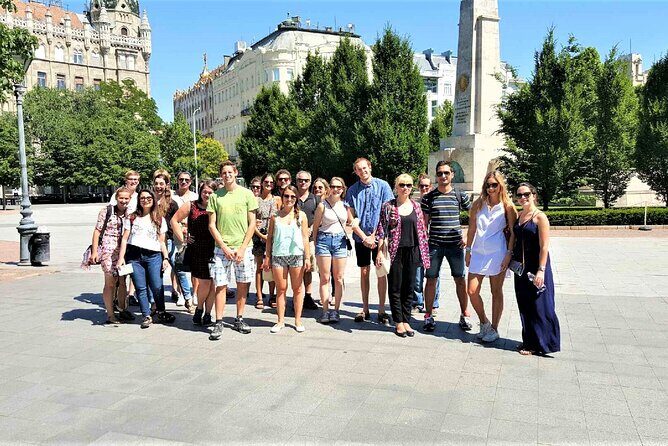
Stop 7: Liberty Square (Szabadság tér)
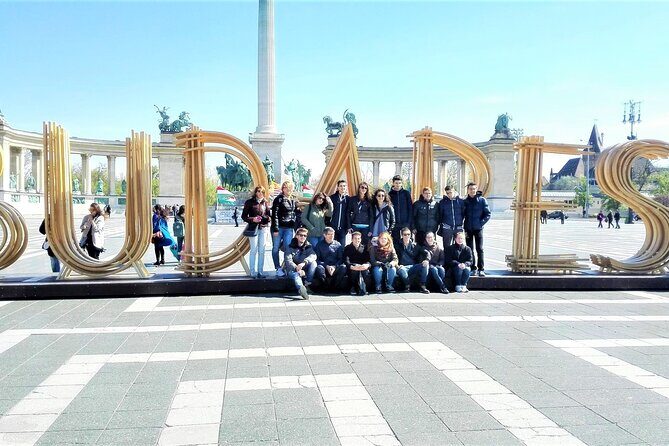
Liberty Square is a nice contrast to the religious and royal stops. You’re in Lipótváros, where the listing notes a mix of business and residential life, plus landmark institutions nearby. The United States Embassy is on one side of the square, and historicist-style buildings include the Hungarian National Bank headquarters. Some Art Nouveau elements are also part of the area’s look.
The guide angle here helps you notice Budapest isn’t only monuments. It’s also working civic space.
Stop 9: Andrassy Avenue (World Heritage)
Andrássy Avenue is dated to the 1870s and is recognized as a World Heritage Site. The listing calls out Neo-renaissance mansions and townhouses and the fact it links key squares toward Városliget.
This is the part of the tour that helps you feel the city’s “grand boulevard” personality. It’s also a great place to train your eye: once you learn what to look for, you start seeing architectural themes everywhere.
Stop 8: Ferris Wheel of Budapest
You’ll also stop by the Ferris Wheel of Budapest, sometimes nicknamed the Eye of Budapest. Even with a brief viewing window (about 15 minutes), the guide context matters because you’ll understand what kinds of sights are visible from above—Buda Castle areas, the Danube corridor, and the temple-tower profile in Pest.
Practical consideration: the ferris wheel itself isn’t described in the data as an included ride. So plan this as a sightseeing stop unless you choose to buy a separate ticket on your own.
The memorial moment: Shoes on the Danube Bank
Stop 10: Shoes on the Danube Bank
This is the stop that often hits people hardest for a reason. The “Shoes on the Danube” memorial was erected to remember those who lost their lives during the Arrow Cross rule. It uses iron shoe sculptures anchored along the riverbank.
The time here is listed at about 15 minutes, and that’s enough to:
- notice how the memorial is positioned along the waterline
- understand what it represents
- hold the moment without it turning into a rushed photo stop
This is also why a guided tour has value. It frames the memorial so you’re not just looking at objects—you’re understanding why they were made and where they belong.
Margaret Island: a break inside the city
One of the smartest parts of the route is the push toward the Danube’s green spaces. Margaret Island sits between Buda and Pest and gives you a city pause.
The listing notes pedestrian promenades, an art nouveau water tower, ruins of a Dominican convent from the 13th century, a musical fountain, and a small zoo. It also points out that in summer you’ll find pop-up bars and live music, plus jogging tracks and thermal options.
Even if you only get a short window (the data doesn’t give a separate duration for Margaret Island beyond the stop list context), this stop changes the feel of the day. Budapest can be heavy on monuments. Margaret Island adds shade, breathing space, and that “I can live here too” contrast.
End views on the hill: Gellért Hill and the Széchenyi Square stop
Stop 11: Gellért Hill
Gellért Hill overlooks the Danube and sits in Budapest’s 1st and 11th districts. The listing includes the story of Saint Gerard, named in the hill’s background, who was thrown to death from this location.
This stop is about 15 minutes, which is right for a viewpoint moment and a short historical framing—again, not enough for a long hike, but enough to understand why people like this neighborhood and why the city looks the way it does from above.
Stop 12: Széchenyi Square
Finally, you have Szechenyi Square with a statue of Széchenyi noted as being in place since 1880. This is a quick “last orientation” stop that ties your walking day into a central public space pattern: monument, square, and city movement.
How the 3 hours 30 minutes actually feels on foot
The listed duration is about 3 hours 30 minutes, and the route includes multiple stops. In real terms, you should expect:
- short viewing windows (10–20 minutes per stop)
- walking time between sites
- time for photo moments
- guide-led storytelling and occasional group prompts
One review concern mentioned that the plan can end up shorter on the Buda side (roughly 2.5 hours focused more on Pest), so you should plan your day with flexibility. If you have a tight schedule later—especially for Buda Castle interior visits—don’t stack everything back-to-back.
What guides do best here (and why you should care)
The most praised aspect across the provided comments is the guides’ engagement. People call out:
- smart pacing that keeps the group listening
- strong factual explanations plus fun trivia
- helpful recommendations after the walk (food, what to try, and what to see next)
Names that come up in the guide descriptions include Robert, Janet, and Istvan. If your guide has that style, you’ll likely get more than sightseeing—you’ll get a practical understanding of Budapest’s neighborhoods and how to move through them.
Also, one practical tip that comes up: show up early enough to find the right meeting point, and keep an eye out for the guide’s visible marker. In at least one instance, the red umbrella was mentioned as the way to identify the guide.
What’s included, what isn’t, and what to bring
Included:
- A local tour guide
Not included:
- Bottled water
So I’d plan your own water (and something light to eat if you’re sensitive to hunger). You’ll be outdoors and walking between hills and river areas.
You should also assume:
- You need good weather for this to run as planned.
- The tour is described as suitable for most travelers (no extra specifics beyond that).
Is this the right Budapest walking tour for you?
This tour is a great fit if you want:
- a budget-friendly way to hit the core highlights fast
- a guided explanation of why Budapest looks and feels the way it does
- a morning plan that sets you up for independent exploring afterward
It may not be ideal if:
- you’re hoping for long interior visits at multiple sites in one day
- you’ve got a strict timetable for Buda Castle that you can’t adjust
- you need a guaranteed route split equally between Buda and Pest
Should you book?
Yes—if your goal is orientation and stories over slow museum time. At $2.88, you’re not taking a financial risk, and the route covers the “must-see” map areas that help you explore on your own later.
Just do two things before you go: wear shoes made for uneven streets and hills, and keep your afternoon plans flexible in case the walk leans more Pest-side.
If you want to get your bearings quickly, this is one of the smarter ways to do it without overpaying.
FAQ
What is the price of the Budapest walking tour?
The tour is listed at $2.88 per person.
How long does the tour last?
The duration is approximately 3 hours 30 minutes.
Where do I meet the guide?
The start meeting point is St. Stephen’s Basilica, Budapest (Szent István tér 1, 1051 Hungary).
What time does the tour start?
The start time is listed as 11:00 am.
What language is the tour offered in?
The tour is offered in English.
How big is the group?
The tour has a maximum of 100 travelers.
What’s included in the price?
A local tour guide is included.
Is bottled water included?
No, bottled water is not included.
Is the tour ticket for each stop included?
The stops listed all show admission ticket free.
Does the tour run in any weather?
The experience requires good weather, and if it’s canceled due to poor weather you’ll be offered a different date or a full refund.
What is the cancellation window?
You can cancel up to 24 hours in advance for a full refund.