REVIEW · BUDAPEST
Budapest: Time Machine Immersive Historical Exhibition
Book on GetYourGuide →Operated by Time Machine Budapest · Bookable on GetYourGuide
Budapest’s past gets high-tech. I like the VR and projection storytelling that turns turning points into something you can see and hear, and I especially like the 1,000 m² scale paired with original audio plays performed by professional actors. The trade-off: the explanations and historical beats can feel like a lot, especially if you prefer lighter, slower museum pacing.
This runs right in the city center, beneath the Twentysix restaurant at Király u. 26, so it’s an easy add-on between sightseeing stops. You’ll be guided in a live tour format in English, German, or Spanish, and the exhibition itself is available in those languages plus Hungarian—great if you’re traveling with mixed language comfort. At about $26 per person for roughly 90 minutes, it’s best if you enjoy tech-forward history more than you enjoy quiet browsing.
In This Review
- Key things to know before you go
- Time Machine Budapest basics: Király u. 26 and finding the entrance
- What the 90 minutes feels like: VR, holograms, mist projections, and a holopyramid
- The story arc you’ll follow: Habsburg rule to socialist-era Budapest
- How the professional-actor audio plays keep you oriented
- Guided pacing: what happens during the live tour portion
- Language options: English, German, Spanish, and Hungarian availability
- Price and value: what $26 buys you in central Budapest
- Who should book Time Machine Budapest (and who should skip)
- Should you book this experience?
- FAQ
- Where is Time Machine Budapest located?
- How long does the experience take?
- What languages are available?
- Is it suitable for children?
- What technology is used in the exhibition?
- How often do tours start?
- Is Time Machine Budapest wheelchair accessible?
- What’s the cancellation policy?
Key things to know before you go
- High-tech storytelling (VR, holograms, mist screens, holopyramid): the tech is part of the narrative, not just decoration.
- Professional-actor audio plays: history lands through character-led scenes, which helps it stick.
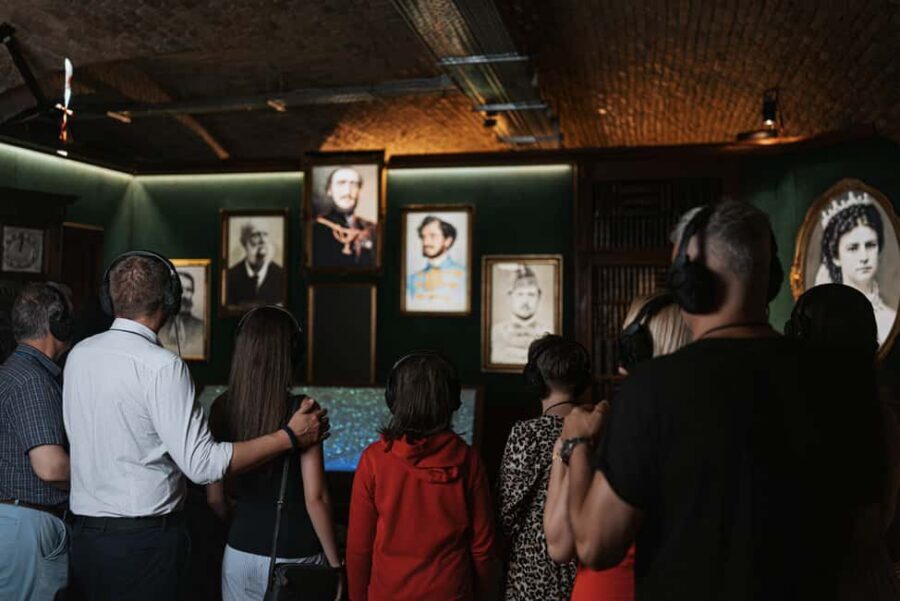
- A clear Budapest timeline: you’ll move through big eras like the Habsburg period, World War devastation, the Ghetto of Budapest, and the socialist era.
- Revolutions, wars, and everyday heroes: not only rulers and dates—also ordinary lives and shifting fortunes.
- Runs in guided time blocks: tours start about every 30 minutes, so arrive early and don’t plan to wander in late.
- Language coverage for international visitors: English, German, Spanish, plus Hungarian availability in the exhibition.
Time Machine Budapest basics: Király u. 26 and finding the entrance
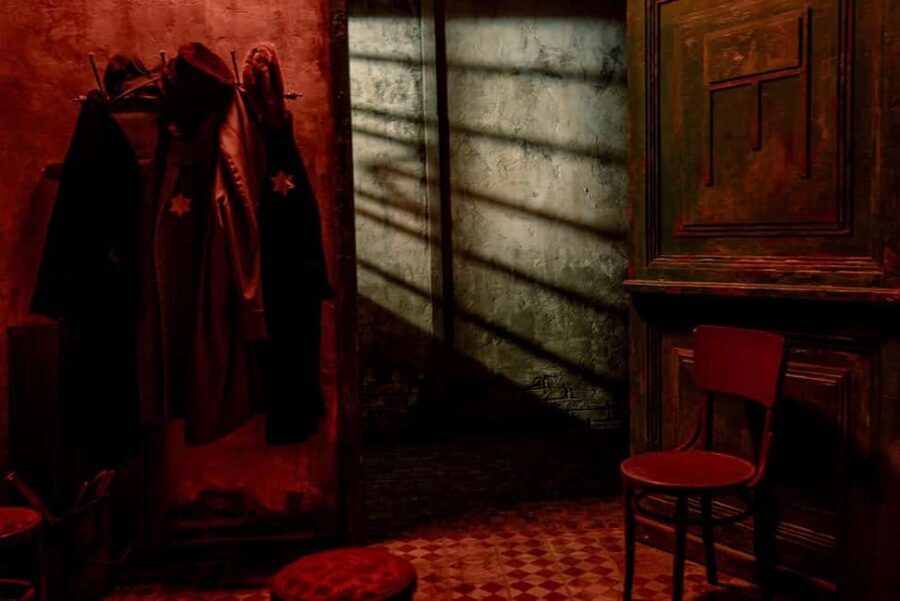
Time Machine Budapest is tucked under the Twentysix restaurant on Király u. 26, in central Budapest. Plan to look for the street-level entrance and ticket point, then head down the stairs to the lower ground floor. It’s a straightforward location, which matters in a city where you can waste time hunting for entrances—this one is pretty direct once you find the Twentysix landmark.
Because tours run on a schedule, I suggest arriving 10–15 minutes early so you’re not rushed at check-in and you can get settled before the show kicks in. Starting times are spaced about every 30 minutes, which is useful if your day is packed with sights.
You can also read our reviews of more historical tours in Budapest



What the 90 minutes feels like: VR, holograms, mist projections, and a holopyramid
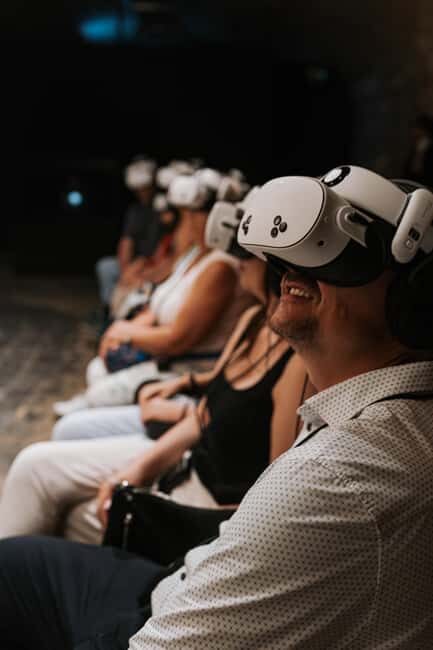
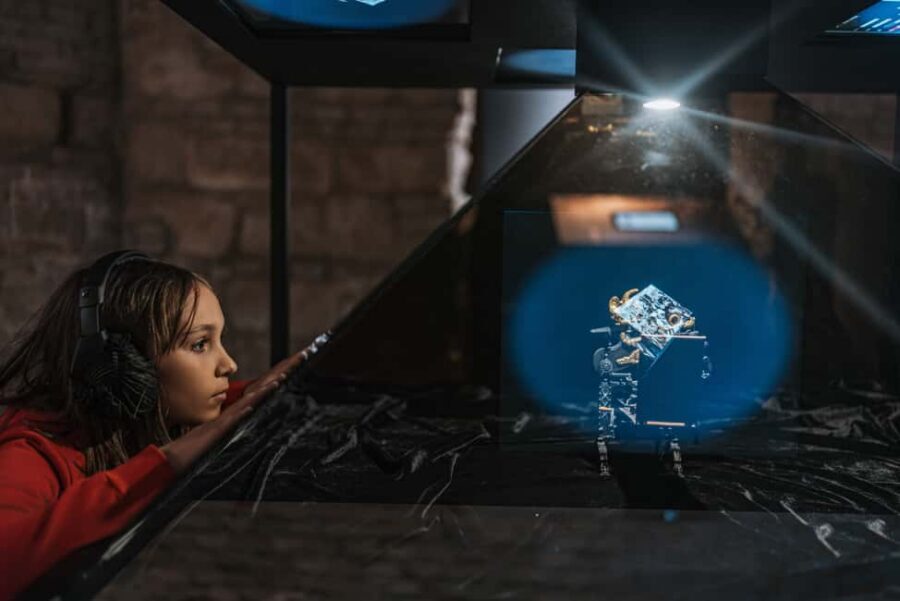
This is a show you experience through technology. Instead of standing beside glass cases, you’ll encounter multiple formats: VR, holographic projection, mist-screen projection, and a holopyramid. The effect is meant to make you feel like you’re inside different moments of Budapest’s story—especially during the more dramatic chapters like revolutions and wars.
A practical note: if you’re sensitive to sensory effects, take it seriously. Mist projections and visual projections can be intense, even if they’re brief. And because VR is involved, keep in mind you may be focusing on a headset-based segment when the rest of the room changes around you—so don’t schedule anything immediately stressful after, like a long transfer with lots of walking.
I also like that the tech is paired with live narration-style pacing. You’re not left guessing what you’re seeing. The exhibition is built to guide your attention: each segment is meant to answer a human question—what changed, who was affected, and why it mattered.
The story arc you’ll follow: Habsburg rule to socialist-era Budapest
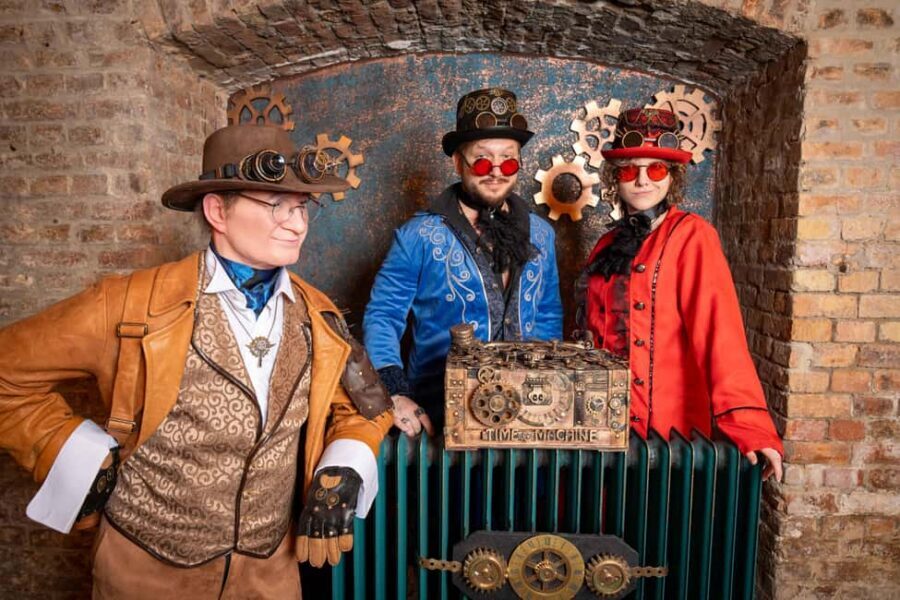
One reason this exhibition is a strong “first pass” through the city is the way it connects time periods into a continuous arc. You start with ideas about unifying the city and then move forward toward the present day, with major historical turning points woven in along the way.
Here are the big chapters you can expect to encounter:
- The Habsburg period: You’ll get context for the city’s political and cultural atmosphere under imperial rule.
- World War devastation: This is the era where the exhibition shifts toward consequences—what disruption does to neighborhoods and everyday routines.
- The Ghetto of Budapest: The exhibition includes this part of Budapest’s wartime history, presented as part of the city’s broader story.
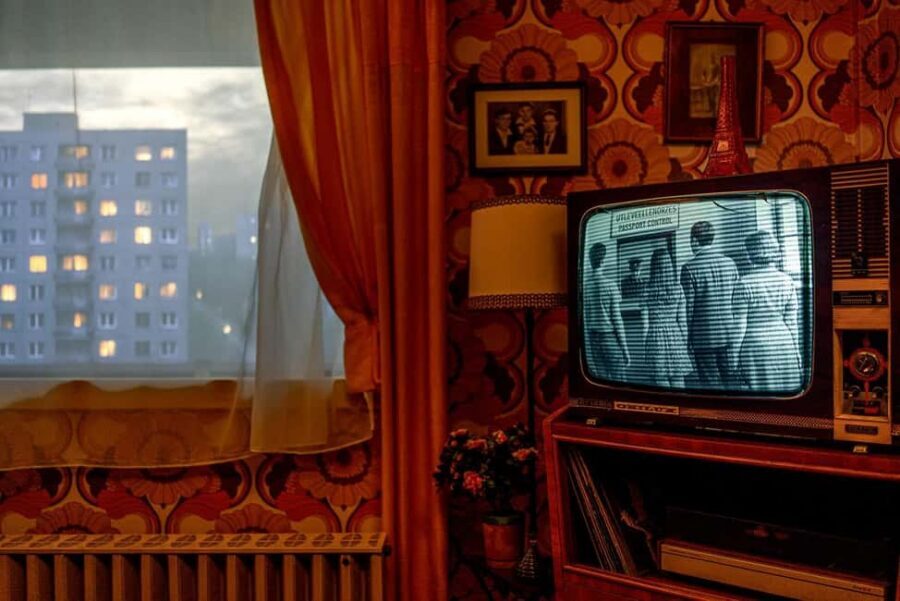
- The socialist era: You’ll see how political systems reshaped public life and the feel of the city.
What I like about this approach for visitors is how it gives you vocabulary for what you’ll see outdoors later. Even if you don’t memorize dates, you’ll understand the “why” behind different layers of Budapest—why buildings, streets, and public spaces carry traces of shifting power.
And importantly, the exhibition isn’t only big-picture history. It also centers stories of revolutions, wars, forgotten destinies, and everyday heroes. That last part—ordinary people—helps the timeline feel less like a textbook and more like lived experience.
How the professional-actor audio plays keep you oriented
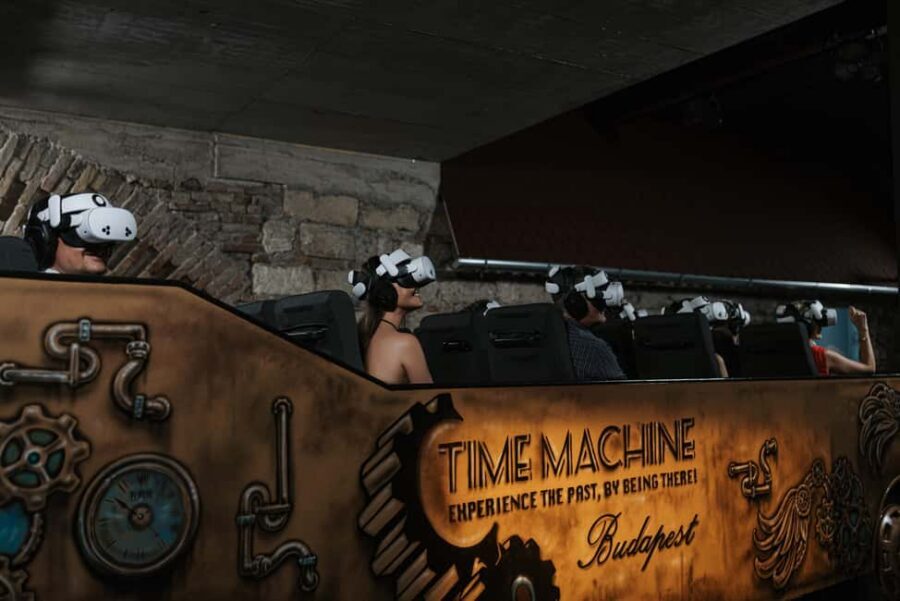
The exhibition uses original audio plays performed by professional actors, which is a big deal for how well the history works. When actors are involved, you tend to get clearer voices, sharper character motives, and emotion you can actually follow. Instead of hearing a wall of facts, you’re listening to scenes.
That’s especially helpful for visitors who are:
- short on time and want a concentrated overview,
- overwhelmed by dense museum texts, or
- traveling with teens who need story-driven learning.
In practical terms, audio-led storytelling also compensates for the fact that you’re dealing with big visual effects. When the room changes with projections and VR segments, the audio direction helps you not lose the thread.
I also appreciate that the team is described as kind and helpful, with some guests noting a small extra like a coffee. That kind of warmth won’t change the show, but it can make the start of your visit feel more relaxed.
Guided pacing: what happens during the live tour portion
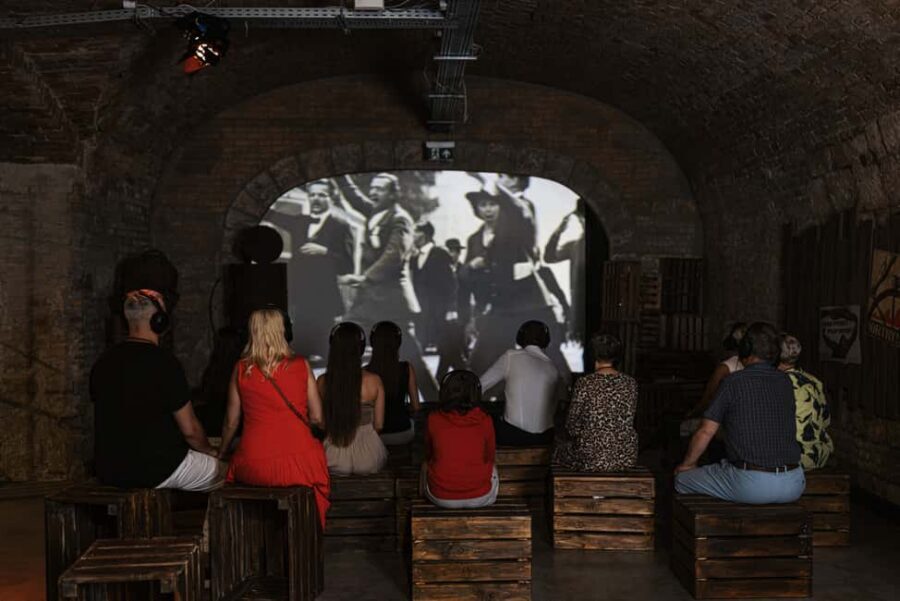
You’ll have a guided tour component paired with the exhibition itself. The experience is scheduled as a single timed event (about 90 minutes overall), with the guided portion running close to 100 minutes. Either way, the message is the same: you’re not doing this at your own speed.
That matters. If you like leisurely museum wandering, this may feel more “program-based” than you expect. But if you want your time structured, it’s a plus. The pacing helps you process the timeline in the right order—Habsburg period first, then the wartime chapters, then the socialist era—so the story doesn’t blur.
If you’re traveling with family, note that the experience is recommended for families with children over 12, and it’s not suitable for children under 12. That’s likely because of the intensity and the historical content, plus the tech-focused format.
You can also read our reviews of more museum experiences in Budapest




Language options: English, German, Spanish, and Hungarian availability
Language is one of the biggest practical reasons to pick this experience. The live tour guide is available in English, German, and Spanish, and the exhibition is also offered in Hungarian.
If you’re choosing between languages, I’d pick the one where you can follow the emotion in the dialogue. History tours fail when you catch only the gist. Here, because a lot of meaning is carried by the audio plays and the guided narrative, being comfortable with the language improves the whole experience.
It’s also a good match for international travel. If someone in your group prefers a different language, you at least have options instead of being stuck with only one.
Price and value: what $26 buys you in central Budapest
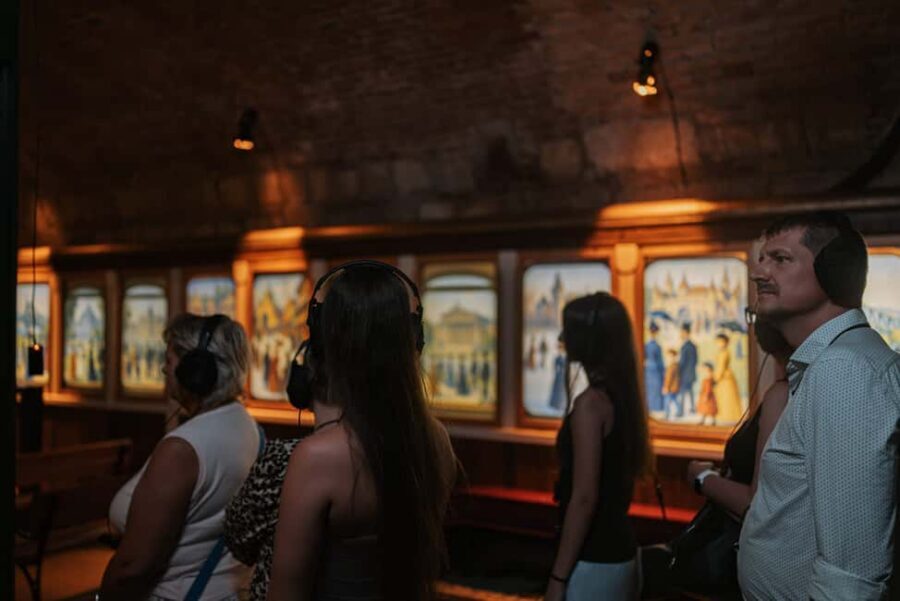
At around $26 per person for about 90 minutes, this is not the cheapest “walk-in” history option. But it’s also not trying to compete with a free viewpoint or a casual neighborhood stroll. You’re paying for a production: a large 1,000 m² space plus multi-tech effects (VR, holographic projection, mist projection, holopyramid) plus original audio performances.
Here’s how I’d judge value if you’re deciding:
- If you enjoy tech-based storytelling and want a quick, structured historical orientation, $26 can feel like good value.
- If you prefer museum-style self-guided reading and quiet reflection, you might feel constrained by the guided pacing and the constant stimulation.
There’s another practical value angle: this can work as your “background builder” before you tackle Budapest’s outdoor sights. Once you understand the arc—imperial period, war devastation, wartime ghetto history, and the later socialist era—you’ll often interpret what you see around the city with more confidence.
Who should book Time Machine Budapest (and who should skip)
I’d lean toward booking if you:
- want a guided overview of Budapest’s major historical periods,
- like story-driven audio and modern visual tech,
- want something that feels more like a production than a standard museum,
- are traveling in a group where language options matter.
I’d think twice if:
- your ideal sightseeing is slow and quiet (this is a scheduled show with a lot happening),
- you’re sensitive to projection effects or VR-style segments,
- you’re coming with kids under 12 (this is not suitable for them).
The one drawback worth respecting is that the experience can be information-dense. One guest felt the explanations might be too much. If you’re the type who likes one or two themes only, you may find yourself needing time afterward to process what you learned.
Should you book this experience?
Book Time Machine Budapest if you want a high-impact, time-efficient way to understand Budapest’s 19th–20th century story—and you’re excited by VR, holograms, and actor-led audio. It’s especially useful early in your trip, when you’re still trying to connect what you see on streets to what you read in guides.
Skip it (or at least reconsider) if you hate structured programming, want a calm and casual pace, or prefer history through reading and looking rather than through projections and tech effects. For the right kind of traveler, this is a strong “story primer” that makes later sightseeing make more sense.
FAQ
Where is Time Machine Budapest located?
It’s located beneath the Twentysix restaurant on Király u. 26 in Budapest. You’ll find the entrance on the street front, then go down the stairs to the lower ground floor.
How long does the experience take?
The immersive historical exhibition is listed as 90 minutes.
What languages are available?
The exhibition is available in English, German, Spanish, and Hungarian. The live tour guide is available in English, German, and Spanish.
Is it suitable for children?
It’s recommended for families with children over 12 years old, and it’s not suitable for children under 12.
What technology is used in the exhibition?
You can expect VR, holographic projection, mist screen projection, and a holopyramid.
How often do tours start?
Tours start every 30 minutes, so it’s smart to arrive 10–15 minutes early.
Is Time Machine Budapest wheelchair accessible?
Yes, it’s listed as wheelchair accessible.
What’s the cancellation policy?
Free cancellation is available up to 24 hours in advance for a full refund.