REVIEW · BUDAPEST
Budapest: Budapest Retro Interactive Museum Ticket
Book on GetYourGuide →Operated by Budapest Retro Interactive Museum · Bookable on GetYourGuide
Old-school Budapest hits different.
If you want history that’s hands-on, this ticket does it with style. I really like the interactive displays that let you do things, not just read labels. I also love the museum’s authentic feel, with real period artifacts arranged into everyday-life rooms. The one thing to watch: some exhibit text may not be fully in English, so plan for a bit of guessing and pointing if you prefer a lot of written guidance.
The museum covers daily life under communism in the 1970s and 80s, in a way that’s easier to take in than a typical history museum. You’ll walk through themed spaces that show the softer side of what people call goulash communism—community activities, school routines, and life inside those famously repeatable apartment blocks.
A good bonus: this is a skip-the-line ticket for a place that can take about 1–2 hours to see properly. That makes it a smart stop even on a packed Budapest day. Afterward, there’s a retro bistro on site if you want coffee, drinks, and pastries.
In This Review
- Key things you should know before you go
- Entering Budapest’s communist daily-life world (1970s and 80s)
- Riding the virtual Gazdagrét streets in a Lada patrol simulator
- Reading the past in a functioning communist TV news studio
- Spotting Soviet vehicles: motorcycles, the black Volga, and the museum’s car collection
- Typical apartments and the “functionality first” design idea
- School days, red pioneer scarves, and propaganda songs
- The astronaut room and the space-themed Hungarian gift
- How long to plan: 1–2 hours that actually lets you see everything
- Cost and value: is $17 a good deal for what you get?
- Best fit: who should book this Budapest retro museum ticket?
- Practical tips to make your visit smoother
- Should you book it?
- FAQ
- How long does the Budapest Retro Interactive Museum visit take?
- Is skip-the-line admission included?
- Where do I present my voucher?
- Does the museum include food or drink with the ticket?
- Is there free cancellation?
- Can I reserve now and pay later?
- Is the ticket valid for more than one day?
- Is the museum wheelchair accessible?
- Do seniors get any special perk?
- Does the museum work for families and kids?
Key things you should know before you go
- Lada patrol simulator: you drive a virtual Budapest housing estate in a Soviet-era police car setup.
- Period TV studio: you can read communist-era news broadcasts in a studio with two working vintage cameras.
- Real vehicles and gear: nine motorcycles, three renovated Soviet cars (including a black Volga), plus a Lada turned into a simulator.
- Typical apartment tour: see how “functionality first” shaped what people lived with daily—carpets, furniture, fridges, TV sets.
- Family-friendly interactivity: kids can handle parts of the experience, not just watch adults.
- You can do it in 1–2 hours: enough time for a full look without eating your whole day.
Entering Budapest’s communist daily-life world (1970s and 80s)
This isn’t a museum that asks you to sit quietly. It’s built like a time machine you can move through at your own speed. The exhibition spreads across three floors, using thousands of period items arranged in themed rooms. The focus is daily life—how people went to school, what they watched, what they wore, and what their apartments looked like.
You’ll see the 1970s and 80s covered with a mix of “serious” and “ordinary.” Yes, there’s propaganda-era material, including school education practices and news-style programming. But there are also the human parts: community life, summer camps at Lake Balaton, and the lived rhythm of a society trying to keep moving even when politics weighed on everything.
One reason I think this works for most people is the pacing. You’re not just reading panel after panel. You’re walking from one “slice” of life to another—then stopping at the interactive highlights when you hit the stuff that really brings the era into focus.
A few more Budapest tours and experiences worth a look



Riding the virtual Gazdagrét streets in a Lada patrol simulator
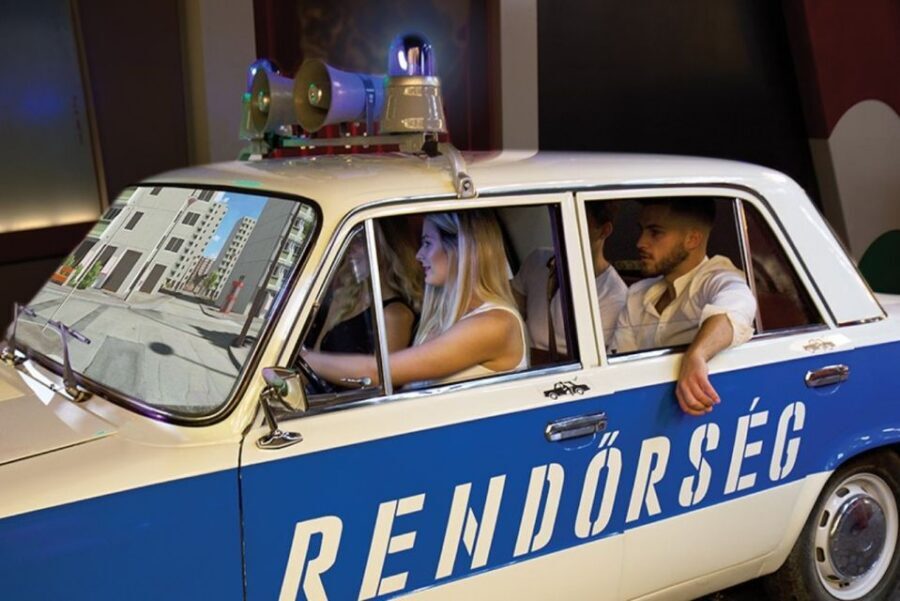
If you only do one thing, do the Lada police car simulator. It’s one of the most memorable setups in the museum because it turns an iconic piece of Soviet life into something playful and skill-based.
The simulator lets you patrol a virtual version of Gazdagrét, a famous Budapest housing estate made of long, repeated rows of apartment buildings. That detail matters. Gazdagrét isn’t just a random backdrop—it’s the kind of place where the architecture itself tells part of the story. When you see it through the lens of a patrol route, those endless blocks suddenly feel less abstract.
Even if you’re not into cars, it’s fun because it gives you a role. You’re not just learning; you’re acting inside a recreated environment. And because the Lada has that recognizable, practical Soviet look, it’s also a visual anchor that helps you connect the rest of the exhibits to real objects from the era.
Reading the past in a functioning communist TV news studio
Another standout is the period news studio experience. The museum includes a studio set up with two authentic, functioning TV cameras. You can read communist-era news broadcasts in that space, and it feels very “you are here” compared to a standard photo exhibit.
This part of the museum is useful because it shows how information was packaged, not just what happened. You get a sense of presentation style—how broadcasts were framed and how TV worked as a state tool. It’s one thing to learn that media was controlled. It’s another to stand where the cameras would have been and read the tone of the era.
It’s also surprisingly good for mixed groups. Parents can focus on the historical angle. Kids can treat it like a pretend newsroom. Everyone gets something.
Spotting Soviet vehicles: motorcycles, the black Volga, and the museum’s car collection
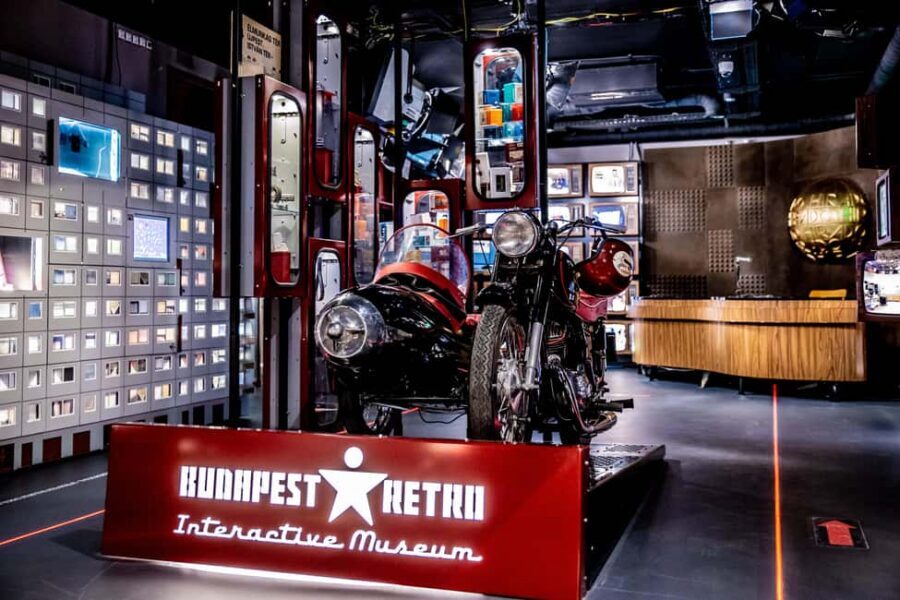
Vehicles are a big part of the museum’s atmosphere, and it’s not just for decoration. The collection includes nine motorcycles and three renovated vintage Soviet cars. One is a distinctive black Volga, and the rest help build that “this was real life” feeling.
What I like here is how the cars and motorcycles bridge the exhibit categories. You move from everyday apartments to TV broadcasts and then back to tangible machinery—like the museum keeps reminding you that the era wasn’t only ideology. It was transportation, maintenance, and the physical stuff people depended on.
And then there’s the smart trick: the Soviet-made Lada police car is transformed into the simulator. Instead of showing you a car and letting it sit there, the museum makes the vehicle do something. That’s when the whole place feels designed rather than merely displayed.
Typical apartments and the “functionality first” design idea
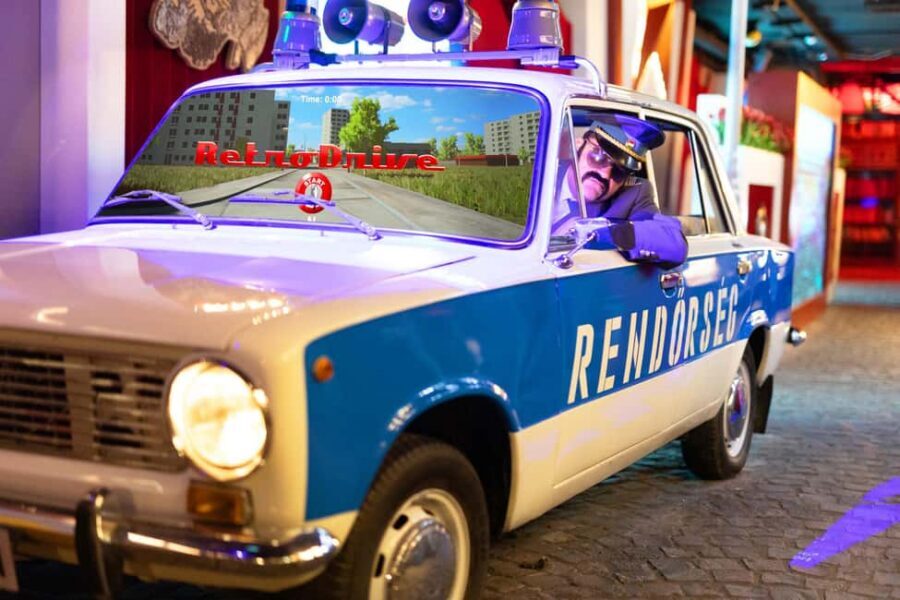
For me, the apartment section is where the museum gets most real. The basic design principle is described as functionality first, and you can see it in the way square apartment blocks and repeated layouts shaped what people lived with.
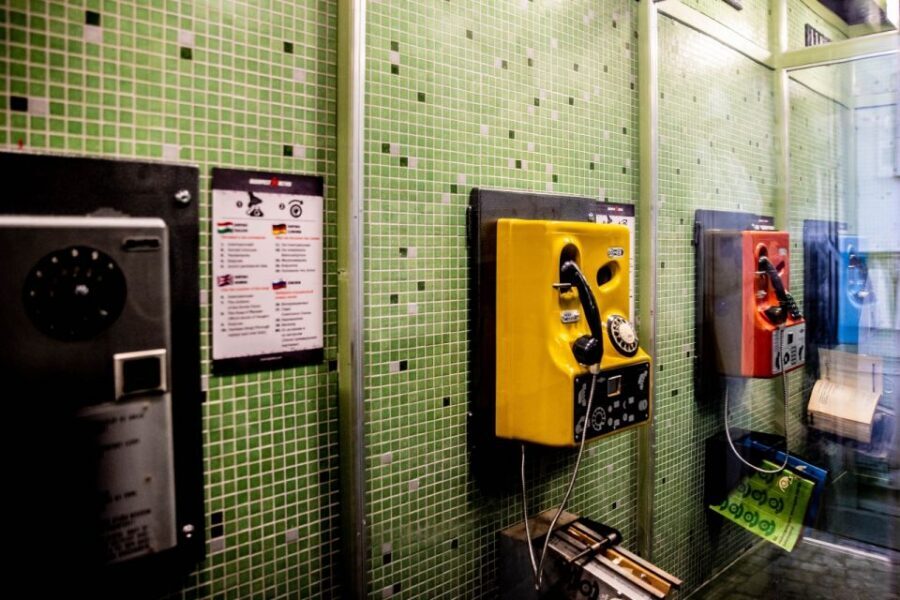
The museum lets you tour a typical apartment from the period, with everyday items arranged in a believable way. You’ll spot how consistent the look and feel can be across spaces: matching carpets, furniture, fridges, and TV sets—things that would have been ordinary daily companions.
This is valuable because it turns “history of politics” into “history of living.” Instead of only learning what leaders said, you learn what residents owned, used, and stared at every day.
There’s also an interactive mirror where you can try on vintage outfits. It’s a practical, low-effort way to make the era feel touchable, and yes, it’s also good for photos—just don’t let the camera ruin the learning part.
You can also read our reviews of more museum experiences in Budapest




School days, red pioneer scarves, and propaganda songs
The museum doesn’t shy away from the youth education side of communism. You’ll see how school education worked and the distinctive red pioneer scarves students wore. You’ll also come across the idea of propaganda songs as part of daily routines.
At the same time, the museum keeps the story from turning into a one-note lecture. It pairs those elements with community activities and summer camps at Lake Balaton. That contrast is important. It shows how many systems were built to mold behavior while still keeping kids busy with “normal” social life.
If you’re traveling with children, this section is often easier than you’d expect. The museum gives you handles—visual objects, themed rooms, and interactive elements—so the heavy topics don’t have to land as pure text.
The astronaut room and the space-themed Hungarian gift
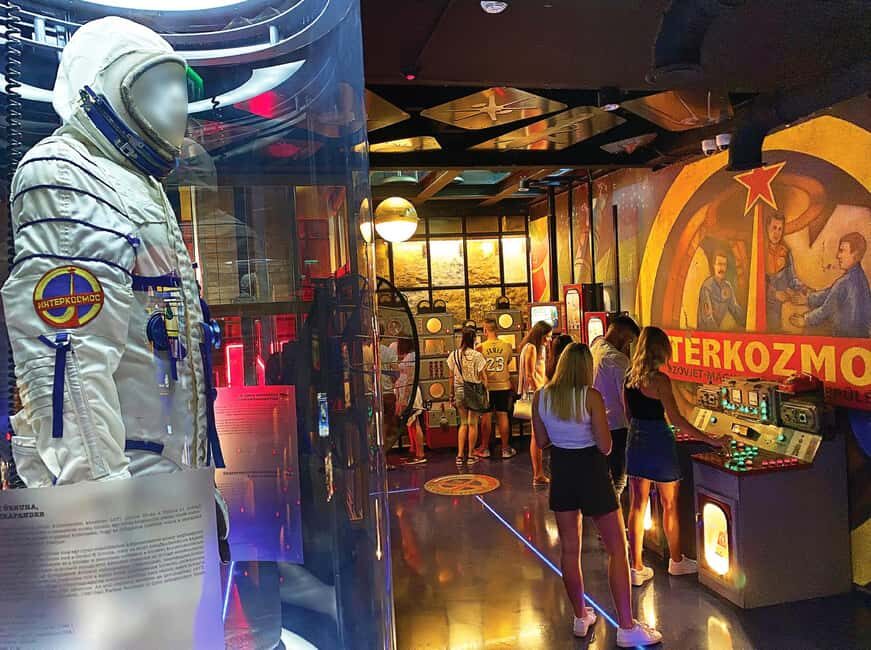
Budapest Retro Interactive Museum also makes room for Hungary’s place in larger Soviet-era events. In 1980, Hungary became the seventh nation to send an astronaut to space as part of a Soviet mission.
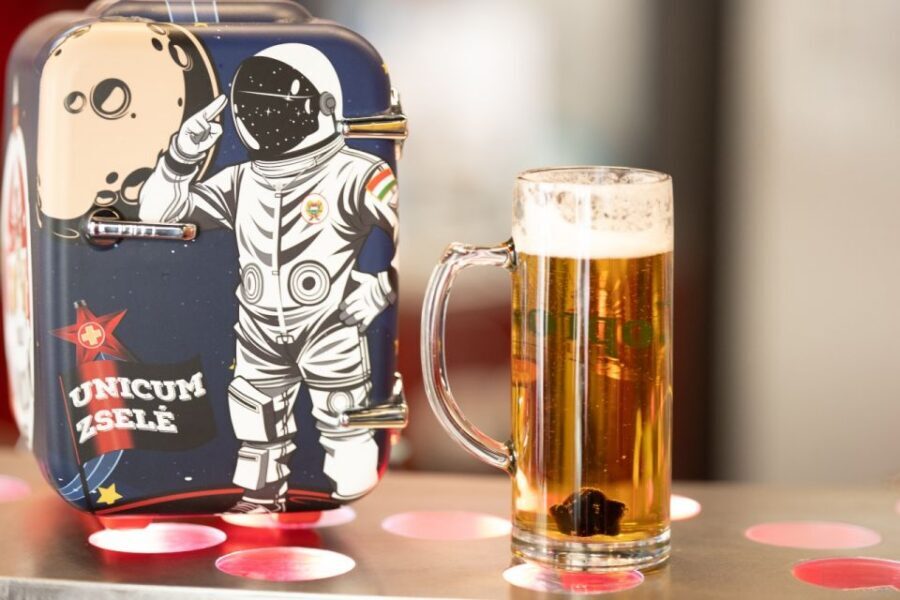
You can find a dedicated room featuring a spacesuit, plus an especially memorable detail: a folk art–patterned canned goulash presented as a gift to the Salyut 6 space station crew. It’s such a specific, oddly perfect touch—everyday Hungarian identity packaged for a very high-tech moment.
This is the kind of exhibit that helps the whole museum feel balanced. You get the political structure, but you also see how culture traveled through it.
How long to plan: 1–2 hours that actually lets you see everything
The museum is designed to be finished without fatigue. Plan on 1–2 hours if you want to experience the core floors and interact with the highlights.
A realistic approach:
- Start with the themed rooms on the first pass.
- Save the most hands-on parts (like the Lada simulator and the TV studio) for when you’ve gotten your bearings.
- If you’re traveling with kids, give them extra time for the mirror and interactive spots—they move slower and that’s fine.
Ticket validity is for 1 day, and starting times depend on availability. If you’re flexible, aim for a time when the museum won’t be at peak stress level. (Even excellent museums can feel busy, and one crowded moment can slow down interactive areas.)
Cost and value: is $17 a good deal for what you get?
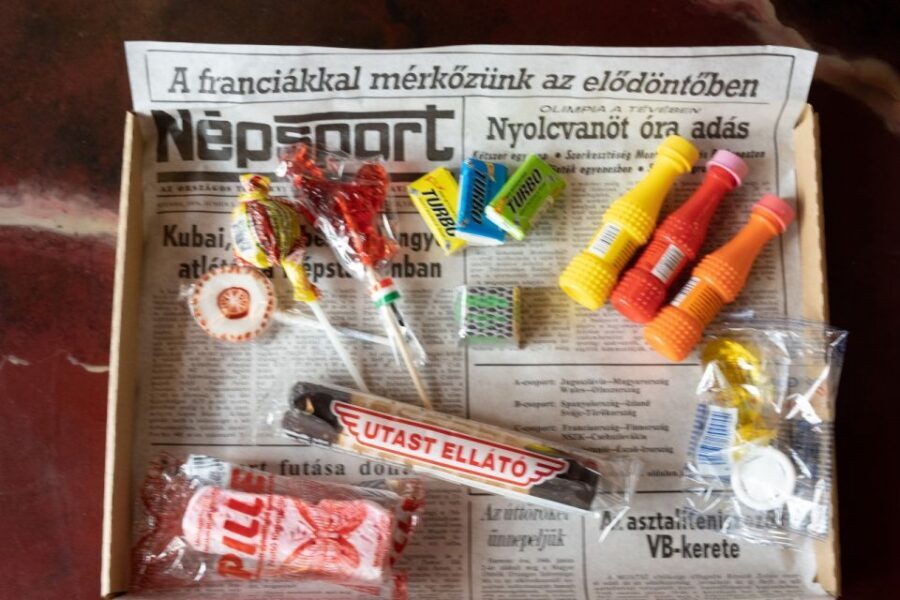
At about $17 per person, this ticket is priced for an interactive museum experience rather than a long, multi-attraction day. What makes it good value isn’t just the number of exhibits. It’s the amount of “doing” built into the building.
You’re paying for:
- skip-the-line entry,
- multiple interactive experiences (simulator, TV studio, mirror),
- a dense collection of real vehicles and thousands of period items,
- and themed rooms that connect daily life across different settings.
Also, the museum includes a retro bistro option afterward, but food and drink aren’t included with the ticket. That means your final spend depends on whether you snack. Still, having coffee and pastries on site is a practical convenience when you’re done.
If you’re the type of traveler who likes “one stop, strong payoff,” this is a solid match. If you’re looking for a huge museum marathon, you might feel it’s small. But the 1–2 hour structure is exactly why it fits well into a Budapest itinerary.
Best fit: who should book this Budapest retro museum ticket?
This is ideal for:
- families looking for something more hands-on than a lecture-style museum,
- people curious about the communist era without needing to slog through dense academic text,
- travelers who enjoy Cold War-era objects and mid-century design,
- groups who want a mix of learning and play (because the interaction points matter here).
It may be less ideal if you only want a classic art museum feel, or if you dislike exhibits where text isn’t consistent in language across the space. In that case, you can still enjoy the visuals and interactive equipment, but you’ll want patience with parts you can’t easily read.
Practical tips to make your visit smoother
A few things I’d do before you go:
- Budget 1–2 hours so you don’t rush the simulator and studio.
- If you care about comfort, remember some visitors note it can get warm inside on hot days—dress accordingly.
- If you prefer quieter moments, arrive earlier or at less popular times so you’re not waiting around for interactive displays.
- Keep an eye on your photo-taking time. The outfits are fun, but the bigger win is actually experiencing each themed room.
Should you book it?
Book the Budapest Retro Interactive Museum Ticket if you want a concrete, hands-on way to understand life in 1970s–80s Budapest. The Lada police car simulator, the functioning TV studio, and the apartment design details are the kind of anchors that make the story stick.
Skip it only if you’re strongly focused on a different style of museum, or if you need every label and explanation to be in your preferred language with no gaps. For many people, though, this is one of those rare history experiences that feels like it teaches you while you’re busy having fun.
FAQ
How long does the Budapest Retro Interactive Museum visit take?
Plan for about 1–2 hours to fully experience the museum.
Is skip-the-line admission included?
Yes. Your ticket includes skip-the-line admission.
Where do I present my voucher?
Present your voucher at the Budapest Retro Interactive Museum desk.
Does the museum include food or drink with the ticket?
No. Food or drink isn’t included, but there is a retro bistro on site with coffee, drinks, and pastries.
Is there free cancellation?
Yes. You can cancel up to 24 hours in advance for a full refund.
Can I reserve now and pay later?
Yes. You can reserve now and pay later.
Is the ticket valid for more than one day?
No. It’s valid for 1 day, and you’ll want to check availability for the starting times.
Is the museum wheelchair accessible?
Yes, the museum is wheelchair accessible.
Do seniors get any special perk?
Yes. Seniors (65+) who purchase a senior ticket receive a complimentary coffee every Wednesday.
Does the museum work for families and kids?
Yes. The exhibition is designed to be suitable for all generations, including families with kids.