REVIEW · BUDAPEST
Budapest (Jewish Quarter) Scavenger Hunt and Self-Guided Tour
Book on Viator →Operated by Explorial · Bookable on Viator
Turn sightseeing into a treasure hunt. This self-guided Budapest Jewish Quarter scavenger hunt turns the area into a game, with hints to locate sights, questions that point you toward real details, and photo challenges that score points. I love the mix of learning + play (you’re not just walking past things) and how easy it is to pace yourself as you go. The main thing to consider: this is app-led, so you’ll want your phone charged and ready to use the map function.
You start at Deák Ferenc tér and follow a route that commonly includes the Dohány Street Synagogue and Gozsdu Udvar, with more stops along the way such as Szimpla Ruin Pub. It typically runs about 1–2 hours, but it’s not strictly timed, so you can pause for a snack, take a slow look, or regroup if you’re with kids.
In This Review
- Key points worth your time
- Budapest Jewish Quarter in “game mode” (and why it works)
- Getting started at Deák Ferenc tér: what to do before you walk
- The route flow: how the app keeps you moving (without rushing you)
- Dohány Street Synagogue: finding details through clues
- Gozsdu Udvar: turning a courtyard into a mission space
- Szimpla Ruin Pub and the “more along the way” factor
- What you’re actually doing in the game (and how to maximize it)
- Who this fits best in Budapest
- Value for money: $9.30 and what you get for it
- Practical timing: when to do it and how to plan your day
- Should you book it? My take
Key points worth your time
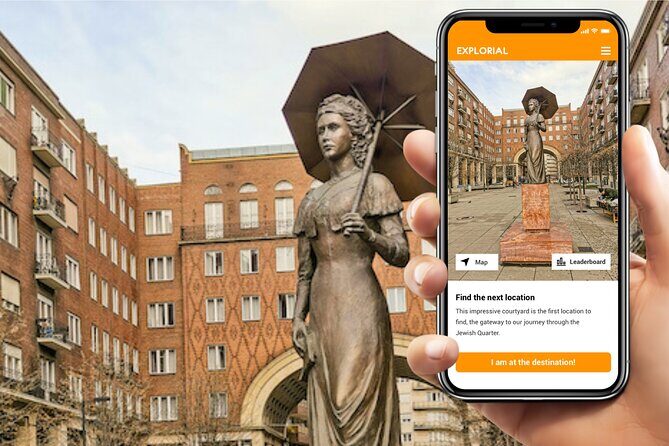
- Explorial app + access code: download the app, enter your code, and start right at the meeting point
- Hints, questions, and photo tasks: you earn points for both observation and creativity
- Self-paced route: you’re not locked into a group schedule, so breaks are built-in
- Big-name stops on the Jewish Quarter route: commonly includes Dohány Street Synagogue and Gozsdu Udvar
- Family-friendly structure: it’s designed so kids and adults stay engaged while walking
Budapest Jewish Quarter in “game mode” (and why it works)

If you like your city tours with movement and purpose, this format hits the sweet spot. Instead of trying to memorize facts from a brochure, you’re guided by little missions. You use hints to find a place, then you read what’s there closely enough to answer questions tied to signs, pictures, or visible details.
That simple structure is why this kind of activity often feels more memorable than a straight walk. You don’t just pass by an important site; you look at it on purpose. And because there are points and photo tasks, it naturally turns into a low-pressure contest inside your group. Even better, the route is flexible. The experience is not limited in time, so you can go at your speed without feeling like you’re falling behind a tour guide.
At $9.30 per person for about 2 hours, it’s also a value play. You’re paying for guided discovery without paying for a live guide. If you’re traveling in a small group, couples included, that can be a smart way to stretch your budget while still getting an “organized” feeling.
You can also read our reviews of more guided tours in Budapest



Getting started at Deák Ferenc tér: what to do before you walk
Your starting point is Budapest, Deák Ferenc tér, Hungary and the activity ends back at the same place. The good news is that Deák Ferenc tér is one of the easiest places in Budapest to reach, so you’re not stuck planning an awkward transit plan just to begin.
Once you book, you’ll receive an access code. Before you set out, do the boring-but-important part:
- Make sure you have the Explorial-App installed
- Enter your access code so the game launches correctly
- Check that the map function is working on your phone
Then you head to the starting point and start the hunt. The opening hours are listed as open all day (12:00 AM to 11:30 PM), which means you can fit it into a wider sightseeing day without being forced into one exact time slot.
One practical tip: if you’re traveling with kids, decide in advance how you want to handle the phone. For example, one person can hold it while others focus on locating signs, reading the clues, and taking photos. That keeps everyone participating instead of having one person “run the tour.”
The route flow: how the app keeps you moving (without rushing you)

This is an interactive walking tour where your pace is driven by tasks, not a rigid timeline. You’ll reach major points and then work your way through short challenges as you go. The “map” inside the app helps you find your way to each location, so you’re not guessing street corners for long stretches.
Stops listed include:
- Stop 1: Dohány Street Synagogue
- Stop 2: Gozsdu Udvar
And along the way, the experience can include places like Szimpla Ruin Pub and other points in the neighborhood.
Because the experience isn’t limited in time, you can do this in two common styles:
- Fast and focused: move from one task to the next with minimal detours
- Slow and observant: take longer breaks between stops, re-check questions, and linger in the areas that feel right
If you’re someone who likes to stop for photos and people-watching, the self-paced structure is a big win.
Dohány Street Synagogue: finding details through clues
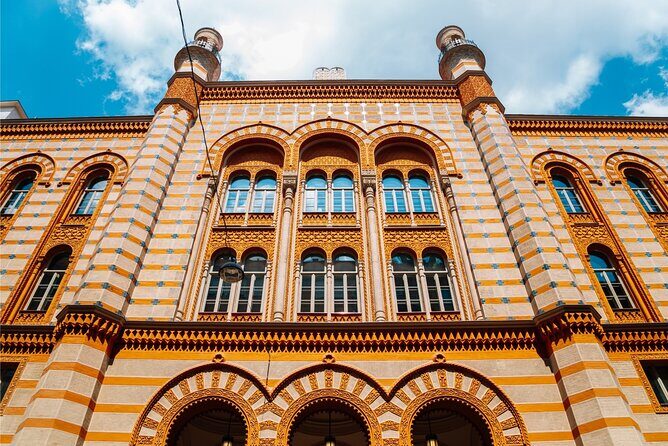
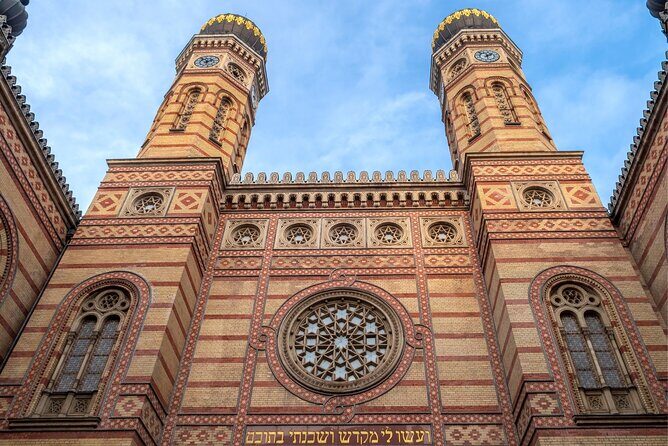
The hunt commonly kicks off at Dohány Street Synagogue, and that’s a smart choice. It’s a major landmark, so you’re anchored immediately in the Jewish Quarter’s most recognizable setting. More importantly, the game approach makes you look harder.
Here’s what you’ll do at each sight during the hunt:
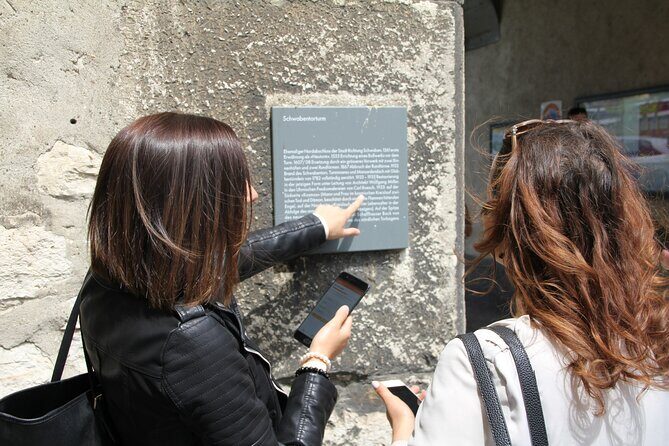
- You’ll use hints to get to the most relevant parts of the location
- Once you arrive, you’ll answer questions tied to what you can see
- Often the information is meant to be found on signs or pictures around the area
That design is more practical than it sounds. If you’ve ever tried to read placards while also trying to find your way through a busy street, it’s easy to miss things. The questions give you a reason to slow down long enough to actually see.
Possible drawback: because you’ll be scanning for clues, you may want to avoid rushing your entry. If you’re also planning to spend time inside any buildings on your own, build that into your day. The hunt will still work, but you’ll enjoy it more if you don’t treat it like a stopwatch.
Gozsdu Udvar: turning a courtyard into a mission space
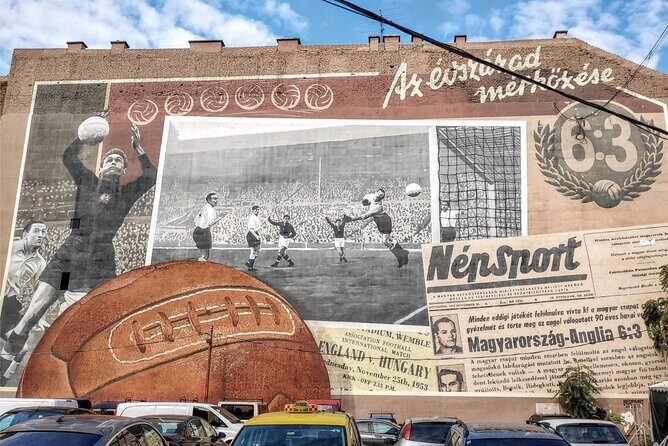
Next up is Gozsdu Udvar, a spot that’s ideal for scavenger-hunt logic. Courtyards and inner passages are great environments for short creative tasks and “look closer” questions because there’s lots to notice in a compact space.
At a place like this, the game tends to shine for two reasons:
- You can complete questions without it turning into a long geography lesson
- The atmosphere supports quick teamwork, since multiple people can search visually at the same time
If you get a photo task at some point along your route, this kind of setting is the sort of place where you can usually find angles and details without needing special equipment. The key is to follow the prompt in the app and make it match what the mission asks for.
One more reason Gozsdu Udvar is a good mid-route stop: it naturally creates a break. You can use the moment to reset, grab a drink if it fits your schedule, and then carry on when you’re ready.
A few more Budapest tours and experiences worth a look





Szimpla Ruin Pub and the “more along the way” factor
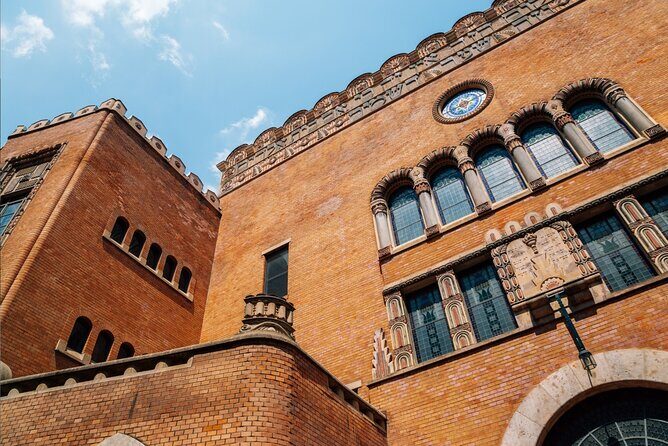
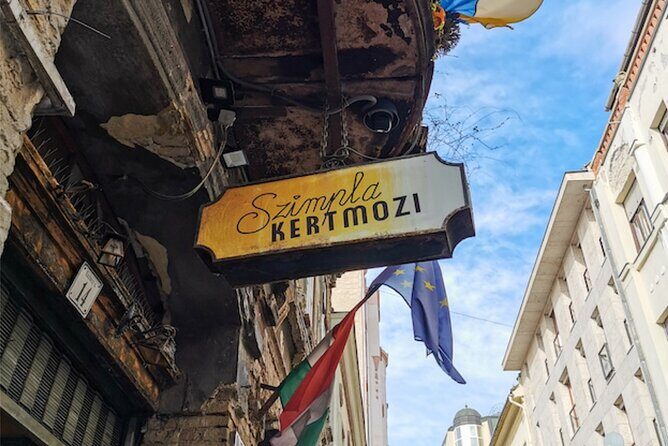
The itinerary you get is game-led, but the route can include lively stops such as Szimpla Ruin Pub. Even if you don’t go in anywhere, this is the kind of location that helps the Jewish Quarter feel real and lived-in rather than purely “sightseeing.”
Photo tasks are part of the format, and places like this tend to give you multiple visual options quickly: textures, signage, and street-level scenes. The scavenger-hunt structure helps here because you’re not just taking random pictures. You’re photographing with a goal, which usually produces better results and keeps the walk from turning into aimless roaming.
That said, keep your expectations flexible. Only certain stops are specifically listed, and the experience can include “many more” points. So treat the app’s guidance as your source of truth for exact moments and tasks.
What you’re actually doing in the game (and how to maximize it)
This tour isn’t one long checklist. It’s repeated mini-missions built around three main actions:
1) Find sights
You’ll use hints and the app’s map function to reach places. If you’re the type who gets turned around easily, this helps reduce stress. You still have freedom, but you’re not navigating blind.
2) Solve questions
Answers are usually hidden in plain view—signs, pictures, and other sight details. That’s the point: you learn because you’re forced to pay attention to what’s already there.
3) Have fun with photo tasks
Photo challenges add energy, especially for groups. If you and your crew are even mildly creative, you can rack up points without doing anything complicated. It’s often more about timing and perspective than gear.
How to maximize the experience:
- Take 30 seconds before each new spot to read what the app wants you to do
- Split roles if you’re with others (one person reads clues, one person searches visually, one person focuses on photos)
- Don’t overthink the photo task. If it looks like what the prompt requests, run with it
Who this fits best in Budapest
This experience is especially good if:
- You’re visiting the Jewish Quarter and want a more engaging way to learn details
- You’re traveling with kids and want everyone to stay involved while walking
- You prefer self-guided exploring over waiting for a group
- You like low-cost “activity value” that feels more interactive than a typical audio guide
It also works for couples who don’t want to argue over where to go next. The app gives structure, and you still choose how long to linger at each mission.
If you’re someone who hates using apps while walking, or you dislike answering questions outdoors, you might find this more annoying than enjoyable. The format requires interaction with your phone.
Value for money: $9.30 and what you get for it
At $9.30 per person, the value comes from three things:
- You’re paying for guided discovery over a route that includes key landmarks like Dohány Street Synagogue
- You get interactive tasks (questions and photo missions), not just a passive route
- You get flexibility: it lasts about 1–2 hours on average, but it’s not locked to a strict end time
Could a guided tour provide deeper historical context? Sure. But this isn’t trying to replace a museum-quality explanation. It’s meant to get you moving, noticing, and learning in small bites while you explore at street level.
For budget travelers, it’s a strong way to add an organized activity without spending much more than the cost of one drink.
Practical timing: when to do it and how to plan your day
Since the experience is listed as open basically all day, you can time it around your other plans. The best strategy I suggest is to do it when you’re awake and not rushing to dinner reservations. Even when the route is flexible, you’ll enjoy it more if you’re not constantly watching the clock.
A good planning pattern:
- Pair it with a lighter meal before or after
- Build in extra time if you want to slow down at specific points
- If you’re doing other major sights in the area, don’t schedule them so tightly that you feel forced to skip the game missions
Should you book it? My take
Book it if you want a self-paced, interactive way to see the Jewish Quarter without paying for a live guide, and if you’ll enjoy tasks that push you to look closely. The fact that it includes stops like Dohány Street Synagogue and Gozsdu Udvar, plus the chance to hit places like Szimpla Ruin Pub, makes it more than a generic walk.
Skip it (or reconsider) if you hate phone-based navigation, don’t want to answer questions on the street, or prefer a tour that gives you a single continuous narrative with no self-management.
If you’re aiming for a memorable, fun, budget-friendly activity that still helps you learn as you walk, this one is a solid bet.